Beyond the Bubble Podcast · Jun 11, 2026
Australia is ten years behind on enterprise AI adoption
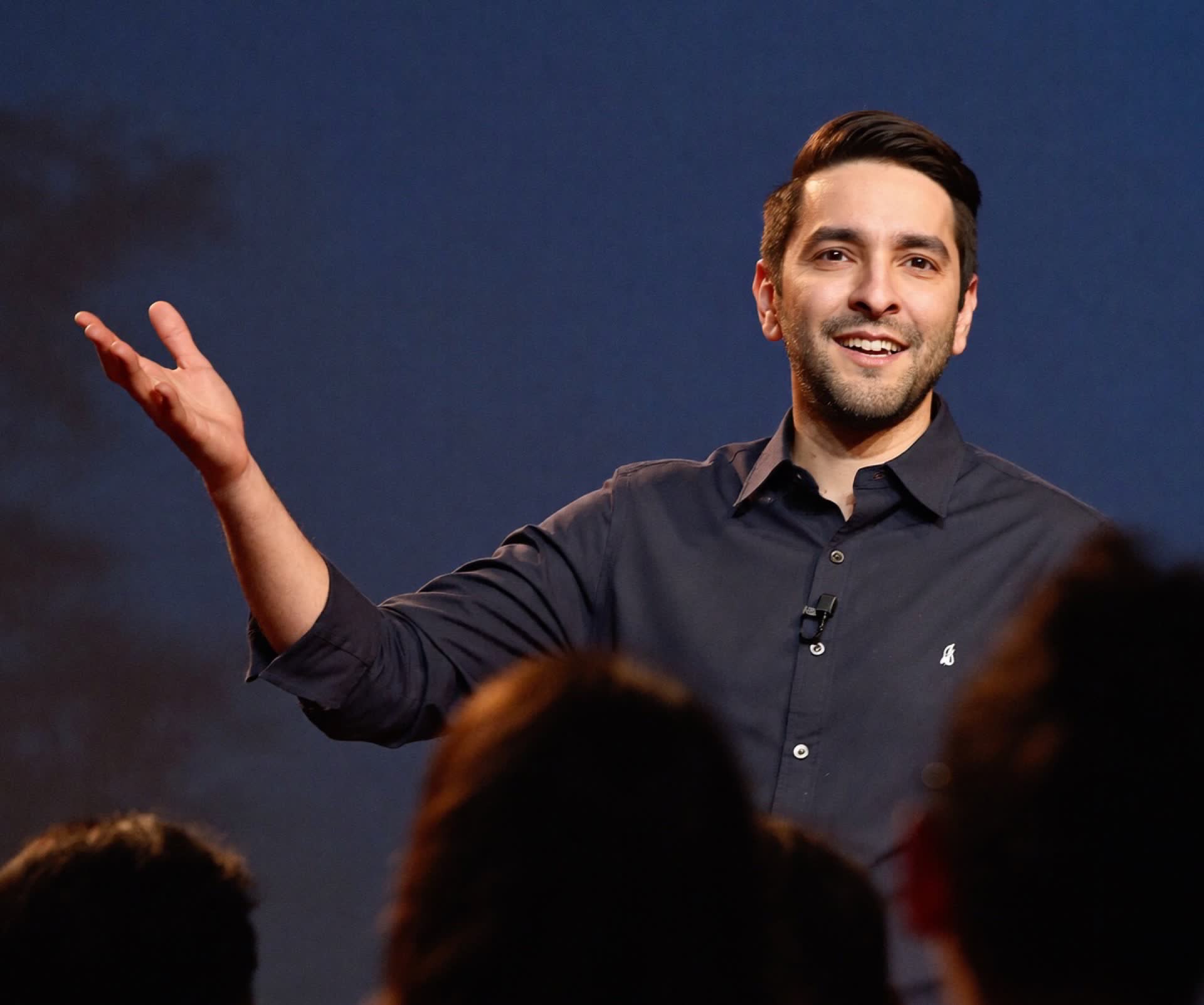
Jenny Vo, founder of Hera Digital, on selling AI sales infrastructure in a market that still treats ChatGPT as a chat interface, why 69% of pipeline dies at follow-up, and why replacing humans with AI is a bad commercial bet.
with Jenny Vo
8 min read
The second episode of Beyond the Bubble moves the conversation out of San Francisco and into a market that, by the guest’s own admission, is still treating ChatGPT as a chat interface. Muzamil sits down with Jenny Vo, founder and CEO of Hera Digital, to understand what AI deployment actually looks like inside corporate Australia, and why the gap between the narrative and the reality is wider than the headlines suggest.
A bubble sitting on top of a foundational shift
Muzamil opens with the show’s thesis. He is “100% in a financial bubble around AI,” but believes the underlying technology is foundational enough to reshape the world. The question he keeps returning to is what survives once the financing narrative cools. Jenny is a useful test case. She left corporate life and built Hera Digital, now almost two years old, six headcount, with roughly 80% of revenue from North America and 20% from Australia. The Australian split is small on purpose. “The Australian market is still very, very reluctant,” she says, and she traces that reluctance to a missing education layer rather than a missing willingness to buy.
Predictability is the hard part, not AI
Muzamil pushes on the tagline on her site, “Build predictable sales systems with AI”, noting that sales systems are not new. Jenny pushes back. “I actually like to challenge you on that perspective, because the AI piece now has actually become overused and oversaturated. It’s more the predictability side that is actually the hard component.”
In her framing, AI works best as a data analytics layer on top of the pipeline, not as a magic wand. Hera tends to start engagements with what she calls an ICP magnification process, rebuilding the RevOps engine from ideal customer profile through to close, then layering agentic AI on the parts humans consistently fail at. The two failure modes she sees again and again are a poor ICP and poor follow-up. Usually both.
The 69% number
The sharpest stat in the conversation comes from joint work Hera did with a sales coach. “69% of the pipeline dies at conversion due to the lack of follow-up,” Jenny says. Her explanation is psychological, not technical. Salespeople feel monotonous reaching out for the third or fourth time, they do not want to bother the prospect, the gap widens, urgency dies. This is the seam where Hera inserts automation, but with a deliberate constraint: the follow-up has to read as human. “Everyone can read AI slop,” she says. Her practical tip for operators sending automated outbound is to purposely include small mistakes, because polished output is now a tell.
Why regulated Australia is ten years behind
Muzamil presses on why adoption is so slow. Jenny is blunt. In Western Australia, where Hera is based, the economy is mining-heavy, and growth for those clients does not mean more revenue, it means more time back. In finance and other regulated sectors, the brake is compliance. “All the sectors that are heavily regulated are still, I would say, comfortably ten years behind in adoption,” she says, because almost no one is doing the work of AI governance and safe deployment inside those compliance walls. Founders she has spoken to in finance simply say they do not know where to start.
She also confirms this is not AI-specific. A recent guest on her own podcast, a Cisco veteran, told her the same reluctance hit Australia when the worldwide web arrived. Her practical conclusion for founders listening: if you want to enter Australia, do it through partnerships with operators who already hold the local IP and the behavioural knowledge. “Unless you have that IP, I don’t see the business lasting very long in the Australian market.”
The post-AI fantasy and the human correction
Muzamil widens the lens. He points out that much of the global south, including his own context in Pakistan, has resisted technology for forty years not because of cost but because of human aversion to change. He asks Jenny whether the X timeline, where every white-collar job is automated in eighteen months, matches reality.
Her answer is one of the most useful moments in the episode. “I don’t think there is going to be post AI.” AI will keep evolving and being deployed, but a business that deploys AI specifically to replace humans is, in her view, making a bad call. “It cannot feel, it cannot experience, it cannot express.” She describes an imagined A/B test where channel A is pure AI outreach and channel B is human, and predicts B wins on response rate because the market is overcorrecting against AI-generated contact. The equilibrium, she argues, will require humans back in the loop, partly to operate AI safely.
From novelty to outcomes
Muzamil names what he is seeing across the market. People are tired of AI being pushed into their face. He remembers a Logitech AI mouse that turned out to be a button that opened a chatbot. His read is that the FOMO framing of 2024 is dead, and the conversation is shifting to outcomes. “It’s no longer about AI. It’s about outcomes,” he says. AI has to be sold the way mobile apps were sold, not as a technology but as a way to sell pizzas, or close deals, or save time.
Jenny agrees and adds a counterintuitive data point from inside her own company. On a recent Monday, Hera did a full silo-by-silo audit of where AI could be inserted into the business. “Six times out of ten, I still prefer to human,” she says. Her partner, she notes, would rather wait on hold than talk to an AI agent. She is not arguing against deployment. She is arguing the cost of removing humans is not only financial. Running a company alone, with only AI agents instead of colleagues, she says candidly, would be unbearable.
The Noodle Seed partnership and the chicken-and-egg problem
The conversation turns to how Hera gets traction in a reluctant market, and Jenny points to her partnership with Noodle Seed and its work on custom ChatGPT apps. Her logic is commercial. Building that IP in-house would be high effort and low impact for Hera. Plugging into a partner who has already built it lowers the barrier of entry for her clients and removes the risk. “People are not willing to pay for something they don’t understand,” she says, and AI carries an unusually heavy version of that problem.
Muzamil draws the parallel that interests him most. Noodle Seed sits in roughly the position WordPress occupied around 2006, or mobile app builders occupied a few years later: the next layer of digital presence, this time built for a world where 800 million people start search inside a chatbot. The catch is the chicken-and-egg problem. The ecosystem needs enough early adopters to justify the build, but early adopters need the ecosystem to justify the spend. Jenny’s answer is that the businesses that survive this gap are the ones built around the end user rather than an ARR target. She points to Noodle Seed itself, which pivoted 180 degrees away from vibe coding into its current shape, as evidence that prioritising the user is what creates a defensible position.
SaaS is not dead, it just has to pivot
Muzamil closes the substantive part of the conversation on the “SaaS is dead” narrative that ran through 2024 and 2025. Jenny rejects it cleanly. “I don’t believe that SaaS is dead.” She describes what she calls the “crackhead era” of opening Claude Code for the first time, learning what is possible, and then realising six hours of custom building at a $100 hourly value is $600 you could have spent talking to customers. The commercial logic, she argues, still favours paying twenty dollars a month for software someone else maintains.
Where she sees real expansion is in subverticals that were previously too small or too unglamorous to justify a SaaS build. Muzamil’s read, which she agrees with, is that as the cost of producing software collapses, hundreds of new use cases open up in industries that were historically untouchable. She mentions meeting founders who have digitised the charity sector specifically to give donors visibility into where their money goes, which she frames as a SaaS product wearing an NGO label.
What Hera is actually for
Muzamil asks Jenny what the ideal version of Hera Digital looks like. Her answer pulls the episode back to the human thread that has run through it. She wants to do more work with mission-led and purpose-driven organisations. Her reasoning is that dentists are good at being dentists and bakers are good at being bakers, and forcing those people to also be business owners dilutes the craft that made them worth serving in the first place. If Hera can take the operational pain off those operators, she says, “I’ll die happy.”
It is a fitting close for a show whose premise is that the durable AI businesses will be the ones still standing when the financing narrative breaks. Jenny Vo’s argument, across roughly an hour with Muzamil, is that the durability comes from the same place it always has: a clear end user, a real outcome, and a willingness to sit in the slow markets long enough to educate them.
Full transcript
Ladies and gentlemen, welcome back to another episode of Beyond the Bubble Podcast. As you guys are very well aware, I am of the opinion that we are 100% in a financial bubble around AI, but I also believe that it is such a foundational technology that it is going to change our world. And so uh in in the sort of hopes of exploring a another conversation of trying to understand really what's going on uh in the trenches out in the corporate uh side of things. Uh we have a very very special guest with us today who uh previously was in those trenches herself on the corporate side. She left her job and in uh uh June 2025 started an AI sales infrastructure company uh out in Australia. uh and I'd love to know more about you know what's happening because we we hear a lot about what's happening in Silicon Valley we hear a lot about what's happening in San Francisco but I feel like you know that in itself is such a small filter bubble uh where a lot of these you know extraordinary technologies are being built uh but the real world still does not have an understanding of what they can do so uh with us today is Jenny W she's the founder and CEO of Hera digital uh that uh what it does I'll let Jenny uh give us a brief about that Jenny thank you so much for taking the time out and joining us on the show. >> Appreciate the time, Maza. Really appreciate it. Looking forward to our conversation. >> Uh so tell me a bit about uh what you do at Hera and uh what sort of markets are you uh servicing right now? What's the scale that you're operating in over the last one year? >> Uh so we're a little older than one year, but one year does tend to roll off the tongue a bit nicer. So we're almost 2 years old. We're not quite there yet. So we're basically just walking uh in the equivalent of of toddler world. Um so to answering your short what we do is we build um sales infrastructures for B2B teams. Um it's not really agnostic per se but we do lean towards the more of the SAS uh industry because it's just something that's always evolving and something's always exciting and who doesn't want something to be different every day. So that's where we've landed. Um we predominantly serve the North American market and the Australian market. more so leaning on 80% North American, 20% um Australian, which kind of segus perfectly into what the market is like in Australia, but I'll dive deeper into that right after this point. And we we're sort of operating about six headcount now. So, we're doing okay. We're surviving for a business that started a year and 7 months ago. I think we're doing okay. Um there's always room to grow, though. So we do also uh particularly lean on the GTM and strategy space because that is more strategic. It's more fun. It's more creative. Uh and that's where we predominantly like to sit. But um nothing's ever too small or too too too big for us to handle. Just we we're just about conversations. Have the conversation. Where does it go? Can we help you? Can we not? We'll send you to somewhere else who can. Um and sort of just ahead and finish off the Australian market component. The reason why we never entered it originally was the Australian market is still very very reluctant and I think that comes from an un an undereducated piece and or un unaware piece right and maybe it's my duty um as an Australian trying to implement uh AI into the Australian market it is my responsibility to educate and allow people to become aware and therefore not so reluctant to adopt. Um, but I hope that that answers your question. That went in a very tangent in a very quick manner. >> No, that makes sense. We're going to dive deeper into that as well. Your your your website headliner says, "Build predictable sales systems with AI." So, I mean, sales systems have been built for as long as I can uh remember. Um, and so that technically is nothing new. There's the the the with AI component that seemingly is everywhere these days, right? Do this with AI. And so I'm curious um what's the difference between the conventional um sales infrastructure versus what is being possible what is possible now uh with AI. >> I actually like to challenge you on that perspective because the AI piece now has actually become overused and oversaturated. It's more the predictability side that is actually the hard component. And I think from someone who's in the trenches from a corporate standing and now in the trenches serving the corporate industry, it's actually the predictability is always a piece that a lot of businesses actually struggle with because it always starts with groundhog from ICP all the way to close. There's, as you can imagine in the sales pipeline, there's so many varying levels of yes, there's there's levels of automations and workflows you can put in place, but that's not necessarily harnessing the real power of AI. Where AI is is when a aentic AI is actually applied to the pipeline. What does that actually look like? Now, when I think about AI as a tool, I think about it as a data analytics tool because my brain just simply cannot compute that level of information and data. So I then rely on AI tools to give me that data so I can make more intelligent decisions on behalf of my customers. So when we have a scenario when we're completely rebuilding or rearchitecting a complete RevOps engine, we dive all the way back down to what we do what we call an ICP magnification process. Now where I comes really handy is we can look at total addressable markers. we can look at what's actually obtainable for you. But additionally, how do you then apply that information to the rest of your funnel and when we look at um implementation and and I guess architecture is allowing AI agent AI specifically to actually help with the nurture and the follow-up process. So with all the many conversations we've had with customers and prospects, there's always one or two issues that generally is the problem of a pipeline that is not predictable. One of them is a poor ICP. Secondly, it's poor follow-up. It's always a mixture of one of the two or sometimes both. Now, I can't really dive in deep and tell you how to fix that because we would be here till tomorrow. But I wanted to share a really interesting stat and I think this might be helpful for your audience. 69% of um the pipeline dies at conversion due to the lack of follow-up. >> Isn't that nuts? Isn't that crazy? >> And then we think follow-up is really simple, but from someone who's actually sitting in the trenches, it's actually more than you think it is. Because from a human psychology perspective, let's say, "Oh, Moz, hey, just reaching out to follow up." You don't respond for whatever reason, 2 weeks later, oh, hey Mo, I'm following up. So, it just feels monotonous to the salesperson. And it's actually a salesperson psychology perspective where they don't want to bother the prospect and lose the deal. So, they just leave it and the the gap widens and widens and widens and therefore it's not be it's not urgent anymore. So when we did some deep diving with this with a sales coach um as a partnership and collaboration we we draw down the stats and it was absolutely fascinating to find 69%. So even if you were to improve your pipe your conversion by 9% which is hard to do but if you can bring that down to 60%. That materially makes a significant impact. So but also no one really likes follow up. No one enjoys follow up. Let's be honest. Okay. So that's where we add an additional layer of um AI systems and infrastructure to allow for the follow-ups to be automated but automated in a human element way because everyone can read AI slop or they can tell that it's AIdriven. So it still has to highly be personalized to that prospect to that conversation to actually make a difference. Um so yeah that that's pretty much um that question in in short. No, that makes sense. But while I mean to me the logic is very much there. It's an existing um it's nothing revolutionary in many ways. It is an an existing business vertical that is now more efficient and more optimized courtesy of this new technology. What I'm curious about though is is there a cost overrun to this that is more than what it was previously? Because if the cost versus the revenue increase has a higher revenue growth, it's a no-brainer. Like why would you not go for AI? And so I'm curious why the uh transition has been relatively slow particularly let's say you mentioned earlier in Australia. >> I think the transition is particularly slow with Australia because I think people had just downloaded chat GBT as a chat interface. So, when I speak about AI adoption into the actual sales pipeline, we've had what now a 10-minute conversation, and we still haven't even really gotten into the crux of it because >> it's not only do we have to sell, we also have to educate before we sell. What does it actually look like? Because AI is so you can't feel it, you can't touch it, it feels intangible until they see results. So understanding that we have to come from a perspective of let's look at the outcome that it can actually give you and the upside right. So if that returns a 4x on your investment to to adopt AI obviously it's a no-brainer. It's getting those persons to those conversations is actually the harder part. Now with the Australian market what's particularly unique and I think more particularly unique within my state which is Western Australia is we are very mining heavy state which means it's not that we need more money. We need more operations and delivery. So then those conversations change quite drastically because when we look at Hera digital and what we do, we look at actually focusing on growth, not necessarily just the front end, although that's where we lean to because that's what we love. But growth means something different to everybody. And in the Australian market, particularly where I am, growth means allowing them to have more time back so they can think about growth. So um I mentioned this earlier on in our chat is I spoke recently to more so leaning on the finance sector because it's quite heavily regulated as you know no matter where you are is very heavily regulated and therefore adoption is typically slower because of that regul uh regulatory body. Then when I spoke to these um founders and owners they said look I just don't know where to start. Look there's so much going on. Regulations change all the time. We have to comply. I don't know where to start. And that therefore tells me it's an education piece. Right? So um with finance sectors um medical sectors all the sectors that are heavily regulated are still I would say comfortably 10 years behind in adoption because there's no there's probably no one quite actively in the Australian market working on AI governance and actually implementation from a perspective of deploying it safely in a highly regulated environment which Now I'm saying that out loud, probably something we should tab for later, but it's quite it's quite an uphill battle because you have to have so many things ticked off. You actually do have to get licenses as if you were practicing finance. So >> I can understand why not a lot of people have um really taken it on. But if it's something that's actually going to genuinely help the industry learn and adopt AI, that's something we're not afraid to actually do. It's not for me. Finance, I did finance for a bit, but it's not for me. For a lot of people, they say, you know, AI or at least um the the commercial use of AI as we're seeing today um is sort of as a technology is very similar to let's say what cloud was or or what mobile apps were in terms of how they accelerated a lot of uh um you know development and productivity and so on. It was sort of similar to uh let's say the phase where internet really changed the way that we worked. It changed the way that our uh you know we were productive. Excel sheet essentially um replaced you know rows and columns of uh finance workers who are just crunching numbers all day. I'm curious, was Australia always this um you know slow in terms of adopting a lot of these technologies or is this phenomena exclusive to AI because of this sort of narrative that's there as well where oh you know AI is uh you know it's a you're going to end up in a surveillance state is going to it's a you know it's a copyright infringement. There's a bunch of these different narratives around AI right now. Um and I feel like it's because I feel like the the the the market has been pumped so much to gather that money for the data centers. The counter is also there with cloud and a bunch of other was just like okay whatever it's a new technology who cares the you know nerds are working on it that's fine. Um so tell me a bit about transitions in previous technology um revolutions. I think that's really serendipitous M because I literally just had this conversation yesterday with somebody in the Australian market on my podcast yesterday. Um, and he was around so he used to work for Cisco. Um, and he was around for decades and he said essentially what I gathered from that conversation was the exact same thing happened when the worldwide web came about. Super reluctant. We don't know what it is. So therefore, let's just shut it out until it actually impacts what we need to do and how we do it. And he said, "It's a it's a wave and it will happen. It just takes a little bit longer." Um, with the Australian market, we always joke because we're detached from any other country is we we just get information slower, which obviously is not the case, but it's a running joke. But to answer your question, sure, it is a it is a natural um Australian market behavior. So if you are looking to enter the Australian market, just have that in the back pocket. And I think the most um valuable way to enter the Australian market is through direct partnerships because unless you have that IP, I don't see the business lasting very long in the Australian market. there won't be much of a foothold because of you don't have that market knowledge and what people are actually on a daily basis what are they reluctant to what are they actually interested in and how much of that does your business overlay makes makes sense so for me there are two major threads here first being that it does not matter how amazing a technology is and how how much change it can make human behavior tends to be very very anti-change. And so when people really imagine what 5 years later looks like with AGI coming in and everybody just sort of sitting at home and not working and and and you know universal basic income, they're imagining that the the risk appetite and the uh and the openness to change that people in San Francisco have is the same all over the world, which more often than not isn't true. um majority of the world and much of the global south I'm I'm from Pakistan you know a lot of countries developing countries like Pakistan they don't have a lot of technologies that have existed for the last 40 years not because they couldn't afford it just because there is this sort of resistance to change and I think the same is going to happen with AI as well where the transition is going to take its sweet time for much of the rest of the world >> and so I'm curious on that first thread. Do you do you see that transition based on what we're imagining in the mainstream narrative? What's happening on X? You know, a new tool is coming out and it's talking about this going to disrupt Hollywood, this going to kill this industry versus the real world impact. Do you think the timelines differ um realistically when it comes to rest of the world? Are you just to clarify that point are you specifically talking about regions and whether different regions are slower or faster to adopt? >> No, I'm talking about a wider wider transition to a post AI world. It's you know just a a world where a lot of our menial tasks are automated. Again there's studies that say oh in the next 18 months all white collar jobs will be automated. Now, that's scary because it feels like, oh, I'm going to be jobless. But there's a difference between in a lab in San Francisco, theoretically, a job is automated versus the actual job is cut down and replaced with an AI um I don't know agent, right? So, the actual real world implementation of AI, do you think the timeline is going to look completely different versus what the internet is making us believe? because of how fast the industry is going. I honestly have no idea what post even looks like. I don't think there is going to be post AI. I think AI will just constantly evolve to a point where it is going to be deployed more and more often. And I don't think deploying or with the any business that has the intention to deploy AI to replace humans, >> I don't think that's actually a smart business move. And this is probably going to be a bit um contrary, but if we think about AI and its applications and how intuitive it's becoming, yes, it can make decisions and yes, it can gather data a lot faster than humans does, but it cannot feel, it cannot experience, it cannot express. Um, and that's why when we look at personalization, personalizations, particularly when we're looking at sales functions, it's a very human function. when we look at business silos and when we if we were to run an AB test where A being all AI only B being only human responses I can almost guarantee you you will get more responses on channel B because it's more personalized we have it's not polished and I think humans now can identify that I'm actually genuinely looking for the unpolished so quick tip if you are sending out um AI automated messages or emails actually purposely put through mistakes because that's how you can sort of pierce through. But what that tells me is eventually over time naturally everything will have to correct itself because there's no equilibrium right now. So >> when I look at all the conversations and I reflect upon them and what we're learning in the actual trenches, if people are responding to mistakes or unpolished post or unpolished um messages or contact, that tells me that people are starting to become sick of hearing about AI, feeling AI and experiencing AI as a as um as a receiving point. So it's starting to slowly correct itself already. But to answer the question from an enterprise level, I don't think businesses are genuinely trying to replace humans. I think they're if they are a good business, they're going to try to make their humans operate better output and maybe they just don't need to hire the admin the admin person because you just can't make those human emotional decisions. Um, so I yeah, just to answer that in short, I we're going on a tangent and I can sort of philosophy say that for a long time, but I don't we think eventually over time it will have to correct itself. And what that actually looks like is you might have to bring people back into the fold, humans back into the fold to actually operate AI safely. So yeah, I don't know what the landscape looks like for this industry, but it's a wild ride. So if you're someone that likes to not do the same thing every day, this is the industry for you. >> That makes sense. I think one of the one statement that really sort of speaks to me is the is when you mentioned where people are sort of sick of the the AI being pushed on their face. So the novelty is beginning to wear off and where a year ago it was the fear of missing out around AI which caught people's attention where you you know you and I literally I was looking at I remember there was a Logitech mouse with it with was an AI mouse right and I was like okay let's check this out and it was literally a button that would open like a chat GPD or something but everybody had to have an AI something coming out um I think people are now beginning to get annoyed by that framing um and So for me, I think it's more important and that's what why when I started this conversation, I wanted to get a sense of what you're doing and how does AI sort of play a play a role there because I feel like >> it's no longer about AI. It's it's about outcomes. It's about the fact that okay, I can generate the same outcome that you've been generating for the last 50 years. I can just do it either faster, cheaper, um at a bigger scale, right? And that's what AI is supposed to do. Um, nobody comes in and says, "Okay, I'll make a mobile app for you which is going to be around cloud and it's going to be this technology." They're going to say, "We're going to make an app for you and you're going to be able to sell pizzas on your app to whoever, right? It's a very simple framing. It's an outcome based framing." Um, and so I'm curious. >> I feel like a lot of people when they're still thinking AI, they're thinking the chatbot. They're thinking chat GPT. They're thinking, "Okay, this is there's this I'm going to say something and it's going to in intelligably with some sort of hallucination returns some sort of text." um to me whereas I feel like over the last one year the the entire ecosystem has changed fundamentally there's been a bunch of I mean with just the MCP uh uh um technology that's come in and and agents working with each other there's now a lot happening and much of the non-technical user has no sense of it >> give me your sense of beyond your particular let's say um um AI in sales you work with a lot of other partners as well. How are they using AI beyond the chatbot and you know how has the outcome changed? And and I'm just to give you a a con small context additional because towards the end of your last answer you mentioned a lot of these companies might be hiring people back that they may have laid off earlier or may be hiring people back for different roles altogether. But we're now beginning to also hear that the cost of tokens that a lot of these companies, these big tech companies that laid off people has far out outpaced what those people were costing. And so even if theoretically it can increase their productivity, if the bottom line in the business doesn't make sense right now, it just doesn't make sense right now, right? And so a lot of these people, Microsoft recently said, "Okay, there's a limit to um how many tokens we're going to give you guys, so on and so forth. give me a sense of uh where we're headed now beyond the novelty factor of AI. I think when we and I think it's varying degrees um based on business so because enterprise level is going to adopt a lot slower a lot more carefully compared to say an agency uh we can obviously move a lot faster we can make decisions faster because it impacts less people now when I look at and it's funny we actually went through this process on Monday is we did a full analysis of the business, every single silo, sales, marketing, operations, delivery, retention, everything, right? And we're like, okay, let's look at the problems. Let's look at the solutions. What can we automate? So, it's an additional layer of conversation. But what's funny when we did all of that breakdown six times out of 10 I still prefer to human because when it comes to human to human elements yes again there is some task that can be handled by AI but humans still at the end of the day prefer to talk to humans and I had a conversation with my partner um yesterday saying that they would prefer to wait on the line on the phone to talk to a human than an AI agent, which is fascinating. And I don't know whether that's an Australian particular specific thing, but that still tells me one again the the industry is overcorrecting, which is kind of nice. But one thing will always stay the same is humans will always prefer humans. And when we look at well if we were replace humans with AI you you need to think about the cost not just from a financial perspective because when I started this on my own it was very lonely. So if I was to start this same process with only AI agents rather than employees I'd probably jump off a building honestly because it's it's such an incredible load. Like can you imagine running a company by yourself? You have no one to talk to. It's all those small office chats that really make what you do um purposeful. And then on the on the back end of purpose, if you're a business and you're prioritizing AI over employees, at the end of the day, what is your purpose on on a on a really deep deeper level? And I'm sorry to go deep and meaningful on you, but when I think about business and all the business owners and founders I've spoken to, everyone has a purpose to some degree. And that is to serve another human in any type, shape or form. And I don't think you can do that effectively with an entire AI team replacing with the intention of replacing humans. Yes, you may have to pivot as an individual or an employee of what you do, how you do it, but the valuable part of having humans is actually the experiences that come with that human and the individual because no two humans are the same. So if you think about it on that level, AI is exactly the same. Even if you give it the same a slightly different in uh u input or a question and I give it the same question, it nine times out of 10 will give us both the same answer. And that's what people are are sick of because there's just no flavor. It's just vanilla. >> No matter how much you try to add in, you try to add some chocolate sprinkles, um, rainbow sprinkles, some strawberries on top, it's still vanilla at the end of the day. >> Makes sense. You mentioned early on, you said one of the ways to break through the industry and champion that education and change because again it's uh the transition is going to be fairly slow particularly in enterprise particularly in corporate um and so while it was popularized of a single person AI company is going to do everything and the agents are going to do everything um the fact is there are a lot of different people who understand different aspects of business um and or champion different aspects of business um and so even if theoretically you have a swarm of agents who can do everything >> practically we've all experienced that's not true. it gives you a semblance or it it gives you a dumb per dumb person's understanding of what a particular uh you know uh vertical looks like but it's not actually uh the the real outcome and so I'm curious how do partnerships play in your own business model um when you're when you're hoping to again educate and uh get new people to at least try out these new technologies and then potentially see whether they can generate an outcome that is more efficient, cheaper, faster or at scale. >> Uh I think a good example there is our partnership with Noodle Seed. So what they've done with the custom chat GBT app space is I think quite clever and a very uh well-rounded offer and I I'll sort of get into that in a moment. And I and I keep saying this to the Noodle Seed guys is like I feel like I'm basically a salesperson for them because I just know the product and the service so well. Um and I I truly do from the first initial conversations I had with some of the founding engineers I truly did see the impact it could have uh and I just wanted to champion that. So for me importantly is where the education piece comes from is from a business perspective if we were to individually go and make custom chat GBT apps we would have it would be such a great learning curve that when you look at impact versus effort it's quite low impact really because we don't understand it but it's high effort. So for me it wouldn't make sense commercially to go and do that on our own. So with having a new not it's not really new it's just something that is tangible to present to the market and say hey we know the market is going this direction I have a solution for you the barrier of entry is very low there's no risk to you there's no risk to your business that is the the best way that we found adoption to be a lot more quicker and a lot more easier because people are not willing to pay for something they don't understand and AI comes comes from a a quite a heavy perspective of that and again there is still quite a lot of an education piece. I think we do it every day now. Uh I think I have a PhD in education in the Australian market at this point. Um but understanding that if you can if you try to enter a market like Australia where you know you have to educate before you actually can um achieve some type of value or obtain some type of value then it's fine. I think it's when you don't have that expectation when you're like a Australian market you know according to chatbt or claude it comes back that it's a very valuable market but not knowing because LLMs will not know that it's still the the Australian market is still typically uh reluctant right so I think if you're prepared and you have a good understanding of the market you enter then that's totally fine but from an AI deployment side with partnerships is quite often we are the ones is deploying AI for our partners and their clients rather than the other way around which is kind of a nice place to be but it also means that every conversation is very different and deployment is very different because what they offer how do they how would that realistically work for their business for them to onell because we look at partners and we look at channel partners where we're both helping each other from a sales perspective and we're both championing each other's product and service. So, um, there's not a whole other outside of Noodle Seed, if I'm honest with you, there's no other partner that helps us directly with AI. It's it's more to do it's more the the other side. So, we help them with AI. Um, but I don't know whether that is because we're based in Australia or if it's because we just happen to have more conversations like that or I don't know what what it is exactly, but I I'm not uh upset about the result. H I'm curious about the this whole Noodle Seed partnership largely because I find Noodle Seed to be at at an interesting position because if you again if you take out the the AI noise and if you just look at fundamentally what the business is and what it's doing it's it's a business that has always existed. Search has always existed. um 800 million people are on this new form of search which is you know using these chat bots. Previously search was directly linked to websites and so you would have these sort of there was a WordPress boom um and that was a huge global boom like in Pakistan you know government programs were there to to teach you WordPress and and get everybody to make a website right um and then post internet once mobile apps were there there was the mobile app boom where everybody was selling the idea that come create a mobile app and uh you know over time we saw everybody needs a mobile app, whether you're a store, whether you're a XYZ, whatever. And so it's a very logical transition towards the next step where if your operating system is now driven by a chatbot as the first entry point to any digital interface, um you need that the apps are going to be there and those apps are going to eventually read out those customers to wherever. The problem though is that there's a chicken and egg, right? So, um, right now you're you're really at I mean, internet has just been invented and you're talking about WordPress and that's that's a tough sell. Um, it was easier to sell that in 2006 or 7 when you know the the the narrative was widespread. Everybody was rushing towards digitizing themselves and so everybody wanted a website. um how do you sort of um deal with that sort of a that chicken and neck where the customer is like okay sure we we see this is happening but is it happening today I don't know you know but you also need enough people to do it today for the ecosystem to be developed for it to really be something it's do you get what I'm saying it's there there's this >> yeah how do you >> particularly particularly I think with the GTM space. Um because in order for you to go to market, you must have a product and if you have a product, it's generally not it's something brand new and it it's exactly what you said earlier is the chicken and the egg. Uh, and we're it's like a constant cycle, but it's a learning cycle because if you truly believe that your service or product is actually genuinely there to help people and not for revenue, um, then you will start to prioritize your decisions differently. How does this impact the end user? What is the end user experience rather than I just want to grow this business to a million ARR and then then sell it, right? It's two very different strategies, but what that means in terms of how does that look like in terms of longevity of business? Um, and I think going back to it again, I think what is the common theme in our conversation thus far is actually yes, there's a sprinkle of AI on top, but it really is about the humans at the end of the day. And that was the original reason why, quick plug, went I generated I started my own podcast was because with all the noise, we don't accidentally bump into each other anymore. So there's no really by means of networking anymore. You have to be proactive with networking rather than reactive. And through those conversations, we've been able to meet the the Noodle Seed team and create really amazing partnerships. And you cannot have that without conversation. So that's AI from a trying to replace humans perspective. It cannot replace those conversations. It just simply cannot no matter how intuitive and intelligent it becomes. It cannot replace that human in conversations. >> No, that makes sense. Uh Jenny, we're going to uh move towards a close here as well, but I'd be curious to to get a sense of what your vision is though um let's say with with HA digital and and how if all the variables around you were in your favor, what would the perfect world look like professionally for your company? I think for us is we actually want to move well we want to do a bit of work in the missionled or purpose- driven um industry. So we're talking charities, NOS's or we want to help people help people if that makes sense. So if we can help optimize someone's business because they are helping a charity or they are helping educate people on something that is more philanthropical than other than learning about technology and business that's ultimately I think where our purpose sits on a deeper level is we we made this business to help people because when we look at um industries and we look at professions. Dentists are really great at being dentists. Bakers are really great at being bakers. But not everyone is made to be a business owner. And when you're forced to be a business owner, that's where the focus starts to dilute. And then the craft as a human that dilutes and then therefore your your initial care of serving that human has now dissipated and is now no longer enjoyable. So if I can take away that pain for these types of businesses, I think that's a win. I I'll I'll die happy. >> That makes sense. And and you guys are focused on because I'm curious how does that sort of tie into let's say NOS's or or sort of social work because my understanding is the nature of your business is very much connected to let's say SAS businesses or services businesses, right? Um, so how do you sort of extrapolate or or or potentially identify how more missiondriven businesses can use something like what you guys offer? >> Um, I met a really good uh two really good founders yesterday. So what they did is they've taken the charity industry or the nonfor-profit industry and they digitalized it. And what that means is um I'm just as curious as you are because I was like what does that mean? um they actually cuz when we think about donations we we're not really sure where our money goes and therefore there's reluctance to donate in the first place. So one it's really about giving visibility of where your donation goes but then also digitalizing that actual component. So even though it's in the NGO industry space it's actually a SAS product. >> So that's how it actually overlaps. So sort of and just to again another tangent that I'm going to go into because a lot of times we we we heard over the last year that SAS is dead. Um everybody is going to create their own version of whatever SAS they want to create. Um OpenAI is going to you know rule everything and they're the one big conglomerate and so on and so forth. Increasingly we're seeing that's not true. One person cannot do everything. Um, but my opinion throughout that was because of the deflation of the cost of producing software, you're going to see a 100 new use cases come out now where you can begin to digitize things and begin to create SAS in industries that were historically untouchable. Like those industries wouldn't even care because they wouldn't be the ones sitting there, you know, basically creating million-dollar projects. Now, if you can create the same thing for like $50,000 or or create like a cheap SAS product around it, um there is actually I I think it's going to grow like the overall industry itself is going to grow with a whole lot more use cases. Do you see something similar happening and you know you you mentioned you've been meeting founders who have been identifying unique spaces for for for SAS products. Um do you see this happening? >> I don't believe that SAS is dead. Um because even if you create whether you've created it or Microsoft created it, it's still a SAS product at the end of the day. It's who who utilizes that SAS product and how do uh software companies actually then to pivot. I think when we look at amalgamation is really the key point. Um, and then you also as a business owner, um, as you do when you first download Claude Code is you go into what we call, um, and I'm sorry to say this, I'm not sure if this is appropriate, but we call it the crackhead error where you start to learn what you can really do and then you're sitting in the dark in a dark room on your laptop trying to figure out how can I do this, how can I do this and then over over time you become overwhelmed. You're like this is actually not worth my time because I don't have time to debug it, right? So I think over time you will start to learn as a business owner is is this truly worth my time? Cuz if I'm spending 6 hours creating a SAS product on my own, yes, it's customizable. Is that I've wasted six hours. So technically that's 600. Let's say you you value your hour by $100 for for example sake. That's $600 you've just wasted in a day where you could be out earning $6,000 talking to customers. So, I think from a commercial, a lot of people don't see the commercial side of it, I'd much rather pay $20 a month if I don't have to create that SAS product. But the only lack I I see where why people think that SAS is dead is because of lack of integration. So poor NADN and make maybe have a bit of a problem but you have to then just like any industry in any particular um uh growth trajectory is you have to learn to pivot as a business whether that's pivot completely and I think going back to noodle seed um a very interesting fact is um they started off as more of a vibe coding platform and they pivoted completely 180 it went back reverse back the other direction and now I think I'm thankful for her because no one else is really doing what needle noodle seed is doing and that comes from the perspective of I want we want to serve the people first and when you create and I think I keep bringing this up but when you create a SAS product because you one you want to earn money or two because you're not prioritizing the end user then you're then you you will create a product just like everybody else that someone can go and vibe code now and therefore you will not last on commercially. So that's my take on if whether a SAS is dead. I don't think so. I think you have to pivot if you are a SAS provider or you have to always operate with the intention of the end user. >> Makes sense. And in terms of identifying new untouched avenues for SAS, do you think there's opportunity there? >> I think so. Um, there's so many different little pockets of of subverticals and industries that you could really dive into. And often I think a key point to identify whether that is an industry worth going into, obviously do your research, but if there's nothing that exists in that space, one there probably is a good reason why it doesn't exist because it's probably too hard or because then you would start to analyze. Does that make sense for us to commercially enter? But yeah. >> Yeah. Yeah. Makes sense. Jenny, I'm going to wrap this up. Uh, thank you so much for taking the time out. I wish you all the very best. I'm excited to see where Australia goes in terms of AI. Um, I know that uh, you know, you're working hard uh, educating people and, uh, fighting that good fight. Thank you so much for taking the time out and sharing all that insight. >> Thank you so much for having us. Uh, was was a really great conversation. >> And for all of you guys, let me know in the comment section below. If you're outside of the North American region, uh, is there a conversation around AI in your particular region? Do you think the governments, the corporations, uh the more uh the the people in the trenches, are they responding to AI? Are they uh rejecting it? What's the narrative out there? Would love to know in the comment section. But nonetheless, it was same as Emil and Zedi. You're watching Beyond uh the bubble podcast by Noodle Seed Studios. Thank you so much for watching and I'll see you in the next one.
More from Beyond the Bubble Podcast
Jul 17, 2026
Enterprise AI is failing on garbage data, not on models
with Yousuf Khan
Yousuf Khan, co-founder and CEO of Clario, argues that enterprise AI projects collapse not because of models or workflows, but because companies feed them years of unstructured junk.
Listen →
Jul 10, 2026
Claude just shipped organic connector discovery first
with Elliot Garreffa
Ghost Team co-founder Elliot Garreffa on the new discovery layer forming inside Claude, ChatGPT and Gemini, and why MCP apps are becoming infrastructure for agents.
Listen →
55:04 Ep 5 · Jul 3, 2026
Experiential commerce is what comes after quick commerce
with Varun Chopra
Varun Chopra, co-founder of Epic, on why AI-flooded storefronts push trust back into the living room, and how a 60-minute home demo took Epic to $4M ARR.
Listen →Never miss what's next.
The dispatch - new writing and conversations, straight to your inbox.
First name, last name, email - in your inbox weekly. No spam.