Beyond the Bubble Podcast · Jun 4, 2026
Travel search was engineered to stay broken
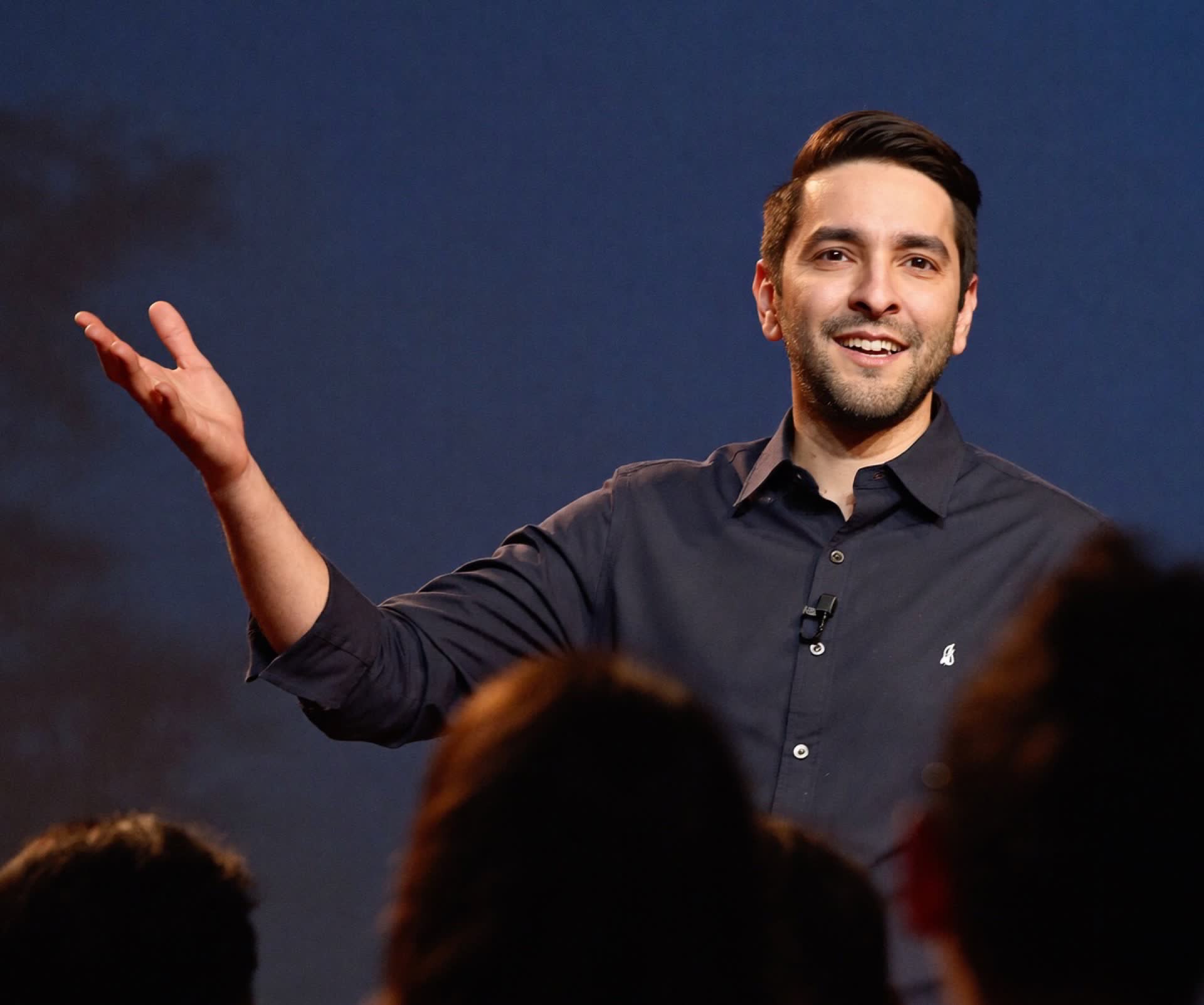
Saad Saeed, founder of Layla.ai and co-founder of Flink, on why the click-driven travel funnel is collapsing, why human agents still sit inside his AI loop, and how he reads the AI bubble after living through the grocery delivery one.
with Saad Saeed
10 min read
From Flink’s grocery boom to a second consumer bet
Muzamil opens by introducing a guest who has already lived through one full cycle of consumer hype. Saad co-founded Flink, the German rapid grocery delivery company that crossed a billion-dollar valuation, scaled past 10,000 employees and became one of Europe’s fastest-growing unicorns before he exited in 2022. What pulled him into travel was a pattern he had seen twice before: an industry that decades of founders had tried and failed to fix, suddenly meeting a technology that could finally hold its complexity.
“I get super passionate about building consumer products and also those products that really change the way people are using some things,” Saad tells Muzamil. Fintech taught him what digitalisation does to an old industry. Grocery taught him what happens when a behavioural shift collides with mobile apps and e-bikes. Travel, he argues, is next, because for the first time “you actually have a brain that can actually take all of that and process it in a good manner.”
Why travel search was engineered to stay broken
Muzamil pushes on the obvious objection: travel has been disrupted before. Expedia, Booking, Google Travel. The promise was that travel agents would die and consumers would win. Instead, planning a trip in 2025 is more anxiety-inducing than it was a decade ago.
Saad’s answer is the sharpest framing in the episode. The mess is not an accident, it is the business model. “The most profitable part of travel is travel search,” he says. A keyword like “hotels in Barcelona” triggers a bidding auction where each link “are going to be bidding upwards of $30 to $40 to get you.” The thirty open tabs are the product. “Every time you bounce around these different links, these companies or basically Google is going to be making money.”
The shift, in his telling, is not the chat interface itself. It is what happens to that funnel when the top of it collapses. “Now since it has changed the game at the top of the funnel, it’s going to have these ripple down effects downstream.” The incumbents are slow because they “haven’t basically had something of this magnitude of a disruption to face in over since they’ve been existing.”
The content layer, and what China already showed
Muzamil notes that when he tested Layla the night before, what stood out was not the chatbot, it was how short-form video sat inside the planning flow. Saad is direct about why: travel is visual, and the link between Instagram inspiration and a real booking has never existed in the West.
He points to China as the existence proof. “In China, social commerce and travel has is is uh rising in like crazy. So you can see somebody live streaming a hotel and you can book it right there and then using their coupon code.” That worked because Chinese monopolies own both the social surface and the booking inventory. The West never had that vertical integration. What changed, Saad argues, is that COVID forced Western travel companies to digitalise their inventory and expose clean APIs so they could diversify distribution. “Now all of the travel data is accessible, and now it’s more or less just a matching problem.”
The 12-suitcases problem, and why humans stay in the loop
Muzamil tells a long story here that becomes the emotional centre of the episode. Moving from Dubai to the US last year with a three-month-old, a five-year-old and twelve bags, his human travel agent’s Turkey stopover collapsed at the airport. No pickup. Wrong vehicle. Three hours outside the terminal in summer heat. His point is not that humans fail. It is that travel fails in places where a single missed detail cascades.
Saad does not flinch. His view is that current AI is not ready to absorb that risk alone, and pretending otherwise is how AI products lose trust permanently. Layla runs a full travel agency, based in Pakistan, inside the product. “Where before they could serve basically four people a day, now they can be serving around 20 people a day. And they can basically constantly keep on improving the models based on their experiences as well.”
He compares it directly to how the frontier labs got built: “With open AI they had an army in Kenya who was training and and all of the models with all of the data… the big buzz word which was alignment, how do you make these models more aligned. And I think this is the same thing for us in travel.”
Reading the AI bubble through the Flink exit
Muzamil takes the conversation to the bubble question, framed carefully. He believes AI is real. His worry is the narrative whiplash, where the average person rejects the entire technology once the hype flips.
Saad’s framework comes from leaving Flink. He uses two questions to evaluate any consumer wave: how large is the behaviour shift, and how sustainable is it? For grocery during COVID the shift was massive but sustainability was always doubtful, because the moment restrictions lifted the willingness to pay the delivery margin was an open question. That is why he exited.
For AI, he reads both numbers as high. “Search, which is literally… the most profitable company in the world in history Google, has now fundamentally shifted in such a short amount of time.” He cites Anthropic doing roughly $10 billion in the second quarter and adds that “money speaks louder than anything… the only reason why they have had such big revenues is because companies have decided that this technology brings meaningful impact.”
His one real bubble risk is not adoption. It is supply. “The only thing that could really blast the bubble of AI is the the compute and oil prices. So if all of the the billions that are being invested in making these new data centers, if they don’t happen, then for sure whole AI industry is going to face a massive um backlash.”
The timeline argument, and why geography decides
Muzamil pushes back on the timeline. His thesis is that the developed world has an existential incentive to automate labour and intelligence, because it is sitting on a sovereign debt crisis it cannot solve at current cost structures. But the shift is generational. “7 to 10 years are a generation. It’s enough time for people to pivot and come to terms with a new reality.” The bubble narrative gets fuelled, in his view, by people compressing that into one to three years.
Saad mostly agrees and adds geographic texture. Europe moves slower because Europeans are more sceptical. China is aggressive but has passed a law saying you cannot fire an employee just because AI can do their job. India has not put up the capital for frontier models. The US is the outlier. “The US is extremely capitalistic and people are also very capitalistic mindset.” His test is blunt: if AI can build a better marketing campaign than your marketing manager, and there is no regulation, will a US company pay $5,000 a month for the human or a $100-$200 subscription?
He offers a small case study from inside Layla. They have an AI running their entire marketing department. It understands the pain point of an incoming user, generates a video tackling it, produces six format variants for TikTok, Instagram, Google and YouTube, runs the A/B tests, and optimises in real time. “Which was quite shocking for us to see this, that it can handle so much context and in real time react so fast.”
Traction, and why the investor list matters
Layla has raised around $7 million. Five million users have come through the platform. Roughly 30 million messages. Trips generated worth about a billion dollars in intent. The current phase, Saad says, is conversion. He references a family last week that booked a $30,000 safari “where the human had to press just done.”
The investor base is where Muzamil presses, because his concern is the classic one: investors pushing founders to scale before the product is sticky. Saad’s answer is that the cap table is deliberately operator-heavy. The founder of Skyscanner. The founder of Booking.com. United Airlines. First Minute Capital, run by Brent Hoberman of lastminute.com. Bu, “the Google in China.” M13 in San Francisco. “These companies have taken decades to come to where they are. So they are definitely very supportive and very much understanding that scaling the wrong thing is the worst thing you can do because there’s no turning back after that.”
That experience shapes product focus, not just funding. “There are people that would really say you need to get my restaurant right but then they are not going to pay you for recommending the perfect restaurant. Which is very different to you need to get my hotel right, where then you’re going to be making hundreds of dollars just on that recommendation.”
Distribution when search is dying
Muzamil asks the question every consumer AI founder is now living with: if users no longer go to Google, how do they find you? Saad gives a number that lands hard. Twenty percent of Layla’s users arrive having already failed on ChatGPT. They paste in the output and ask for a real planner. “Chat at the end of the day does not get all everything live stitched together… Chat actually does no mathematics, it’s just predicting the next letter. So it’s notoriously bad in mathematics, and travel is all about numbers and budgets and distances.”
The rest of the distribution is social. Travel creators post itineraries with deep links back to Layla, where the trip becomes a customisable template. Layla also lives inside ChatGPT as a connector, built fast using a startup called NoodleSeed. “That allows any business to come and be on ChatGPT within basically a matter of days.”
The 10-year vision: the always-on luxury travel agent
Muzamil closes by asking what travel looks like in ten years. Saad rejects the first generation of travel chatbots, which mostly tried to turn the filter-and-sort interface into a conversation and failed. The real prize is recreating the luxury travel agent. One that knows you well enough to anticipate, not just respond.
Muzamil presses on the real-time problem. If his son decides on day two of a Mexico trip that he wants a water park, can Layla re-plan and re-book in the moment? Saad is honest. The technology is mostly there. The blocker is economic. “To have an agent that’s always on and online is still too costly. The tokens that it costs and so on… but the willingness to pay for this is not high because you don’t really care that much about this pain point.”
The future state he describes is one where the agent sees that day two’s beach forecast has turned to rain and suggests an indoor alternative before the user notices. Where a foreigner travelling Pakistan gets continuously guided through which districts to enter and which to avoid, because the agent has read every relevant blog comment and TripAdvisor review. Muzamil’s reaction lands the vision: a solo traveller walking around with an earpiece and a local fixer who never sleeps.
It is also, notably, a vision that does not require the AI to replace the human agent. It requires it to replace the thirty open tabs.
Full transcript
Ladies and gentlemen, welcome back to another episode of Beyond the Bubble. Today we have a very very special guest with us today who has uh been in the startup space for a few years now. He originally uh was in a the fintech space then the fitness space. his most recent and last for was uh in the grocery startup space which was huge early uh right around co uh and he co-founded Flink which was a German grocery delivery startup uh it had over a billion dollar valuation was one of the fastest growing unicorns at the time with over 10,000 employees he took his exit in 2022 and decided to travel a little bit and that's what got him uh to what he's doing today uh he is the co-founder and CEO of Leila.ai AI which is a AI first um sort of travel agent the travel partner that tries to understand you and tries to help you with your travel plans. Um it's a very interesting way with how he describes it because uh you know for me it was an AI first product that was trying to disrupt a particular industry. It makes a lot of sense. I used it last night just to sort of test it out and I could very clearly see um you know where this was going. But the way that he describes it is actually phenomenal. I'll let him uh do that. Sad sed from the city of Rahul Pindi all the way to Germany. Uh you know it's it's amazing to have you here. Thank you so much for taking the time. >> Thanks so much ML. It's a pleasure and honor to join you. Um s I'm going to just start off with trying to get a bit of background um of the last five to seven years of what you've been up to and then if you could explain what is Leila and what what does it do for in the drought space? >> Yeah definitely. So for me I get super passionate about building consumer products and also those products that really change the way people are using some things. And uh now just like you mentioned I've uh been trying to see how different industries could change after seeing how the fintech industry got changed massively with digitalization and the influx of data coming in. Um grocery delivery was another industry that especially with co mobile apps and ebikes was really ripe for disruption even though there were decades of uh of companies that have tried to do grocery online and and failed. I think the first big failure was in 1999. Um, so it's it's really interesting when there's been a lot of people that have been trying to do uh solve a problem and it's just not the right time or the market or the technology. And now is for travel planning and the thing that I'm super excited about which is another thing that a lot of people have tried and went after. Um, but now we finally have a technology that can take all of the possible parameters that are involved in a trip such as is it the right weather? Does the flight come at the right time? Is my hotel going to be close to the activities I be doing? All of those thousands of small micro decisions that you take. Now you actually have a a a brain that can actually take all of that and process it in a a good manner. So, we're excited about where this could go. >> Okay, that makes sense. So, um, my issue with travel is and and and this is someone who very early got onto the travel tech space. So, the Expedias and all of those I remember back in the day the the travel experience was you'd call a travel agent. They would, you know, build a plan for you. That plan would more often than not be generic. Um, and you wouldn't really know the best possibilities you have. And then you had the sort of Expedias of the world and the Google travel come in and my the understanding was all these travel agents are going to get disrupted. Um now you're just going to Google it. You know everything is available. Just go and booking.com this that. Over time, I just feel like it's become more convoluted and more uh uh uh sort of noisy. And more often than not, I'm I I find myself relying on the travel agent again because online it just seems like they're using cookies to charge me more. You know, there's a lot of narratives online about if you keep on appearing on the website, they're going to charge you more, they're going to do this or that. And it's it's it's one of the most nerve-wracking and anxietyinducing experiences for for the average traveler. By the way, I may not be the active traveler, someone who, you know, plans a trip every 2 3 months, but for the average traveler, every time I have to get a trip done, my god, what a nightmare it is. So um why do you think this is a space that a can be solved when there are incumbents worth billions of dollars with huge teams um and arguably with a lot more data available to them than than you do? What makes you feel like this space can be disrupted? Yeah, first of all, I completely share the the experience that you've had and I think a lot of us do and the reason why travel online is so convoluted and the travelers are so commoditized is because of the status quo which is the most profitable part of travel is travel search. And we have been taught for decades now that you put in a keyword hotels in Barcelona, you're going to get 20 links. Each one of those links are going to be bidding upwards of $30 to $40 to get you. And then every time you bounce around these different links, these companies or basically Google is going to be making money. And that's why it's been in their interest to keep this travel experience like this, which is they're going to make you switch through 30 different tabs and try to monetize you in all of these different clicks where you can finally end up on a hotel which is actually providing you the service and giving you what you want. But now the biggest fundamental shift that's happened is we're moving away from these clicks to just regular conversational language. And that now since it has changed the game at the top of the funnel, it's going to have these ripple down effects downstream. And this is now what everybody in the travel industry is uh either panicking about or excited about of what effects this will have and and how will all of the different players basically react because up till now the game has just been booking.com will try to acquire you for as cheap as possible on Google and then try to funnel you forward to a hotel and even if they can make €1 more on you they will basically take that and that no longer happens. where you're just bouncing from different websites from here to there now people expect to get all their result in one interface and that is basically what we are tackling with Leila with which is rather than trying to send you off in 100 different tabs how do we keep you in one interface get to know you extremely deeply and understand why you are traveling rather than just constantly showing you results of book this hotel book this flight or book this car rental understanding the reason behind your traveling and then coming up with something that really fits um which basically a travel agent would do. So we have done a full circle where we started off with travel agents then went on to these keywords and now we're kind of going back to these travel agent kind of conversational aspects. Um and the big players have just been extremely slow to respond to this because they haven't basically had something of this magnitude of a disruption to face in over since they've been existing. So that's what's kind of giving us a little bit more confidence to go ahead and tackle this. >> No, that makes sense. I think so. The way to sort of I would explain it is it's more like an operating system for the travel industry. So it's using the same infrastructure. um it's still going to those websites and trying to get the the pricing out. It's still trying to, you know, you have the digital base that already exists. It's just that you're you're really defragmenting that that that sort of touch point that the consumer touch point where it becomes very intuitive, very easy um and a lot more personalized because previously booking flights was one thing. um if you had to understand where you're going, what you're doing, you had to be looking at a bunch of different blogs. You had to be looking at a bunch of different content. And more often than not, there was actually a even with all of those tabs, there was always this disconnect between what you sort of saw on Instagram, um which is what drove a lot of interest in travel, by the way, and what was available online. And what I I used Leila last night and I think the one thing that I found most interesting was the fact that there was this there was a lot of aspect of content very readily available where you could quickly jump into these beautifully done videos and then sort of let the agent or let Leila um sort of curate an experience around it. Tell me about the content integration that you've done and why that's so important in your opinion. Yeah, for us, I think we are very bullish on having these short vertical videos from actual content creators drive people's decisions cuz travel is so visual that if you haven't been to a place that you can barely pronounce even the how it's spelled. It's really helpful to just see what the experience is going to be. And this is what all these travel companies have really taken away as well. I mean it's always now been filtering and and sorting um and across different price points and so on and this has been changing since quite a bit. So just like you mentioned Instagram and Tik Tok have been the de facto places where people are taking a lot of inspiration and starting off their journey but there was never a a line connecting that to something which is a lot more bookable. >> So our inspiration has also been what we saw in China. Um in China, social commerce and travel has is is uh rising in like crazy. So you can see somebody live streaming a hotel and you can book it right there and then using their coupon code because there you have monopolies where one company just owns the entire um ecosystem from the social media to the travel booking platforms which has been very hard in the west. Um and that thing has become much easier >> because when COVID happened all the travel companies they lost their business and they had to digitalize everything and that's where they spent a lot of their time digitalizing all their inventory making sure that they have good APIs good connections and so on so that they can diversify their distribution and now all of the travel data is accessible >> and now it's more or less just a matching problem of something trying to understand who you are really well and what all the travel inventory out there in the world is and then matching what fits and this is a it's an extremely complex and complicated problem but uh this is now the last challenge really to solve makes sense and in terms of you mentioned it's a complex problem right um where what stage are you in in solving that problem because it's one thing to to have the sort chatbot curate a trip for you, a plan a trip for you. It's another thing to actually convert that planning into actionable bookings and really uh uh uh sort of rock solid um conversion and and I say this because I'll give you an example of last year. I was actually on the process of moving uh from Dubai to the US. I got my travel agent. I I have a 5-year-old and a one-year-old. I I got my travel agent to book a trip um from Dubai to Pakistan. Pakistan to uh the US via Turkey. Because we were coming via Turkey, I said, "Okay, we'll stay for uh 24 hours, take a rest, and then come to the US." Um as we got off Turkey, um we and the travel agent had seemingly booked everything, figured it all out. Again, we had a a I mean, we had a 3-month-old at at the time. It wasn't even a one-year-old. Um, and we had because we were moving, we had like three bags each, so 12 bags, right? >> Um, we got off the airport. There was supposed to be someone who was supposed to pick us up. Wasn't there. Had to call the uh uh agent. They said, "Oh, I don't know. I spoke to someone. I gave them money. let me see if they'll show up. Eventually, they did. They didn't realize they said there's four people, two adults, two kids. They didn't realize there'll be 12 bags. They came in. They said, "Listen, we don't have the car. The car that you want would be probably like a a mini coaster, and if you want, you pay us x amount more, and it'll take 2 hours." We were standing outside that airport for 3 hours before we could get to the get to the hotel, do the rest or whatever, and then move on to the US. It was a nightmare. You can imagine with two small kids and you know middle of the summer in Turkey and this was a human who really knew and understood what I was what I needed but made I don't know if you'd call it sloppy mistakes or was just things who got lost in translation and that really made me realize travel is is such a highrisk game because you're leaving everything you're going to these strange places, one small decision can completely change everything for you, right? Um, and the problem is it gets lost in translation because I don't know what all is required, what all sorts of information is required from me. The agent doesn't know things that I haven't told him and things can go south very very easily, right? So, so you need to have build an engine that really hammers the customer, gets all the information out, makes sure that they have a sense of all the possible risks, ensures that he's covered those risks and communicated all of that with with these notes. So, on the on the platform side, there are a ton of stakeholders. They're all very random. How do you get all of them on the same page? Make sure there are I mean you can't eradicate it but minimize the risk of scams, minimize the risk of failures and then still have happy people. I think one of the reasons why the sort of platform approach worked was because people weren't too deeply involved with the process and so Booking.com would say, "Oh, you know, we advertised this. This was our agreement page of terms and conditions. You agreed to this. If you had a bad experience, we don't really care." Or, you know, you booked through Ryan airline. We were just the messengers. When you go in as this sort of planning partner, the risk just catapults and people's expectations are every screw up is your fault. How do you sort of reconcile with that and ensure that every um every every booking, every management, every planning is a done to the tea with no hallucination per se. Um and any changes are directly built in to the system if that makes sense. >> No, it does. And I think uh your experience is unfortunately not a uh not not a single off one because there are a thousand of possibilities of messing up and I think because it's a logistical problem one issue at one point is just going to mess up the entire issue that is goes forward >> and this is why what our whole approach to this has been is not that AI right now is going to go ahead and solve all of your problems. >> So AI what we are seeing right now which can play a massive role in travel is enabling the travel agents that are already there and the combination of human and AI together actually makes a very strong partner. So what we have actually at Leila um is a whole travel agency um that we've hired um that's also based out of Pakistan um that actually facilitates and helps people complete their bookings. >> So there is where we're seeing the the best output where these travel agents they could before if they could serve basically four people a day now they can be serving around 20 people a day. and they can basically constantly keep on improving the models based on their experiences as well. So it's a little bit right now also at that stage where I think with open AI they had an army in Kenya who was training and and all of the models with all of the data that out there and so on the the big buzz word which was alignment um how do you make these models more aligned and I think this is the same thing for us in travel. How do you make all of these models a lot more aligned to all of these mess ups that can happen and then make sure that those are avoided? Um, and that's basically what we're doing right now together with the human agents. >> No, that makes sense. Um, and so basically any areas where you feel like the the the machine or the AI might um the the the risk factor would be higher, you still have humans in the loop making sure um that that those risks are taken care of if if I understand correctly. >> Exactly. >> Right. Um, previously you were in a grocery tech startup and you know I'm going to I'm just going to say it. grocery was like this sort of a pump and then eventually came crashing down. It's same with Pakistan arguably I mean we had the airlift story which was the one of Pakistan's most funded fastest growing startup and then it crashed crazily and then you had Crazy recently got acquired got a lot of funding and so they've been able to um not just survive but also thrive and be able to uh sustainably manage themselves. Um what what do you think or or what would you say you learned from that experience where I feel like during co the narrative and the VCs overtook the startups and a lot of people were pushed into growing too rapidly creating insane valuations. Um and then when the real world happened the dynamics shifted and the actual real um outcomes were very different and therefore obviously the valuations then had to uh uh uh had to correct and then that led to a lot of these businesses shutting down. Um my question to you would be what was your exit like from Flink and with AI and again my thesis as most people would understand in this show as well is that I feel like there is a narrative problem with AI now increasingly and there are increasing calls for AI is a bubble. Now the problem with that is for the average Joe whenever the flip happens they tend to completely reject. They're like, "Oh, you know, we always knew this was never going to work. It was too good to be true." The truth is somewhere in the middle where it is going to work. It just has to be done a little more sustainably. Um, and with AI particularly, I 100% know this technology is so phenomenal that it is going to meaningfully change the way that we interact with every touch point, whether it's travel, whether it's finance, whether it's anything. Um, and so what was that experience with Flink like in terms of the super high growth and then the correction? What did you learn from that and how are you implementing that in this new sort of buzzy AI space that you're in? Yeah, I think that's a really valid question because the reason why I also decided to exit from Flink was that I couldn't see it sustainably grow >> the the way that it was growing because co was playing a massive factor towards it even though there were and always the question is for consumer how large is the consumer behavior shift and how long will it actually stay? >> And for groceries, it was okay, the shift was massive >> because you weren't really allowed to go into the supermarkets anymore, but the question of how much would it stay was always a question um that when all of the restrictions are lifted off and so on, will people still be willing to pay the extra margin um to stay there or not? And I think this for me was always a big question and I think airlift that you mentioned I mean I think that was just massive gross negligence um of of money management more than um startups because I think we can be very proud of Crave Mark of what they've done for the name of Pakistan as well saved it after all of the fiasco from airlift and um I think has really also encouraged foreign investment investors to realize that startups in Pakistan can have an exit. So um I think they've kind of shown that you can kind of sustainably take that forward. But for AI um I think within this this is like a is a very big question because especially if you go to the US or in the San Francisco you have this echo chamber of people that will say it's going to it's the apocalypse are coming all the jobs are going to be taken away and so on. Um I think personally for me in in the two questions of how big is the consumer behavior shift >> and how sustainable will it be? Will it just switch back to what it was before or not? In both of these two factors that I always really look at, I think for AI, they're both extremely high and positive. So the behavior shift is massive. Um search which is literally the way with which um I mean the most profitable company in the world in history Google has now fundamentally shifted in such a short amount of time that this will have a ripple effect going forward massively and not just search but intelligence. I think the biggest question was can you actually start replacing intelligence because the market cap on intelligence is in trillions because then you can replace every knowledge worker that's out there and the that is a shift that is way too big and I think this was a question that was still out in the open which it was you know there were a lot of open will it happen or not but the revenues of Anthropic and Open AAI um in this quarter and basically in the second quarter. So Anthropic is about to do 10 roughly 10 billion in the second quarter which are numbers which are completely unheard of >> for a startup to come to this level of revenue so quickly has never happened not even on a on 10x at this scale. So and and especially money speaks louder than anything where now the only reason why they have had such big revenues is because companies have decided that this technology brings meaningful impact for me that I can actually start um producing goods and qualities which means that this will also stay. It's not something which before people were saying they're testing a lot of companies were testing with this and so on. So now with these amount of revenues, it really shows that companies are adopting this at massive scale which does show that there will be a big change um that will come and I think this is definitely especially for the developing world a massive opportunity because for the first time you can learn about all of the concepts of Einstein in Baloi in Cindi you can have everything so contextualized Um and we can really do this leapfrog of learning and knowledge and move on directly towards this where now your phone has such an interesting partner that you can kind of talk with. Um but I think the change is um it it will be quite drastic. The the the internet was already quite a bit of a a drastic change which had a bubble and then it bursted and it went down and then it took some time again. But the only thing that could really blast the bubble of AI is the the compute and oil prices. So if all of the the billions that are being invested in making these new data centers, if they don't happen, then for sure whole AI industry is going to face a massive um backlash because we just don't have the compute to take in all of this. But if that doesn't happen, people want to use AI and the adoption is only growing and it's not going back. Nobody says now I hate chat GBT. I'm going back to Google or I started to use my cloud agent for this and now I'm not. So I think in in this regard it would not be like one of the escooter bubbles or the delivery bubbles that that that happened. um especially when robotics comes in and labor starts to get changed. I think it this will we are looking at a world which will be very different um in in in the coming years. >> That makes sense. I would I would push you back on the timeline though, right? So, um I feel like what a lot of these conversations tend to miss is that we're giving a vision of the future which I personally think 100% exists and it's if you really look at the macros of it and you look at the developed world, it's an existential crisis for them to to somehow you know the entire western uh developed world is right now going through a sovereign debt crisis and therefore they can't afford to sustain the status quo. which exists because the cost of labor and the cost of intelligence is is too high. Um they have the cost of energy is the same for them as the rest of the world argue arguably sometimes even less. So um the cost of raw material is the same commodities are dollar priced. They're the same all over the world. It is the labor and the intelligence that forces them to import from you know the factories of the world from China so on and so forth. And then the same with intelligence where I would say I would argue you know India is the largest exporter of intelligence and China is the largest exporter of labor or labor intensive goods. Um and so it makes sense for for for the developed world to get into robotics which we're seeing them do right now. um and automate their factories so that they can bring those product manufacturing back to their countries and then to automate intelligence so that they they have they can stop the flow of that capital down to other countries or stop importing sort of knowledge workers or intelligence from other countries. But the problem is when when we say you know labor is going to be automated and intelligence is going to be automated at scale and then there is a whole fear ele uh element of jobs are going to go away everything's going to get destroyed I would argue that timeline is maybe 7 to 10 years of really uh uh uh actionably getting implemented across 7 to 10 years are are a generation it's enough time for people to >> uh to pivot and and and come to terms with a new reality >> I feel like most regular folks are assuming that timeline to be 1 to 2 to 3 years and I feel like that's what ends up fueling the bubble narrative where you mentioned yourself the there are certain very clear bottlenecks in terms of energy in terms of even the the I I would argue I would break down AI into three parts energy as the core then there's machines that uh the hardware that that that powers the the the models and then the frontier models frontier models are growing 100% the capital is available, the companies are there and there's a new model every week and you know they keep on fighting amongst themselves but there is a bottleneck in terms of the the chip manufacturing the supply chains the rare earth minerals and so on and there is definitely a bottleneck in the energy um where we just can't deploy let's say nuclear or other power as fast as we'd hoped um and so the two things in terms of expectations are what are going to I feel like and I think grocery is probably not the right example but is internet did create the most valuable companies in in in the history of the world. Internet 100% created um wealth beyond our imagination. It changed the way that we did business. It created entirely new industries. But it was overhyped in 99. It came out crashing in 2001. A ton of people lost their jobs and a ton of people got disgruntled and said, "Oh, you know, this is all fake when it wasn't." And the real value creation came in much more slow, sustainably, and and in many ways very in a in a very boring way. If I were to I'm sorry with a very large context, but if I were to now push back to you with the timeline of it and how do you factor that into the way that you're doing business? Because my understanding is you guys have raised $3 million. Um, when the narrative is everything is changing a year from now, the investors might be pushing you to just grow, grow, grow, burn the cash, grow, get the customers in, get that valuation, get jump to the next round versus maybe you pushing back and saying, "Listen, I need to have the fundamental architecture really sorted out so that when I grow, I make sure that I have a sticky customer rather than a bunch of customers coming in, getting a poor experience, and moving out, and then showing the numbers, but not really creating that impact if that makes sense. >> Definitely. I think it's a very valid point of uh are people getting a bit too greedy and and too um too excited about it because there's definitely a lot of fear-mongering that goes on and I think you will always see anthropic coming up and saying all jobs are going to get lost right before they're doing their fund raise or then open AAI comes and Sam Alman makes a big announcement saying the government needs to control AI before AI destroys the world and then you see oh wow they were just doing another fundraising and it's the most exciting thing that you can do for a fund raise which is like spread fear so there is definitely an element to that where all these people is the same with Elon Musk um as well trying to tell us that the world is going to collapse and that's why he has to go to Mars and that's why he has to basically get hundreds of millions in um tax avoidance for SpaceX X. Um there is I think that part no doubt that people will overhype it um if they can but the the other part of where that timeline is and whether that timeline is one year or or or 7 years um just like you mentioned for the developing countries it is much longer >> um because we don't the pressures on us to innovate are not that high because also we are self-producing in terms of food and and so on. So we don't have much to lose where these countries have massive economies that just like you mentioned are not sustainable and so on. So developing countries will take much longer and and AI is not going to take your job for for the next year for the the developed countries the pace at which companies are are changing and adapting. I think this also can be broken down in buckets where Europe is not moving as fast. Um I think because the Europeans are also a little bit more more skeptical rather than positive and and so on. >> Um but America and China these are then the two countries that are going extremely aggressively after it much more than India as well. Uh because the Indians just have not invested the capital that is required for the frontier models whereas the Chinese have. Um and China now came out with even a law which says that you cannot fire an employee just because the AI can do its job. So China also will basically stop how fast this change will come. Whereas the US is a very different ball game. The US is extremely capitalistic >> and people are also very capitalistic mindset and I think there is a question of if the AI can build a better marketing campaign than your marketing manager >> will they still keep you for the better of their heart or not and I think that on that and if there's no government regulation and no nothing and if there we agree that especially in the US businesses will choose a $100, $200 subscription rather than a $5,000 per month um employee, then it's only the question of can this AI create a better marketing campaign than a marketing person. Um, and I think if you start to just say if that is the only thing that's going to start basically determining whether this massive shift in jobs and all of those different things is going to happen or not um that is a scary uh pro prospect just because of the rate at which it's improving. I mean we now have um implemented that the AI actually runs the entire department. So people come in, they chat with Leila, they book basically a a safari for South Africa for their kids. The AI understands exactly what was the problem pain point that they needed a travel agent. This basically family based in Seattle. It generates an a video which is exactly tackling that pain point and also basically makes six different formats of Tik Tok, Instagram, Google, YouTube, deploys it different versions of it, runs the AB tests as well and then basically has access to all of our tools and then keeps on monitoring which AB tests are performing and then keeps on optimizing that, brings new users and then the whole loop cycle goes in which was quite shocking. for us to see this um basically that it can handle so much context and in real time react so fast. So I think this is just the question of if you don't if you need now two people to do 10 people's job would you still hire the extra 10 or not um and I think this is where we we do need to come up with new concepts of universal basic income or figuring out how we would be tackling this. Um but the change the the the change I think there it would be it would be quite real especially in these very capitalistic countries. >> That makes sense. Um tell me about your traction where where do the numbers stand right now and are you guys >> uh so so is what stage of the startup are you in right now? >> Yeah. So we have basically raised around 7 million um and uh we have gone really top down. So first we really wanted to see how can we get as many consumers coming onto the platform. So we've gotten around 5 million users coming in that have done around 30 million messages on the platform. Based on that they've generated basically trips on the platform which are worth around a billion dollars. And now we're at that next stage, which is how do we start converting? >> And we basically just had last week uh this family that basically booked a $30,000 safari. Um which was basically mostly all done by the AI where the human had to press just done. >> Um so now we're really at this stage of how do you start converting all of these trips and content that's being generated on the on the platform. And this is where the the next quarter's focus is going to be. >> Interesting. Um, run me through the the the um the investment because I I I researched online. I I heard Paris Hilton invested in you guys. >> What was the what did the raising look like in terms of the investors that you have? You went to the US for this. >> Um, what are their expectations? Again, I'll I'll ask because I fear that the investors tend to push people more than the founders really understand where the technology is and the pace that they're operating on. Um, and so I'd love to know more. Previously when we used to have conversations, it was always like we raised X amount of money, this is what we're doing. I'd love to know about the investment side of things. Um, what's the relationship like? How are there institutional investors? what's the what's this what are you hearing from their side in terms of how they'd like for you to to move forward? >> Yeah. So, I think this time around um I had been a little bit more fortunate to choose to to work because as you can imagine like you definitely have investors that keep on pushing and they don't really care about the long term but as long as they can get a return on the next round and can push a company into scaling something that doesn't work. And this time we basically have um the founder of Skyscanner who's invested, the founder of Booking.com. These companies have taken decades to come to where they are. So they are definitely very supportive and very much understanding that scaling the wrong thing is the worst thing you can do because there's no turning back after that. >> And uh we basically have quite a global set of investors because travel is so global. We have United Airlines um the largest airline in the world who's invested. We've gotten um First Minute Capital which is uh basically run by Brent Hobberman who's the founder of lastminute.com and uh we also have Chinese investors. So we have basically bu the Google in China and then um also M13 which is based out of San Francisco. So basically quite a global set. >> Fascinating. And I think one of the best things here in my opinion is the fact that you have very focused investors who are part of that particular industry. They're not just people with money and wallets. There are people who understand deeply the space and they also understand how it can potentially evolve. Um and so my understanding is it not just people with money. I mean uh let's say Booking.com or Skyscanner. These are uh these are people with incredible amounts of institutional experience as well as data and so on and so forth. And so is that relationship just exclusively just you know hey we gave you money um build what you can and see where it goes or is there a more deeper relationship there where you're learning from their institutional uh sort of knowledge base and and and that experience that they bring to the table. >> Yes. So these are founders of the business. So they basically gave their own personal um money in there and they're very heavily involved and I think they really helped in shaping the business because in travel >> the problem is there's too much that you can do because everyone has some need but there's very different varying amounts of how much money you can make out of this and also why travel has the highest rate of failure for startups. Um so we basically they've helped a lot in basically focusing us on which problem to solve and which problem not to solve. I think there are people that would really say you need to get my restaurant right but then they are not going to pay you for recommending the perfect restaurant at all >> which is very different to you need to get my hotel right where then you're going to be making hundreds of dollars just on that recommendation. >> Yeah. Um it's helpful that that's been quite helpful learning. >> That makes sense. You said uh travel is one of the highest rate of failures. Why do you think that's so? >> Because it is uh deceptively complex. It looks extremely easy because we have all traveled and we all felt a place which could have improved and so on. Um, and that's why a lot of people start into this because they love traveling and they see that something is broken and then when you get into it, you realize that this is run by a few monopolies out there. So, Booking Holdings owns almost every other company out there from Agoda to Hotels.com to basically Priceel Line and then you b just have three players like Expedia, Booking.com, Airbnb which are running pretty much the whole show and you realize that if you have to go and compete with them, you need to have a radically different product. Um, otherwise they can outpric you, they can outmarket you any time of the day. And there are very few things in travel people are willing to pay money for. And it's just like you mentioned, it's a very considered purchase. So they're not going to book with you very easily as well. And this is why a lot of it's it's basically been called the graveyard for startups. Um because there's just been so many um travel companies that have come and tried to solve a certain stage and funnel of it >> and and not succeeded. >> No, that makes sense. Um you mentioned that you you got already now millions of users um you have a lot of these sort of journeys that you've created. How are people really finding you? And because again based on the experience that I had and I'm not sure if there is an app that goes with it, but the online web experience that I uh used yesterday was the same old obviously the expected there's a chatbot just done in a much more intuitive and rich way with a lot of more media available. But there's a chatbot um that's managing that interaction at at this point in time. And so that experience technically is very similar to let's say chbpt or um claude or so on and so forth. And you know chbd famously talks about we have 800 million users using chbpt every month. I'm curious because technically speaking the the first part of the equation where hey chat you know plan a trip for me in XYZ it's the same thing and for the users they don't really understand that you're going to be able to actually eventually convert and get that that that uh uh that booking done as well for chat they can technically absorb the same thing right um so how do you a differentiate yourself and B, how do you then enable users to find you considering they're increasingly not going to Google and because historically it was all about search and SEO and so on. Um, you mentioned a little bit about my understanding is media buying ads on on on different socials that reroutes the customer, but then how do you sort of work around these existing frontier model chat bots that are taking the bulk of the first interaction that the user has with AI right now? >> Yeah. So actually 20% of our users come with a output that they got from chat GPT and then they paste it on Leila. So that is a actually pretty encouraging sign for us because they come to chat they try to make their trip and they realize that Chachi at the end of the day does not get all everything live stitched together >> which exactly what you just mentioned the stitching part is the complicated complex part and chat actually does no mathematics it's it's just predicting the next letter so it's it's notoriously bad in mathematics and travel is all about numbers and budgets and distances So 20% of the people actually get disappointed in charge and then say is there an actual AI trip planner and that's where we rank quite high and then the rest of them is mostly through social. So we work with travel creators who post on social and then are able to say that if you would like to do a trip that is similar to this then you can find it on Leila with a specific link and then people can go take their trip as a template and start customizing it towards themselves. Um and then that is the rest of the traffic that's coming in. >> No, makes sense. Um do you do you expect Chad GPT and Claude because I was just I just Googled AI trip planning as you mentioned um and interestingly you know you you're ranking uh uh number one so there was sponsored post so Chad GPT and Claude and everybody had a sponsored come plan your trip with us and I hid the sponsored posts and then you were actually organically ranking number one. Okay. >> Um, but I'm curious how do you for the for the because the bulk of the customer is moving away from this generic search to um to these sort of chat bots. How do they even discover you like are you there on uh uh on chat GPT? you have like there's this new concept of GEO also popping up where you know not just with the search engine optimization you also optimize yourself on on on on let's say generative AI uh chat bots have you worked around that as well >> yeah so we're also right now on chat GPT and this is where we work basically with a startup called noodle seed that allows any business to come and be on chat GPT within basically a matter of days. Um, and that allows people to already have the first initial experience of Leila, which is a lot more richer content and so on inside chat GPD and then that can bring us traffic directly onto the platform. Interesting. Um, what do you think the future of AI is in travel? I mean, what's the vision here? I get the I get what you're doing right now. I understand technology is rapidly evolving. You might have a there might be things that you might imagine but are not possible right now just because of the the scale and the infrastructure. What's the vision here? What does it look like 10 years from now? So the the biggest change which I think the fa the first phase of these travel chatbots have come and and it's not really succeeded none of the the big layers have made a big difference and so on which has just been to convert the existing way that which we do stuff like the search box and filter and try to make it into a chatbot. M >> and the future of that is really where you have a personal travel agent that knows you so well that can basically be acting as that assistant that you know you or if you would be paying a luxury travel agent for >> and that luxury travel agent doesn't take decisions on its own but they're all it's is collaborative because travel is so personalized. So they always know the right stuff to show you to excite you about it and then to make you and surprise you and do stuff together. So it is how can you actually recreate that luxury travel agent would takes care of those small little things that your little kids can also enjoy and all of this. And I think actually solving that case where you end up with 12 suitcases but also that travel agent actually does realize and know that and can inform that in front in the future. So I think solving that case is so much more complex than it comes out to be and the current LLMs are also not equipped to handle that complexity but that is where we want to be going towards where the next travel planning is so effortless that you can actually really just focus on the planning piece uh the traveling part and all of the planning part has been delegated towards another agent. M do you think it's uh the the the the biggest or I would argue do you think agents of agents sort of a thing is what's missing right now where every restaurant has agents and every uh uh you know car company has agents. So once you have that underlying agentic infrastructure it'll become increasingly easy for these agents to then quickly talk to each other. What I'm trying to understand is it's one thing for me to ask Leila to plan a trip for me 6 months from now. Get all the bookings done. Great. But now I'm I'm there. I'm in Mexico. I'm um you know it's my second day of travel and then my son decides he wants to do something XYZ. Then I go back to Leila and I want Leila to do something immediately. I feel like I'm not sure if it'll be as runtime as as as um I'd like right now, right? because uh the human in the loop right now uh even he would be available 12 hours depending on which country I'm flying in from and I might call them I I'll be like listen I need my son wants to go to a water park I don't know if there's one can you figure it out can you book one um right now can Leila do that can Leila customize and and and tweak your trip on the go and if not do you think that is a lack of uh infrastructure where you know it the the the the the realtime changes that are required, the bookings that are required so on and so forth that infrastructure structure does not just exist right now. >> I think the the willingness the cost and revenue piece is the only misalignment right now >> because to have an agent that's always on and online is still too costly. um the tokens that it costs and so on and even though the technology is definitely there. So, but the future this is also exponentially getting cheaper. The the token costs are going much lower and so on but the future really is where the agent can anticipate your need before you even think that it is coming up. And that's all about just knowing you better, knowing everything about the world, knowing that the weather changed. Or >> as soon as they know, okay, on day two you were supposed to go to the beach, but now the weather predictions have turned from sunny to rainy. It should already alert that and say, let's do an indoor event instead. And these are all of the things that were I think we already have the data infrastructure part of it as well. It's just that it is too costly to keep on having this alive >> while the user does not the willingness to pay for this is not high because you don't really care that much about this pain point. >> Um so I think we we'll slowly get there um as well. But for now if if if an agent can even bring together and stitch together an entire complex trip um which is also not that well documented. So, for example, as a foreigner, if you want to go to and travel all of Pakistan, it's really not that easy. Um, not everything is completely laid out. There are certain areas which you shouldn't be going to. There are some areas that you should be going to and so on. And you have to do a lot of research yourself cuz when you land at the airport, there's not a lot of directions that also go and help you out with over there. So I think this level of intelligence that can actually be scraping every possible blog comments for uh sorry the trip advisor com reviews and so on and then always guiding you in the best possible way um is is something that I think the future would definitely be. if that makes sense. And that's a that's an exciting vision of the future because I feel like you that you could really be a solo traveler with a like headphones in your uh in your ears and with a with a always on agent telling you about oh you know why don't you go here, don't go here. There's a security like you mentioned the security thing is such a real thing because a lot of foreigners would never really understand the local nuances of culture of um secure districts and non-secure districts and that can actually on a real time guide you on what you should be experiencing because they know you so well. That makes a lot of sense. Um I love the vision here sad. I'm going to wrap this up. I just want to get a sense of uh what your most favorite startups and uh and builders are right now in the space. And I don't want the more famous ones. I want the more unheard of uh unheard ones um particularly in the travel and then the wide wider AI space right now. >> Yeah. So I think um just like I mentioned we're definitely working with one which is noodle seed which actually enabled us to come to on chat GPT anthropic extremely fast and I think GEO is right now on everyone's mind and being inside of these platforms is has been extremely interesting for us of how quickly that whole um experience really was. I think the second thing that I um personally really like which uh would not be that um that famous would be something called neural flame frames. It it actually allows you to create music um videos for your own music. And I think that is something that is uh as a musician it's it's super cool if you if you like music but you don't have the skills to create videos for your music. >> Now you can finally have have both and then have that whole >> um experience. And then I think the last thing is um maybe just the way certain companies have already used AI such as um the Whoop band um for fitness. >> Their AI assistant is so good. Um and it's also just because it knows so much about your heart rate, what your um how your sleep has been and so on. Um I mean it's measuring around like 10,000 data points about your body and then the level of insights and the the recommendation that it gives to you is just so on point and personalized and I think that's a phenomenal way that they have kind of used that for the betterment of of your health. So I think that's another one that I personally like quite a bit. >> That makes sense. Uh Sad I'm going to wrap this up. Thank you so much for taking the time out. I'm excited to see what you guys build there and uh you know the the the the journey towards eventually creating that sort of completely autonomous uh intelligence in the travel space. Wish you all the very best. I know it's a tough uh industry but I think you have the with your experience. I'm excited to see what comes out. >> Thanks so much Mim. It was a pleasure today. >> And for all of you guys let me know in the comment section below. Have you used Leila.ai? Um, even if you haven't, uh, we're going to put a link down in the description. Check it out. Uh, give us your feedback on, uh, what works, what doesn't work. Again, we're in the very early innings of this AI space. And so, even if something feels broken right now, it can very, very rapidly be fixed. I think one of the greatest things that has happened um in this AI uh uh you know this new AI race that has that's happening compared to cloud and apps and internet before it is the founders are very much out there and they're uh very approachable in many ways. Um and so the the the distance between what the product is and what the product can be is really dependent on how much the users can sort of interact and share that feedback with the founders as well. And so I'd love to hear your comments in in in the comment section below of what you love, what you don't like, um, and what you think can be improved. Uh, but nonetheless, this was Syasan Zedi. You are watching Beyond the Bubble. Thank you so much for watching, and I'll see you in the next one.
More from Beyond the Bubble Podcast
Jul 17, 2026
Enterprise AI is failing on garbage data, not on models
with Yousuf Khan
Yousuf Khan, co-founder and CEO of Clario, argues that enterprise AI projects collapse not because of models or workflows, but because companies feed them years of unstructured junk.
Listen →
Jul 10, 2026
Claude just shipped organic connector discovery first
with Elliot Garreffa
Ghost Team co-founder Elliot Garreffa on the new discovery layer forming inside Claude, ChatGPT and Gemini, and why MCP apps are becoming infrastructure for agents.
Listen →
55:04 Ep 5 · Jul 3, 2026
Experiential commerce is what comes after quick commerce
with Varun Chopra
Varun Chopra, co-founder of Epic, on why AI-flooded storefronts push trust back into the living room, and how a 60-minute home demo took Epic to $4M ARR.
Listen →Never miss what's next.
The dispatch - new writing and conversations, straight to your inbox.
First name, last name, email - in your inbox weekly. No spam.