Beyond the Bubble Podcast
Enterprise AI is failing on garbage data, not on models
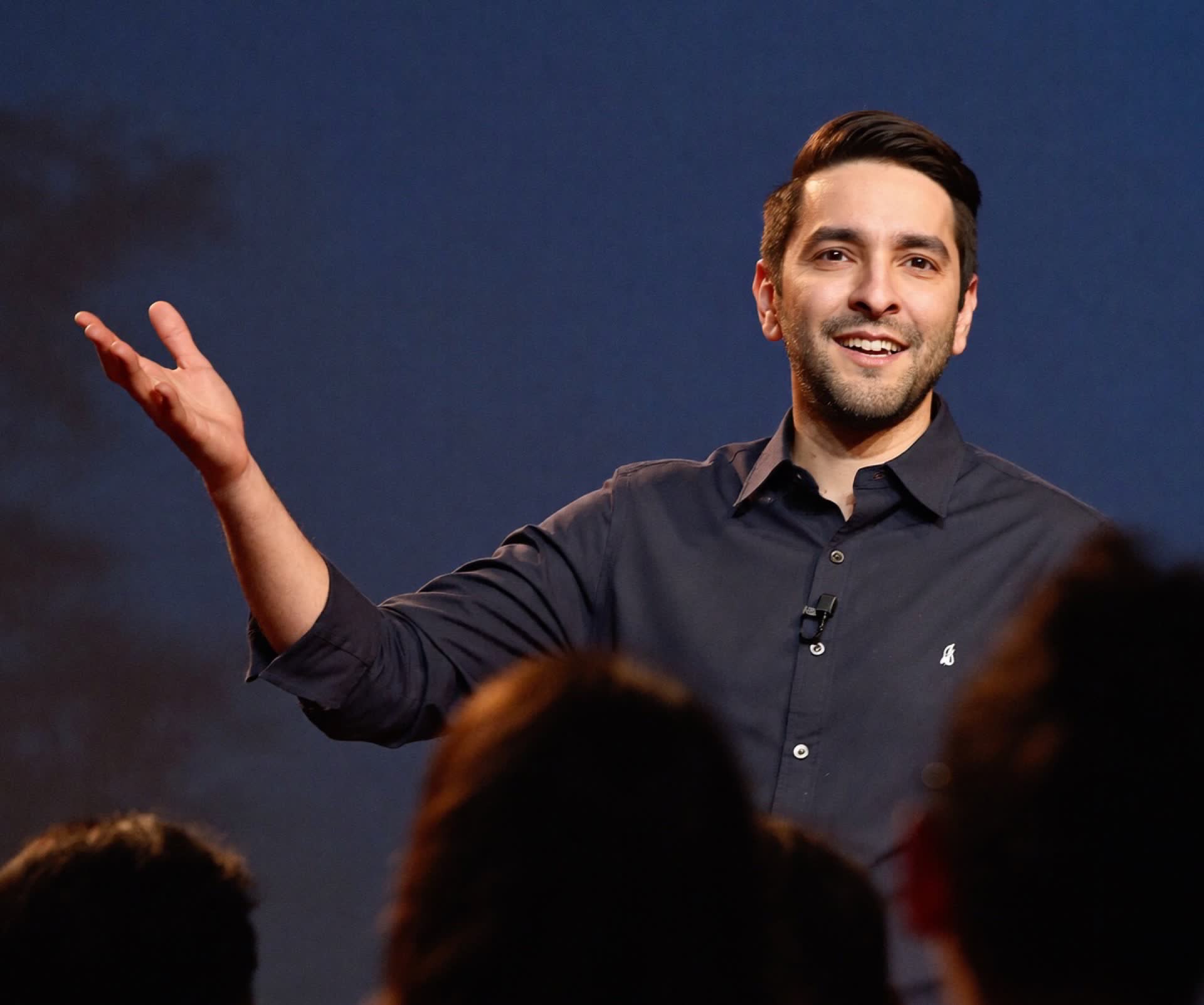
Yousuf Khan, co-founder and CEO of Clario, argues that enterprise AI projects collapse not because of models or workflows, but because companies feed them years of unstructured junk.
The accidental CIO who wants to clean the enterprise basement
Muzamil opens by framing the guest inside Beyond the Bubble’s editorial line: the interesting operators in AI right now aren’t the ones promising to destroy Hollywood, they’re the ones doing “the unsexy more productive, more powerful work” that survives once the narrative flips. Yousuf Khan fits that description. He is a five-time CIO turned venture investor turned founder, currently building Clario.
Before he gets to the pitch, Yousuf sketches the path in. He describes himself as “just a kid from Karachi who’s trying to make it in the world,” raised across Egypt, Kenya and the UK before landing in the Bay Area. His first tech job came in 1999, moving boxes into the office of a freshly funded internet startup. “What is this place? Why are people so happy and what’s going on here?” he remembers thinking. That summer turned into an IT project manager contract, and from there a career at Qualys, Pure Storage, Moveworks and Automation Anywhere, followed by five years as a general partner at Ridge Ventures.
His self-description sticks: “I’m the accidental CIO.”
Yes it’s a bubble, but not the dot-com bubble
Muzamil pushes on the parallel between 1999 and now. Yousuf’s answer is direct: “Are we in a bubble? 100% we’re in a bubble.” He then draws the distinctions. This bubble has lasted longer. The industry is bigger, faster, richer. And he hopes any correction is left to market forces rather than the kind of government intervention that defined 2008, which he explicitly does not want repeated.
On labour, Yousuf refuses both extremes. It isn’t jobs disappearing so much as jobs being reshaped: “initially will start with 5 or 10% of your job then it will go to 20%. And then it will get to 30 or 40%.” Operational analytical work is most exposed. But he points to legal tech, an industry that “hasn’t really been a thing for up until maybe five plus years ago” and is now producing multi-billion dollar companies inside a centuries-old discipline. New industries and re-levelled old ones absorb much of the shock. “I’m just a believer in moderation in everything.”
What a former GP thinks about venture strategy now
Muzamil turns to Yousuf’s five years at Ridge Ventures and asks what a conservative thesis looks like heading into a possible correction.
Yousuf’s answer is unromantic. Focus. A narrow domain thesis resonates with founders and with LPs. “There’s a lot of fundamental luck in this business,” he admits, but the compounding strategy is depth. He adds a line founders don’t like to hear: “Most people forget you have to earn the right to invest in a company.”
He also draws a harder distinction: “Just because it’s a good product doesn’t mean it’s a good venture backable idea.” His example is AI consulting services - fine business, wrong shape for venture, though he notes the industry is now morphing into “AI-powered tech-enabled services,” which changes the math. Conservative, in his framing, doesn’t mean cautious. It means focused.
The genesis of Clario: fifteen years of unanswered questions
Muzamil asks what Clario actually does. Yousuf doesn’t reach for a deck. He reaches for a grievance.
“The volume of garbage data that’s being created across enterprises is absolutely ridiculous. I find it offensive.”
He describes fifteen years of trying to answer basic questions as a CIO. Can I find the files over ten years old that nobody has touched? Can I show the files duplicated fifteen times over from seven years ago? “Can’t answer that question.” He mocks the file names anyone in an office recognises: “version_26_muzamil_final_do_not_change_final_final.”
He confesses he wanted to name the company garbage.ai. Investors passed. He tried katra.ai. The desi VCs also passed. They settled on Clario, short for clarity of infrastructure and operations.
The framing is that unstructured data is 80% of a company’s file system, and post-ChatGPT the generation rate has exploded. Where creating a document used to be a week-long chore people avoided, now anyone can generate a twenty-page document in five minutes. Multiply that across every Google Drive, SharePoint, Confluence, Box and OneDrive in a company, and the base for any internal AI project becomes toxic.
Why garbage in is now a token-cost problem
The Clario pitch has a specific technical shape. If you build a customer service bot on an unclean knowledge base, a customer asks how to set up email on their phone and the bot returns a 2008 article about BlackBerry configuration. “You’ve spent token costs. You’ve got people who don’t trust it, so they won’t use it again.”
Yousuf extends the example to new-hire onboarding bots that surface 2020 COVID vaccination requirements, and to legal automation that pulls the wrong version of an NDA out of twenty near-duplicates. The failure mode isn’t the model. It’s the substrate.
The economic argument follows. Retrieval on a noisy corpus is more expensive than retrieval on a clean one. Processing 100,000 documents costs materially more than processing the 30,000 that actually matter. Clario, he says, is “the Marie Kondo of enterprise data,” integrating with OneDrive, Google Drive, Confluence, Box and SharePoint, scanning metadata, batching recommendations, and letting CIOs actually clean.
Muzamil pushes on whether Clario eventually moves upstream into organising unstructured data so it’s more useful, not just less bloated. Yousuf refuses to be pulled forward. “You need to clean the system first. It’s as simple and straightforward as that.” His team has already found terabytes of Microsoft Access database files being stored, backed up and archived on OneDrive. Access is unsupported. Those files should never surface in search, and should certainly not be paid for in storage.
Storage is not cheap when you count everything around it
One of the sharpest moments is Yousuf’s aside on infrastructure economics. He notes NAND storage prices quadrupling, on-prem CIOs in healthcare and financial services now having to reserve rack space for Nvidia GPUs where they used to just add more storage, and data centres not being built fast enough, to the point where he has heard proposals to build them in space.
“Someone needs to pay for that cost,” he says. His summary: “Storage may be cheap from a commodity standpoint. It’s not cheap to manage and secure and comply and archive and process.”
The seed round context sits underneath this. Clario raised a $6 million round led by Preface Ventures, with participation from Bridge Ventures, Moment, High Sage, Rain Capital, Foster VC and Transform VC. The pitch to CIOs is that they can walk into their CMO, chief legal officer and CRO and defend more automation because the underlying data is now in a trustworthy state.
The Silicon Valley bubble inside the AI bubble
Muzamil raises something he noticed touring the US last year. San Francisco felt “a different dimension completely disconnected from reality.” Corporate America in Atlanta, New York, Dallas felt like it was still living its best life, ignoring the whole thing.
Yousuf partly agrees and partly corrects him. “This itself is a bubble,” he says of San Francisco. He has spent time in Minneapolis, Chicago, Boston, Charlotte, Dallas. He sees transformation across the country, but concedes the capital structure and tempo are concentrated in the Bay Area, with San Francisco running faster and much of the rest running slower than they usually do. Muzamil’s reading of the tension is sharper: in corporate America, where meetings dominate and real productive output is a few hours a day, “that’s what AI hits immediately,” which is why the defensive anti-AI sentiment sits where it sits.
On whether enterprise ROI looks different for startups versus slower Fortune 500s, Yousuf is genuinely humble. “There’s no patterns in this business anymore.” Trillion-dollar companies are announcing layoffs. Some companies get acquired inside eighteen months. Others sit at hundreds of millions in revenue and stall. He won’t pretend to see the shape yet.
OpenAI, Anthropic and the founder’s real question
Muzamil closes with the question every AI founder is asked: if OpenAI or Anthropic can build what you’re building, with infinite tokens and infinite engineers, why bother?
Yousuf’s answer has two layers. The first is regulatory. He believes data will increasingly be treated as a sovereign asset. Large companies “can pay a billion dollar fine without thinking twice. It’s a rounding error.” Mid-sized companies cannot. Sovereign clouds and neoclouds will keep proliferating.
The second is temperamental. “Welcome to the day in the life of a startup founder. Some days the highs are high. You think you can change the world. The lows are like, what was I thinking?” His advice: pick a big market, use frustration as a catalyst, and remember the frontier labs’ focus is elsewhere. He points to the AWS pattern - many products built on AWS competed with AWS-native products, and plenty survived.
His closing frame is characteristic of the whole conversation: “Build a great customer experience and they’ll stay with you.” No moats theatre. Just execution.
Where the next twelve months go
Muzamil asks for a twelve-month forecast and for three under-covered startups worth watching. Yousuf declines the second question out of respect for his founder community. On the first, he is more direct. He expects potentially three trillion-dollar IPOs this year. He expects M&A activity to intensify. He thinks the “SaaS apocalypse” narrative was overhyped and a distraction.
His final observation is the one that lands hardest, and it sits cleanly on Beyond the Bubble’s editorial line: “There’s lots of companies that still run on IBM mainframes. There’s lots of insurance companies that still have lots of fax machines.” Change takes time. The bubble may pop. The models may consolidate. But the base problem Yousuf is solving, the accumulated garbage sitting inside every enterprise file system, is exactly the kind of unglamorous work that survives whichever way the narrative turns.


Never miss a conversation.
New episodes and the thinking behind them, straight to your inbox. No hype, no spam, no pitch.