Dil ki Baat
Pakistan's old system is collapsing, and that is the opening
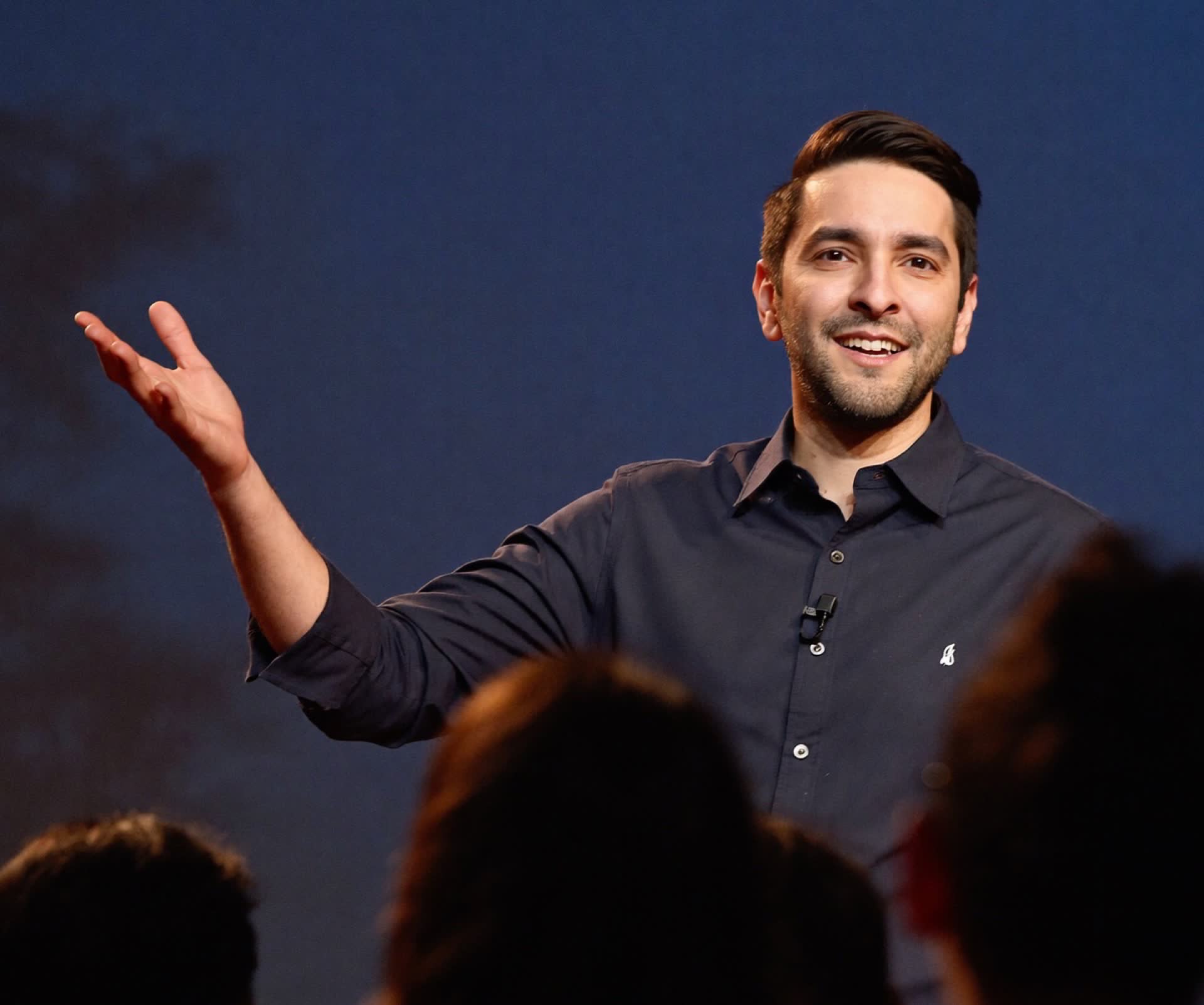
Muzamil reads a Goldman Sachs forecast of Pakistan as the sixth largest economy by 2075 and argues the crisis is a restructuring that comes before growth.
The question he kept asking guests
For four years, Muzamil says, he ended conversations with more than 400 guests by asking what Pakistan would look like in 2050. Most of the answers, he says, were defeatist and conditional: if the government does this, maybe that happens. A few guests gave clear answers, some only off camera. Overall, no clear picture emerged.
Viewers asked him the same question, and he says he never answered it properly. He wanted to test his gut feeling against real study first. About two years before this episode, he moved to Dubai. He says he cut himself off from the noise in Pakistan and studied how countries grew over 30 to 50 years. This episode is his answer.
He sets two limits at the start. This is a macro, long-term view, and he expects ups and downs on the way. And it is not about who is right in Pakistan’s current politics. If you came for that, he says, you are wasting your time and his.
He also does not tell people to stay. “If you have the means and the opportunity, you should definitely leave Pakistan,” he says, to gain exposure and globalise yourself. Leave as an extension of Pakistan, he says, without turning your back on it. He notes that about one million people leave India every year even as it grows. His concern is the rest: the 250 million Pakistanis who will stay.
Read the country like a company
Muzamil puts money at the centre. Societies move toward good behaviour, he argues, when people are fed and secure, and when money rewards following the rules. He says Europe’s sophistication rests partly on centuries of extracting wealth from the rest of the world, while litter and pollution in Pakistan reflect poverty.
To read a country’s future, he says, ignore individual actors and look at the system. He compares a country to a company. An efficient company with motivated people grows. An inefficient one, with comfortable management and demotivated staff, borrows to keep going until lenders want their money back and it goes bankrupt. Small companies close. Mid-sized ones are absorbed. Large ones restructure under new leadership and a new plan.
Pakistan, at 25 crore people, is too big to be absorbed. He points to Syria, a much smaller country, and the refugee crisis its collapse created worldwide. A crisis in Pakistan would have to end the way it does for a large company: in restructuring and a new system.
He also asks for patience with history. In his account, the land that is now Pakistan has rarely been ruled by its own people. Pakistan’s roughly 75 years, he says, are less than 4 percent of the last 2,000 years. Growing pains, fights over power and bad decisions are, in his view, normal for a young country learning to govern itself.
What the Goldman Sachs report says
The part that caught his attention came from outside Pakistan. He cites a Goldman Sachs report on the world’s largest economies in 2075. As he presents it, the report places Pakistan sixth, at an economy of 12.7 trillion dollars, with per capita GDP of 27,100 dollars against 30,000 dollars for India. That would put living standards in the two countries close together. When a Pakistani says the country will do well, he notes, it is easy to dismiss them as paid or naive. An investment bank that does detailed financial modelling is harder to dismiss.
The report’s opportunities, as Muzamil walks through them, start with demographics. About 60 percent of Pakistanis are under 30, while Europe, Japan and China are ageing. That means Pakistan keeps adding workers for the next 30 to 40 years as many developed economies lose them.
The second is manufacturing and services. As Chinese labour grows more expensive, he says, some factories can move to Pakistan and serve new consumer markets in the Middle East and Africa. English, a legacy of colonial rule, helps Pakistanis work with the English-speaking world, which he says matters more as remote work and AI spread.
The third is location, which he says people always mention and rarely explain.
The centre of gravity comes back
Muzamil explains location through the idea of a global economic centre of gravity: the point with equal economic activity on either side. About 2,000 years ago, he says, it sat over what is now Pakistan and stayed in the region for about 1,500 years. He says that in Aurangzeb’s time, the Mughal Empire produced 31 percent of global GDP, against about 23 percent for the US today.
Colonisation from the 1500s pulled that centre west until about the 1960s and 70s. Then Asia rose again. By 2025, he says, a line through the centre of gravity runs over Pakistan once more, up to Russia.
Proximity matters because business happens near markets. He uses Mexico as an example. People know it for drug cartels, but he says its GDP per capita is higher than many would expect, because it sits next to the US and American growth trickles down. Pakistan, in his reading, sits between growth on both sides. It neighbours China and India, which he expects to be the two largest economies. It is close to a rising Middle East and a growing Africa. And it is Central Asia’s best route to warm waters.
The challenges, and the pivot moment
The report’s first challenge is political instability. Muzamil says many Pakistanis compare the country to the wrong models. The Gulf states, in his view, are small populations living on oil. The West built its systems on centuries of extracted wealth. “It’s like comparing a rich man in DHA with someone from a village,” he says. Pakistan should be compared with large, populous economies without one big commodity, like India, Indonesia and Turkey.
Those countries, he says, show a pattern. After independence, they had elite capture, rent seeking and corruption. Indonesia and Turkey saw military interventions, and he says Indonesia had about 30 years of military rule until 1998. These economies grew slowly until they reached about 250 to 350 billion dollars. Then each one crashed: India in 1991, Indonesia in 1998, Turkey in 2001. Each went to the IMF for the last time. The currency jumped, controls fell away, and old political structures collapsed under their own inefficiency. Then came a new social contract.
“I personally think we are in that pivotal moment,” he says. In his view, the old system no longer serves the population, and the debate over who rules is noise. “The question is not who will be prime minister. The question is what that prime minister will do.” He says he is not judging who is right. He sees political change, followed by stability, as inevitable within two to four years. He adds that no government can hold down a majority of its people by force for long.
Opening the economy, on a timeline
The second challenge is economic reform. Muzamil argues the government can no longer control the dollar or decide through licences who gets to build industry. The economy is too large, transactions are going digital, and the poor can see on TikTok how the rest of the world lives.
He gives a dated forecast. “My timeline is December 2027,” he says, for economic instability to reach a baseline, with conflict, debate and protests along the way. Whoever is in power, whether this government, PTI or a military government, he expects to open the economy step by step. He points to the government ending its role in setting agricultural prices as one such step, which may raise food prices in the short term but should raise output over time. After December 2027 he expects stability, and after 2030 growth that is sustainable and fast.
Education is the one citizens can fix
The third challenge, and the one he calls most important, is education. Between three and five million Pakistanis reach working age each year, he says. In his example, if four million turn 18, there are only about 300,000 to 500,000 higher education seats, counting the best and the worst universities. Formal education cannot grow that fast.
His answer is the democratisation of education already under way online. He says he never studied economics and built his understanding from YouTube, books and articles. People learn on TikTok and social media every day, but chaotically. The job, as he sees it, is to teach people in a structured way in the niches where work and productivity can grow. He believes this is something ordinary people can do without waiting for policymakers.
Why he put his eggs in the Pakistan basket
Muzamil ends with a personal note. When he left two years earlier, he says, he planned to secure his family in the global market. After studying other economies, he changed his mind. “I am not talking about patriotism,” he says. “I am talking purely selfishly.” His bet is that long-term money will be made in Pakistan, so he has put all his eggs in that basket.
His reasoning is that the most money is made when sentiment is lowest. After the crashes in India, Indonesia and Turkey, he says, the people who became millionaires were the ones who ignored the noise, studied, and placed themselves where the country was heading. To Pakistanis abroad, he says: do not leave with a broken heart. You are Pakistan’s ambassador there, and in his view the link you form between Pakistan and the world could be what makes you rich later.



Never miss a conversation.
New episodes and the thinking behind them, straight to your inbox. No hype, no spam, no pitch.