Dil ki Baat
A skill alone will not future-proof you against AI
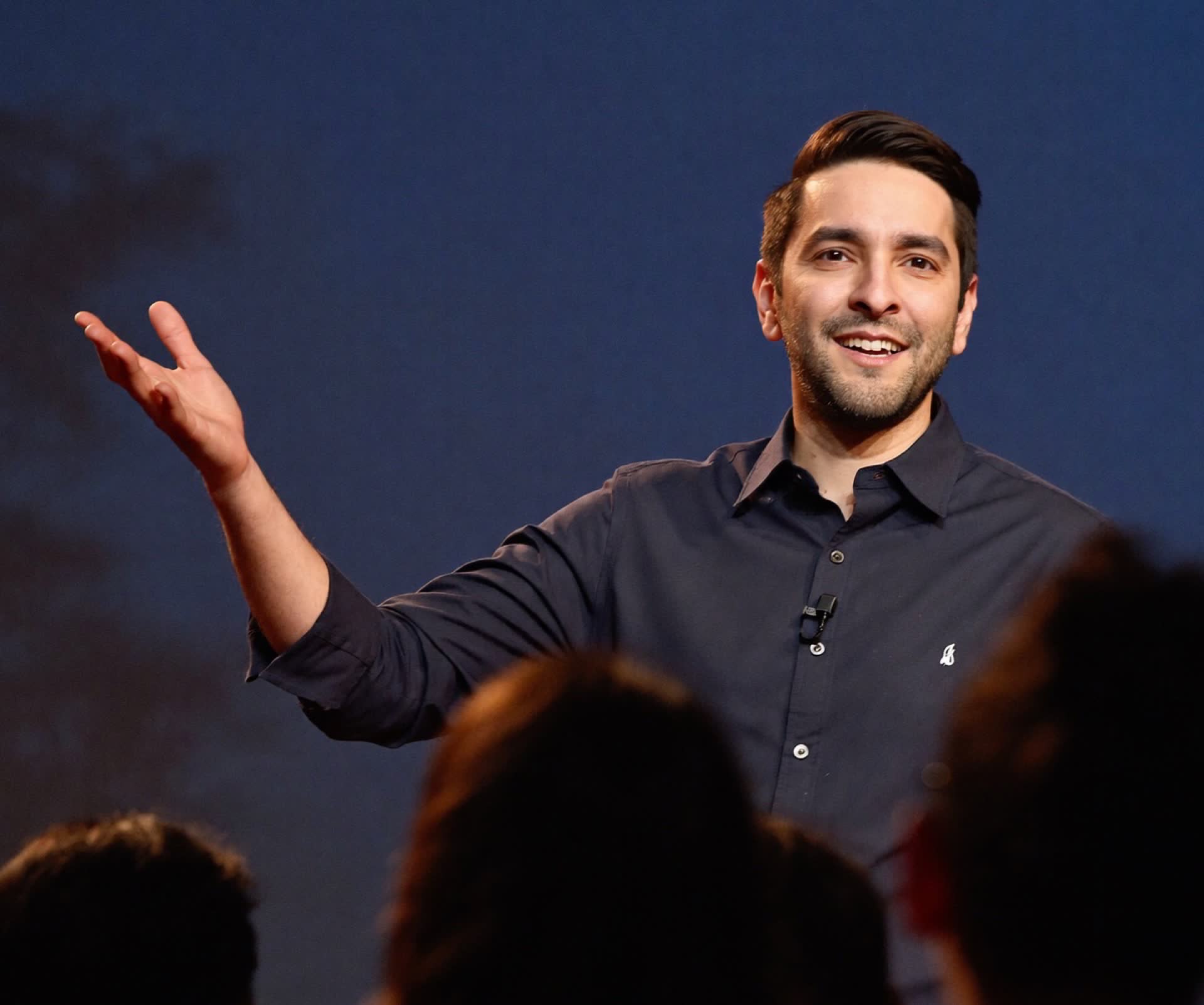
In his first Q&A, Muzamil takes viewer questions on left and right, truth, Ukraine, Iran, building knowledge, AI and IT jobs, and what university is for.
The first Q&A
This was the first of Muzamil’s Friday question-and-answer episodes. Viewers had emailed him questions. He says he received about 200 to 250, put them in a box, shook it and answered the first five to seven that came out. The host-written description adds a caveat that runs through the whole episode: these are his own thoughts, not expert advice.
The questions range widely. One viewer asked about religion and politics, another about the war in Ukraine, others about learning, AI and university. The thread that ties his answers together is a habit of mind. Understand the fundamentals, find the logic, and look for the real problem underneath.
What he means by left, right and centre
A viewer who identifies with the right asked whether Muzamil ever truly understood it, or whether he simply followed it blindly before moving left. Muzamil agrees that, growing up, he followed blindly. Then he explains what he means by the labels, which he says are used loosely and often wrongly in Pakistan.
“Being religious does not make you right, in my opinion,” he says. For him, a religious scholar who answers your question calmly, without judging or threatening you, is in the centre. The right, in his use, is people who build one framework and then force their interpretation on everyone else. The left, in his use, is people who say religion has no place in public life. He disagrees with that too. He believes religion should be at the core and that laws should rest on it.
His argument is about method. Most believers, he says, agree on the fundamentals. The disagreements come later, over new questions where interpretation is needed. On those, he wants debate based on proper study of history, hadith and the reasoning of scholars. He gives an example from parenting. A child forced by the stick behaves only while you watch. A child who understands why something is harmful avoids it whether you are there or not.
Truth, revelation and reason
A second viewer contrasted the Islamic view of truth, as what God and the Prophet called right, with the secular view, as what a person concludes from evidence and reasoning. Muzamil says both have a place. At the top of his framework sit the fundamental truths of the Quran and Sunnah. Below that, for the details of a changing world, he says believers should use their intellect and rationality. He notes that Islamic tradition itself works this way, moving from Quran and hadith to consensus and analogy. “Truth is actually somewhere in the middle,” he says.
Ukraine and the Iranian president’s visit
On what the West thinks of Ukraine, Muzamil gives his opinion and says plainly that he does not follow the military side in depth and relies on others. In his reading, the US wanted to slow Russia by cutting its gas revenue from Europe and justifying sanctions. He describes the US aid package of 60 billion dollars as money that flows mainly to America’s own military industrial complex, which builds the weapons sent to Ukraine. He quotes a line he has heard: Russia was the pretext and China the real target.
He believes the plan has not gone as hoped. In his account, Russia kept selling oil and posted large current account surpluses, and many commentators now doubt Ukraine can win. “The West is starting to realise that they are going to lose this battle,” he says, in his view.
On the Iranian president’s visit to Pakistan, he says he was pleasantly surprised by how seriously it was taken. In his reading, Iran wanted to show it was not isolated and to reset ties after recent strikes between the two countries. Pakistan, he thinks, used the visit as a bargaining chip. It signalled that it had energy options, including the gas pipeline the US had warned against. He sees this as leverage for upcoming talks with the IMF and the West, and he calls it a net positive if it gets Pakistan a better deal.
How to start building knowledge
A viewer said he felt overwhelmed and did not know where to begin. Muzamil’s answer is to stop trying to master everything. Whatever analysis he can do today, he says, came from a habit he built about five years ago. “Every day before I sleep, I read 25 to 50 articles,” he says, across his areas of interest.
His method is simple. Search a pair like “India Pakistan” or “China America”, open the news tab and read the first ten articles. When a writer offers a calm, wider analysis, follow them on Twitter. Mute the accounts that shout that the world is ending. He also watches YouTube on topics that catch his interest, such as semiconductor supply chains or hydrogen as a fuel. He says outlets like Vox, CNBC and Business Insider, plus many independent channels, do the work of turning raw information into knowledge.
“Let yourself find the material that you want to consume,” he says. Over a year or two, he expects that kind of steady input to put you ahead of your peers.
AI and IT skills
A data analyst asked whether IT skills are still worth learning as AI spreads. Muzamil, who worked as a data analyst himself, says yes. Learn the skill, partly because AI makes mistakes and you need the skill to catch them. But a skill like Python or SQL can itself be automated.
The value, in his view, moves to the person who understands the client’s business and the problem to be solved. He tells IT workers to start thinking like product managers. He expects IT work to look radically different within five years, with more need for problem solvers than for people who only have a skill.
He worries about Pakistan’s short boot camps that teach a skill in three months. For someone who already has computer science fundamentals, a boot camp is fine. “Just learning a skill alone will not future-proof you in the AI world,” he says. He also argues for interdisciplinary study: a computer science student who learns some medicine, law or design can solve problems in those fields. He does not expect mass joblessness. He expects AI to cut the cost of solving problems, so more problems get solved, by smaller teams across more companies.
What university is for
The last question came from a student starting university. Muzamil says a university’s job is to teach the fundamentals of your field, not to place you in industry. Four years give you time and space to learn deeply.
The rest you learn outside. Study what your field is doing today, which problems it is solving and with which tools. Then find people near you working on those problems and ask to learn from them. He says most interns walk in knowing nothing and hoping for a stamp on their CV. A student who arrives understanding the problem stands apart. “Forget about the money,” he says, for those whose families can support them. If you know the problem, how it is solved and where you can add value, he believes the job will follow fast.
He ends, as usual, by inviting viewers to disagree in the comments and to send more questions by email.


Never miss a conversation.
New episodes and the thinking behind them, straight to your inbox. No hype, no spam, no pitch.