Dil ki Baat
How a sheltered Islamabad boy became a liberal by 20
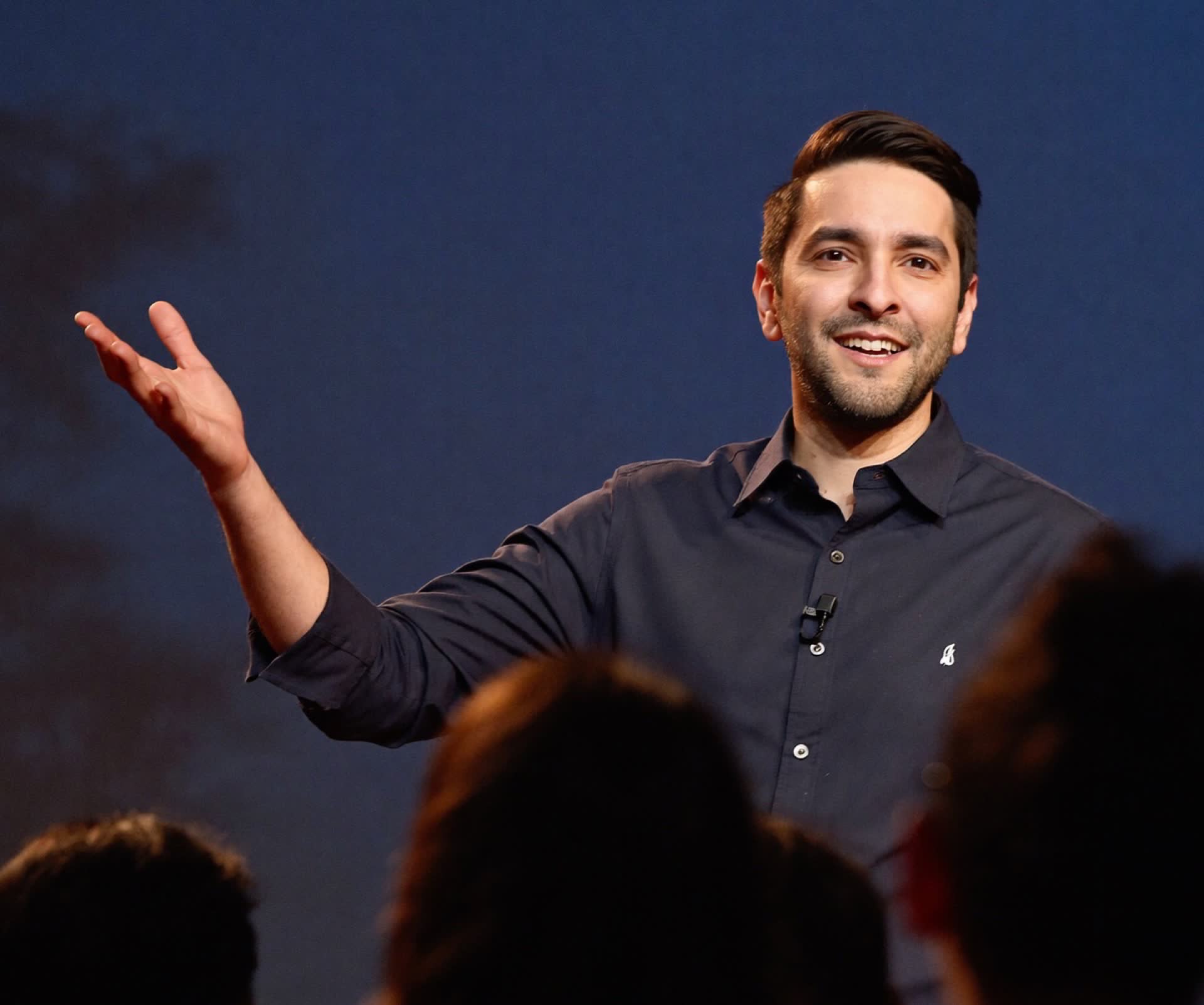
Muzamil tells how a sheltered boy in a conservative Islamabad family became a westernized liberal by 2010, through school, the internet, terror and one trip.
Why tell his own story first
Muzamil had planned to start a series on geopolitics. While putting it together, he realized much of his analysis differs from mainstream commentary. He knew how that tends to go online. Instead of disagreeing with his point, people take it, find others who say similar things, and push that whole ideology onto him.
He gives two examples. Call America an imperialist power, and someone labels you an Islamist. Say women in Pakistan need better laws and better protection, and someone says, “You are a khooni liberal.” The core point gets lost. “The entire discourse becomes very muddy and very noisy,” he says, “and it becomes increasingly meaningless and super exhausting.”
His reading is that people judge him on surface things: how he looks, how he dresses, how much English he speaks, his accent. So before getting into geopolitics, Balochistan and the culture war, he wants to lay out how his views evolved. This is part one of a three-part story.
He also sets a frame for the whole series. Every worldview, however far left or right, comes from some experience or trauma. “You may be right in your own scope, and that person may be right in theirs,” he says. “The truth lies somewhere between these two scopes.” Finding it takes patience and humility. Growth, in his view, stops only when a person decides to stop evolving.
From Jeddah to a basement in Islamabad
Muzamil was born in Jeddah in 1990. Soon after, the Gulf War began and Saudi Arabia started removing non-Saudis from jobs. After 15 years in the kingdom, his family moved back to Lahore in 1991. He was the youngest of six siblings.
His father was a career banker who had worked at Saudi British Bank and before that at United Bank. He searched in Lahore for a year without finding a good job. Then he heard about a new bank opening in Islamabad and Rawalpindi, Askari Bank. He applied, got the job, and became one of its founding members, in days when interviews were held in a hotel and there were no proper branches yet.
The family liked Islamabad. It was small, clean, safe and familial. They sold their Lahore house and agreed to buy one in Islamabad, paying a quarter of the price as token money. The sellers asked for a month or so to move out. So the family moved into the basement, with roughly three rooms and two bathrooms, while the sellers stayed upstairs.
Within weeks the house went up in value. The sellers wanted more. They filed a case against themselves and got a stay order. The arrangement meant for six weeks lasted about ten years. The case went from the session court to the high court to the Supreme Court. The family won, and finally moved in around 2003 or 2004.
What a ten-year court case teaches a child
Muzamil grew up with no other reality. He knew the small space they lived in, and he knew that losing the case would leave them with no home, while the rupee lost value year after year. “It was a very supremely stressful time,” he says.
It also gave him a close look at the Pakistani legal system at a young age. The clerk who wanted money before a file would move. One hearing date after another. A lawyer who did not show up. A fresh case filed to buy time. He describes a family that had migrated in 1947, then lived abroad for 15 years, with no village or backing to lean on. His father believed in doing things through systems and structure, as he had seen in Saudi Arabia. In Pakistan, that meant waiting.
A quintessential Pakistani childhood
At home, the values were those of a typical Pakistani family of the time. His mother ran the house, his father went to work, and the family watched the evening news on a black 21-inch Sony TV. Bollywood was off limits for the boys. Some Hollywood, like The Lion King, was allowed. Television and video games were rationed.
The worldview he absorbed from family, school and society was simple. Pakistan was one of the best nations in the world. Muslims could overcome anything. Americans were bad people who had wronged the Muslim world. “We are poor and innocent,” as he puts it, and others wrong us by design. He stresses this was not formal indoctrination. It was the ordinary, subtle discourse of the time. When 9/11 happened, he remembers children at school saying America got what it deserved.
Being the youngest of six shaped him too. His eldest sister is 16 years older, his eldest brother 13 years older. He had no say unless an older sibling backed him. So he learned negotiation and, in his words, politics: find the stakeholders, align their interests, and attach someone else’s interest to what you want.
He studied from prep to seventh grade at an OPF school, a government school run under the overseas Pakistanis ministry. It was simple, with no air conditioning and physical punishment. He credits its teachers with teaching manners, patience and values, which he sees less in private schools today.
Four changes that turned his life upside down
Around 2003 and 2004, four things happened at once.
A private school. He moved to Beaconhouse Margalla Campus in Islamabad, on the O-level track. He arrived intimidated, with almost no English. Looking back, he sees schools like Beaconhouse, City School and LGS as “a westernized bubble” cut off from the rest of Pakistan. The music was Nirvana and Metallica, the films were Hollywood, and the games were American. Without anyone saying so, western values began to replace eastern ones. He insists this is a shift between two value systems, and he is not calling either one good or bad.
An empty house. Four of his five siblings left within a year or two. His three brothers had studied computer science at FAST during the IT boom. One moved to Canada, one to America, and one worked on consulting projects abroad. His sister went to LUMS to study law, a choice shaped by the family’s court case. A house of about seven people became three. He had his own room and his own time for the first time. His mother, who had built her life around her children, became depressed. He withdrew from the home and into the internet.
The war on terror. Suicide bombings became normal during his teenage years. Assemblies were cancelled over threats, metal detectors stood at the school gate, and drills prepared students for an attacker. He remembers the Marriott bombing. His home was about 10 kilometers away and the whole house shook. His two brothers had worked in the building next door about three years earlier. He believes violence becoming normal is “very, very wrong for any generation.”
The bombings, combined with his new school and the internet, changed how he saw his own culture. The message around him was that these attackers were Islamic fundamentalists. Watching videos of children dying, he began to see his eastern culture as primitive and to blame it for the violence.
High speed internet. He calls it his gateway to the world. Early internet forums and Reddit were full of educated, logical people. He started breaking every problem down logically and cutting emotion out, since in his view Pakistanis are especially emotional.
The 2008 trip that flipped him
After his O-levels, his brothers invited the family to North America. It was his first trip out of Pakistan. They visited his sister in Atlanta, whom they had not seen since 1994, his brother in Seattle, and Vancouver.
He found the opposite of what he had been told. People were polite, normal and positive. The scale of development, from Disneyland to grocery store aisles, floored him. “Is this a civilization? Is this a country?” he remembers thinking. “Where are these people and where are we?”
The bigger effect was how he reacted. He had been raised to dislike America. When he found something different, he swung to the other extreme. If people had lied to him about America, he reasoned, they must have lied about everything. He says this is exactly how a person moves to an extremist fringe. Had he gone with no expectations, he would have liked America. He might not have fallen so madly in love with it. He embraced it “with the same intensity” with which society had tried to make him hate it.
Where part one ends
By 2010, after about five years of change starting in 2005, he says the transition was complete. He had become “the quintessential Islamabad, private school, burger, liberal, secular” young man. He believed secularism, capitalism and individualism were the logical progress of humanity.
He also became very sure of himself. He loved debating and thought most people who disagreed with him were simply ignorant and would think like him once they had exposure. He ends part one on that cliffhanger: a full liberal at about 20, sure he understood the world. Part two covers the years between 20 and 30, and the experiences that flipped him again.
He asks viewers to hold judgment until all three parts are out. He also asks people who grew up in the 1990s to share how school, the internet and the war on terror shaped them.



Never miss a conversation.
New episodes and the thinking behind them, straight to your inbox. No hype, no spam, no pitch.