Dil ki Baat
Building a consulting business with AI as your chief advisor
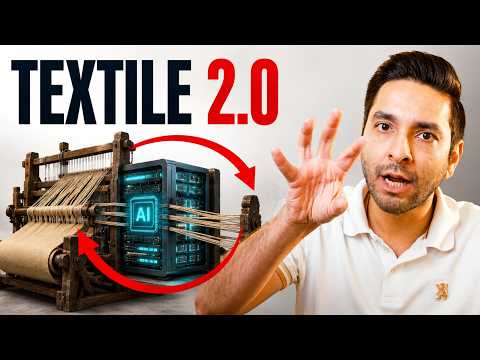
Muzamil hires AI as Chief Product Officer to develop a business model that generates $1 million annually without trading time for money.
The problem with good ideas
Muzamil opens by welcoming viewers back to discuss a topic from the previous video. An idea came up about building consulting firms that generate $1 million in annual revenue. The premise sounds attractive. But as Muzamil explains, “Ideas are very good and thoughts are also free. But none of them are worth much. Execution is key.”
This simple truth cuts through the startup hype. Having a concept for a seven-figure consulting business is not the same as running one. The gap between concept and reality is where most entrepreneurs fail.
The skills gap
Running a business requires far more than a good idea. Muzamil lists what it actually takes: “You need to know sales. You need to know marketing. Legal knowledge, financial knowledge, and so on. Everything is required. You need to be able to sell. You need to know how to approach customers.”
The challenge is that most founders have depth in one or two areas but not all. And the skills you lack are often critical to survival. Muzamil finds himself in this position. He understands his product. He knows which consulting services to deliver. But he does not have the time or expertise to handle sales, legal compliance, financial management, and marketing all at once.
The hiring dilemma
The traditional answer is to hire people. But Muzamil faces a real constraint: “I don’t have the money right now. How can I go and hire someone?” Without revenue, he cannot afford experienced staff. And hiring inexperienced people to fill senior roles often fails.
This is where most founders get stuck. They either wait until they have capital to hire, which means they never start. Or they burn out trying to do everything themselves. Muzamil chose a different path.
Hiring AI as a strategic advisor
Instead of hiring a Chief Product Officer or a business consultant, Muzamil hired AI. He gave it a specific role and clear expectations: “I told it, brother, you are my Chief Product Officer. You choose to critique me. Don’t worry about who I am at all. I won’t get upset with you or my ego. It will hurt you. You have to choose and tell me which areas or which ideas I am failing in.”
The collaboration lasted 48 hours. AI did not simply generate ideas on demand. It debated his assumptions. It pointed out flaws in his thinking. It pushed back on his models. This is the opposite of the generic business plan templates that AI often produces.
From critique to protocol
After this intensive work, Muzamil and AI arrived at a framework called the DREAM Protocol. He explains that this came from a careful process: “I told it, this is the dream protocol. Now we have this. We decided we want to do this. So come on let’s start discussing this dream.”
The protocol has five components, each representing a core lever in building a consulting business. Muzamil does not reveal all five in this segment, but the structure is systematic. Before launching or hiring or optimizing anything, he needed to define the model that would actually work.
The lifestyle business principle
A key insight Muzamil gained was about time. “Brother, you want to build a lifestyle business. You cannot monetize your hours because you will burn out there. You are stuck there and your work will be done.”
This is crucial. Many founders build businesses that lock them into trading time for money. A doctor earns more than a general practitioner, but still cannot scale beyond the hours in a day. Muzamil’s goal was different. The consulting firm needed to work without him trading every minute of his life.
AI pushed him on this. It suggested that he needs to balance business building with family time and rest. A sustainable business model must allow for a life outside work. This reframing was one of the protocol’s most important contributions.
Before you start building
Muzamil emphasizes a practical order of operations. You cannot build the business until you understand what you are actually selling. “Before we do anything, we need to find out what we are selling, where customers are, and what is inside what we are selling. What is inside the market stays inside the market. First of all, we want what is in the market.”
This means researching demand before building product. It means understanding who has the problem you plan to solve. And it means knowing whether customers will pay for your solution or find an alternative.
The DREAM Protocol builds in these questions as checkpoints. You map the business landscape before committing resources to it. This saves time and capital.
Execution begins now
The episode ends with Muzamil signaling that the real work is about to start. The protocol is defined. The AI collaboration has produced a repeatable model. Now comes the part that separates ideas from outcomes: doing the work.
He invites viewers to follow along as he applies the DREAM Protocol to building his own consulting business from zero. For founders who struggle with the early stage, the part where you are not sure what to build or how to structure it, this offers a blueprint.


Never miss a conversation.
New episodes and the thinking behind them, straight to your inbox. No hype, no spam, no pitch.