Dil ki Baat
Two weeks, one AI operating system, and a door-to-door test
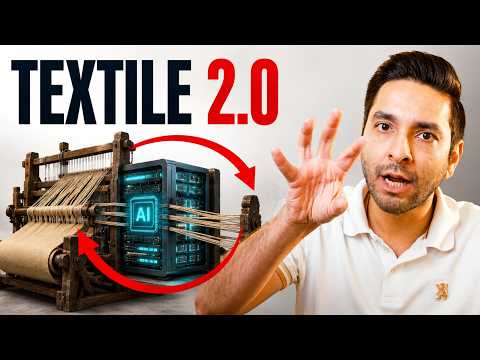
Muzamil Hasan walks through two weeks of building a personal AI operating system — a second brain trained on 550 podcast episodes, autonomous agents that reply to YouTube comments in his voice, and a reconnaissance tool he is now using to cold-sell automations to small businesses in Atlanta.
The bet: AI is the first tech wave Pakistan will not miss
Muzamil opens by pointing out that his previous video on Claude Code crossed eighty thousand views — unusually high for the channel — and uses it as evidence of a larger shift. Over the last thirty years, he argues, Pakistanis were typically five to seven years behind every technological revolution: personal computers, the internet, mobile apps, enterprise cloud. The average person in Larkana or Faisalabad did not know these revolutions existed until they had already reshaped economies elsewhere.
AI is different, he says, because it is “democratised” in a way earlier waves were not. YouTube, TikTok and cheap hardware mean anyone with a laptop and an internet connection can not only learn it but adopt it. He offers a caveat before going further: “एआई का नैरेटिव इस वक्त स्ट्रांग है… एआई के नैरेटिव फ्लिप भी कर सकता है क्योंकि मार्केट जो है वो फाइनेंस को देख रही है।” The technology is real, but the hype around it is not permanent. His purpose in this Dil ki Baat is narrower — to show, in storytelling form, what he has actually built in the last two weeks.
From a viewer’s comment to an automation problem
The chain begins with a viewer. Someone suggested Muzamil reply to comments more often. Someone else suggested he automate the replies. He takes it seriously, but with a constraint: “स्लोपी तरीके से कमेंट्स को मैंने ऑटोमेट नहीं करना। मैंने ये नहीं करना कि यार बस जो है ना एक चैट जीपीटी स्टाइल जेनेरिक किस्म का रिस्पांस आ रहा है।”
The response has to sound like him — his actual style, his actual knowledge base, his actual depth. That reframes the whole project. Before he can automate replies, he needs a machine that knows what he thinks. And what he thinks lives in the roughly five hundred and fifty podcast episodes he has already recorded.
Building the second brain
Muzamil goes back to first principles. He needs transcripts of every episode. As far as he understands it, Claude does not have its own speech-to-text model. Gemini does, and he had already been using it to transcribe Urdu, which he says it handles with unusual precision — “उर्दू को बहुत खूबसूरती के साथ बहुत बारीकी के साथ ट्रांस्राइब करता है और कोई भी वर्ड लूज़ नहीं करता।”
He creates a Google Developer account, uses the free-tier limits, and asks Claude to write an automated script that breaks each audio episode into chunks, rotates through models to respect rate limits, and stitches the results back into a single labeled file. What he estimates would have cost around forty-five hundred rupees, he completes over four days for free.
The transcripts feed into what Muzamil calls a second brain, referencing Andrej Karpathy’s framing and the Obsidian framework. Claude processes roughly seventy-six percent of the corpus; DeepSeek handles the other twenty-four percent. The output is striking. Ten point nine million words spoken across the videos. Fifteen distinct world views extracted. Three hundred and eight stances. A hundred and twenty-five stories. Some material is set aside as too fragmentary to use.
He reads one extracted view aloud: “एज एआई मेक्स एक्सजीक्यूशन एंड टेक्निकल पॉलिश चीप एंड कमोडिटाइज द स्कार्स रिसोर्स एवरीवेयर शिफ्ट अपस्ट्रीम टू जजमेंट, टेस्ट, नैरेटिव एंड ट्रस्ट।” The system has captured a claim he has made repeatedly across the show — that in an AI world, the durable moat is judgement and taste. It has also isolated specific stances: on the economy (“1970 era nationalisation destroyed Pakistan’s manufacturing capacity”), on founders, on tech, on geopolitics.
The second brain is exposed as an API. Any text sent to it comes back rewritten in his voice, with whatever narrative he would ordinarily attach to that topic.
The comment agent, and pretending to be human
Muzamil connects the second brain to a YouTube agent. The comment section of the previous Claude Code video, he shows, is now largely written by that agent. In one case a viewer asked what laptop he uses, and the agent correctly identified the MacBook M4 Max from somewhere in his indexed content — even Muzamil does not remember telling it.
The design choice is restraint. Rather than let the agent respond to everything, Muzamil constrains it: no more than thirty comments a day, no bursts of thirty replies in one sitting, wake every four to five hours the way a normal person would, no double-replies to the same comment. “बयक वक्त 30 कमेंट्स थक करके नहीं मार दोगे।” The point is not to maximise output but to remain invisible as automation.
He is candid about what he still does himself. On a recent controversial episode about Hafiz Ahmed, he turned the automation off. Angry commenters would only be inflamed further by an AI counter-reply. “मैं तमाम कमेंट्स पढ़ रहा हूं,” he insists — he still reads everything. Since deployment, average comment counts have moved from thirty or forty to over two hundred per video.
From loops to always-on daemons
The first architecture Muzamil built was loop-based. An agent wakes up, checks something, acts, sleeps. He shows several: a community manager loop, a content researcher loop, a YouTube SEO loop. Each has a clear input, a clear process, a clear output.
Loops broke down when he extended them to email. Email needs immediacy — a four-hour polling interval was too slow. This is where he discovered launchd daemons on macOS, root-level Python scripts that stay resident, listen for signals, and act when triggered. “देयर इज़ अ थिंग कॉल्ड लॉन्च्ड डीमंस जो कि इंटरेस्टिंग नाम है,” he says, “बट वो बेसिकली स्क्रिप्ट्स होते हैं पाइथन के जो कि ऑन रूट लेवल… वो चल रहे होते हैं।”
He rebuilds his executive assistant agent around this. When a new email arrives, the agent first qualifies it: is this junk, a subscription notification, an actual human, an actual urgent human? Only qualified emails wake up the full response chain, otherwise the token budget would be destroyed by spam. The agent also cross-references his broader system — an expiring API key or an over-limit subscription qualifies as urgent even when no human sent an urgent email. The move from loops to headless always-on agents, he explains, is the real inflection point.
Graph engineering and the executive team
By the time Muzamil discovered graph engineering — multiple agents collaborating and handing work off — he realised he had already been doing a version of it. He formalises it into a corporate structure: a CMO, a COO, a CPO, a CFO. The top intelligence layer runs on the strongest available model. The workers run on Sonnet, or on DeepSeek’s API for cheap generic tasks.
He walks through them. A content strategist watches audience signals and drafts scripts. A YouTube SEO agent adjusts tags and descriptions autonomously. A researcher agent monitors RSS feeds and hacker news for signals related to his narratives. A public relations agent handles replies and monitors sentiment — it was this agent that flagged the temperature shift after the Hafiz Ahmed episode. Its report to him read: “the heat in that room is pointed at the subject, not the host.”
The CFO tracks the whole cost stack. Muzamil shows the dashboard: roughly 3,428 dollars cash in hand, an 800 dollar monthly net burn, projected runway ending in December. Because he is on Claude’s subscription his actual bill is under 400 dollars a month, but if he were paying API rates the same usage would be around 928 dollars.
Muzamil is emphatic about one design lesson: “एक ही चैट को एक ही एजेंट को कहते हैं कि तुम सब काम कर दो” is the wrong instinct. Breaking one large task into structured sub-tasks handed between specialised agents — the way a real company works — produces dramatically better quality.
The agents built a platform for the agents
About ten days before the recording, Muzamil told his agent team he wanted an operating system to make all of this legible. He named a build lead — Arc OS Build Lead — and told it to assemble its own team: architect, engineer, QA, release manager, product manager, UI/UX designer, product critic, fixer. His input from that point was minimal.
The platform he demonstrates on osmuzamil was built by that team. It has a catch-up dashboard, briefings from each department, cost tracking, an approvals queue, a directives log. He can open agents individually, speak to them, wake them up, see their estimated cost. The product manager iterates on a feature list. QA sends failed builds back to development. “इट वाज़ ब्यूटीफुल… लिटरली ना… रियल टाइम के ऊपर कि अब ये एजेंट ये काम कर रहा है। अब उसने दूसरे एजेंट को दे दिया है।”
He is careful to caveat that engineers might scoff — “जो सॉफ्टवेयर के लोग हैं वो बहुत जबरदस्त चीज आके बोलेंगे कि यार ये तो हैवी फारग है” — but for someone whose computer science degree is a decade old, building this in ten days with almost no direct input feels significant.
Earned autonomy
The autonomy model in the platform emerged from the same process. Every agent starts at L0. Every action requires approval. Approve without feedback roughly ten times and the agent moves to L1 — it starts acting on its own for routine work, only asking for human input on critical decisions. Correct it, and it drops back a level.
Muzamil did not design this. He told the build team he needed a system that was robust, transparent, mission-critical, and could not run wild in live environments. “आई नीड अ सिस्टम जो कि रोबस्ट हो, ब्रेक ना करे, ट्रांसपेरेंट हो और मिशन क्रिटिकल हो कि वो लाइव एनवायरमेंट्स में तबाही ना मचाए।” The tiered autonomy structure is what the agents built to satisfy that brief.
Selling it door to door in Atlanta
The last third of the episode is the most human. Muzamil is in the United States, where nobody knows him. A close friend once told him, referencing a book, that real growth requires being rejected a hundred times in sales. So he decides that instead of selling automations through Pakistani intermediaries on LinkedIn, he will walk into small businesses in Atlanta himself.
To make that possible, he builds Arc Recon. Using a Google Cloud console API for Maps, it pulls every business within a roughly ten-mile radius — around 2,684 businesses — then enriches each one with basic public information and assigns a fit score. For high-fit prospects it produces a deep dossier: what the business does, who the owner is, what tools they already use, what ads they run, what their reviews complain about, three specific automations that could either increase revenue or reduce cost, and a personalised pitch deck.
It also filters. Franchises are marked “not fit” — “फ्रेंचाइज़ आपसे कभी भी बात नहीं करेगा।” Small and medium businesses stay in the “to visit” pile. When Muzamil asks for a daily plan, the system produces a route, timing, contact names, and the ideal window based on when the manager is likely free and traffic is low.
His first day of visits was humbling. “शदीद हंबल हुआ है आपका भाई। जलील हुआ है।” Three businesses told him to leave — Vietnamese-run shops that preferred to work with their own community, and car repair places that were not really his target anyway. He got one meeting scheduled with an existing contact. “आपका भाई 100 दफा जाएगा और 100 दफा रिजेक्ट होगा और फिर 101वीं भी दफा जा करके कन्वर्ट करेगा बिज़नेस।“
The productised OS, and what he is actually selling
Individual automations are the entry point. The long-term product is a full operating system for small businesses — the same architecture he built for himself, adapted. He shows reference demos: single-click tool connections for services like QuickBooks, an agent roster, industry-specific starter configurations for restaurants, legal practices, salons, home services.
Every proposal is generated per prospect. Every industry has its own analysis of what has been proven and what is new — and critically, whether an automation makes the client money or saves them money. Anything that does neither, he says flatly, “इट्स अ नोवेलिटी। उसको बेचने का कोई फायदा नहीं है।”
The final piece is deployment. Two days before recording, he built the virtual machine layer. A single click provisions a six-to-eight-dollar-a-month VM, installs Claude, deploys the predefined agents, connects the client’s tools, and boots a baseline system that he then customises.
What two weeks actually taught him
Muzamil closes with a self-appraisal that is careful not to slide into boasting. “जिस बंदे ने 10 साल से कोई काम नहीं किया… मुझे वीएम डिप्लॉयमेंट्स भी करनी आ रही हैं। मुझे एजेंट्स डिप्लॉय करने आ रहे हैं। एंड दिस इज ऑल लाइक जस्ट टू वीक्स।” He credits nothing exotic — analytical thinking, problem-solving, first principles, and the willingness to sit with Claude and iterate through ten options at a time to build taste.
His view on courses is unsentimental. AI courses, he says, are effectively free now. What is not free is a curated community of people building alongside you. He plans to launch one eventually, but only after he has proven he can actually sell something. By the end, the frame has shifted. This was never a video about impressive tooling. It was about a specific claim — that judgement, taste, narrative and trust are the durable resources when execution becomes cheap — and Muzamil is now walking into strangers’ shops in Atlanta to see if the market agrees.


Never miss a conversation.
New episodes and the thinking behind them, straight to your inbox. No hype, no spam, no pitch.