Dil ki Baat
Russia's World Youth Festival was soft power aimed at the global south
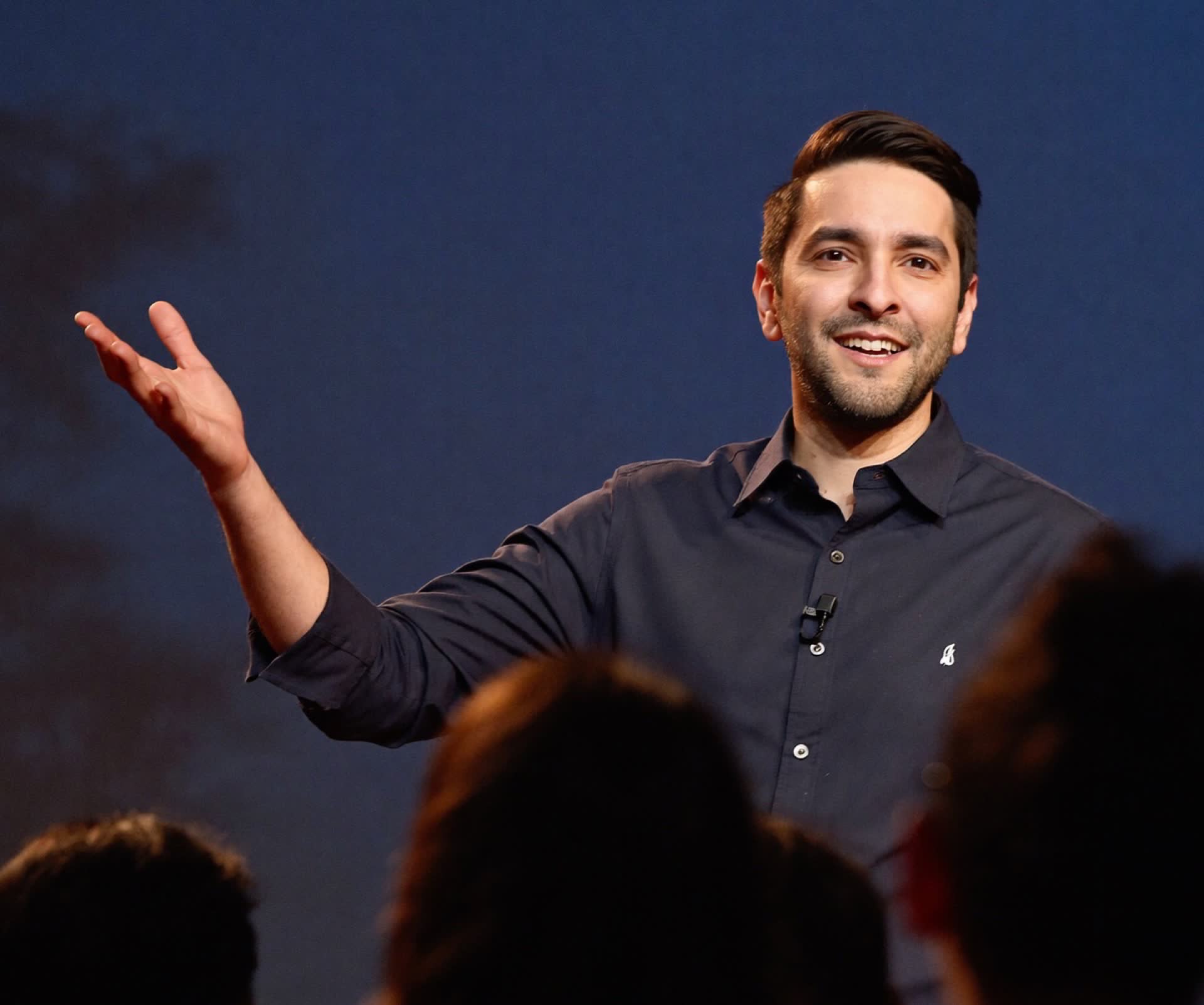
Muzamil spent a month in Russia at the World Youth Festival. He came back convinced the next decade will be shaped by the global south's young people.
Why he went to Russia
Muzamil opens with an apology. He had been missing for a month, and viewers had been asking where he was. The answer surprised many of them: Russia. “Who goes to Russia these days?” he asks, given the sanctions and the war.
He went for the World Youth Festival. He found it in December through the festival’s website, applied, and learned in February that he had been selected. Selected participants received a fully funded trip covering flights, accommodation and food. About 200 Pakistanis were selected with him.
His motive was curiosity. Growing up, his picture of Russia came from Hollywood: vodka, guns and strange people. After moving to Dubai, he met many Russians who had moved there after the Ukraine war, and they were nothing like the films. So he wondered about the society itself. Western media told him Russia was poor, sanctioned, tightly policed and short on freedom. “So I was like, in a country with sanctions, where freedom is curtailed, where conditions are so bad, what will they do by inviting 20,000 people from around the world?”
Inside the festival
The group flew to Sochi on 29 February. Sochi is in the south-west and is Russia’s warmest city. In March, nights there dropped to about minus 1 or minus 2, which Muzamil compares to December in Islamabad. The festival ran from 1 to 7 March, with about 10,000 people from abroad and 10,000 from Russia. Concerts, art and culture exhibitions, talks, workshops and competitions ran at the same time. “It was just crazy,” he says.
The last edition was held in Sochi in 2017, with people from about 190 countries. This time, because of the war and Russia’s dispute with the West, western Europe, North America and Australia did not take part. About 140 countries sent youth delegations. Pakistan sent 200 people, Brazil 300 and Argentina 250. China and India sent large delegations, and many came from Africa, South America and the Asia-Pacific.
That absence changed the room. At most large events, Muzamil says, people from the developed world stand at the front, with a different level of confidence. Here, the global south stood at the front, and their confidence was “on another level.” The conversations were about science, technology, education and collaboration, and about the order that could emerge if American dominance ends. He stresses that this was subtle. People did not sit around criticising America. They talked about being young, growing and able to change the world together.
He also thanks Future Team Pakistan, the festival’s official partner, which coordinated the Pakistani group while the Russian government paid.
A soft power exercise
Asked to describe the event objectively, Muzamil is direct. “Basically it was a soft power exercise,” he says. In his reading, Russia was consolidating the global south, bringing its young leaders onto one platform. Most of the people invited were not influencers. They were businesspeople, lawyers, political activists and thought leaders from many industries.
He explains what he means by the global south’s narrative. As Pakistanis, Muslims and Asians, he says, there are views people hold but feel nervous saying in a world run by America and the West. Some even dismiss their own views as backward. At the festival, those views were celebrated openly. One full day was given to the importance of family. Muzamil describes this as an eastern value. Close family ties can be annoying, he admits, but people in the region had been told, subconsciously, that western individualism was the more advanced way to live. South Americans and Africans welcomed the family theme as much as he did.
Palestine was also present throughout. Delegates chanted for Palestine, and Arab participants from Israel attended under the Palestinian banner. In conversation, he kept hearing the same frustration with the current American-led order. People described it as unfair, full of conflict, and closed to the global south’s chance to escape poverty. He links this to the growing weight of BRICS, which he plans to cover in later episodes.
The world beyond English
The biggest lesson for Muzamil concerned language. Pakistanis, and the English-speaking world in general, consume English media and news. “We think the world is just this,” he says. At the festival he saw how large the Russian-speaking world is. It covers Russia, the Central Asian states such as Kazakhstan, Tajikistan and Kyrgyzstan, and countries in Eastern Europe. A shared language binds them, and they collaborate and grow inside their own world.
He saw the same with Spanish- and Portuguese-speaking South Americans and French-, Spanish- and Portuguese-speaking Africans. They study in each other’s universities and have their own systems. Their worldview is different.
From those conversations he drew a larger conclusion. The future, in his view, will not be defined by Europe, America or Japan, where populations are ageing. “The future of the world will be defined by the youth that is prevalent in South America, in Africa, in South Asia,” he says. What those young people think is right and wrong will shape the next world. He believes the Russians understood this “very smartly.”
He was also struck by how much Brazilians and Africans knew about Pakistan. Brazil, he notes, is larger than all of Europe combined, with a big population and economy, yet Pakistanis rarely take it seriously. Delegates from countries such as Mali and Niger described their countries pushing back against European colonialism and claiming their sovereignty, with regime changes and new blocs forming.
Khabarovsk and the real Russia
After the festival, 2,000 of the 20,000 participants stayed on for a regional programme. Muzamil was sent to Khabarovsk in Russia’s far east. Night temperatures there fell to minus 20 or minus 25, and frost made it hard to stay outside for long. He thinks he may have been one of the only Pakistanis ever to visit the region.
He expected a remote, underdeveloped place. He found the opposite. He visited schools, grocery stores, art and culture centres and a ski resort. On one leg of the trip he spent 36 hours on a train with showers, hot water and temperature control. “Infrastructure-wise, Russia is very far ahead,” he says. He was pleasantly surprised against everything he had heard.
The people surprised him most. “Extremely good people,” he says, “genuinely good people, well-mannered people, simple people.” He means people who were kind beyond a polite hello.
On Ukraine, propaganda and learning
While he was in Russia, a few people sent him messages saying Russia was at war and was being cruel to Ukraine. His answer is candid. “I personally do not know what is happening between Russia and Ukraine. Honestly, I do not know.” The dominant narrative he receives comes from western sources, which he distrusts, especially after watching how they cover Israel and Palestine. Any Russian alternative is also a Russian perspective, so it is not neutral either.
His approach is to go where he can learn. Today he had access to Russia. Tomorrow it may be Europe or America, and he will go there too. He accepts the risk of propaganda and warns against becoming blind or brainwashed. Then he makes a broader point. “Everyone does propaganda,” he says. Every power that wants a position in the world uses it. He gives the example of American-funded scholarships, which he describes as soft power that sends students home as pro-America voices. He says this is normal and done worldwide.
What comes next
Muzamil ends by setting out why this matters for Pakistan. Geopolitics shapes geo-economics, he argues, and geo-economics shapes daily life. In ten years, will Pakistan export to America or to Central Asia? Will its people travel to England, or to Africa, South America, Tajikistan and Azerbaijan? To answer that, he says, Pakistanis need to look at the wider world.
He announces a series of six to eight episodes on geopolitics, tracing major changes from the 1940s to today and what they mean for Pakistan. He also plans to spend two to three weeks in Balochistan, which he believes Pakistan has ignored for 75 years, taking its gas and little else. In his view, Balochistan will play a central role in Pakistan’s economics and politics. He wants to understand its opportunities, threats and security problems first-hand. Thought Behind Things is paused while he redesigns it, and he expects to relaunch it around September or October.


Never miss a conversation.
New episodes and the thinking behind them, straight to your inbox. No hype, no spam, no pitch.