Dil ki Baat
Syria shows what happens when a state refuses to change
The day after Assad fell, Muzamil traces Syria's collapse to a regime that refused to change, and warns that Pakistan's fault lines carry the same risk.
The day after Damascus fell
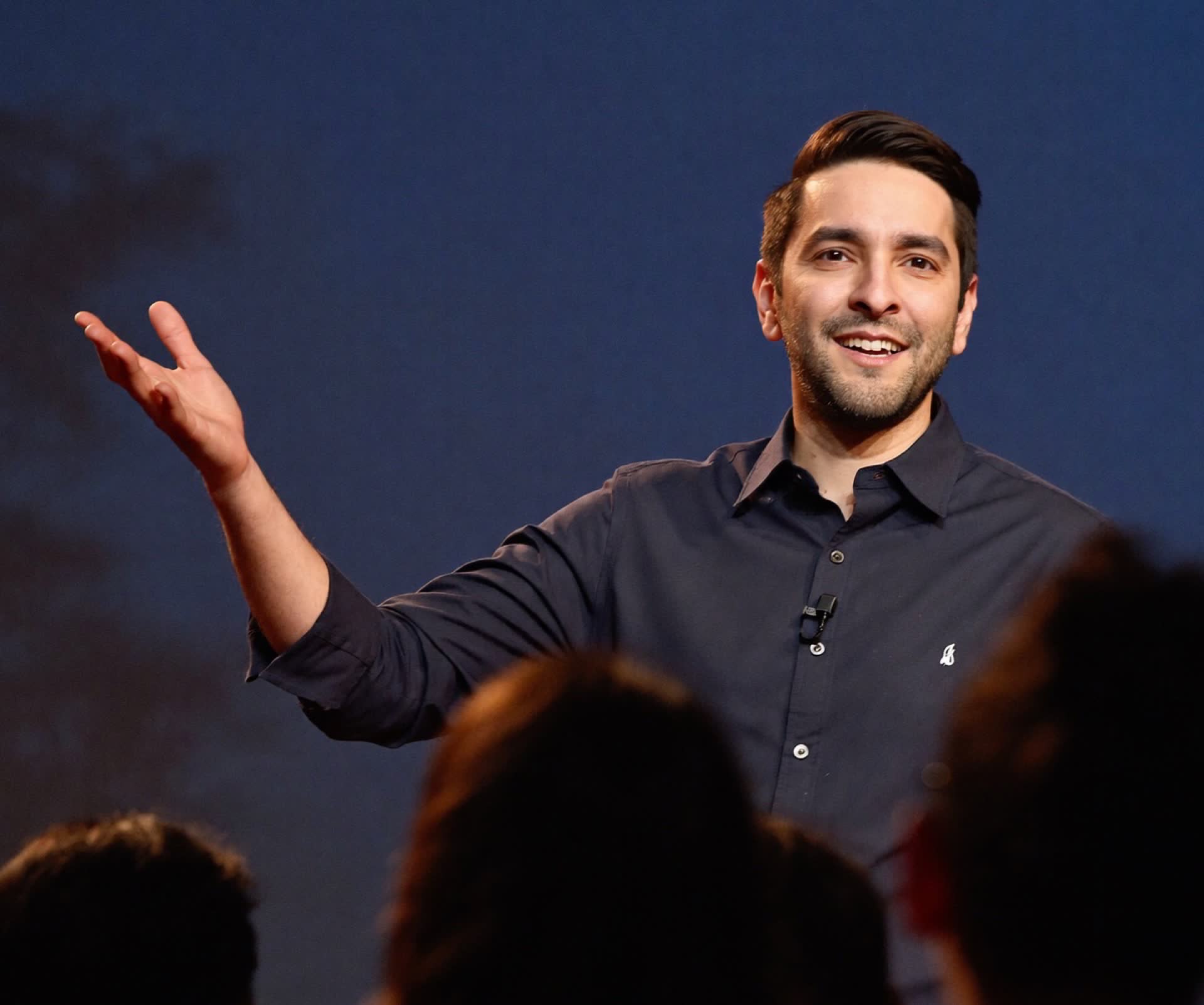
Muzamil recorded this episode the day after Bashar al-Assad’s government fell. Rebels had taken Damascus, and a civil war that began 13 years earlier had, on the surface, ended. He wants to explain what is really happening on the ground, and what Pakistan should learn. In his view, there is “a very serious chance that Pakistan could become the next Syria.”
He starts with the noise. Each camp reads the news through its own bias. Americans call it freedom. Pro-Russia voices in the Global South call it a win for American empire, with Israel’s help. Many in Pakistan, he says, are reading it on sectarian lines, as a Sunni majority freed from a Shia-led regime and a blow to the Iran-Hezbollah-Houthi network.
He accepts there is some truth in each reading. But none of them, he says, explains why Syria reached this point. In his view the truth lies somewhere between geopolitics and sectarianism, and “its backdrop is purely in economics.”
An economic crisis meets a closed system
Muzamil traces the roots to 2008. The global financial crisis began in America’s housing market. Because the dollar is the world’s reserve currency, the shock spread everywhere. He compares it with 1998, when the Asian financial crisis hit Thailand and Indonesia. In Indonesia, a political system that had run for 30 years collapsed under protest, and a near-bloodless transition brought democracy back. He says Indonesia has risen ever since.
After 2008, economic stress built up across the Middle East. Many of these countries were authoritarian, with little public say in governance. When times are normal, he says, people in such systems stay quiet. When times turn bad, they ask why the rulers live well while they suffer.
The West, he notes, declared a crisis, bailed out its banks and tried to calm its people. The authoritarian governments did not. They had ruled for 20 or 30 years and assumed the bad patch would pass.
Tunisia opened, Libya and Syria doubled down
The protests began in Tunisia in 2011, over economic and governance grievances, and spread across the Middle East and North Africa within a year. Major protests hit Libya, Yemen, Egypt, Syria and Bahrain. Smaller ones in Morocco, Iraq, Algeria, Lebanon, Jordan, Kuwait and Sudan were largely contained.
What happened next depended on the response. In Tunisia, the authoritarian leader resigned after a few weeks of protest. A new constitution followed, and Muzamil says the country has had relative peace since. Libya’s government doubled down, the West got involved, and protests turned into civil war. Gaddafi was removed, but six more years of bloody conflict followed, and Libya is still in crisis.
Syria also doubled down. For about a year the regime tried to put down protests by force. Then, he says, “the first bullet was fired,” violence spread, international players arrived, and the war ran for 13 years.
His point is that these countries were not in ruins 10 or 15 years earlier. People living in relative peace often think nothing can go wrong. “When circumstances change, they start changing overnight,” he says. In the fights between elephants, ordinary people are the ones trampled.
Why so many powers came in
Muzamil explains why Syria drew in so many outside powers. It borders Iraq, Jordan, Lebanon, Israel and Turkey. Iraq had already been through a major war, and the long border was hard to protect. Syria and Israel have fought before, and he notes that Israel has occupied the Golan Heights for decades. Lebanon fought Israel in 2006. Turkey sees parts of the region as historically its own.
Then there are the borders drawn by departing colonial powers, which split ethnic and religious groups across states. The Kurds, spread across Turkey, Syria and Iraq, have long pushed for their own state. Turkey has its own concerns about Kurdish separatism.
Outside powers always have interests, he says, and Pakistan has played that game too in Kashmir and Afghanistan. But while a system holds, interference stays limited. Once the fault lines break open and people fight each other, the door opens for everyone.
The war is not over
Muzamil does not see Assad’s fall as an ending. He describes what has happened since. In his account, Israel moved forces into Syrian territory near the Golan Heights, calling it a buffer, and bombed weapons depots, airports and aircraft in Damascus. The United States says it bombed ISIS strongholds. Turkish soldiers and the Turkish-backed Syrian National Army are fighting the US-backed, Kurdish-led Syrian Democratic Forces.
He is sceptical of efforts to present the group that took Damascus as moderate, noting that its history traces back to Al-Qaeda. He cites a New York Times report that factions backed by CIA assets and Pentagon assets had been fighting each other. He also notes that the rebels said they would not touch Russian forces, and that an Iranian official said Tehran had warned Assad two months earlier and been ignored.
His own reading is speculative, and he presents it that way. He thinks the players are positioning for Donald Trump’s return to office on 20 January. Russia may have struck a deal over Syria in return for a better outcome in Ukraine. He offers this only as a possibility. Iran, in his view, has taken a major blow, with its supply lines to Lebanon now cut.
“The actual game starts now,” he says. With their main common enemy gone, armed groups with different backers will turn on one another, and the resources in between will be extracted while ordinary Syrians suffer.
The regimes that survived changed first
The lesson Muzamil draws is about evolution. Libya and Syria did not fall only because outsiders intervened. In his view, they needed to evolve, their rulers would not let them, and the pressure burst out “like a pressure cooker.”
He points to Saudi Arabia as the counter-example. It remains a monarchy, but he argues its leaders understood after the Arab Spring that a large youth population could not be held down by force. So they opened up, offering freedoms and opportunities. Tunisia changed its constitution. Both, he says, are stable today.
He links this to a newer wave. When the United States raised interest rates in 2022, many countries came under strain. He says Bangladesh and Sri Lanka saw revolutions over jobs and economic conditions, and Sudan fell into civil war.
The warning for Pakistan
Muzamil then turns to Pakistan, and admits he was nervous to do it. He argues that the political crisis of the past two years is often framed as a fight between particular leaders and institutions. In his view, those figures represent narratives. The underlying force is public sentiment: a young population that does not feel growth and believes Pakistan cannot keep running the way it has for 75 years.
“There was no Imran Khan in Syria. There was no Imran Khan in Libya,” he says. “There, it was the sentiment of the people.” Banning a party or sidelining a leader will not make the public happy, he argues. If the public is unhappy, that discontent will find worse and worse forms.
He is clear about the stakes as he sees them. A major economic crisis is “standing at the door,” in his words, and if people revolt after it, no one will control it. Controlling elections, courts or media will not work, he argues, if nothing actually changes. People want to feel that decisions are theirs, along with real freedom, rule of law and space in the economy.
He adds a geopolitical layer. China needs alternatives to sea routes it fears could be choked. By his estimate, China buys about 2 billion dollars of Iranian oil a month, which could one day move by pipeline through Pakistan. Russia may want a route through Central Asia and Afghanistan to Gwadar. In his reading, that makes instability in Pakistan useful to some outside powers. He stresses that this is a mainstream topic among political scientists, not a conspiracy theory.
He says that in off-camera meetings with Pakistani and international academics, he keeps hearing talk of the balkanization of Pakistan if conditions do not improve. He lists the fault lines he sees heating up: tensions between Punjabis and Pashtuns, renewed Shia-Sunni conflict in Parachinar, unrest in Azad Kashmir and resentment in Gilgit-Baltistan.
Pakistan is not a city state, he reminds viewers. Examples like the UAE or Singapore do not fit a country of 25 crore people. “If that population turns violent,” he says, “that will be a bad day and a sad day.”
He hopes Pakistan follows the Tunisian or Indonesian path, or even Sri Lanka’s, and not Syria’s or Libya’s. He says he is not taking sides on who is good or bad. He asks those in power to find a solution that includes the people, and he asks viewers a simple question: are you happy with the Pakistan you have?



Never miss a conversation.
New episodes and the thinking behind them, straight to your inbox. No hype, no spam, no pitch.