Dil ki Baat
Pakistan calls itself Islamic but runs as a secular state
Muzamil argues the secular-or-Islamic label changes nothing, that Pakistan's unregulated religion looks secular in practice, and sets out the state he wants.
A conversation, not a lecture
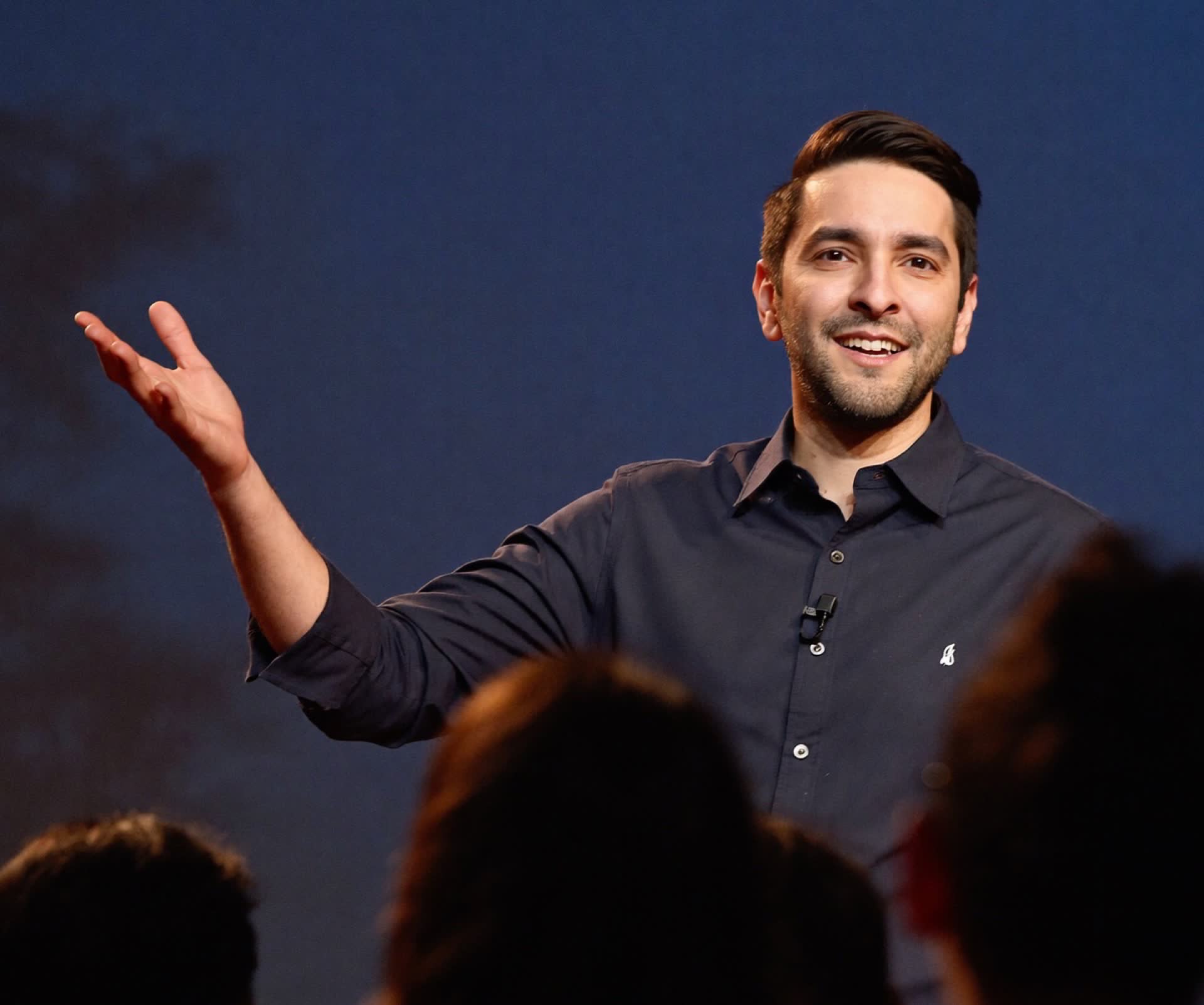
Muzamil opens with a note about the show itself. He named it Dil Ki Baat, a matter of the heart, and not a matter of the head or of work, because he did not come to give sermons. He wants the feel of friends at a roadside tea stall. One friend has read a book and shares what he learned. The other listens, then agrees or disagrees with reasons.
He asks the comment section to do the same. People call each other joker, kafir, extremist or molvi, and that achieves nothing. “You cannot change someone’s opinion by slapping them,” he says. In his experience, the people with the deepest knowledge, whether senior religious scholars or serious researchers, are the most patient with questions. Angry certainty, he suggests, is usually a sign of shallow learning. He notes that Islamic history, especially its golden age, was full of thinkers who debated openly before reaching conclusions.
He also mentions a history episode he plans for later. The world’s oldest civilisation, he says, arose at Mehrgarh in Balochistan about 7,000 years ago, and the Indus Valley Civilisation grew from that community about 5,000 years ago.
Changing the label changes nothing
The previous episode, on the ideology of Pakistan, drew blanket comments. Some said remove religion from the state and make Pakistan secular. Others said bring the Islamic system and nothing else. Muzamil tests both.
Make Pakistan secular, he says. The police, the bureaucracy and the corruption stay the same. Make it Islamic. Which version: the Ottoman or Mughal order, the state of Madina, or the rightly guided caliphs? Slogans are easy, he argues. Implementation is hard, and it hurts people who depend on the old system. He gives interest as an example. Islam had specific, legitimate reasons to forbid it. Abolishing it today would cost jobs and cause unrest, and anyone calling for it should explain how to manage that pain.
The result of skipping that work, in his view, is a hotchpotch. “Pakistan calls itself the Islamic Republic of Pakistan,” he says. “It is not an Islamic republic at all. In reality, Pakistan is a secular Pakistan.”
Two definitions
Muzamil starts with definitions. Secularism is the principle of running human affairs on natural considerations, separate from religion. The state’s laws and decisions rest on humanistic principles, science and data. They may match religious teaching, but they are not drawn from it.
An Islamic system, by the definition he reads, is a complete set of social relationships built on Islamic principles. It covers the economy, politics, culture, morals and a society’s sense of where it comes from and where it is going.
He explains why Pakistanis react so strongly to the word secular. In his reading, the United States and Western Europe spent the last 20 to 30 years waging the war on terror, destroying Iraq, Libya and Syria, and demonising Muslims. Western media also mocks religious people, including Christians. So “secular” arrives sounding anti-Islam. Muzamil calls that Western version anti-religious and says it is a recent development. Secularism as a system never had to mean that.
Indonesia, India and the weight of region
To get past the word, he reframes the choice as a state without a religion versus a state with Islam as its official religion. Then he looks east.
Indonesia is the largest Muslim country in the world and has no state religion. It calls itself secular. Yet it has many devout Muslims, and Muzamil cites a study he read during his research: over the last 30 years, many Indonesian women chose to wear the hijab of their own accord. The state stayed out. The public built mosques and schools and did its own preaching.
His wider observation is that values follow region more than official labels. Countries in the Far East with Buddhist, Islamic or secular constitutions share similar values. India calls itself secular, and Pakistan calls itself Islamic, yet in his view both behave the same. He says India is now going through Hindu majoritarianism, and that in many Indian states cow slaughter and beef are banned and lynchings follow. In his reading, Pakistan went down a similar road in the Zia-ul-Haq era, when religion was used as a political tool, and is still paying for it through terrorism. On the Pakistani side he asks whether the Islamic label ended theft, rape or child abuse. It did not.
Why a theocracy cannot work in Pakistan
Muzamil separates two Islamic models. A theocracy, as in Iran, rests on one supreme figure, an Ayatollah or an Amir-ul-Momineen, seen as authorised by God to decide matters of religion and governance alike.
He asks whether Pakistan could choose such a person. By his rough breakdown, about 40% of Pakistanis are Barelvi, 40% Deobandi, 10% Shia, and the remaining 10% Ismaili, Christian, Hindu, Sikh and others. Choose a Deobandi and the Barelvis object. Choose a Barelvi and the Deobandis object. Choose a Shia and everyone else objects. He also notes that history has few true theocracies. Most caliphates were monarchies with Islam as the state religion.
That leaves the second model, a state with Islam as its official religion. He lists Malaysia, Bangladesh, the Maldives and many countries in the Middle East and North Africa. Pakistan’s inherited democracy could fit it: elected representatives make laws, and a Council of Islamic Ideology, with all major sects represented, checks those laws against Islamic principles.
What a state religion really looks like
Here Muzamil makes the point he thinks most people miss. In Muslim countries where Islam is the official religion, a central council of scholars from every sect agrees a common code on the shared fundamentals. The state then regulates religion closely. Every mosque has a government-employed imam who speaks within those agreed principles. Step outside them and the state steps in.
Pakistan does the opposite. Any cleric can set up a Deobandi, Barelvi or Shia mosque, choose his scholar and preach against the others. That free market in religion, Muzamil argues, is what you find in secular countries. “Pakistan is actually more secular than Islamic,” he says. Like free-market capitalism, unregulated religion lets the biggest player swallow the rest, opens the door to majoritarianism and leaves no check on who is preaching or what training they have.
He adds that many of Pakistan’s leading scholars were killed in terrorist attacks in the 1980s and 1990s, and that religion was then taken over by less learned people while educated believers stayed silent. Many viewers, he says, follow new YouTube scholars without knowing which school of thought they belong to.
He contrasts mosques abroad with those at home. In Turkey, the Middle East and modern Saudi Arabia, including Makkah and Madina, he finds mosques that invite people in. Pakistan’s mosques, in his words, “frighten you and threaten you” and keep telling you what will lead you astray.
Freedom inside an Islamic system
Muzamil says the secular crowd’s real fear is that an Islamic system would look like the Taliban. He calls that form of Islam recent, about 40 years old. In the Islamic golden age, the Ottoman Empire and the Mughal Empire, he argues, Muslims were among the most tolerant people on earth. Minorities historically paid the jizya tax and then had full freedom to practise their faith. In a state religion model, he says, Islam is the most regulated religion, and a confident system does not fear other faiths.
He urges viewers to study Muslim countries in detail. Look at Malaysia’s films, concerts and dress rules, and at women’s freedom, rape rates and child abuse there. Turkey is secular and, in his view, going through an Islamic renaissance. Malaysia has Islam as the state religion and a mixed Malay and Chinese population. Both are middle-income countries that grew through hard work without oil money. Indonesia is secular. The UAE has Islam as its state religion and no democracy. Compare how mosques, scholarship and governance work in all four.
His own view: an Islamic, democratic state
Muzamil says that after the last episode some viewers assumed he was selling secularism. So he states his personal opinion, and says it can change.
“My personal view is that Pakistan should be a state with the official religion Islam,” he says. It cannot be a theocracy like Iran. It should keep democracy. Ideally, he says, it would be an Islamic socialist democratic republic. He adds the word socialist because the state should care for the poor and lift them out of poverty.
He wants two priorities: knowledge and education, and economics. In the Islamic golden age, he says, the state funded scholars, philosophers and scientists alike, and that patronage made the period shine. Pakistan should educate its people and combine religious and worldly learning. Mosques should be regulated, unified and centralised. Top academics, from anywhere in the world, should set guidelines that run from top to bottom.
“We cannot become the Taliban,” he says. “That is not Pakistan’s DNA.” He notes that Pakistanis have never given a single Islamic party a majority. In his reading, most people want an Islamic order with freedom, and not the suffocating version of the last 30 to 40 years.
The next episode will trace the thinking of subcontinent Muslims from Sir Syed Ahmed Khan to the creation of Pakistan. He closes by asking viewers who disagree to say so kindly in the comments.


Never miss a conversation.
New episodes and the thinking behind them, straight to your inbox. No hype, no spam, no pitch.