Thought Behind Things
Why Karachi's housing crisis is a governance problem
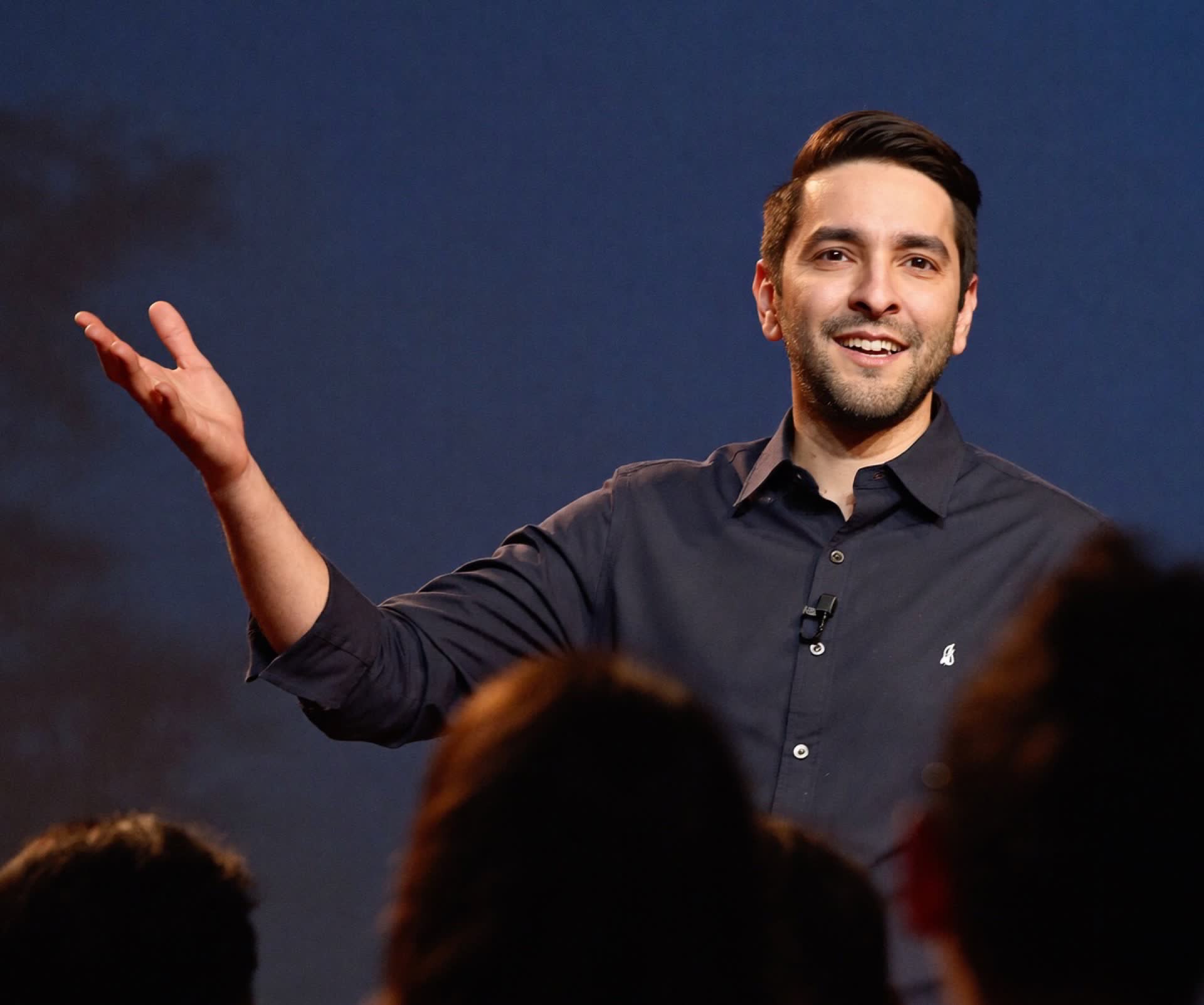
Humza Tabani — CEO of Tabani Group, former airline operator, and construction developer — walks through what it actually takes to build in Karachi: 17 agencies, political interference, and a land market pumped full of black money.
From textile mills to a private airline
The episode opens with Muzamil introducing Humza Tabani as a veteran businessman from Karachi with experience across industries that rarely overlap — textiles, aviation, and construction. Tabani traces his roots to a prominent Memon business family, a community he describes as Pakistan’s most powerful business constituency.
His early career was shaped by being the eldest son. “I was always into doing business,” he says. “Mujhe apna time waste karna acha nahi lagta tha” — he did not like wasting time, which meant formal education took a back seat to joining the family enterprise. The Tabani Group at that point ran spinning mills, weaving looms, and a full range of value-added textile products.
The pivot to aviation came in 2002 when the family decided Humza should take over Aero Asia, the group’s private airline. He walked into his first operational board meeting and immediately asked the director of flight operations to chair it — he was there only to observe. “Jab pehli dafa headwind aur tailwind ka zikr mere dimag se guzra, I had no clue at that point of time.” That admission of ignorance on day one, and the decision to listen before acting, is a thread that runs through everything Tabani describes about management.
By the time he took over, the airline had shrunk from eleven aircraft to three. Over the following four years he rebuilt it to twelve aircraft — Boeing 737s, DC-9s, and MD-82s acquired from American Airlines in Phoenix — and grew passenger numbers to 90,000 per month.
Why aviation is almost impossible to run privately in Pakistan
Tabani is direct about why Aero Asia eventually wound down in 2006. The airline operated through nine governments in fourteen years, including caretaker administrations. “Beach mein to aisa tha ke deedh saal ki baari lagti thi” — governments rotated roughly every eighteen months. Each transition brought new aviation policy uncertainty.
He explains the economics with precision. A flight with 170 seats, 120 passengers booked, and a break-even of 130 still has to fly. You cannot hold 120 passengers at the gate and redirect them to the afternoon service. The seat that goes empty is revenue permanently lost — what he calls a perishable commodity. The same logic applies to cargo hold capacity. “Jitne kam landings hon aur jitni zyada flights hon, itna it’s more viable operationally.”
But the deeper problem, he tells Muzamil, is structural. “Aviation ke baare mein to bada mashhoor hai na — you start with billions and you end with billions.” Without bank financing, a public listing, or semi-government backing, a private airline in Pakistan is fighting on too many fronts simultaneously. Ease of doing business, he says, remains the single biggest issue — and it has not improved.
Building 900 apartments in Karachi: the Dubai model
After selling the airline, Tabani took a month off — the first real holiday he had managed in years — and then spent six months untangling the legal and tax paperwork that accumulates inside a large family business when it separates its holdings. By 2007 he had started fresh in construction.
The project was Al Khalij Towers: ten towers, 900 apartments, ground plus sixteen floors, in the Yaseen Abad area of Karachi — five minutes from the Expo Centre in Gulshan-e-Iqbal. The name itself was borrowed from Dubai. Tabani had studied Dubai’s construction model and brought back a specific concept: covered car parking for every resident, a proper entrance lobby, gymnasium, swimming area, barbecue area, and play space. “Covered car parking har bande ke liye — that was the key which I targeted.”
In 2007, construction cost in Karachi was around 2,000 rupees per square foot. The project was delivered in two phases over roughly seven years, with full deliveries beginning in 2013. By the time Muzamil speaks with him in 2022, the towers are complete and fitted with solar panels and high-definition surveillance cameras.
Tabani is candid about how construction has changed. In 2007, a building needed only corridor lighting and a generator capable of running one lift. Today a developer must provide solar connections, anti-corrosion coated glass, full HVAC systems, a reception area, and a gymnasium. “Everything is a cost.” The customer expectation has moved up a notch — driven, he argues, partly by social media showing people what is possible.
The 17-agency problem and why Karachi cannot plan itself
Muzamil pushes Tabani on the mechanics of getting a building approved. The answer is striking. For a single commercial plot — legally gazetted as commercial, registered with a housing society — a developer must obtain NOCs from seventeen separate agencies before construction can begin. These include the master plan department, building control, water board, and a string of municipal bodies that do not coordinate with each other.
Tabani uses a simple illustration to show what unplanned density does to a city. A 1,000-square-yard house with eight residents gets replaced by a 60-apartment building. Five people per apartment means 300 families. “Kya udhar ke sewerage line usko support karegi? Kya paani ka connection usko support karega? Kya school ka network jo udhar hai woh support karega?” The infrastructure was designed for the original eight residents. Nobody updated the master plan.
The same fragmentation applies to roads. When a new road is built, the water board, sewerage authority, electric utility, and gas company should all be coordinating. In Karachi they do not. “Jab departments aage se synchronize nahi honge, department ke andar interconnectivity nahi hogi” — a road gets built, a water line leaks underneath it the next day, and the road is destroyed.
He also describes the five-year Supreme Court order banning high-rise construction across Karachi. During that period, new Karachi — with its own incomplete documentation — continued to develop, while established commercial plots in the old city sat idle. When the ban was eventually modified to allow high-rises only on plots that were “by birth commercial” — gazetted as commercial from the original society layout — it created a two-tier market that still shapes where development is possible.
Federal policy, provincial politics, and the housing gap
Pakistan is short 10 million houses nationally. Karachi alone accounts for 5 million of that deficit. Tabani walked through the previous government’s housing policy in detail — he had his team vet it and produce an executive summary — and his conclusion is blunt.
The policy was well-designed on paper. But Sindh is governed by the Pakistan Peoples Party. The water board, building control, and key implementation agencies all sit under PPP. The federal government at the time was PTI. “Dono ek page par to thi hi nahi.” The federal government played its political card by announcing the policy. The provincial government played its card by not implementing it. “Hua kya? Policy paper par hai.” The city fell further behind.
Tabani extends this argument to Punjab, where he notes that DHA-era development moved quickly precisely because federal and provincial governments were aligned. Policy continuity, he argues, is not a technical problem — it is a political one.
Later in the discussion, Muzamil asks about the flood-affected areas Tabani has been visiting every Thursday, Friday, and Saturday. Tabani describes communities where children have run out of tears, where families have been sleeping under open sky for a month with no footwear. He coordinates with the Navy for logistics and with the Army and Rangers for security. His frustration is directed not at the relief workers on the ground — he praises them — but at political parties whose volunteers only reach areas within their vote banks. “Peeche koi nahi jata. Poore poore road hat gaye hain. Log bandon par reh rahe hain.”
The land market, black money, and why developers cannot compete
Muzamil raises a point that Tabani immediately validates: the land market in Pakistan has been so thoroughly inflated by black money and speculative capital that legitimate construction economics rarely work. “Land ki cost 60 percent hai to aapke liye waara hi nahi khaega — saaf si baat hai.”
Tabani adds a layer. Property tax in Pakistan is effectively 0.001 percent of the total tax base. Landowners have every incentive to hold, collect rent, and wait. Builders have no incentive to enter a market where land alone consumes most of the feasibility. The result is a market that produces luxury apartments for the upper-middle class — which is what his own first project served — but almost nothing for the lower-middle class or below.
He describes the cash economy around property transactions in detail. A foreign investor trying to buy a 5 million rupee property is told to pay 2 million by bank transfer and 3 million in cash. “Teen million main cash carry karke gadiyon mein se lakar dekh aise.” The investor walks away. The transaction never happens. The market stays opaque.
On the export side, Tabani gives a parallel example. A manufacturer books machinery overseas at 180 rupees to the dollar. By the time the shipment arrives at port and payment matures, the rate is 240. “You are talking about good 25, 30 percent of the entire feasibility.” The feasibility study — which cost 15 to 20 lakh rupees to produce — is immediately obsolete. The consulting firm shrugs: “Yeh to mulk ka masla hai.”
What a real solution looks like
Muzamil asks Tabani directly: given everything you have seen across aviation, textiles, and construction, what is the actual on-ground solution?
Tabani’s answer is consistent and specific. He does not want political power. “Hamara koi politics se lage kare kuch nahi — hum businessman Memon aadmi hain.” What he wants is a board of ten to fifteen people: experienced businesspeople, retired technocrats, former secretaries. No political party representatives. No tigers, no lions, no party symbols. A serious think tank with the authority to set five- or ten-year policy and hold implementers accountable.
His model for accountability is simple. Award a contract transparently, through proper procurement rules, with full committee review. Once awarded, let the company build. If a new government arrives and wants to review it, review the paper trail — but do not stop the work. “Jab ek businessman ko aap notice maar ke NAB mein kheench denge — dekiye, woh politician nahi hai. Businessman ki aadat jail jaane ki nahi hai.” The threat of arbitrary legal action is itself a deterrent to investment, regardless of whether the businessman has done anything wrong.
He returns repeatedly to the idea that right person, right job is the missing variable. His example: Pakistan’s IT minister at the time, he suspects, would scroll through a WhatsApp chat manually to delete photos rather than use the top-right menu. “Main pretty sure hoon.” A cardio specialist cannot treat a toothache. The same principle applies to cabinet appointments.
On the macro picture, Tabani lays out the numbers plainly. Exports are $31 billion. Imports are over $85 billion. The deficit is $48 billion. Remittances and other inflows cover perhaps $15 to $18 billion. “Tees billion ka deficit to phir bhi hai na? And you are not talking about tees billion rupees. It is $30 billion.” Against that gap, IMF tranches of one or two billion dollars are noise. The only real solution is cutting the import bill and growing exports through value addition — he uses the textile chain as his example, showing how adding processing and stitching to raw fabric can multiply jobs from 2,000 to 3,000 or 4,000 per production unit.
By the end of the conversation, Tabani is measured but not optimistic about the timeline. “Abhi bhi hamare paas ek do teen saal hi haath mein hai yeh sab cheezon ko align karne ke liye.” He believes Pakistan is a gold mine — his phrase — but one that is consistently mismanaged, misrepresented, and left without a coherent vision. “Leader don’t create followers, leader create leaders. Vision is missing.” The current government has it. The previous one had it. Neither has delivered it.
Muzamil closes by noting that Karachi — which generates close to 60 percent of Pakistan’s GDP, hosts its largest middle class, and is its most educated city — has been ignored for the longest time. Tabani agrees. Sort Karachi, he says, and the rest of the country follows its lead.


Never miss a conversation.
New episodes and the thinking behind them, straight to your inbox. No hype, no spam, no pitch.