Thought Behind Things
The American who saw Pakistan before the VCs did
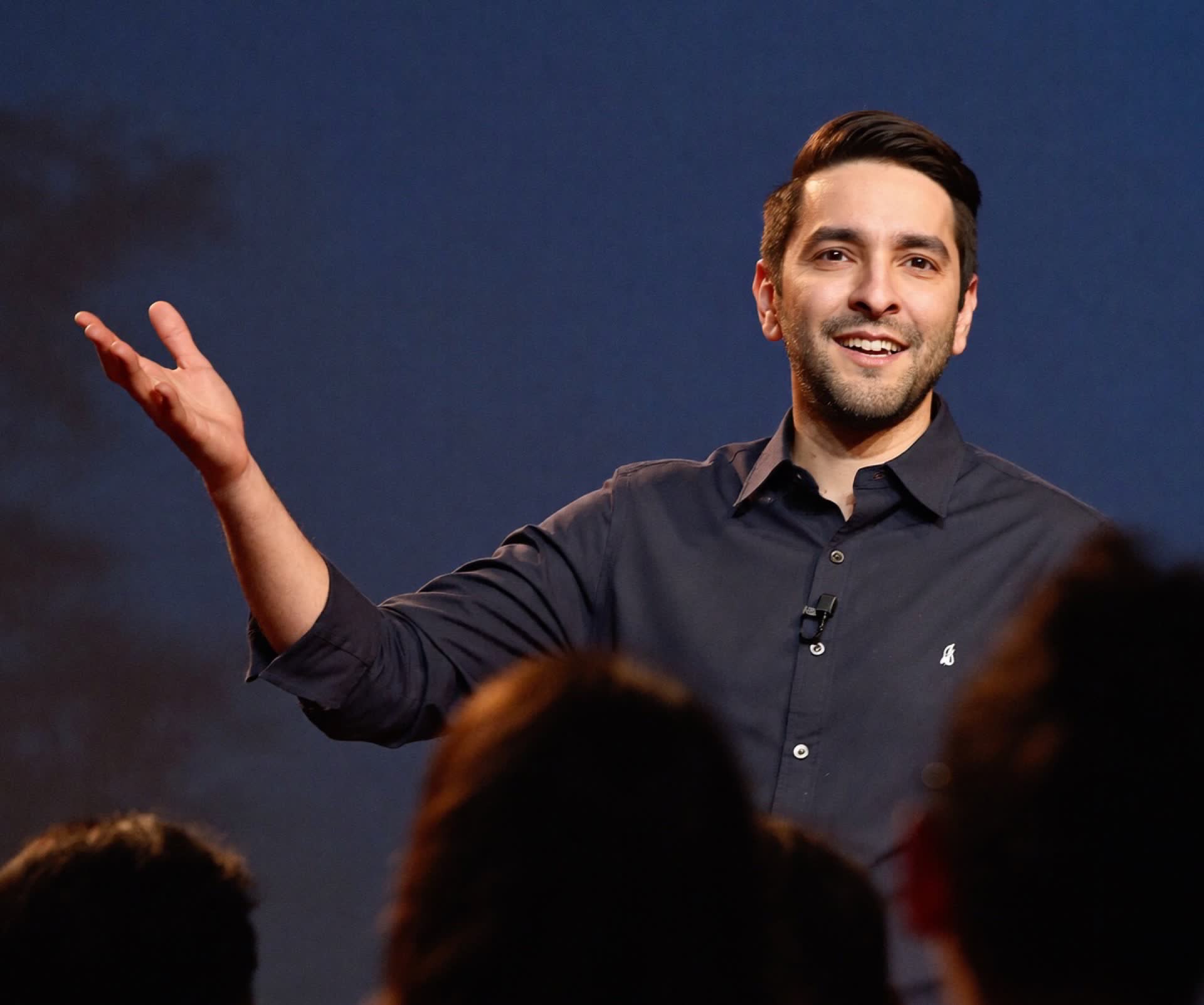
Brandon Temensky, CEO and founder of SadaPay, traces the unlikely path from selling Twitter followers as a teenager in Miami to building one of Pakistan's most talked-about fintech products — and explains why the country's payments revolution is not a matter of if, but when.
From Twitter followers to fuel trucks
The episode opens with Muzamil noting that Brandon Temensky is one of the most-requested guests in the Thought Behind Things community — and that he will be conducting the interview in English, a departure from the show’s usual Urdu format.
Brandon’s origin story is not what most listeners would expect from the founder of a Pakistani fintech. Born and raised in Miami, he describes himself as “a really introverted, video game addicted, nerdy kinda guy” in his early teens. At 14 or 15, he taught himself HTML and then PHP to build a website for his online gaming team. That skill led directly to his first business: a network where users would follow each other on Twitter, with a paid tier for faster follower growth. “As a kid, I was making, like, $500 a day,” he tells Muzamil. The business went viral within weeks through a simple growth hack — requiring new members to tweet about the network on joining — but Brandon admits he did not appreciate the success, failed to keep up with competitors, and lost the business within a year. The lesson he carried forward: “If you fail a customer, it’s really hard to get them back once you break that trust.”
University followed, where he studied economics and marketing part-time while running online businesses — men’s skincare, automotive aftermarket parts, two real estate technology attempts. He dropped out after the equivalent of two full years, having concluded that an internet marketing textbook published three years earlier was teaching him nothing he had not already learned by doing. His last and most developed startup before SadaPay was Gas Ninjas, an on-demand fuel delivery service that began consumer-facing and pivoted to servicing distributed fleets — police cars, elevator technicians, air conditioning crews — whose drivers took vehicles home overnight. The company was acquired by its main Silicon Valley competitor at the end of 2017.
Indonesia, Gojek, and the discovery of Pakistan
After the Gas Ninjas exit, Brandon took what he calls a “mini retirement,” moved to Indonesia, and spent two and a half years in a coworking space in Jakarta. There he encountered Gojek, the Southeast Asian super-app that had grown from a motorbike-hailing service into a platform covering payments, food delivery, and dozens of other verticals, eventually going public at roughly $38 billion. More importantly, he met John Shepherd, Gojek’s CTO for its entire financial services division, through a Slack channel in that same coworking space.
Pakistan entered the picture through a university friend, Attik Afsal, who spotted Brandon on Instagram and invited him to visit. Brandon arrived for the first time in late 2018 with the same vague Western impression of the country that Muzamil describes — “a land of desert and camels” — and was immediately surprised. What he found on closer study was a market with structural advantages that were being almost entirely ignored by global capital.
He had noticed that Pakistani banks carried some of the highest pre-tax profit margins in the world while simultaneously holding the lowest private sector credit-to-GDP ratio among emerging markets. He compared Pakistan to Nigeria, which received roughly $600 million in venture capital in 2018 versus Pakistan’s approximately $10 million, despite Pakistan having a larger population, a larger middle class, better smartphone penetration, faster internet, and — the detail that struck him most — over 93% of adults holding a biometric identity card. “In financial services, you need to know who your customer is,” he explains. “It’s called KYC. It’s a big deal.” Nigeria, by contrast, had fewer than 30% of adults holding any identity document at all.
Building the team and surviving the two-year license wait
Brandon spent roughly a year visiting Pakistan repeatedly — days at a time, then weeks — before committing to build something. He describes his approach to networking as a probability game: “Every time you connect with someone, you meet someone, that’s an opportunity to get lucky. I think you can create your own luck.” Through that process he assembled a founding leadership team of veteran Pakistani bankers: CFO Tessir Ali, COO Omer Salimullah, and Chief Compliance and Risk Officer Abdul Kadir Sultan.
John Shepherd eventually left Gojek to join SadaPay as CTO — moving from a company worth tens of billions of dollars to an early-stage startup. Brandon attributes the decision to John having watched Indonesia go from an all-cash to an all-digital economy in roughly five years and wanting to be present at the very beginning of what he believed would be a similar transition in Pakistan.
The State Bank of Pakistan’s EMI license application took two years to process — a shock to Brandon, who had assumed it might take six to nine months based on the UK’s three-month EMI timeline. The commercial license was approved in late April 2022, with a commercial rollout beginning in May. By that point, SadaPay had already accumulated over 500,000 waitlist sign-ups through a referral mechanic borrowed from early Gmail: sign up, invite friends to skip ahead in the queue, and watch the network spread itself. “Well over a million people had signed up pretty much just because of this growth hack,” Brandon tells Muzamil. The waitlist was not purely a marketing device — it was the only way to avoid the operational catastrophe of trying to onboard half a million people and deliver half a million debit cards in a single day.
At the time of recording, SadaPay had approximately 250 employees, 65 of them in product and engineering, and had raised a total of $20 million from mostly US and UK investors across a seed and seed-plus round.
Why SadaPay spends nothing on marketing
Later in the discussion, Muzamil presses Brandon on the business model — how a company that charges no account fees, no transfer fees, and gives away debit cards can sustain itself. Brandon’s answer has two parts.
The first is interchange. Every time a customer spends with a SadaPay debit card, the merchant pays a processing fee that gets distributed among the players in the transaction. “On average, we’re getting about 1% whenever someone spends money with a debit card,” he says. The second part is the product pipeline: international payment processing for freelancers, remittances, and eventually credit products distributed in partnership with licensed bank partners, since the EMI license does not permit SadaPay to lend directly from deposits.
The zero-marketing-spend policy is not just a cost-saving measure — it is a deliberate statement about what kind of growth is sustainable. Brandon is pointed in his criticism of competitors who have spent heavily on customer acquisition: “If you’re selling a dollar for 90 cents, people will buy that dollar all day.” He contrasts this with SadaPay’s approach of investing the marketing budget into the customer experience instead — a support team that responds with emojis and GIFs, proactive chasing of missing transfers rather than waiting for customers to file disputes. “When you talk to us, it’s probably because you have some issue with your money, and that’s a very stressful moment for you. And if we can really be there for you in the moment of need… that is so different than from what you’ve ever potentially experienced before with a financial institution.”
The rails problem and why RAAST matters
Muzamil raises one of the most substantive technical questions of the conversation: SadaPay’s product experience depends on underlying payment infrastructure it does not control. Banks go down. Transfers disappear. How does a fintech that promises simplicity survive on rails it did not build?
Brandon’s answer is layered. SadaPay claims a transfer success rate of 99.98%, with the remaining 0.02% attributable to failures in third-party systems — the banking switch, the connectivity between the switch and the bank, the bank itself. The company builds redundancy into every hop and monitors proactively for money that goes missing, rather than waiting for customers to notice and complain. The speed advantage over legacy banks comes from building on modern technology rather than systems that are, in some cases, twenty or thirty years old.
The structural fix, he argues, is RAAST — the State Bank’s new instant payment rail, which provides finality within twenty seconds and makes a phone number or email address a valid account identifier. He draws explicit comparisons to UPI in India and PIX in Brazil. But he also observes what looks like a conflict of interest slowing adoption: “It almost feels like some of these banks don’t really want to promote RAAST as much, maybe because they’re not allowed to charge for it.” The old system still permits fees. RAAST does not. Alongside RAAST, the State Bank has mandated a single interoperable QR standard, meaning a merchant needs one code to accept payments from any app — the same resolution India eventually imposed after merchants ended up with fifteen different QR codes on their stalls.
The middle-down strategy and the path to critical mass
One of the sharpest exchanges in the episode comes when Muzamil challenges Brandon on the gap between SadaPay’s current demographic — tech-savvy, middle-income millennials and Gen Z — and the much larger population of Pakistanis who live in a cash economy, many of whom are not literate in any language. He uses the example of his own cook, who has a Standard Chartered account he cannot access because he never entered an email address during setup and is now trapped in a helpline loop he cannot navigate.
Brandon does not dismiss the challenge, but he pushes back on the assumption that it is insurmountable. He points to M-Pesa in Kenya, where 60% of GDP is transmitted over a platform that requires users to type USSD strings — “as rudimentary as it gets” — as evidence that people will learn a simple financial interface if it is built for them. He also cites TikTok as a design lesson: Instagram required sign-up and assumed sophistication; TikTok opened to content immediately and reached demographics no one expected.
The middle-down sequencing is deliberate and economic. Serving low-income customers in financial services produces thin margins and tiny wallet sizes, requiring enormous scale before any profit is possible. Starting with the middle income demographic allows SadaPay to reach profitability sooner and build the distribution channel that can eventually extend downward. “It’s much smarter and much more sustainable to go from the middle down and serve everybody else,” Brandon says. “It’s really hard to go from the bottom and then work your way back up.”
The chacha thought experiment captures the mechanism: a millennial tries to pay digitally at a cash-only kirana store, gets refused, walks across the street to the competitor who accepts digital payments, and buys there instead. The first chacha is not ideologically opposed to digital — he simply has not yet felt the cost of refusing it. When he does, he will adapt. “Everywhere else around the world, this is how it’s happened.”
What comes next, and Pakistan in 2050
By the end of the conversation, Muzamil asks Brandon to describe the next twelve months in concrete terms. Brandon is deliberately vague about specifics — “these are kind of, like, secrets” — but confirms that the near-term focus will be on freelancers and remittances. A business account for freelancers is in development. The company is working toward launching what it describes as the lowest-cost exchange rate in the world for inbound rupee transfers. Early credit products and savings features are also on the horizon, with an explicit philosophy that good financial design can teach financial literacy: “There’s probably only two ways to improve someone’s financial position. You can throw money at them, give them a grant or a subsidy, or you can teach them how to better manage their money.”
On the question of PayPal — a recurring request from Pakistani freelancers — Brandon is candid about the structural barrier. Pakistan’s data-sovereignty regulations require that financial data on Pakistani citizens remain in the country. PayPal withdrew from Turkey for the same reason. Without AWS, Google Cloud, or Azure infrastructure in Pakistan, the cost of building compliant local infrastructure is difficult for any large foreign platform to justify commercially.
Muzamil closes by asking Brandon to sketch Pakistan in 2050. The answer is optimistic but grounded in specifics rather than slogans: universal smartphone and internet access, digital payments as the default, a significant expansion of IT exports as young Pakistanis earn in foreign currency without leaving the country, and — the detail that feels most personal — international tourism to the north. Brandon visited Skardu, Karakoram, Hunza, and Gilgit and describes them as exceptional. He imagines international airports, foreign bloggers, and the slow repair of a perception problem that has kept global capital away from a market he believes is genuinely undervalued. “Pakistanis are incredibly patriotic, much more so than many other people I’ve met from other countries around the world,” he says. “I hope to play a small part in that.”


Never miss a conversation.
New episodes and the thinking behind them, straight to your inbox. No hype, no spam, no pitch.