Thought Behind Things
The man quietly connecting rural Pakistan to the internet
Haaris Mahmood Chaudhary, CEO of Universal Service Fund Pakistan, explains how a decade-old telecom levy is being used to bring fiber, 4G, and eventually 5G to the most underserved corners of the country — and why connectivity is only the beginning.
From cricket dreams to Citibank New York
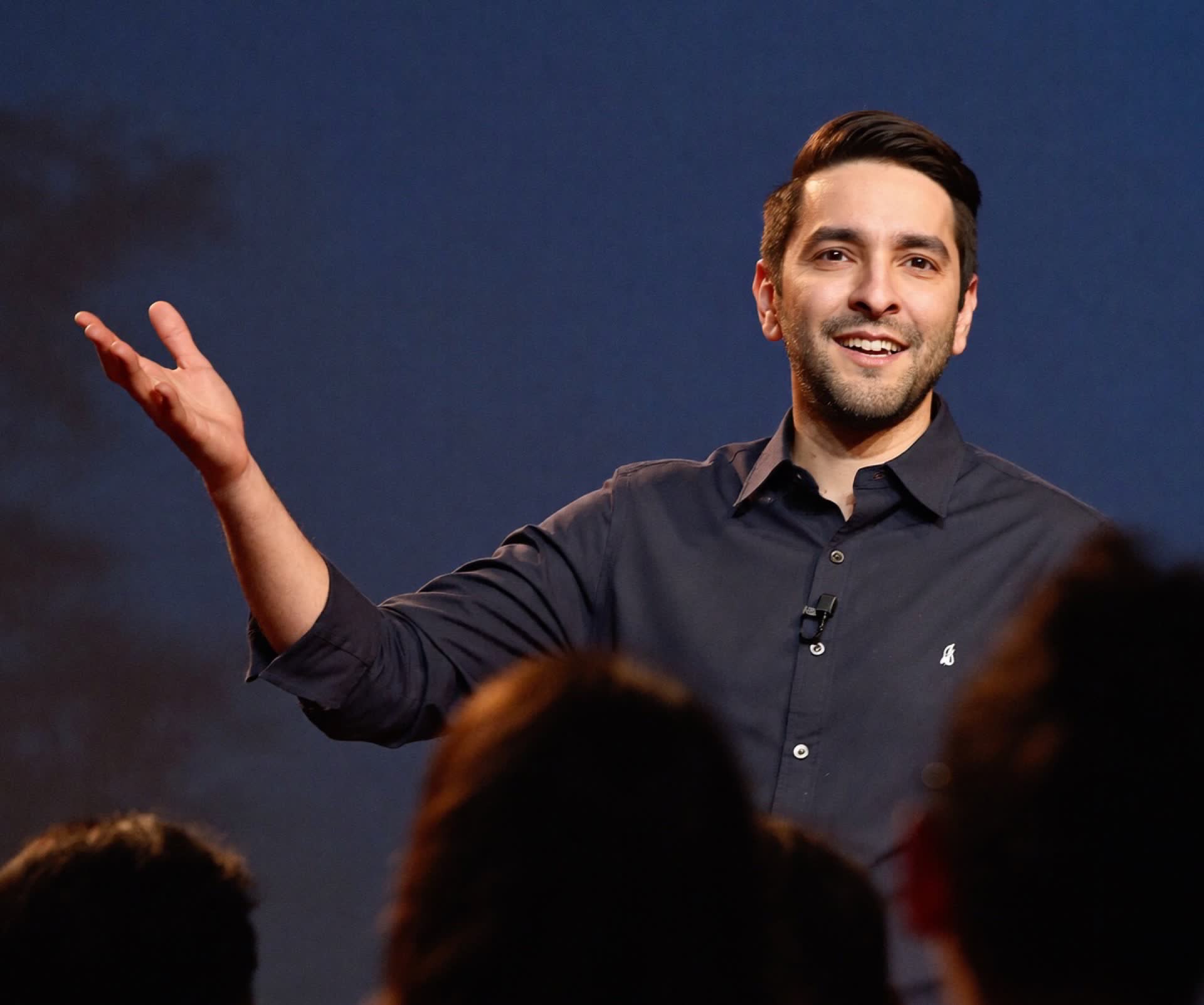
The episode opens with Muzamil framing the conversation around a conviction he holds personally: that internet access has become a basic human right, as fundamental as roti, kapra, and makan. The guest he has invited to explore that idea is Haaris Mahmood Chaudhary, then CEO of the Universal Service Fund Pakistan — the organization specifically designed to bring high-speed internet to the country’s underserved and rural areas.
Haaris’s own path to that role was anything but direct. Born in Lahore and raised in Islamabad, where his father was a government officer, he describes himself as an average student who was more interested in cricket than academics. “I wanted to go to a college where I could play on the cricket team,” he says, explaining how he pushed his way into Islamabad College for Boys on the back of his sporting ambitions, inspired by Imran Khan and the cricketing legends of that era.
When cricket didn’t pan out as a career, his father gave him practical advice: study economics or political science. Haaris ended up at Bahria University in one of its first two batches for business administration, and a 1997 internship at ABN AMRO — then a high-end private banking institution in Islamabad — changed everything. “I was really fascinated — people getting dressed up nicely, going to office and meeting high-net-worth customers and solving their issues.” He decided banking was his calling.
After graduating, he joined Citibank Islamabad as a training officer, then pursued an MBA at New York Tech and landed at Citibank New York. The contrast with Islamabad was total. “New York — you walk five blocks and you hear all kinds of languages. Initially it was overwhelming, then I started loving it.” He stayed two years before family obligations pulled him back to Pakistan.
The long road back — and an unexpected door
Returning to Pakistan in 2003 with an MBA and two years at Citibank New York, Haaris expected to walk into a senior banking role. Instead, he spent three months unable to find work. He eventually joined Standard Chartered briefly, then moved to ABN AMRO, where within three years he became vice president at 27 — one of the youngest in that role — and was transferred to Karachi as head of wealth management.
When ABN AMRO began winding down its Pakistan operations, Haaris moved to Dubai, joining Credit Suisse at the DIFC and then Barclays Capital, spending three years at each. When Barclays exited the Middle East, he was offered London or Africa. He declined both, gave himself three months to find another Dubai role, and when that didn’t materialize, came back to Pakistan.
The pivot that defined the rest of his career happened almost by accident. “I was sitting in a coffee shop and someone said, ‘There’s a CFO position at a fund.’ I had never even heard of it — it was USF.” He applied, and in the interview was asked directly: “You’re not a chartered accountant. Why would we hire you as CFO?” His answer: “Are you looking for an accountant or a CFO? A CFO has accountants under them.” The committee liked it. He got the job.
What USF actually is — and how it’s structured
Muzamil asks Haaris to explain the fund’s history and structure, noting that USF and NADRA stand out as rare honorable mentions among Pakistan’s public sector organizations. Haaris traces the fund’s origins to an ITU framework established in 2002, with Pakistan’s version set up in 2006 around a single core idea: wherever commercial deployment by telecom operators is not viable, the government steps in to support connectivity.
The funding mechanism is what makes it unusual. “It’s not a fund the government is funding. There’s a levy which is 1.5% of registered gross revenue” paid by all licensed telecom operators. That money is then managed by a board with equal representation from the public and private sectors — cellular operators, fixed-line providers, internet service providers, and a consumer representative sit alongside government officials.
The scale of what has been accomplished under this structure is striking. From 2006 to 2019, the fund deployed approximately 1,800 towers and 8,000 kilometers of fiber. From 2019 to the time of recording, it contracted over 2,000 additional towers and 12,000 kilometers of fiber — more in three and a half years than in the previous thirteen. “60 billion rupees was contracted from 2006 to 2019, and from 2019 to today it was over 75 billion,” Haaris explains. COVID, he says, was the catalyst: it forced operators and government alike to recognize that the fund was underutilized and that connectivity could no longer be treated as optional.
The connectivity gap — and why fiber is so far behind
Later in the discussion, Muzamil pushes Haaris to quantify the actual state of connectivity in Pakistan. The numbers are sobering. Tele-density — the share of the population with any cellular access — sits at roughly 88 to 89%, meaning about 12% of Pakistanis have no connectivity at all. Of those who do have cellular access, only slightly over 50% have 3G or 4G. Fixed broadband — fiber to the home — reaches just around 4 million subscribers, roughly 5% of the population.
The reason fiber has lagged so far behind mobile broadband is structural. Fiber is capital-intensive and labor-intensive, right-of-way policies were only approved about two years before the conversation, and the commercial incentive was simply absent. “Mobile broadband had five players, then four. They had aggressive growth strategies. Fixed broadband had essentially only PTCL, and then Nayatel and Cybernet and FiberStorm — but only in metropolitan areas.”
Muzamil raises a pointed observation: in Pakistan, a 3,000-rupee Jazz 4G package delivers 60-70 Mbps, while a 20,000-rupee fiber line delivers comparable or sometimes lower speeds. “There is literally no real incentive for me to go towards the fixed line.” Haaris agrees, and frames it as a consequence of policy sequencing: mobile broadband grew fast because it was easy and incentivized; fiber was never given the same policy support.
USF’s response is a program called Fiber to UC — connecting every one of Pakistan’s roughly 6,500 union councils to a fiber node by 2028. Currently about 1,800 UCs have fiber, concentrated in major metropolitan areas. The target requires approximately 40,000 kilometers of fiber at a cost of roughly 2.5 million rupees per kilometer — totaling around 100 billion rupees. “Obviously we have funding, but we don’t have that kind of funding,” Haaris acknowledges. “Eventually we will have to raise funding if we want to continue with this program.”
The economics of ARPU and why operators can’t invest
One of the more revealing stretches of the conversation concerns the economics of Pakistan’s telecom sector. Muzamil asks why the industry hasn’t moved toward the contract-based model common in developed markets — two-year commitments, structured pricing — which would give operators the revenue predictability to invest in quality.
Haaris’s answer points to a deeper problem. “Our ARPU — average revenue per user — is the lowest. I think Bangladesh and Somalia have double ours.” Bangladesh, he notes, has a broadly similar economic and telecom profile to Pakistan, yet its ARPU is nearly twice as high. This low floor removes the financial incentive for operators to invest in infrastructure quality, contract structures, or service guarantees.
Pakistan also launched 3G and 4G five to six years later than neighboring countries — the auction happened in 2014, while regional peers had done it in 2007 and 2008. That delay compounded the structural underinvestment. “We were five years behind. But now I think a sense is coming within the industry that these things need to change.” He mentions minimum floor pricing as one idea being discussed — a baseline that would make the sector financially sustainable without destroying affordability.
Smart villages, telehealth, and demand creation
Muzamil asks how USF ensures that towers deployed in underserved areas are actually used — drawing a parallel to water filtration plants in development programs that are installed and then abandoned within months. Haaris’s answer moves from the structural to the human.
He describes two examples from Chitral, where connectivity enabled women selling handicrafts to bypass middlemen and sell directly through Facebook — receiving payment via JazzCash and EasyPaisa. And from Panjgur in southern Balochistan, where a girl who made sketches for 200 rupees to visiting buyers from Karachi began selling through WhatsApp and Facebook, eventually teaching neighbors to use YouTube for makeup tutorials and connecting local designers to Instagram.
“When economic empowerment comes to an area, they become socially empowered as well,” Haaris says.
The most concrete example of demand creation is a pilot smart village program in Kolkukiana, a village 25 kilometers from Islamabad that cars cannot reach — you have to walk in. USF laid fiber, set up a computer lab in the local school, and partnered with an education platform called Taleem to provide remote science teaching, because no science teachers were available beyond grade seven. Within six weeks, over 100 girls had registered. A telehealth platform launched simultaneously saw 200-plus patients register in four to six weeks, 70% of them women and girls. “They said, ‘If this hadn’t been here, we probably would never have addressed these issues.’” A third component brought NADRA mobile vans to handle ID registrations and renewals on-site.
The plan is to replicate this in three or four more villages across all four provinces, targeting the most remote locations, before eventually scaling.
5G — the cycle Pakistan cannot afford to miss again
By the end of the conversation, Muzamil turns to 5G. The pattern is familiar: Pakistan missed the 3G/4G window by five to six years, and now risks repeating the same delay with 5G while India and others have already begun deployment.
Haaris is candid about the impasse. Operators argue that paying $200-300 million for a license for a product consumers aren’t yet buying doesn’t make financial sense — a point he says Aamir Ibrahim, then CEO of Jazz, had made publicly. The government’s position is equally logical: spectrum has value and must be priced accordingly.
His proposed middle path is a trial rollout in Islamabad, Lahore, and Karachi — metropolitan areas where the fiber backhaul and 5G-capable smartphones already exist in sufficient numbers — before any full national auction. “I am very confident that the results will be good and people will use it for positive use cases. IoT, augmented reality — we’ll get some cases from there and then take it to second and third tier cities.” He adds that discussions between government and the private sector are already underway, and that a middle way is likely to emerge. “We don’t want to miss that cycle now.”
Pakistan in 2050 — a bet on youth
Muzamil closes by asking every guest on the show the same question: what does Pakistan look like in 2050? He asks Haaris to answer from the data, not from aspiration.
Haaris’s answer is grounded in demographics. Pakistan’s average population age is in the early twenties. By 2050, Europe, Japan, China, and America will have average ages in the late forties or early fifties. “They will be needing human resource. So we will have the largest youth population.” He places India alongside Pakistan at 27-28 years average age, and argues that even without optimal policy choices, Pakistani talent will find global outlets. “I am very confident that our nation has talent. That talent will go globally and be utilized.”
His ambition for the country: “I am hopeful that by 2050 we should at least be part of the G20.”


Never miss a conversation.
New episodes and the thinking behind them, straight to your inbox. No hype, no spam, no pitch.