Thought Behind Things
Ten investors told him he was too young. He built Food Loot anyway.
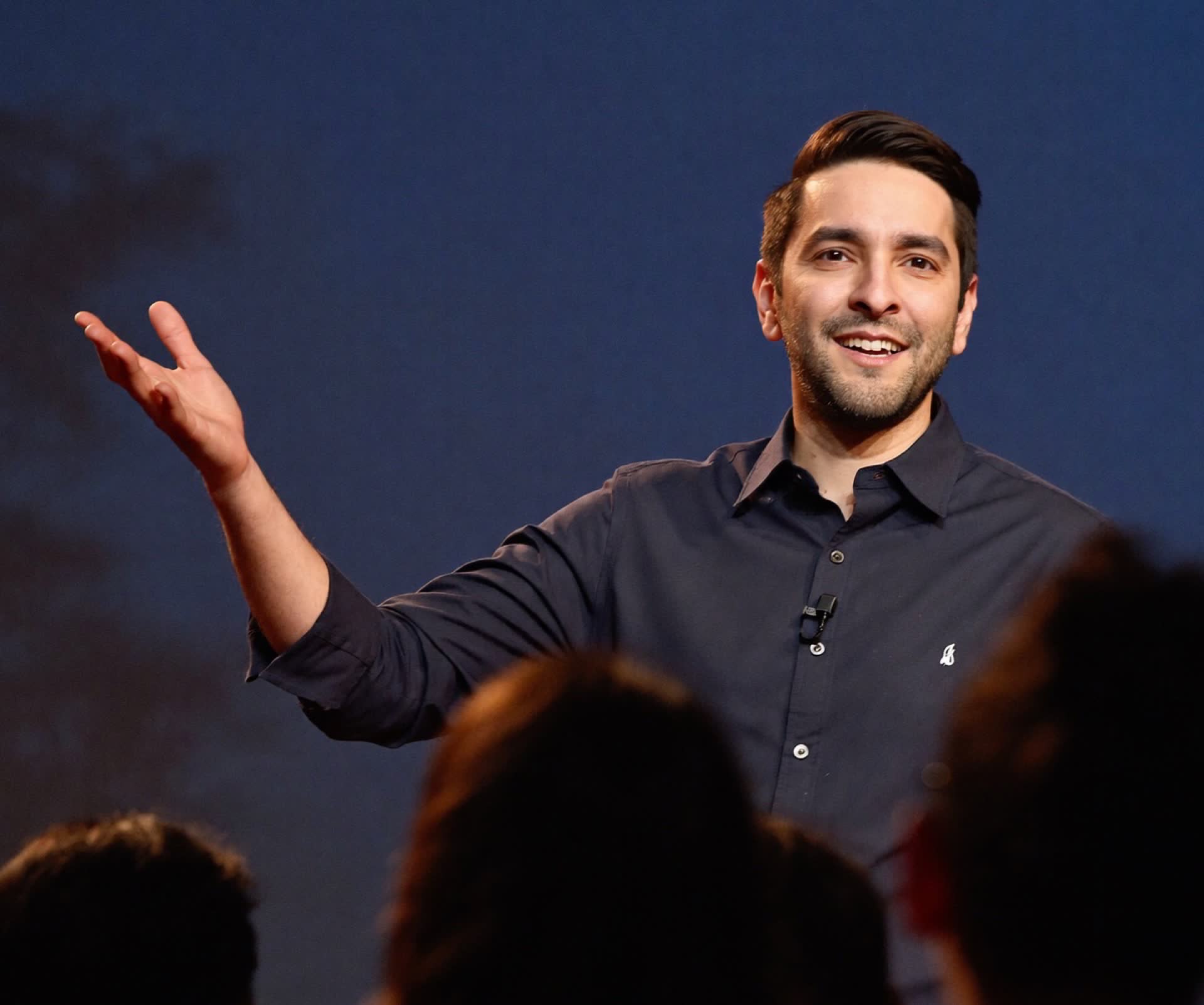
Hasan Haji paused his degree at King's College London to build Food Loot, a Karachi app selling restaurants' surplus food at up to 70 percent off.
A 20-year-old with a surplus-food marketplace
Muzamil opens with his usual frame for the AI series. His golden age for founders, he says, runs from about 28 to 40: young enough to adapt to new technology, experienced enough to understand a domain. A younger founder who comes up with something fresh is unusual. Today’s guest is 20. Hasan Haji spent a couple of years at university in the UK, paused, and came back to Pakistan to build Food Loot, where he is founder and CEO.
Hasan’s pitch is short. Food Loot is a platform that monetises surplus food. It takes the best end-of-day food that did not find a buyer and sells it to users in surprise bags at up to 70 percent off. The catch is that users do not choose what they get. In exchange, he says, they get 2,000 rupees worth of food for only 400 to 500 rupees. Food Loot works with about 150 brands, which gain new buyers. Users get to try new products, and Food Loot sits in the middle as the marketplace.
He does not claim the idea is new. It started, he says, in Denmark about six or seven years ago with a company called Too Good To Go. He used the app many times as a student in the UK, and it inspired him. Similar apps now run around the world, and he names Pika Box in the UAE and Baraka in Saudi Arabia. “We’re not the first people to do this,” he says.
He separates wastage, surplus and expiry. Food Loot does not sell food near expiry, and it does not sell leftovers from someone’s plate. It sells fresh food from that day or from an earlier session, packed into a bag that is good for 24 hours.
Delivery over WhatsApp
Food Loot started about four and a half months before the recording with pickup only, the way the model works abroad: you order a bag, show a QR code and collect it. Karachi is different, Hasan says. The city has been spoiled by delivery apps, so Food Loot had to deliver too. It launched delivery two weeks before the recording and has seen a strong response.
Muzamil assumes Bykea is one of the partners. Hasan corrects him. Bykea left food delivery a couple of years ago after only a few months, he says, but it had built a good team. Four or five people from that team noticed a key problem: vendors were used to WhatsApp and did not want to use Bykea’s system. So they moved their delivery onto WhatsApp entirely.
When Hasan began pitching delivery companies, Bykea was one of the first. He calls Rafiq, who guided him through last-mile delivery, a very good mentor. Rafiq connected him to four people who used to work for him, and their whole model runs on WhatsApp. A customer orders on a restaurant’s website, the order lands in the POS system, and the address and details are copied into a WhatsApp group. Food Loot automated that whole sequence on the backend at minimal cost.
There are now three main third-party delivery providers in the market, and Hasan names them: Drop Off, Speedway and Speedy. He says Food Loot is working out contracts and partnerships with each. When an order comes in, the system uses past data on each company’s riders and strengths to send it to whichever provider performs best at that hour.
From Tanzania and Dubai to Karachi, and a run of hustles
Muzamil notices the accent and asks where Hasan is from. Hasan says he is definitely an ABCD. He lived in Tanzania first, which gave him exposure to Africa, and then in Dubai for most of his life. He came to Karachi during his middle school years and studied there, which is where he says he understood the system, the culture and what people want.
The discount instinct came with him. He can afford food at full price, he says, but the word discount has always appealed to him. “Me as a Pakistani, I just love myself a good deal,” he says.
He calls himself a hustler since high school. He used an early OpenAI beta, a small chat box on the web, before AI was widely known. He would type a line and get a 500-word answer back, and he used it to do other students’ work for a fee. He adds, for any teachers watching, that he is not admitting to anything. He ran TikTok clips for a couple of years, outsourcing the editing to people in Pakistan. He bought each clip for a dollar and sold it for two and a half dollars to streamers in the US. He also resold sneakers. All of it led to his first real startup, Food Loot, which was first called Untossable.
Two hundred doughnuts at 1 AM
The idea came from a doughnut shop. It was 1 AM, and Hasan saw about 200 doughnuts per branch about to be thrown away. Doughnuts have roughly a 12-hour shelf life, he says, so whatever is left goes back to the factory and is binned.
He asked the staff why they did not give the doughnuts to people on the road. The answer was that it would cheapen the brand, and that if the food was not handled well, the shop could be sued. He asked why they did not give it to their own employees. That, he was told, would make staff less keen to sell, since they would rather keep the food for themselves.
Hasan saw a problem on both sides. Vendors waste good food, and customers face food inflation at an all-time high, with the cost of living and gas prices rising too. A middle option, where customers get good food at a discount, made sense to him. He decided he would fund it himself if he had to, even if that meant working 100 hours at a bank.
Muzamil adds history. About a decade ago, he says, a nonprofit called Rizq tried to collect leftover restaurant food and redistribute it, with CSR campaigns from brands such as Pepsi. It worked for about six months and then faded, because someone has to fund it. If you do not put a price on it, he says, restaurants have no incentive to finish the transaction. In his view, Food Loot keeps the noble mission and adds an incentive that makes it sustainable.
”You’re 19”: building the app himself
Hasan first went to venture capitalists in Karachi, about ten of them. Some were family friends and some worked at VC firms. Every one gave him the same answer. “You’re 19 years old,” he recalls them saying. They said they believed in his hustle and talent. But he was 19, he was not in Pakistan full-time, and they did not know if he was committed. “Fail a couple of times and then maybe we’ll see what your next idea comes out to be,” he remembers them saying.
He says it left an imprint. He went back to university in the UK and started learning to code properly. A friend he had met during Umrah, who worked at Google at the time, reminded him that he had studied coding in high school and offered to mentor him through the build.
He tried AI builders first, including Gemini, Lovable and Replit. His first version took about a month and a half of 17 to 18-hour days in a corner of his dorm room. Then he found it was built in React, which he says would not work properly as a mobile app or pass App Store approval. He restarted from zero. This time he used the ChatGPT chat window, not a coding tool. He described each screen, asked for the code, and then edited, corrected and connected it himself. His friend at Google mentored him through problems, including cybersecurity. He says he can now code in many frameworks.
The money has been his own from the start. Hasan says he has taken nothing from family, friends or even his parents. He cut costs wherever he could. When an uncle wanted a golf app, he built it to earn runway. He built websites and apps for family and friends. Now people approach him every day to build apps, so he outsources the projects to a team and takes a middleman commission. “Everything, I can assure you, has all been bootstrapped and self-funded,” he says.
Muzamil pushes on the numbers
Food Loot started from scratch about four months earlier, with no marketing experience and no Meta ads. Until the month before, Hasan says, he thought Meta ads were useless, and he no longer does. Vendors came through cold calls and pitches, one vendor leading to the next, which he calls web theory. The team is about ten people across sales, marketing, customer support and product.
He gives the user and vendor numbers. Food Loot has about 150 partners and roughly 40,000 users. The brands he names include Test Kitchen, Costa Coffee and Subway, and he says Food Loot is in talks with McCafe. Each brand page is tailored to how the brand wants users to feel. A pizza place, for example, wants users to know they will get pizza, so the surprise is only partial.
He is reluctant to give a bag count, so Muzamil pushes. He says he was a very nice person for the last five years, but anyone can now open a business on the internet, and it is his job to make founders on the show prove they are real. Pakistan is a low-trust society, he says, and people do not like sharing numbers. He has lived through Airlift and through many founders who said one thing and did another. “Either you’re committing tax fraud, in which case don’t come on my show,” he says. If not, tell the public the numbers.
Hasan answers. Of about 40,000 users, he says, roughly half are active in a typical month, around 20,000, and in some months it reaches 70 percent. Users follow nearby brands and get a notification, which he calls a deal drop, when a brand within about a kilometre posts a bag. On sales, he says Food Loot sells about 100 to 150 bags a day. Some days it drops to 40 or 50. Mondays and Tuesdays are the slowest.
Muzamil calls 100 orders a day a great number this early, especially with delivery only two weeks old. He thanks Hasan for sharing it, and says he thinks he has caught him very early.
The next six months
Hasan says the team set six-month KPIs for every department that very morning. The user goal is 200,000 to 250,000 users within six months. He sets goals he has a 40 to 50 percent chance of hitting, which he calls an Elon Musk principle. Even reaching 75 percent of a stretch goal beats a safe target, he says.
The vendor goal is to grow from about 150 to 600 to 800 within six months. Someone in Johar, Safura Chowk, Nazimabad or DHA should have 50 vendors posting deals nearby, he says. It should cover all of Karachi, well beyond DHA and KDA. After Karachi, the goal is to be Pakistan-wide by the end of Q4 2027, in Lahore, Islamabad and the other tier one cities, and then tier two cities.
On funding, Hasan says he is not looking at venture capital right now. When he started, he believed he had to raise because that is what startups do. He now thinks many good ideas fail simply because a VC rejected them. He accepts that without debt, funding or a grant it is hard to scale fast, and says raising may come in the next six to eight months. For now, the focus is on acquiring vendors.
University, faith and family
Muzamil asks whether Hasan will go back to King’s College, where he had a year left. Hasan describes himself as a man of blind optimism who goes all in on whatever he does. He leaves the next two years to God. If staying away means he can give people in Karachi access to the best restaurants at 70 percent off, he says, “I’d be stupid to go to university for that.” A year ago, he adds, he did not expect to be running a startup or sitting on this podcast.
His family’s view has moved. He was a good student in high school and university, so his parents never worried about his grades and had some trust in him. His grandparents and others still tell him that being a university dropout is an embarrassment. At first his parents were less supportive. They told him to launch, see how it went over the summer, and then decide about university. Later they pulled him aside, gave him confidence and pushed him to take the year off. They did not want him to be the student who regrets not trying.
Speed will decide the market
Muzamil sees no obvious flaw in the model. The food waste exists. Food Loot needs no infrastructure of its own, only a marketplace in the middle, and delivery already exists. Unlike many startups he meets, this one does not obviously depend on raising cash. If Hasan can solve the matching problem well and market enough to win users, Muzamil thinks he can keep growing.
He also warns him. Food is a tough market, he says, and attention will bring ten other players. While Food Loot is busy in Karachi, someone else may start in Lahore. The real question, in his view, is whether he can expand faster than others take the pie. “Pakistan is a food driven economy,” he says. Whatever else works or does not, food always sells.
Hasan ends on one line. “Everything comes down to execution,” he says: how you approach every problem, and how you listen to your customers. That, he says, is how Food Loot will go into every city, competitors or not.
Muzamil closes by asking Karachi viewers to try the app and tell Hasan directly what is wrong with it. An early founder still listens, he says. He also asks for less toxicity. When he opened TBT to more early-stage founders on LinkedIn, he says, some people attacked him for it. In a low-trust society, he argues, people stay in survival mode, and nobody builds anything big, for themselves or for the country.



Never miss a conversation.
New episodes and the thinking behind them, straight to your inbox. No hype, no spam, no pitch.