Thought Behind Things
Hassan Munj on why AI needs intent, not more noise
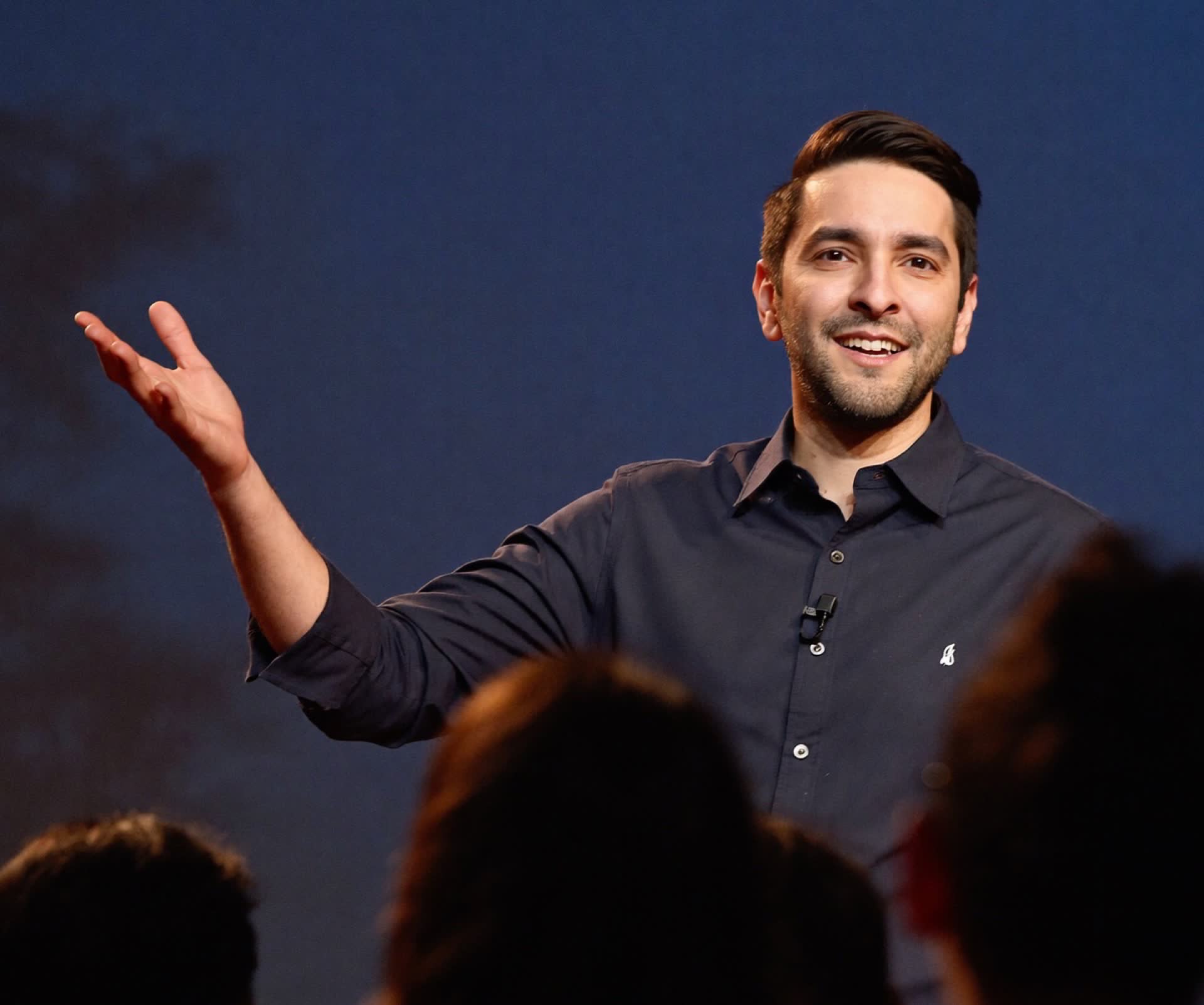
Hassan Munj, founder and CEO of Leap AI, traces his path from a rejected medical student to a serial entrepreneur, and explains why he built an intent-based networking app for founders in Pakistan.
Why exposure matters more than talent
Muzamil Hasan opens with a point he has made many times before. In an AI-shaped job market, hard skills like Python or app development still matter, but he is cautious about recommending any single skill to newcomers. His answer to people who ask what to do next is exposure. Developing your judgment in the abstract is empty talk, he says. You build it by travelling inside Pakistan and outside it, and by meeting people a step or two ahead of you. You do not need to meet a big-name CEO to learn. Someone a little further along can often answer your questions more usefully than someone far above you.
A guest who sits in the networking space
Muzamil introduces Hassan Munj as the founder and CEO of Leap AI, and as a serial entrepreneur with several businesses behind him. He says he wants to understand how Hassan is solving the networking problem, especially for Pakistanis, and what his own background is. Did he study computer science? Is he building in app development, or did he see that AI could let anyone do it?
From a topper with a medical plan to a gym owner
Hassan begins with his schooling. He was always a student who topped the class, and the expectation was that he would become a doctor. He studied physics, chemistry, maths and biology until he realised that was not what he wanted. His father suggested a white-collar career instead, and Hassan went to Manchester University to study economics. He later applied to Imperial College London and was accepted, but he says the offers he expected from abroad never arrived. When no jobs followed, he came home.
He describes telling his father he wanted to open a gym. His father ran a very traditional business and had paid for his education, so the conversation was hard. Hassan had a friend who had come back from Canada with a cross-certification, and together they opened what he describes as the first cross-certified studio in Pakistan, under the name Iron Box. He had been working out since 2006, and the years of rejection had shaken him in a way he had not experienced before. “Hamesha first aate the, head boy bhi the,” he says, meaning he had always come first, and rejection was a concept he did not know.
Learning to run a business the hard way
Iron Box grew quickly, but the early months were rough. Hassan remembers a first month in which the business made 100 rupees net, and his father asking how much of his own money he had put in. Hassan says Iron Box became well known in DHA and Gulberg, and that the team had to turn people away because they did not have the space to accommodate everyone.
Hassan then describes a series of ventures: a furniture showroom with his wife, who is a furniture designer; a partnership in a second business; an e-commerce business; and the sale of his share in Iron Box. When he sold his 10 percent stake, his father thought the price was a scam, since the stake was worth far more than that on paper. Hassan says the buyer went ahead, and his father’s reaction, first disbelief and then approval, shaped how he thought about his own judgment.
He also describes a difficult period after his cousin passed away in 2020, which pulled him out of several ventures. He then spent two to three years learning a business that had not been transferred to him properly, and eventually relaunched through a SaaS-based design agency. A partner once asked him whether he knew how to do cold email. He did not, and the partner told him to go and do it himself. That lesson, he says, pushed him toward building something of his own.
Digitisation before intelligence
Muzamil turns the conversation to traditional Pakistani businesses and their resistance to digitisation. Hassan agrees that many family businesses continue to operate on trust, and that the system worked well enough for decades. The problem is that AI’s productivity depends on digitisation and on systems that create repeatable processes. In a trust-based model, the owner carries the company in his head, and a newcomer is treated as a potential thief.
Hassan describes an import business he ran with his cousin, which brought in electrical insulation material from Taiwan and China and sold it to distributors and factories. He says he automated parts of that business himself, but that the wider trade still runs on paper slips and PayPal, and that clients often refuse to believe in automation. In his own office, staff use ChatGPT to scan and process documents, and he uses AI for forecasting, dashboards and analytics. “AI ki value automation mein nahin hai,” he says, meaning AI’s value is not in automation alone. He compares it to business intelligence tools that large companies once paid heavily for, and argues that AI now brings that capacity within reach of a small operation.
Building a space where founders ask for what they need
The episode moves on to Leap AI itself. Hassan says he got the idea partly from watching an Indian startup show, and partly from frustration with cold outreach. People often did not reply to his messages, which set off his old rejection trauma. He wanted something built on intent: a platform where you could say what you were looking for or what you could offer, and reach the people who needed exactly that, without hoping an algorithm would show your post to the right person.
He describes what he sees as a layered problem in Pakistan’s business world. Early on, everyone is a best friend. Once people start to succeed, they hoard information and refuse to help one another, because they assume sharing will hurt them. “Yahan pe sab kachra hai,” he says, describing the middle layer, where competition makes everyone protective. Above them sit the big players, whose networks are closed. Hassan argues that the ecosystem is fractured: investors invest, but founders do not talk to each other, and no one guides anyone else. His goal is to make intent the basis of connection, so that a founder can ask openly for a mentor, a partner or a deal.
The product, the numbers and the agent
Hassan says the idea took shape in January 2025 and Leap AI launched in November 2025. It is currently a free app on iOS and Android, with around 3,000 downloads. He says the platform has seen more than 500 conversations start between users and about 6,000 messages exchanged. The team removes fake or spam profiles regularly, and Hassan jokes that Elon Musk has tried to join the app five times.
The next phase, as Hassan describes it, is an AI agent that becomes the core of the product. When someone posts an offer, such as mentorship or a consulting package, and another user wants to expand into a particular market, the agent would connect them. Hassan says the platform will become a founder ecosystem radar, bringing the right people and opportunities to founders instead of forcing them to search. He argues that a basic founder will not see the value of the platform without a clear understanding of terms like grants, investors and pitch decks, and that the agent is meant to close that gap. The intended model is paid, with premium features aimed at more advanced founders.
Trust, community and the cost of moderation
Muzamil presses on how Leap AI will differ from Facebook groups, circle-style communities and other forums. Hassan answers that community works because discovery and connection are powerful, and that trust grows through a network effect. He says the first 5,000 users were manageable, but past 10,000 the cost of moderation became very high, and the team had to pause and rebuild before reopening. He also admits that in Pakistan many users expect free services and have little sense of what they are worth, which is why the team plans to move toward a paid model.
On the question of what happens next, Hassan says the company is building an agent that will eventually form the core of the platform, and that the aim is to make it useful even to founders who are not deeply technical. He hopes Leap AI will become the platform he always wanted to build.
What Hassan asks of the audience
Near the close, Hassan asks listeners to try the app and give honest feedback, and to be kind and constructive about what they find. He argues that Pakistan should be less quick to criticise and more willing to support one another, especially because most of the world’s entrepreneurs are outside Pakistan. Muzamil agrees and invites viewers to share their experience in the comments. “Hum ek aisi duniya mein jee rahe hain,” Hassan says at one point, meaning we are living in a world where we have to work together to compete.



Never miss a conversation.
New episodes and the thinking behind them, straight to your inbox. No hype, no spam, no pitch.