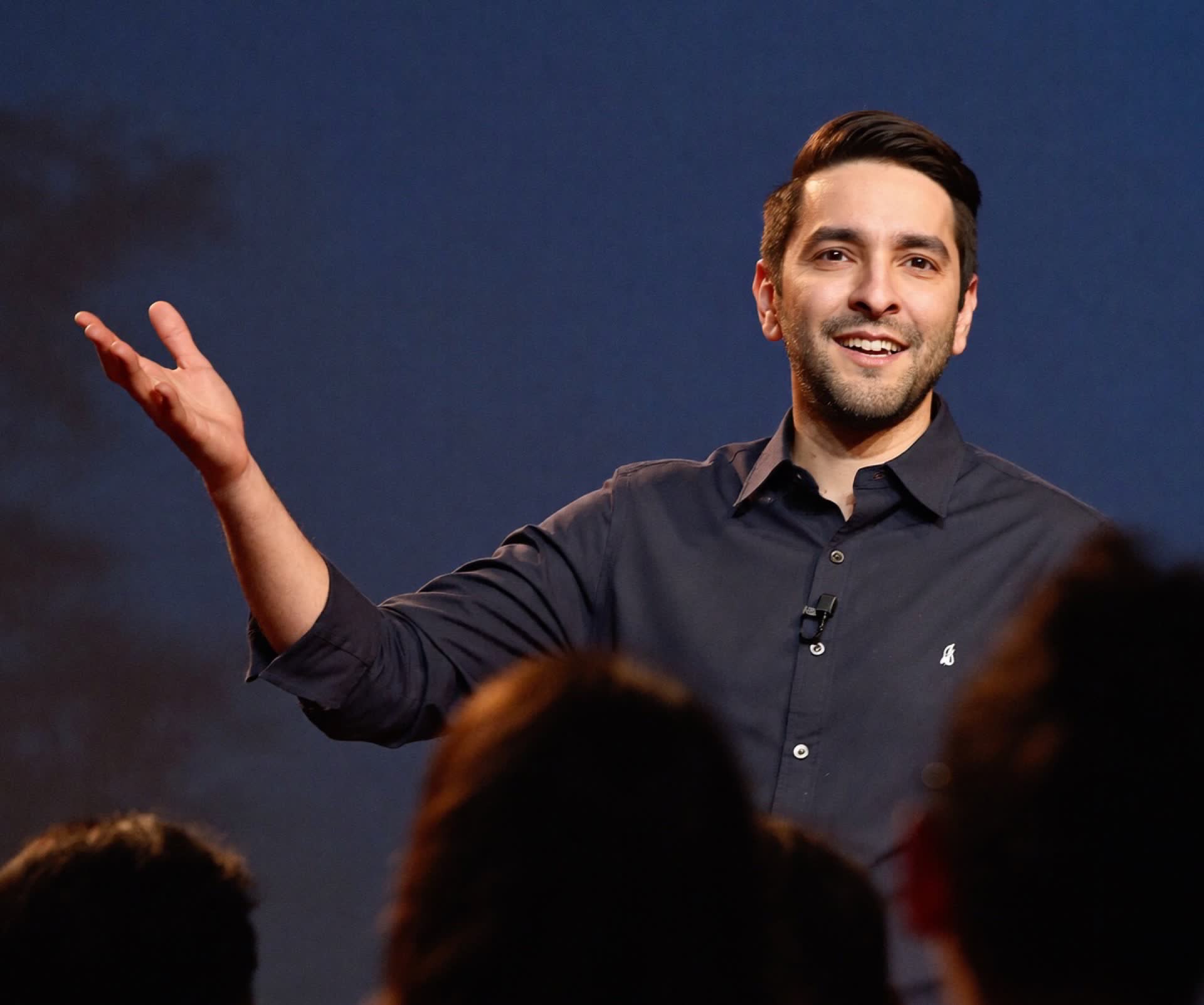
Thought Behind Things · Oct 20, 2023 · 2:05:02
How Shaukat Khanum built world-class cancer care from nothing
Dr Aasim Yusuf has run the medicine at Shaukat Khanum for thirty years — from a hospital that opened in a wheat field with no electricity to the first charitable hospital in Pakistan to win US-grade accreditation. He walks Muzamil through how you build an institution that treats most patients for free, why it turns away two thirds of the people who come to it, and what the brain drain is doing to the staff who keep it running.
with Dr Aasim Yusuf
12 min read
A London childhood and a mother who always meant to leave
The episode opens with Muzamil setting a careful frame. Shaukat Khanum carries a connection to Imran Khan and to a charged political history, and Muzamil asks listeners to leave the politics at the door and judge the institution on its merits — “a jewel in Pakistan’s crown,” he calls it, and a disservice to discuss any other way. What follows is two hours on how that institution was actually built and run, told by the doctor who has run its medicine since before it opened.
Dr Aasim Yusuf was born in London in 1962 and lived there until he was nearly fifteen. His mother was, in his words, an ardent Pakistani who never wanted to live in England; his father never wanted to come back. When Bhutto’s government ran an exam for overseas Pakistanis to join the civil service in the mid-seventies, she sat it, got in, and brought the family home. Yusuf is honest that England in those years was not the multicultural place it is now. Racism was, as he puts it, rampant — being called a “paki” on the way home from school was ordinary. He quotes a line he loved from Mohsin Hamid: prejudice is like a hair fallen across your eye that you keep flicking at because it bothers you but can never quite see.
He is careful not to romanticise the West, then or now. The England he left in the seventies was grey and economically bruised — three TV channels, coal miners on strike, candle-lit power cuts and a three-day working week. The point he keeps returning to is one Muzamil seizes on: developed countries were not always developed. They had their smog and their squalor and they fixed it. The trajectories diverged later, and Pakistan’s angle of climb simply widened more slowly.
King Edward, the Zia years, and a long road into medicine
Yusuf did not choose medicine so much as default into it. He wanted to be a fighter pilot; his mother engineered a visit to the selection centre only after confirming he was too young to join. She thought he should be a doctor, and in the late seventies, he says, you became a doctor or an engineer or you were considered a failure. He went to King Edward Medical College in Lahore on the condition that his mother get herself transferred to the city so he would not have to live in the hostel. She did.
He joined in 1980, into a class of 240 boys and 30 girls, the front two rows of the lecture theatre reserved for the women. The Zia years were, for him and his peers, the most stifling period of their lives — student unions banned, people beaten for talking to a girl, the climate seeping down through society far below the level of politics. The session that should have taken five years took six, padded out by the strikes and closures that followed Bhutto’s overthrow and execution. What saved the experience were the clinical years and the legendary clinical professors, and a small group of overseas-born students who, like him, had come back to Pakistan to study and became friends for life.
The mistake he still names: coming back without negotiating
After graduating in 1986 and a year of house jobs, Yusuf went to the UK in 1989 to train — general internal medicine, then gastroenterology, drawn to the specialty partly because it let him do procedures. Coming back to Pakistan was never in doubt. “My eyes were not aglow when I went to England,” he says. He could assimilate, he got every job he needed, but he never felt at home.
The way he came back, though, he calls one of the major mistakes of his life. His mother heard that Imran Khan was opening a hospital and suggested he apply. She drove out to a building site in the middle of nowhere and handed his CV to a girl working in marketing in a hut by the side. Months later Dr Nausherwan Burki — Imran’s cousin and the hospital’s chief medical advisor — called to say they did not really need a gastroenterologist but might have a part-time endoscopist role. Yusuf, used to fixed NHS pay scales and not knowing you were meant to negotiate, said he would take whatever everyone else got. He also said the line he warns recruits against to this day: that he was coming back to Pakistan anyway. “If you say to someone, well, I’m coming back to Pakistan anyway, that’s half the battle done.” He now runs recruitment, and he knows exactly how much leverage he gave away.
A hospital with no electricity, built from bare rooms
By the time he actually arrived in December 1994, the part-time job had become a full-time one. He joined four weeks before the hospital opened on 29 December. What he describes next is the part of the story that explains everything after it.
The hospital opened without electricity and ran without it for six months — a building designed for central air conditioning, with windows that did not open, stiflingly hot. Two enormous generators the Pakistan army lent the hospital kept the CT scanner and the radiation machines alive; lights and pedestal fans got what was left. Yusuf and a colleague went out and bought polo shirts because shirts and ties were unbearable. On his first day, the woman greeting new consultants took him to two bare rooms — no paint, no sockets, no false ceiling — and told him this was the endoscopy unit, and it was his to build. He decided where the sockets and monitors went.
When the first chemotherapy patients got sick and there were no inpatient beds yet, they furnished an unoccupied house on campus in about six hours and ran it as a ward; when one of those patients needed intensive care, they kitted out a room as an ICU and put someone on a ventilator. He once had to refer a patient for an ultrasound-guided biopsy he had never done before and never did again, because the endoscopes had not arrived and there was no other way to get the tissue diagnosis chemotherapy required. The hospital sat in wheat fields where Johar Town is now, and staff left in convoy at five in winter because people got robbed and mugged; one engineer was shot.
The lesson Yusuf draws is not nostalgia. Because physicians built the place from bare rooms rather than slotting into a working machine, clinical staff were given a preeminent place in the organisation. “It wasn’t just managers deciding these things.” That, he argues, is why the CEO has held the job for twenty-three years, why he himself has run the medicine since 2004, and why nothing feels insurmountable now — the people who survived the first years set the culture.
Quality as the line that cannot move
The thread that runs through the whole conversation is quality treated as non-negotiable. Yusuf’s standard is blunt: “If we can’t do something to our standards, we won’t do it.” Peshawar offers fewer services than Lahore, but the services it offers run to exactly the same standard.
His external proof is the Joint Commission, the body that accredits US hospitals against a book of 14 chapters, 285 standards and nearly 1,200 measurable elements. In 2018 the Lahore hospital became the third hospital in Pakistan, and the first charitable one, to win Joint Commission International accreditation. Peshawar followed in 2019. In 2021, mid-pandemic, when hospitals worldwide were declining reaccreditation because corners were being cut, Shaukat Khanum went through it anyway. In 2022 it submitted every site together under JCI’s new enterprise standard and became the first organisation in Pakistan and the second in the world to earn it. Only two other institutions in the country hold ordinary JCI accreditation, he notes — Aga Khan and Shifa.
Underneath the accreditation sits the cornerstone he is proudest of. Doctors and nurses are blinded to a patient’s financial status. Whether you pay or not, you get the same tests, the same drugs, the same food, the same room. The collection-centre network — close to 200 of them, plus home sampling in the big cities — exists to generate the revenue that lets the bulk of treatment be given free.
Why it turns most patients away
Muzamil raises the criticism the hospital hears most: that it picks and chooses its patients and refuses too many. Yusuf does not flinch from it. Pakistan diagnoses over 180,000 new cancer patients a year. About 45,000 reach Shaukat Khanum’s walk-in clinics in Lahore, Peshawar and Karachi. Of those, around 12,000 are accepted for treatment.
The choice, he argues, is stark and unavoidable. You can accept all 45,000, give them all paracetamol, and call it care — or you can treat a smaller number to a world-class standard. Acceptance is disease-specific: a given cancer has a threshold of age and stage, set by the likelihood of cure and by whether the hospital actually has the surgeons, drugs and machines to treat it. Because the money is zakat, he feels a duty to spend it where it can return someone to their family and their work. Patients who are refused are offered counselling by a psychologist and advice on where else to go, and they are told plainly that refusal is a limit of capacity, not a verdict on whether they can be cured. The honest answer to the demand problem is more hospitals: Peshawar nearly doubled capacity, Karachi will add as much again, and his estimate is that Pakistan needs roughly twenty tertiary cancer hospitals the size of Lahore’s to meet the real need.
The drain that is hardest to replace
The most sobering stretch of the conversation is about the people. Shaukat Khanum grew from 10 consultants to about 130 over thirty years. Since the start of 2023 it has lost 12.5% of them — 17 specialists, every one bound for a job abroad, none yet replaced. These are people it can take a decade or more to train, and the funnel that produces them is narrow: few go overseas, fewer train in the oncologic specialties the hospital needs, and fewer still want to come home when the economy is tanking and the rupee has cut their dollar-equivalent pay to a fraction of what it was. “Thank god for parents,” he says — family, more than anything, is what brings people back.
Nursing is worse. Pakistan is short, by his estimate, two million nurses — he is emphatic it is two million, not two hundred thousand. Shaukat Khanum hires qualified nurses, runs them through a year as trainees, funds postgraduate degrees in exchange for service, and still runs about a 20% attrition rate. He has made a kind of peace with the churn within Pakistan — a nurse who leaves for another hospital here still raises the standard of care somewhere. What hurts is the ones who go overseas, because they are irreplaceable. The hospital’s counter-move is its own postgraduate training: it takes the best of its trainees, sends them abroad for two years, and brings them back on a five-year commitment. That, he says, is the light at the end of the tunnel.
Regulation, brain drain, and a stubborn optimism
Yusuf helped draft the act that modernised medical regulation — moving registration online, letting people apply from a phone, and introducing a national licensing exam so that a graduate of any school, foreign or local, had to clear one standard before practising. He calls it a genuine improvement, and watched it rescinded almost as soon as Imran’s government fell, a reversal he attributes to the owners of private medical schools defending their interests rather than the public’s. He is careful about politics, but clear that he thinks the country lost something there, and lost it again when the Sehat Sahulat health card — which had begun pushing private hospitals to open even in rural areas because patients suddenly had money to pay — went on ice.
On the question everyone asks him — is cancer really rising, especially among the young — he refuses to overclaim. Pakistan has too little long-run data; Shaukat Khanum runs the country’s largest population-based registry, the Punjab Cancer Registry, and it is under twenty years old. What the data does show is that common cancers here present ten to fifteen years younger than in the West, breast cancer at a median of around 42 versus 52, driven by reproductive factors and cousin marriages, with oral and lung cancers climbing on pan, gutka and tobacco that arrived late and is only now cresting. Treatment, meanwhile, has changed beyond recognition — from the “slash and burn” of mutilating surgery and shotgun radiation to breathing-gated beams and targeted drugs, some individualised therapies running past a million dollars a patient. On AI, he is neither breathless nor dismissive: imaging and biopsy pattern-recognition are coming, the hospital is already running research projects on it, and he is wary of being “research colonised” by companies that want to download three decades of radiology in exchange for a free month — he wants technology transfer, engineers trained locally, the country left better off.
Muzamil closes by saying healthcare conversations usually bore him, and this was among his favourites in 380-odd episodes. He thanks Yusuf and everyone who has passed through the institution for their service to the country. Asked how he sees Pakistan in 2050, Yusuf is plain: he has always believed the country is on an upward trajectory, the angle varying but the direction holding. He has watched the hospital survive bleak periods — donations collapsing in 1997, Imran selling his last plot to pay salaries, recruitment freezing after 9/11 — and come through each one. Seventy-five years, he says, is nothing in the life of a nation. The next five to ten will be hard. The longer arc, he is certain, bends up.
Full transcript
श्रामिला कपिल ना आज रात welcome back to the three hundred seventy fifth episode of thought behind things today is the 10/20/2023 and आज हमारे साथ एक बहुत ही खास मेहमान मौजूद है जिनको जब मैंने originally बुलाया था तो मुझे थोड़ा सा था कि यार health care के ऊपर जब हम बात करते हैं तो पता नहीं इतनी viewership आती है नहीं आती पता नहीं लोग interested होंगे भी या नहीं होंगे लेकिन यह जिस चीज़ के बारे में बात कर रहे हैं it is an institution in Pakistan something that has been developed जो कि global standards के ऊपर चल रहा है ना सिर्फ बल्कि sustainably चल रहा है और grow कर रहा है. आज हमारे साथ मौजूद है chief medical officer of शौकत खानम memorial hospital और शौकत खानम cancer hospital doctor आसिम युसफ. मैं यहां पर यह mention करना चाहूंगा देखें जी इस hospital का एक connection रहा है इमरान खान साहब के साथ और इमरान खान साहब की एक particular history रही है please इस conversation को सुनते हुए आप politics को ना लेकर आएं दरमियान में चाहे for pro और against इस conversation को इस institute के merit के लिए सुनिएगा और खासकर इसमें हमने मैंने personally I have avoided any politics or political conversation I have tried to unpack this institution because it is most certainly a jewel in Pakistan's crown and I think it would be a disservice to associate politics with this institution. Doctor आसिम युसूफ साहब personally जो मुझे मजा आया इनसे बात करके the way that he speaks the way that his मतलब उनका जो तर्ज़ है बात करने का personally आपको बहुत मजा आएगा more than that obviously the stories are incredible he's been associated with the institute for thirty years and has been instrumental in scaling it up as well अगर आप इस channel पर नहीं है तो subscribe करना मत भूलिएगा अगर आप पुराने है तो video को like करना मत भूलिएगा इससे हमारे algorithm को बड़ा फ़ायदा होता है अगर आपके कोई thoughts है तो comment section में ज़रूर आ के बताएं I listen to all of them I read all of them and it really helps me improve the quality of conversation अगर आप overseas पाकिस्तानी है तो नीचे देगी हुई link के ऊपर आप हमें support कर सकते हैं to help us stay independent for as long as possible but anyways this is doctor आसिम युसूफ on TBT श्राहाबाद studio. आसम साहब कैसे हैं आप? बिल्कुल ठीक, thank you. मैं conversation को थोड़ा सा start करूंगा just trying to understand a little bit about where were you born and early life आपने कहां पर गुज़ारी?
So I was born in London Mhmm. 1962. I'm close to 62 years old, January में. And I lived there till I was nearly 15, at which time my mother in this I think in the mid seventies, mister Bhutto, the prime minister, ran this exam for people from overseas to join the Pakistani civil service. So my mother was an ardent Pakistani and never wanted to live in England. All my life, I grew up hearing about, you know, we're gonna go to Pakistan, this and that. And my dad never wanted to come back to Pakistan. So she gave the exam. She got into the civil service. And in late nineteen seventy six, I think, she came back to Pakistan, and I joined her a little later. I went to school in Bindi for a year, Saint Mary's, great school. And then, had no real aim in life and didn't really know what to do. So I wanted to join the Pakistan Air Force and be a fighter pilot like I think every 15, 16 year old boy does. And my mother was greatly opposed to the idea and then one day she comes home and says, yeah, okay, you can go and check it out. So I went to the selection center on the mall in Bindi to be told that no, have to be at least 16 to join and I wasn't quite 16 and I'm sure my mother had found out and found this out before she allowed me to go. So then I went to government college, did FSC and my mother thought I should be a doctor and I didn't really know what else I should do. So that's how I ended up going to medical school, which probably isn't terribly inspiring for future physicians. But in the late seventies, that's how it was. Know, you did medicine or you did engineering or, you know, you were considered a failure in life, I think. And what medical school did you go to? So so we lived in Islamabad. Mhmm. And I really didn't want to live in a hostel. I was quite happy to go to Pindi Medical College, but my mother had relatives and so on who had been to the famous King Edward Medical College in Lahore, and, that was the be all and end all as far as they were all concerned. So again, my mother thought I should go to King Edward and I said, okay, I'll go, but then you need to get yourself transferred to Lahore, get a civil service job in Lahore so I can live at home because I'm not living in the hostel. So that's what I did. I went to King Edward. And did she end up moving to Lahore for you? She did. Yes. To sidetrack a little, I'd had a bizarre experience in the hostel and government college because I was in the hostel there for a year. I'd come back to Pakistan a year before that roughly. Didn't really speak very much Urdu and spoke no Punjabi at the time. And when I went to the hostel, my first night in the hostel, was a reception party that came to greet me. And at that time in government college, all the kids in the hostel were people who had topped the various metric boards from all over the Punjab. Right. And that's how they measured one another. They assessed one another. You know, how many marks did you get in the metric? And I got more than you. So they, the first question when I opened the door was, where are you from or whatever and then in Punjabi the guy says, '¿किन यह number तेले आए सान metric each?' to which in my broken Urdu I started replying 'किनी actually मैंने metric नहीं किया, I did O Level senior Cambridge as it was then called. And this guy turns to the guy next to him and says, 'Eki chakkar, metrikki nikita?' So, you know, it was quite far removed from their experience. But eventually, was all okay. In fact, the guy that lived next to me is one of my best friends today. We went to medical college together. Even till date? Yeah. Yeah. Wow. Because most people from that hostel ended up in King Edward. It was very merit driven. So I'm still friends with all those guys. But, you know, that's how I I didn't really like the hostel at all.
So yes my mother did move till to the दुनिया भर में technology बहुत evolve कर चुकी है. अब आप घर बैठे एक mobile phone से पूरी दुनिया में किसी किस्म की भी different assets, stocks या even cryptocurrencies ख़रीद सकते हैं. जहां पर यह technological evolution आए वहां पर भी unfortunately हालात ऐसे हैं कि economy एक ऐसी जगह पर पहुंची हुई है कि बड़े आजकल बुरे हालात हैं, inflation बहुत ज़्यादा बढ़ रही है, savings हमारी deplete हो रही हैं. ज़्यादातर लोग investments करते ही नहीं है और जो करते भी हैं वह 90% losses unfortunately बनाते हैं. इसी problem को solve कर रहा है sarmaya. P k जो कि अपने financial trading platforms पर trainings भी offer करता है और data भी offer करता है जिससे आप पूरी दुनिया की markets ख़ासकर पाकिस्तानी markets को आसानी देख सकते हैं. अगर आप लोग अपनी investments और trading में struggle कर रहे हैं तो I would definitely urge you to check out Sharmaya Financials platform. It's a remarkable place जहां पर आपको बहुत interesting you know reports के through data भी मिलता है, investment की advice भी मिलती है और खासकर उनकी trainings जहां पर उनके experts जो है वह आपको crypto और stock market और commodities और assets के अंदर trade करके पैसे कमाना सिखाते हैं so check out the platform and check out their trainings. Now back to the podcast. Before we move forward I'd like to understand what was England like growing up because the the years that you grew up there बड़ा कम हमें Pakistan में वह insight मिलती है बड़े थोड़े पाकिस्तानी थे उस time के ऊपर correct and I remember I have a speak to someone recently in Dubai and they spoke about the sixties you know again one of those people जो कि बहुत early days में England में रहे हैं and he spoke about an England that was not very multicultural massive amounts of racism beyond London and then he spoke about this one year when वह उसको कहते थे skin heads होते थे, क्या होते थे? वह bald लोग होते थे, आ कर वह करा करते होते थे and then he talked about this one year Bradford में या कहां पर जब बहुत सारी पाकिस्तानी community ने एक riot सी हुई थी and then it sort of changed and it was fascinating कि हम बड़े differently देखते हैं west को आज in the lens last twenty years के what was the experience like for you? So you're absolutely right. England was not just all multicultural,
even London. I mean, racism was rampant. And obviously, as a child on one level, that's all you know, and so you don't really feel that it's anything unusual. But at the same end, when I think back and as I grew up a little bit, one did realize that there was a lot of racism, in school and elsewhere. It was common to be called a packy and so on on the way home and things like that. So on the one level, it was fine as a child. You grow up, you have friends, and within your circle, you're okay, but it's never far away. And I I read somewhere, I think Moussin Hamid wrote that racial prejudice is like a hair that's fallen from your forehead and it's front of your eye and you keep flicking at it because it bothers you, but you can't actually see it. And I thought that was a wonderful description of exactly how and I just could relate to that completely. But, you know, it wasn't something that was there all the time, but it could happen at any time, you know? To some extent, that's true even today. Right. You know, a few years ago I went to England. I I go fairly regularly. I was about to get on a train, and these two kids on the train, on the platform, waited till the train was moving and then they shouted, why don't you go back home? Now, don't know that it was me or other colored people on the train too, but, you know, one always thinks it's it's you. Right. So these things happen, but then all societies are racist. I don't think we're we're not unracist ourselves. So to some extent, that's human nature. Yeah. But it was certainly much more open in those days, and it wasn't frowned upon the way it is, at least in the public discourse in the West now. So, yes, that that was an issue then, certainly. Makes sense. It's better now,
but it's still there, I think. Right. What about in terms of development? I think I was recently talking to my father. He's 76 years old, six days younger than Pakistan. And yeah I was telling him about the economic crisis and so much so many horrible things are happening and he was in The United States at the time तो उन्होंने मुझे कहा उन्होंने कहा यार तुम लोगों का ना मैं भी बड़ा fascinate होता हूँ कि तुम लोग कितने ना शुक्र हो क्योंकि हमारे वक्त में तो he was he was a career bank very senior position in one of the banks here and he was like even in that position मैं हफ्ते में तो in a lot of ways you know जो अगर masses की बात भी करें तो जहां पर masses जो है वह मिट्टे घरों में रहनी थी आज उनके पास fridge भी है आज उनके पास basics भी है तो in a lot of ways Pakistan has developed you just can't see it और वो he was sort of tailoring back to his own experience growing up in Old Lahore and that really made me think as well और फिर मुझे होता है कि चलो Pakistan का तो एक evolution चले आप यहां पर बहुत लोग हैं उनसे आप सीख सकते हैं but really अगर आप किसी बाहर की country जिस developed world को आज हम देखते हैं और कहते हैं कि वाह क्या developed world है मुझे बड़ा होता है कि if I were to if I would be able to look back at it let's say fifty years ago Yeah. And then see the evolution that they've had, maybe I can begin to feel a little better about Pakistan as well because, you know, evolution होती है over time. Yeah. So, what was England like in terms of development, in terms of society,
in terms of maybe some of the problems that we face in Pakistan today? So, you know, I always tell people that I think because people are always fascinated by how, you know, how did you adjust to come to back with life in Pakistan and so on. Fifty years ago, however long it was ago now, forty five, forty six years ago. The it was not that different. You know? I mean, I think the the paths have diverged much more since then. The technical technological advances and other things have really taken off there, and we've really fallen further and further behind. You're right on one level, obviously, we have also progressed. We have not stood still. But our trajectory at which we've, improved and developed, I think, you know, the Scale of the angle here. Has widened without a doubt. Right. In England when I was a child, when I left, there were four TV channels. In fact, were three TV channels BBC One, BBC Two and ITV. We had PTV and PTV wasn't great. But we used to show an English film once a week and this and that. 'vampe kojak arata', 'vampe kojak de karliti'. You won't have heard of that like that. That's a very famous program with Telly Savalas. Right. And, you know, things like that. So it wasn't completely out with the lived experience that I'd had there. Obviously, overall, England was dull and gray, and in the seventies, was a bad time economically. We we lived through the the coal miners' strikes. We had a three day week in England when I was in secondary school. The coal miners went on strike to try and topple the Tory government and also to improve their own, wages and so on. And we had power cuts. We we had candles to light the house because there was no electricity, because most electricity was coal fired at that time. And offices and schools had to close down, and they they would only have a three day working week, which was great as 10 or 11 year old, whatever I was at the time. But it led to the downfall of the Tory of Edward Heath's government and so on. So it wasn't a wonderful play. It wasn't, you know, nirvana by any sense. Right. It was it was difficult times for them as well. I think, you know, with Margaret Thatcher coming in in 1979 and the economic changes she produced, I mean, it it led to a greater divide between the haves and the have nots. But materialism and prosperity and those things clearly burgeoned in the eighties and then on. Interesting and in terms of
pollution and again मैं हमेशा circle back करता हूं. Crown में देख रहा था और उसके अंदर जो है वह एक episode है smog वाली. And I was just और ये मैं देख रहा था जब जिस time पर ना उस time पर लोहौर की smog चल रही थी and I was like अरे तो developed world में भी ये मसला था एक ज़माने में और आज हम देखते हैं और वो खूबसूरत है और वो बेहतरीन है और वो green है. That's right. इसका तो मतलब है कि हम भी all hope is not lost.
Yeah, I think, you know, climate change is another matter. Of course, of course. It seems as though it may be lost there. I don't know if these changes can be reversed. Right. But, certainly in terms of pollution and the environment, I mean, these countries have shown that it is possible to improve those things, but obviously there's a cost attached. And part of that cost also involves making other countries continue to use those technologies while you move on to something else. So there's selfishness involved there too, I think. But, yes, it's certainly fixable. I don't remember the smolks as a child. I think that was mostly in the fifties. And it was fixed by the time that you Clean air actinol had come in, I think, in in the mid fifties or something. But Power Station, for example, was a famous building. I'm sure you've seen it as well in London. Now it's a luxury apartments and shopping mall. But in the early seventies, I used to go home on the bus and I used to cross the Chelsea Bridge on the way home every day on the bus. And Batsi Power Station used to be pumping smoke into the air, and the coal barges were still coming up the tens to provide the coal. So into the seventies at least, there were still many coal fired power stations, including in London.
But obviously that's all history now. Right. Interesting. So coming back to your, you're getting into the King Edward Medical College. Mhmm. पहले तो एक basic सा सवाल. King Edward Medical College जब आप गए और आज के King Edward Medical College, is there a difference, do you think?
Yes. The one standout difference that we all always talk about, only half jokingly, is that when we joined, I joined in 1980, there was a quota for girls in King Edward. There were 30 girls in our class and 240 boys. So you could imagine what that was like, you know, in Pakistan. Yeah. The front two rows in the lecture theater were reserved for the girls. And every old boy, the boys baying for blood were all at the back, you know. And it was a pandemonium every day until the teacher came in, you know, throwing chalk and this and that, you know, anything to attract a girl's attention somehow. Some years ago I think they just opened it up and it was just based on however many marks you got for all the medical schools. So today, King Edward has a majority of female students. I don't know exactly what the proportion is, but it's virtually reversed. So much so that someone jokingly said que, Right. So that's one huge difference obviously. I think the other main difference is that to some extent King Edward has lost its preeminence. आहखान, other places, शिफाज़, CMH, private medical schools, many of them are very good. And I don't know how they're ranked now, but, you know, they must be up there near the top somewhere.
But has that affected the quality of King Edward itself for just the brand equity? Not necessarily the quality of the education they provide, but obviously cream
of the cream as it were is not going there anymore because some of them are being diverted to other places, then that affects the final product I suppose. But still, amongst the government medical schools in the Punjab, King Edward, I think, is still the top place. And, you know, King Edward was founded in 1860. A great institution, and, you it takes a while for these things to change and so on. But there's also been a lot of development as well. They've got a lot of new departments, buildings. I believe the curriculum has been updated. We were studying the curriculum from probably the 1930s or 40s. We were still studying Grey's Anatomy. Possibly Pakistan was the only country in the world that still used Grey's Anatomy. A big, thick textbook to study anatomy is completely pointless. No one needs that much anatomy knowledge, but, you know, so those things have improved certainly. They've moved to a multiple choice exam format and so on. So, you know, they've dragged themselves into the twenty first century. And how was your experience? Five years, right? Yeah. Five years. Were those five years? Five years officially. We were recovering from the delays throughout the seventies to the academic year because of the various political troubles. I think, the early seventies maybe there were various student strikes and stuff which resulted in closures which delayed the academic year. Were student unions and and and student politics a thing at King Edward as well? When we joined, yes. Banned shortly thereafter. And then when mister Burdo was overthrown in '77, then when he was hung in '79, there were long prolonged closures. So we were the session of '79 to '84 because we did FSC in we should have done FSC in March '79, we did it in September. So that was six months delayed. Then we waited nine months at home before medical school started, the best nine months of my life because your parents couldn't tell you to study or anything. Do you specifically get? Absolutely, it was the best time. But anyway, so we started medical school in June or July 1980, but we were the session of '79. We should have finished in '84. Then further strikes and closures meant that we didn't qualify until the summer of 'eighty six. So passing everything at the right time, it took six years rather than five. The first two years in those days, they ran a preclinical curriculum and then three years of clinical. What does that mean? So the preclinical subjects were the basic subjects like anatomy, physiology, pharmacology. You learn about drugs, about the structure of the body, about the way it functions and so on. But you don't see patients and you don't really discuss disease as such. You learn the normal. So that's very boring and lecture based. You have cadavers that you dissect to learn the anatomy and so on. So that was interesting. But the rest of it was pretty dull biochemistry and so on. It's a lot of facts and learning. That was terrible. I hated it, and most people hated the first two years. Well, were at facts and learning and sort of Retta and No, it was okay. That was all right. I mean, I passed. I didn't get a distinction or anything, but I passed. I was okay. I think. Do you think medicine is a lot of Retta? Do you think medicine is a lot of problem solving more than anything? Yeah. I think the way we were taught, it involved a lot of rote learning. Those things have improved certainly the world over, and I think also here now. A lot of places now run a problem based curriculum where from the first year you start with a patient and you say, Okay, this is a patient with TB for instance. Then you'll discuss the structure and the function of the lungs, the drugs that you would use to treat TB, how TB would present, what the pathology is and so on. So you do it that way. Obviously in first year it's hard to do because you don't know anything about anything, but by third and fourth year onwards that helps. So I think some medical schools run that here as well. But in King Edward, the great strength that they had was clinical years, the third, fourth, and fifth year. When you start going to the hospital and you go to the wards and see patients, they had a breadth of experience, and the teachers were outstanding. The clinical professors that we had were just fantastic, legendary people. So that was very enjoyable. I really, really enjoyed the clinical years and really found myself in my element and thought, Yes, I think this is what I'm going to really enjoy doing. The clinical years were just an ordeal to get through, really, to prepare you for the next three. And beyond academics,
what were those five years right for you? Again, you'd just come to Pakistan. Probably either the only one or maybe one of the few जिनको cultural shock तो लग रहा होगा ना? Right?
By king Edward I've been here a couple of years so I was partly over that.
You know but there was a there was a Pakistan that was changing as well. Eighties का Pakistan is was a was basically when the direction flipped as well. And
so how did that sort of affect you personally? Yeah. So we, I think most of us felt that the, that period under General Zia was the worst time of our life. It was just everything was so stifling and you couldn't do this, you couldn't do that. Was it really like वह आप लोगों के level पर भी impact था उसका stifling? Absolutely, because not that we were necessarily in contact with those people, but it permeated down through society, you know, so much so that people would get beaten up in King Edward or in college for talking to a girl. Really? So, you know, we you talked about the elections. So we had student union elections in the winter of nineteen eighty, and they were the last elections we had. I think unions were finally banned in '82 or something. So there was, I guess, a right left divide. There was a Jimeet, and there was always an opposition to the Jamiet. Was called different things in different colleges, but they were basically the antithesis of what the Jamiet was. So we had the pioneers in King Edward, for instance. So, you know, they won the election as well. But and, again, some of this is just hearsay. We don't necessarily know who belonged to what party, and you didn't necessarily need to belong to a party. But there was a lot of this sort of thinking. Oh, why were you talking to her? You shouldn't be talking to girls. And and it And some of the teachers would also do that. So girls that talk to boys would get into trouble when they had an anatomy test, for instance, because they'd be noticed and they would fail them for that, things like that. So it was a difficult time. But the saving grace for me, at least in the first two years in King Edward, was that a number of other kids came from overseas to study medicine at King Edward. And these were people like me who were of Pakistani origin and parenthood. But they, unlike me, I had come a few years earlier, they came specifically to attend medical school. So about three or four from The US and three or four from The UK. So that was my immediate group there. We immediately made friends and bonded, and again, I'm friends with those people till today. So that was a little group within a group, but obviously there were lots of other great people there too. You make a lot of friends, so some of those are friendships that last a lifetime. And then medicine is, particularly when you go into the clinical years, it's very immersive. You're with people twenty four hours a day. You're on ward duties and so on. You spend the night with people, you're in the casualty department seeing patients all night. So there's a lot of bonding and camaraderie there too. That was very nice. I really enjoyed that aspect of it. Right. And then in the last two or three years, also moved into the hostel. Was finally grown up in to do that. So the hostel is also by that time, I really enjoyed the hostel. A lot of independence, and, you know, we would always go to see the nine to twelve show at the in the cinema, which I could never do when I was at home because I had to be home by 09:00. You know? So it was a reaction to that. We never went except for the nine to twelve show. You know, things like that. Right. That's good. So you graduated
in 'eighty six. Yep. And what did you do after that? So you have to do a year's house job.
And at that time, I think you needed to do that in order to get full registration. You were provisionally registered with the Baxter Medical and Dental Council when you graduated. And then a further year to do the pre registration house job, as it was known, which is a kind of apprenticeship, a practical training, after which you got full registration and after which you could then decide what you wanted to do thereafter, go into general practice or whatever you wanted to do or go into postgraduate training. The only kids that didn't do that were those who were off to The US, for example, because there that year didn't make any difference. You started from scratch anyway. If you wanted to go to England, as I did, to do postgraduate training, then, at that time the GMC, General Medical Council in The UK, they also required this house job. So I did a year's house job, and then I worked for another year in Mayo Hospital, as what they called a medical officer, which is a kind of junior doctor essentially on the wards. Right. In which time I gave the plab test to allow me to go and work in The UK, and then I went. And this was, again, late eighties. Right? Yeah. So I went in '89.
When do you think the the the private hospital like, private university, private medical school revolution happened? So around that time, but, I mean, our खान
opened while we were at King Edward. Okay. I think we were in third year or fourth year or That was the first private fourth medical school in Parkinson's? To the best of my knowledge, yes. I'm not entirely sure, but I think so. Right. And then thereafter, I'm not sure, so I don't want to misquote, but I don't think there were very many others into the '90s. But sort of late '90s and then 2000s is when every man and his uncle started opening a private medical school. And, you know, some of them were literally, some were very good, but some were literally sort of converted houses that were attached. You know, go to a private hospital, you buy the house next door and you open a medical school there. So I think there was a lot of controversy about those kinds of places and how they were recognised and was it appropriate. I think over time the PMDC has done a good job in pulling a lot of those up, but I think the standard is still very variable. The regulatory
framework has evolved over time. आज का मैं Pakistan जब देखता हूँ और Pakistan का health care sector देखता हूँ तो मुझे एक बहुत distributed, varied किस्म का health care sector नज़र आता है. कोई sense नहीं है कि क्या है, क्या नहीं है, कौन सा doctor है, कौन सा doctor नहीं है. Again, कुछ faint memories of the nineties. Health care was very standardized. Expectation होती थी. आप doctor से भी मिलते थे ना they all looked the same they all talked the same अब यह है कि अब for lack of better word it feels like there is a lot more quacks in the market जिसको आप quack तो नहीं कहेंगे. They can definitely show you the credentials. But you do sometimes really think about कि how did you end up here? Do you think we have a well regulated health care industry today with the mushroom growth of everything from clinics to hospitals to वह demand side जो है वह sustainably और structured तरीके से मुझे लगता है grow नहीं की. वह demand side grow की तो उसमें supply नहीं बस जहां से उसको space मिली है. उसने कहीं ना कहीं से उसको fill करने की कोशिश. To the extent, I remember this one day my cleaning lady came to me and she was like, my nephew needs a job. I was like, okay. What sort of a job does he need? And she said, anything maybe a clerk in an office would be fine. And I was like, okay. What sort of experience does he have? And she was like, oh, he's a doctor. I was like, What do mean he is a doctor? And she is like, Oh, you know he has his clinic down out in Ternal and But you know times are tough and clinics aren't doing that well and I was like how did he come about being a doctor? She's like oh you know he at a very young age he worked with this doctor and then he worked with him for eight ten years traditional apprenticeship and now he just you know basic वह basically क्या कौन सा है? Again demand supply थी. आपने demand को मद्देनाज़र रखते हुए आपने supply नहीं बढ़ाई तो उस supply को fill किया with quacks जो कि आके बुखार का टीका लगाते हैं और फिर सात और दस चीज़ें करते जिसकी वजह से चीज़ें खराब होती हैं. What are your thoughts on that? We
can talk about the regulation and the regulator at length because I was involved peripherally with the reforms of the PMDC as well until beginning of last year. But the medical profession, Yazabi Hair, is still regulated. Yes. It could be better. I think the degree of regulation has improved. It could certainly be better. But the other issue is that these other people are really not regulated at all. So, you know, there are laws about how doctors should function and there are penalties associated with not functioning to those standards and so on. And there are now provincial health care commissions which look at these things and so on. And I believe it's part of their remit to look at these other traditional and, what we would call non qualified people. But the degree of regulation there is much more lax, I think. You know, I don't know what kind of license this person had for his clinic internal and whether he had any kind of licensing doubted Do you think regulation
maybe exist करती है लेकिन उसकी implementation
इतनी strong नहीं है. So, वही, it's variable, The regulation exists. It's much, जैसी भी है, it's much more forcibly enforced for physicians, doctors, within MBBS degree, as opposed to these other traditional and homeopaths and just out and out quacks, as you refer to them, who are not regulated at all, really. So I think that's a major issue because, again, homeopathy is a recognized science. I'm not denigrating it in any way. But that also needs to be regulated. If I just suddenly start calling myself a homeopath, that doesn't mean that I am one. Then to call that personality is not to say that you're against homeopathy necessarily, but the fact that you need to regulate these things. Makes sense. But the PMDC, a lot of work was done in the last government to regulate it. In fact, a new act was brought through parliament and it was essentially revamped completely. The registration processes and so on were all converted to online. People could apply from overseas, you know, a lot of facilitation in that way. Also, qualifying exam was a post qualification exam was introduced.
Only after you passed that could you practice medicine. So you went to The UK in 'eighty eight? 'eighty nine. 'eighty nine. And, you went there to work, or did you do a specialization there?
The two were synonymous. In The UK and in The US, in fact. As a doctor specializing in medicine or a postgraduate discipline, you work in a hospital and you study and do your exams and stuff at the same time. So, yes, you work full time and you study as well. And what did you decide, your specialization? So I decided to do medicine first, general internal medicine. So that's a three year training program initially, after which you do the MRCP or the membership of the Royal College of Physicians. And then you choose the subspecialty. So I chose to do gastroenterology which is a further three years of subspecialty training and I think that was partly because I always liked procedures and pure general internal medicine is a cognitive specialty, endocrinology and others, they're sort of thinking specialties, which doesn't mean gastroenterologists don't think, hopefully. But you also get to do procedures. We do endoscopic procedures, put tubes inside the patient's body from various places, and you can do diagnostic and therapeutic procedures. So I liked the idea of doing a procedure as well. So that was one of the reasons I went into gastroenterology. Also, I thought there's a lot of hepatitis and gastroenterologic diseases in Pakistan. I always wanted to come back to Pakistan. That's right. That was a given thing? Absolutely. Why? This was from, well, because I'd lived in England already, it didn't really hold any great retraction for me. My eyes were not aglow when I went to England. I thought, yeah, fine. Been there, done that. But also, I think we were always brought up with this view, as I mentioned, that we're always going to go back to Pakistan and we don't belong here. And I never really felt I belonged in England. Interesting. I could assimilate, okay. You know, I could, I mean, there's some obvious differences. But other than that, you know, I could at work, I had no problems. I was accepted. I did all the things. I got all the jobs I needed and so on. I could have stayed, but I never felt at home there. Do you have kids? Yes. I have kids. Do have Pakistan or? So they were in Pakistan till they were 18. They both went to school, did their o levels, a levels and stuff, both went to university in England and are still there. They're in one is a physician, so he's also training and doing postgraduate training. The other is just went to UCL, did a degree in economics, and then went into chartered accountancy. I have 15 exams to do with chartered accountancy. Was horrific. And he's done 14 of them. His next last exam is next month. So he finishes then, and I think he'll probably stay there a few years as well. But at the moment, they both frequently and repeatedly express the intention to come back to Pakistan. They do. Yes. Because my entirely without my
my understanding would have been कि मैं मैं शायद उस पर सोच रहा था कि इंसान जो है वह जो चीज़ उसको बहुत easily मिली भी होती है उसको वह शायद इतनी attract नहीं करती. Maybe you were born and brought up in Shanghai. So, passport भी था. Whatever. But maybe I would have thought कि for them it would be the other way around. Where वह इतना दूर के धोल से आने हैं. Sure. Plastically, no on the other side. Well, think they
also went to England several times as kids. They were not entirely unfamiliar. But, yeah, they had never lived there. Right. And obviously, having gone to university now, there'll also be a time soon, I think, where they'll have spent a significant portion of their life, maybe a third or a half of their life there. But, Baral, that's that's what they say. You know, I have not forced them either way. I didn't force them to go. I won't force them to come back. But that's what they want to do. So you you
as soon as you were done with your specialization, you decided
to come back. Yes. Did you have an opportunity here already, or were you going to look for it once you were back? So I was gonna come back anyway. Right. And actually that led to one of the major mistakes I made in my life. Sort of mid-nineteen ninety four I was starting to think about coming back. I had basically done my training. I was working as a consultant and I had applied to a couple of places but never really got a reply even, you know, which is the norm I think. And I spoke, I was talking to my mother on the phone one day, one of those hurried conversations that you'd had, everything ok, सब ठीक है, सब दस minute ही सीमें गुज़र जाते थे. So with the phone cards, you know. And she said कि वह this guy इमरान खान, he's opening a hospital somewhere. Why don't you apply there? तो I said वह तो cancer hospital नहीं है, वह oncologist, he must only want cancer specialist. I had no real idea of what it was gonna be. And she said, Well, send me a CV and I'll try and find out where it is and I'll go and, you know. So I posted her a CV, there was no email in those days. And she set off in her car to try and find this place in the middle of nowhere because the hospital was was She was not connected to anyone over there. No, not at all. She literally drove out into the sticks and she got somewhere, it was a building site and there was a girl that I later worked with who was working in marketing or something and there was a little hut to one side where she handed the CV over and that was the end of it. Then a couple of months later I got a letter from Doctor Norshirvan Birki who is Imran's cousin and is a professor of medicine. Was at the University of Kentucky at that time and he was the, what was called the Chief Medical Advisor and he was recruiting all the consultants. And he wrote to say that he'd like to talk to me, called me and he said, Well, you know, we don't really need a gastroenterologist. But I saw your CV and I was intrigued by a couple of things which he told me later. But basically, we might have a part time position for an endoscopist. Okay. What is that? Which means someone who does endoscopy, the camera test where you look inside the body, so a part of what a gastroenterologist does. So he was offering me a part time job essentially. And I made the mistake of saying, Well, I'm going back to Pakistan anyway, So I'll take it. Know, if you can give me a part time job, it's good, you know, puts bread on the table and then we'll see कि बाकी क्या होता है. I was very much in the traditional model, you know, you go back and you set up a private clinic somewhere and in दो तीन hospitals में आप काम करते हैं कभी कहीं कभी कहीं. I used practice, but that's what most people did, you know. Did you think you were very ambitious as a person? I think in retrospect it was very foolish to be thinking about coming back to Pakistan in the way that I was. I'm not sure if I was over ambitious. I think I was quite foolhardy. Right. Because I had a son, I had a wife and a son. But I never really thought too much about it. But you know, है वह लोगों के बस ठीक है, हो जाएगा यह सब. वह लोगों बाद जो है वह लोगों Exactly. के So he said, look, I'm gonna be in London in July, July nineteen ninety four and why don't you come and meet me? I'll be staying at Imran's. And I thought, oh, wow, Imran's. This is two years after the World Cup, Imran Khan. So I was more excited about the prospect que Shayed Imran anyway, I drove up to London. It was a Saturday, South Kensington, very nice place, इमरान का flat. I go knock at the door thinking कि इमरान आएगा, हम बातचात करेंगे, you know, we'll bond. तो it turns out कि इमरान तो ख़ैर था ही नहीं वहां पर. It was only doctor बैठकी there and he interviewed me and he said, you know, he offered me a job essentially. One thing he was intrigued by on my CV was, you know, England and then Pakistan. But what I think really struck him was that I'd spent a year at Saint Mary's Academy, which is where he'd gone to school too. So that was kind of an immediate talking point, and then he went to King Edward as well. Anyway, so at the end of it, he said, okay, we'll give you a part time job. And what do you want to get paid? Now in England, in the NHS, even today, salaries are fixed according to the scale that you work at whether you're a registrar or a consultant or whatever you are, you know, a houseman, foundation year doctors they call them. So I was used to this. I didn't know that you were supposed to negotiate your salary, which is what everyone does in The US apparently. So I said, well, you pay and whatever everyone else gets paid is what I'll get, I'm happy to get paid. So he offered me what was in even then ludicrously small sum of money, which is too embarrassing to mention now. And I said, Fine, if that's what everyone else is getting, I'll take it. And so it wasn't that he was lying, but he was actually paying oncologists and other people much more. But they were full time and this was supposed to be part time and so on. So I turned up and I joined and that was So pretty much
the mistake that you mentioned earlier on was- It's not to negotiate. It's to negotiate.
And to say, I'm coming back anyway. If you say to someone, Well, I'm coming back to Pakistan anyway, that's half the battle done. I'm now in charge of recruitment and I've been for many years. And one of the hardest things is to get people to agree to come back to Pakistan even if they want to. People play hard to get. Why should I come back to Pakistan? I could just stay in England and earn nine times what I'm earning in Pakistan and so on. So, two mistakes there. Makes sense. How long did it take for you to move from gastroenterologist part time to full time? No. By the time I actually came, the job had metamorphosed into a full time position. So actually, in October that year, he wrote again to say we want a full time gastroenterologist.
So by the time I got And he joined in 'ninety five? No. December ninety four. December ninety four. 12/01/1994.
The hospital opened on the December 29, so I joined four weeks before.
Right. Was the scale of the operation same as it is today, Or was it a very small? Much, much smaller. It an
unbelievable experience. As a physician, you never really go into a new hospital at the ground level and grow as the hospital grows. Most places have been there forever. Mayo Hospital have been there since '18, whatever, and all the hospitals I work to do. So you're really focused on being a cog in a machine, doing a job, going home. Exactly. Here, you will start to be here. Oh, absolutely. As an endoscopy, for instance, on my first day, that girl Fatima that I mentioned she was by then sort of working in HR and she was the one who would greet all the new consultants. वह lumps की पड़ी हुई थी very personable, well spoken. Think it was kind of considered कि बिल्कुल ही इनको सारे बाहर से आ रहे हैं तो थोड़ा you know soft landing on the shelf. Lovely girl and she took me into the hospital, gave me the tour and took me to two bare rooms. अभी paint नहीं हुआ था, बिजली के sockets नहीं लगे हुए थे, false ceiling नहीं हुई थी and she said this is the endoscopy unit. So it's yours now you do what you want with it. So I actually decided कि बिजली के sockets कहां लगेंगे और, you know, monitors कहां लगेंगे and so on. So I, you know, from that level onwards, rightly or wrongly, that's another matter. But we were the ones who decided this. Oncologists decided that chemotherapy is very different. Things like this. Otherwise, go into a functioning machine and everything you just fit in. Here, we were designing the processes and the systems. So was fantastic. Do you think It's and experiences is very rarely
given to a physician. Do you think that, because of that direct connection क्योंकि normally ये होता है यार पूरी चीज़ management के लोग आए उन्होंने design किया फिर उन्होंने कहा कि यार अब जिसने काम करना है वहां उसी तरह काम करे जैसे हमने कहा है so because the one who has to use it was so directly involved, do you think that played a major role in the quality of service in years to come and the processes that were created? Undoubtedly.
I think so. It wasn't just managers deciding these things, it was driven by physicians very much so. The physicians were given a preeminent space within the organization to help to grow it and direct it and so on. And it's not by chance that the CEO, Dr. Fessel, has been CEO since twenty three years. I've been Medical Director and then Chief Medical Officer since 2004. So, you know, physicians have been given that the reign to be able to sort of do this, and that's why the system has developed the way it has. What's also happened as a result of being in at the ground level is that nothing seems insurmountable now. You know, the the challenges we faced then, which is unbelievable. I mean, so for instance, Imran was not in politics, but I think was already perceived as a threat. And so the hospital opened on 12/29/1994 without electricity. We did not have electricity for six months. Really? In a building designed for central air conditioning, so no windows that opened, stiflingly hot, no air conditioning, no light. So we had two enormous generators which the Pakistan army lent the hospital because doctor Berke had been classmates in Saint Mary's with someone who was the army chief or the last army chief, I forget, something like that. So, you know, we had a little bit of goodwill from there. So they lent us two enormous generators and the hospital ran on generators. But that meant that the CT scanner and the radiation machines, which were the priority, they got electricity. We got electricity for lights and fans, but not for the air conditioning. Right. But there were no fans either because it was sexually air conditioned. So, from the very So, had to buy pedestal fans. From the very get go,
were working with your hands tied behind the back in one way or the other? Yes, to start with.
We had to go out and buy a new wardrobe because we all used to go to work in shirts and ties and stuff in England, even in America, I think. And as it got unbearably hot, January March, April, me and this other guy that was a chest physician, Mansur Javed, we both went to Amar Classics to buy t-shirts, polo shirts because we had to stop wearing shirts. Was so hot. And I think some people even brought in their own fans, which were shorty desktop fans just to work through the clinic. But anyway, You these things
mentioned Doctor. Fesser Sultan since 2000, the CEO and you being the Chief Medical Officer since 2004, almost twenty years next Do you ever worry about succession? But important होता है कि institutions develop हों, personalities not develop हों. Obviously, I am not sure Doctor. Fessler सुतान ने कब join किया but you guys both have a certain legacy attached to the The first movers generally वो टुक चल जाते हैं और ये ना मैं generally when I speak to businessman I always ask this question particularly those from Karachi because वहां पर जो है वो जो मेमन सेठ का जो style of succession है ना वह more often than not leads to a major shake up of the industry but Pakistan में वह रिवाज नहीं है institutions बनाने का जिसमें आप किसी institution की ख़ूबसूरती है कि processes और institutions होना तो आप plug कोई भी कर दे absolutely they are out of the individuals yeah and the system will जो meritocracy है वो system define करेगा so if they don't fall in the merit the system will drive them out one way or the other. कोई ये नहीं कर सकता कि एक गलत बंदा आगे पूरा system दबा करेगा. So probably एक question के दोस्त एक personal level के ऊपर does that something that you think about कि यार ok maybe I am 62 maybe I should retire. बेटे से बात कर रहा कह रहा है यार अब आज relax कर रहा है but then the fear है कि यार you know what like this is my baby I have built it with so many other people I can't leave it and दूसरा do you think there are enough structures in place कि जब ये दो major personalities छोड़कर जाएंगे, एक एक shake up होगा उस institution के लिए, right? एक legacy खत्म हो रही है. Yes.
So, I'll answer that second one first. Right. So, we have actually, the board has and we have actively participated in that process. We've been developing the structures to try and ensure that this doesn't happen. Clearly, I think when someone's been around for thirty plus years, whenever they leave, there is going be kind of a void suddenly. But a lot of effort has been put into making sure that that is not something that cannot be filled. So we've got, initially we only had the hospital in Lahore. And at that time we had a CEO and a medical director. The CEO was overall in charge. The medical director was responsible for the clinical side and overall for clinical quality. And one thing that the board did from very early on, I think from inception, was that the medical director reports administratively to the CEO, but also reports independently to the board. Because the CEO is a physician, as it happens, but may not always be. And it was felt very important that the medical staff always have direct access reporting to the board so that if they have clinical concerns, they want to highlight issues, a CEO who comes in and says, Let's just stop treating patients for free, for instance. These things need to be able, we need to report those independently. So that's the structure until 2015. When Peshawar opened, we realized that, you know, there's a whole new entity out there which cannot be run exclusively from Lahore. So then a a new structure was developed where a CEO and a CMO are overall for the trust to oversee the administrative side and the clinical side For the entire group. All the organizations. And then each hospital has its own medical director as well as the chief operating officer. So we have created that second level now in both Peshawar and So that can potentially elevate eventually too. Yes, so that's a succession plan. Also we've got a number of associate medical directors who are from the consultant staff who have been department heads and other things who have sort of grown with us through the system. So there's also a third line for the medical side. And then on the administrative side again, although we don't necessarily recruit from internally only, we always advertise all our positions because you want to get the best person you can. Some of these things are so niche that it's likely that they'll be from within the organisation, but it's certainly not essential. So we have a number of other administrative and other directors who can all vie for the positions of COO and so on. So we had built those structures, yes. Have I thought about retiring? No, not yet. I think if a time came when the institution wanted me to step down and appoint someone else, I'd be okay with that. And if they allowed me to continue to function as a physician, I'd be happy with that too because certainly I don't see any reason to stop functioning as a physician. Are you still working as a physician? Yeah. 50% of my time is clinical and 50% is administrative. I used to joke that initially that that's because I don't know when they might fire me and they might not want me as medical director anymore. And endoscopy particularly is a very, it's an manual skill. You need to keep doing it to maintain your dexterity. After twenty years, I don't know if they'll fire me or not, they might still I suppose. Hopefully that fear has receded a little. But I enjoy clinical work. I mean who sits on the board? How does the board structure work? So the board structure is that there Imran is the chairman of the board, and there are five members from the family of Imran Khan or of Shawkat Khanam, who was his mother. So from her family or their family nominees. Right. So at the current time, that is Imran, his two sisters, Aleema Khanum and Osmar Khanum. Doctor Norshirvan Barki, who's his cousin but is officially classed as a nominee of the family, and mister Esan Mani, who was the chairman of Baksan cricket board and so on, the famous chartered accountants and so on. So he's also a family nominee. Then we have eight other members of the board from all across the country, And these are retired judges, bankers, lawyers, some other medical people from The US and other places. So very diverse experience across all Absolutely. And the term is for the non family members, the term is five years, and you can have to serve a maximum of two terms. How The board meets four times a year. So the board decides
to offer, for example, if there is a seat that is vacant, the board essentially
sits down and decides who to bring on? Yes. So the CEO and the CMO are board appointments. All the other directors, the medical director and so on, have to have board approval but are appointed by the CEO and the CMO. Right. So they are presented to the board. Makes
sense. You have been there since the very start. If I were to ask you, movies में होता है ना एक building होती है उसका एक time lapse चल रहा होता है, building बड़ी होती जाती है या एक offices का time lapse चल रहा है तो पुराने वक़्त में वो pads है फिर डब्बा computer आ रहा फिर laptop आ रहा है run me through the evolution of शौक्त खानम as you have seen it over the last thirty years.
In a way, it's very much like that. I mean, if you talk about the bad and so on, we transitioned from a completely paper record to a completely electronic medical record almost twenty years ago. We have the hospital information system, it's homegrown, it operates across all our hospitals, we can access it remotely, it also works in our collection centres, we have everything on it, the patient's history, all their tests, all their imaging. We could access it from here for instance. Fessler and I once went to Brazil together and we accessed it from there just to see. Obviously it works everywhere. It's also now on an app so we have it on our phone as well. We can dictate into it and it also has, apart from the clinical modules obviously, also has non clinical, so the human resources, finance, materials management, they all have their own modules. So it's a fantastic system And apart from things like consent forms, everything else is now online. We've given this away for free to government hospitals in the KPK. We've offered it for free to government hospitals in the Punjab in the past, but people didn't take it. We've also sold it commercially to people who can afford to pay for it private hospitals and so on. So it runs, including in Islamabad, in a number of places. But, you know, if you think about the the overall hospital, when we opened, as I said, we were 10 consultants and 10 junior doctors. When we opened, there were no inpatient beds because the inpatient unit wasn't yet ready. And it was felt for about a day and a half, I think, that cancer care is mostly outpatient and chemotherapy on an outpatient basis we dengue, medise ainge, jainge. But of course, when you give someone chemotherapy, they get sick with it. And when they get sick with it, you need to admit them somewhere. And there was no beds to admit them to. But there was a house on campus for the CEO, which was unoccupied. Doctor Burke was in Lahore at the time, but he wasn't living in it. It had, I think, three bedrooms. It was unfurnished. So within about six hours, I think on day three, we furnished that house as an inpatient unit first of all. Because somebody basically required that. Someone needed admission. There was nowhere to admit them. And I think either the same day or the next day, one of those patients needed intensive care. All the equipment had arrived, there was a delay to the finishing of those rooms. So one of those rooms was then kitted out as an intensive care unit. We ventilated somewhere, put someone on a ventilator and treated them there. So that was our first inpatient unit. And for about six weeks I think that ran as the inpatient unit come ICU until the beds opened in the main building. We had a lot of nurses in those days from The Philippines, some nurses from England, a nurse from South Africa. It was a much more multinational kind of place at that time. And I think the Filipino nurses were the ones running the ICU at that time in that house. Similarly, the radiation machines had arrived but were not yet operational. It takes a couple of months to install and run and commission these machines. So, the radiation oncologists were also just seeing cancer patients and treating them with medicine and so on. Similarly, operating rooms were not yet open. So there's a lot of things that, our endoscopy unit was functional, but our scopes have not arrived. So I was in the curious position of having to refer someone with a mass in their large intestine which we would normally biopsy from inside for an ultrasound guided biopsy which I've never done before nor since. Know, 'bahar se needle dalgiosme se tissue निकालना for biopsy, because that was the only way we could biopsy and you can't give chemotherapy until you've established a tissue diagnosis. So you know, it's really little small acorns, you'll get there, mighty oaks grow from little acorns. That's how it was. It was a very small place. The hospital was in the middle of nowhere. Johor Town essentially did not exist other than on a map. The hospital was surrounded by wheat fields. And at 05:00 in winter, we would leave in convoy because people used to get robbed and mugged. Really? Yeah, absolutely. One of our engineers got shot by someone who was trying to rob him, I think in March or April time. So it was a deserted place. You didn't go there. When we were on call, if we had to go in to see patients, I remember driving in at sort of two in the morning. And there were stories in those days that people would dress up as policemen and sort of put up a roadblock so they could rob you. So I remember going in and about two in the morning, there was a roadblock and there were two policemen there and they tried to stop me. I thought I'm not stopping here. I just accelerated and drove through. And one of them picked up a gun and pointed it. And I kind of just slumped down in my seat. Don't know what use that would have been to me quite honestly, but I thought at least at least he won't get a headshot, you know? And I just drove on. I I think he was just scaring me. Obviously, he wasn't really gonna shoot. So it was a scary, weird kind of place at that time in that sense. Right. Now you you see ads on TV for housing societies and so on, which sell themselves by saying only 17 kilometers past Shakot Hanum, and that's still considered Lahore, you know? So it's lots of changes.
And you've been, like that has been your work, that place has been your workplace for thirty years.
In life really, I mean.
Again, you know, you days का मुझे बता दिया, two thousands. उसके बाद would you say then it was just mostly functional or is there any major
So, yeah, we changes. Huge changes, yes. I mean, when we opened, as I said, no beds. Then for the longest time we had about 30 beds. We've gradually grown to 200 plus beds. In Lahore. Yes, we've made a new building. We made a services building to move some of the offices and stuff out of the main building so that we could create more room for inpatient facilities. So the 2nd Floor of the hospital was entirely offices. We moved all those into the Services Building and built a huge new 15 bed intensive care unit there. We had, as I said, no theatres initially. Plan was for four operating rooms. We expanded that and made nine operating rooms in total. We had two radiation bunkers. We expanded because radiation bunkers are underground, So they're actually outside the main footprint of the main building now and underground. So we've got three more there. So all the clinical facilities have expanded hugely. In 2007, I think, or 2008, we were the first hospital in Pakistan to install a PETCT scanner which is really revolutionary technology at the time but which you can't run cancer care without quite honestly so we were the first one to do that now we've got one in Peshabad two in Lahore now So all our facilities, clinical facilities, have doubled or troubled in size really in that time. The laboratory collection center network, I think in 1997 or 'ninety eight we opened our first collection center opposite Jinnah Hospital in Lahore. That was considered a revolutionary thing at the time, and then we've got close to 200 off them all across the country. And we run a home sampling service now in major cities, Islamabad, Karachi, Lahore, so people can ring up and get their samples taken at home. And again, this just helps to generate revenue for the hospital so that we can treat more and more patients completely free. But throughout all this, we've stuck to that. We've always emphasized the importance of quality and equality in everything we do. So quality, obviously we try and aim for the best possible quality in diagnostics and treatment. But the cornerstone of the hospital is that we provide the same treatment to all our patients. Doctors and nurses are blinded to the patient's financial status. We don't know who's paying and who isn't. So they get exactly the same tests, same treatments, the same food, the same rooms to stay in. There's no difference. That's what we pride ourselves on.
Now you are currently looking at both लाहौर and पेशावर? Yes. How would you say in terms of quality of service? लाहौर ज़ाहिर है, एक तो शहर भी बड़ा है, talent availability easier है, infrastructure पुराना है. अगर आप shower को compare करें तो were you able to maintain the same quality? या वहां पर, I mean, no shame in admitting कि यार नहीं 80% पर, 70% पर कोशिश कर रहे हैं but हो नहीं हमारी. Right.
No. So, I think as I said quality is the be all and end all for us. If we can't do something to our level of our standards, we won't do it. So, पेशावर में we don't have all the services that we have in लोहार but those that we do have operate to exactly the same standard. And, you know, I can say this and you can believe it or not, but there's an external indicator of that, is the Joint Commission. So the Joint Commission is an organization which credits all United States hospitals. It has a number of quality standards, 14 chapters, two eighty five standards, 12 nearly 1,200 measurable elements. It's a huge book of standards that they enforce on all hospitals in The US. And in The US, no hospital can function without that accreditation. So they have an international arm called the Joint Commission International, which accredits overseas hospitals to those same standards of quality. And they relate to everything you do, from the food you serve, to the way you prepare your drugs, to the care you provide, how you see patients, how you assess them, how you reassess them. If someone's got pain, are they seen within x minutes? Are they then reassessed within an hour to see if their pain's got better? If it hasn't, what have you done? So that level of granularity. So in 2018, our hospital in Lahore became the third hospital in Pakistan and the first charitable hospital in Pakistan to receive joint commissioning accreditation. It's a five day process where there US auditors come and evaluate all your systems and processes. So, you know, that's external validation. In 2019, our Peshawar hospital was also accredited, again, through the same stringent process. And this is a three yearly cycle. So in 2021, in the middle of the pandemic, Lahore was up for reaccreditation. And the world over hospitals were refusing to be reaccredited during the pandemic because, you know, all kinds of corners were being cut and, you know, kinds of standards were being relaxed and so on. But we decided that we would go ahead with this. And, in fact, we did, obtain JCI reaccreditation for Lahore in 2021. And they commended us for the fact that, you know, we were one of only very few organizations which actually went ahead with the process. And the standards had changed as well. The standards had become more stringent at the end of twenty twenty. So we did that. And then in 2022, it was time for Peshawar to be reaccredited because it was their three yearly cycle. But then the JCI introduced a new set of standards called enterprise accreditation, which was specifically for organizations such as ours, have multiple campuses across geographic locations or within the same city or wherever. So we decided to submit both Lahore and Peshawar. Lahore didn't need to do it again. Lahore and Peshawar and our facility in Karachi and our centers in Lahore in Liberty and on Jail Road, all of them together to JCI re accreditation. So in August and September last year, all our facilities were surveyed individually by various sets of surveyors over about four weeks in total. And so we became the first organization in Pakistan and only the second in the world to achieve JCI enterprise accreditation. So, you know, whether, I mean, they're neutral, they have more axe to grind. Right. But I mean, that's external validation ophthalmology. Generally,
regular JCI accreditation in Pakistan, how many hospitals have that? Apart from us, there are two others.
Ah, Ahan and Shufa. That's it? That's it.
Wow.
We have two hospitals, बेशावर and लोहौर. Right. And our centers, गिराची and so on, and there are two others. Makes sense.
Okay. So I'm gonna I'm gonna sort of evolve the conversation and मैं थोड़ी मोटी मोटी चीज़ें पहले कर लेता हूँ कुछ चीज़ें जो generally public कहती है I your insight on that lot of people have to critique कि शौका खाना pick and choose करता है अपने patients को और वह जो है वह बहुत ज़्यादा लोगों को refuse कर देता है from treatment. What would you say to that? Yes.
So I would say that we need to step back and see how many cancer patients there are in Pakistan. Each year, there are over one hundred and eighty thousand new cancer patients diagnosed in Pakistan each year. Of those, nearly forty five thousand come to our walk in clinics. So we run walk in clinics in Lahore and Peshawar and two in Karachi. One in our facility in DHA and one at our hospital site in Karachi where the new hospital is being built. So the walk in clinics are where anyone can turn up with a diagnosis or a suspicion of cancer. They'll be examined and they'll have their investigations and scans and reports, whatever they have, reviewed and assessed by our physicians to see if they fulfil our acceptance criteria. If they fulfil our acceptance criteria, they're accepted for treatment into the system. Through this process, from 45,000 that come to us each year, we whittle that down to about twelve thousand new cancer patients that we see, that we accept each year for treatment in either Lahore or Peshawar principally. We have a very small chemotherapy facility only in Karachi at the moment, so that's just 50 or 60 patients a year probably. You can either accept everyone, all 45,000, and give them all paracetamol, and that's it, or you can treat them to a world class standard of care, in which case you have to accept that there are limits to how many you can treat. So yes, we absolutely do not accept everyone that comes to us. We have acceptance criteria which are disease specific. So for a particular disease, it will be a certain age, a certain stage and so on. For another disease, it might be a different age and a different stage. And these are based on the likelihood of cure and our ability to treat them, which is multifaceted. Do we have the right physicians to treat it? Do we have the right drugs? There's no point in accepting the patient. Do we have the right surgeons, the equipment and so on. Curability because the bulk of treatment is provided for free and it's provided by zakat. And people give us zakat, we feel, because they want us to use it in the best possible manner. And we feel the best possible manner to use it is to treat someone who is likely to be cured, who can go back, contribute to society, look after their family, young mothers, you know, things like that. It's a hard choice, but at the end of the day, that's why we opened our second hospital in Peshawar, so we could effectively double or nearly double the number of patients we were seeing in Lahore. And that's why we're opening in Karachi now because with Karachi when it's fully functional, we'll be able to accept almost as many again as we're currently accepting in Lahore and Ashgabar. So close to 12,000 new patients a year in Karachi also. But that will still only be 24,000 new patients a year. Our estimate is that there is a need for about 20 tertiary care hospitals the size of our hospital in Lahore to deal with all the cancer in Pakistan. Obviously patients are getting treated elsewhere. There's a lot of good hospitals in Pakistan and a lot of good hospitals provide very good cancer care. But there are very few tertiary care cancer hospitals. A tertiary care hospital is one where the specialized and more complex forms of diagnosis and treatment are provided and where all elements of cancer care are provided under one roof. So currently what happens is that there may be a good surgeon in one place, you'll go there, then you'll go somewhere else to have your chemotherapy, and then there'll be only one or two places where you can get radiation. And then the final stage of treatment, unfortunately, sometimes is palliative care. Palliative medicine is the branch of medicine which looks after the symptoms of cancer and non cancer diseases too when a cure is no longer possible, when symptom palliation and alleviation of symptoms becomes the most important thing. So we run that too. And we are the only organisation in fact in Pakistan which has a training program in palliative medicine as well. So, you know, it's a difficult thing to turn people away, but we always tell them that, look, if we had the capacity, we would take you. And our refusal to take you does not mean that you cannot be cured or treated, just that we don't have the capacity to do it. And we'll also then advise them on where they can go instead. And we also have a system where all patients who refuse treatment at Chocolate Thanem are offered counseling by a psychologist because it is very difficult and people come to us with a lot of hope.
And this includes both the paying and non paying customers? Yes, there are disease
specific criteria for all patients. They may vary, for private patients somewhat, in that they may be more lax because they're paying for their care and if they want to do it, they can. But again, there are finite numbers that will be accepted there too. It isn't an open door for patients who Yeah, can
makes sense. Where is the Karachi hospital opening up?
Is it going to be opening up at the full scale or is it going to be slowly and gradually scaled up? So the Karachi hospital was originally meant to open towards the end of this year. But because of the issues we discussed earlier with the economy and inability to open letters of credit and imports and this and that, it's delayed. And at the current time, we think it will open sometime towards the end of twenty twenty four, InshaAllah. Right. So about a year from now. Right. Bishavar opened in phases. When we started, we were essentially treating cancer only with chemotherapy in Bishavar. For radiation and for surgery those same patients would come to Lahore because you know that's a six hour journey, it's still doable. Clearly Karachi can't open that way. So in Karachi all services will start all at once. We'll have all the diagnostics, all the treatment facilities, chemotherapy, surgery, radiation, etc, all at the same time. But when I say 400 beds and 10 linear accelerators and 16 operating rooms and 30 something intensive care beds, we won't open all those all at once. So we'll open in a scaled manner, two or three radiation machines to start with, four operating rooms, 50 inpatient beds, and then we'll build it up gradually as the need. And what's the location of that hospital? So the hospital is in a place called DHA City. Okay. Which is not DHA. It's DHA City, which is out on the highway. Okay. So as you leave Karachi, the first sort of major development that comes along is a place called Beria Town. Right. And this is a little bit further than that on the motorway heading into Sindh. But, you know, the hospital is meant to serve not only all of Karachi, but also all of Sindh. And so for patients coming from Sindh, it's ideal because it's well before you reach the city. You don't get lost in the maelstrom of activity in Karachi. Also, we're on a kind of promontory on a hill and we're visible from miles from the motorway. So people will hopefully be able to get off the bus or wherever they're coming and come straight into the hospital from And what's land size of all of these three different hospitals? So we have 20 acres in Lahore, acres in Karachi, only six acres in Peshawar. Possibility to expand in Peshabar or no? So, yeah, Peshabar, made a vertical building. There was no limit on, well, within reason, there was no limit on height. In Lahore, there was a limit on height in Johar Town when this hospital was built. And so the current count, the buildings are only four stories. But now it's been commercialized or something. So now we can build higher buildings. And so after Karachi opens, Inshallah, we have a plan and it's all sort of LDA approval and so on has been obtained to make what we call a clinical tower, a new nine story building in the Lahore campus, which will effectively double our clinical capacity in Lahore. So that will probably start construction somewhere in 2026. Right. And then we'll take it from there. In terms of...
Okay. I mean, there's a bunch of stuff there, but let's start with the with a very basic one. And you mentioned you you had nursing staff from all over the world, including Philippines. Mhmm. What does the nursing staff look like today? Is it from Pakistan mostly by and large? It's almost exclusively Pakistan. Okay. How's the talent in terms of nursing and technicians? And again, context being, I recently spoke to the chief operating officer of Kulsom Hospital and he mentioned he was very troubled with the nursing talents that was coming. He was like, doctors, you can definitely find good talent. But in terms of nursing, lots of random schools. They're just building people up. Obviously medical knowledge होती है वह एक side पर जो soft aspect है ना जो training होती है एक इंसान की कि हमने बात कैसे करनी है, empathy कैसे लेकर आनी है, deal किस तरह से करना है, Protocols किस तरह follow करने हैं? वह unfortunately बिल्कुल भी नहीं आता and he was just like, you know, यह mostly just दो चार quality के hospitals हैं. वहां पर वह staff इसके लिए enter करता है. फिर वह अपना time लगाते हैं. वह train करते हैं. जैसे वह train हो जाता है पूरी market में खेंच कर लेती Consistent
rotation होती रहती That's right. So, I think there's no dearth of good nurses in Pakistan. We have very good nurses. But the issues are, as you say, that there is a lot of variability obviously And there's a constant hemorrhage of nursing to other hospitals and overseas, which I think is bordering on criminal. I mean, Pakistan has a shortage of over 2,000,000 nurses. And most Western... 2,000,002, yes. 2,000,000, yes. I don't... It's not 200,000, it is 2,000,000. I know how many zeros there are in 2,000,000. That is the estimate of how many more nurses we actually need for Pakistan, for our population. So, there are more and more nursing schools, obviously. At Chokathalm, what we do is that we hire qualified nurses and designate them as trainee nurses for one year. So they're not considered staff nurses until they've undergone that one year of in house training. We then have a number of educational and training programmes, in service training and so on. And we also encourage them to do postgraduate degrees, which we will support financially as well in exchange for them agreeing to work for us afterwards. So we have a number of programmes to try and develop nursing skills and nursing leadership. But we're also then a prime target for recruiters for other organizations within Pakistan. And unfortunately, well, fortunately I suppose, but unfortunately for us, in the Punjab and the KPK, there's been a huge growth in the number of nursing positions becoming available in government hospitals over the last five to ten years. And so, lot of nurses will leave, not necessarily because the working conditions are better, but because the workers' easiest. And they're kind of full time regular jobs with a pension and so on. Ours are all contractual jobs. We're all on three year contracts. So, you know, which keeps everyone on their toes a little, I think. But, you know, we look on this philosophically as, you know, this is also part of our mission statement to educate her, to train, and to contribute to health care in Pakistan. It's okay if a nurse leaves us. As long as she's going elsewhere in Pakistan, you know, we might feel the pain, but we're also happy on one level. They'll help to improve the standard of nursing care elsewhere in Pakistan. What really hurts is the nurses that leave to go overseas because they're irreplaceable. Currently, we have about a twenty percent attrition rate for nursing. Across local and international or just international? That's all comers. The bulk of them are probably local. Right.
Because you've been able to build a center of excellence, both in terms of oncology and then technicians, nurses, a lot of this, other areas. Why did you never venture out into schools or, I mean, university, right? So a medical university, medical college, medical city, if you must call it, a nursing school. I mean, there's a cost overrun to sort of get the nurses in, pay them, and train them for a year. Yes. You could flip the model. Yes. And you can take that money, put that into care for patients and then also train them in the process. मैं इसको complete कर लूंगी demand and supply का problem है ना so जहां पर आपको let's say पचास nurses चाहिए वहां पर आप पांच सौ train करें, साढ़े चार सौ आप market को देंगे भाई यह लोग खुश रहो और मेरी पचास कुछ नहीं है. Right?
Yeah. Well, I'm not sure you could keep the 50 as well because there's also a premium for people who have worked at places like so you probably still lose them as well. So we do have nursing education. I said we talked about the trainee staff nurse program, obviously, but then we also have, we've been running diplomas for a long time, diploma in oncology nursing, diploma in perioperative and critical care nursing and so on. But for the last three or four years, we actually also now run a bachelor's degree programme in conjunction with one of the local universities for nursing. So we, are doing conversion courses for nurses, the traditional nurses who are not, graduates, but we're also running bachelor's programmes for nursing now. So we do have that, but we haven't got our own university. It's a school of nursing affiliated with a Why didn't you go for your own university? For the same reason that we haven't opened a medical school. I mean, you know, we are a cancer hospital. Want to stay focused on what we do. We don't want to be distracted by starting something which will then become a bigger part, bigger than the whole. So we don't want cancer care and the cancer hospital to become a little appendage of something much bigger. We've also discussed a medical school many times at the board level and within the institution as well. For the same reason, we've not done it because, A, as a cancer hospital we don't have all the various departments and specialties that you need to open a medical school, things like obstetrics, trauma, other simple things that come to mind, but a number of others as well. And then also there are some regulatory requirements that we cannot fulfil. So I said we have 200 inpatient beds because the bulk of our care is given on an outpatient basis. We give over 120 patients chemo on an outpatient basis. We treat radiation, give radiation to the same number daily on an outpatient basis. In the traditional hospital model, all these patients would be admitted. All patients under investigation are typically admitted while they're being investigated. We do all this on a day case basis. So we only have 200 beds today after thirty years. The PMDC requires 500 beds and a general hospital to open a medical school. So, you know, it's an enormous sort of shift in focus for us. Right. But you are partnering with people, so that expertise inherently can then be transferred to downstream.
You mentioned the sort of churn in terms of nursing staff. There's been a very active conversation about brain drain in Pakistan of people leaving because of the economic crisis. Has that impacted your more specialized staff in the last couple of years? What has that looked like and how are you dealing with that? Because your specialized staff is literally one in a million sort of a situation, right? Not that easily replaceable. It has to be years of training. And so, expand on that. So
I said we started with 10 consultants. We're up to 130 odd now. Since 01/01/2023, we have lost 12.5% of our consultant staff. 17 people have left so far. All gone abroad? Each of the 16 have gone abroad, yes. Each of these is virtually irreplaceable. As you say, it takes so many years to train these people. The numb we have tended to recruit from overseas, from The US and The UK. The number of people that go overseas, it's it's a pyramid. You know? It's a it's a funnel effect. There's a only a small number of people that go overseas, only a small number of them will then necessarily train in the oncologic specialties that we need particularly, and only a very small proportion of them then want to come back. When the situation is difficult here politically, economically, security wise, whatever the reason, then that number drops even further. We always say thank god for parents. Parents are what brings people back to Pakistan by and large. And so that's traditionally been why people have joined. But, you know, in times like these where the economy is, you know, tanking and there are various issues as to what's gonna happen in the future, Young consultants, I can't blame them. Know, I mean, they look at the they look ahead and think, well, know, okay, you've put your kids through university. How am I going to put my kids through school and university sitting here and making this kind of money? And often people will come to me and say, look, we understand and we cannot even ask you to increase our salary proportionate to what we've lost over the past year or two. And, you know, these people often who've, well, who've had experience overseas, who have contacts, who may have a foreign passport, they really have given up a lot to come back to Pakistan. And, you know, it's not just that the grass is greener on the other side at this time, it probably is unfortunately. So it's very difficult. One thing that we've done is, apart from continuing to recruit and running overseas recruitment fairs and so on, is that over the past twenty years or so we've had our own postgraduate training programmes. So we have a number of people now coming through the training programme. The best of the best of those, we then hire to train them a little bit further, kind of finishing school, then we send them overseas for two years with the understanding that they'll then come back and work for us for five years as consultants. So, you know, that is some light at the end of the tunnel there than there are hope now. But we continue to struggle with this. The 17 people that I say we've lost, we've not managed to replace any of them so far. And in terms of before this economic crisis,
what was the churn rate for your specialized staff? Were there I mean, for those who are going abroad, they would go abroad. But were there people who were switching from Shawkat Khanam to other areas within Pakistan? And follow-up to that question, how is your remuneration compared to the local industry for
this talent? Okay. So before the sort of recent events, was always an attrition rate. I mean, you know, some people because we were recruiting from overseas, some people found it difficult to settle. More often than not, it was people's families that found it difficult to settle. Know, if they came back when their kids were slightly older, that was harder for them to settle down. Always, when I'm recruiting, I always say, well, fine, you wanna if it's a man, I always say, fine, you wanna come back, but what does your wife want to do? And it's to the point now where if they say, well, she's not really keen, but I'll I'll get her around to it. I always say, No, no, no, don't do that. Come back when she's ready to come back. I'm not interested otherwise. Because, you know, if people are not happy and one half of the family is not happy, you're not gonna settle. So, there was always that attrition rate. Was much lower than it is now, and that's why we grew from 10 to a 130. Okay, it's thirty years but it's been a steady increase. In terms of salary, sorry, you asked if people left for domestic opportunities. For the longest time, the only people that left were those that were going overseas. Over the last ten or fifteen years, a number of new private hospitals have opened in Lahore and elsewhere in Pakistan. Earlier I mentioned someone who had left us to come to Karachi for family reasons, so you know there were a couple of people like that. But a few people have left over the years to join other institutions in Lahore. But the majority have been and remain those that are going back overseas. In terms of salaries, we offer by far the highest salaries in Pakistan. One of our colleagues who left to join a famous hospital in Karachi went for exactly half the salary that we were paying. So we pay very well. But again, we pay in rupees and whatever we paid a year ago is today unfortunately in dollar terms, is worth about, I don't know, 60% or something of what it was worth then. In terms of, again,
tailoring back to the conversation, you guys can check it out with the other gentleman. He mentioned, you know, there's a lot of people who come back to Pakistan, and we, you know, we absorb a lot of them. And I asked him why these people were coming back. What was the incentivization? One of the things that he mentioned was, you know, a lot of these people come back because they find it easier to work here. You know, there's the policies are a lot more relaxed. And so my question to him was, you know, maybe then if I really located from the outside, it seems like you're attracting the worst talent that may just be on the verge of getting sued, but you're still attracting them, and you're providing them a safe haven. That really led me to a wider question. I'm not trying to pinpoint Sure. To the talent that anyone recruits. But to a wider question, in Pakistan, do you think there are enough regulatory and then implementation wise enough fail safes for medical malpractice? Has there been occasions or precedents where a doctor or a hospital was sued for gross negligence or whatever you'd call it. And in terms of the whole licensing regime, is it very actively practiced in Pakistan where if the license is not there, the license is not there? I want you to really answer this, not just exclusive to Shawkat Khanam, but you really looking at the industry at large.
So I I will just start with Shawkat Khanam, if that's okay. Shawkat Khanam is not an easy place to work by any means. Most people will come and say, you've got a lot more rules than anywhere I've ever worked before. That's partly driven by JCI because we have to maintain those standards and that's an ongoing thing. Once you're accredited, they can come back and check you anytime. So it isn't just that you prepare for the exam every three years. But it's also because of our institutional culture and ethos. And we feel that those things are very important. It's not just to obtain an accreditation. It's that you've got to live it and breathe it every day. So we certainly don't ascribe to that view that, you know, people find it easier to work here by any means. I think there is a lot of regulation of the medical profession in Pakistan. The regulator is the Pakistan Medical Network Council. They are quite active. We also have provincial health care commissions, which are relatively new last ten to fifteen years, but they've enforced, at least in Punjab and KPK I know about, a set of minimum delivery standards, service delivery standards, which they enforce. Those of us in the private sector, Shakottalm is a privately run hospital, not a government hospital, feel that the standards are much more stringently applied to us than they are to government hospitals. And to some extent, that's understandable. I mean, the government hospitals, unfortunately, are not able to enforce many of the standards that we are. But nevertheless, we do feel sometimes that it's unfair that we are judged by all the laws and regulations, all apply to us and not to others. But that's okay too. I think it's important that we hold ourselves to that higher standard. I don't think that, I wouldn't say that, I'm not sure about malpractice across the country, but there is increasingly, we are a litigious society anyway about property and other things. And there is an increasing trend to complain to the healthcare commission or to the PMDC. And of course, today people don't need to complain to anyone. They just stick it up on Twitter and Facebook and so on. And, you know, for organizations like ours, which are heavily dependent on public goodwill, that is very serious. And we take all this very seriously. We have a very effective complaints process within the organisation. We encourage people to complain, but to tell us if they've had a problem because we look on these as quality improvement opportunities and we try and learn from them. We've been sued on a couple of occasions for things that have gone wrong, but to is human and we try and distinguish between what is a mistake and what is recklessness. Recklessness we do not forgive, but we understand that mistakes will happen and that the practice of medicine is not an absolute science. Cannot predict in all cases how the human body will react to something. It won't always do what you think it's going to do. Right.
Following the, I mean, getting forward the conversation on regulation, you mentioned earlier that you worked very extensively on the new regulation that came out in lieu of the Pakistan medical council. I think PMDC से वह PMC हो गया था. And there was a lot of confusion back at the time. Unfortunately, obviously policy की बात होती है ना politics बहुत ज़्यादा automatically आती है. Politics notwithstanding, exclusively focusing on the policy. What was the thought process and really what were the differences that were made at the time? What did you hope to achieve from those differences? I
was fortunate to be one of two or three people who helped to design, write the first draft of that, what became that act. And the idea basically was to try and improve the system of regulation, to modernize it, to improve it, and to make it more effective, and to make it more accountable. There were various issues. I mean, the the system was quite old fashioned and bureaucratic. It involved filling in paper forms. If you look at the simplest sort of level, filling in paper forms, going to the PMDC offices with your applications, and then waiting weeks and weeks for things to happen. So one of the things that was done was that a lot of this was moved online so people could apply from their mobile phone or whatever for their PMDC registration and pay through a banking app and get your certificate electronically. One of the big things in Pakistan is the variable standard of medical education and how medical schools are recognised, regulated, assessed and so on. So there were a lot of changes in that process that were enacted. And then how do you ensure at the end of the day that the citizens of Pakistan get a certain minimum standard of care when they go to see a doctor? Okay, if the person graduated from King Edward or from Mahakhan or I don't want to mention one or two, Shafahou, you know, numerous other good places, then that's fine. But if they graduated elsewhere or particularly if they graduated in some overseas medical school, which we really don't know much about, how much can the PMDC go and do? I mean, can they go and assess medical school in China, for instance? So, we decided to institute a qualifying exam, a licensing exam, the NLE, which a lot of countries have, and a lot of countries which don't currently have it are also thinking of introducing it, like The UK, for instance. That was meant to be a great equalizer that you could graduate from anywhere. As long as you can pass this exam, then PMDC will be able to guarantee to the citizens of this country that this doctor has achieved a certain minimum standard and is safe to practice. So this was also included. Then the medical college admission test and the various, all the aspects of medical education, medical and dental education were included in this. And really, I think it was a good act and it wasn't just that because I was involved in it, I think most people felt that it was good. Unfortunately, as you say, there was a lot of politics involved and a lot of political players who have a vested interest because they have private medical schools of their own and so on. So there were a lot of other issues that came up, and I think that's one of the reasons that once the government fell, इमरान's government fell, this was one of the first things that was rescinded unfortunately,
which I think is very unfortunate. Do you think जो इस वक़्त कानून exist करता है? चले एक तो यह होता ना कि यार एक चीज़ थी, सही थी, उसको हमने optimize किया और एक यह होता कि यार अभी जो चीज़ है ना वह primitive है, वह potentially destructive है और वह it's creating more problems than solutions. How would you categorize the current regulatory environment in terms of how the PMDC functions?
Well, PMDC is still functioning, obviously. It's still doing a lot of very good things naturally because that's what it's meant to do. But we would like to think that we optimized it and improved it. And change, I think, is often a good thing. We shouldn't shy away from change and we shouldn't oppose change just because it's change. So I think it was a retrogressive step. But that's not to say that nothing good is being done. Of course, the system existed and we are still functioning along that system, but we've missed an opportunity
to try and improve it, I think. Do you think maybe it came on too strong? Maybe it would have been better to phase it out?
Or do you think the opposition that came in was largely because of certain interests that would never have accepted it irrespective of when? I think it was vested interests largely that drove the opposition to it. There was a very strong movement by the owners of private medical schools and so on which opposed it. And
I don't think the interests of the public were best served by that. That makes sense. If I were to ask you there's a lot of conversation on the demand and supply of doctors in Pakistan. Sometimes I hear from doctors that there are no jobs. You hear young doctors graduating and saying listen like I mean it's one thing to say the pays aren't enough and we'll talk about that as well but it's another thing altogether to say there are no jobs that makes no sense to me for a country of two fifty million people with diabetes number one I mean, start naming it and it's just the healthcare space is just extremely fragmented and huge demand. Like you mentioned, 2,000,000 nurses. But then it makes me feel like even if you open institutions that would create let's say 2,000,000 nurses over the next five years they'll largely be jobless. Why do you think this problem keeps coming up more often than not with young doctors? Once they have spent five, seven, ten years you find them to be able to plug themselves one way or the other at one place or the other. So I think
there's two aspects to this. I mean, clearly there aren't enough health care facilities in this country proportionate to the number of people we have and the number of sick people that has a proportion of that we would have. So there is a dearth of healthcare facilities certainly, but the other problem is that doctors often don't necessarily want to go where the patients are. So there's an overwhelming desire, and this is a generalization obviously. There are people, I'm sure, that go and work in rural areas very happily. But the bulk or a significant proportion of our population lives in rural areas. The majority of doctors do not want to go and work in rural areas, partly because it's nicer to live in a city or they think that opportunities are greater and they've got kids, they want to put them through school and then put them through medical school and so on. So there's that aspect to it as well that if doctors were willing to go where the patients are, then there be more jobs available for them. But of course, the other aspect to this is that there are no healthcare facilities for them to work in, in the rural areas often. So it's a kind of catch 22 that the patients are where there are no facilities and the doctors don't want to go there, A, because it's rural and B, because there aren't facilities there. The bulk of facilities tend to be concentrated in the cities. When did you last hear about the government, any government, opening a big hospital out in the stick somewhere? It's always in the cities because that's where the vote bank is and But
I mean obviously government hospital तो government hospitals हैं ना, government system तो हमें already पता overrun with inefficiencies and so on and so forth. मेरा बड़ा interest रहता है इस podcast के ऊपर का try to identify कि ठीक है जो चीज़ें control में नहीं है वो नहीं है जो है वो तो देखे ना and so over the last two decades पाकिस्तानी अपना पैसा जब दबाता है ना पहले तो दबाता था वो संदूक में फिर उसको समझ आ गई कि at least एक certain segment को समझ आ गई कि यार पैसा जो है ना वो संदूक में डाल लेंगे मतलब है कि वो burn हो रहा है साल with a high inflation country like Pakistan तो उसने क्या करना शुरू किया कि उसने ज़मीनों में दबाना शुरू कर दिया. और ज़मीनें pump, pump, pump, pump होनी थी और it was the most unproductive means of investment. And so now it's my, it's an area of interest for me to identify value. Because पैसा लोग पैसे के पीछे जाते हैं आप value change समझ लें तो पैसा कमाना largely आसान हो जाता है. And so in that जब आपने problem statement देख ली कि चलिए demand and supply के अंदर एक एक एक difference है, problem statement के अंदर infrastructure की problem है तो then एक logical conclusion यह निकलता है कि यार then there is a requirement for investment in in infrastructure. उसके दस सवाल और आऐंगे कि management कोई talent available है कि नहीं है. But that's a secondary step. Do you think in today's day and age investment in healthcare infrastructure has a good profitability and a comparatively less riskier profitability. Yeah, is it more of a restaurant business where 97% will end up closing So
first of all, I'm not a health economist and I'm certainly not an expert on this aspect of this particular question that you're asking. But two or three things I would like to say about this. I don't think that health care provided to an appropriate standard is easy or cheap to do. It's an expensive business. And I think that, I've got to be careful how I say this, I think that a number of private hospitals may face the temptation to cut corners in terms of quality in order to make a profit. That's the reality. If they try and provide the kind of quality standards that more well established places do, then it cannot be profitable. I think and I'm not here at all as an apologist or a spokesman for the previous government but I think one thing that would have really changed the whole paradigm if it had been allowed to continue was the Sihid Sahulip card. That was a fantastic program which, apart from the obvious benefits of allowing people who had no health care and giving them 10 a year per family of five and so on, It was going, it had started to and it would really have led to a further burgeoning of growth in the health industry, particularly in the private sector because a lot of new hospitals were opening or people were planning on opening them, including in rural areas because suddenly patients had the money to be able to pay for their care. So if that had been allowed to continue, that would have really changed a lot of the things and would have created more jobs for doctors, opportunities for nursing. And then when jobs start then training also starts with that. So that's another thing which unfortunately is in abeyance at the moment is on ice I think at least if not being formally scrapped. I'm not sure what the latest status is. That would certainly have helped with this. But in terms of just pure profitability,
I don't know. Know. I I think I'm qualified I'm do a going to bring the conversation back and we are going to wrap this up. It's one of the longest that we've done recently, but I'm going to bring it back to your areas of expertise on some level at least. In terms of cancer, you've been in Pakistan's only specialized cancer hospital. Yeah. And the largest and one of the best in the world. When you look at the numbers, do you see a change in terms of cancer? I mean, urban is legend that we're hearing now where it says, Oh, more and more people, particularly more and more young people are getting cancer. For me, it could very well be. I mean, correlation is not causation-value. I'm not sure if that data is identifying whether cancer has increased or whether diagnosis has increased. Previously you'd say he died from XYZ but maybe that XYZ was a secondary manifestation of cancer. What would your thoughts be first of all? Particularly when you focus on younger people. I'll give you an example. Early mid last year, thankfully just before I say anything else I did not have cancer but middle of last year I saw my tongue in the mirror and it was swollen to the extent that I could it was swelling so fast कि हफ्ते दो हफ्ते बाद मैं suffocate करना शुरू हो जाता हुआ इतना ज़्यादा हो जाता I went to a dentist, dentist said you need to get an MRI this looks serious I went to get the MRI found out that there was a huge lesion or a huge growth around this size. अच्छा. Growing very, very rapidly. I went to an interventional radiologist. उन्होंने इसकी blood supply रुकी. I went to मैं एक facial surgeon उन्होंने कहा eventually पूरी जुबान काट के ironically मेरा धंधा ही जो है वो बोल रहा है. And so there was a fifty-fifty off कि जी जुबान हमेशा के लिए खत्म हो जाएगी was a tough time for me personally as well and I can't swallow things properly there is a lot of lifestyle changes that happened and more often than not I do sometimes think because it is a very real मतलब मुझे पता है कि उस time के ऊपर मैंने इतना taken for granted लिया और आज मुझे पता है कि उस important muscle रहा है कि मैं I do think about कि यार I was 32 years old you know why did this happen to me? Mean was it the food that I was eating? Was it the microplastics? Was it this or that? And then when I look around, a friend of mine had a growth hair, had a couple of ribs removed. A cousin of mine had, at the age of 31, had a heart attack, had passed away for a few seconds, they had to get resuscitated. And I don't know, I mean, did this happen to young people back when you were young as well? Or is this something that's a growing thing? So
the truth to this is that we don't have enough data to be able to answer this in a scientific way. There's been very little formal collection of data on cancer in this country, and in fact at Chocatan, I keep bringing that back unfortunately, we run the country's largest population based cancer registry. It's called the Punjab Cancer Registry and hospitals from all over the Punjab collaborate with us and we collect data. That data is then extrapolated to represent Pakistan data and in fact it's even extrapolated to Afghanistan. So the WHO and stuff all uses that data. So that data's only been around for about less than twenty years. So we have no formal comparison to say, give 50s, 60s, microgram. Growth come, who you get over. But the most likely thing that we think is that two things. First of all, people are living longer than they used to because the infectious diseases and so on that would kill children and babies are more curable and treatable now. So as people grow to an older age, they're more likely to manifest the illnesses of old age, which include cancer. So that's one reason. The other is that there's increasing awareness. Again, we feel we've contributed greatly to that with breast cancer awareness and so on, but of course others have done that too. It's a nationwide effort. So there's more awareness and more likelihood of people going to seek help earlier, more facilities available all over the country for things like mammography and x rays and CT scans and so on. So it's multifactorial, But at the end of the day, the data that we do have shows that in our country, most of the common cancers tend to occur between ten and fifteen years younger than they do in the West. Really? So our peak incidence for breast cancer is in the early 40s. 42 years is the average age, is the median for women presenting with breast cancer in this country. In the West, it's over 50, it's 52 or 52. Would attribute
that to environment or genetics or? A mix. So it's,
for breast cancer in particular, it's things like the, age of menarche, the age at which you start having menstrual periods, the period of life for which you're having periods, your menopause, the number of pregnancies you have, then cousin marriages will accentuate this because there are some genetic abnormalities in your hamariantum mashallah parents, grandparents, great sub cousins. So those things tend to potentiate themselves. There may be environmental factors too, we're not aware of those yet specifically. Lung cancer is on the increase because smoking took off here later than in the West. There was a time when the tobacco companies in the West were saying they'll give cigarettes away for free in Asia and Africa, and they probably did. So we're just starting to see that. The the crest of the वह वहां पर वहां हो चुकी वहां हो चुकी अब वह delay कर रहा है. Exactly. और यहां पर अब वह आएगा. हमारे oral cavity cancer is increasing because of use of pan, chalia, gutka, all these nasmar, all these things. So yes, cancer does occur at an earlier age. There are increasing numbers of patients, I think, because of survival from other diseases and because of better awareness I think. Makes sense and in terms of treatment,
has treatment evolved over the last twenty years and आने वाले वक्त में particularly इस पर मैं इसको एक question को because you also want to wrap up, I tie up with another question, which is age of AI related. There is a lot of conversation on health tech, there a lot of conversation on how AI diagnosis can help, how with AI and with precision technology, we're now at the cusp of that sort of moment where hardware has come to a point where precision is there, that a lot of different machines can work together, high speed internet allows for remote management as well and autonomous procedures are beginning to take shape where human capability से वह आगे एक point पर चले जाएंगे कि precision जो एक surgeon, best surgeon in the world से ज़्यादा machine जो कि continuously radiology को use करते हुए वह identify करके so जो मुझे again मैं अपना gutter करूं ना तो वह constant मेरे surgeon को आनी is really really good I have had him on the podcast as well after that उनको हफ्ते बार fear यह था कि यार मुझे पता ही नहीं मुझे नहीं पता nerve कहां से जा रही है human error हो सकती है human error हो सकती है in that aspect can potentially play a better role in being extremely precise so यह बहुत एक multi level question है but the question is Cancer treatment evolve? Cancer treatment in the months will evolve? And in wider terms, AI and modern technology, how do you see the impact of those within your industry, जिसमें वह जो clinical या internal medicine का काम है, वह काफी कहते हैं कि वह शायद replace भी हो जाए. What do you think? So,
yeah, several questions there. So, cancer treatment has evolved beyond recognition. I mean, even when we were medical students, which is not that long ago, thirty five, forty years ago, the mainstay of cancer treatment was what was called colloquially a slash and burn, which meant slash meant cut it out surgery. And surgery used to be mutilating, grotesque. Breast cancer surgery, for instance, it would remove the entire breast, the entire muscles of the chest wall, all the lymph nodes in the armpit. Mutilating devastating operation, you know, emotional trauma, the distress was just unbelievable. And burn meant radiation, irradiate. And radiation was very, you know, blunderbuss is like firing a shotgun, just kill everything that moves there, which had tremendous side effects and so on. Surgery has become much more nuanced now. Increasingly, for instance, in breast cancer, today you treat with chemotherapy first to shrink the tumour so that the surgery is more comfortable and as little long term effects as possible. The smaller the incision, the better and the smaller the volume of tissue you have to remove and so on. Radiation has become immensely more accurate and targeted. We started with IMRT where in front of the radiation beam you would place these filters at various points so that the beam would be exactly the shape of the tumor, for instance, like the surrounding tissue spinavojo. Then now we've advanced to the point where we can incorporate the patient's breathing cycle into it. The breast, for instance, or a lung tumour. Obviously, when you're breathing, lung moves and therefore the tumour moves too, but the beam is stationary. So what we now have is inspiratory gating, respiratory gating, so that the machine can sense when the patient is breathing. And when they've breathed out and the lung is still for a second, that's when the machine switches on, delivers the radiation, and then stops again as you start breathing. And these are just a few examples. But the real revolution in cancer treatment is with chemotherapy. Again, chemotherapy used to be very, very potent and toxic drugs which would kill the cancer cells, would also kill all the other dividing cells, the blood cells, the hair, all the other. So, you know, you'd become intensely anaemic and your white cells would drop and so on. So now we have more and more targeted therapy which acts only on the cancer cells without damaging the other surrounding cells and the blood cells and the cells lining the gut and so on. So fewer side effects and greater efficacy in treating the tumor. Unfortunately, there's a huge cost associated with all of these. I mean, these are exponentially more expensive. And then we talked earlier about, individualized therapy for cancer. So for things like leukaemia, they're now treated at the molecular level blood cancers. And you can get designer drugs which are designed exclusively for you as a patient, which will target your specific genetic mutations and the clones of cells that you have, which
can cost upwards of a million dollars per patient. So that may be a far cry for us at the moment, but that's where cancer treatment is headed. And in terms of these treatments that are very expensive, both Molecule and the earlier one that you were talking about, do you think this cost is right now because it's early stage patents, pharma companies right now ensuring that the research cost is, Eventually but eventually it
it will. I mean, the targeted therapies, certainly that will happen as drugs go off patents and so on. But for the individualized therapies, I don't know when that will happen. I think that may be a bridge too far, quite honestly. I'm not sure. In terms of artificial intelligence, that's very interesting and obviously that's what everyone is talking about now. I get an email almost every day, either from a member of the board or from someone who's read an article about AI and how it links to healthcare. So the obvious things are diagnostics and we're actually doing a number of research projects on this currently with universities in Pakistan as well as elsewhere. On the role of AI in imaging, so you know things like mammography, mammography, chest x-rays, where a computer system would do an initial read and if it's completely normal, then that's it. But based on the algorithm, whatever you teach it obviously, it will highlight the ones that need a second review by a That's not quite ready for prime time yet, but that's certainly going to happen. Similarly for biopsies and for histological specimens, so slides can be scanned electronically and then fed through a computer. Same thing, pattern recognition, so the computer would be able to then say, These are the ones that I think are completely normal. And then you do a quality check every tenth one or something of those. And these are the ones that need a physician to look at them. Obviously, the decisions that result from this are potentially life changing. So, you know, it's not something you would do lightly or as part of an experimental thing. So, I think the dust has yet to settle. There aren't any really widely accepted international guidelines on this at the moment. But obviously if AI develops to the point where we could have a robot instead of a foreign qualified doctor to see patients, then at least that might help solve our In of those brain
terms of the data that you guys have and you have a huge bank of data, obviously with a lot of the work that AI requires is the data. If I would, let's say, talk about, and I remember I saw a startup a couple of years ago, so much before the AILLM revolution, they were working on cancer diagnostics for breast cancer in Islamabad, and you know again using just sort of imaging data they were able to identify with a 93 accuracy whether this person has breast cancer or not and बड़ा वह simple था उनका था कि यार जहां पर आपको doctors चाहिए वह देखने वाले चाहिए तो अब हम क्या करेंगे? हम एक van में ले जा सकते हैं और ले जाकर के लोगों को across Pakistan breast cancer के अंदर करके at least as a step one at a very low cost we can begin to find out. अब इस किस्म की जो जो यह भी एक तरह से अभी research phase में ही है but तरह की चीज़ों के लिए आपको data चाहिए और यह data publicly available नहीं है जिसमें आप कर सकते तो a lot of the medical data is stored in these lockers and hospitals जिससे solutions potentially emerge कर सकते हैं और solutions medical universities नहीं कर सकते हैं इसमें tech के लोग हैं इसमें bio engineers हैं तो ये generally startups कर रही हैं, tech companies कर रही हैं but the tech companies don't have the data and hospitals don't have the tech capability to be able to do it क्या आप चार engineers अपने hire कर रहे हैं ये specialized work है ये तो इसमें have you been ever been reached out by partners to say कि listen like we can do an MOU, we'll ensure the privacy, we'll ensure the security but you know we'll work with you and if we're able to create something to maybe you have direct sort of rights to utilize our technology.
Well, just to go back a little, you can do it with universities too, and we are doing it, not with medical universities, but with others. Technology and other technological So we are, and we're doing a number of projects with them at the current time. We have also been approached a number of times by commercial organizations, which will throw you a little carrot, okay, well, we'll give you something free for a month if we get access to your entire radiology database from 1994 onwards, which we will download onto our service. So it's gone. So we're more careful about that. Obviously, there are patient confidentiality and privacy issues, but we also don't want to be research colonized. We want to, not so much that we want to get something for ourselves, but we want there to be a technology transfer. We want it to benefit the country as a whole so that we a lot So we're currently actually in negotiation with a company where something like this might happen, but they will train some of our engineers and others because we have quite a lot of computer type people to do our hospital information system, so that we can then develop this further locally. So yes, we are in negotiations with that kind That's of exciting. Looking
forward to, you know, what you guys can do, and particularly because in this area you can be the emergency champion across the world.
And it's the way of the future. Think there's no point bearing your head in the sand. Is going to happen. 100%. Doctor आसिम युसूफ़ साहब, thank you so much for coming in. Thank you. I'll be very honest.
Healthcare के conversation से मैं ज़रा दूर भागता हूं क्योंकि वह generally ना I am really sorry to say this to the community वो generally बड़े boring लोग होते हैं very honestly this is one of the most favorite conversations I have had in a long long time and I have spoken to three eighty thought leaders in Pakistan you're an incredible conversationalist but more than that I think this this I can't say this enough the work that you but not just you your team all of the people who've come and gone who've put in any work in it. शौक्त खानाम is a world class institution. Is one of the few things that in Pakistan we पाकिस्तानीs are incredibly proud of. Something a badge that we can wear across the world and maybe someday even in mass as well. But honestly that sort of pride that that institution has given us. Thank you for your service. Thank you for to all of the people everyone from शौकुत खाना who may be watching this. Thank you for your service to the nation, to humanity I think this is not said enough so I would like to thank you for that thank you and if there was one question that I ask all of my guests and I love your insight on that you've lived in The UK early on in your life you were in and out I'm sure you traveled across the world. Were in Brazil once as well. How do you see Pakistan of two thousand and fifty, twenty seven years from now, knowing all of what you're now, seeing all of what you've seen over time? I'd like for two things within this question. एक ही एक है a lot of people tell me कि यह ना बोल कि मतलब Pakistan की बहुत बड़ी youth population है और वह उसको optimistically बोलते हैं. Youth population doesn't know anything. It can be great, it could be disastrous. Yes. And दूसरा यह है कि लोग काफी दफा करते हैं if and they give me a vision of the future if such and such happen. I want a vision of the future based on what you see right now and just extrapolating that. The ifs may or may not come, but what are your thoughts?
So, you know, my view of Pakistan hasn't really changed through my life, my adult life. I've always felt that Pakistan is on an upward trajectory. The angle at which it's going upward or not may vary, but, you know, we're a very young nation. I mean, we're always comparing ourselves with other people, you know. I think it's wrong to compare us with Europe or with America or even with India. I mean, we're obsessed with this India. They're a different country. They've got a different trajectory to us. Seventy, seventy five years is nothing in the life of a nation. We've had our ups and downs. But if we look at where we were in well, we read about where we were in 1947 or within our own lifetimes, we talked about the late seventies, the eighties. The dearth of opportunity here, I said you either became a doctor or you became a lawyer or an engineer or you were a failure. That's how people presented it. Now, are so many career opportunities. Even today with all the doom and gloom surrounding us, I think in the longer term, I don't see a problem. Yeah, short term we're going through some difficulties right now. And maybe my experience at Trakatanam has only helped to reinforce this. We've had some very bleak periods. You know, 1997 when Imran first fought the election, our donations fell through the floor because it coincided with the Ramzan season. And Imran famously had to sell his last plot to pay our salaries. And we thought, my god, how is this going to work? PAIN nineeleven happened and we just couldn't recruit anyone from overseas and couldn't, for a while, couldn't go to The US to fundraise and so on. So, there mean lots of ups and downs and that's mirrored in the history of our nation, I think. There have been ups and downs, and we may be going through some difficult times now. But I think that this country has a great future. I don't think that's going to manifest itself in the next five to ten years, but it's going to take longer. But I think the
future is bright. So you're largely optimistic? Absolutely. Sir, thank you so much for coming in. Thank you so much for coming in and sharing all that insight thank you all of you guys thank you so much for watching अगर आपके episode पसंद आए हैं आप दोस्तों ने साथ ज़रूर share करिएगा नीचे comment section में जाकर बताएं what are your thoughts on चौक्त खान and Pakistan's health care industry and generally about cancer, cancer treatment have you had someone close to you have cancer recently? If yes, what all went through? Would like to hear about your experience? इसी के साथ साथ YouTube like button button दबाएंगे ज़्यादातरों में conversation पहुंचेगी. Are watching ThoughtBearning things. Thank you so much for watching, and I'll see you in the next one.
More from Thought Behind Things
Jun 30, 2026
Simon Dixon: the US empire is being wound down by design
with Simon Dixon
Simon Dixon argues the American empire isn't collapsing — transnational capital is deliberately unwinding it, and Pakistan's military has become its leverage in the transition.
Listen →
52:45 Jun 9, 2026
How Asad Mehmood landed Mattermost from Pakistan before A levels
with Asad Mehmood
Asad Mehmood walked into Mattermost before he had A levels, crossed two million dollars on Upwork, and now runs a design agency from Pakistan. He sat with Muzamil to lay out the framework underneath it: become undeniably good, then become visible, then sell outcomes.
Listen →
59:04 Jun 5, 2026
A 22-year-old Pakistani's road map to space by 2050
with Hassan Mossin
Hassan Mossin, a 22-year-old Pakistani astrophysicist training with the International Institute for Astronautical Sciences, walks Muzamil through the next twenty-five years of space — commercial stations by 2030, a lunar base by 2032, and why the bottleneck isn't food or oxygen, it's energy.
Listen →Never miss what's next.
The dispatch - new writing and conversations, straight to your inbox.
First name, last name, email - in your inbox weekly. No spam.