Thought Behind Things
We were not making a restaurant, we were making an institute
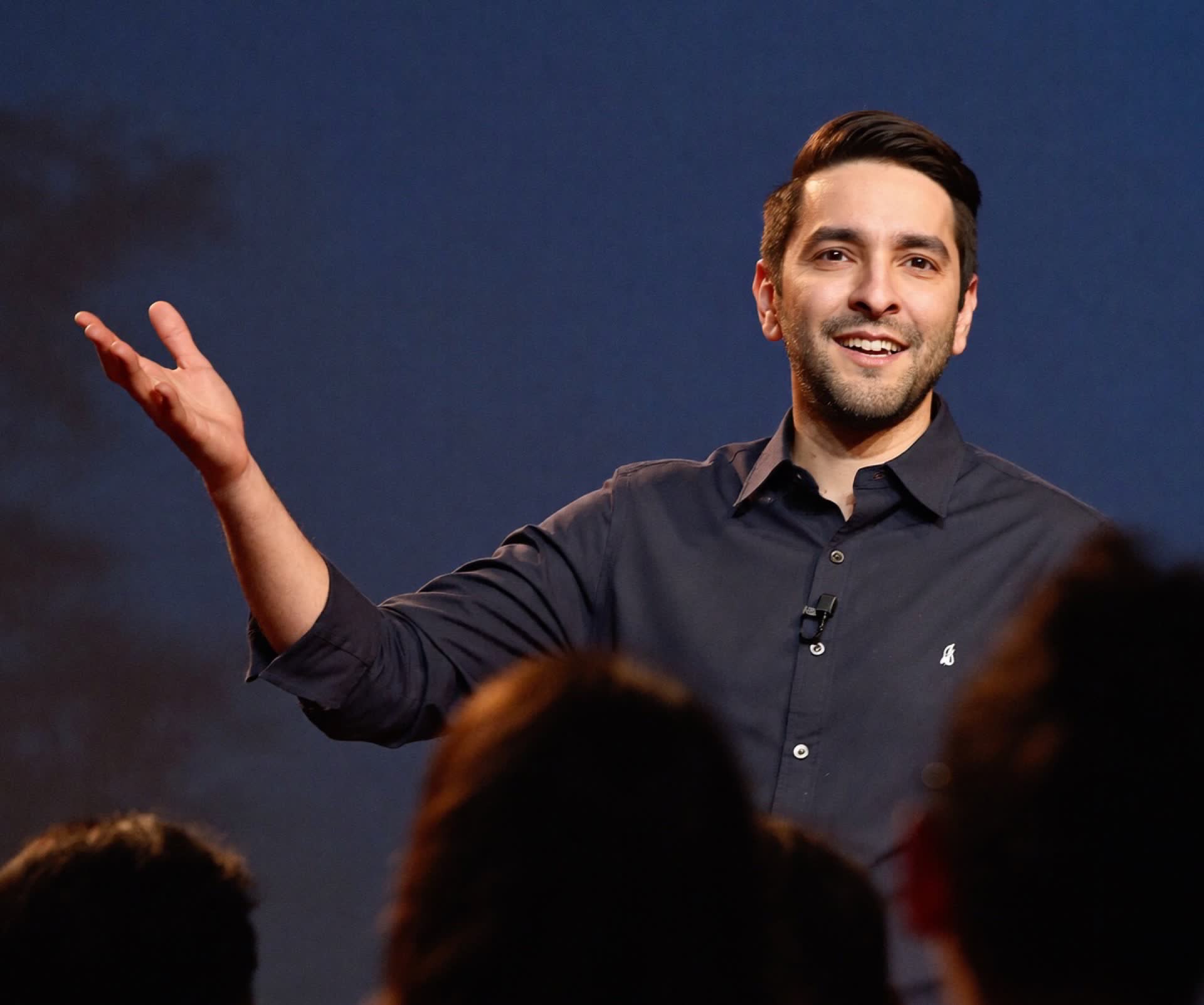
Nisar Chaudhry, founding member of the Yum group, explains how a failed franchise deal became four home-grown brands across roughly 25 locations, and why most Pakistani restaurants die: no systems, no investment in people, and no plan for what happens if the thing actually works.
A guest worth chasing for a year and a half
Muzamil opens by admitting he pursued this conversation for a year and a half, partly because one of his favourite restaurants belongs to the guest’s group. But the real motivation is a pattern he keeps seeing: after real estate, which he calls a mostly dead and unproductive investment, the second Pakistani money fantasy is the restaurant. People save for a lifetime, open one, and expect the money to multiply. “If a hundred restaurants open up, I would say 93, 95, years later they are closed,” he says. He wanted to sit with someone who beat those odds at scale. Nisar Chaudhry is a partner, executive director and founding member of the Yum group, whose four brands, Yum Chinese and Thai, English Tea House, Spice Bazaar and Chashni, operate around 25 locations across almost all major cities in Pakistan, starting from Lahore, and employ more than 1,200 people.
From Narowal to Dunkin’ Donuts
Chaudhry’s own route into food was, in his words, a happy accident. He grew up in district Narowal, in a town near Shakargarh, in an agriculture-based society where education was the default ambition because there were few factories or workshops to absorb young people. He graduated from a government college and moved to Lahore in 1996, where his father was already established as a food contractor. A cousin at Ericsson Telecom got him a six-month job as an assistant in administration in 1999. Then that cousin, an ex-hotelier, returned to the hotel industry, and the example stuck. When Dunkin’ Donuts advertised ahead of its Pakistan launch, Chaudhry applied and became one of the five founding managers, trained abroad in Dubai before the opening. He stayed roughly five years, from 2000 to 2005, and calls it the turning curve: unlike McDonald’s assembly-line outlets, Dunkin’ Donuts runs on centralised production, so he learned manufacturing, food costing and recipe making from the inside, down to making the products himself. He remembers the launch-era queues running from morning to midnight, and a schools push that placed kiosks inside chains like Beaconhouse and LGS to reach kids directly.
The franchise that never came
After a year as general manager at the fish-and-chips chain Mr. Cod, Chaudhry found his partners: Imran Maqsood, now chairman, and Imran Afaq, now managing director, who had been his franchisees there. Six months of working together built enough trust that they proposed starting something jointly. At the time Chaudhry was holding offers from Metro, which wanted to send him to Bulgaria for training as a business development manager, and from a franchise operation referred through a friend at Coca-Cola. He chose the risk instead, trading what he calls a luxury professional life, company car included, for conversion from employee to employer. The original plan was to bring an established foreign franchise to Pakistan, and they went as far as visiting a franchisor’s regional office in Saudi Arabia, with Pizza Inn and Kenny Rogers Roasters both in discussion. Then came 2007: Benazir Bhutto’s assassination, the crisis that followed, and the intensifying war on terror. The franchisors refused to enter Pakistan and offered only remote support. “Why not have our own brand?” became the founding question. If they had to do all the building themselves anyway, the franchise fee bought nothing.
Five million rupees on food before a single table
What the group did next is, for Muzamil, the heart of the episode. Most Pakistani restaurant founders start with the location, then the decor, and treat the food as a detail to be solved by whichever chef turns up. The Yum partners inverted that: a central kitchen, a qualified chef and team, and more than 5 million rupees spent on R&D in 2007, before the restaurant existed even as a concept. Six months of continental trials convinced them the market was crowded. The research pointed elsewhere: Chinese, they concluded, is the second-best choice for the Pakistani community after Pakistani food itself, because it rhymes with how Pakistanis eat, gravies, rice, soup, three or four people sharing communally. And the incumbents were coasting. The old Chinese restaurants had not innovated in forty years, earning on originality claims while their infrastructure decayed. “They were earning on their uniqueness,” Chaudhry says, so the group bet that reinvented Chinese had real potential. The bet extended to talent: when a former colleague of one of the partners cooked a hot and sour soup that was out of the world, they hired him, the ex-head chef for Dynasty at the Marriott with decades in Chinese cuisine, and paid him more than the five-star hotels did. Chaudhry says they were the first in the industry to give chefs cars. Design got the same treatment, with architect Masood Ali Khan, an ex-hotelier who had led top hospitality projects, shaping the concept.
An institute, not a restaurant
Yum opened in Gulberg, Lahore, in August 2010, and Chaudhry remembers the date because the clarity behind it still defines the group. “We were not making a restaurant,” he says. “We were making an institute.” From the first day the business ran on systems built like a multinational: recipe cards for every dish, inventory software, an integrated point of sale, so that if someone is plugged out, a new person will come, it will be set in three days. The typical local founder becomes finance manager, purchaser and marketer in one body and then blames the team when it collapses; the Yum partners built the departments first, including HR and a training function on day one. Marketing was deliberately quiet. Rather than billboards that inflate expectations, they invited families from a list built during construction and let word of mouth carry it, on the theory that a guest who arrives with low expectations and gets a wow feeling becomes the advertisement. “In business there is no rocket science, you simply need to have basics right,” Chaudhry says. Even the launch tagline refused to boast: “Now your first choice” handed the verdict to the customer. Within 15 days the restaurant was packed, and within about three months it was, he says, the number one restaurant in Lahore.
Four brands, one flywheel
The rest of the portfolio grew out of that first success with the same R&D-first discipline. English Tea House opened six months later in the standalone space behind Yum, with cold math underneath the romance: if 30 to 40 percent of Yum’s crowd walked over for dessert and tea, the new brand would break even before winning a single new customer. It bet on tea in a coffee-obsessed cafe market, introduced a continental English breakfast and a colonial high-tea platter, and Chaudhry argues the two brands never confused anyone because they are two destinations, China and England, at the same point. Chashni took on mithai, a category run on tradition rather than systems. They benchmarked Nirala, hired the ex-Nirala production manager who had powered its boom years, bought a property and dug out a purpose-built basement for production, and then went aggressive: three outlets opened at once, two of them former prime Nirala locations, so the market would read it as a chain from day one. It was profitable in the first month, and today leads in corporate gifting, positioned to compete with cakes and chocolates rather than with the neighbourhood sweet shop. Spice Bazaar reinvented Pakistani cuisine itself, and Chaudhry notes with some pride that government bodies bring international delegations there to show the educated version of our hospitality and our culture.
Why most restaurants die
Muzamil pushes on the failure question, and Chaudhry’s diagnosis is blunt. “One is they don’t believe in human source. Investment,” he says; the second is technology. Local owners trust neither their people nor a system, which is why they sit at the till all day. If you have to watch 500 people at a gate, you stand there 24 hours; put in a camera and you can monitor it from Dubai. The deeper failure is planning only for failure. Most experimenters have a justification ready if the venture flops, but no plan for what happens if it works: no factory capacity, no training pipeline, no processes to copy into a second outlet, so even a hit cannot be repeated. Muzamil summarises the asymmetry: opening is easy, sustaining is fairly difficult. Chaudhry adds that quality is a mindset before it is a cost. “In a clean shirt and in a bad shirt there is a mindset,” he says; the fabric costs money, the cleanliness does not. That mindset shows up in the parts of the operation guests never see: separate staff cafeterias, shower areas and a uniform laundry, walk-in chillers for everything down to vegetables, expiry tags on every marinated item, and two quality assurance officers per outlet reporting to a corporate head. The Punjab Food Authority’s model-restaurant video was shot at Spice Bazaar. Waste stays near zero because the menu is a la carte, order to cook; the day’s unsold high-tea food goes to the staff cafeteria the same day and is never reused.
The talent pipeline nobody talks about
Running 1,200 people in a country with no government recognition for hospitality means building the workforce yourself. Junior staff turnover runs around 30 percent, so the group operates a comprehensive training setup: fresh hires spend one to two months in process training before they touch the floor, which means even the churn leaves trained people in the market. Chaudhry credits hospitality schools, above all COTHM, the College of Tourism and Hotel Management founded by Ahmed Shafiq, now in more than 16 cities with over 25,000 graduates serving worldwide, for turning cooking from a stigmatised trade into a career. He points to Pakistan’s culinary team winning medals at international competitions in Turkey as proof of what the talent can do, and argues the industry is now one of the country’s biggest engines of revenue and employment even without industrial status from the state.
Karachi, London and 2050
The expansion map is concrete. Karachi, which Muzamil calls the holy grail, is shortlisted and targeted within the year, and the group sees even more potential there than in Lahore. Internationally, companies are already registered abroad and two MOUs were signed during COVID for the UK and Canada, with the Middle East also in view. The model will be partnership rather than typical franchising, so operational expertise and brand standards stay in the group’s hands, with the food customised only at the edges for local palates, the way McDonald’s sells a McArabia. Asked for his 2050 vision, Chaudhry answers as an operator who built a multinational-grade company in the middle of Pakistan’s worst years. The whole revolution in hospitality took ten years, he says, and he expects to double his 1,200 people within two more through international expansion. “The country is not going to end,” he says. On the evidence of this conversation, neither is the appetite.


Never miss a conversation.
New episodes and the thinking behind them, straight to your inbox. No hype, no spam, no pitch.