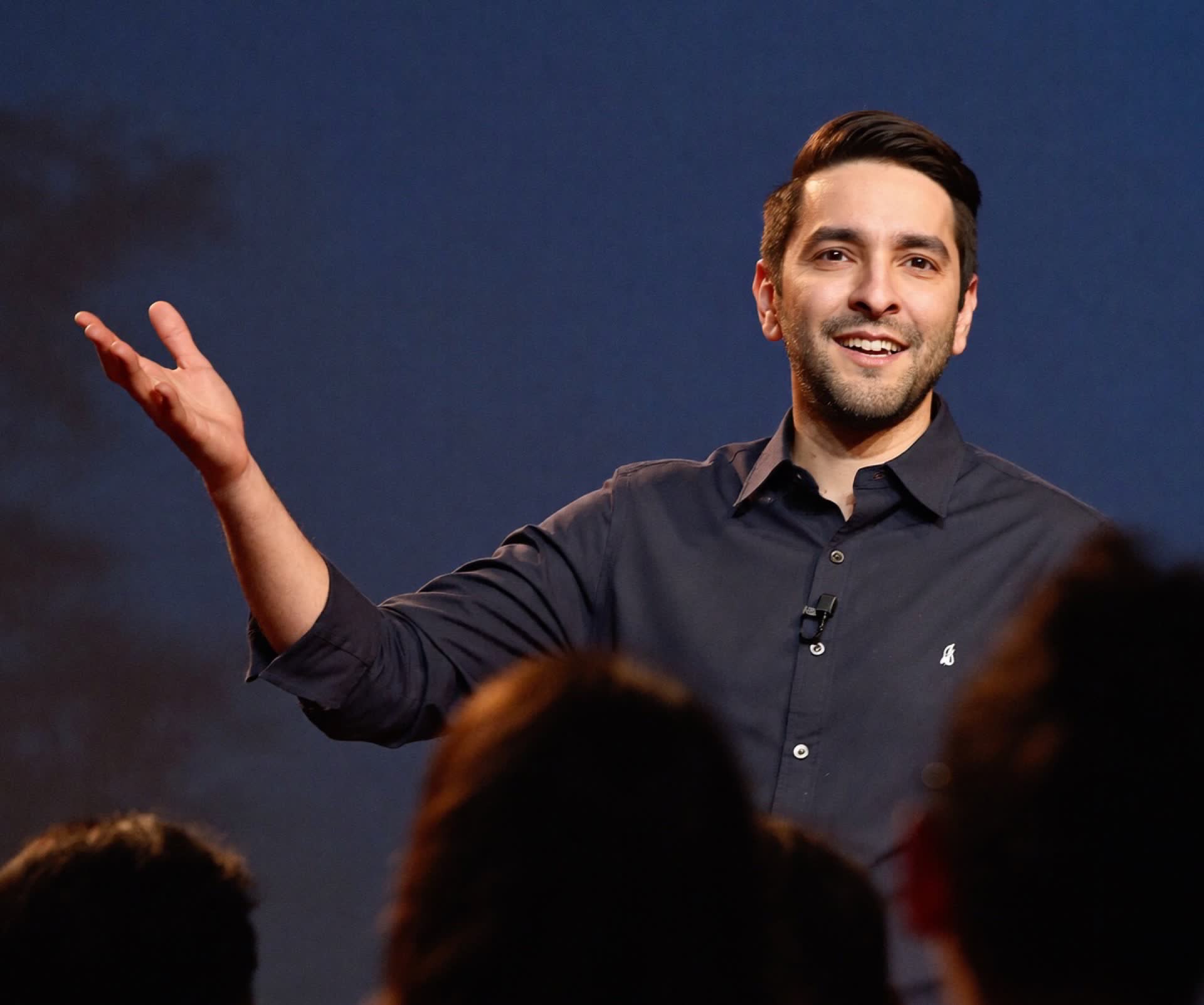
Thought Behind Things · Apr 2, 2026 · 1:01:52
Pakistan's elite never had to deliver — that's about to change
Javed Hassan returns from Fudan University to argue that Pakistan's real problem was never the absence of a civilizational past or the absence of foreign money. It was a vassal elite that never needed a social contract with its own people — and the Iran war may be the crisis that finally forces one.
with Javed Hassan
13 min read
The good, the bad, and the ugly before the guest arrives
The episode opens with Muzamil walking through the news block he uses to frame every show — and on this day the news block is doing most of the framing for him. The good: the IMF has reached a staff-level agreement with Pakistan for a 1.2 billion dollar disbursement, and China has reaffirmed its commitment to the second phase of CPEC, the industrialization phase, alongside a renewed push to put more solar into Pakistan. With the Strait of Hormuz choked and Dubai’s ports operating below capacity, Karachi is suddenly processing ten to fifteen times its average container load. “We have an opportunity to provide a solution for the problem that is right now happening in The Middle East,” Muzamil says, “and seemingly, we’re making good use of it.”
The bad is harder to soften. Twenty percent of global oil and LNG supply is offline. JP Morgan has mapped out when the cushions in storage and in transit will run dry — mid-April for North America, the first of April for Asia. Thirty-three percent of global fertilizer is offline, fifty percent of urea, fifty percent of plastic capacity. The Gulf is already importing seventy percent less food. The UN World Food Programme is warning of forty-five million people in acute hunger if the war continues to June.
The ugly is a single tweet from Dr. Moeed Yusuf, the former national security adviser, warning that if no off-ramp is found within a week, history will write the conflict off as World War III. Muzamil notes that he knows Moeed personally, knows him to be conservative, and would not have written that publicly without seeing something serious underneath. It is this backdrop — not a stable one — into which Javed Hassan is introduced as the man who can deconstruct the multipolar reality that is now forcing itself into the room.
Three months at Fudan, and what China is actually becoming
Javed Hassan spent September through December at Fudan University in Shanghai. The first thing he wants to say about China is not the well-worn line about poverty reduction or GDP — those are stories most people have already heard. The shift he is reporting is the next one. China, he says, is “transformation from just an industrial power center to an innovation and technological power center. And that is going to be what is going to be defining for the next fifty years, not only for China, but possibly for the globe.”
Muzamil responds with the line that is doing the work in his head — “we really need to be thinking, go east, my son” — but he is careful not to romanticize. He puts the harder question on the table immediately. Pakistani policymakers, he says, keep talking about a “China model,” and what they mean by that, almost always, is permission to be more authoritarian. Javed cuts that off cleanly. He had the question put to academics and policymakers at Fudan repeatedly, and the answer kept coming back the same way. “Please, please, do not try and copy the China model. This is unique to us, and we do not expect anyone else to copy the China model.” Four thousand years of history. Two revolutions. Deng Xiaoping’s image of feeling for pebbles in a stream. The Communist Party is not, in his telling, a dictatorial monolith — it has roughly a hundred million members, runs heavy internal screening, and is meritocratic in a way Western coverage tends to flatten. “Democracy with Chinese characteristics,” he calls it.
The lesson he wants Pakistan to take is the inverse of the one its policymakers want to take. Don’t copy. Observe. Build on your own particular capabilities, your own normative values, the things Hidalgo and others mean when they talk about economic complexity grounded in what a country actually has.
The civilizational excuse, and why Egypt undoes it
Muzamil offers a familiar framing: Pakistan is a seventy-five-year-old construct, not a civilizational state like Iran or China or India, and that thinness of identity is part of why it is so easily knocked around. Javed pushes back, and the pushback is one of the sharper moments of the episode. “I’ll first address this, I call it shibboleth of civilizational nation,” he says. The United States, where Muzamil is now based, is “no more than two hundred years. It’s a completely artificial construct. And with ideas, fantastic ideas of life, liberty and pursuit of happiness.” Egypt has three thousand years of history; it has not done well either. Civilizational age is not the variable.
The variable is what the elite is willing to demand of itself. In every country there is an elite. The countries that progress are the ones where the elite has understood, often grudgingly, that it cannot win unless the wider population is enabled — educated, capable, participating. The countries that stagnate are the ones where the elite, as Javed puts it, is captured by a narrow worldview and “doesn’t really think big.” He returns to a conversation with the dean of Fudan’s business school, who had been pressing him on what was wrong with Pakistan. Javed answered with one fact: the same ten conglomerates have dominated Pakistan’s economy for forty years. The dean stopped him there. “Well, you don’t need to tell me anything more.”
No creative destruction. No new competition. No new companies. No pressure on anyone to grow, to create jobs, or to educate a workforce. That is the diagnosis.
The 1950s decision that bought the elite out of the social contract
Muzamil moves the argument toward agency. Why did Pakistan’s elite become rent-seeking when other elites became efficiency-seeking? His own answer is that Pakistan’s elite was a vassal class — never required to develop agency because pressure was always relieved from above by global patrons. Javed accepts the framing and adds the historical specifics he has been gathering for the book he says he is trying to write.
In the early 1950s there was a window. Land reform was possible, the kind that Taiwan, South Korea, and Japan went through and that lifted agricultural productivity in Taiwan by three to four hundred percent over a comparable period. Pakistan’s agricultural productivity rose by roughly fifteen percent in ten years. Defense spending in Pakistan’s first decade averaged forty-nine percent of the budget — sixty-two percent in the first year, dropping only gradually. American aid filled the gap that taxation would otherwise have had to fill. And once that gap was filled from outside, the elite had no reason to go to its own population, ask for money, or negotiate a settlement with it. “It was a society that needed did not need social contract,” Javed says.
This is the formulation he wants on the record. Forget the language of elite capture, he tells Muzamil. Ask instead whether there is a societal contract between those who govern and those who are governed. In China the Communist Party operates under one — implicit, surveyed, constantly anxious about GDP and poverty alleviation because legitimacy is at stake. In Taiwan and South Korea, even during their non-democratic decades, that contract existed. In Pakistan it never had to.
What happens when the patron stops paying
Muzamil paints the hypothetical carefully. A protracted Iran war. The Gulf weakened by lost revenue and possible escalation. American missile stocks drained, American economy strained, recession or depression on the table. The patrons of Pakistan’s elite — Dubai, London, Washington — degraded in the same window. He asks whether that finally produces the pressure that domestic politics has refused to.
Javed says he is, against his usual instincts, hopeful. The rents of the 1950s, 1970s, and 1980s are no longer arriving. Even China, he points out — and he is candid here in a way the official line is not — has invested very little in Pakistan in the last four years. “You’re not prepared to absorb it. Your conditions are not such,” is how he summarizes the Chinese position. If oil prices stay near or above one hundred dollars for the next four to five weeks of war, remittances from a weakened Gulf may compress at the same time the import bill spikes. The pressure wall the elite has lived behind starts to crack.
He does not romanticize the crisis. “Nobody wants a collapse, nobody wants an implosion.” But the historical record, he argues, is uncomfortable. Sri Lanka, post-default, is in some ways better positioned than it was before. The cataclysmic events the elite fears are the same events that occasionally make transformation possible. The elite frames those events as dangerous because they threaten the existing order, and that framing has shaped the public’s view of risk too.
A strategic American defeat and a genuine retreat
The second half of the answer is geopolitical. Javed thinks the United States is unlikely to get the overwhelming victory it was looking for in Iran, and that the absence of that victory constitutes a strategic defeat. He frames the consequence carefully. It might mean, finally, that America turns inward — “America first quite genuinely, as opposed to just in terms of talking.” For the people of America, he says, that would be a good thing. For the rest of the world it means a multipolar order in which China’s rise continues, India and Russia matter more, and Saudi Arabia, Qatar, and Egypt are forced to confront the fact that their growing populations cannot be managed through patronage alone.
Pakistan, he says, “really has run out of steam.” The last four years have produced almost no growth and almost no job creation. The capacity of the elite to gaslight the public — his word — will give out. The pretense that being a regional mediator constitutes a development strategy will give out. And then the serious questions arrive. The first one he names is alignment. Pakistan’s official rhetoric calls China higher than the mountains, deeper than the sea, sweeter than honey. Its actual posture remains Washington-first. “I think that really will need to dilute. It doesn’t need to break down, it just needs to dilute. And we need to firmly hitch our wagon with the country, which might be the country of the next fifty to one hundred years, which is China.”
The AI and robotics gap, and the new gatling gun
Javed grounds the China argument in numbers. In 2024 roughly 550,000 industrial robots were installed globally; about 260,000 of those went to China and 35,000 to 40,000 to the United States. Japan, Taiwan, and the rest of the field together accounted for the remainder. The United States may be four to five months ahead of China at the AI frontier by his reckoning, but in the diffusion of AI into industry — and in the coupling of AI with industrial robotics — China is well ahead. He cites the BYD factories in Shenzhen and Shanghai, where one vehicle reportedly rolls off the line every twelve minutes.
He reaches for a historical analogy. In the early nineteenth century, the Mughals, Japanese, and Chinese were not far behind the West on civilizational values, but the steam engine and the Gatling gun changed the math on the battlefield and in the factory. Today, he says, “we are facing a China which is really the one with the Gatling gun and we are probably like Bolsonaro” — by which he means the country still bringing bows and arrows to a fight that has moved on.
Muzamil pushes back from the other side. Earlier development models assumed someone, somewhere, would still want to buy what a poor country could produce. The United States is exiting the consumer-of-last-resort role. China is automating away the labour-intensive ladder that India and Vietnam climbed. Where does that leave a country with forty percent illiteracy and no fiscal room? Javed concedes the bleakness, then refuses it. Every technological revolution has eliminated jobs and created different ones. Even Chinese AI companies, he says, are starved for English-language talent. The opening exists. The question is whether the state can stop trying to direct everything and let people find it.
Stop chasing the anchor deal
The last substantive thread of the conversation is about how investment actually arrives. Muzamil notes that Pakistan keeps positioning itself for the headline-grabbing twenty-five-billion-dollar Saudi commitment, or the next big Chinese announcement, and these announcements rarely convert. Javed says the framing is the problem. In Shenzhen, when he was working out of Hong Kong, the deals he saw were five million, ten million, twenty million. “Acorns into big oak trees.” The Special Investment Facilitation Council and other top-down vehicles are optimized for the wrong end of the distribution — for optics, not for ecosystems.
He notes that in the same year China deployed roughly a trillion dollars globally under the Belt and Road framework — significant amounts into Nigeria, Congo, Malaysia, Thailand, even Vietnam, a rival — and “virtually nothing” into Pakistan. The reason, in his read, is not only security. It is that China does not feel Pakistan is committed. The two-boats posture — one foot in Washington, one foot in Beijing — does not look like fence-sitting to anyone watching closely. It looks like indecision.
Muzamil layers a related point on top. The state, he argues, should be doing only three things: storytelling, narrative, and policy. The rest should run on its own. But the current government cannot even hold a coherent narrative. It says export-first, then defends a Pakistani rupee that has been flat against the dollar for an unnatural stretch while the Indian rupee has depreciated in spite of a strong current account. Javed agrees — and goes further. “I have not seen any currency which is so stable like the Pakistan rupee. It’s been around 2.8 so constant. I mean, this is not a market.” Let the currency find its level. Stop performing control. Replace the official line that everything is hunky-dory with a humble pitch to the world: come here, we need help, the playing field will be fair.
From bust to bust, with stability in between
Muzamil closes by asking whether the country is heading into another twelve-to-twenty-four-month tumult, given oil, remittance pressure, and the absence of growth under stability. Javed corrects the question. “Let’s let’s get away from that. There’s no boom bust because there’s no boom. That has it happened. It’s from bust to bust. It’s bust, flat line, what is called stability, and then bust again.” Another bust is coming. The luxury of gaslighting and of hundred-billion-dollar Saudi mirages is running out. “The truth liberates you,” he says. “We have to start getting real with ourselves.”
Muzamil ends the episode with a story from 2022, the last bust, when his proximity to the show had put him in rooms with the so-called elite and he watched them push their wealth out to Dubai and London while the controlled dollar bled the country. He sees the same signals now in the calls to loosen real estate taxes and stimulate the property market — exit liquidity, in his reading, dressed as policy. Javed agrees and adds the only line that matters. This time, he says, there is no space left in the system to make it work. “They’ll have to face the music.”
Full transcript
सानवाल खावतीरो हज़रत. Welcome back to another episode of Thought Behind Things podcast. Today is the 04/02/2026 and we'll start the news with the good, the bad and the ugly. Starting with the good news, IMF has reached the staff level agreement with the पाक्ष्टानी government for $1,200,000,000 disbursement. The amount itself is not that much, but it proves that short term our economy is stable, and it's not going to completely crash out, which is great to hear. Meanwhile, today China reaffirmed its commitment to CPAC phase 02/2029, which is the industrialization phase. Along with that, they're also interested in pushing more solar into Pakistan considering the oil crisis, where the oil prices will probably remain elevated and high for the good foreseeable future. And a potential solution to that is becoming energy secure by producing our own energy through renewable systems like solar power. Now this is important for Pakistan because our economy requires industrialization, and we need foreign direct investment to sort of kick start the economy. But more so, China has been lagging on this for a little while over the last couple of years as we increasingly went more towards America even though this great power conflict has been ongoing. But with the state of Hormuz choked up, it seems like China is now making that effort to ensure that the supply lines are open because Pakistan or CPEG at large was an alternate route for China in case any conflict erupts in the South China Sea, where China can go through a similar situation as is happening in the Strait Of Hormuz where, you know, the trade has stopped, ships are unable to cross, and therefore, if China faces such a corundrum, they will need to look for alternate routes, Seapeg being one of them. Now because Strait Of Hormuz is closed up and the ports of Dubai and The Middle East are not functioning in full capacity, a lot of the container ships are stranded out in the sea. And that's primarily why as an unintended consequence, the port in Karachi is handling and processing almost 10 to 15 times its average load of containers right now, which is a great thing for Pakistan considering the circumstances. We have an opportunity to provide a solution for the problem that is right now happening in The Middle East, and seemingly, we're making good use of it. A lot of experts used to say that Dubai wants a destabilized Pakistan and a destabilized India because the traffic of Mumbai and Karachi ends up in Dubai and props up the economy there. And therefore, unfortunate as it may be with the crisis happening in The UAE right now, there is an opportunity for Pakistan particularly to potentially provide them with an alternate solution, and it seems like some of that at least is coming to कराची right now. Now talking about the bad, I feel like a lot of people in Pakistan are not realizing the gravity of the situation with this Iran war. Right now, 20% of the entire oil and LNG supply in the world is offline, and the prices that have been hiked right now are still preliminary because there was a lot of oil in storage all over the world that was available. There was a lot of oil in the sea in transit that was available that is being constantly docked out and traded. Now JP Morgan has outlined a detailed map of when the oil will start to run out. In the North America, that would be mid of April. In Asia, the shortages will start on the April 1, and increasingly the pressure will increase. Of course, that leaves Pakistan in a tricky situation because right now the government, even with the price increases, already subsidizing fuel and diesel. And as the price increases further, they will have to raise the rates. Once the fuel price increases, the price of everything else increases, and there's going to be huge inflation that's gonna hit the economy, and it's gonna be tough for a lot of people. But oil prices is just the tip of the iceberg because 33% of global fertilizer is currently offline. 50% of urea is currently offline. Because urea is made from LNG and gas, plants across Asia are shutting down. And not only does that mean that the price of urea will shoot up, a lot of shortages will occur, which means as of the next harvesting season, we will be seeing a lot of shortage in food supplies all over the world as well. Already the Gulf nations, which are heavily food import dependent, are importing 70% less food because of the closure of the state of Hormuz, and the UN World Food Program warns that if this war continues by June, forty five million people might suffer from acute hunger. Along with that, oil is also used for all sorts of plastics manufacturing. And because of the lack of oil, 50% of plastic capacity is currently offline all across the world. What does that mean? That means all of the packaging material, the bottles, the plastic wraps, the shopping bags that we all use regularly in our consumerist lifestyles will be off. How does that impact our societies? How does that impact our markets? We are potentially looking at an absolute catastrophe. And now for the ugly part, I have a tweet I want to share with you. This is the former national security adviser of Pakistan doctor मुहीद युसूफ who says, if no off ramp is found within the next week, history will write off this Middle East conflict as World War three. Very soon, it will resemble a global conflict in terms of the number of countries involved, the intensity of violence, and the spread of its absolutely catastrophic consequences. Those who can must prevent this from happening. Now this is a very very serious warning. I know मोहित personally. I know he's very very conservative, he wouldn't have said this unless he sees something very very serious happening under the hood. For people in Pakistan, they need to be taking this seriously because if this conflict widens, if it is potentially becoming a World War three, we might see a war happening between India and Pakistan like the one that happened last year. Even though we can be all nationalistic and we can say, oh, you know, we're gonna bring their planes down and we're gonna shoot missiles at them, the fact is ordinary people always suffer during wars and during these turbulent times. Nonetheless, whether Pakistan utilize this opportunity to create alternate business opportunities for itself or the supply shortages makes life a little bit difficult over the next short to medium term or we're looking towards a world war three, I don't know. But to deconstruct this situation and give us a sense of the multipolar world that is emerging between US and China. Today we have with us जावेद हसन who has been on the show multiple times before. He was formerly the chairman of the economic advisory group in Pakistan and most recently he was a senior research fellow at Fudan University, Shanghai, China. रावेद, welcome welcome to the show. Great to have you back.
Good morning. Good evening, probably you.
बुज़ामिल, good to see you after a long time. And I heard that you've recently been a research fellow at the Foodan University. How was that experience in China?
Well, I was there for about three months in last year from September till December. Quite an amazing experience. It was eye opening. What's happening in China is something which we should all be aware of. There's a transformation that has already taken place, a lot of people are aware of in terms of the reduction in poverty, the growth in GDP per capita. It's now the second largest possibly the largest depending on what metric you use. But now there's an even greater transformation that is taking place, which is it's transformation from just an industrial power center to an innovation and technological power center. And that is going to be what is going to be defining for the next fifty years, not only for China, but possibly for the globe. And that's something we should be, in Pakistan, be very aware of because we look west all the time. And there used to be the saying, Go west, my
Probably, we really need to be thinking, go east, my son. Son. No. That makes sense. I'm curious, and I'll break this down into two distinct parts. One is to learn from China and the way that they've sort of grown. And we hear a lot about the Chinese model of, you know, how they were able to raise their people out of poverty, how they were able to create the sort of incredible factory of the world. For me, though, it sometimes feel like feels like it's a cop out to actually build an authoritarian state. We look at the seemingly authoritarian aspects of China, and we ignore everything else. And we say, oh, you know, we're gonna have a Chinese model, and it's going to be aggressive, and we're gonna be successful. And then there is this separate aspect of the future of the world, which is a multipolar world, and whether we should be taking, you know, looking towards East or or the West. We'll come to the second part later, but I'm curious to know your understanding of what the Chinese model could look like vis a vis how Pakistan can develop here on fourth and in terms of how we structure our economy, if that makes sense.
Yeah. I I think we have to be very careful about these terms that we bandy about. So, casually, China model. And it's heard in Pakistan all the time. Even policymakers seem to be talking about the China model. And what they seem to say mean is that you should have effectively a non democratic model and a semi authoritarian model and be able to force your view from the top or force decisions from the top. I think that oversimplifies what China is about. In China itself, to academics there are people who are effectively the cognoscente, the people who make decisions. And I've had the, while at Fudan University, I had the pleasure and opportunity to meet a lot of academics and some of the policymakers. And one thing that came out again and again and they were very clear about it whenever we talk about the China model the response was, please, please, do not try and copy the China model. This is unique to us, and we do not expect anyone else to copy the China model. It involves four thousand years of history, many layers of pain and joy and intervention by external forces, a revolution or two. You know, was not only one revolution, there were a couple of revolutions. So, there's been considerable journey into arrive here. And really, it's still in a phase where they're experimenting, they're changing. And if you see what Deng Xiaoping said, he said basically you have to feel the pebbles in the stream as you go along. And that's whatso there wasn't a clear cut. It was experimentation, seeing what works, what doesn't work. And then doing what works, taking it forward, building on that and continuously building. I think, you know, again, the idea of authoritarian regime, that is over sort of stated in the West especially, but also in places like Pakistan. There is essentially a really very deep call for legitimacy in China. The communist party doesn't operate as a dictatorial power. It seeks consent. There is membership that is very widespread. Something like 10% of the population effectively is a member, about 100,000,000 members of the Communist Party. It's very meritocratic. Within this process, there is a lot of screening. And a lot of it is, you might consider, democratic. So, as they say, China, it's democracy with Chinese characteristics. So, I think, don't think we should be glib about it, and I don't think it's replicable to Pakistan. Every country has its own characteristics. And this is something which a number of major development economists have said. You know, there's Hidalgo Cesar who has done, you know, the complexity model. He talks about how countries should really focus on their own particular capabilities, their own history, their own normative values. And then that's how you build on a country. So I think in Pakistan we have to be very careful. Yes, we need to learn. We need to observe. We need to see what has worked in other countries. But we to try and sort of bring lock, stock and barrel the China model. That is really a bit, think, unrealistic.
You you mentioned, you know, you have to look at your own history. You have to go to your own DNA, you have to sort of evolve from that. Right? If we we look at Pakistani DNA, I feel like we were how do I put it mildly? We were sort of, like, a we're not a civilizational state. We're not Iran, which was Persia. We're not China, which was which has had its own sort of civilization history. India has had a civilizational history. Pakistan, unfortunately, is is a, just a 75 year old, very, very sort of young nation state. Nothing wrong with that. But, obviously, that's one of the reasons why it's difficult for us to find our identity. And as we sort of became independent, it was also an interesting time of shifting global, you know, status quo where the where The UK as the as a central superpower shifted towards The US, and we immediately went towards The US. There was a world that was created from then till today. And our elite, our entire infrastructure, our entire identity is driven and built around that world. Now that world is once again shifting, and I feel like if we do look at at our own history and our own past, and if we look at our own elite and elite institutions, I feel like they're increasingly becoming helpless and do are struggling to find the way out from this current conundrum. And within that context, I'd be curious to know how do you see this current multipolarity that is taking over and this sort of conflict between The US and China. And to be very honest, this a lot of people within power that I've within Pakistan, in the corridors of power that I've spoken over the last two years, were increasingly constantly saying, oh, you know, it's US. It's a US world. They're gonna sustain forever and ever and ever, and nothing is gonna challenge them. And I feel like they're increasingly rattled post Iran war as well, where they, you know, a lot of the narratives that they had made in their minds have sort of been crushed as well. So I'm curious to know your understanding of right now where the world is standing, and and how does Pakistan sort of, you know,
work in that question? I'll first address this, I call it shibboleth of civilizational nation. And yes, I think it's wonderful to be a Persia which has three thousand years of history. One would say similarly China has extensive history of the past but I think it's again something which is overplayed. There are you're living presently in The United States. What civilizational history? It's no more than two hundred years. It's a completely artificial construct. And with ideas, fantastic ideas of life, liberty and pursuit of happiness. So, frankly speaking, I think we should not use that as an excuse. And I'm fair it is used as an excuse for not having done as well as we could have done. So I think, yes, China has very great advantages. So there's Persia. But then again, let's look at another civilizational country, which is Egypt. How come that has not done incredibly well? I can give several examples like that. So I think those easy explanations, I think, should be set aside. There are more, more, more deeper reasons. And I think one of the simple reason is that it's a question of really legitimacy and really giving the people your elite has basically and we use this word elite capture but I want to think about it slightly differently. It's not simply a question of elite capture and taking all the resources, but it has not it could do that. It could be the main beneficiary of the economy. Most countries, even in China, there's a certain elite. A lot of the people there are who are now doing well are part of the elite, who have had historic background in communist party and all that. But that so let's not say that elites don't exist in other countries. But the one thing there is in most other places which continue to progress is the elite tends to understand that you need the wider participation of the general population. You cannot yourself as the elite succeed unless you have an enabled population, unless you have a capable population. It is almost impossible to actually progress you as an elite as well. So, what we have is an elite which looks at a very narrow worldview. It maintains its power. It maintains its resource capture, but it doesn't really think big. That is the issue. So, just think where we have a problem is not simply elite capture, but it's an elite capture which doesn't think big. Does not One of the things which was while I was fed food on, I went to meet the dean of the business school there and, he was very interested. He was telling the sort of transformation that has taken place in China, the number of companies, the problems that they have now of excessive competition, you know, the misallocation from the So there's constant debate questioning about even though they've been extremely successful, felt that there's overallocation in electric vehicles, there are too many companies. So there are issues there, but there's constant transformation, constant change. Then he asked, What's gone wrong in Pakistan? And I said, Can I just ask you, Professor Quinn, tell me, what do you think of the fact that for the last forty years, the top 10 conglomerates are the same in Pakistan? There's been hardly any change. It's the same. The conglomerates you had about forty years back, virtually few names you might add or subtract from that, but they are the same. And Thorebant, he said, Well, you don't need to tell me anything more. And that was it. I mean, literally said, yeah, that's where there's not going to be any creative destruction, I use the word, where there's not going to be any transformation, where there's no new companies, where there's no new competition, where the same group of people continue to make their sort of rental income. We have discussed this, I don't want to focus on that. Where's there going to be that impetus to grow, to create jobs? And where is there going to be a need to have the labour force, the population educated to actually transform? That's where the problem lies. It's not simply a question of democracy versus no democracy or elite versus capture. As I said, elites exist in every country. It's but the nature of the elite that exists and how it views itself. The elite here, which I'm trying to look at from the 1950s, they basically ensured that there was no land reform, where there was extensive land reform taking place in the '19 in Taiwan, Hong Kong, Japan, in South Korea. And land productivity, this is just a statistic worth noting, Land productivity, agricultural productivity in Taiwan increased by something like 300 to 400%. There's a great book by How Asia Works by Studdwell, worth looking. In the same period, in Pakistan, where there was effectively no land reform, land product agricultural productivity increased by something like only 15% in ten years. And that has been the case. So fundamentally, if you're not going to have that pressures on your elite to change, to have competition, you're not going to create the incentive mechanisms to actually grow and actually utilize the people. Exploit even if you want to use the harsh word exploit the people. We we basically want to ignore the people. That's the problem.
If I would ask you, I mean, you you mentioned this very interesting fact about pressuring the elite. Right? And, I mean, if you look at the entire system objectively, there are different stakeholders. There are different pressure points, and that sort of, normally pushes for for change and evolution and transformation. What is it that you would argue is the reason why our elite has inherently been so rent seeking? Like you mentioned earlier, elites exist all over the world. There is absolutely nothing even morally, I would argue, wrong with having a system in place, a structure where where some people are better off, some people are worse off. You know? But for a lot of different countries, their their elite are efficiency seeking. They they're able to create incredible productivity and wealth for their countries and thereby wealth for themselves as well. For a lot of countries, and I would say two countries that come to my mind, you've mentioned the other one already, Egypt and Pakistan have a very similar dynamic. You know, continuously military intervention and then certain families within the society. And you can very clearly see even in Egypt, I was speaking to, I was in Dubai for a couple of years. I was speaking to a lot of Egyptians, and there's a there's a very clear demarcation of the officer class and the, you know, the masses. And that same dynamic holds true for Pakistan as well. I would argue that the reason why such elite has existed is because the elite never really had an agency. They were inherently vasals of a of a global system, and these two states had a very particular role in their respective, geographical locations, and, therefore, the elites were propped up. The pressure did not exist because pressure walls existed
as a, you know, a You know By proxy विद्युकापाव. You've stolen my thunder. Whatever I have to say, you already said it. No, but you're absolutely right. Mean, I'm trying to write something about Pakistan's history, the political economy, and I don't know when it will happen. But one of the things that you notice, there was a moment in the early 1950s where we could have pursued effective land reform. We could have had better taxation measures. We could have had led which all would have led to a greater focus competitiveness of actually elevating the poverty levels, the education levels in the rural areas. But unfortunately, America intervened. We decided to join arms with America, which started basically as you use the word vassal. We decided to become a vassal country of America. And that was basically ensured that we got enough defense spending. And defense used to be at one point in the early first decade of Pakistan, 1950 to 1960. On average was around 49% of your budget. Just imagine, just let that sink in. About 49% or in the first year actually it was 64%, 62 because that was Kashmir. But it didn't decline that much. And it was, on average, for the first decade, 49 But how we managed to sort of and it would have been even higher had it not been for American intervention. Essentially, you're going to spend much of your money and much of your resources on defence, you're not going to do much. But moreover, because we got this aid from America which came, it completely stopped the need for the elite to go to the people, to ask for taxes, to bring about the sort of consensus from the masses. It was a society that needed did not need social contract. So when you think about this is when you think about Egypt or Pakistan and some of the Middle Eastern countries, even though they may be awkwardly doing very well, But I don't think I don't see them as very productive. Societies which don't have a social contract between the elite and they're the ones who tend to be left behind. So if you want to look at it in a slightly different way, forget the elite, is do we have a social contract? Do we have a societal contract between those who manage, who govern and those who are governed? And frankly speaking, in countries like China there is a societal contract. There's an implicit understanding that if Communist Party doesn't deliver, it will be in trouble. They're constantly worried about GDP growth. They're constantly worried about, you know, poverty alleviation. They're constant. So there's concern right at the top because the society has an expectation. And to a certain extent, they're again continuously doing surveys. And one of the things is that there's a certain degree of legitimacy. Same is true in places like Taiwan and other countries historically which were not democratic if you think in the first part of fifties and sixties, even Korea. But there was always this sort of contract between the people and those who govern. What we don't have is that kind of contract where the elite needs to deliver to the people. And that is the problem. And so until you have that nature of contract where even if you may have all the levers of power, you need to actually create a situation which will deliver. Otherwise, you won't sustain. And therein lies our issue that effectively we get gone this theoretical work by Achemoglu and Robinson and all that. Let's keep that aside. But essentially, there is effectively no accountability or no pressure on our governing class
to to actually deliver to the people. So if I were to ask you, what happens assuming, let's say, this is a hypothetical, this is a, you know, caricature that I'm sort of painting. But what happens if we have a protracted long war, in The Middle East that, that escalates much further? Let's say, the Gulf nations, suffer a lot of losses because of the loss driven revenue as well as, let's say, if Iran sort of attacks them even more. I mean, UAE already has suffered a lot, but let's say, you know, this escalates and the Mizrays really start start coming down. I feel like a lot of people will rush out. The economy can potentially collapse. So let's assume The Gulf is in trouble. They do not have the money as freely coming as it used to. Let's assume that this war goes on and it drains The US of its of its, let's say, missiles, which a lot of people are saying, as well as it's costly it's a costly endeavor, and US is not necessarily doing too well economically right now, and that potentially leads to a decision or worse, crash or depression. What the where does that leave your elite? Because those are your primary patrons. You know, you you you take your money. You park it in Dubai or you used to park it in Dubai. You took your money. You parked it in London or in The US. Those were the countries that would bring in, you know, the investments, quote unquote, which didn't really pan out even over the last two, three years when it was relatively stable. But now in these new sets of circumstances, I feel like that patronage is increasingly going to be done and dusted. And so do you think would the elite now be forced to or would that pressure finally come in naturally, over the next, let's say, decade, in the absence of such patronage?
You know, Mozart Bill, I'm very hopeful actually. In the crisis that we are facing now, I finally feel, for a start, this rental that we used to get in the fifties and the sixties, And then we got another way in seventies and in eighties. This isn't happening. Despite all our efforts, we haven't got much investments either from The Middle East, definitely not from America. And we have not really got much from China either in the last four years. So that kind of external investment is not happening because there's a simple reason. We are not And China is a very candid about it. They say you're not prepared to absorb it. Your conditions are not such. Probably the same is true for others. But what is more important that if the changes that are happening in The Middle East and they're so dramatic, there are two changes. One, their own growth will slow down. So, the pressure wall that was eased from remittances, that might suddenly change and reduce. So, we might not be getting those remittances that ease a lot of the pressure on our external balances and effectively the elite. And we may also find that oil prices remain high for some time. This in my my my assessment, this this war is going to continue for another four to five weeks, if not more. So we we could see a persistent price hike, which remains close to 100 or above 100. And that will have severe impact in terms of growth, in terms of our external account, and that will start putting pressure. So, finally, we might get the pressure that will really put the governing class in a difficulty, a difficult position. Now, my view is not we don't obviously nobody wants a collapse, nobody wants an implosion. But unfortunately, this part of the world, you see, unless there's some dramatic change, and unfortunately in many parts of the world, unless there has been a dramatic change or circumstances where things do fall apart, that you don't get the required change that is needed for societies to transform, to build again. If you think about it, Sri Lanka, despite having gone through a default, is probably better off today than it was before the default. So, we look at these cataclysmic events as extremely dangerous. But again, our views are shaped by the elite because they find these cataclysmic events very dangerous to their straggle hold on the economy. I personally think we have to be careful because we don't want too much suffering and obviously the poor suffer the most. But again, these kind of cataclysmic events could be an opportunity for change. There's two points here. First, I think you were trying to hint at it, is the multipolarity of the world. I think this event that is happening and the lack of sexes, and I think it seems unlikely that United States will get the overwhelming victory that it was looking for in Iran. And this lack of victory will effectively be a strategic defeat. And it might mean that America withdraws to being America first quite genuinely, as opposed to just in terms of talking. And it probably does for the people of America. That would be a great thing. And you want a successful America. But it will want to interfere less in the rest of the world. And that would mean you have a multipolar world. That obviously, in some ways, people are uncomfortable about. But frankly speaking, a multipolar world means you have greater rise of China, which has already been rising. And also, to a certain extent, India and Russia, they might become more important. The countries like the Middle East, Saudi Arabia, Qatar, Egypt, you know, Egypt will need to really look at themselves. They have large growing populations and can they just rely in the manner they have been going on. They would need to empower the people. I think they're relatively educated, especially in Saudi Arabia. But they need to create the job opportunities, the competitive environment where real investment comes in rather than, I would say, pretty flaky investments, which really create jobs where you're competitive globally. Pakistan Pakistan I think really has run out of steam. I genuinely think you know people think this can sort of go along for another five ten years. I don't think so. I think the last four years have shown there's no growth, virtually very little job creation. The poverty index is at some point there will be considerable pressure that will be coming from the people. And generally, even the elite starts running out of steam. Its own ability to effectively gaslight the public, and there's a lot of gaslighting that goes on, will not happen. And these kind of... You know, by saying we are participating and mediating, that kind of pattern on the back that we try and do by being an important player, that is also not particularly going to work out. So, when you have that and you have real need for change, then you start asking the serious questions. And it is time. I think we have been talking about these serious questions, but I think the time is coming upon us where serious questions. I mean, first of all, in terms of alignment. And our alignment, despite the fact that we say we are strategically close to China and, you know, higher than the mountains and deeper than the sea and sweeter than honey, Despite all that, we'll look to the West and our first and foremost relationship tends to be with America. I think that really will need to dilute. It doesn't need to break down, it just needs to dilute. And we need to firmly hitch our wagon with the country, which might be the country of the next fifty to one hundred years, which is China, where there are some dramatic things as we started off with, dramatic things happening in every field, in every field. You know, I know, Muzambel, you're very interested in artificial intelligence. You know, that is going to be defining, you know, every era has its own technology or its own particular instrument that transforms society. You had, you know, the steam engine in early nineteenth century, which was transformational. Then you had Internet boom in the sort of 80s, which again was transformational every, every ages. I think AI is going to be the transformational tool. Every, I'm not, what I'm saying is so boring and mundane, everyone is saying it. So forgive me for repeating that. But it's not simply AI. It's the diffusion of AI into industry, in how you work, and the coupling of AI with robotics, industrial robotics. And that is something while the West may be slightly or United States may be slightly more advanced than China, it may be four to five months, think, by my reckoning, and more advanced than China. But China is fast catching up. But in terms of the diffusion of AI into industry, China is way ahead. And there's another thing China is way ahead of America is in terms of industrial robots. Just guess, I mean, in 2024, were something like 550,000 industrial robots installed globally. Of those, something like 260,000 were in China. So almost 50% were in China. In The United States, it was about 40,000 or 35,000. Similarly, in Japan, Taiwan, you know, all of these other countries together added up to, you know, 200,000 or thereabouts. So you imagine you have industrial robotics, you have AI. Imagine what is happening to productivity. It's not only the fact that industrial robot needs less people, but the precision of manufacturing, the repetition of tasks. Yet one can just go on. Literally, that's why they can produce a beer, one BYD vehicle every, sort of twelve minutes, I'm told. And it's it's worthwhile going and seeing the BYD, factory in in in in in China, in in in Shenzhen and and and there is one in in Shanghai as well. If I were to pause you here, look,
as humans, we tend to look at our recent history and we try to even as academics, you know, we try to look at models. Early on, we were talking about the Chinese model and we were looking at, okay, how did China rise? How did India rise? And, then we try to sort of emulate that. I feel like it's such a weird time right now that any recent recent age example just doesn't work. So you had The US, for example, that ended up as a superpower, and every superpower has this cycle. Ray Dalio puts it out very perfectly, where when they're sort of expanding their power, they end up going into consumption, and when they have the reserve currency and so on and so forth. And so that's what China essentially used. Right? China used US's, like, crazy need of consumption to keep on selling them goods and, by proxy of that, build their sort of industrial base. For the services sector, India sort of did the same. And that's why now they sort of have a huge 350 plus billion dollars of services exports almost close to Pakistan's GDP. The fact is today we talk about, oh, you know, we can set up industry. We can set up services. We'll do IT exports of $30,000,000,000, $40,000,000,000. The fact is the buyer is just not there anymore. The US needs to make sure that they are stopped running deficits. That's has been the entire concept behind the tariffs and the trade wars and so on and so forth. Even Trump is saying that to India, you know, we're not gonna get the same opportunity that China got because we're not gonna make the same mistake twice. China, on the other hand, you would imagine, okay. So if The US is going, China has an aging population, and they're moving to a higher value, you know, industrialization or higher value services. Maybe we'll produce things and give them to consume. But we're also now at a shift where China doesn't need that many hands to produce because we're going towards industrial automation. And so they're really bypassing that sort of very logical transition where you get wealthy, and, eventually, you get go towards consumption. And other countries that are less wealthy can sort of, you know, take your place. While all of this is happening, I feel like for countries like Pakistan, it's this horrible rug pull. Like, there is absolutely no opportunity left because you have an illiterate population and you have AI. You're you're drowning in debt. The world is talking about hundreds of billions of dollars in AI investments. We can't put food on the table. So where does that leave us?
Okay. Yeah. You know, it it it can look bleak. And and there are moments where I can be overly pessimistic, and I'll try not to be. But I I give the example that if if you're in the 1820s and you were looking at the West, you know, late nineteenth century, late eighteenth century, early nineteenth century, you know, the Mughals and Japanese and Chinese were not that much behind in terms of understanding civilizational values. But in technology, they were beginning to get left behind. Then what happened was your steam engine where you could convert energy, you know, by 20 times what one human being could do or a horse could do. And that was transformational. And suddenly the West was moving, or especially UK, Britain was moving so much faster. And on top of that, they built the Gatling gun, you know, the automatic machine gun. Effectively, on the battlefield, you were faced with people with, you know, old sort of gunpowder guns and bows and arrows versus a gatling gun. So right now, we are facing a China which is really the one with the Gatling gun and we are probably like Bolsonaro. So that is the big picture. But I also believe in economics and I believe in comparative advantage. And every country can't do everything. Even though at times it does seem that China can do everything. But even in China, there are gaps and there's human resource gaps. If you go and meet some of the AI companies, they are dying for good resource, especially in the English language. They would love to have more people from Pakistan. There's also services gaps, you know, in terms of just basic, you know, health services. Everything you will need people in the end. Every technological revolution has not meant that jobs have disappeared. There have been new jobs created. But what it does require is a clear understanding among those who drive policy, who or who allow people to by themselves achieve. So I don't necessarily believe that the state can direct everything and the state very often doesn't know what is what is the future, what is the best way to go. But at least let people decide for themselves and have an overall direction. And that's where I keep saying, and I'm not really trying to promote China, but we really need to decide. Are we going to hitch our wagon with China, which is progressing, or the East? Generally, Vietnam, these Asian countries where the future will tend to lie? Or will we continue to look at the West? And our fundamental problem is that we continue to see the West as our future. Those are countries which are in I go and spend some time in London or, you know, Europe. And especially Europe, think it's toy line, it's Disneyland. There'll be basically tourist centers. I can't see them as being manufactured. There'll be a great place to go and holiday and that may be their competitive advantage. So do we really and we might be able to provide some human services in that area. But do we really want to hitch our wagon to that? Or do we really need to think in terms of where the world is going? And that's where the policy decisions are made. We need to basically say, look, we are going to be effectively the manufacturing ancillary to China and Vietnam. Come here, we open the doors. You come and set up your factories. You give concessions in terms of tax duty or whatever. I personally am not too keen on. And let them find and let it not be directed by China is very keen. It's not too key to do state to state. Let them work with entrepreneurial people, young people, especially in Pakistan. Let them set up businesses. Let them have an environment where it is productive, it is profitable to do business in Pakistan. And, you know, I think very often even the security thing is important, but it's used as an excuse. It's the overall direction of the country that creates concern. Let me give you one piece of statistic. Last year, it was a landmark year for BRI. There was almost as much as trillion dollars invested by China globally. I think something like $200,000,000,000 in places like Nigeria and Congo and all sorts of places. There was huge amounts of investment that went up all over the place. Then in places like Malaysia and Thailand, again, huge amounts. Even in Vietnam, one of the biggest, even though they tend to be rival countries, there's large amount. There's virtually nothing, not even the hundreds of millions from China in Pakistan. And one must ask this question. It's not simply a question of security. Why is that the case? Why is China not looking at us as a place for an investment? Look, I know there's illiteracy, it's 40% illiteracy, but there's something else that is going on. And they feel that we are and to some extent talking to them. They don't feel we are committed to them, Even though they, you know, outwardly say, you know, we are the best of friends and, you know, no closer friendship. But that level of commitment that we need to when you're trying to go, yo, '¿qué qué?', en ordu, there's a word, in two ships or two boats you're you're trying to go. You can't you you tend to fall off. And I think that's that's that's our problem.
A bunch of I think phrases too. A friend of everybody is a friend to none. Yeah. वगैरह वगैरह. But I think something that you mentioned early on where you said our elite unfortunately do not have the ability to think big. And this idea that we constantly repeat where we say, oh, you know, beggars can't be choosers. You know, हमारे पास हमारी elite ही हमारी जो अपनी agency है ना वह side पर रखती है. And again, that that comes to the earlier point of your elite psychologically being basals and realizing and and reaffirming it to themselves. To me, it seems like the reason why we didn't get that money is because we lack the storytelling. It does, I mean, these are all random numbers. बांग्लादेश had had great storytelling, then you realized, oh, their export numbers were fudged. India, I don't know if you'd read that report recently, but they're saying they may have overstated their GDP by up to 20%. This, you know, when stories change, things do change. And we see that in the last year where suddenly Pakistan that was completely random is suddenly in the center stage. As quickly as it became center stage, if we don't grasp the story, if we don't share what we stand for, who we are, and what our purpose is in terms of problem solving, it's going to go away as well. One interesting thing, I I led the last question with a sort of a negative pessimist direction. Let me switch that to a potentially positive direction. Right? Okay. AI seems so far ahead. We're a developing country, but there is some fundamental shifts that are happening. And what we saw this, earlier this month was Karachi Port, you know, doing 20 15 to 20 times as much container, absolutely. Right? Simply because of the fact that there is an issue happening in The Middle East, and we seem to be the most stable central space available for people to do business. I feel like that just doesn't doesn't exist in our narrative. Our narrative is all about the security dimension. We're going and we're negotiating with Iran, so on and so forth. As a as a society, as a country, as as as our leadership, we're not really telling the world, okay, there is a lot of mess out there. But what are what can we do to solve the economic quagmire that has been created? And I feel like until and unless we have that understanding ourselves of what our role is to play in the economics of the world in terms of as problem solvers, nobody outside is going to come in and answer that for us. What are your thoughts on that? That's
partly true. I the messaging is not the best, but I think there's another deeper problem. It's kind of goes against the grain of what you're saying. I fundamentally think we try to look at things too much, far too much in terms of top down. So we thought if we create an SIFC and centralize everything, so there must there would be so much more investment. It's actually quite the opposite happened. And we tend to want to see these big investments, a Rick or Dick or a billion dollars here or $2,000,000,000 here. You know, this is not how it happened in Shenzhen when it was I was there, I was in Hong Kong and there used to be 10,000,000, 5,000,000, 20,000,000. It's the small things, the small fries that become big fishes later. So, you know, acorns into big oak trees. So, fundamentally, what we need is not this sort of desperate desire, and this is what the elite wants or the power centers want. They want these big investments because then it gives them the optics to claim. But what you when you want real transformation, you want real transformation at ground level. You want small entrepreneurs developing, you want businessmen coming and setting up a business with someone you have hardly heard of. But he's very efficient and he's very innovative and he's willing to work with the Chinese eighteen hours like they do. He doesn't have the wherewithal to not be to be lazy. So he's going to really, you know, kick ass and do whatever the Chinese or Vietnamese or whoever is investing, even American, going to do that. That is the kind of thing. And and it it could be 5,000,000 here, 10,000,000 there, 20,000,000 there. And that's what we need. We need lots more investors. And then you create an ecosystem where there is positivism, there's more money coming in, there is more talk of it. These small investors talk with big investors. And that's how it happens. What we are always looking for is these anchor large investment.
Forget them. They might happen or they might not happen. No. That that makes sense. Look. What I what I meant was, what we're what you're saying is the government tends to believe that they are the ones who are going to be the facilitators and the drivers of this investment and this business. I feel like the government's sole responsibility is storytelling, narrative, and policy, and the rest happens on its own. Now the reason why I say there is no storytelling and policy is because the the government themselves are very confused. Right? They want they're like, let's do business. All sorts of business. We do export business. We do import business. All business good business. Problem is all business cannot work simultaneously. If you wanted I mean, the narrative over the last couple of years they've been giving is export first. Okay. Sure. Export first. But if the USD is, you know, gaining 10% over INR, which is doing great by the way, India has been exporting amazingly. Their current account deficit is has been known positives. Yet they're depreciating against the USD. Why have we been stable over the last year? Why have we actually increased? Why is the PKR gained over the last year? I mean, and I felt like for the last couple of years, was like, okay. Finally, maybe the elite has an understanding of let's not control the currency because that's gonna help us and yet we're again over there. So I feel like that North Star narrative and the policy that's supposed to supposed to support that narrative is missing.
See, the the you're absolutely right. But part of it is the narrative is that we are doing hunky dory. We are doing beautifully well. And and that is the and what are the reasons for that? Possibly legitimacy issues. There's an insecurity that whether we're legitimate, so we constantly need to say how wonderfully we are doing. Leave that all aside. Forget it. Let the currency manage itself. I mean, according to the market, the market should be the determinant of the currency value. I have not seen any currency which is so stable like the Pakistan rupee. It's been around €2.8 so constant. I mean, this is not a market. I mean, it's like a flat line. It's impossible. So I think that therein lies the problem. There is this desire that we must not allow the currency to depreciate. Why? Why is that important? Who cares? I mean, let it find its own value. Investments will, in fact, if you, if there's a perception that it's overvalued, that will be a deterrent to investment because any potential investor will feel I don't want to invest here because I might as well wait. So these are the things. What you do, yes, you want to sell a positive image, you want to sell positive story of the of Pakistan, you want to make it open for people to come, you want to remove the barriers in terms of legal hurdles. But you don't want to sort of give artificial feeling that it is the government that is in control. This nature that we are in control, in fact, government should say, we're here, we're here to help, we're here to facilitate. But really, businessmen, you come, you deal with our people, you get to know them. We'll make everything possible. The laws will be helpful. They'll be fair. They'll be a level playing field. That is what is needed. And when you can sell that message and rather than saying everything is hunky-tory, in fact, no, we need your help. We are not we are not doing as well as we should be. We need a lot more investment. That humility is needed. And if you see China, even today when you talk to them, they say we are a developing country. That's a developed country. I mean, you go, it's cashless. Some of the best metros, everything.
Even though people who've recently gone to China from The US said US seems like a third world country compared to China. It's just that the world hasn't really accepted that. I've
been to a few cities there and it does. I mean, the the the public services there are are something else. But the point is that there is an inbuilt, I don't know, it may be false humility because there can be certain arrogance that you can suddenly see among the Chinese. But there's generally a humility. They still think of themselves as a developing country. Now, I think that is quite important. We we, when we are trying to sell to the world, we need to give a message that we are open for business, we are free. You come here, we will not manage currencies, we will not manage everything for you. This is a market driven economy where you need to find your partners. I mean, again, I'm going to throw in a word I use. The state is not very good at directing and managing resources. Let the people do it and let the investors do it. It will find its own way. And irrespective of the illiteracy and the stunting, there will be investors that will come in. But have faith in the people and allow them to, they will actually find their own. In Korea, that's one example I'll give you. In Korea, the literacy level went up from 22% in 1947 around to 72% by 1950. In Pakistan, it basically stayed at 19.5% in that decade. India, it increased by 10%. But at Korea, a lot of it was not only just state directed, it was really there was a lot of impetus from the state, but it was a lot of it. People were incentivized to go and get educated, to get trained. And the secondary and primary education was largely driven by individuals because there was the incentive mechanisms in the economy to get the education. Not everything has to be state driven, even though I think when it comes to education, I'm very keen that the state should see that it's its duty to invest. But again, we have to have a reliance if we had much greater reliance and faith in the people. And this is where the elite comes in. The elite fundamentally does not think the people have it in them to succeed.
Makes sense. जावेद, I'm gonna wrap this up. We're almost at the one hour mark. I have one question for you, If you if anyone has seen the last forty years, I would say, in Pakistan in terms of how the economics is going, how the political economy works, it becomes increasingly clear how the boom bust cycles work in terms of both the narrative as well as the economy. Right? Pakistan saw its bust in 2022. And whenever there is a bust, there's always political cup and instability and so on. And so now the new government came in, and they went to the IMF. They got their stability, so on and so forth. To me, though, it seems like the bust is beginning to get near because of certain shifts. Right? So oil prices are rising. It's gonna put pressure on current account. Remittances might start getting pushed out from The Gulf. The the the stability was there, but the growth didn't come in. Do you see over the next twelve next twelve to twenty four months? Do you see business as usual? Do you see we're gonna just keep on rolling? And I'm purely talking about the economic side of things, not political. Although political is gonna follow that irrespective, how do you see the economy in in terms of the boom busts that we continue to see in Pakistan and the fact that the current government hasn't really changed anything in the way that elites normally
think I think you use the word boom bust. Let's let's let's get away from that. There's no boom bust because there's no boom. That has it happened. It's from bust to bust. It's bust, flat line, what is called stability, and then bust again. Yes, I think we are heading towards another tumultuous time, another moment. I'll again, you can say crisis, but is an opportunity to change. And think, really, there'll be considerable pressure because of oil prices, lack of growth, all of that. And I think all the excuses will now start. So there will be real pressure to change. And I think, to a certain extent, programmes like yours, it's for people to put pressure on those policy centres to make real change. I don't think there is now the luxury of gaslighting and saying things will be fine and there'll be GBP100 billion investment from Saudi Arabia or whoever. The the change has to happen within. And we have to, as I say, the truth liberates you. We have to start getting real with ourselves.
That makes sense. And the reason why, just for the audience, my my first real experience of of of studying a bust was 2022, and I saw very closely because, interestingly, because of the show, I had made acquaintances with a lot of these elite so called. And so I was fairly friendly with them. And then I saw also in 2022 how they sort of sucked the country dry and pushed a lot of their wealth in Dubai, in The UK. And I was just just was flabbergasted by what was going on at the time. And the dollar was controlled for two and the money was just flowing out. And more often than not, whenever the elite begins to sniff the bust coming, you begin to see certain things. To me, a couple of days ago, I was reading this this this thing about how, you know, the real estate needs to be loosened up and and the tax needs to go and, you know, we need to stimulate the economy. And that's exit liquidity. Literally exit liquidity that is currently being that the elite want because they're realizing, okay, this shit's going down. We have six months, maybe nine months. Let's push this down. Let's create a frenzy in the market, get as much PKR, and then potentially
that that's what I saw when I was reading that. Working this time. It ain't working. There there's no there's no no there's no leeway in in the system. There's no space. They can't No. That makes sense. That makes sense. So so right now, they'll have to face the music.
That makes sense. I I mean, this sounds very terrible to say, but I hope so. David, thank you so much for taking the time out and sharing all that insight.
Great. Thank you very much.
And for all of you guys, let me know in the comment section below what are your thoughts. Should we be going towards China? Should we be going towards The US? How do you see the war in Iran panning out? Do you think it's going to go along for the next four or five weeks? Donald Trump earlier today mentioned that they've all almost won, but also they want to bomb Iran back to the stone age. Lots of mixed signals. I couldn't really tell where this was going. So I'd love to know your opinions. What are your thoughts on this? Nonetheless, it was a seven lessons. You're watching Thought Behind Things. Thank you so much for watching, I'll see you in the next one.
More from Thought Behind Things
Jun 30, 2026
Simon Dixon: the US empire is being wound down by design
with Simon Dixon
Simon Dixon argues the American empire isn't collapsing — transnational capital is deliberately unwinding it, and Pakistan's military has become its leverage in the transition.
Listen →
52:45 Jun 9, 2026
How Asad Mehmood landed Mattermost from Pakistan before A levels
with Asad Mehmood
Asad Mehmood walked into Mattermost before he had A levels, crossed two million dollars on Upwork, and now runs a design agency from Pakistan. He sat with Muzamil to lay out the framework underneath it: become undeniably good, then become visible, then sell outcomes.
Listen →
59:04 Jun 5, 2026
A 22-year-old Pakistani's road map to space by 2050
with Hassan Mossin
Hassan Mossin, a 22-year-old Pakistani astrophysicist training with the International Institute for Astronautical Sciences, walks Muzamil through the next twenty-five years of space — commercial stations by 2030, a lunar base by 2032, and why the bottleneck isn't food or oxygen, it's energy.
Listen →Never miss what's next.
The dispatch - new writing and conversations, straight to your inbox.
First name, last name, email - in your inbox weekly. No spam.