Thought Behind Things
Pakistan's fintech gap: one in twenty unbanked people
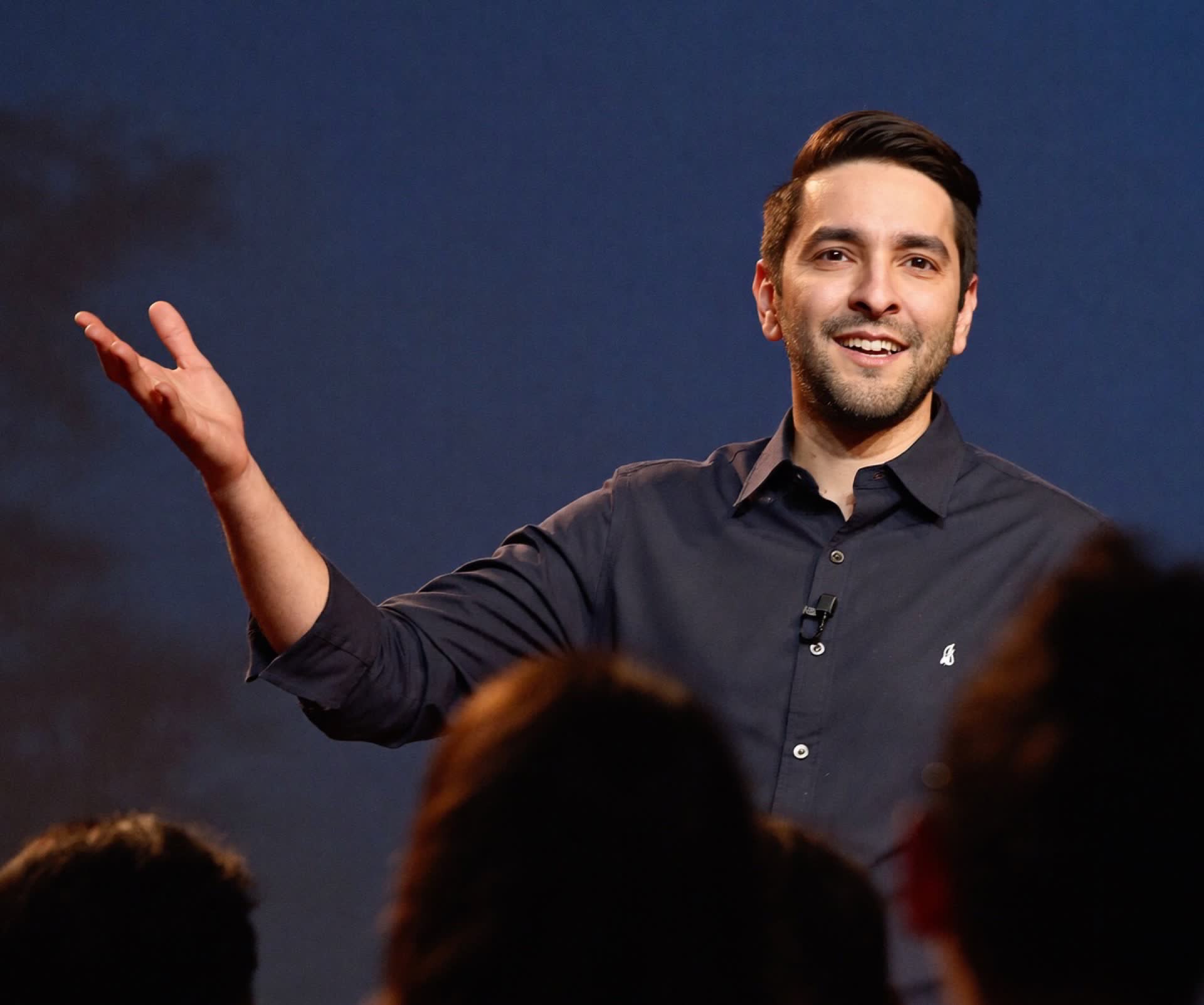
Mudassar Aqil, CEO of Telenor Microfinance Bank and Easypaisa, walks through why 70% of Pakistanis still lack basic banking, why cash will not die without government intervention, and why the next four years could change everything.
From Lahore to Maryland and back: the making of a banking career
The episode opens with Muzamil asking Mudassar Aqil about his early life, and the answer is unambiguous: “I am throughout, through and through Lahouria.” Born and raised in Lahore, Aqil completed his schooling at Cathedral School, took a B.Sc. in physics and mathematics from FC College, and then spent roughly a year figuring out his next move before heading to the United States in the early 1990s for an MBA at Salisbury University in Maryland.
Banking found him before he had finished the degree. He joined First National Bank of Maryland — later acquired by M&T Bank, a top-fifteen US institution — without quite knowing what banking was. “I didn’t know what banking was,” he says. “Koi khud zyada pata to tha nahi.” One thing led to another, and he stayed for eleven years across two banks, working through operations, process reengineering, marketing, and finally business intelligence and analytics. That last role, running BI for a bank serving well over a million households, gave him a grounding in data-driven decision-making that he describes as still useful today.
He returned to Pakistan in 2006, not because his career had stalled — he says it was going extremely well — but because his parents were ageing and his brothers were both in the US. “Somebody has to be close to them,” he explains simply. A chance introduction during an Eid holiday led to a job offer from Bank Alfalah, and he packed up and moved.
Why Pakistan’s banking boom of the 2000s mattered
At Bank Alfalah, Aqil joined in quality assurance and quickly took on the deposit product portfolio as well. He describes the Musharraf era as a genuine inflection point for consumer banking: private banks began expanding aggressively into Punjab, recognising that agricultural wealth was being created there, not just in Karachi’s corporate sector. “Bank Alfalah and the banks that came after them realised that Pakistan’s agriculture economy had a lot of new wealth being created in the heartland,” he says. The emphasis shifted toward larger, better-designed branches and improved service quality — an early signal that consumer experience mattered.
He stayed six years, then made his first major pivot: in 2011 he joined what was then Kashf Microfinance Bank, shortly renamed Finca Microfinance Bank, as CEO. He held that role for eight years.
The microfinance thesis: who actually runs Pakistan’s economy
Muzamil asks Aqil to explain what microfinance actually does, and the answer reframes the entire conversation. Pakistan’s MSME sector — micro, small, and medium enterprises — accounts for roughly 74% of urban employment and 80% of farmers work on five acres or less. Yet the last figure Aqil had seen put MSME credit at only about 8% of total private-sector lending. The remaining 92% goes to large businesses.
“Pakistan ki jo economy hai, agar aap sochen ke uska paiya jo chal raha hai, woh chote chote zameen ke upar jo kasht karte hain un logon se aur chote karobar mein jo apne hathon se mehnat kar rahe hain log un par chal raha hai.” If that base collapses, he argues, Pakistan’s employment generation capacity collapses with it.
Microfinance, he explains, began with a credit focus because the economics of small savings are brutally hard without technology. The Grameen Bank model — solidarity lending to groups of women who guaranteed each other’s loans — was an elegant design for its time, but it was always credit-centric. Serving small savers through brick-and-mortar branches simply does not pencil out: the cost of maintaining an account for someone earning fifteen or twenty thousand rupees a month, who spends it all before the month ends, cannot be justified by the revenue that account generates. “Bina technology ke viable nahi tha,” Aqil says flatly. Technology is what finally made the deposit and payment side of the equation solvable.
The five-layer financial needs model — and where Pakistan actually sits
Later in the discussion, Aqil lays out what he calls the base-level financial needs of any individual: transactional access, savings, borrowing, investment, and insurance. Pakistan, he argues, has not yet reliably delivered even the first layer to most of its population.
State Bank of Pakistan reports roughly 50% financial inclusion, but uses a relaxed criterion — one transaction in 180 days. Aqil’s own estimate, using a monthly-transaction standard and stripping out dormant accounts and duplication across the roughly 65 million bank accounts and 50 million wallet accounts that exist on paper, puts the genuinely served population at 30 to 35 million people. In a country of over 220 million, that is a striking gap.
The global context is starker still. “Duniya mein har one out of every twentieth person who does not have a banking service available is a Pakistani.” Pakistan holds a five percent share of global financial exclusion — a figure that includes sub-Saharan Africa. “That’s crazy, right?” Muzamil says. Aqil agrees without hesitation.
The arhthi problem: how informal credit traps farmers and small traders
One of the sharpest moments in the conversation comes when Aqil connects the credit gap to the arhthi — the middleman who sits between farmers and markets. A farmer without access to formal credit takes advance contracts from the arhthi at below-market prices, buys seeds and fertiliser from the same arhthi at the arhthi’s rates, and surrenders most of the margin in the process. “Maximum margin jo hai woh arhthi le jaata hai,” Aqil says. The result is that Pakistan’s agricultural yields are among the lowest in the region — not because farmers lack skill, but because the capital that would allow them to innovate never reaches them.
Muzamil observes that he had never thought of the arhthi as a credit problem. Aqil’s point is that cartelisation in Pakistan — across sectors from air conditioners to FMCG distribution — almost always traces back to the same root: a small number of actors controlling access to capital and therefore controlling pricing. “Pakistan mein cartelization is a very massive problem,” he says. “Koi aisa business nahi hai aap dekhenge jahan par koi ek cartel ya koi ek is kism ka ek chand teen ya char parties hain jo control na kar rahi ho pricing ko us saare sector ke.”
Why cash refuses to die — and what it would take to kill it
Muzamil describes a failed attempt to pay for fuel using Easypaisa at a Total petrol pump: the pump attendant could not locate the right phone, the process stalled, and the customer behind him gave up and paid cash. This, Aqil says, is a choreography problem. “This game is a choreography game. You have to match supply and demand.”
The deeper issue is that cash has a hidden cost that nobody sees, while digital payments carry a visible one. The merchant discount rate on card transactions runs at roughly 2 to 2.5%. Cash looks free. But it is not: banks have built entire business models around cash management, accepting large cash deposits into current accounts at zero cost and recycling the liquidity into government bonds at risk-free returns. “Hamara jo commercial banking ka aaj retail banking ka model hai, uske andar ek bahut badi problem hai,” Aqil says. “Bank is model ne apne aap ko adapt kar liya hai cash economy ke saath.”
His prescription is direct: make cash more expensive and digital payments cheaper. Mandate cashless acceptance for all retail businesses. Add a surcharge on cash transactions to surface the hidden cost. Subsidise the digital payment infrastructure for a year or two — he estimates the monthly cost of making all such transactions free at five to seven billion rupees, a fraction of what was spent on petrol subsidies. “A fraction of it can help digitize Pakistan’s entire financial ecosystem.”
He also points to the Punjab government’s initiative of reducing GST by five percentage points on restaurant card transactions as the right kind of tax incentive, and calls for similar measures nationally.
Easypaisa’s three pillars: payments, lending, and the super-app
By the time Aqil joined Telenor Microfinance Bank in 2019, the strategic logic was clear to him. On one side, Telenor — a globally respected telco with high ethical standards and long-term thinking. On the other, Ant Group, the largest fintech in the world, serving one billion people in China alone and present in eighteen other countries. “At least one in six or one in seven people in the world are using Ant’s services,” Aqil notes. The joint venture that became Easypaisa sits at the intersection of those two sponsors and a market where 70% of the population still lacks basic banking.
Easypaisa’s strategy rests on three pillars. The first is payments — the bread-and-butter use case. The second is lending. Easypaisa has already disbursed more than four million digital loans, totalling roughly twelve billion rupees, with loan sizes up to ten thousand rupees, fully digital, no human interaction, and credit-scored using wallet behaviour data. The algorithm was previously built with an international partner; over the past year it has been brought entirely in-house.
The third pillar is platform. Easypaisa has opened its APIs and built a mini-program architecture — an app-inside-an-app model — so that third parties can bring their services into the Easypaisa environment with the payment layer already embedded. Mutual fund products are coming within weeks of the recording. A grocery app and a digital voucher service are already live. Alipay, Aqil notes, runs hundreds of mini-programs inside its platform. “That’s our vision, that’s what we are building on.”
Muzamil asks whether a micro-seller — someone who cleans aquariums, say — could eventually set up a storefront inside Easypaisa the way WeChat enables in China. Aqil says the architecture already allows it. The remaining work is building a developer ecosystem so that people actually come and build on the platform. “Technology is not the barrier.”
The four-year projection and what Pakistan looks like in 2050
Muzamil asks Aqil to look forward: five years for the banking industry, and thirty years for Pakistan overall.
On banking, Aqil is specific. He projects 100 million Pakistanis using digital payments on their mobile phones by the end of 2025 — a three-times increase from today’s 30 to 35 million. He points to India’s UPI, launched in 2016, as the reference case: five years after launch it had transformed India’s financial sector completely. Raast, Pakistan’s fast payment system, is on a similar trajectory. Digital onboarding and e-KYC are already in place. “I don’t see why the average Pakistani would need to go to a branch,” he says, carving out only three exceptions: senior citizens who need hand-holding, high-net-worth private banking clients, and complex business relationships.
On Pakistan in 2050, Aqil is careful but not pessimistic. He acknowledges the difficulty of the question — nobody in 1992 would have predicted 2022 accurately — but says the situation is fixable. The condition is political: “Pakistan ke tamam log jo hain responsible citizens ke taur par ikatthe hon, apna democratic right istemaal karen, vote karen… democracy phale phoole, institution strong hon, to Pakistan will be a transformed country in 2050.” The alternative — fragmentation, religious extremism, weakened institutions — points in a completely different direction. The choice, he says, belongs to young Pakistanis.


Never miss a conversation.
New episodes and the thinking behind them, straight to your inbox. No hype, no spam, no pitch.