Thought Behind Things
Why Muhammad Raza Saeed keeps his holdco in Pakistan
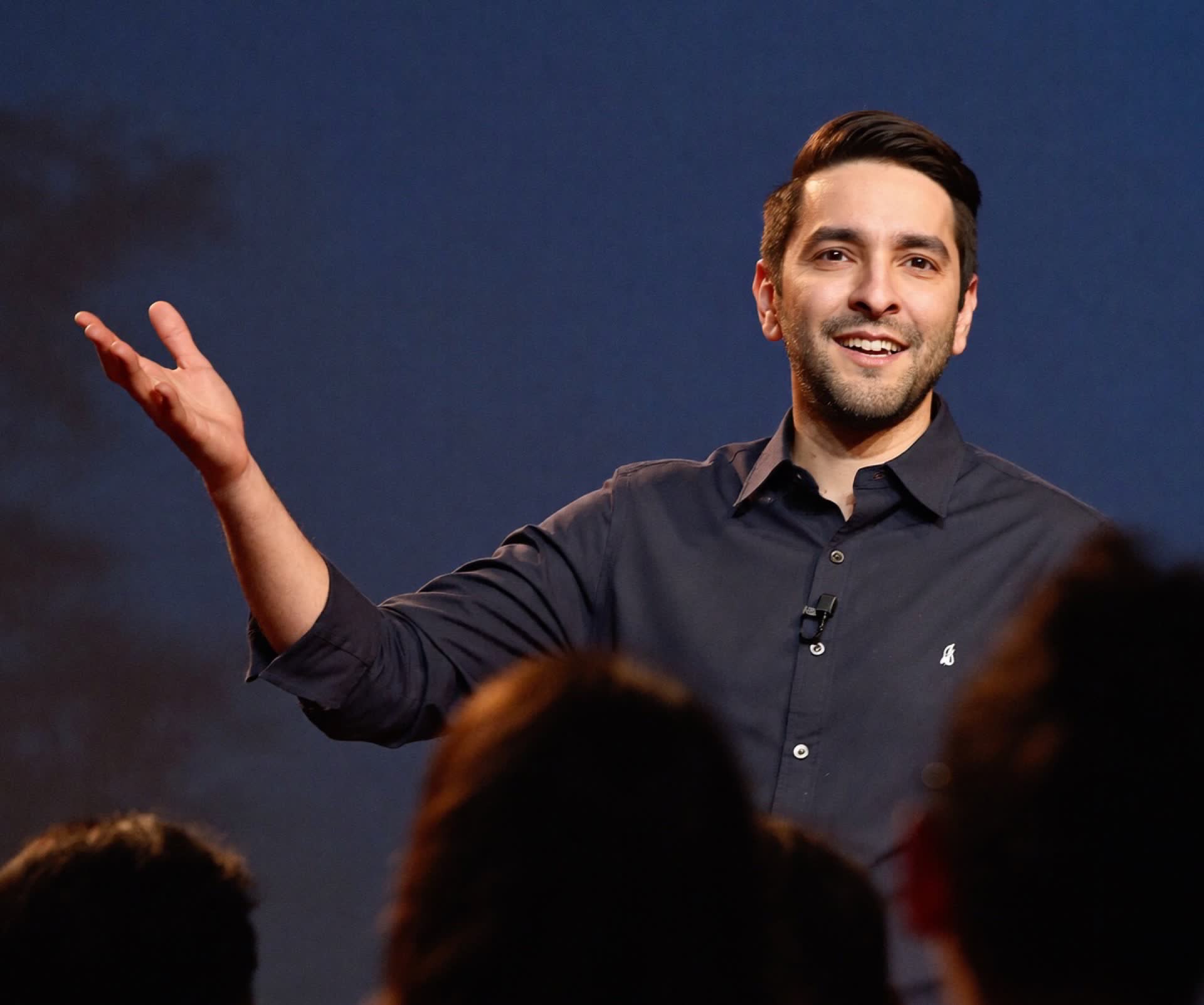
The CEO of PakWheels and Confiz on building a 700-person IT firm from a $1,500 loan, why specialization beats headcount, and what Pakistan needs before its IT sector can truly scale.
A $1,500 loan and a website called Elance
The episode opens with Muzamil recording in Lahore — a change of setting he had flagged to his audience — and his first guest is someone listeners had been requesting for a long time. Muhammad Raza Saeed, CEO of Confiz Limited and co-founder of PakWheels, grew up in Bahawalpur, attended the well-regarded Sadiq Public School, and came to LUMS in 2000. By his second year, he had a 3.96 GPA. By his third year, he had effectively stopped attending.
The reason was a company. In 2002, Raza and a group of classmates were working on a mesh-network meter-reading idea for an IEEE competition, hoping the top-ten finish would get them to Washington DC. It didn’t. They pivoted to software services, but the dominant freelancing platform of the time — Elance, which later became Upwork — charged a $1,500 registration fee. For students in 2002, that was an impossible sum.
The solution came from an unlikely source: a young English teacher named Charlie who had come to Sadiq Public School on an exchange programme. Raza had stayed in touch with him, pitched the idea, and Charlie wired the $1,500. “It was supposedly a loan,” Raza tells Muzamil, “but I don’t think we even signed an agreement.” Charlie ended up making roughly $4,500 on that investment within a year.
Their first serious client, a man named Brian, liked their work enough to pay $2,000 a month — at a time when a starting software engineer’s salary in Pakistan was around thirty to thirty-five thousand rupees. Brian also shipped them a computer, monitor, printer, and scanner. The company was called Udaan, with Raza as the R in the acronym. That is where Confiz began.
Building Confiz: the Microsoft relationship and the US presence
Raza formally started Confiz in 2005, after his LUMS partners dispersed into family businesses and other obligations. His co-founder was a Stanford-trained professor named Sartash, who had joined LUMS from the Bay Area after the .com bust wiped out a company that had raised $200 million. “I thought that is where all the innovation happens,” Raza explains, “and probably we’ll get customers as well.”
The company grew year on year for seventeen years without a single revenue decline — a fact Raza mentions with visible gratitude. The inflection point was a deepening relationship with Microsoft. A colleague began spending significant time in the US, building that relationship into a consistent customer pipeline. Over time, Confiz built something unusual for a Pakistani IT firm: a substantial technical team in the US, not just a sales office.
“Sometime I’d say that we are a US company with the Pakistani office,” Raza says, “and maybe I should be there.” More than 50 percent of Confiz’s revenue is delivered from the US. At the time of recording, the firm had roughly 700 people: 80 in the US, 30 in the UAE, around 490 in Lahore, and 50 to 60 in Islamabad, with remote hires across Pakistan.
Why specialization beats headcount
Muzamil pushes Raza on what Confiz actually does — what its DNA is. The answer is retail and consumer packaged goods. A 2014 acquisition of a company called Mantaq, which had been implementing ERP for Pakistani retailers, added a retail strand to the business. The Microsoft relationship in the US also turned out to be heavily retail-oriented. Today, Confiz works with large retailers and CPG companies — Unilevers and P&Gs of the world — on problems like modernising the experience of store employees, integrating buy-online-pick-up-in-store workflows into mobile devices, and optimising supply chain inventory.
The underlying argument Raza makes is one he returns to several times: “Software is a means to an end. It is not the end. The end is what problem are you solving with that software.” A Fortune 500 company is not looking for Python developers. It is looking for someone who has solved the same problem it faces, repeatedly, across multiple similar companies. That pattern recognition is what creates a specialist. And specialists command higher margins and face less competition.
“If you can’t stand out in something,” he says, “then you are a commoditised player and everyone and anyone will be trying to sell the same thing.” The analogy he uses is blunt: “Aloo, gajar, gobhi, matar lekar jaenge toh there are ten other vendors khade hain jo wahi cheez de sakte hain.”
Stock options for everyone, and the road to an IPO
Later in the discussion, Muzamil asks about Confiz’s ownership structure and whether an IPO is on the horizon. The answer reveals something structurally unusual. In 2015, Confiz converted from a partnership into a public non-listed company — one level below a publicly traded entity — specifically so that it could offer stock options to every employee from day one.
“I always had this belief that the real asset is people,” Raza explains, “and it will be extremely unfair if the beneficiary of any growth is only a limited number of people who started the business.” Over 100 Confiz employees have exercised their options and are now shareholders receiving quarterly dividends. KPMG and PwC serve as auditors and tax advisors. An independent board is in place. “We can go public anytime literally,” he says. “Doh teen mahine ke andar we are all ready.”
The reason they haven’t is timing. Pakistan’s macro environment and the global tech correction make it a poor moment. But the intention is clear: an IPO is the mechanism through which all those shareholders can eventually create liquidity. Raza also notes that Pakistan lacks examples of people making real money through a tech IPO — and until those stories exist, stock options will feel abstract to most employees.
PakWheels: a forum, an acquisition, and a used-car market that doesn’t depreciate
The conversation shifts to PakWheels, and Muzamil is candid that this is what most of his audience came to hear. The origin story is quieter than the mythology. In 2008, Raza and his friend Sunil — two years his senior at LUMS, whose import-export office sat directly across from Udaan’s office in Liberty — decided that internet penetration in Pakistan was about to grow and they should get into it. Sunil mentioned a small website he used for cars. They sent an email to the founder, a fifty-year-old fourth-grade dropout named Hanif from Karachi who had built it as a passion project before moving back from Dubai. The transaction happened. They had no idea how to value the business.
For years, PakWheels was essentially a side project running alongside Confiz. It grew slowly as DSL penetration increased, then accelerated when 3G launched in 2014. That same year, Confiz raised its first external funding — $3.5 million from Frontier Digital Ventures, an Australian-listed emerging-markets investor that had also backed Zameen.com. The raise forced PakWheels to become a serious, standalone company. It was spun out of Confiz, and the two businesses have operated separately since.
PakWheels’ stated mission is to transform used-car buying, selling, and maintenance in Pakistan. Raza points out that used-car transactions in Pakistan are roughly three times new-car transactions by volume. Yet the market is almost entirely trust-deficient. “If I ask you to buy a car, you’d probably call Sunil,” he tells Muzamil. PakWheels introduced digital classifieds to Pakistan — the first such platform in the country, in 2003 — and has since added inspection services, a used-car price calculator, and reviews. It now does hundreds of inspections per day.
The deeper structural observation Raza makes is about Pakistan’s auto density: 17 cars per thousand people, versus roughly 150 in Turkey, 350 in Malaysia, and 900 in the US. That number will only grow if Pakistan’s middle class grows. And Pakistan’s middle class will only grow if the economy grows sustainably — which it has repeatedly failed to do. “The auto problem and the macro problem are the same problem,” is essentially his conclusion, though he frames it more gently.
One detail stands out: in Pakistan, cars appreciate. Everywhere else in the world, they depreciate. That single fact explains why the used-car market behaves so differently here, and why the opportunity for a platform like PakWheels — one that helps buyers and sellers navigate a market where pricing is opaque and trust is absent — remains large and largely untapped.
Advice for IT services companies stuck at ten to fifteen people
Muzamil asks Raza what he would tell the next thousand IT services companies in Pakistan — the ones stuck in a cycle of small Upwork projects, unable to break through to larger clients. The answer circles back to the same principle.
“You need to find patterns in whatever you are doing,” Raza says. Commoditised cold calls and cold emails don’t work because a hundred other companies are sending the same ones. What works is becoming the person who has solved a specific problem for a specific type of customer, repeatedly, until that pattern becomes a credential.
One path he highlights is early specialisation in a new platform. Large professional services firms — Infosys, Cognizant, Deloitte — are slow to move on emerging platforms. A small company that builds genuine expertise in a new cloud tool, a new data platform, or a new SaaS product before the market crowds can become an acquisition target. He cites a friend who sold a company to Deloitte Digital in the US after becoming an early specialist in mobile app development when the App Store launched. “Jab ek platform naya aata hai, jo grow kar raha tha, usme shuru mein jo log hote hain, woh ek outsize return lete hain.”
The warning is equally clear: trying to do everything — “yeh bhi kar lo, woh bhi kar lo” — is the surest way to stay small.
Capital structure, policy instability, and the holdco question
By the end of the conversation, Muzamil raises a question that has become live in Pakistan’s IT sector: why do so many IT companies park their money in offshore holdcos rather than bringing dollars back into Pakistan? Raza’s answer is structural and personal.
Confiz’s holding company is in Pakistan. All subsidiaries report up to the Pakistani parent. The US entity pays the Pakistani entity for services rendered, at arm’s length. Everything is reported to SECP. “Our goal has always been to be a public company,” he says, “and that’s why we give shares and we will inshallah be a public company. We’ve always wanted to operate in a way which is proper in everything.”
The reason other companies don’t do this, he argues, is not greed — it is the absence of policy consistency. “Dollar jitne ka bhi ho, stable ho,” he says. A businessman in any industry cannot make investment decisions when the exchange rate, tax rules, and regulatory environment can change overnight. The amnesty schemes, the petrol price politics, the sudden reversals — all of it erodes the trust that would otherwise bring dollars home. “Business ki saari problems stem from the fact ke aapko kal nahi pata kya hoga.”
His wish for Pakistan in 2050 is not complicated: fewer somersaults. “As long as we are on a trajectory — sahi hai, time zyada lag jaega — but aap grow kar jaenge. But jab aap summersaults kar rahe hain, that is what’s destroying everything.”
Muzamil wraps the conversation at nearly two hours — apologising, as he notes, for the fifth time to his crew for running over — with Raza heading off to prepare for a desert rally race in Multan that weekend.


Never miss a conversation.
New episodes and the thinking behind them, straight to your inbox. No hype, no spam, no pitch.