Thought Behind Things · Apr 6, 2026 · 51:50
The dollar at 350 is not the end of the market
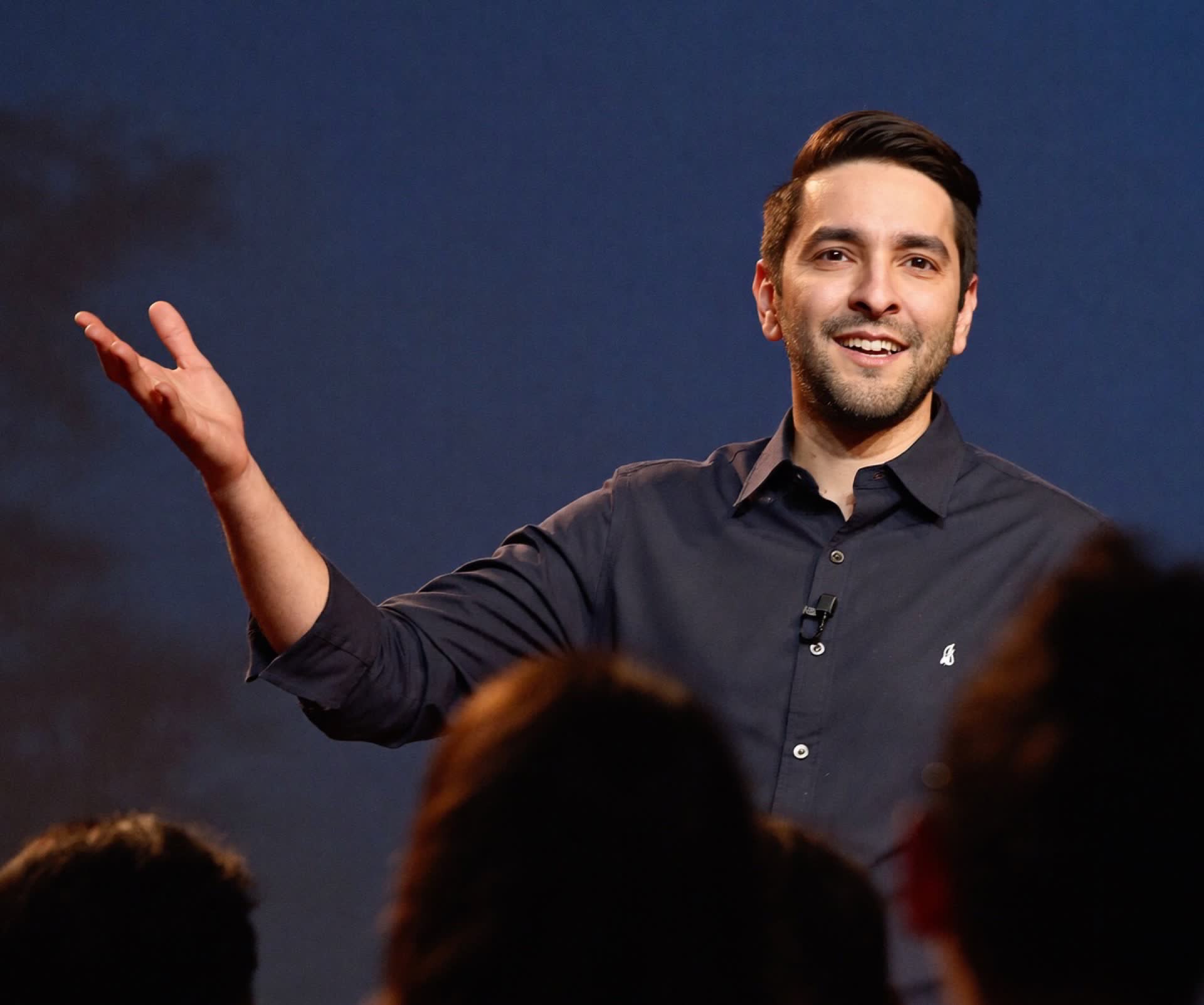
Sarmaaya founder Laeeq Ahmed joins Muzamil to unpack the $4.8 billion repayment month, why a 22.5% rupee devaluation could be bullish for 60% of KSE-100 earnings, and which Pakistani companies actually win when oil spikes, solar scales, and the grid fails.
with Laeeq Ahmed
11 min read
A $4.8 billion month and the return of the 350 rupee
The episode opens with Muzamil walking through the headline that has dominated the week: Pakistan is repaying the UAE’s $3.5 billion loan it first took in 1998, ending a long stretch in which the UAE simply rolled the debt over. In total, April demands $4.8 billion in debt obligations. Muzamil notes the obvious anxiety this creates around the foreign-exchange reserves, the rumoured Standard Chartered stop-gap of $2 billion, and the equally obvious problem with the rupee.
“Pakistan’s average devaluation for the dollar is 9% per year,” Muzamil reminds the audience. After two and a half years of holding the rupee artificially stable, the market is now pricing in a possible 22.5% correction — which would bring the dollar back to around 350 rupees. Add an oil shock from the Iran conflict on top of that, and the picture darkens further. The KSE-100, which had been flirting with 200,000 points just weeks earlier, is now hovering around 150,000.
To make sense of it, Muzamil brings in Laeeq Ahmed, founder and CEO of Sarmaaya, a guest who has now appeared on the show five times. The opening question is the right one: is this knee-jerk, or is it systemic.
Why the 2023 rally was a story about government strength
Laeeq’s answer reframes the entire question. Three years ago, he reminds Muzamil, Pakistan was on the brink of default with foreign-exchange reserves covering barely three weeks of imports. The IMF programme forced a strategy change. Subsidies came off. Petrol moved from 150 to over 200 rupees. The dollar climbed from 180 to around 280. Electricity, gas, transport and fuel bills all went through the roof.
The public’s instinct was to expect the stock market to fall with them. It did the opposite. “We were around 50,000 back in June 2023 and we went up to one ninety thousand just six-seven weeks ago,” Laeeq says. He attributes this inversion to a structural change in government behaviour. Before 2023, subsidies flowed to rich and poor alike — the man on a Honda 70 and the man in a Fortuner paid the same un-taxed petrol price. Once those subsidies came off, the state moved from weak to strong. Revenues climbed. Tax discipline tightened. And investors, who had refused to allocate to a country with broken fundamentals, began to allocate to one with companies that had always been performing well.
That, Laeeq argues, is the real lesson under all of this. “Earlier the companies were very good, their performance were very good, but the government was weak.” The 50,000 to 190,000 rally was the price catching up to a reality the equities had been carrying alone.
Adversity is where the next thesis lives
Muzamil pushes back gently on the binary instinct that grips public discourse during shocks like this — the sense that things are either fine or apocalyptic. He stakes out the position he has been repeating on the show: tough times are coming, and people should be cognisant of that, but adversity is when innovation happens.
He pulls in his own track record on EV interviews from five years ago, when comment sections would tell him to stop covering small EV makers and go back to Toyota, Honda, and resale value. “Today, if suddenly, there is, like, an economic opportunity where the customer is not forced to go to EV because of the fact that the fuel prices are so high that there is no economic viability there,” he says, “that EV is going to actually help us with our pollution. That EV is going to actually help us with our circular debt because it’s going to increase the demand on the grid as well.”
Laeeq agrees, and frames the larger principle in investor terms. He casts back to COVID, when the market crashed 40% and felt like the end of the world, only to recover and double from 100,000 to 190,000 in less than a year. The point is not market timing. The point is that the entire purpose of investing is to protect yourself from shocks you cannot see coming. Short-term liability money belongs in low-risk mutual funds. Anything beyond that is long-term equity. “You always need to plan for the next shock. We don’t know when the next shock will come.”
The dollar-up trade: who actually wins
Laeeq then walks through, sector by sector, exactly who benefits when the macro picture turns the way it is currently turning. The list is more counter-intuitive than the noise on television would suggest.
Refineries get the international rate locally, so they win as oil climbs. Oil and gas exploration companies bill OMCs in dollars, so they win on both oil price and rupee. Banks win when inflation peaks and interest rates climb. IT exporters earn in dollars and win on devaluation. Fertiliser companies are dollar-pegged on input pricing.
He returns later to the question Muzamil asks about why a devaluation should not be read as automatic bad news for the market. “60% of the Pakistan stock market, KSE-100 companies are dollar dependent,” Laeeq says. “Whenever the dollar goes up, their earnings goes up.” For the IT companies, the OGDCs, and the refineries, a 280 to 310 rupee move is a tailwind to the income statement, not a headwind.
The fifth lane he identifies is the EV and two-wheeler shift. He references BYD’s franchise where 100 cars sold in a week, Atlas Honda announcing capacity expansion on its newly cash-flow-positive electric two-wheelers, Sazgar taking five canals of new space, and the steady arrival of Nishat-backed Jaguar and Deepal models. Muzamil presses on whether there are listed pure-plays in solar. Laeeq is honest: there are none directly in solar, but Exide and Millat Tractors give exposure to the battery side, which he believes is the next big thing as households increasingly consider replacing grid-connected solar with battery-backed off-grid systems.
The export problem nobody is solving
Muzamil contributes news on local lithium-ion battery production, a planned half-billion-dollar Chinese collaboration announced in January, and Lucky’s partnership with a Chinese OEM on new energy vehicles. He asks Laeeq about Engro’s exposure to Thar coal, fertiliser, the chemicals business, and the recently acquired Jazz tower portfolio.
Laeeq’s answer about Engro pivots into the larger argument he has been circling around the whole conversation. Coal is not yet fully utilised. Cement, which still imports from Afghanistan along disrupted routes, could move to coal. But the deeper problem is structural, and it is not one that Engro alone can fix. Pakistan is a consumption-oriented economy. Lucky, Sazgar, and the rest of the Mansha group — including Jaiko, which Mian Mansha recently acquired — are taking Chinese brands, CKD-assembling them locally, and selling them to Pakistani consumers. The dollars come in. The dollars go out. The current account doesn’t move.
“What we need to do, we need to produce locally and then sell to the outside world, get more dollars,” Laeeq says. He flags Millat Tractors exploring exports into Africa as the kind of move the country needs more of. The current auto policy, which incentivises greenfield CKD assembly for domestic consumption, runs in the wrong direction. If the rupee continues to devalue, that very devaluation could finally make Pakistani manufacturers competitive on global markets — if the policy framework rewarded that competitiveness rather than the local sell-through.
Fertiliser, LNG, and the question of which plants are running
Muzamil presses on a specific risk he is hearing about: fertiliser companies are pegged to the dollar in price, but they depend on local gas. With shortages of LNG from Qatar reportedly forcing six plants offline and Agritech’s urea plant already shut down, the inelastic-demand thesis on fertiliser is more complicated than it looks.
Laeeq concedes he has not seen the specific news on LNG diversion. He frames the fertiliser sector’s profile from the balance sheet up: in the last five years he has not seen a single year where fertiliser companies failed to pay a dividend. Government subsidy historically backstops the sector because food security is a national priority. But Muzamil’s underlying point lands: the average investor cannot just hear “fertiliser is dollar-pegged” and allocate. They have to know which company has guaranteed gas, which plant is running, and which one is dark.
Karachi as a port, the muslim bloc, and the end of US primacy
The conversation widens. Muzamil makes the geopolitical case that Pakistan should drop the nationalist-versus-friend framing of regional countries and ask one question only: how does Pakistan benefit. He uses a concrete example — Karachi port is currently handling ten to fifteen times its normal traffic because ships can no longer dock safely in Doha or Dubai. Pakistan is the closest secure major port on that lane.
Laeeq builds on it. The 250 million Pakistanis at home are out-earned, in dollar terms, by the few hundred thousand sending remittances from abroad. That is the structural failure that has to be solved. Then he widens the lens further. The US has failed to protect its Middle East base hosts. Pakistan demonstrated, during the recent war with India, that a regional power can defend itself against a superpower-backed adversary. Pakistan remains the only nuclear-armed muslim state. The opportunity, in Laeeq’s reading, is for the muslim bloc to coordinate around that, not in exchange for another $20 billion loan to refill reserves, but as the basis for a real economic-partnership posture.
Muzamil adds further texture. The UAE produces 4% of the world’s aluminium. With the Strait of Hormuz at risk, that aluminium is not reaching buyers. Plastics, palletisation, and downstream packaging — all of which UAE centralised and re-exported across Africa and East Asia — are exposed. Pakistan already has the industrial base in most of these categories servicing its own market. A weaker rupee and a regional dislocation could, in theory, make those same factories globally competitive overnight.
The next three months
Toward the end of the conversation, Muzamil asks Laeeq for a hunch — not a prediction. Laeeq’s answer is direct. US debt has crossed forty trillion. The current war they expected to win in two days has run more than a month. He believes the US is losing its superpower status and that China is, increasingly, on the right side of history. Pakistan demonstrated Chinese defence technology in the recent India conflict. Iran is now using the same playbook, with reported F-15 losses.
For Pakistan domestically, Laeeq expects continued pressure on reserves and real pain for the poor. The data point he highlights is sobering: when oil moved from 260 rupees per litre to 310 rupees overnight, March consumption rose 24% versus February. The expected behavioural response — conserve — did not occur. Panic did.
“For the richer I don’t think there is any sort of change,” Laeeq says. “In last fifty years I have never seen a rich getting bankrupt or basically telling anyone that it’s so difficult to basically make money in Pakistan.” The takeaway he leaves for the audience is the cleanest distillation of the entire episode: the only way the average person can partner with the rich is by owning equity in the companies the rich own. A Sazgar does not need to sell 25 million units to re-rate; it needs to sell a thousand. The shareholder partners in that re-rating regardless of where the rupee is on any given day.
Closing: the BYD that arrived in Atlanta before America noticed
Muzamil closes from Atlanta, where he has been in the US for the last year between San Francisco, Seattle, and New York. He notes, with surprise, that the vibrance he experiences in Pakistan simply does not exist on US streets. He inverts an inherited mental model: growing up, Pakistanis were told that China was the country that closed itself off and the US was the country racing ahead. Today, he says, the situation looks reversed. There are no BYDs in America. There are no Chinese EVs at scale. Americans jump up and down about Tesla, but Muzamil — having driven a BYD just before leaving Karachi — says there is no comparison on anything except brand.
He runs the same comparison on solar. A 1,500-unit-per-month residential system in Pakistan, end-to-end with net metering, quoted at roughly 2 million rupees. A comparable 1,200-unit system in the US quoted at fifty to sixty thousand dollars. Same hardware. Same physics. Different price by an order of magnitude. Pakistan, he argues, sits next to the factory. There is no transit cost. There are no layers of distributor margin. The country’s structural opportunity is to industrialise on the back of energy that is cheaply available across the border, and to stop sulking through the shock instead of using it.
The conversation closes the way it opened — with Muzamil thanking Laeeq for the fifth time, and with an invitation to the audience to open a brokerage account, start a SIP, and let the next three months sort the serious investors from the spooked ones.
Full transcript
About that as well. But I think the next second most important news that came out was the fact that Pakistan was repaying UAE's $3,500,000,000 loan, part of it which Pakistan got in 1998. So after a very very long time of UAE consistently rolling over that debt, they decided to ask for it back and Pakistan has officially announced the the foreign office actually came out with a statement earlier today as well where they said yes we will be giving back this loan. All in all in April Pakistan has to give back $4,800,000,000 worth of, you know, loans or or debt obligations that it has to return. And obviously, that's creating a lot of confusion and a lot of fear in the market because we always have a very sort of lifeline of foreign reserves that we have. And you know we have had those stable for the last couple of years but suddenly this might be a big drop you know pending some other brotherly nations might help us out or you know we're also hearing that Standard Chartered might give out a $2,000,000,000 loan to provide a stop gap arrangement. But either ways, you know, there is again fear and confusion in the markets of what this might do. The dollar, unfortunately, was controlled over the last couple of years. And as I've mentioned multiple times on my show, I do not adhere to the idea of, you know, controlling the dollar especially when you officially and unofficially claim that you want to have an export led economy. You need to have a free market. You need to have dollar at parity so that it incentivizes the exporters. And so we as always control it once again. Pakistan's average devaluation for the dollar is 9% per year. So for two and a half years if the dollar was not devalued a lot of people are now saying that with this potential international turmoil that is happening as always with a with a boom bust cycle during the bust, the dollar always, you know, tries to search for parity and therefore we might look for a 22.5% devaluation give or take that might bring the dollar out to 350 rupees again. You already have an oil shock, you might have a forex shock and you know that might create a lot of pain for the average users. While that is happening the stock market which was at the at an all time high not too long ago at a 189,000 points. A lot of people were saying it's going to cross 200,000 within this year but unfortunately with the Iran war again with oil prices with inflation fears now people are scared and the the market is now hovering around 150,000 points. Now obviously a lot of this economic data a lot of this you know numbers are confusing and therefore I I really wanted to talk to someone who is right in the thick of all of this trying to understand a lot of this data especially trying to understand how the the macro economy is working, how the companies are working because they are the first ones to absorb a lot of this pain and then the way that they evolve and the way that they sort of give you signals then tends to tell you where the economy is going as well and for that we have the founder and CEO of सरमाया. इलेक, thank you so much for taking the time out and coming on the show. Thank you, मज़हबिल, for inviting me. I just wanna sort of start off with trying to get a sense of where do you think the economy is right now. Is this a short term, you know, knee jerk reaction to global events? Or do you think this is a bit more systemic and it might just hold for a a few months?
Yeah. So, I think if you just look into the Pakistan stock market right now, if we just go back three years, I think we are already on the brink of getting default and one of the fear was that the forex reserve were very low. In fact, we were just covering three weeks of the coverage was related to any sort of import from outside the world. I think post IMF signing, we have seen a different sort of strategy from the government and where what they have done is that there is if there is any sort of subsidy which they were giving to the end user, they have pull out all the subsidies. So that means the petal which was available maybe at 150 rupees went up to more than 200 rupees. The dollar which was hovering around 180 rupees. Now it is last three years as you have already said is around the same Rs. $2.80 per dollar. The electricity bill, gas bill, transport bill, fuel bill everything went out of the roof. And one of the thing which we have seen in the general public was they all were sceptical about the economy because since government has imposed so many expenses in fact salary taxes were increase The public listed or the big companies who are giving taxes, they need to pay more taxes. Obviously, now they are under IMF. So they need to meet certain sort of revenue targets by the government. One of the thing which the public were not able to understand when all the bad things are happening to the companies or to the public, the stock market inversely basically went up. So we were around 50,000 back in June 2023 and we went up to one ninety thousand just six-seven weeks ago and we are just down to one fifty thousand in last month or so. The thing which we need to understand why stock market was not performing before 2023 was exactly the same reason. The revenues which government was collecting was subsidizing the whole society regardless you are poor or rich they were giving you subsidy if the electricity they were the cost was 100 you might be paying 60 rupees the petrol there was no taxes or anything collected on top of petrol. So if you are running a motor bicycle or if you are running a fortuner, you both were paying the same amount and that was basically giving relief to the rich and also sort of you are giving relief to the poor. So once it was passed on then again government has not seen whether you are a rich or a poor. They have imposed the same sort of thing for both the segment of the society. While government passed on all the subsidies to the public, so that means earlier government was weak but now the government is getting strong that means that they were collecting more revenues they were collecting more taxes they were basically indirectly also collecting taxes which means the government and the investor what signal it gives to the investor, now the government is more serious in making sure that their reserves are more stable than before and that would trigger investing in the stock market. Earlier the companies were very good, their performance were very good, but the government was weak and people were not buying that we cannot invest in a country where the macro or the fundamentals of the countries are not good. As soon as the macro and fundamentals got better, so did the performance of the stock market. Now coming to the current situation, again this is something which is not inherent. There is a global war which is coming around. Unfortunately Pakistan majority, in fact one third of the import bill is the oil bill and oil the cost if the rates of oil goes up, so does our import bill. As you've already mentioned, UAE has already demanded that they need to get out there $3,000,000,000 or $4,000,000,000 So the way I look at it is maybe this can be opportunity for us that we need to basically there were certain policies which were not implemented like the fertilizer bill was not basically applied because of some reason There was a circular debt issue on the oil and gas exploration companies which is now settling as well. Now oil and gas companies need to focus on exploring more oil wells because they need to get rid of the dependency from the international market. And thirdly, we have seen the public in Pakistan is very intelligent. I believe when they found an opportunity that electricity bill is the bills are out of the roof, What how you can basically protect yourself by implementing solar on in your house. Similarly, now the petrol is out of the roof. How you will protect yourself? By buying EV cars. And we have seen in last couple of years, there is a massive adoption and there are good companies which are coming in with the EV cars as well. We will see lot of people will basically buy those EV car as well. The government need to basically encourage people so that the dependency on the oil should come low and we need to focus more on these sort of things which can basically also adopt. We have seen in last two, three months, there are a lot of time we heard that there is a certain policy change which will discourage people to implement solar right now. I think they should strictly don't implement any sort of change because now is the right time we need to get on to these sort of things to get our macros more stable and less dependent on the outside world. And largely because of the conflict, I think post Pakistan India war, the outlook of Pakistan internationally has, has changed massively. In fact, the all the things which Pakistan is right now doing to make sure that there is a peace settlement. I believe if they are able to achieve, they will, it will certainly bring certain sort of credibility in the international world as well. We used to hear that the US president is not calling us or not basically reaching out to our leadership. But right they are basically pushing us to solve the problem, which means that there is certain significance which Pakistan is still holding in the international world.
That makes sense. And I I think couple of very interesting points that you've mentioned. As a starter, what a lot of people tend to do, particularly during times like these, is they have, like, a black and white sort of opinion. Right? Either you have a great time happening and everything is amazing, or we're all going to die. The fact of the matter is with every adversity, there is always an opportunity. There are certain times when, yes, I mean, you can have a discussion on politics. You can talk about, you know, leadership did this or leadership did that. But then there are external variables always. And right now, there is a huge external externality to this entire equation. And in my opinion, and that's something that I've been sharing on the show as well, there are tough times coming. They happen, you know, ever so often, particularly for Pakistan. But they are coming, and people need to be cognizant of that. Having said that, I do believe that whenever adversity comes, that is always a time for innovation, that is always a time for change as well. As you've mentioned rightfully, and I want you to dive deeper into that. In case of to me, to be honest, the conversation that I've had over the last five five years, I I remember I had a lot of conversations with EV manufacturers. And I would be like, you know, in Pakistan, that customer is so tough. How do you tell them, how do you teach them that this is a newer technology? And I remember when I would have a conversation with the EV bike manufacturer or car manufacturer, the comment section would say, you know, oh my god. This is just random. We want Toyota. We want Honda. We want resale value. Today, if suddenly, there is, like, an economic opportunity where the customer is not forced to go to EV because of the fact that the fuel prices are so high that there is no economic viability there. Right? And so there is a transition. That EV is going to help us with our pollution. That EV is going to actually help us with our circular debt because it's going to increase the demand on the grid as well. So there is an opportunity potentially happening here. And, obviously, if the policymakers can accelerate that, that's always well and good. I'm curious, though. First of all, you mentioned solar. You mentioned EV. I'm sure there are other potential transitions as well if we play this right. For an average investor, because I know that you are focused on investments, are there opportunities in the market right now where people can realize that, yes, even with the toughest stuff in macros, there will be alternate players that might suddenly emerge as winners and therefore are are are great as an investment hedge.
Yeah. So, I think मुज़मिल, what I have learned in last five years, I think this is our fifth episode which we are recording on TBT. When I came for the first time we were in 2021, we just came out from the COVID. And I think if you just look into the COVID, we were again in the same situation. It was a time where everything was closed and people thought that there is no business. What is the point of investment? Why we need to invest. Those who invested before COVID, the stock market crashed 40%. I was one of them who witnessed that particular cash and we all used to think why we invested in such environment where everything is not working, the business is closed. But now I realize that investment you always do to protect yourself from such sort of scenarios which is nothing is in your hand. For example, during the COVID we thought that we have invested but see our investment is minus 40%. What's the point of investment when it's down and we need if we need money today how we will cover it? I think, during this these sort of shocks if you are invested, you don't need to locate covering these sort of downturn or the economic difficulties in your short term investment strategy. You always need to plan for the next shock. We don't know when the next shock will come. There was a war last year. Again, the stock market at that time was at 118,000 when we fought the war with India. After the war or during the war, it corrected itself 18% and we thought this is the end of the world we don't know what will happen but as soon as war settled we have seen again it rallying from 100,000 to $190,000 which is almost double in less than one year we are still we have not touched May 2026 So the whole idea I think which I believe I need to let people know, you do investment not for the short term. If you are already in some sort of economic difficulties, the first preference should be all the funds which you need to cover during these uncertain times should be in the low risk of the mutual fund. That means you are not taking any sort of risk because it is covering your short term liabilities which could be anything. Anything which you have got in the surplus should be invested for the long term regardless whatever the situation is every time and ever there is uncertainty the stock market goes down and it provide opportunities. Now when it provide opportunities that doesn't mean that you should go blindly. For example, now the government basically announced and it has passed on all the dollar based things to the end user which means the petrol is right now available at $3.80 rupees per liter. The diesel is right now available approximately around 500 rupees. All the refineries will now get the benefits because they will be they are manufacturing and they were they are doing all the stuff locally but they will be getting the rates of international that means they will get the main benefit. The oil and gas exploration companies are basically using the dollar to basically bill all the OMCs. So the fertilizer and the oil and gas exploration are the two beneficiaries right now when oil is at all time high. Similarly, people used to think that inflation will peak. When inflation will peak, the interest will go high. The banks are the beneficiaries. That means now you need to look into the banks as an investment strategy as well. Thirdly, as you have already mentioned, UAE has demanded their dollar. They need to get pull out those dollars and there is a good sort of probability that the rupee might devalue against the dollar. That means that the all the IT companies who are earning in dollar, they will make more money as soon as the dollar get appreciated in Pakistan. So the whole idea is that if you are aware during these sort of times as well you can get a lot of opportunities. Lastly I think you have already mentioned, I have seen, I was just in BYD franchise yesterday. There were so many people who were asking for Aettu that one of the smallest car which is available at 7,200,000 and they have already delivered 100 cars last week as well. So the whole idea is that if you are interested then you can also buy the shares of these companies which is Hubco as well who are manufacturing these cars which people will eventually buy. So the whole idea is if you understand the the environment and you understand who are the beneficiaries and you invest in them right now as well. There is a good probability you will again make a lot of money because in this situation all these companies will show a good positive earnings and every time when the earnings is higher the price is also automatically adjusted and it will give you good return as well. That makes sense. I'm curious though, you mentioned Hubco.
I think there's Saasgar. I'm not sure about the other. Are there other companies that have exposure to EV and particularly motorbike? Because I feel like, yes, cars are always gonna be constrained by the dollar as well in terms of the amount of cars that are coming in and the amount of cars that can be sold. But motorbikes, I think, is a huge market. And I feel like that's the the two wheeler and three wheeler segment is really going to go on a bonanza right now, particularly because I feel like a lot of these are locally produced as well in a way because, you know, they already, like, they're taking those repurposed old Honda CD 70 type infrastructure. Much of this was produced in Pakistan, and they're just bringing in the motors and the batteries from abroad. So the idea of of scale is much higher there. So are there other companies other than, let's say, BYD and Hubko that people can get exposure in first of all? Second, is there any company that people can get exposure in for solar? Because, again, I think there is a potential opportunity for solar. I personally think if the oil prices continue to sustain at these levels, there is a huge incredible transition happening for solar coming for solar. And this is not just something that I'm saying. I mean, this has been reported multiple times that Pakistan has been able to weather this storm a little bit because of the transition that we had because of the people. Pakistan was the third largest solar deployment last year in the world. That was absolutely insane. Right? And and and then a third one for me would be we have a huge usable amounts of coal that we are using. I believe Engrow has it. You know, they're extracting it out of thar. Is there exposure in the public markets for that? Because, again, that is, you know, fossil fuel that is available, and that is going to reflect with the global markets or at least as an alternative to whatever imports that you're doing. And, therefore, I feel like that's potentially a stock that can provide value. One last question to this is, if the fear is that the dollar might go from 280 to, let's say, 150 at a time when people might be spooked. And, you know, if your forex fall, like, reserves fall, suddenly, people might go and try to buy it. Does that reflect on the earnings of the exporters? So, for example, you know, obviously, they've done their accounting at 280. Suddenly, the dollar is at 350. Does that impact the IT companies and their bottom lines? Does that impact, let's say, Interloop and their bottom line when the sort of financial year closes in in June?
I will answer the last question first because I remember that one first. So the idea is that whenever the dollar appreciate, if you just look at the history, I've just, 60% of the Pakistan stock market, KC 100 companies are dollar dependent. That means whenever the dollar goes up, their earnings goes up. How, what does that mean? The oil and gas exploration companies as we have already discussed, if it is currently trading at $120 they will be charging $120. Similarly, the oil which was available at 70 rupees five years ago, it is not available at $3.80 rupees because the dollar is up. Consumer need to pay more money. As lastly the IT companies they will be charging in the dollars. Earnings will go. So in the short term the general public will think oh dollar went up from $2.80 to 300 or 310. It is negative for the market. It is not negative of the for the market because 60% of the companies are earning in dollars. In their books, their if the dollar goes up, so does their revenue as well. So this is positive for the companies, for the KC 100 index because earnings can go up because the dollar is up. Secondly, I think you mentioned the two wheelers. So, I was just going in last couple of weeks, they two of the companies basically listed companies mentioned that they are expanding their business. What does that means? The Atlas Honda which controls 90% of the two wheelers in Pakistan, they basically announce that now they need to produce more cars. They are cash flow positive. Whenever they bike is basically sold, they get money upfront and they are now thinking to basically sell it. They have already launched the EV segment of a two wheeler, two wheeler as well. I believe there were couple of starters which came on your show as well. I can see their bikes on the road as well. They have small distribution in all the small segment as well. We used to see kids basically having their bicycle. Now they don't have any bicycle. Now they have EV and they are basically running the EV, the small kids as well. In fact, one of the positive change which I have seen, the females are basically also using this particular thing which is so good to see that they don't, they are not dependent on commute for the male. They can also easily run these sort of EVs as well. The four wheeler car, again Saasgar announced recently they have taken a new space for five canals. They are again expanding approximately, I think, billion they have used to basically scale. Their tank is, I think, one of the most demanding four wheelers right now. We have seen निशात, which is निशात category. The Jaguar as well, more than three to 5,000 people basically got hand off the new the EV car as well, then there is दीपाल as well. So many things in the listed and the unlisted space and again I am saying the same thing. The people in Pakistan are intelligent. They look into how they can invest, which particular thing can save more money. Earlier there was debate that the cost difference between an EV and the petrol is so high that maybe the difference can be covered in petrol prices or paying the petrol or filling the tank with the petrol. But right now because of the certain upsurge of these petrol prices, we will see the same people who are thinking to buy the petrol will now shift to the EV. And again I will, I would say all the, all the companies who are in the EV side, we will see a massive sort of adoption from the Pakistan people. And I think this is again good for the country because the more car we have, one of the thing which we need to again escalate is the number of station where you can basically recharge your car. I believe there we can see some of the people are basically using the safe solar technology. Those who have in their home, they use the same technology to recharge their own car as well. 80 to 200, 120 kilometer, they are done. They don't need any fuel, which is again good for the economy. The less oil we need, the less CapEx or the forex reserve we need to cover those sort of expenses. So I think overall, the companies who will get benefit are the one who are basically trying to get these sort of new technologies here, whether it's two wheeler, it's four wheeler. In fact, the IT companies or all the companies who are dealing in dollar will actually get the benefit if the dollar dollar get the value from here.
That makes sense. And just to know my question was long and you probably forgot, but just wanted to get your 2¢ on couple of things. The the exposure to solar panels and if if there is a company in Pakistan that deals in solar that can actually benefit from potential imports and deployment of solar, answer this and I'll come to the next one. So the solar side,
there is no such company listed. But the battery side, there are couple of companies listed. And one of the thing, the fear which now I can see in the people and that since government is so so relict, so targeting to basically cut all the rewards given to the solar adoption people that they are even thinking to basically replace the grid with the on battery in the house as well. That will again get all these battery sort of elements which are listed as well like Excite and also Miller tractors. These are all the companies which are listed but not directly in the solar domain but the battery domain which I believe is the next big thing. If anyone is has already got solar which is taking the electricity from the gate, people are still I can see couple of influencer made the video that you you can get all the electricity done in your home as well. Just replace the on grade to the battery. So the battery is the, I think, the next big thing which can happen in Pakistan as well.
That makes sense. And just to give a couple of news pieces on a few things that you've mentioned. Pakistan is moving towards local indigenous lithium ion production, battery production. Talking to China, we're talking about close to half $1,000,000,000 worth of investments. This was announced in January. So there is definitely very clear focus even in the in the policy circles trying to sort of localize because that is the logical next step, particularly for a country like Pakistan, which has a, you know, decaying energy grid system. Solar is a lifeline for us. The second one, most interesting, you you mentioned the expansion for Sasgar as well. Lucky announced an interesting collaboration with the with the Chinese GSE, I believe. And they're getting into the sort of new energy vehicle space as well. So a lot of new energy vehicles are clearly hybrids or or or full electrics are definitely taking center stage. I'm curious about Engrow, and how do you see that stock because of their exposure to to coal. And I don't know if if the the third coal Angro project is directly linked to the main Angro stock or is that a separate spun off company?
Angro, I think, has got a very diversified sort of business. They have recently acquired all the the I think Jazz basically gave ever all the towers to Angro, and I think this is a massive business. They have basically invested last year. We can see a lot of income coming from these sort of towers in near future as well. They are already in the fertilizer sector, the chemical sector and also they are into this coal sector as well, the power sector. I think there is certain limitation or I don't know. I was seeing in the power side as well. Because of the solar adoption, the dependency on the oil is currently being reduced. And the next big opportunity is that we need to get rid of the oil, in the, the power, thing and get coal as a replacement as well. Coal has not yet been fully utilized. One of the thing where coal can be used, again if you see the cement, cement is dependent on the coal as well. Right now there was certain import from the Afghanistan which is disrupted as well. That can be replaced with the coal as well. And there are lot of opportunities. I think, still don't know what is the level at which third coal is currently being operated. But I believe there are multiple companies which are, which have caught stake. Angro is one of them as well. But again, one of the things which you mentioned that all these companies are basically using the CKDs and developing here, selling to the end consumer. And obviously, पाकिस्तानी public is buying those sort of things. We need to understand as a country we need export replacement. We are ordinary consumption oriented economy. All these things basically we need we are consuming a lot. We are not producing a lot. The companies for example Lucky I have I have not yet seen any company focused in basically for example the IT side we have not seen lucky basically investing in the IT side massive sort of industry where you can get more dollars in Pakistan just like systems as well. Again, sazgar is a auto company but all the people who are basically in this Mansha group I have not yet seen any export oriented thing. All of them are basically focused on the conception side of it. Like मंशाह साहब also bought Jaiko as well in Pakistan. Again a consumption oriented economy where basically they are taking Chinese brands in Pakistan, manufacturing it, selling it to पाकिस्तानी, getting the dollar again importing things from outside Pakistan manufacturing it. What we need to do, we need to produce locally and then sell to the outside world, get more dollars. Dollar is something we need to focus as a country. Though we are, we as a public are looking into things which can basically ease the burden on us. But again as a country we need to understand, we need to get rid of all the consumption oriented thing and incentivize all the companies who are looking into exporting. We, the export in Pakistan is getting down day by day and we need to focus on the things. These sort of export like importing from outside, manufacturing it and using it internally is again weakening our own currencies currency as well. So I think this is the focus area which the country should be the the government need to incentivize all the companies who are focus on the export oriented things Rather than giving them, there is a certain auto policy as well which is helping a greenfield company to come in, get everything being CKD, well appeared and sell to the end consumer. But we need to reverse this sort of thing as well. I was just looking into another report. Millet tractor was basically saying that they are now looking into exporting these tractors outside the world even to Africa as well. Africa is such a big market we are not yet capitalize that particular market. So we need to look into the opportunities as a country we need to look at the venues which can give us more more dollar and we can manufacture locally If the rupee go more devalue that means we might be more competitor internationally as well and it might help us to basically grow our export.
That makes sense. Last question on on on on the companies and and and sort of the investment landscape but there are a lot of companies that are driven by dollar, like you mentioned, fertilizer being one of them. You know, the the rate is going to be set by what the rate is in the global markets. And if the fertilizer price is going to go up, you know, they are going to sort of normalize that, and therefore, their revenues will will reflect that as well. And it is largely an inelastic industry where when people need fertilizer, they need fertilizer, and they will have to pay. Whether they have to take loans, they will pay for that particular fertilizer. The fear on the other hand to me is, like, if I look at, let's say, Systems Limited or any IT services company, I don't see a lot of disruption in their existing contracts because, you know, even if the dollar devalues, even if there are shortages, so on and so forth, the money is coming in and devaluation actually helps them. But then there are companies like, let's say, fertilizer that on the first look, I'd be like, oh, you know, they're pegged to the dollar. Let's go and invest in them. But then what happens when they are fed by gas or LNG and there is shortages? Right? So, how do the shortages reflect in the bottom line of these companies? Let's assume there is a 30% shortage of whatever commodity that is that's the raw material. That does that mean that the prices go up and the bottom line remains the same? Or does that mean that even if the prices have gone up, the overall sales will decline because of just the amount of material that you are able to produce, if that makes sense? So, I think the whole fertilizer thing is controlled by the government as well. They have given subsidy. I think four g fertilizer was creating a
gas from the मारी locally and again these are all the sister companies. There is no disruption in sort of availability of gases to these fertilizers. In fact, fertilizer used to get subsidy on if there is any sort of disruption in the the pricing thing then there is again a subsidy and since food is the core to our nation as well so this is one area where government has given a lot of subsidy to the fertilizer company and the problem and the the whole environment which is right now where there is a deception and we can see the food will go expensive from here. I think government is already looking into the fertilizer thing. We have seen a good sort of off take in last month as well. And I think there is, I have never seen fertilizer company in losses regardless of whatever the situation is. If you just look into the balance sheet or the income statement, every time you will see these fertilizer companies earning a lot of rupees
in profits and they are giving lot of dividend to the shareholder as well. I have never seen a single year in last five years when the fertilizer company is not giving dividend to the shareholder. So I think the the the oil deception I don't think right now. The reason why I'm sorry the reason why I'm the reason why I'm asking is because the last five years there was no there was never a time when the plant had been shut down. Right now, we're hearing that the government might shut down six plants because of the lack of LNG coming in from Katar. And we definitely know for sure that Agritech's plant, urea plant, has been shut down. So we know that there is a production height, right, and that I'm curious as to how that might affect. Like, there might be a company or two that has guaranteed gas availability from the local lines, and I think that would be the company to get into. It's not just the reason why I'm saying this is because the investor's gonna, you know, the average investor's gonna listen to it, and they're gonna be like, let's put all our money into fertilizer. I feel like they have to be a bit more smart about what's what the company is. Are they producing at this time or not? Do they have gas availability? And, therefore, then they can potentially invest.
I think the more problem is on the farmer end. In last couple of years, we have seen the prices which they were getting. They were in the negative side. There were a lot of protests in the Punjab as well where they they basically bought something at a higher price and it was they were selling at the lower price and one of the thing even the tractor side they they also raised that the farmer earning is not that much that why they were not able to sell lot of tractors as well the same goes with the fertilizer as well I have not yet seen the news the the deception of the LNG to the fertilizer and if there is any closure. But I can see if the rates of the local wheat for example is given at a level which the farmer is happy to basically use it. You can see a lot of fertilizer being basically used in that particular area as well. The thing which you have mentioned I have not seen anywhere in the news right now. Maybe there must be some sort of thing but I am not aware of any such sort of news from my end.
Makes sense. I'm gonna sort of make the conversation a bit more wider. And, you know, I'm sure that you're following the conflict. You're following what's happening with the with the shortages. You're happening you're following what's happening with the geopolitics as well. Again, moving away from a black and white lens and an ideological lens or a sort of, you know, a nationalistic lens because everybody has a, you know, has a side, skin in the game. And they're like, you know, okay. We we Iran is our friend and Saudi is our friend and UAE is our friend and we should be doing this and we should not be doing this. The fact of the matter is that the only thing that matters for a vast majority of Pakistan is Pakistan. And for them, the question should be, how can Pakistan benefit from this the most? Because the fact of the matter is everybody else, all of our brothers, they're always gonna look for themselves first, and then they're gonna extend any help that they might extend to you. Right? And so I'm curious. We talk about the adversity a lot, and I, you know, I'm I'm one of the biggest doomers. I've been saying this, you know, go get extra supplies of wheat, get extra supplies of rice and so on. It's always good to be safe than sorry. But having said that, does Pakistan have potential opportunities, that they can leverage? Because Middle East is a trade hub. It is an incredible economy that was built. There's not a civilizational economy. It is an economy that is propped up by a global system led by The US and petrodollar. That system seemingly is coming to a halt. And in the in the aftermaths, when a new potential system rises, I feel like there is always an opportunity to create a new stethoscope. And just to give an example for for people who who, you know, who might be following this, Karachi sport is handling 10 to 15 times the amount of traffic that it normally used to handle just because ships can no longer go and dock in, let's say, Doha or Dubai. So let's say, ships coming in from East Asia that have to go to Africa, that have to go to Europe, docking in Karachi and doing what they have to do and then taking that, voyage further. Again, we are the closest major port that is still secure. Right? And that's just one example amongst many many other potential opportunities that Pakistan can leverage if we sort of ignore the noise and focus on really providing problem solving value to the region. What are your thoughts on that?
So, I think one of the main problem right now as a country which we are facing, I think 25,000,000 is the total population of our country. People who are sending 200,000,000, sorry. So the people who are sending money who are in few 100 lakh for example people, they are sending more money to us than we are producing and exporting to outside the world. So, this is the main problem we are facing. I think everyone is basically busy in criticizing everything but we are not focused in exporting. What we need to do? Massive country utilize these sort of human resource available to build something which we can sell to the outer world. Pakistan right now I think this particular thing can be an opportunity for us. Just like you mentioned the port thing. This is one bit of it. The other thing I think you see the Middle East is affected because there are bases of US in the Middle East and the whole idea of basically the bases were given to United States for that they can protect them any sort of aggression in their land and I think US is again failed in protecting them. Pakistan has already demonstrated against one of the super power that how they can they can basically defend their own land and one of the thing which we can see if all these muslim nation can come together, there is only one muslim nation who is nuclear power which is Pakistan. So we can basically use these sort of things in uniting the whole muslim nation and then utilizing it. It should not be utilized. Ok, now we have done this. Give us $202,000,000,000 because we needed to keep it in our foreign reserve so that we can consume more. We need to basically get the economic benefit from all the opportunities which is coming. In past we have seen there is any issue in Afghanistan give us dollars we will make sure that all everything is settled to us. But we need to get out of this. We have seen there is so much economic instability, there is so much political instability in Pakistan. We need to settle all the differences and we need to focus as a country. If we need to go ahead, it cannot happen the way it has happened in the past. It should change the way we used to do business with the world. It should not be with some sort of expectation of giving us loan. We need to focus on the business side. If we are able to basically get the economic benefit from this adversity, then nothing is better for the our country. Think we have got everything. The गुवार्दा Port, CPAC route, Iran if sanctions are lifted then the gas coming from that side and again the role which Pakistan is currently playing not being part of anything. I think this is one of the smartest move which you can do right now.
That makes sense. Again, just to give some people context, of what can be done. UAE produces 4% of the entire world's aluminum. So So while we're looking at the state of Hormones being closed and the oil not passing, we also know that aluminum is not passing. And there are, you know, buyers all over the world looking for aluminum, and that aluminum is not coming in from from The UAE. So are we producing aluminum in Pakistan? Can we package that and sell it to a buyer internationally from कराची to Far East to Africa? These are opportunities. There is incredible amounts of plastic products from as simple as pallets that are used, as a raw material to create any, any plastic product or bottling, this, that. A lot of these were being produced by The UAE because it was a centralized hub. You know, raw material would come in there. They would, process it, and they would send it to a lot of countries in in in Africa, in East Asia. These are these are, like, big serious potential businesses. And right now, I mean, I'm not saying setup industry. It takes years to setup industry, but Pakistan already is a huge economy. There are industries somewhere or the other servicing the local economy because we were not really competitive globally. At a time like this, that, you know, suddenly you end up becoming competitive, especially assuming if the dollar goes down or near, you know, the the rupee goes down and considering the shortage. लेख भाई, I'm gonna wrap this up here at the forty three minute mark. Give me a sense of the next three months. What are your expectation? I I don't expect you to predict. Nobody can predict. But I I I'm just, you know, there's a gut feeling, a hunch, especially specifically for for long term investors like yourself. You know, there's a muscle memory that you end up making. And so what's your hunch right now in terms of the markets, in terms of the economy, and in terms of the regional geopolitics that is playing out?
Yeah, I think if you just look into The US economy economy, The US debt is now at all time high. I don't think it's sustainable right now. They have already touched fifty-forty trillion and now they are into a war which they thought that they will win in two days. Now it's been more than a month. So I think they are now stuck in this particular war and again there is an impact internationally because of the war. But I can see the status of US as a superpower. They will lose that particular status and I still think we are at the right side of the history that China can be the next big thing which they have already shown in the recent part with the technological thing the way they have basically used the defense through Pakistan demonstrated it. Now Iran in the hindsight is also using the same thing Their FF 15 was down as well. But from the Pakistan perspective again as we have discussed, I still think this disruption can be an opportunity for us. It's the way we as a country are in a position to get benefit of this situation or not. In the short term it seems that there will be lot of stress on the forex reserve. There will be lot of pain which as a nation we need to go through and this is the thing last month if you remember मुज़मिल, there was a sudden increase in oil prices overnight. It was trading around $2.60 rupees per litre then it was around 310 rupees and people were expecting that there will be no hoarding and people will be using less oil. The March figure which came out, Pakistani basically used 24% more oil than February. So that means that there was a panic and people you consumed a lot of oil. Now there is an again oil up prices increase. So we hope that the oil consumption goes down as well. As a nation I think this is the time we need to basically protect ourselves and also look at the people who are not able to cope with this situation. Think things will be tougher for the poor in the country. For the richer I don't think there is any sort of change. It's an opportunity. In last fifty years I have never seen a rich getting bankrupt or basically telling anyone that it's so difficult to basically make money in Pakistan. We have seen so many rich people making a lot of money. The only thing which person who is listening to this particular podcast, These sort of things cannot basically change whatever you are basically planning. If you want to become protect yourself, I think investment is the only way of protecting yourself. And the only way you can basically partner with the rich person is by investing in the company which they own. All these companies which we have talked in this particular podcast is are basically getting things, manufacturing it and selling it to the end consumer and one of the thing which we I have seen in recent part people think since people are not saving a lot of money, so that means it's not good for the economy and we don't know why stock market is performing. For a company like Saasgar, they don't need to basically produce 25,000,000 units. They just need to sell thousand units, thousand freelancers coming and buying saasgar is sufficient for a saasgar company price to go from 50 to 2,000 rupees. So we need to understand, we need to focus on the companies who are making money and just partner with those companies and protect our money. The money which we got right now is, is not for the short term. We need to basically plan for the next big thing, the shock, whatever it will come in next year, two year, three year by investing in the companies today. So, I think we need to be smarter in managing our money. The things are not good for the arm person in Pakistan. The only person who is able to maneuver around by investing smartly will basically benefit for all the aftershocks which will come in future as well.
Makes sense, like भाई thank you so much for sharing all that insight and joining us. I am, I am glad to have you on the for the fifth time, possibly the sixth time and and, you know, looking forward to speaking to you again on the show.
Thank you, मंज़मिल. Thank you.
And for all of you guys, I think the last point दिलेग mentioned was absolutely incredible. You know, we can grab and criticize all you want, but but these moments more often than not can be very very powerful and meaningful. For Pakistan which is an import driven economy, one third of our entire import goes into oil and you know importing expensive petroleum. This is a potential opportunity where we deploy our money to replace that. So that means electric bikes, electric rickshaws, electric cars, solar panels, anything that in the long term reduces our dependency on oil because, you know, we don't know. That's not something that we control, we will always be at the whims of international shocks. And so because there is economic value, I think as a as a nation, if we are able to band together and are able to manage, like, manage to go through this transition, I think that's gonna be absolutely incredible. One thing I would mention, I'm in The US right now. I've been here for the last year. I've I've gone to San Francisco, Seattle, New York. I'm in Atlanta right now. You'd be surprised first of all the the vibrance that I experienced in Pakistan does not exist out here in The US. Surprising, it surprised me as well. But more importantly, I all also feel like, you know, we'll we'll we'll do a separate episode on the geopolitics of of things as well. But, growing up, we used to think or hear about China and the fact that it was, you know, locked down and it it had its own little world and the rest of the world was advanced and they would be doing incredible things and China would just close itself off. It almost feels like The US is that China of that time and it almost seems like China is The US of of of that time because there are no BYD cars here. There are no Chinese electric vehicles here. They these guys jump up and down on on Tesla. Tesla. I drove a BYD right before I came here. Did a video and put it up on Instagram as well. There is no comparison. Like, BYD is miles ahead of anything that Tesla has to offer apart from brand value. But these and and just solar, like, I remember I got a quote for a for a solar panel you know project for my home and the entirety of it and I we would consume like 1,500 units per month and I got a quote for like 2,000,000 rupees for for the end to end you know even selling units back to the grid. Out here in The US for around 1,200 units, I got a quote and it was like $5,560,000 dollars. And it's literally the same thing. There's no difference. Now imagine apples to oranges. The the upside for us is we're right next to China. There is no transit cost. We we don't the overheads, the distributors, so on and so forth. We don't have that cost. We need to leverage that and we need to spend on industrializing ourselves, energy being one of the one of the core factors of industrialization because it is cheaply available in China. The West sounds rosy. It's definitely great. It's developed. I love being here because I have family here as well. But to be very honest, the vibrance that Pakistan has and the opportunity that Pakistan has, I feel like people don't take that seriously. I hope you're able to, you know, utilize this opportunity. We don't just sulk and be depressed. But, nonetheless, would love to hear your your thoughts on in the comment section below. Are you investing? Have you open a stock market account? Are you investing in mutual funds? You know, what has your investment journey been so far? What do you expect to happen in the next three months considering the regional circumstances? But nonetheless, was the same as Muzahmin Hassan Zedi. You're watching ThoughtBaiin. Thanks. Thank you so much for watching, and I'll see you in the next one.
More from Thought Behind Things
Jun 30, 2026
Simon Dixon: the US empire is being wound down by design
with Simon Dixon
Simon Dixon argues the American empire isn't collapsing — transnational capital is deliberately unwinding it, and Pakistan's military has become its leverage in the transition.
Listen →
52:45 Jun 9, 2026
How Asad Mehmood landed Mattermost from Pakistan before A levels
with Asad Mehmood
Asad Mehmood walked into Mattermost before he had A levels, crossed two million dollars on Upwork, and now runs a design agency from Pakistan. He sat with Muzamil to lay out the framework underneath it: become undeniably good, then become visible, then sell outcomes.
Listen →
59:04 Jun 5, 2026
A 22-year-old Pakistani's road map to space by 2050
with Hassan Mossin
Hassan Mossin, a 22-year-old Pakistani astrophysicist training with the International Institute for Astronautical Sciences, walks Muzamil through the next twenty-five years of space — commercial stations by 2030, a lunar base by 2032, and why the bottleneck isn't food or oxygen, it's energy.
Listen →Never miss what's next.
The dispatch - new writing and conversations, straight to your inbox.
First name, last name, email - in your inbox weekly. No spam.