Thought Behind Things · Nov 22, 2023 · 1:13:37
The only startups worth funding solve a problem that already exists
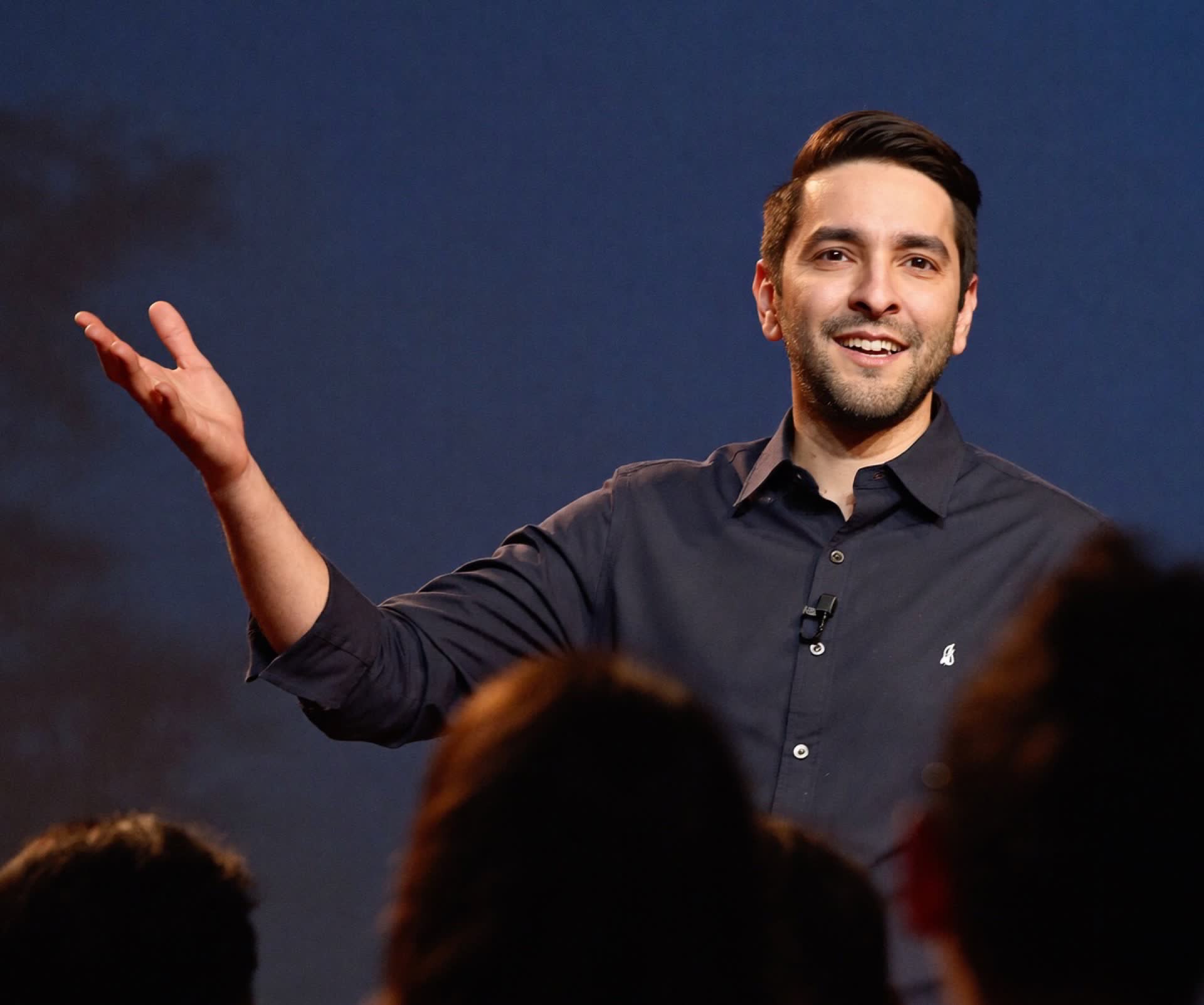
Aleena Nadeem left Goldman and London venture capital to build Edufy, Pakistan's first student-loan fintech, after a decade of family charity work convinced her giving money away would never scale. She explains why a startup only fails when there's no real demand, and why education credit is the one product she'd bet the country on.
with Aleena Nadeem
10 min read
A childhood in a Riyadh compound and a charity that wouldn’t scale
Aleena Nadeem grew up inside a British compound in Riyadh — a gated, westernised world where, she jokes, people assumed she rode a camel to school. She was born in New York, lived in London, did middle and high school in Saudi Arabia, and had never lived in Pakistan until October 2021, when she moved to build Edufy. She is, by her own description, an overseas Pakistani.
What kept the country present was her family’s charity. The Progressive Education Network has been paying school fees for children in Pakistan’s public sector for over a decade — the figure she cites is 700,000 students, mostly at the primary and secondary level. She worked there every year from childhood, and it shaped her thinking more than anything else. Charity, she concluded, is good but not sustainable. “It’s not going to change the game for Pakistan,” she says. Every cycle you have to go back to donors and ask for more. That frustration — a pressing problem with no self-funding mechanism — is the seed of everything she built later.
MIT, Goldman, and learning the shape of credit
Nadeem went to MIT’s Sloan school for business and finance, a poster of the campus pinned to her bedroom wall in Saudi as “manifestation 101.” She is dismissive of the scores that get treated as status symbols in Pakistan. What matters, she argues, is what you do with the degree afterwards — and she is sharp about watching talented women collect prestigious admissions and then do nothing with them. “If I’m just putting the degree on my wall,” she says, “then I have taken a seat from somebody who is maybe more deserving than me.”
She offers a deliberately controversial read of her cohort: an inverse relationship between EQ and IQ. The genuine geniuses, the top of the batch, often went into PhDs and pure research. The students just below them — the B-to-B-plus tier with the right balance of intelligence and on-the-ground human instinct — are the ones building wild things. Her example is a friend, Tarek Mansour, who founded a betting-and-FX startup that reached a billion-dollar valuation. Building a billion-dollar company, she argues, takes a level of human EQ the pure geniuses don’t always have. The killer combination is one of each.
After graduating in 2016, she went straight to the fixed-income desk at Goldman Sachs in London, working with the treasury departments of large tech companies on where to park their cash. The lasting lesson was credit itself — how risk changes with tenure, which fixed-income products a corporate treasurer actually feels safe holding, and why. Three years later she moved to Ventura Capital, a late-stage fintech fund, where she worked on the credit side of growth deals and helped raise $50 million for Paytm in India.
Why money flows to founders early and to numbers later
Nadeem draws a clean line through how venture capital actually evaluates a company at different stages. At the earliest stage, she argues, the FOMO-driven bets are not as foolish as they look. The product pivots so many times that there is nothing stable to underwrite except the founder — their tenacity, their desire, their ability to see some version of the vision through. “You’re investing in the tenacity of the founder,” she says.
Due diligence becomes decisive at growth stage. At Ventura — a series C to D fund — they spent serious time inside the financial statements, and the question of path to profitability had already arrived before the global tech crash forced it on everyone. The era of Uber-style losses with no one asking when customer acquisition cost would fall was closing. In emerging markets, she says, that question lands harder: capital is scarce, so a business has to be able to sustain itself.
That framing sets up the disagreement at the centre of the episode. Muzamil has been a long-term cynic of Pakistani startup fundraising — too many rounds celebrated as ends in themselves, too little clarity about the core problem being solved. He contrasts Pakistan with India and Indonesia, which first built hard industries, services, and exports — India does roughly $150 billion in IT exports alone — creating the middle class that startups then layer on top of. Pakistan, draining dollars rather than earning them, doesn’t obviously have that base.
The one problem a startup can’t solve for
Nadeem accepts the cynicism and answers it with a thesis. In a capital-constrained economy, technology should be pointed at real problems. “If you’re solving a real problem, the money will come,” she says — and then sharpens it. The single failure mode you cannot engineer around is building a product for demand that doesn’t exist.
“Maybe your UX is not correct — go back and fix it. Maybe your product is not making sense, maybe they want a longer tenure. The one problem that you cannot solve for is there being no demand for your product. You can’t create demand.”
She is unusually candid about marketing. Edufy is two years old and this is her first podcast; she has worked quietly, by choice, because she is not a fan of selling herself and believes everyone else is chasing headlines. A $6 million raise, she says, means nothing if it’s all gone tomorrow. Muzamil agrees, and explains why she topped his list when Faisal named the startups his fund had backed. His own thesis runs through demographics: ageing populations in Europe and Japan, rising anti-immigration sentiment, and AI making remote digital work portable to the global South. Pakistan can’t build hard industries quickly, but it has five million children turning eighteen every year. Educate them, connect them to the real economy, and you raise the country’s bottom-line dollar. Karim, by contrast, he treats as consumption-driven and margin-poor in Pakistan. Education credit is one of the few models he sees as genuinely part of the funnel that grows the economy.
How Edufy actually decides who to lend to
Edufy is short for education finance, and the model is direct: students who want to attend college download the app and receive a subsidised loan, repaid in monthly installments. Nadeem is targeting the gap in a market she sizes at $30 billion — students who complete a $17 billion private-sector schooling layer and then drop off before higher education for lack of money. In two years the company has signed roughly 20 colleges, mostly medical, and onboarded around 200,000 students. When demand clusters at a college not yet on the platform, Edufy reverse-engineers it, approaching the institution with a list of students who want in.
Lending, she stresses, is not a demand problem. “It’s not a demand-efficient business” — the constraint is supply, which the $6 million raise is meant to solve. The harder question Muzamil presses is default. Her answer rests on a behavioural bet: education is a priority payment. In a survey across the 200,000 students, 30 to 35% said they would use a credit product, yet most already pay their fees somehow. They are capital-constrained, not defaulters. Families will default on a car before they default on a child’s degree.
The credit engine is where she leans on her background. Edufy runs algorithms directly on applicants’ bank statements to assess ability to pay, partnering with Adlafy — a credit-scoring startup led by TechLogix CEO Salman Akhtar — on that side. On the education side, the company’s ERP systems are plugged into colleges in real time, pulling dropout rates, GPA, degree hardness, and accounting for students who transfer laterally from weaker colleges to better ones. The thesis is plain: if someone has the ability to pay, they will pay for education. Muzamil pushes her on the limits — medical colleges are the top of the pyramid, and the real impact lies in the peripheral, data-poor institutions where the middle and lower-middle class actually sit. Nadeem doesn’t dispute it; the credit-scoring machinery is precisely what’s meant to let the model reach further down.
Owning the tech, and why so much Pakistani fintech didn’t
The conversation turns to why Pakistan, despite an early head start with Easypaisa, never produced an M-Pesa or a Paytm. Nadeem’s first answer is capital — playing the field with one arm behind your back. India had massive access to it; Pakistan, with a down economy and geopolitical drag, didn’t. She names strong founders in the space and insists the talent is real.
Muzamil adds a second answer rooted in how the sector grew up. Early Pakistani fintech was often telco-led, run the way telecoms run marketing — get a product built by a third-party vendor, then market it heavily. He tells the story of his own Easypaisa account that wouldn’t open for years; insiders told him the vendor had built it and they were locked out, unable to fix their own product. The lesson he draws is that a technology company has to own its technology. Nadeem agrees, but widens the frame. Tech matters for two structural reasons: it bends the cost curve so customer acquisition cost falls as you scale — the hockey stick that traditional, inventory-bound businesses can’t produce — and it builds a competitive moat, because genuine systems take a year or more to replicate. Edufy’s college integration took two years to build.
She and Muzamil spend a long stretch on a tempting idea — letting retail investors fund student loans directly, lowering the cost of capital and the rate students pay. Nadeem keeps it grounded. Edufy already does co-borrowing, with synced parent and child portals on the same loan, and runs a scholarship plan. But she resists the urge to chase everything at once, which she names as the number-one mistake early-stage startups make. Her KPI now is simpler: a loan book good enough that a student in an airport lounge tells a friend they financed their education through Edufy. “Your consumer should be your marketer.” When that works, she says, the market — not a slide deck full of remittance buzzwords — will tell her what to build next.
Pakistan in 2050, with the ifs left in
Asked the closing question every guest gets — where is Pakistan in 2050 — Nadeem refuses to strip out the conditions. The country’s future, she argues, turns on whether corruption changes and whether the informal sector formalises. Eighty percent of the economy sits informal; only 20% is formal, and tech plays only in the formal space. She zooms out first: this is a global cycle, not a Pakistani anomaly — rates rose, money left the markets, a tech crash followed worldwide, and Pakistan was a symptom rather than an exception. She expects a bounce back by the second quarter of 2024.
She nods to the Goldman Sachs projection that put Pakistan among the world’s largest economies by 2075, but she won’t lean on the demographic-dividend cliché; a young population is a variable that can break either way. Her own contribution is narrower and more concrete. Reduce the brain drain, raise the literacy rate, inject capital into the middle class — and do her part by educating as many people as she can. The model only works, in the end, because the demand was already there.
Full transcript
Welcome back to the three hundred eighty fourth episode of Thought behind things. Today is the 11/22/2023 and आज हमारे साथ मौजूद है अलीना नदीम who is the founder of Edufy one of the startups that was recently announced to have raised funding. In startups, is part of the five startups that FASL, AFTAB recently announced that they will funding. On five startups, bookme.pk already are TBT. Two. This was what I found the most exciting because they are working in education and in fintech and this is an area that I am not only personally passionate about but also one of the areas that I am at if is potential up space Pakistan we had Alina over and talked about the model why she believes this will work the potential impact already scaled and we at journey she has graduated from MIT it's a solid profile phenomenal experience if you really want to understand कि Pakistan में startups कौन सी काम कर रही है कौन सी exciting है कौन सी ऐसी है जिनको अगर funding हुई है तो VCs ने कुछ सोच के ही funding की होगी able to get a lot of insight from this conversation. If you new channel, subscribe and like the video, it really helps with the algorithm. If you have any thoughts, let me know in the comment section below. It really helps me improve the quality of the conversation. Overseas पाकिस्तानीs can help support the channel with the Stripe link down below. It helps us remain independent for as long as possible. But, anyways, here is Alina Nadim on TBT Go लोहोर studio. Alina, how are you? I'm good. How are you? Great. Thank you for joining us. Thank you for having me. I'm gonna start the conversation just trying to understand a little bit about where were you born and early life आपने कहा पर गुज़ारी? Sure.
So, as you mentioned, my name is Alina. I grew up in Saudi, रियाद, a very different रियाद from what it is now. End to end? Like, you were born in रियाद as well? No. We probably don't wanna go into the story of where I was born because it's a bit of a circle. But I was born in New York, lived in London. But all of my middle school and then moved to Saudi. So middle school and high school, all that I remember
is from Saudi, रियाद. Right. Yeah. Interesting. How was that? How was रियाद at the time?
I loved it. You know, people ask me, you know, you lived in रियाद. You go to school on a camel and I was like, fuck, I don't go to school on a camel. I loved it, right? I think ignorance is bliss and when you are a child, you don't really know of your life outside a compound. I grew up in a compound. Right. Which you might know, is just a gated community. I had everything that I needed there. But now that I do think about it, wearing an Abaya and going outside a compound and, you know, outside the company is a very conservative society. And now that I have gone more exposed and gone to college in The US and, you know, read a little and realized that, oh, you know, maybe I was living in a very conservative society and the compound life is not necessarily how everyone has grown up. Right. But in from But within the compound, it was different, but even back in those days. Yeah. I lived in a British compound. So there's some compounds which are, you know, where the majority is foreigners. And so I lived in one of those. And it was still a very westernized like that ground or that land is western land so technically and so it's quite liberal there. Interesting.
Yeah. And you did your high school from
as well? Yes, I went to a small school British International School of रियाद. Right. Had you lived in Pakistan? I have never lived in Pakistan. So, I am an overseas पाकिस्तानी. I only moved to Pakistan for the first time in my life in October 2021 to start at Juphi. Right.
And yes. Okay. Before going there. Yeah. So you graduated, I would say, in 2012? Yeah. And you where did you go for your university?
I went to MIT.
Doing what?
I did my undergrad there in business and finance and graduated
in 2016. Tell me about your, like, why did you choose MIT? What was the thought process there? Why did you pursue business in the first place? And MIT may generally, when you think MIT, you think engineering, right? You think tech or or any form of engineering, to be very honest. Business is generally not the first thing that comes to your mind. So tell me about the thought process कि while you were in high school applying to colleges,
what were you looking at? Sure. I also did a lot of courses in mathematics. So, I have a minor in maths. Right. But I felt that the Sloan Business School was really intriguing to me at that time. I think people also forget that when you're a kid, I mean, younger, I mean, you go to college at what? Nineteen, twenty, twenty one. You don't really know what you want to do with your life. You go with what interests you. Right? I felt I got introduced to this professor called John Cox. He created the Scholes model. He was a great professor, and I loved the way that he taught. And so introduced me to more like Sloan courses. And yeah, I think that's where I kind of ended up being pulled into there. But was it an active thought, Probably not. You know, just kinda got pulled into Was, MIT a dream or was it just something that just an interesting coincidence that happened? No, definitely a dream. I remember I put on a poster. This is, manifestation one zero one. I put up a poster on my bedroom mall in Saudi and was like, you know, I this this this is where I want to go because I have always been fascinated with technology as well and that like MIT is like the school for technology, right? And
yeah. I mean having gone to MIT, what can you identify from within yourself? Because जो जो नहीं गया वह, मैं नहीं गया वह, right? मैं आपको दिमाग में आता कि यार MIT तो इस just just this this exclusive club जिधर घुसने के लिए खुदा ही जानता है क्या चाहिए होगा? So were you like a a genius student with distinctions across the board? Was it incredible co curricular activities? Or was it you really knowing what you wanted to do and then pursuing a path to to to make it happen? What'll what made it happen rather,
if I were to ask you? Yeah, mean obviously you need the grades, right? Like I have 13 A stars, three A, four A stars in A levels, distinctions in economics. Think you know economics record is still Solid on the like, yeah I mean like I had 800 out of 800 in the SATs but nobody but I just think that these scores don't really mean anything, right? I think for me actually you know I think in Pakistan it's become a little bit of like a status symbol कि आप आप चाप gone से college break हो but what I find really frustrating is and I often see this more in females is that you see amazingly talented females, super smart females who have gone to who like you know they have gone into this amazing college and then I ask them what are you doing with your life and now and they might not have pursued something that they were really passionate about. So, I think what matters more is, ok, have gone into a great college, it great but what you do after? What do you do with that degree, right? Like, I just am putting the degree on my wall and not making use of that, then I have taken a seat from somebody who is maybe more deserving than me, who could have done more with that degree. So, think that's the more important part. But obviously, getting into a good college also and if you don't get into a great college with like the MITs or the Harvards or the Yales or the worlds. It's the end of the world. It's not the end of the world, right? Like if you look at some of the leading businessmen today, some of them haven't even gone to college, right? So I think it's about, I think also my time at MIT, I noticed that there was, this is just my, might be my controversial opinion. Maybe we might need to cut this out. But I think that there is like an inverse relationship between EQ and IQ. Okay. Right? So, just bear with me for one second. I I just, some of my friends in MIT, they're genuinely geniuses. Right? Like, they're way smarter than me. Right? Right. And they've gone on to do PhD in nuclear engineering, working at SpaceX now in the valley, doing crazy things. But there's a certain level of EQ that you need to really push things on the ground in the real world. And I feel like sometimes some of my MIT kids who are, like, the top 15%, the smartest of the batch are actually, you know, maybe not pursuing the things that I would have thought they might be pursuing. But the second, like, eightieth to 85%, like, the b students to b plus students in MIT, they're doing wild things because I think that they have the perfect balance of EQ and IQ. What do you, how do you define wild things?
My definition of wild things. It more impactful or do you think it's more,
I mean, how do, how would you define it? Well, in the technology space where I really think it's groundbreaking, right? Like, at the forefront of technology. For example, one of my friends, Tarek Mansour, he lived right next to me. He's founded a startup, billion dollar valuation called Kalzi, Lebanese background. He's really changing the way that you look at betting and FX. He's created a new product in in The US. Like, he is really at the front. What I like define as wild is
groundbreaking technology that is really changing the game. A lot more risk, a lot more exploration and a lot more. So, the top five percentile would probably just go and work somewhere while the more straight smart ones would actually end up taking a lot more risks would you say? दुनिया भर में technology बहुत evolve कर चुकी है. अब आप घर बैठे एक mobile phone से पूरी दुनिया में किसी किस्म की भी different assets, stocks या even cryptocurrencies ख़रीद सकते हैं. जहां पर यह technological evolution आए वहां पर भी unfortunately हालात ऐसे हैं कि economy एक ऐसी जगह पर पहुंची हुई है कि बड़े आजकल बुरे हालात हैं, inflation बहुत ज़्यादा बढ़ रही है, savings हमारी deplete हो रही हैं. ज़्यादातर लोग investments करते ही नहीं हैं और जो करते भी हैं वह 90% losses unfortunately बनाते हैं. इसी problem को solve कर रहा है sharmaya.p k जो कि अपने financial trading platforms पर trainings भी offer है और data भी offer करता है जिससे आप पूरी दुनिया की markets ख़ासकर पाकिस्तानी markets को आसानी देख सकते हैं. अगर आप लोग अपनी investments और trading में struggle कर रहे हैं तो I would definitely urge you to check out Sharmaya Financials platform. It's a remarkable place जहां पर आपको बहुत interesting you know reports के through data भी मिलता है, investment की advice भी मिलती है और ख़ासकर उनकी trainings जहां पर उनके experts जो हैं वह आपको crypto और stock market और commodities और assets के अंदर trade करके पैसे कमाना सिखाते हैं So check out the platform and check out their trainings. Now back to the podcast. I think building a billion dollar company
requires a certain level of like on ground like human EQ And I think the geniuses, which is unfortunate. But if you pair it maybe a genius founder, like, one with, like, the top 5% with, you know, any that's that's a killer combo. That's what I the two complementary skills, I could say. Makes sense. How about the four years there though? Mean, did you and I'll start with the you landing there. You're landing at MIT. Yeah. There must be a massive imposter syndrome there. Yeah, for sure. So, how was that? I mean, once you're in? So I think one thing people don't realize is that MIT is a curved school. What does that mean? So the grading is curved. What that means is and versus maybe other IVs are not, I wouldn't even know but they're not curved. So what that means is even if you are, you score an 85% out of a 100 in your class. If everybody has scored a 95, right, you're a C student. Even though you know 85% of the information, right? Like that's how some of the courses are curved and so because of that it's a very tough school because obviously you have a lot of people from all over the world who are better at calculus than me or you know at other things you know than me. And so it was it was tough that way. But, yeah, I I still graduated. I was class, you could say, president. So class vice president. So so so it must have done something right. Oh. But Were there a lot of Pakistanis there? There was, in my batch, four Pakistanis. Mhmm. Four or five. And but in my the Tor Paxmed or Pakistani organization I think had like twenty thirty.
Right. Was the community integrated?
Yeah, for sure.
I mean, you hadn't lived in Pakistan but was there was that identity always there?
You know, when you were meeting people or? Yeah. I was I mean, I was president of the Pakistani society for a year as well. And I always, I've always felt maybe because of my parents that, like, my parents used to make me come back to Pakistan, make me, you know, meet my पाक्सानी relatives and like work on the ground here in our charity to make sure that, you know, I have a strong affiliation to my background. Tell me about the charity. What what does that do? Sure. So the charity is called Progressive Education Network and it has been educating children for, you know, the last decade in Pakistan. I think the current number is 700,000 students. In the public sector that we just paid that, you know, we, along with other very notable Donors. Donors pay the fee for the child for free and yeah but it's mostly in the secondary education sector so primary secondary. Interesting. And you worked with the charity as well? Every year, we worked there since I was a kid. As far back as I remember and I think that's from a large extent that's genuinely what shaped my passion for this sector because I saw charity is great but it's not sustainable, right? Like, it's not going to change the game for Pakistan. It's not going to change the game for the education sector because you have to go back and tell your donors, मुझे और पैसे दे दें, हम देख करना है. And the, like, the fact that it's not sustainable is what used to frustrate me.
Yeah. Interesting. MID में आपका major क्या था?
I majored in business. Majored in business? Sloan, sloan.
Tell me about like what sort what what sort of courses were there? What did the I mean, the academic side of things? What did it look like for four years?
In terms of the courses at MIT, what was the most interesting? Yes. I think the John, like, the John Cox course was great. He told me the Scholes model, options model, taught me options. What's what's what are those? So options is either put and call, trading. Right? It's a it's a it's a it's a trading mechanism. Don't know how to dumb it down, but, like, it's a way to ensure that your losses are preserved in a in a put or call. Or, you know, I learned butterfly schemes, basically tells you how you should, put a put and call together to ensure that you can put in a trade, but make sure your losses are covered to a certain degree. Interesting. So I found that very interesting because I think the traditional way of for example thinking about trading is you you you put your money in and if the money goes down your losses are you're gonna lose money but no you can you can put your money in and say this how much after a certain point I don't want to lose anymore. And that was interesting too. So you are mitigate your risk at all risk. And Minigating your like opening my eyes up to this world that I hadn't seen was interesting.
And so you graduated in 2016? Yeah. What did you do straight up after that? I
started working at Goldman Sachs. Actually, I graduated in like June and then the next day I remember I was flying to I flying to London to start my job and my family was not too happy about that. But And that job was in London? Yeah, it was in London. Wanted to be closer to Saudi. Right. And so I was on the desk that I was on was the fixed income desk at Goldman. Okay.
And What does that entail?
So what that entail was that I used to work with the tech companies in The UK. So like Apple, Google, Facebook, their treasury departments and be like, okay, this is how much cash the Apple has and or like Facebook or whatever. I can't by the way, these clients are obviously not the actual clients of Goldman. I'm I'm not naming the clients of Goldman. But and just say, okay, this is what you this is how much money you have. You should invest it in certain fixed income products. And but I think what was interesting about my time there is I really learned about credit. That's basically what Edufy does now. Mean, the credit space is really understood how does the risk change for longer credit, shorter credit, How does tenure affect credit? And what are the different types of fixed income products that you can make? And what is the corporate appetite for that? So, like, would Apple invest in ABCP paper? Would they invest in commercial paper? Would they, like, what are the type of fixed income products that they would genuinely feel safe in? Why do they feel safe in that? You know? So I think that was really eye opening to me, and I was able to learn a lot about the credit space in a short amount of time. And what I loved about Gomen is that it had the same amount of rigor that MIT had in terms of its time and I thrive when it's a very high paced environment. Right and you were there for three years? Yeah. Why did you leave? I got an offer from Ventura Capital, which is a late stage tech fund. It's based out of London. They focus on fintech. And they and I was put on the fintech deals that focus on the credit side because of my background in credit. And so that was super fun as well. I worked on Paytm in India and helped raise 50,000,000 US dollars as part of that. How aggressive is the I mean, when you're
working at such a firm, how aggressively are they looking at in terms of numbers, in terms of I mean, we hear a lot of VCs throwing money over the last few years. In your experience, how much of a due diligence did they do? What was the process like when identifying what sort of a company to invest in? What sort of a startup to invest in? And particularly when it comes to emerging markets where the dynamics more often than not can be fairly different compared to you know what what's historically been happening in in the West.
Sure. So I'll answer your first question first. Money is not flowing around like it used to, right? Has that changed very recently? Yeah, of course with the tech crash, right? Think, you know, we're both aware of the tech crash. We let's let's just park that tech crash aside. I think, yes, in the early stages, it Wasn't there another FOMO? Yeah. Yeah. It's a FOMO it's a FOMO trade. I think it's also VC. The thing is but I don't actually think that that's the wrong way to invest. That's what I think my opinion is. Let me tell you. Just let me just bear with me for one second. Because when you're an early stage startup, you're investing in the genuinely you are investing in the founder because the idea or the initial product pivots so many times. Right. Right? So if you're going in, investors cannot say at an early stage, I'm investing in like, know, the big vape or or like, not big vape, I'm invest investing in Relics or whatever product they've made because that product's gonna change its shape. Right. So, you're investing in the tenacity of the founder, the desire of the founder and, like, the capability of the founder whether they can see through some form of that vision. So I don't think that's wrong. In the later stages though when you're going to growth due diligence becomes very important. I worked in Ventura was a series C to series D fund. Majority of their deals were in that stage and the due diligence was there. Right? Like, we used to spend 8, like at least at Ventura, used to spend a lot of time looking at the financial statements of the business. What is their path? And at that time when I was there, the question of what is the path to profitability was coming into question before the tech space. You know, we saw the Ubers of the world where you could have losses for ages and no one would even ask, you know, when is the CAC going to go down? Customer acquisition costs going to go down? And when is the path to profitability there? But but I was at when I was at Ventura, that question was that, you know, we we had started asking that question, and we did wanna see some sort of either exit or some path to profitability, especially in emerging markets. That question does play a role. In SF maybe not so much because the capital is there, right? But in Pakistan, when you are building a company, you do need to think about like, you know, if for example right now we are in a tough time, like, can my business sustain itself? It like, can it become profitable? Right.
For a lot of I mean when you are looking at emerging markets Pakistan में twenty twenty one, twenty twenty two I was having a lot of conversations the sentiment was very different. There was a lot of free dollar cash available pump हुई थी market COVID के बाद से और बस ये था कि यार where the next success story और अब्दुल जी we are just waiting on the day कि पहला unit कौन आएगा और सुबह जी line लगेगी. I have been a long term cynic of startup fundraising in Pakistan क्योंकि एक तो medals बड़े गलत हो गए हमने उसको जनाब बस constantly कर दिया यार you know उन्होंने funding कर ली डेढ़ रुपए का और कुछ नहीं पता कि कर क्या रहे हैं पीछे core problem solving क्या है बस you know who has the biggest fund raising round. But more importantly when I look at other countries like India or Indonesia जिसकी मिसाल दी जाती है right कि look at these countries they were able to do it. These countries had this they really first focused on on hard industries and soft industries and services and when you look at their overall economies, you know, they're they're doing I mean, India is doing a $150,000,000,000 worth of exports just in IT alone. And it's a lot of that dollar coming in and then creating a middle class जिस middle class के ऊपर आप एक sort of layer बनाते हैं startups की, right? So when I look at Pakistan which is draining $2,025,000,000,000 dollars a year suddenly makes you feel like के pump and dump को दो minute side पर रख के does the graph make sense at least in the short term?
No, I think that's a very very valid question and I think that goes back to my point about one, you need to have a path to profitability. And second is true value creation. Right. And that's why I focused on Edufy because I believe in making sure that technology is used to solve real problems. Okay? If you're solving a real problem, the money will come and the money will flow. Forget about the money flowing. I mean, this is how I think. Forget about the money flowing, it will come. If you are making or putting technology to solve a problem that doesn't exist, that is the only time your startup will fail. And this is I mean, all other problems you can account for. Okay, okay, maybe your UX is not correct. You haven't designed that correctly. Go back to the UX team, fix it, and then you will be able to capture the customer demand. Maybe your product is not making sense. Maybe they want you know, longer tenure or maybe it's in a sector that might doesn't make sense. But the one problem that you cannot solve for is the you're is, like, there being no demand for your product. You can't create a demand. Right? So that's why I believe in emerging economies where your capital constraint, technology should be used on real problems. Let's just, I'm just gonna focus on Edufy for a quick second. Right. Like, Edufy short for education finance. We're solving the education problem in Pakistan. I mean, at least for me when I was in London, I was thinking, ok, want to go back to help my country in Pakistan. What are the two big problems that I see or that I personally am passionate about? One was people do not have access to education and until we increase the electricity rate of Pakistan, nothing gonna happen. Right. The second is people don't have money. Right. We're a poor country. Right. If you put these two problems together, what do you get? Student loans. Right. लोगों को पैसे दें कि वह पढ़ सकें. Right. Like, this is a real problem, right? And I think that's where true value creation comes when you're generating or using technology to create value for a problem that genuinely exists. If you're doing that, I do believe that capital should flow because the numbers will flow, right? Demand means numbers, numbers mean profitability or real growth and when you have real growth and real profitability, investors are not gonna leave an opportunity on the table. Makes sense. So you like, yeah, just sorry to interrupt you. The same, this is the problem with like headlines. Like I've been in business since two years. Not a single headline. We have worked very quietly on focusing on real value creation. This is the first podcast that I am doing. I am actually not a fan of you know, I am not too good, I am not too great at marketing myself but my point is that I think everyone like you said is focused on the headlines. 6,000,000
raise doesn't matter if it's all gone tomorrow. Yeah. Right? Yeah yeah. Look I will tell you I will be very honest. One of the reasons why I mean I had a conversation with फ़ैसल. He mentioned five startups that he's or or or his VC has, you know, invested in. You were the top of my list and I'll tell you why. मेरा thought process किस तरह चल रहा है. The way that I see it, I see aging population in Europe. I see aging population in Japan. I see polarization rising. So, thought यह आती है aging population. Productivity increase करनी है migration होगी. Polarization आती है. Anti immigration sentiment आता है तो suddenly आप कहते हो कि अच्छा productivity चाहिए पर बंदों को relocate आप उतना en masse नहीं कर सकते. साथ in the age of AI आपको यह realization होती है कि अच्छा digital के ऊपर बहुत सारे काम हो सकते हैं so now these markets are gonna be looking at let's say the global South for a lot of the productivity done online. जैसे मेरी thought यह आती है कि अच्छा यार Pakistan को इस वक्त dollar का crisis है, Pakistan hard industries इस वक्त नहीं कर सकता है, it takes time, it takes a lot of money. What we can do is कि हमारी पचास लाख बच्चे जो है हर साल अठारह साल की उम्र में पहुंचते है somehow if we are able to educate them तो we can empower them to eventually work for let's say Europe or Japan or other countries in the world and get the dollar in but then हमारा बच्चा तो educate ही नहीं हो रहा so when जब मैंने आपका सुना ना तो you are part of the the only probably very small segment of startups क्योंकि मैं अब startups को इस्तार नहीं देखता कि startup है value creation है करीम did value creation. करीम is doing apart from the fact कि करीम ने Pakistan में headcount उठाया ताकि मेरी valuation ऊपर चली जाए. Pakistan is a loss market. Pakistan के margins terrible हैं और करीम का is a, Pakistan is a pain in the neck for करीम. Pakistan is a success story consumption driven, जितना भी Pakistan में आप जितना भी उसको optimize कर लें मेरे हिसाब से वह short term में नहीं चलेगा. The only startup that I personally find value in is one that inherently is part of the funnel then increase bottom line dollar for Pakistan Education actually is one that increases the bottom line dollar because if you allow for an X amount of people to be educated and get connected to real economy that they can start to earn from that's a startup जो कि growth मुझे नज़र आती है. And that's one of the reasons why. I think you are on the right track of problem solving. I want to understand a little bit about within this context what exactly are you guys doing at this point in time? You've been, you know, working for two years. Yeah. You're live right now? Yes. Ok. Tell me about what what's the model? How does it work? Sure.
So, just to answer your, just on your point just real quickly. Well, the gap that I'm trying to target is कि if you look at the middle class population, right? They'll do high school. ठीक है? Private sector में अगर आप देखिए $17,000,000,000 market, US dollar, they're doing education. But then there's a gap. There's a drop. Right. They don't go to higher education. This drop is what Edufy is trying to increase, right? We're trying to increase the literacy rates by injecting capital here. But आपने पढ़ना है, आपने college जाना है, Edufy की app download करो, आपको subsidized loan मिल जाएगा. आप महीने में monthly installments pay करो, we will ensure कि आप college पढ़ सकते हैं. That that that's what we are trying to do.
And are there specific colleges that are right now where मतलब can anyone do this or are there specific colleges that जिनके students के पास अभी यह opportunity है? So I have poached probably
so in Pakistan there is around 77 medical colleges. I am focusing on medical colleges. We have other colleges on our board as well. I poached a lot of them and right now we have around 20 colleges in two years which is, you know, we have around 200,000 students who are, you know, in our, you know, signed up technically with us. So, but if a child, what we do in our UX design as well, if a child applies for a loan from a specific college who is not on our portal, we do make an active effort. If we see a large demand, कि इस college में demand चाहिए. लोगों, students ने Pakistan के बच्चों ने इस college में जाकर पढ़ना है. We do approach that college में like दे यह ले list, यह भाई list है कि इन यह बच्चों आपके school में पढ़ना चाहते हैं. पैसे नहीं है. हम पैसे देते हैं कि आप हमारे साथ sign कर लें. Right. So, we do reverse engineering the demand as well. Right. But you have to remember lending business, the problem is not on the demand side. It's not a demand efficient business. Yeah, of course. It's a supply to, society efficient business, right? We have just raised 6,000,000 US dollars. So, inshallah that, you know, that problem supply side is solved. Where's what
are you going to use that money for?
We in a we've been focusing on the tech build. So now we're gonna be focusing on growth and marketing. So now, after two years, we're just gonna start actively marketing. Mhmm. Getting the word out, which brings me to, you know, podcasts like this. Right. Making people understand our product and, you know, this great product that we have for the पाकिस्तानी population and, you know get them to use it. How do you ensure the students
don't default on this? Like what's the ratio of students who don't end up paying or for one reason or the other
you know, default on their payments? So, I think it's a very interesting gap, right? So, if you study the data from colleges, you'll realize, so we did a survey and, you know, across the 200,000 students that we have. Around thirty-thirty 5% said that they need some sort of credit facility. Or if there was a credit product available they would use it. मतलब कि अगर हम आपको loan देंगे क्या आप लेंगे? उन्होंने कहा हां हम लेंगे. But then you ask them आप अपने fee pay करते हैं? हां हम करते हैं. But they still need it because you don't know how these people are you know मतलब कि पैसे वह किस तरह पीछे से जमा करके अपनी fee अदा कर रहे हैं. Right. Right? So they are capital constraint but they are not defaulters and that is what makes our product beautiful or this space beautiful because they are not going to default on this payment. Education is a priority payment for many households in Pakistan. People will default on their घर के loan पर default कर देंगे या I mean mortgages markish तो है नहीं in Pakistan में but I am just saying if there was like you know car but like parent will educate their child. Medical college के बच्चे की fee अदाख करा like होएगी.
But वही बात है ना कि medical college is the top of the pyramid to be very honest in Pakistan. The real impact is not gonna be medical colleges. The real impact is gonna be जब DI खान Institute of Technology का बच्चा जो कि जिसका कोई data available नहीं है जो कि बिल्कुल peripheries में है और उसको वापस जोड़ा and that's truly your middle class or sometimes even lower middle class जिसके fees भी कुछ ही ज़्यादा नहीं है. मतलब अगर मैं कहता हूं कि medical colleges की पच्चीस लाख रुपए का मैं loan ले रहा हूं. वह शायद दो ढाई लाख रुपए का loan. $202,150,000 rupees का loan होगा. But वहां पर question आता है. There are lot of companies that do end up focusing on the top 3% की economy and Pakistan भी बहुत बड़ा मसला है कि we have a top three percent की economy जिसके अंदर हम सारी services बनाते ये करते हैं वो करते हैं but we don't have a booming middle class क्योंकि उनके साथ it gets dirtier there. Right? And it gets more complicated. It's easy to do this with lumps or fast or medical colleges and so on. How do you ensure कि for example मैं mass market universities में जा सकूं और मैं उनको यह facility provide करूं. Mean I am sure there must be some data point, right? Maybe first year पर now अगर second year के ऊपर मैं कह सकता हूं कि कोई cap है? GPA का?
Degree का? What are the mechanisms that you use to compel the student to not default? Sure, so we have a अदलफ़ा is also one of our shareholders. अदलफ़ा I don't know if you want. I don't know what company. अदलफ़ा is one of Pakistan's leading credit scoring startups. So, they raise 7,000,000. They were just on Forbes as well just the other day. It's led by Solman Akhtar, who's the CEO of TechLogix. So they're our partners. So our credit scoring side is, you know, is, you know, that's what we've been focusing on for two years. It's it's a this is a risky game. Lending is in, lending in Pakistan with interest rates are god knows what, you know. Yeah yeah. And is probably one of the most scary things you can do. But But it's also the holy grail as well, right? Look, at least credit scoring is a holy grail. Credit scoring and and I genuinely do believe that credit scoring does work in countries like Pakistan if you do it right. What we focused on and you know that's where my kind of my background a little bit has helped as well is focusing on the consumers ability to pay. And what our thesis is driven by is that if we think if the person is able to pay or he has the ability to pay, he will pay, right, for the child's education. And when we look at the ability to we're doing, you know, we've narrowed it down to doing algorithms on the bank statement itself, like true algorithms. So, and and to answer your question on the education side, we have an education sector as well. So we look at, for example, what are the dropout rates of a college? Right? So there's obvious, you know, there's obvious hypothesis like, okay, if the college is not that great because there's a medical colleges की rankings भी होती हैं, normal colleges की भी rankings होती है, तो dropout rates will be higher. But we have also taken account of, you know, people move laterally from colleges which are not that great to better colleges, right? So, you have to account for that. You have to account for GPA, which we do account for. We account for degree hardness. What that means is that if the degree is super hard, then the dropout rates are predicted to be higher as well. And that's where our technology comes in because our technology systems are plugged into these colleges. We're getting this data from real time from the students. The students are picking the courses. We know which courses are the popular ones. We know what their scores are for them. We are one of the stores which are genuinely using technology to actually impact real, like you know tangible decisions in the business and how to actually lend out. Right.
In terms of I mean while you are focused on the technology side of things. यह जो आपका consumer है वह जब आपके पास एक दफा आ गया और उसका एक credit score system आ गया और उसने ensure किया कि वह आपको returns दे रहा है. My understanding is कि you are literally the on border for credit for a large number of consumers. And so, to stick to just education would be losing out on the value जो कि आपके पास जब आपके पास बंद आ गया है वह उसने चार साल आपसे loan लेकर वह figure out कि आप वह graduate होकर बाहर चला गया है तो there is a range of products now that you can potentially offer them because you have a lot of data that a lot of other people don't and so that person can be literally a lifelong consumer for a lot of a wide range of services. A 100%.
आपने कभी सोचा है कि you know once they are out what's next for them? Of course, there is like that's why we are focusing on the student, right? So, that's why we are focusing on the student so we can they have a long lifeline ahead of them and we want to ensure that we capture all of the value across all of their needs, right? SNPL, which is Study Now, pay later is one of our first products. We have a number of products in the pipeline. But I also don't want to dive into, you know, the number one mistakes that early stage startups do, which is doing everything too fast. I want to focus on what we're doing. I want to be the best in the business and what we're doing. Execute that, build a really great loan portfolio, build a consumer base which literally is sitting in the lounge in Pakistan. वह अपने दोस्त को बता रहे होंगे भाई हमने तो अपनी education edufy से कराई है. यह product देख है. Like, your consumer should be your marketer. That's those are my KPIs right now right? Yes when I'm doing that successfully the market will determine my next product. I believe in looking at the जो demand है market से उससे products build करो. अपने PowerPoint अपने you know you may be a deck, जैसे PowerPoint में लिखते है कि हम यह remittance, remittance का like everyone loves putting this remittance thing in there. Remittance डाल दें, यह डाल दें. Ok but like how? Like, you know, the how is a big part or the, you know, 30,000,000 uncredited population or, you know, big key numbers which don't really mean anything. And yes, we have a lot of data. We we will build more products, but I believe in just let's just do our product and do it to the best of our abilities, and then we can launch more products as a one come. We have a student credit card in the line. Obviously, that's our Natural Next product. We have a teacher salary advanced product. We have a number of really exciting products
if there is demand in the market will What's spend the resources to do the vision here though? I mean what's in terms of अगर मैं numbers की बात करूं, अगर मैं growth की बात करूं, मैं scale की बात करूं, again you mentioned 20 medical schools and 200,000 active users or 200,000 onboarded users at least. But what's the potential and what are you looking to target over the next three to five years? Sure. So the larger vision for Edufy is to be Pakistan's first student led,
you know, digital fintech, right? How that looks like or what products we end up launching, you know, time will tell. Even if we capture our first primary market, it's like I mentioned, it's a $30,000,000,000 market. We can become a unicorn or a billion dollar company even if we just execute the space to the dot. Right?
Yeah. But you don't have any, I mean, you're not ready to share any numbers in terms of what your targets are? Of course. At any start up, you know, when I left
my job in London, I didn't move back to just, you know have a quick exit we do want to become Pakistan's first unicorn but
I think you know Doing it once every time with Yeah a we have big strong it should be yeah. Tell me about moving back to Pakistan I mean you have never lived here. What compelled you it's not an easy place to live in It's definitely not an easy place to do business and you moved in 2021 and it all went to shit after that. Yeah.
Best timing ever. Best timing ever. Honestly.
So I mean tell me the thought process before making this switch and your family is still in Saudi?
Yeah my family is still in Saudi. What were, what were? My family is kind of all over the place some of them are in London some of them are in Saudi. What was their feeling when you said, listen, this is this is what I'm gonna do? And personally, what were you thinking when you decided to make this happen? Well, the real answer is I was having an existential crisis on what am I doing with my life, you know. I think as we all do when working in private equity in London or wherever and I done a couple of years there now. So, I wouldn't say I was, you know, I had reached that age where I was kind of questioning like what is the meaning of life? What is my impact in life? Is it just am I going to live a consumption based life or am I going to give back in a tangible way in a space that I feel passionate about? And that really led my decision because, as I mentioned, I worked in a charity when I was a kid. So, did have this frustration on why we can't solve. There is a pressing problem and we need to solve it. And my background kind of fit well with that from, you know, Goldman Credit, Investor Relations. So, I wanted to bring that back to my home country, you know. And
yeah. Was was I mean did you do some sort of research? KR Pakistan है मुझे करना चाहिए. You could have gone elsewhere as well, right? You could have you could potentially have been based out of let's say Dubai and focused on the Indian market or the Indonesian market or I mean there are bunch of countries जहां पर comparatively बंगाली market for that matter. Why
Pakistan? Well if you actually study the Indian market India has the largest student loan fintechs. They have billions like I mean billion dollar valuations but like millions sorry of US dollars pumped in for the exact product that I am building in Pakistan.
Interesting.
And there's nobody else currently who's worked on something similar in Pakistan? Yes. Yes. When I moved back in October 21, we are we are the first ones doing Study Now. So there's a gap in the market. So to answer your question, I moved to Pakistan because, obviously, I'm from Pakistan to San, but also no one is doing student loans. Right. And so, that's what triggered my move. And I personally feel like you should work in a space that you feel passionate about. I feel very passionate about this market. And I do believe that the product will work here and there's a demand here, there's a need here. I mean, I'm not gonna build a student loan fintech in London for example. There's probably existing players It's a developed market. They have that, you know, that need has been covered. But in Pakistan, there's a need and that is exactly what tech is supposed to do. Right. It is supposed to bridge that gap between a need and. Makes sense. What was the family's thought on on you deciding to? My mom just started singing the national anthem. She is very proud, you know. She is a proud patriot, like patriotic पाकिस्तानी so and she has brought me up like that. So, she was like I am so glad you know, you are leaving the West and doing something that you know in our home country.
Was she not worried at all about, I mean again like I said. Yeah. Patriotism on one side it is a difficult place to be in and you moved here alone. Yeah I lived here alone. I think like
especially I think society wise it's very weird. Like why is a girl living alone? I know I got a couple of raised eyebrows you know We were like, oh, she is probably moving back to get married. And I am like, you know, couldn't done that in London. No-no. You know, I mean, I mean, I moved back because this is what I feel passionate about. And so yeah but I mean, yeah I mean it's definitely. Did you have a social circle here? Did you was with? I did have, I do have a couple of friends but to be honest, my sounds a bit cliche, but when you're working in the office for a large amount of hours, your team does become your friends. My head of product I've gone very close to, and my head of development, she's also a female. I'm not coming. We're a team, we're family at the office. And I feel like when you're working towards a collective vision, coming home maybe to an empty house, like, doesn't, I mean, it's long hours. So,
yeah. You headquartered yourself
in At गड़ी Show. So, the technologics office. Right. So, Tech Logics is based in गारिशोह. So, the Top Floor of Tech Logics. Tech Logics is one of Pakistan's oldest tech companies. Thirty years. So, we're on the Top Floor. So, Edufy has the Top Floor there. Was was
coming to लोहौर of conscious choice? Why not क़राज़ी और इस्लामाल?
To be honest, I didn't know when I moved back कि कराची is really the hub of the tech space and लोहौर doesn't really have that ecosystem. But, to date I don't move to, I haven't moved to Karachi because my team, my credit team and the technologics kind of backend support that we have because we're part of like a bigger entity here
you know grounds us in Lahore. Makes sense. How do see the overall fintech space in Pakistan? Again context Twitter के ऊपर हर तरह से बातें तस्वीर आती है Pakistan's fintech landscape जिसमें कुछ क़रीबन ढाई 250, 300 different logos लगे हुए होते हैं. For from someone who's been in Pakistan for the last fifteen years I've been hearing about the fintech revolution, mobile wallets, yada yada yada unbagged population. The numbers the slide decks are phenomenal. The execution I don't know if it's the execution that has I wouldn't say failed but lagged or what but somehow it hasn't kicked off every year but like next year is when it's gonna really kick off. You're in that space if you were to zoom out a bit and look at again the hundreds of wallets and the you know thousands of micro products out there why haven't we been able to create the M Pesa's and the Paytm's even though we had a head start? Pakistan back in the day with EZ Paisa was one of the first in the region
to essentially get into this space but you know what are your thoughts on that? Look I think a large part of that is driven by capital right? Like if you're not going to see the capital you're not going to be able to be aggressive with your growth strategies. It kind of, like, you're playing the game with a handicap, right? You can't play, you can't enter the playing field and expect to win the fight when you have one arm behind your back. That's how Pakistan is playing the field, right? India access to capital, right? Massive capital and that's... The discussion will go into geopolitical reasons. It'll go into our, you know, politics. I don't want to really go into that. But yes, our economy is down. Just got the IMF package. Hopefully, that comes up by Q2 twenty four. But our economy, geopolitical tensions, lack of capital does contribute to it. We have amazing founders like Omer, Abi, great. I can name a number of other excellent fintech, you know, friends and colleagues who are just exceptional and they by the way, know, in the fintech space people are hitting numbers. Right? Maybe, maybe, if you compare us to India and like, have we hit a billion dollar unicorn not yet.
But you think we can get there? Yeah, most definitely. I would have moved back if I didn't think that. What do you think about the technology side though? Because आपने बात बोली interesting है कि capital exist नहीं करता था but अगर मैं experience में देखूं ना तो Pakistan में it was also the people who were getting into it early days there was a lot of tech telecoms getting into they got into fintech more often than not they drove fintech the way that they drove telecom which was basically they were marketing bona fide marketing glorified marketing companies they would go to third parties get their products made and then market the hell out of it मुझे उस पर problem यह आया था कि it's in the world, right? If the tech is in the world then you need to own the tech. Globally you'd find कि and I I I do believe I mean उमर has been on the show there are been a couple of founders the best founders I found were investment bankers more often than not which also places you at the top but they had a very core focus on के यार we need to own the tech the tech is the real value here and then we'll learn more it historically in Pakistan you'd find a lot of people who worried and 'Tech' best thing to do, able whatever we have to market and consumers will learn more it which उसका result यह था कि you got sloppy apps मैं easy पैसे के example देता he is the biggest player in Pakistan for almost six years मेरा easy पैसा account नहीं खुल रहा था मैंने कहा क्यों नहीं खुल रहा? Sir आपका data नहीं आता मैंने कहा यार मेरी sim के ऊपर है आपने market किया हुआ है कि मैं एक text भेजूंगा और वो खुल जाएगा sir हम करते हैं वो हो जाता है मैंने कहा ticket खोलें fix करें उसको sir हमारे पास तो insight ही नहीं है चाहे I knew couple of folks inside I asked them क्या scene है उन्होंने कहा यार vendor ने बनाया हुआ है we are locked out और हम कुछ नहीं कर सकते that I mean that was mind numbing for me right कि The entire concept of a technology company is that you should be so fast and fluent that you directly identify problem and within six hours it be by bank to ten hours figure out but हमारा जो था वो ही broken था in the sense कि we try to use the old business model and sort of polish it with the fintech वाली polish and and and may be that was one of the reasons why a lot of the people failed अब वो जितना साधा पर आ रहे थे doing a good job उन्होंने अभी recently Apple Pay वाला product launch किया है again they are owning the tech do you think tech is at the heart and core of any startup
Obviously I do, right? I definitely think that but I think tech is a very broad word. You know, some startups I see tech enabled, right? But if you truly need, if you truly want to capitalize on the, why do we say tech? What do we say, like what does it mean? If you truly want to capitalize on the exponential growth like if you look at any startup deck, right? You see revenue it will be like this and then it'll go like this. Like, it's called the hockey. You know, the hockey stick curve. Right. Why is that? That's because that's when you really reduce the customer acquisition cost and your tech is working to allow and to enable scale. Right. And reduced cost. That's what traditional businesses don't have, right? Right. Traditional businesses are backed by, you know, maybe a standard inventory business or whatever. They will have, you know, increasing cost as you grow. But that's the difference. And if you don't have that tech in place, your CAC will remain high. You'll continue to burn. You will not if you if you're in the current state, you won't get capital and then you'll be out of business. Right. So, yes, if you if any startup genuinely wants to run, you have to invest in your tech. Second reason you genuinely need to invest in tech is from a competitive standpoint, right? Ask cook market करके consumer लेलिया, but tech is an app, right? At at a score, if you you it can move to the other, competitor really fast, and then you and then there's a lag time for tech. It takes a year or, like, maybe a year and a half to build, like, genuine tech. Right? Like, for example, the system that we've plugged into our college, it took us it's taken us two years to build Right. That. Right? And then it'll too late. Competitors might take your consumers. So you really do have to be tech enabled to, one, ensure competitive advantage and, two, ensure your CAC is low. Tell me about your tech.
आपने बोला like, again जो consumer facing है वह तो basic है, right? That is just interfacing. App आ गई, वह कर लिया. Once you are in, are in. उसमें कुछ ज़्यादा कुछ काम नहीं है. Do you own the credit scores of your consumers? Yes. Ok. And is that an evolving
credit Yes. And we genuinely use machine learning. And we and that's why we have, you know, we we had the credit scoring is one aspect of our tech, right? So credit scoring is one thing, we're doing that. We have our app, that's the other thing. We have our system that is plugged into the colleges to help us get the data. Right. For the students, right? And that includes the academic data and a lot of those things Exactly. Our systems are ERP systems, our our campus on cloud software that goes into the colleges and really, you know, allows students to choose their courses and and pick that. That's the system and then we also have our liquidity portal which is basically what the banks or the liquidity providers use to track their loan applications.
Right and who is in terms of the so you are basically the connector? जो पैसा basically student को loan में जा रहा है वह basically bank से आ रहा है?
Well, we've raised our own funds. We have a number, yes. We partner with banks but we've partnered with other liquidity providers as well. We've also raised our own money. Interesting. Do you But all of them, all all of the liquidity channels
they feed into our liquidity portal so you can still view the tech. So do you think at some point it can open up to end users as well? So मैं कहता हूं यार मेरे पास मेरे पास एक Pakistan है कोई काम की product नहीं exist करती जिसमें मैं invest करूं और मुझे return मिलता रहा बेशक lock तो कि यार साल का lock है जो भी whatever. Savings account की एक वह बहुत मसला है sentimental मसला बहुत ज़्यादा है. This seems a lot more tangible और इसकी आप शरीर या compliance भी बड़े आराम से निकाल सकते हैं. Do you think an end consumer can invest in some product like this? या would you always want to let's say go to a mutual fund or this or that जो कि consolidate करें और फिर आपको lump sum लाकर दें. So, one like idea that I have been exploring or been thinking about in my spare time is
anyone who wants to invest in this space can. I'll do a donation scheme, ठीक है? And whatever capital I get, I will use that to reduce the interest rate for the student. Ok, interesting. So, आपने invest करना, मुज़मिल invest कर ले, spread that capital
so that more students can get the loan at a lower rate. Ok, but that's a donation scheme. That's not a return to the consumer.
Right? So, if I, for example, want to No, it is because remember our loan has interest. It's just subsidized. The interest that you get, that's a return to the consumer, right? You're saying a consumer would invest, right? And
he like he invest in the company नहीं but but I अगर आप for example एक लाख रुपया लगा, ठीक है? एक लाख रुपया उस पर divide हुआ for a student let's say rate चल रहा है 10%. ठीक है? आप 10% के ऊपर 2% डालते हैं. बारह percent साल का divide होता है और उसके हिसाब से उसकी installments वन जाती हैं. ठीक है? Capital मैं लगा रहा आप enable कर रहे हैं. अगर मैं उसमें डाल रहा हूं तो उसके ऊपर मुझे You're getting the interest, right? I'll give the interest to you. You give the interest comes back to me. ठीक है, you take a cut on it obviously platform fee but that does come back to me.
Interesting. It's an idea I have been exploring but like I said our first Obviously priority दस चीज़ें और भी होंगी. Yeah hundred hundred things but the goal of this the only reason I would bring if we ever bring retail investors onto this space, would the only benefit I see for Edufi is कि overall सबका like for all of the students, if I'm giving an at an interest rate of 12 with retail money because it doesn't have the same kind of cost of capital associated with it. Right. I'd be able to reduce it from, let's say, whatever interest rate we have, let's just say 20% to 18%. Right. Because you because you don't have a cost of capital if that if that makes up. हां, मतलब वह Right. What I'm saying is now for all of the students, I can give the loan at 18% and you make 18% and then for all of them I can give it a better. Interesting. Tell me about, again,
the conversation we were just having before this was someone who is working on a social impact product. Fascinating actually. I never thought of it like that but उनका concept यह था उनका यह हमारा वह platform है. Platform के ऊपर anyone all over the world can donate on specific areas and it's all traceable and there's data available and what not. मेरे पास multiple times ना people have come reached out to me. They they're like यार मेरा मेरी salary sorry मेरी fees due हुआ ये photocopies हैं और आप please ये जमा करवा दें. Semester की fees है ये हुआ है. अच्छा पहला उसका मसला ये आता कि यार डेढ़ दो लाख रुपया जब कोई आता है कि आपसे कहता है कि 150,200 rupees suddenly जमा करवाने हैं. I do feel bad for people and I don't wanna do it. But वह liquidity फ़ौरन तो नहीं available मेरे पास. वह कह रहे जी last due date है. दूसरा यह कि traceability और और authenticity का भी बड़ा question mark आता है. Do you think you could potentially plug a product where let's say consumer आता वह कहता है so think financial aid but broken down into monthly installments. So for example मैंने एक बच्चे को भेजना है university. मुझे इससे ग़ज़ नहीं है कि बच्चे अब normal universities don't have like digital platform. उनका कोई होता कि they give you a fee चलान, you go to a bank, you you know submit it. मैं कहता हूं कि यार मैंने बच्चे को भेजना है मैं एक social impact के साथ partner करता हूं. मैं कहता यार बच्चा आप define करेंगे. Payments यह manage करेंगे. मेरे महीने की पच्चीस हज़ार रुपए या 30,000, 35,000 मैं महीने का कटाऊंगा. आप insure करेंगे, वो insure करेंगे बच्चा university चाह रहा आप insure करेंगे उसकी fees account फ़र हो रही है बच्चे को एक रुपए का भी नहीं और बच्चा full financial aid plan पर है. So, for example, I can say मुज़मिल हसन scholarship, tax scholarship मैं launch करता हूँ and I partner with these set of people and they manage all of that. Does that make sense to you? Yes, you are basically saying like these all of these donors would
provide like scholarships for the students free of cost. Yes, but that's
broken down. It's much easier for me to account for that donation that's happening every month rather than you know एक lump sum start में जाकर बच्चे क्या figure out क्या हर semester में मुझे देना पड़ रहा है. I have a platform जिस पर मेरे पास उसकी insight भी आ रही है, मेरे पास उसकी information भी आ रही है कि वह बच्चा जा रहा है, सही जा रहा है. Because you have that data, right? किसी उसके grades से आ रहे हैं, system से आ रहा है. Do you think that could potentially be made?
Yeah, of course. I mean, it's just basically you're combining, it's like a Venn diagram between charity and and and traceability and accountability and breaking it down into micro, like, micro pieces in terms of the payments or the donors coming from. Yeah, of course. I think that's very doable. But once again, the charity model is not sustainable. Like you have to still go back to the donors and be like भाई आप मुझे और पैसे देते like हमने और बच्चों को पढ़ाना है. Right but of course मैं ये कह रहा हूँ कि आपकी तो product है ना आपके लिए मैं charity नहीं हूँ. Think of it like this
Charity छोड़े. बच्चा है बच्चे की बच्चे ने loan apply करना है. बच्चे का जो पैसा आ रहा है ना वो actually उसके चचाने pay करना जो कि America में बैठे हुए हैं. Ok ok. ठीक है? So essentially दो notes निकलाएंगे. आपके लिए product है. Oh, so you are talking about co borrowing? Yes, the idea is कि जी मैं forget charity. Charity मेरे scope में है. आपके scope में you are just a product, right? So आपके पास जो बच्चा आ रहा है वह आपको महीने के पैसे नहीं दे रहा. मुझे एक separate portal चाहिए जिसमें जो बंदा pay कर रहा है उसको separate insight हो. जो बंदा actually is the student वह अलग हो. Does that make sense? So we do that already. So did that
we are our co borrowing. ठीक है. So the student can either if he you know doesn't thing is we look at ability to pay, remember. So, students sometimes might not have the ability to pay for the loan. In that case, we allow co borrowers. So, either if it's a relative, so चाचा हो गया, ठीक है? यहां parent हो गया. And then we assess their income and to see and it's a co boring mechanism. So the parent and the student, there is a parent portal on our app and then there a child portal. So depending on that like and it's synced. So they'll be able to see this for the same loan कि कितनी payment pay होगी and if a child earns in one month and wants to pay, we also allow that.
Right and इसमें अगर for example you have that data of students who have gotten into universities, they have applied for this, they may not have the ability to pay. Is there a possibility कि वह co borrower open market में आ जाए? Basically मैं वह linkage draw करना चाह रहा हूं कि मुझे मेरा बड़ा करता क्या?
हो सकता है but are we doing it now? No. And I also think that yeah, I think from a licensing perspective.
Question mark आस्था है इसके अंदर. Yeah,
you are basically getting retail, you are building a retail fund. You are going to the retail in its truest form. Is there a way for you to have the co borrower as a father?
Is there a way for you to connect at least? मैं यह कह रहा मेरी problem statement समझे. मैं यह कह रहा हूँ मैंने scholarship launch करनी है. But मेरे पास मैं नहीं इस ख़त में बात सकता कि यार मैं Pakistan में कहाँ से ढूंढूंगा सबसे deserving बच्चा? Yeah, of course. Yeah, agree. Right? So you can actually connect me to the deserving बच्चा जिसके मैं घर वालों से बात कर लूंगा कि भैया आप loan apply करो मैं आपको महीने की payments क्या करूंगा? Of course, we have our scholarships
are part of our plan like that's a simple scholarship program and we intend on launching that. But I think the bigger more impactful thing like I mentioned before is that ठीक है आपने तो एक बच्चे को आपने कर होगा. But the bigger thing is taking your money and distributing it amongst every evenly amongst all students. Right. So that the average cost for all students goes down. Right. That's what I think is more impactful. You are just thinking even if you have, you have the data कि किसको loan चाहिए और मेरे पास पैसे हमें connect कर दो. Right. But that's like that's not as impactful like कि connectivity is I get it. Like I said like education sector में loans देना और like student loans is not a demand efficient business. Right. Like it is not like the service that I will be providing to you by introducing you to somebody who needs a loan, education loan is not that valuable.
That makes sense. Do you think, अच्छा sorry इस मेरे पास में I don't know how the financial system works and obviously you are the expert there so help me understand. अभी इस चल रहा है let's say interest rate चल रहा 23%, 22%? 22 base rate, yeah. 22 base rate. That basically means कि अगर bank जो है वह एक लाख रुपया किसी को loan दे रहा है और उस पर वह 24% charge कर रहा है तो bank को 2% मिल रहा है और 22% state bank के पास जा रहा है. He making a 2% margin but no one is doing consumer lending at 24. It's much higher than that. I am just Yeah, it's like assuming random banks are giving consumer lending probably at like 30. Ok, so 30 में ऐसे जो bank pocket कर रहा है वह 8% है और 22% goes to the state bank?
How does that work? But like there is a margin of less than 30% consumer lending पर 22 is their cost of capital. They also have a buffer. They have to maintain a delinquent like a certain ratio within their for liquidity reasons. So maybe they make like four-five percent margin. Okay.
अगर for example आप कहते हैं कि यार मैं पैसा उठाता हूं मुज़मिल से Theoretically.
ठीक है? Ok. Theoretically. But you you could put but the consumer can just put it on the bank and get to 90 So,
हां, I मैं एक एक एक यही समझ ला चाह रहा हूं आपसे. Theoretically bank का क्योंकि मुझे समझ नहीं आ रहा bank. ठीक है. As in like you don't trust the bank. I don't trust the bank. Don't understand the bank. For some reason you don't wanna put it in the bank account. ठीक है. ठीक है. मैंने bank account में डाला. मेरे संदूक में पैसा पड़ा burn हो रहा है. ठीक है. मैं अगर आपको देता हूं एक लाख रुपया. Can you disburse that at 7%? I need a license for this. You need a license for this. Yes. If you have a license. Then yes. Irrespective of the central bank rate.
Yeah, because I don't have any cost of capital from nobody tells you what rate you need to disperse at. Ok. That's like like this is what we decide, right? We are looking at our own expenses. Our expenses 22%, that's our cost of capital and then you decide what to set it at, right? Right. You're coming to me, मुझे for get the money from you मुझे कोई cost of capital नहीं है. हां. It's free capital for me, right? Right. So, I might have some like processing or whatever charges on that But yeah, technically speaking I can give it to you at 7%. But I need a license. What sort of a license?
Believe it might be believe a license. Not NBFC.
I think it would, I think if we create a retail fund, it's, it would be a little bit different.
Like all of these retailers, right? Right now do you have a license? Yes. What what sort of a license is that? NBFC.
Non banking financial institution.
Ok. Is यह is this an open ended license कि एक certain आप चीज़ें पूरी करें तो मिल जाएगा या straight bank की certain limits हैं कितने amount of people who can get it? So, yes, the licenses have gone through a lot of scrutiny as well
in the lending space and you have to be in business for three years and certain amount of funds raised, capital requirement है.
Does it regulate the amount of interest you can charge like? Yeah, the rate Loan chart का और वह सारा कुछ आया था तो उसके ऊपर. Yeah, because of the entire media
like, about bad apps coming in the space. You've seen a lot of regulations put on, like, what you can cannot do. And but actually, Edufy was one of the first apps to be certified. There was a new regulation that came out. We were kind of like the market leaders in terms of getting our app approved by eBrix, which is one of the top auditors that our app is actually, you know, complying with all of them, our front end. Because we were doing those things anyways, like taking a selfie,
ensuring that this consumer knows the interest rate, consumer knows what the plan is and etcetera etcetera. Makes sense. I am gonna wrap this up. Yeah sure. But मुझे यह बताइएगा कि how do you see the overall startup ecosystem in Pakistan? Have had a dry period of no money coming in and then suddenly we get announcements of substantial amount you guys raised $6,000,000. पहले तो start मैंने start नहीं बोला नहीं congratulations. Thanks. But आपको क्या लग रहा है sentiment किस तरफ जा रहा है for a country like Pakistan that has largely been ignored historically. अब finally थोड़ा सा this is positive news. I am sure it's going to change the sentiment for the next let's say eighteen months throughout '23 and then '24.
How do you see the sentiment for startups in Pakistan? I think we should zoom out a little bit and just think about the global landscape as well, right? Like, it's not just Pakistan going through it. Like, we've seen interest rates globally increase, and you've seen a tech crash happen globally, not just, you know, air, you know, airlift, not just Pakistan. So, we're not immune to the global shift. बल्कि, fact, Pakistan was a symptom of actually what was going on Yeah, exactly. Right? Like, we're not we're not we're not in our own siloed. But I think that, you know, the cycle is as old as ever. Interest rates increase. People put money in the banks when people start putting away from the the market, because the interest rates decrease. When interest rates decrease, money will go out. And it's very primitive, basic economy, like, you know, less Standard, Standard. So, I do I do envision that, you know, by q two twenty twenty four, we should see a bounce back. You know, if you look at our we keep talking about our dollar deficit that Pakistan has. If you compare it to the, as a percentage of GDP, it's only 7%. And if you look at The US, I mean, I'm not comparing us to The US, but as a percentage, manageable, right? And there are discussions that are happening as you may already know. I am not going to dive too deep into that about with The UAE and Saudi about, you know, some of our assets and what can or cannot happen there. So,
I think that Generally you are positive about this sort of reversing and at least on some level finding some stability. Yeah.
Sure and what I and what Edufy, am just putting Edufy in context of this. We are plan on like we are not plan we are expected to be profitable within the next six months. Ok. Yeah, I mean most VCs might look at that as a red flag be like burn more money but
but we are good. Do you think the VCs have changed though ever since last year? It depends I mean I don't like your Are there still VCs who are like burn grow burn grow?
Look I I don't want to put a blank statement on all VCs right? We can't talk about all VCs like that either. I think emerging market VCs do look at things a little bit differently, like I said, because of lack of access to capital or easy capital. But, yeah, I think that if you're a first mover, there is this sentiment that you have to capture the market
and create your barriers to entry before anybody else does. Makes sense. And that requires a burn. Makes sense. But, yeah, we intend on being profitable. Profitable. Yeah, makes sense. Hope I hope to see that happen very very soon. अलीना I am gonna wrap this up. Am gonna ask you one last question I ask all of my guests. You have never really lived in Pakistan. So this is gonna be interesting. Then you moved very very recently. You have been around Saudi, The UK, US and I'm sure you've traveled all across those areas as well. How do you see Pakistan twenty seven years from now? In 2050, if you see Pakistan over the last two years as you've experienced and try to extrapolate that without any ifs and buts के. अगर यह policy हो गई तो कमाल हो जाएगा and one thing I really want to stay clear of because that's just thrown around too way too much now कि जी हमारी एक youth population है जो कि कुछ बहुत magic create करेगी. That can go either either ways to be very honest. Yes, that can be a a a variable but that's not the only variable. So अगर overall holistically if I were to ask you what's the vision? How do you see Pakistan? I believe Goldman Sachs की ही एक report थी 2075 की जो बड़ी Pakistan में share भी हुई जिसमें Pakistan was the fifth largest economy in the world in 2075 with 27,000 per capita GDP $4,000,000,000,000 or $5,000,000,000,000 की economy. Got a lot of people excited but उनको समझ नहीं आ रही थी because you know micro के ऊपर तो the world is burning, right?
What are your thoughts on Pakistan twenty seven years from now? I mean, I think it's a very difficult question to ask. There's so many ifs and buts. But I think fundamentally, I mean, it's difficult to answer this question without saying ifs. But if but if there's the sentiment of corruption, both on a business sense and holistically as individuals, we are doing business, it doesn't change. Hopefully, that does change. The informal sector comes, you know, we see it goes towards a formal sector because remember, 80% of our economy is in the informal sector, right? We only 20% of the economy is in the formal sector, and tech is one of those sectors that plays in the formal space. So, but look, I think Pakistan, there's money to be made, right? I think there is a large economy. I think that the tech sector can be a very positive driving force to attracting real capital to the country. We have seen Pakistan do that in previous years, you know, where we were at our highs. And I do think that that can happen again. We just need some positive success stories. Yeah. And I mean, our industries, if you look at our top, you know, some of our top top industries, numbers are very large, right? Like, so I do envision that Pakistan does have a bright future. I hope it does have a bright future, and I hope that I can assist or do my part in it by educating as many people as I can, reducing the brain drain, increasing the literacy rate and injecting capital into the middle class.
And I am trying to do my part to try and assist in Pakistan's growth. Makes sense. Thank you so much अली for this insightful conversation and thank you so much for coming. What do you think about this startup, this model, this product and if you're a student looking for a student loan definitely check out the app. I'm not sure कि आपकी universities पर होगी या नहीं होगी but it's definitely worth a try and अगर नहीं भी है तो उस पर डालें and they'll do their due religions and try to onboard the university and or you as well we've put the link down in the description. Link please add कर दीजिएगा. But anyways, thank you so much for watching. This was Sayul Mazam elas and Zadi. Were watching ThoughtBear and Things. Thank you so much for watching, and I'll see you in the next one.
More from Thought Behind Things
Jun 30, 2026
Simon Dixon: the US empire is being wound down by design
with Simon Dixon
Simon Dixon argues the American empire isn't collapsing — transnational capital is deliberately unwinding it, and Pakistan's military has become its leverage in the transition.
Listen →
52:45 Jun 9, 2026
How Asad Mehmood landed Mattermost from Pakistan before A levels
with Asad Mehmood
Asad Mehmood walked into Mattermost before he had A levels, crossed two million dollars on Upwork, and now runs a design agency from Pakistan. He sat with Muzamil to lay out the framework underneath it: become undeniably good, then become visible, then sell outcomes.
Listen →
59:04 Jun 5, 2026
A 22-year-old Pakistani's road map to space by 2050
with Hassan Mossin
Hassan Mossin, a 22-year-old Pakistani astrophysicist training with the International Institute for Astronautical Sciences, walks Muzamil through the next twenty-five years of space — commercial stations by 2030, a lunar base by 2032, and why the bottleneck isn't food or oxygen, it's energy.
Listen →Never miss what's next.
The dispatch - new writing and conversations, straight to your inbox.
First name, last name, email - in your inbox weekly. No spam.