Skip to content

Thought Behind Things · Jan 17, 2022 · 1:17:10

Why an ex-Morgan Stanley PM left New York to build Abhi in Karachi

Omair Ansari, CEO of Abhi, on growing up in nine countries, watching emerging-market banks miss financial inclusion, leaving a Morgan Stanley portfolio manager seat for Karachi, and why his real competition is not other fintechs — it's cash.

with Omair Ansari

11 min read

A globally rearranged childhood

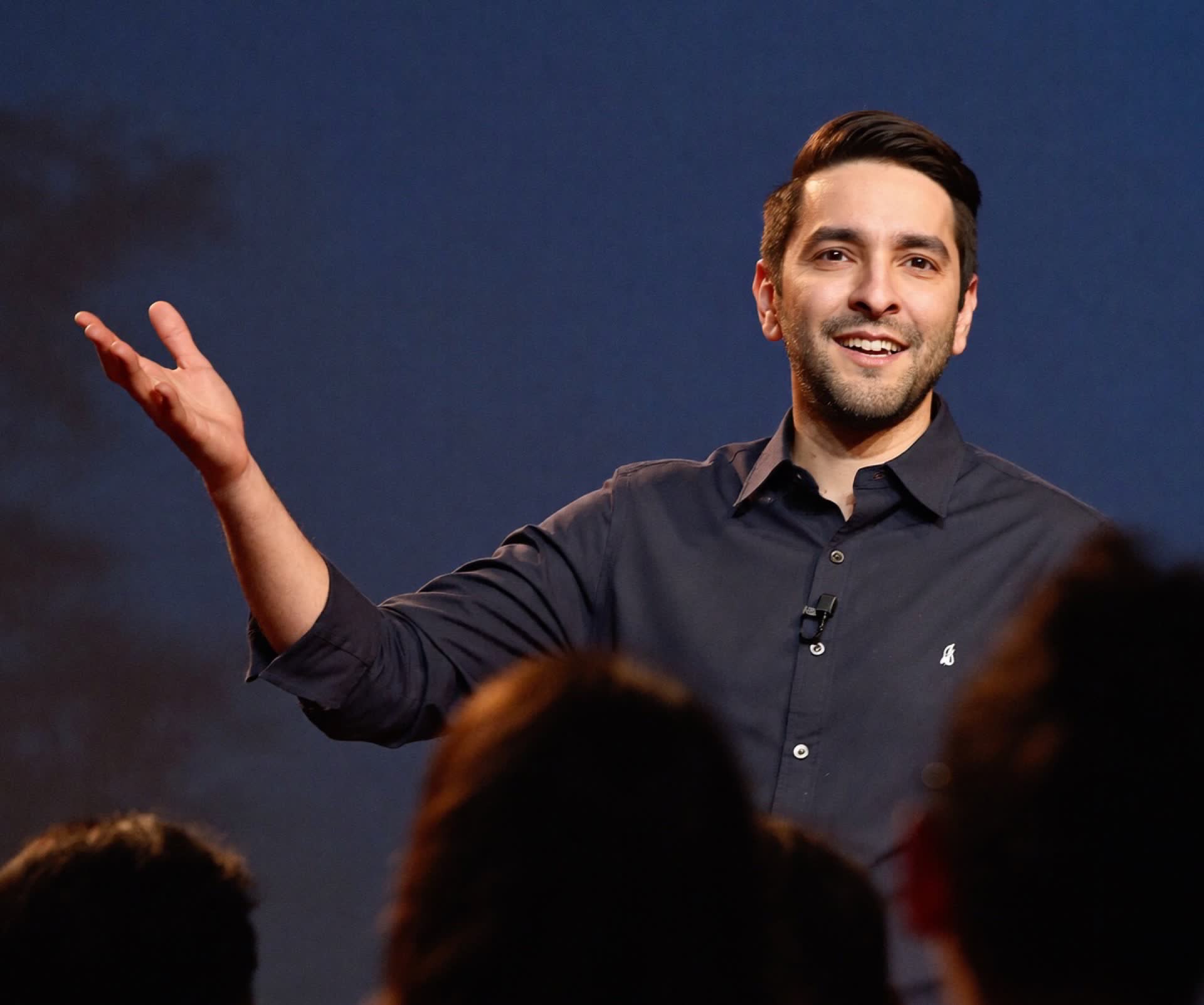
The episode opens with Muzamil introducing Omair Ansari as a recently returned ex-investment banker who has just launched a startup called Abhi. The disclaimer is in place from the first minute — this is not a sponsored conversation, the team simply reached out because they liked what Abhi was doing. From there, Muzamil hands the floor to Omair and asks what pulled him into fintech in the first place.

The biographical answer turns out to be the foundation for everything that follows. Omair has never lived in any one country for more than five years. He was born in London, then moved through Lagos, Paris, Bombay, back to London, Toronto, Abu Dhabi, back to Toronto, and then professionally through London, Dubai, Doha, Hong Kong, Lagos again, Nairobi, Johannesburg, Dubai once more, and finally New York. He describes his accent, accurately, as “the globally effed up accent.” His graduating class in Abu Dhabi was thirty-six people and thirty-eight nationalities.

That itinerary matters because it set the lens through which he eventually saw fintech. Every country on the list was an emerging or frontier market, and most of them were consumer-driven. By the time he picked a university degree, the choice of a finance and political science double major at McMaster — Canada because his US student visa was refused in the year of 9/11 — was less a career plan than a way of grounding the political instinct in something employable. “I knew I wanted the foundation of finance,” he tells Muzamil, “because with just a poly sci degree, was like, how am I gonna get a real job?”

The banks were never going to do financial inclusion

The conversation’s first real argument arrives early. Omair describes himself as “essentially a left wing person living in a right wing world.” The right-wing world was investment banking’s settled story about emerging markets, which went like this: as Nigeria slowly becomes the United States, the banks will be the conduit. Disposable income rises, banks intermediate, financial inclusion happens, and prosperity follows.

The trouble, he says, is that this is not what he saw on the ground. In Kenya it was a telco — Safaricom, through M-Pesa — that brought the unbanked onto rails. The banks did not just lose the race, they refused to acknowledge there was a race. “How can they do it?” Omair recalls his colleagues asking. “We’re the banks. No one else can do this except us.” That moment, which he describes as the beginning of the end of his banking career, becomes the throughline of the whole episode. Whenever a banking-class incumbent assumes financial inclusion is its monopoly, someone else builds the rails.

He carried that conviction through a four-year stint at a London hedge fund, where he learned a different lesson about how markets behave under stress. His fund was up 36% the year the broader market fell roughly 40%. Performance, in other words, was excellent. It did not matter. Because every losing fund needed to return capital to investors, the winning fund became the ATM. Without gating provisions, capital was withdrawn faster than the strategy could absorb. The fund shut. “It doesn’t matter how good you are,” he tells Muzamil, and it is clear he means it as a lesson about systems, not about ego.

Frontier markets and the persona problem

After a stint at Amwal in Doha — which he leaves frankly because “Doha’s boring” when you are young and single — Omair joins Renaissance Capital, the dominant frontier-markets bank. His first assignment is to take investors to Iraq in 2014. Things are going well, AsiaCell is about to IPO, and he writes a report optimistic enough that Marc Faber asks to republish it in Gloom Boom and Doom. A week later, ISIS attacks Mosul. He cites it as a clean lesson in what frontier-market volatility actually feels like — not as a chart, but as a phone call.

What follows is a tour of the African continent that becomes the most quietly substantive section of the episode. Omair lived and worked in Lagos, Nairobi, Accra, Johannesburg, Kampala, and Kigali. When Muzamil asks for a single view on Africa, Omair pushes back: “Africa is not one place. Over fifty countries, each one very different from the other.”

He then makes a point that lands harder than its phrasing suggests. He invokes Edward Said’s Orientalism to explain why Pakistan’s reputation, like Africa’s, lags so far behind its ground truth. The persona of a country, he argues, is constructed by the media a tourist consumes before they ever arrive. Indonesia and Pakistan are, on a 40,000-foot view, the same country. Indonesia gets the foreign capital. Pakistan does not. The difference, in his telling, is Bali — the tourist is happy to grind through Jakarta because there is a beach holiday on the other side. There is no Bali at the end of Karachi’s working week, and so the persona never updates.

On China in Africa, he is direct. CPEC, in his framing, was version two. The debt-driven build-out across Ethiopia, Kenya, and elsewhere preceded Pakistan’s by years. He has watched the asset seizures begin — agricultural land, ports — as currency depreciation triggers default. The lesson Sri Lanka learned with Hambantota was rehearsed in Africa first.

The case for leaving New York for Karachi

Muzamil pushes hard on the move itself. Investing is a comfortable seat. The investor is always the one being entertained, never the one chasing the cheque. To leave a Morgan Stanley portfolio manager role — where Omair was running emerging-market fintech positions in Brazilian payment processors, Chinese consumer finance, and Indonesian platforms — for a Karachi operator seat is, as Muzamil puts it, a decision that “doesn’t make a lot of sense to me, seriously.”

Omair’s answer is two-part. The first part is personal: “Comfort breeds complacency.” He had been on the investing side of the table long enough to know he wanted to find out whether he could sit on the other side. The second part is structural. Across all the markets he had covered for Morgan Stanley and Vostok New Ventures — fintech transactions everywhere around Pakistan but never inside it — Pakistan was the gap on the map. “If I don’t do this, someone else will,” he says. “And if I don’t do this, who will?”

The two years between the decision and the resignation are worth noting. He spent them testing the thesis in person — meeting banks, regulators, government officials, and existing fintechs — and finding a co-founder. Ali Ladhubhai, an HSBC and Samba veteran with prior fintech operating experience at Carlo Compare and Foree, filled the operational gap Omair knew he had. The pair tested the idea before they raised. They posted flyers at a 400-person company telling employees to WhatsApp a number if they wanted their salary in advance. Within two weeks, 30 to 40% of the employee base had transacted. That was the proof point.

The product is a wedge, not a destination

The product Abhi has launched is simple by design. The company integrates with employers and lets employees draw their already-earned salary at any point in the month, in under thirty seconds, for a flat 2% fee. No late fees. No penalties. Sharia-compliant.

The growth curve Omair shares is the sharpest data in the episode. July, the launch month, did roughly four and a half thousand dollars in transactions. August was twenty-five thousand. September, three hundred and fifty thousand. October just over a million. November, two and a half million. December, on the day of recording, sat at seven point nine million. Ninety companies signed, roughly six hundred and fifty thousand employees with access, twenty-eight people on staff, six months in.

But Omair is careful to frame earned wage access as the wedge, not the company. “If we fast forward two years and that customer is still using this as their primary product,” he says, “I would have failed you as a customer.” The destination is a financial wellness platform — savings, investments, insurance, and properly priced credit, all delivered into the same app. The reason that destination is reachable, he argues, is data. Four or five years of transaction-level visibility into a salaried customer’s behaviour is the asset Pakistani banks have never been willing to build, and it is what makes personalised financial products possible on a market the banks have written off as unscoreable.

Muzamil pushes on the pricing. A 2% flat fee on a thirty-day cycle annualises to roughly 24%, which is meaningfully above a conventional bank consumer loan. Omair does not duck the question. The pricing makes sense for the current product because it is cheaper than microfinance, dramatically cheaper than a loan shark, and — most importantly — accessible in thirty seconds rather than after a humiliating bank visit. He retells a customer’s testimony almost verbatim: the customer had a bank account, but when he walked in to ask for a loan to pay school fees, the security guard looked him up and down and made it clear he was not welcome. The teller did the same. “With you, thirty seconds,” the customer told Abhi. The convenience premium, in this market, is the izzat premium.

Cash is the only real competitor

Later in the discussion, Muzamil widens the lens to Pakistan’s banking sector as a whole — the SME credit gap, the Hascol blow-up, the persistent unwillingness of incumbent banks to underwrite the middle class. He asks how Omair sees the sector evolving over the next five years.

Omair’s answer reframes the question. “Everyone asks who’s your competition when it comes to fintech,” he says. “Our competition is cash. It’s not fintech.” Cash is still, on his estimate, ninety-eight percent of the Pakistani economy. Digitising it requires not just better wallets but a closed loop where every reasonable use of the digital balance is available digitally. The reason M-Pesa worked in Kenya was that physical cash was being lost on long-distance buses; the digital alternative was strictly better at the precise pain point. The reason QR codes have not taken hold in Pakistan yet, on Omair’s read, is that the capital required to build out the merchant infrastructure has not historically been available. Even in China, ubiquitous QR adoption is only five or six years old.

The illustration he picks is one every Pakistani user will recognise. Order Careem with a credit card and the captain will quietly cancel. Order Foodpanda and the rider will insist on cash. Until those daily, weekly, and monthly use cases — refuelling a car, buying groceries — are bridged into the digital wallet, the wallet remains, as Muzamil puts it, “monopoly money.” Asked for a realistic five-year target, Omair pegs digital at 10 to 15% of the economy. He frames that as a serious achievement, not a disappointment. Once digital adoption inflects, he expects it to inflect sharply.

What financial inclusion actually looks like

By the end of the conversation, the two threads — the personal one about leaving New York and the structural one about cash — have folded into a single argument. The reason Omair is in Karachi running Abhi is the same reason he believes cash will eventually lose. Technology, he says, “has democratised finance to a degree where no longer should it be that only when you have won the genetic lottery that you are able to build your asset base the same way someone else has.”

The Pakistani middle-class employee is not bad at managing money. They are paid late, by up to sixty days. They live in an economy with double-digit inflation. They have no biweekly cushion, no functional consumer credit market, and a banking sector that does not want their business. In that context, asking a colleague, an employer, or a family member for a small advance is not a personal failing — it is, in Omair’s words, an izzat tax that no salaried adult should have to pay. Abhi’s bet is that removing that tax for two percent is the wedge that earns the right to sell the savings account, the insurance product, and eventually the credit line that follows.

Muzamil closes the conversation where he began it — with a founder who left a portfolio manager seat in New York for a 28-person team in Karachi, six months in, doing eight million dollars a month and growing. The thesis is clean, the product is live, and the competitor — cash — is still ninety-eight percent of the market. There is, by Omair’s own framing, a long way to go before that number moves. But the lesson he carried out of Kenya in 2014 is the lesson he is now testing in Pakistan: the banks were never going to do this. Someone else will.

Full transcript
Muzamil

सारे अल्लाहबतिनाजात, welcome back to another episode of Thought Bent. Thank you, आज हमारे साथ एक बहुत ही ख़ास मेहमान है who has just recently moved back to Pakistan. He's a ex investment banker and just started a a startup, a very interesting startup called Abi. And we'll we'll love to talk to him more about that as well and his life journey. It's a it's a very fascinating story. But just as with all startup podcasts, मैं disclaimer देता जाऊं. This is not a sponsored podcast. We love the work that these guys are doing and we reached out and, you know, they they were kind enough to come in and share a little bit about what they're doing. उमर अंसारी is with us. He's the CEO of अभी. Sir, thank you so much for being part of the show. स्नाकुम, thank you for having me. So I'll the conversation. We're just sort of trying to understand, you know, what made you get into this entire, fin fintech and and then sort of investment space.

Guest

Oh, that's a loaded question. I'd say a mix of background. Mhmm. Having so I've lived in no country more than five years my entire life. Gotcha. Most of that has been in emerging markets. Right. Professionally, I kind of went continued down that path of always wanting to help and invest more in these markets because they tend to be very consumer driven places. And that's where the original idea of kind of professional, at least my professional background came in. Then I always say that I was essentially a left wing person living in a right wing world where in investment banking, we focus on companies saying, okay, specifically on the banks and saying, in order to focus on financial inclusion or for these developing markets to catch up with developed markets, so for Nigeria to become The US, etcetera, etcetera. The banks are the conduit to be able to do that because they're the ones who are able to allow for financial inclusion to happen and then when disposable income increases, that's how you really have prospering nations. Right. I think along my journey professionally and living in various different smaller emerging markets, it became very apparent that the banks weren't the ones doing this. Right. It it was actually the telcos that did it at first, for example, in Kenya. Right. And then it slowly started happening even outside the telco space. And so for me, that was really interesting because everyone who's on the banking side completely missed that. Right. They missed the beat. Like, no, How can how can they do it? We're the banks. Yeah. No one else can do this except us. We're the smart guys. We're the guys who've been doing this for years. Who else can step in our territory and really focus on the financial inclusion that we're supposed to be doing? And lo and behold, other people did it. So I think that was the beginning of the end for me when it came to banking in a sense. I still had a little bit of time to go, so where it really hit me was in Kenya. So we had worked very closely on a transaction with M Pesa and Safari.

Muzamil

Sort of tell me a little bit about, you know, you said you lived in, nine countries. Yeah. So growing up, where were you? I mean, where were you where were you born? Then Yeah. So I was born in London,

Guest

and then moved to Lagos Of Nigeria. So in Nigeria, went Paris, then Bombay, then London, then Toronto, then Abu Dhabi, then back to Toronto, and then professionally I was in London, Dubai, Doha, Hong Kong, back to Nigeria. So I was in Lagos. I was in Nairobi. I was in Johannesburg in in South Africa. Back to Dubai, and then my last stint was in New York. Wow.

Muzamil

And, you know, जब आप, know, growing up and you were moving around, were you going to different schools in all of these countries? Every different. Yeah. Yeah. So, I would say, mean, you probably can't pinpoint my accent,

Guest

and I call it the the globally effed up accent, because everywhere I went, I was lucky enough to go to the American school. Right. But in these countries or in the cities I was in, for example, my graduating class in Abu Dhabi, we were 36 people but 38 nationalities. So though it's an American curriculum, I'm surrounded with, know, surrounded with numerous different dialects and accents, etcetera. So, yeah. Makes sense.

Muzamil

And and so you graduated from high school in Abu Dhabi? In Abu Dhabi. And where'd you go for your university?

Guest

After that, I went to Canada, because I wasn't smart enough to get into The US, and also it was the year of 09/11. Actually, so I'd so I'd gone I'd gotten into a good university in in The US, and then my student visa got rejected.

Muzamil

Although I had British and Canadian passport, so So this ruin visa was rejected on the British or a Canadian passport? Yeah.

Guest

So at the day I was Abu Dhabi, 18 year old Muslim living, yeah. So so it wasn't it wasn't ideal, scenario, and then so Canada worked out. Right. And and what university was this? McMaster University. Okay. And, program I did, B.C. So it's a double major in finance and political science. Ah, interesting. Yeah.

Muzamil

Why that choice though? I mean, for a for an 18 year old in 2001, finance, I get it. Yeah. Political science? I love political science. So

Guest

I'd say that's where I actually wasn't fantastic in finance. Was better at the political science part of it. And that's really what I understood. I think from a young age because I did model United Nations as well in school, and the softer aspects of understanding politics and economics Right. Was really what drove a lot of countries. I mean, look at them when we look at Pakistan, look at these. It tends to be a lot more politically driven, which then feeds into economics, then feeds into finance. Right. So I knew I wanted the the foundation of finance because with just a poly sci degree, was like, how am gonna get a real job? So I said, I'll do the the poly sci aspect of it. But finance,

Muzamil

was was kind of the bedrock. And I feel like your political science teaches you a lot about leadership and and sort of really looking at things in a macro context as well. And I feel like even if you're not working in that space, it's always there with you in every decision that you eventually end up taking. Probably even the the decision to actually end up end ending up in the emerging markets and and and investing there. Definitely. Because, look,

Guest

when government policy sets its eyes on something that they wanna help build or at least support, then that's where the economics and the finance comes out of it, right? Right. Because that sector tends to get the support that's required. That's where you're able to start something in that segment to be able to really build a a formidable company, in my at least what I've seen in Right. In some of these markets. So it's very different from The US today, for example, or The UK today, where you can go in almost any segment, and there'll be different facets for you to be able to do. But when you have government support in emerging market, it makes that much easier. Right. Makes sense. So you graduated from, this university in what year? 2006. 2006. And what was the first job? First job was with, a hedge fund in London. Mhmm. So I was focused so my entire career was always emerging markets. So I was in London, Hong Kong, and Dubai with a company called Marshall Ways, with a sub fund called Kevera Capital. And what we did was essentially long short public equities. To to put in layman terms, we basically bought stocks and we made money off companies that were going down in value as well. So, yeah, we were basically You're one of those sharks. One of one of those, yeah, one of those one of those sharks, exactly. Right. How long were you doing that for? I was there for just over four years. Mhmm. And then the financial crisis hit. Ah, right. Yeah. 2009,

Muzamil

2010. Exactly. And so when you talk about emerging markets, particularly in the context of 2006 Yeah. What were the countries that you were looking at?

Guest

So, India. Mhmm. China. Mhmm. We're looking at realms of, like, Pakistan, for example, at that point as well, but mostly those were the two main markets that we looked at at the time. No South America. No Africa. Not yet. Not yet. That was later on in the career. Right. And,

Muzamil

what about, the financial crisis hit, and, I mean, what was that like, by the way? Just being there in the in the in the heart of it. It was weird.

Guest

I guess I I'm sure you guys and a lot of people that you used to hang out with lost a lost a ton of cash. Oh, for sure. And, you know, the weird thing, the dynamic was, and that's what taught me a a real lesson at the time, and, like, it's looking back at it now. It doesn't matter how good you are. In fact so our fund that we were running at the time was actually up 36%, when the markets were down close to 40%. So we'd actually made good return in that market. That was the nature of the fund. But because everyone else was bleeding, and because they couldn't return capital to investors, we became the ATM. So our fund dwindled down very quickly because we didn't have certain provisions placed for gates, etcetera, for people to take money out. We went down to having next to no assets and had to shut down, even though we performed well.

Muzamil

Really? That that that is so interesting. I mean, I never really thought about it, because, obviously, people have money, but people lost other people made them lose money. So they don't have any money, so they're gonna take your money. So,

Guest

like, here's the green, this is the red. We need to offset this in order to give it back to our investor base. So pull it out from here where it's doing so well. Yeah. And so what was the next switch? Were you were you jobless for for a while? Yeah. I was jobless for, I'd say, six to nine months. I said Yeah. At that point, I said, let's go and probably a stupid decision looking back at it. But my sister was living in New York at the time. Right. So I was like, I'm gonna go and look for a job in New York. Right at the heart of heart. The heart of the financial crisis. I'm like, I can do this. So got to New York in the heart of the financial crisis. I got duped by many different scams of interviews, etcetera, you had to pay for blah blah. Realized, okay, New York probably at this time is not the right place to be. Then went to Toronto. I said, okay, let me try my luck in Toronto. And in Toronto, it's funny, I remember going to to Bay Street and had gone and hit all the investment banks. Put my resume in, I even, like, somehow lied my way to get up to the HR Floor of I remember it was, like, CIBC or something like that. And I gave in my my my resume. Was like, how'd you get up here? I'm like, I I just got up here. So I gave my resume. Okay. We'll be in touch. And I went back home, and I turned on the news, and Bloomberg headline was CIBC or whichever one it was is firing 200,500 people. I'm like, yeah, it might be hard getting job over there. So so a company in Doha at that time called Amwal, which is part of the QIA, they had approached me. And they said, look, we're launching a MENA fund, and we're looking at launching an Asia equity fund as well. Would you be interested in coming and joining us? And so that's when I moved to to Doha. Right. And basically helped set up that portfolio and start running that for for the company. Very cool. And so how how long did you work there for? I was there for about two and a half, three years. And what sort of work were they doing? I mean, what sort of markets were they looking at? So they were looking at, so GCC. So it was UAE, Saudi, Qatar, Bahrain, Oman. And then I helped focus bring some of their private equity side on India, Pakistan as well. And we were trying to expand to Southeast Asia. So we were doing, like, Indonesia, etcetera as well. So, yeah, setting up the bedrock for that was the the idea.

Muzamil

Right. Why'd you leave that one? Two two two and a half years? Doha's boring. Really? Yeah.

Guest

Doha's really boring. So it wasn't really pushing me that much the work wise, but also Doha's itself, I think when you're single, young, it wasn't the right place at the right time for me, unfortunately. So, I was like, you only live once. There's no reason, like, sitting around here and figuring out what's gonna happen. Let's go and do something else. And that's when I was doing a lot of work on, or at least research in Africa, so Sub Sahara Africa. And having lived in Nigeria when I was younger and stuff, I said, okay, look, this could be interesting, so sorry to speak to people. And that's when I joined Renaissance Capital. So Renaissance Capital was,

Muzamil

or is still the leader when it comes to frontier markets. They had a huge footprint in in Africa. So how do you, what's the difference between frontier emerging and probably there's another market? Right? If you can explain that a little bit. So frontier is basically,

Guest

look, thresholds by Morgan Stanley, classified index, or MSCI. They come out these classifications. It's, basically based on your GDP of your capita, liquidity of the local stock exchange. It's it's, to be honest, all quite a bit of BS, but it's basically imagine small emerging markets are frontier markets. Okay. So bottom on the food chain are frontier? Born on the food chain, but things move up and down. Pakistan's been frontier emerging and back down to frontier. Right? Which is all because of semantics when it comes down to the liquidity of the local stock exchange and your Right. Currency situation and all those kind of things.

Muzamil

And then so after frontier, there's emerging and then Then there's emerging, then it's developed. Okay. So So you're looking at frontier markets in the in Africa. Yeah. And, what'd you find out?

Guest

So I moved to London first. I moved to London. My first assignment was to go and take a group of investors to Iraq. And Iraq was Iraq what year? This is 2014. Yeah. Is very Right, it's not 1313. ISIS is all over everywhere and So this is before ISIS. अच्छा. So, yeah, 2000 I think Arab Spring चल रहा अभी ISIS हां, Arab Spring चल रहा है. Yeah, exactly. So we took a group of investors to Erbil. Erbil and Baghdad. And at that time, Iraq was actually booming. Really? Things were going well. It was semi postwar. The thing that's the current president of the time was doing good things, infrastructure expenses were doing. The first IPO was happening called AsiaCell, which is which was a a telecom company. And so the the trip went well. We were there for, a week. We came back. I wrote a massive report. I remember I wrote it. It was my first report there, and I don't know if anyone knows, but Mark Feb Faber, he's like a he writes this report called Gloom and Doom. He's kind of a a renowned figure in the investment world. He picked up the piece, he's like, I wanna republish this because I love Iraq, da da, like, oh my god, this is amazing. Lo and behold, like, I put out the report and always in your reports you have to write the risks area. Right. And for me, the risk area was there's only one which is political, and there's a situation when it comes to security, etcetera. And literally a week after the the report went out, ISIS attacked Mukdan. The whole story, so this is how you learn about the volatility of of frontier emerging markets. And so I was in London, the person who was heading up research in Nigeria had just quit. And so, my boss at the time, Dave Nangle, he said, yeah, you know, someone's quit over there. We're looking for people. And I was like, I'll do it. He's like, what? You're gonna move to Lagos, Nigeria? I'm like, yeah, I'll move. And he's like, okay. So I moved to Lagos, to basically help, add up the the consumer and brewery advisory function over there on the research side. And very quickly thereafter moved around from there to Nairobi, to Accra. All for Renaissance? All for Renaissance, to Joburg. I was in Joburg for a little while.

Muzamil

Went to Rwanda, been to Uganda. So what's Africa like? I mean, you've you've looked at it very closely, and, obviously, you've been your job was to sort of research the entire, you know, space. Yeah. What what's your opinion on the continent, and how do you see it particularly in the context of, maybe over the next twenty, thirty years? Yeah. Look, each so one

Guest

thing I'll say is Africa is not one place. Right? So over 50 countries, in Africa, each one very different from the other. So when people ask me, what do you think your view of Africa is? It's like saying, oh, what's your view on Asia? Like, that's very different. Pakistan's different from Bangladesh. Bangladesh is different from Sri Lanka. Sri Lanka is different from India. Right.

Muzamil

And all of these are different from Pacific Asia. Exactly.

Guest

Exactly. So I'd say each country has its own interesting aspects and very synonymous to other places, that kind of took me into where we are today. Places like Egypt and Nigeria, for example, very similar to Pakistan. Right. Places like Kenya are more synonymous to a place like Bangladesh. Right. So, you can go places where it's there's completely no infrastructure and nothing really happening economically, and you can go to other areas where it's it's it's really bustling and and very interesting, where there is a a local ecosystem and vibe for you to be able to to be able to back. And then you've got the the edge of it for when it comes to beauty as well. You can go to Mozambique, which is stunning. And you can go other parts of I would like Congo, for example, which, in my opinion, as as beautiful.

Muzamil

So it's it's a it's a It's very diverse. It's a yeah. It's a it's a hard question to answer. Probably, let me let me give you more context. Right? So for for the longest time, and if you know anything about Pakistan Mhmm. You know, we had something similar in Pakistan as well where Fata or KP, Fata was like Elaga Gher. Mhmm. You know, it's just something you don't talk about. It just exists. Yeah. Kepi for most of, mainstream Pakistan was just this again, so it's it was either tourism, but even we didn't have a lot of tourism. What? It was never part of the mainstream, sort of conversation nationally. Up until probably, you know, mid-two thousand tens, when KP really sort of began to open up and and really sort of joined the national conversation. And then people realized, oh, you know, there's a there's a crazy amount of talent there. It was mostly, like, you know, okay. So there are, like, tribal people there, and and all of which was untrue. These were stereotypes. But, obviously, it's what what the media feeds you. Right? Yeah. With Africa, there's the same thought process. You know, it's, like, the media has fed you poverty and, you know, like, this this stone age, essentially. There's nothing really happening there. And I'm trying to sort of understand if over the next twenty years, maybe we'll see at least some African countries really take the center stage in terms of, you know, the global conversations. Because a lot of times, Africa is more often than not sort of, ignored. Yeah. You know, politically or or So so what do you think about that? Do you think there are countries within, you know, that region that are really emerging at a very, very fast pace and would be interesting to see over the next forty years? Yeah. No. Definitely. Look, if you look at simple demographics. Right? So you look at a country like Nigeria, 250,000,000

Guest

people. Mhmm. So very synonymous to Pakistan. You've got a young population as well. In fact, more people are willing to look at Nigeria than they are willing to look at Pakistan, despite it having a much more volatile currency, despite it having a lot more political risk comparatively. But it is really the powerhouse of Africa, if you wanna think about it. South Africa, on the other hand, which everyone likes to go on vacation, Cape Town, etcetera, is beautiful now. But as a country, it's actually been worse off comparatively to a lot of the other countries, but gets a better rapport. Because, again, it comes down to anything it comes down to, where tourists are willing to go. Right? I always make this example of, Indonesia versus Pakistan. Right. And this is where if you look at the amount of investment that's gone into Indonesia, compared to Pakistan, which is a complete same country, if you look at from a kind of 40,000 foot view, It leaps and bounds beyond, where where Pakistan is. And I always say it's because the tourist Mhmm. Is happy to go to Jakarta and then go to Bali on holiday. Right. So you'll always go through and you'll do the hustle bustle of Jakarta, and then you go and you do a nice holiday in Bali and it works and everyone loves Indonesia. Right. From foreign tourist standpoint. How many foreign tourists do you say I'm going to Pakistan on holiday? Yeah. It doesn't happen. Yeah. Right? So you're right in that standpoint where, I think, Edward Said wrote a book called Orientalism. And and that's the idea of the persona of what a country is based on the media or movies you watch. Yeah. Right? And that portrays something which is completely different from what last year is on the ground. So so, yes, I do believe there are gonna be powerhouses that come out of Africa, specifically places like Nigeria, I think Kenya, I think Egypt, is gonna are gonna be very interesting countries. Morocco and Tunisia are already powerhouses. They went through the Arab Spring, obviously. But you look at them now, they're doing much better comparatively to some of the other nations. So

Muzamil

Northwest Africa is very interesting. Do you think there's a lot of, and this is gonna be my last question on Africa, and I'm gonna move on. But do you think we're we're seeing a lot of Chinese interest in in Africa recently? Because I saw a Johnny Harris video Yeah. Where he was like, why is China all over Africa? And then, apparently, they're building, bullet trains and all sorts of infrastructure. Yeah. Do you think now I mean, when I when I went through that video and I started googling, I realized Africa is growing quietly. So sort of similarly similar to how we've seen China grow, and suddenly now China is a big player. Yeah. Yeah. Was in your when you were there, was Chinese investment a big thing? Is that something more recent? Massive. That was CPEC version one. Right. So I remember I went to Ethiopia,

Guest

2000, I wanna say '14. Our flight from, I was in Rwanda before, so from Rwanda to to Addis, Ethiopia. I remember we got on the flight and all of us were like, are we on a flight to Beijing? Because the entire flight was packed full of Chinese people. Really? And it was so they had, basically, they they have a huge footprint in in in Ethiopia, similar to the tune of SeaPac. Right. In terms of quantum value wise. And they were setting up infrastructure there. It's all part of the One Belt One Road as well. So One Belt One Road actually ends in Africa. Right. Right? So that comes through to go other to then go up upwards into into China. Right. So that is that was version one, and it was all very debt driven. Right. And then they said, okay, let us get Pakistan. Interesting. So so, yeah, it was definitely before Pakistan that they they that Africa got the Chinese investment. And you think that investment is sustainable for them?

Muzamil

As a as a finance?

Guest

As look. It's already showing the the the evil face of it. Right? Okay. So debt financing is was was kind of the forte for China. And we've already seen places like Kenya, we've seen in Ethiopia as well, where seizing of assets has happened because debt repayments become very problematic. Right. You have a lot of corruption issues in these places, and so the best decisions for the nation aren't necessarily made. Right. And so agriculture, etcetera, which is a prized possession of a country that you should never actually give to a foreign entity, were being bid to the highest bidder. So, when the default happened due to currency fluctuation, etcetera, then those assets got seized. Right. And so, the negative side of it's coming out, similar to Sri Lanka that's happened as well with the port. So, yeah, it's, it's all been debts driven. It's been very beneficial for the Chinese, and to an extent, some of the local countries in Africa as well, but

Muzamil

It still to be seen how soon It still needs to be seen. Okay. So so you were there for at at Renaissance for how many years? I was there for just under four years. Sure. And all of these countries are within that time. These are, small,

Guest

sterns in different countries. Exactly. Exactly. So I ended in Dubai, we actually expanded. I expanded the footprint. We set up, Pakistan, Bangladesh, Sri Lanka and Vietnam.

Muzamil

Right. And then so this, what year are we looking at now? So now I'm in February

Guest

end of two thousand fifteen, beginning 2016.

Muzamil

And where do you go next?

Guest

So at that point, Morgan Stanley was a client. Right. And so, just to rewind, when I was doing that at at Renaissance Capital, that was where I really first met kind of fintech for the first time, and fell in love with it. And so started focusing on that a lot more. From what I was writing about, what we were advising from an investment standpoint, so we did like Bcash in Bangladesh, for example. So when we signed this client and my boss, who became my boss, he reached out, he was a client, and said, hey, you want to put your money where your mouth is, in a sense. So so, yeah, I moved from, my last stint with more with the renaissance was in Dubai. Mhmm. And so I moved from Dubai to New York. So he they were running a frontier market fund at the time, and so I joined on that as an analyst. We were launching at the same time an emerging market fund. And very quickly, we started doing a lot more focus on fintech, because a lot more was happening there. So, specifically in the emerging market space. Right. So, we were this is where LATAM, etcetera, starts kicking in. So I started looking at Brazil. I started looking at Argentina. I started looking at China a lot, Indonesia, parts of South Africa again, parts of Eastern Europe, etcetera, etcetera. And so then I became portfolio manager. I got promoted, became portfolio manager on the product, and was living on a plane. I was, like, three weeks of the month I was traveling around the world to these different countries and investing in the likes. We were in, like, three sixty degree finance in China. We were in Chudiana, China. We were in Ant Financial in China. We were in, Pasaguro in in in, Brazil. We were in Stone in Brazil, XP. So started seeing a lot of this hap the the financial inclusion happening outside the banks in a lot of these emerging markets. Right. And along that way was when started having a lot of conversation with, Dave Dangle at Vostok, who's our anchor investor, and went on as a strategic adviser at Vostok as well. So I was doing Morgan Stanley as well as Vostok. And, again, we were looking at a lot of transactions, a lot of companies that were coming out of all the countries surrounding Pakistan and even a little bit further outside Pakistan, but not anything in Pakistan. Right. And that was,

Muzamil

I guess, the next beginning of the end for me. Yeah. Because I'm just wondering, I mean, particularly this last part of your life Yeah. At Morgan Stanley. You're living you're traveling a lot. You're meeting a lot of these, you know, new age companies that you're investing in. And, I feel like even in terms of how one feels doing their job, you know, this is like a dream job for a lot of people. You know? It's it's a the dynamic is very interesting. Right? It's it's very powerful as well. You're the investor. You're always the investor. So everybody's gonna really sort of make you make sure you have a great great time. Yeah. You're never the person who's going and collecting the debt, essentially. You're you're the one who's handing out the cash. And so, it's very, very easy to probably get comfortable there. It is. And so and and and okay. Fine. So maybe if you were to tell me, okay. Listen. Like, I was just I got bored of traveling a lot, and I decided to move to another company within New York, that's one thing. Yeah. But from that comfort, you decide to just sort of jump into Pakistan. Yeah. Which doesn't make a lot of sense to me, seriously.

Guest

Yeah. No. Every time I say it New York to Karachi, it's still

Muzamil

So, I mean, what was what was going on there? What was the thought? I mean, was it as simple as, you know, the numbers make absolute sense? Let's just take this leap and figure it out, or were you did you see a lot of other things as well where you're like, okay. Fine. Like, I need to make the switch.

Guest

Look. For me, it was one of the general ethos I have is comfort breeds complacency. Right. I loved what I was doing. I love being an investor. I still invest. It excites me. However, at every point in my life, I think I've always I always feel like you should always try and be the person on the other side of the table. Mhmm. So those super exciting, doing the investing. I think it was a personal challenge to say, you actually be an operator? That was one aspect of it. Right. It's not comfortable. It's not comfortable at all. Yeah. You're you have the complete opposite of comfortable. But beyond that, it also for me was I've had the privilege of working abroad. Mhmm. I've had the privilege of seeing these things happen in other countries and seeing that playbook. I'm not saying that playbook plays out exactly in Pakistan. And I see the opportunity. I saw the opportunity at least at that time for for for the Pakistan system. And it came down to me for if I don't do this, someone else will. Right. And if I don't do this, who will?

Muzamil

Right? How... Have you... Had you been to Pakistan before this? Yeah, times. Family or business? I had family and business. Right. You you had an understanding of what were Yeah, because you had never really lived here, but you had an Exactly. Understanding of what I got married in Pakistan. अच्छा. हां. So you you were connected to the country as Yeah, yeah. And so so you decide that you you decide to take the leap of faith. You quit your job and then you set up something here? Yeah, what was that process? So I tested it. Okay.

Guest

I spent about the point of me deciding I wanted to do something to me actually quitting was about two years. I had that initial conversation with with David and said, look, I think there's a huge opportunity over here. I'd like to do something. I had an idea of what I wanted to do, but I wanted to do a little bit more homework. That conversation I remember, we went to this restaurant. We were catching up actually over some other stuff, and that's why I brought this up. And he turned around and said, I'll back you. I'm like, what? He's like, yeah, I'll back you. I was like, okay, wait, wait, That's not kind of what I was expecting. I just love a lot of work to do. Let me come back to you on this. So that's why I spent a lot more time back and forth, and I I spent luckily wearing my Morgan hat and my Vostok hat to be able to meet everyone. Get the right insight, basically. Get the right insight. I met the banks, I met the regulators, I met senior people and government officials, I met with fintech companies at the time and saying, what's missing? If I came here, what is it that I would do? Right. And what are people doing wrong? And so, that's when we came across the the idea or at least I came across the idea of what I wanted to do, but again, also wanted to test it. I also had weaknesses. Right? You have to I think before you take a leap into anything that you don't know, you have to really look yourself mirror and saying, look, what am I good at? What am I crap at? And what do I need to learn? And how can I fill those weaknesses? So I had no operational experience at Pakistan. There was no way I was gonna land up in Pakistan and be like, I'm gonna do this. Just gonna raise some money. Doesn't mean anything. Yeah. Yeah. So my cofounder, Ali Ali Laldubae, is my operational cofounder, so he's the COO. And he has that for me. And how did you come across him? So we knew each other through mutual friends. Mhmm. He had his own startup called Carlo Compare. And that was based in Pakistan? That was based in Pakistan. So he was born, bred up in Karachi. Right. Was HSBC in Samba for in retail banking for many years. And then he went on to launch Carlo Carlo Compare, which unfortunately didn't go well, but fintech worked. Then he was at a company called Forry.

Muzamil

Forry? Uh-huh. That Forry. Right, right, right, right, right. So

Guest

he was there, and we got introduced by a mutual friend. Mhmm. And we kind of kicked it off, and I said, look, what do you think about this? He said, it's interesting. I said, let's test it. So, I think, I don't know whether I should go into what we exactly we do here or whether I should just say stories. Tell me about it. No. Tell me about what you guys do. So what we do as a very simple product, number one Mhmm. Is you wanna go after a segment which is a big enough market in Pakistan, but also is a manual pain point that exists. Right. And a manual pain point that exists in the country is that a large proportion of the middle class live paycheck to paycheck. Right. Wage inflation doesn't happen. Very rarely do companies give you a inflation bump at the end of the year, simply you just stay at what you are. And people jump jobs a lot because of that for small amounts of money. And then they're constantly going to their family and friends or going to their employers and asking for money in advance before their salary comes in. So what we do is we come in and we tie up with your with the employer, and we provide you as an employee the ability to access your salary instantaneously at any time in the month in under thirty seconds. That's the basic thesis and the basic premise of what we do. Right. Because digital adoption, in my opinion, really only happens when you fix a manual pain point. Mhmm. Because that's where people accept it, and then you can start going to anything else. So Ali and I decided to test this out. So I was in New York. He was here. We went to a company with about 400 people, and we put posters around the office. And the posters simply read, if you want your salary in advance, WhatsApp this number with your bank account details and how much you want. Cut a long story short, within two weeks, we had about 30 to 40% of the employee base transacting with us with no further advertising. Connection to the company itself? To the so we we get paid back from the employer directly. Right. So you partnered with the company? Exactly. So we go b to b to c. Mhmm. And we get the company to provide us access to the employee base. Right. And then we we get paid back at salary time.

Muzamil

Interesting. Interesting. What's what are you looking at in terms of growth right now? I mean, how long have you guys been operating? And, So we launched in July. Mhmm.

Guest

In July, last week of July, we did just over 4 and a half thousand dollars in transactions. You fast forward to December, we're now doing 7,900,000 a month in transactions. Really?

Muzamil

So And and and this is I mean, this is growing. This is not because, you know, this month they were able to do that. Maybe next month they might grow. No. No. No. So so in terms of numbers, so we started off July 4,000.

Guest

August was 25,000. September was $350,000, October was just over 1,000,000, November was 2,500,000, and this month we're, yeah, about 7.9 to date.

Muzamil

Fascinating. And most of these, like, companies are reaching out to you, are you reaching out to companies, or how do you or do you have a BD team that's basically So we have a mix. So now it's it's because we've grown and because other companies have seen what's happening where,

Guest

we are getting reverse solicitation as well. But at the beginning, it was and still is very much driven by our own BD team,

Muzamil

that goes out and and and gets clients on board. And is this what's the vision here? So, I mean, if I can I can just ask you Mhmm? What you're trying to do. Beyond the whole, obviously, you know, it's a start space. There's definitely a lot of money to be moved around Yeah. For for your customers as well as for yourself as well. But really sort of trying to in terms of solving that problem, what's the vision? I mean, what could they this potentially do, to a very sort of fragmented, financial sector in Pakistan?

Guest

There is a plethora of products we can come out with on the back of this. The idea is that when I build that trust with you Mhmm. As an individual Mhmm. When it comes to credit, my ability to bring you up the financial ladder becomes that much easier. Right. And that is our focus. We call ourselves a financial wellness platform for that exact reason. Right. Because when you are financially well, then you are mentally well, and that is where you live a good life. Right. The reason why we're doing that, why I quit to be able to come and do this as well is what technology has done is it's democratized finance to a degree where no longer should it be that only when you have won the genetic lottery Mhmm. That you are able to build your asset base the same way someone else has. So we start off with this, to say, hey, we'll help you when it comes living paycheck to paycheck. It's not your fault. Mhmm. You in Pakistan, unfortunately, it's not like The US, for example, where people are paid biweekly. So every two weeks you are paid. Mhmm. Over here, people sometimes have to wait up to sixty days to get paid their salary. Mhmm. Right? Beyond that inflation, the country's high. So sometimes it's just not your fault when it comes to living paycheck to paycheck. Everyone, the rhetoric inside is like, oh, yeah, you just don't know how to handle your finances. Like, no. You have limited means. You're not born into wealth. So if someone's not gonna come and help you when it comes to your interim credit where you require, then there's no stepping stone for you. And then you make bad decisions. So our idea is let's help you with this problem first. Then as we go down the ladder, that's when we can start giving you other products for you to be able to stop living paycheck to paycheck. So we can provide you with a savings product, for example, an investment product. We can provide you with insurance products. So the possibility

Muzamil

of products for us to go after is huge. Is is limitless. Yes. Again, for a for a for a country there for a market that's not really been explored, I mean, anything is possible. Exactly. What would you say is at the heart and core of though? Is it the the the individual, customer data, or is it the credit sort of, score? Because a lot of, what I see, particularly in the fintech sector right now, think the biggest fish that everybody's trying to tap is the credit score. Like, having that understanding of who can actually return money Yeah. In the long run. And some people are doing that through retail. Some people are doing that that through, you know, these microfinance, apps and and all of these things. Like, they'll they'll say, okay. We're p to p transfer, but that's not where the money's at. The money's at the credit. Right? So for you guys,

Guest

where do you where where are you looking to build your expertise? Because what's the what's the heart and core or the engine of Yeah. Abi? It'll be data. Mhmm. It'll be data. If you fast forward four, five years, the amount of data we will have on our platform to then be able to customize financial products for an individual Mhmm. Is gonna become that much easier. Right. I think the links it's lacking from traditional banks is the data aspect of being able to segment that data. Right. And saying, look, you are different from this person and this person is different from that person. And with the use of data and AI on top of it, I'm able to actually give you personalization. Mhmm. It's millennials, gen z, etcetera, it's all about personalization. Right? Right. And that's for everything. Right. So our vision is that we wanna make sure that by that point in time, I will fit the needs that you require. You may need a car at that time of this other person needs a house. So why am I selling you or trying to get you a mortgage when you actually need an auto loan? Right? So you're right in terms of the credit scoring, that all comes off to time. It can't happen overnight, and you need credit to come through the system first before you be able to create credit scores. Right. So you look at, for example, so Bank of America in The US actually came out of credit cards. Right. So credit cards, and go back to history of this, but it was very much where credit scores came out of it to then become the conduit for people to be able to start borrowing, which then led to people being able to be scored or saying who's gonna pay back, who's not gonna be paid back. Right. It's interesting, I think that the fallacy that's there for a lot of people is that they think they know what people's behavior is because they belong to a certain class of society. Right. There's a great book, which still finishing, called Utopia for a Realist. And it makes a very valid point in there and shows statistically how they've gone to places. As you mentioned, we know of Africa, for example, from television, etcetera, goes to the depths of Africa in places like Rwanda, Ethiopia, Uganda, etcetera, Whether you do micro financing at not extortionate rates, by the way. Right. And without the precursor of saying, we're gonna come and break your legs if you don't pay back. And the repayment rate was much higher than people expected. Right. Same thing with Grameen Bank in in in Bangladesh as well, by the way. It was one of the lowest NPLs anywhere in the world. But

Muzamil

everyone's preconceived notion is that they do not handle their money. Yeah. Give give give the rich person money instead of Exactly. And that's also very interesting because a lot of banks in Pakistan probably the biggest story for this year was, you know, if if you're a small and medium enterprise and you go to a bank, the banks will probably slap you and ask you to leave. Yeah. But all of the major banks in Pakistan literally pumped money into this company called Hescol. Mhmm. And, eventually, that company, you know, I mean, they were fudging up their financials, and, eventually, it came out that they were in 60,000,000,000 rupee debt. And they had to write it all off, and, you it's like, imagine that amount going into the SME sector. Exactly. And the banks might have been able to actually make some of it, some money out of it. Right? So, I think I get what I get the mentality there. Mhmm. And I think that's probably why fintech is is and and microfinance impact, and it's so incredibly exciting. Mhmm. Because we've never really gotten majority of the population towards credit, towards savings, towards this or that. It's just like, you know, they're just waiting, and they're generally they're generally going to loan sharks, and and and and sort of writing off their life away for for a a simple thing like a medical procedure. Yeah. What's your and and and this question is based on, well, in the early days when EasyPress and JazzCash came in, and, you know, the primary idea was very, very noble in terms of really sort of providing this sort of disconnected, undocumented, customer and and bring them into the financials, system. But what's the fee that you guys are, charging, on top of any,

Guest

you know, money that someone takes out? So we charge a flat fee of 2% per transaction. Right. So there's no late fees, there's no penalties, etcetera. We're sure it's compliant as well because it's usually important for Pakistan.

Muzamil

Mhmm. And that's it. So and there is no late fee. So what's the maximum that they can return the money by? So we're doing paycheck to paycheck right now. Right. So our maximum duration is thirty days. Right. So and and this is why I I had a discussion with your team as well, I asked them the same question because if I look at it purely in a banking or a or a financial standpoint Mhmm. What we're looking at is even in the best case scenario, I take my money out on the first of the month Yep. And I return it on the thirty first. Mhmm. So I'm getting a a one month or a thirty day, credit cycle. Yeah. Right? By the end of the month, I am paying that with 2%. Yep. Right? Over the year, I'm essentially getting 24. Exactly. And that 24% is also not based on I mean, it's not like I've kept the money, and I've kept it for twenty for twelve months. Exactly. Right? So in terms of I get it from, like like, a lump sum amount from the bank Mhmm. And I do, like, let's say, CYBOR plus 13 2%, 3%, I'm still giving even in the updated numbers, I'm giving, what, 13% maybe? Maybe. So so do you think this is I mean, so in terms of the number Yeah. Your numbers are higher compared to the other one? Granted, you're actually giving people money or not really. Exactly. And then second, and this is, again, something that happened with EasyPress and JazzCash as well. You know, you got the you got the people with the money, and and I can I can just add your bank account and send you money, and it's 0 rupee fee? And if I if, you know, if you are a blue collar worker and don't have access to a bank, and I ask I send you money. And this is something that, you know, a lot of people who work for me as well, my cook, my driver, they have been unable to get a bank account. Mhmm. And every month, they come in and they're like, you know, please give us cash. And I'm like, okay. I'll transfer Jazz cash to you. They're like, listen. You know, it's gonna it's gonna be a fee of, like, I think on the salary, 1,500 rupees is gonna get cut. Yeah. For them, 1,500 rupees means much more than what it means to me. Exactly. So how do so I I understand the noble vision of trying to get these people in, but also now but, unfortunately, they end up paying a lot more proportionally. Yep. Do you think that is something that you can eventually sort of solve or are already solving right now? Yeah. Look. The idea is I

Guest

I would say the success for the company would be or failure for us would be that if we fast forward two years, for example, or even hopefully earlier, that customer that's come on for this product of accessing your salary early is still using this as their primary product. Right. I would have failed you as a customer. Mhmm. Because my whole purpose or our whole purpose is to be able to help you move up the financial ladder. Right. So have a savings spot. Have something else that you can start dipping into when you do need interim financing, which is free, essentially. This is the pricing mechanism. Look. It's it's it's it's always up for debate. Right? And you'll have both sides of this. But our our philosophy was this makes sense for now. It's cheaper than microfinance banks. Right. It's cheaper, way cheaper than the loan shark. Yes, it is more expensive than traditional consumer finance when you go to a bank, but guess what? That person, I'll give you an example. We did a, we had a testimony that we put up the other day where the person took out the money to pay for his children's school fees. He has a bank account, by the way. So this wasn't someone who's unbanked at all. I said, why don't you go to why didn't you go to the bank and ask for a loan? And like, my review is horrible, but he he essentially said that when I go to the bank, the guard looks me up and down and makes me feel like I'm not welcome. And then if I even make my way inside through the guard and get to the teller, that person looks at me and basically makes me feel like I'm not welcome in this branch. And then they make me jump through all these hoops to even try and apply for a loan because they don't want me to have that money. With you, thirty seconds. Literally, in thirty seconds, I clicked a button. I needed 2,000 rupees. So, there's a convenience aspect of it. People are willing... I think the one or the word I know well is isit. Right? And isit ki baat hotiye. Right? For you to go to your friends and family and constantly ask for money. Go to your employer

Muzamil

and ask for money as well. Don't think, for example, like you said, your your driver, etcetera, like coming to you and saying, I I'm mean, it's it's it's they they deserve better. Yeah. Why should someone else hold something over to them just for just because they have to pay their,

Guest

son's school fee? Exactly. Something that they should be getting irrespective. Exactly. So Totally agree with that. Definitely. So so on the but on the second aspect, you're absolutely right. When they go the the problem is when they go and they try and take out that money in if they have a Jazz Cash wallet or Easy Pesa, there's a fee that's associated with it when you go and take that take out that cash from the outlet. We're now working with the likes of Jazz Cash, Easy Pesa, where there will be no fee. Right. For for For anyone who has that that that wallet. So our whole thing is we wanna make sure that that fee that you're paying is the all encumbered fee that you'll have to take on. It's not going to be added amounts that are on it, once you, avail of the the loan per se. Makes sense.

Muzamil

And you're right now, you're, you're so how do you take the money out? Through bank accounts, through EasyPesa, through JazzCash, all of these microphones? So we're completely,

Guest

interoperable. So we go into any wallet and any bank account. Right. So wherever you're being paid your salary currently, we go into that account. And even those people who are paid cash, we're making them digital. Right. So that's kind of how we're we're functioning right now. And

Muzamil

right now, you're going exclusively b to b? So for example, if I'm a a random person x y z, and I work at a company called a b c Yep. My company has not contacted you, but I'm really interested in your service. Yep. Can I eventually be able to apply, or or is is it exclusively based around companies sort of taking that, risk? Yeah. Obviously. I mean, there is a risk. Yeah. Exactly. Trying to mitigate that risk as well. Exactly.

Guest

So are you only going through companies right now? For now. Mhmm. But we will be launching a B2C product. Okay. So along the lines of what you're saying, so similar, to what we're offering right now, with some added benefits as well. So we're working on that, and it's gonna be something we're looking at doing in, in 2022.

Muzamil

Right. How many companies do you have right now in terms of, actual companies?

Guest

We now have signed on over 90 companies Mhmm. And have access, and we're onboarding about 650,000 employees.

Muzamil

Including within these 90 companies? Or right. Yeah. And, where is this mostly concentrated? ¿In Karachi? No. So we're nationwide.

Guest

So we've got look, I think the the reason why we launched Karachi is if you can conquer Karachi, you can conquer Pakistan, in my opinion. Yeah. Same thing as New York, US, Lagos, Nigeria, etcetera, etcetera. Because head offices sit there. Right. So we are able to bring on conglomerates, for example, that have branches across the nation. So so, yeah, no, we've got customers who have are sitting in Multan and Feslabad, Sialkot, even though we haven't physically gone there yet. But because the employee base sits there, we're able to to serve them. So we're expanding our sales team. We have two offices right now in Karachi and Lahore. Mhmm. We've just brought on a salesperson in Lahore. We're adding some people in Lahore, Islamba, then we're gonna be expanding from there. And how many how many employees do you guys have now? We're 28 people. In six months? In six months. Wow. And when do you officially join,

Muzamil

after quitting from The US? So I resigned

Guest

in January. I was on gardening leave advisory period till end of May. But I was working both both things at, at the same time. And then junior ahead in Pakistan. And then, I mean, I moved here in March. Ah, so I moved here beginning of March, and we went live in July.

Muzamil

So अभी को तो हमने discuss कर लीजिए. थोड़ा समय थोड़ा macrophilia situation you've obviously, because you come in with a with a lot a lot more homework than, let's say, a banker who's like, you know, I feel like there's a problem that to needs a solution, and so I need to solve that. Pakistan has I mean, and and and this is something that you've probably heard way too much, but I'm just going to build context for the viewer as well. But Pakistan has a banking problem. You know? We have I mean, call it, banks would blame FATF or whatever. But the fact is banks are too complacent and too lazy, they don't really care much for sort of increasing the bank population as long as the rich people are there. Mhmm. Middle class is generally not really welcome in the bank. It's it's too much paperwork and extra extra cost for them. And so what happens is because of that, a lot of the digital you know, when we when we say digital transformation and and sort of digitizing our economy and sort of, widening our economy or tracking our economy becomes increasingly difficult. You know, we talk about, people in China having entire cities where there is absolutely no cash left, right, and center, and they're even going towards a digital currency as well. Yeah. But when you when we look at Pakistan, it just seems like such a far off dream. You know? I mean, I had an SME, and 99% of all our orders were always cash on delivery, and then that in itself brought so much so many problems. Yeah. That, you know, doing business becomes so complicated versus, let's say, being in The US or wherever where you could use credit cards and so on. So what's your thought process on how the entire financial sector... You know, what does it look like right now, and and and how do you see that evolving over the next five years?

Guest

Everyone asks who's your competition when it comes to Fender. VCs ask me this, and other people, clients as well asked the same same thing. And our competition is cash. It's not fintech. Cash is still 98%, if not more, of the economy. And to digitalize that is where it only happens when you're able to get everything that person would need in a digital construct. Right? So how you do that is by spending a lot of time with your customer base and saying, okay, I've given you this. Now what are you using this money for? Right? So similar to the SME issue. Right? So, okay, if you're getting cash, then what are you doing with that cash afterwards? And how do I digitalize that process? Right. So what are we doing? For example, when we speak to our customers and they say, okay, we take out our our salary in advance. We're using it for utility bills. We're using it for water bills. We're using it for education. Saying, instead of going and taking that money out from an ATM and then going and giving that cash, how about within our app you can do that directly? Right? Then it becomes more seamless. That's where digital adoption really happens. And Peso, look at Kenya for example, the physical problem was that people were sending cash physically from the South to the North to their family on random buses. It was getting lost along the way and taking a long time for them to to get it. That's what the norm was. When MPEZ came around and set up stalls everywhere and then allowed you to be able to do it over mobile phone, boom, send it to your family and they'll be able to pull it out on that side. That's where digital adoption happened. So I think you can't expect for cash to go away overnight. Mhmm. But I think if we fast forward five years, cash

Muzamil

will be less so of a proponent of the economy. What if you if you were to throw a number, you'd you you said 98% is cash. Right? Yeah. What's your what would the goal be or dream be? You know, in five years, maybe we can look at an economy which is maybe

Guest

Look. Dream? Dream would be closer to kind of 85, 90%, to be honest. Right? That's because I I think that's where the real That's a realist. Cash would be 8515% would be Digital. Would be digital. Because it take the thing is when it when it kicks in, it does this. Right? And so,

Muzamil

obviously, I would love it to be a 100%. But I think the likelihood of that happening in the country over a five year period is difficult. I mean, so it's 15%. How much do you think... What what would what would that, in terms of cash value, in terms of, you know, x billion dollars, being being held by fintechs, how much that of that do you think is is gonna be there?

Guest

Gosh. In terms of value wise, it'd be difficult for me to to answer that. Percentage wise would be easier. And for me, I think if we can get to 85, 90% of the economy being cash and the rest being digital over the course of the next three to five years, that'd be a great achievement. Right. Hopefully, we surpass that. But we have a lot of infrastructure that's required for that to happen. And if RAS comes around in the timely manner that it should, then hopefully that happens. But you look at UPI, for example, in India, even though that being brought around, you still have digital not making up more than about 15% of the economy. Right. So

Muzamil

it takes Yeah. It takes a while. It takes time. It takes time. When you're talking about the infrastructure, if I were to ask you, what were the major challenges in Pakistan that, you know, you guys and a lot of other companies are facing right now that maybe people are trying to solve as well. But what would what would those challenges look like? Yeah. I think it's exactly what you mentioned before in terms of once you have it digital,

Guest

what are your outlets to be able to use that continuously digital? So I'll tell you a simple example. Karim, Food Panda, I don't know if you've experienced this, but if you try and order Karim and you put in credit card details, the person won't show up. Yeah. And they'll probably cancel the ride. Yeah. If you order Food Panda, they come and deliver the food, they want cash. Mhmm. They don't want Credit card. Credit card. Yeah. Right? So, that part of it, and this is where, again, why our focus as well is saying, what is a cultural problem that you can then allow for digital adoption to happen? Because if they're not able to access that cache instantaneously, what is the beauty of cache? The beauty of cache is you give me a 100 rupees, I I get that right now, and then I can use that. Now if you send it to me digitally, where all can I use that? Yeah. And if I have to go take a detour just to take the cash off. Exactly. It's annoying. That doesn't make sense. Yeah. So I think, hopefully, if we can I I hope, that something like QR codes, for example, kicks off in the country? Because you'll get points of sale units. So there's no POSs in the country, is only at around 70 odd thousand right now. That's tiny.

Muzamil

Yeah. Why do you think QR codes haven't been been able to I mean, we haven't been able to pop them up? Because it's really easy. Yeah. There's not a lot of complication there. The the the solution is very simple. You don't even need Internet access for most part. Mean, You can make the transfer and the you know, through text messaging, you can also Yeah. You know, get the confirmation Yeah. Particularly for a country which has, I think, a 180,000,000 or how many cell phone users Yeah. Apparently. We haven't been able to, you know, go to that level. Yeah. For most part, it's just generally, oh, you know, utility bills and and and mobile phone packages, and and it's a standard cliche. And I understand that. I understand these are the basic use cases that you're going to do every month, you want to, integrate them first. Yeah. But then there are use cases that I that I do every week, for example, and that's, you know, refueling my car. Mhmm. And, somehow that hasn't happened. Then I go through things that I do every day, and that's basically getting basic groceries. And and that hasn't happened. And I think until and unless that sort of stuff is digitized and it's it becomes increasingly easy, to you're absolutely right. If I have money in my wallet, to be very honest, with Easy Pesa or JazzCash, it's it's like, it's like that money is just I don't know. It's a monopoly money for me. Yeah. Like, it's like, oh, I'll have to transfer that out to someone, or I have to go god lo knows where. Yeah. Even ATM is something that I'm used to, so I don't know where I have to go to get the easy peasamooney out. Yeah. And that mindset is difficult to shift, obviously. So why do you think we haven't been able to come to the point of sale level, unfortunately, even though it's been I mean, microfinance and mobile wallets have been out there for years? Yeah. I think it it's coming.

Guest

It took time even in China, to be honest. So in China, was only in the last, let's say, five odd years, five, six years that you've had the pickup in QR payment. And so why was that? Is because there's a lot of capital that allowed the companies to be able to build out that infrastructure in order to do it. That has not existed in Pakistan. We've been in a phenomenon for the past year that the kind of VC funding that's come into the country that has a longer term view. Yeah. Local VC funding, otherwise before, was not VC funding. Yeah. It was people who said, okay, I'm giving you VC loan sharks. Yeah. VC loan sharks, and they wanna see that you become cash flow positive or you've created a model that returns cash within kind of five to six months. Yeah. Right? That's not that's not how you build infrastructure. You need a few years before, one, you are able to, one, execute on what you wanna put out in the market, two, for adoption to happen, then three, charge for them to be able to to to be able to monetize it. So I think now that'll hopefully be fast paced, in in in the country because there are players who are going to focus on QR codes and building the rails into the, merchant network for them to be able to accept QR code payments as well. Because that's been the issue. The rails haven't been there. Mhmm. And now the rails are being built. Right. I feel like, you're absolutely right in terms of the rails, because I feel like if we had to get the grocery stores in,

Muzamil

telling them that just accept these digital payments from which you it's going to, you know, it's going to be inefficient to take money out of it versus a lot of these retail ecommerce players entering that market and saying, listen. Just forget forget about the QR codes for a bit. Just, integrate your supply chain and digitize your supply chain because it's going to make it easier for you. Once that part is digitized, it makes it all the more easier for them to just sort of integrate digital payments and then just make their those payment directly to the to the supplier. Exactly. And so they're able to convert much much faster. And it's margin as well, right? So you look at a POS which is issued by the banks.

Guest

Typical MDR on that is between so the merchant discount rate is between one and a half to 3%. Right. Now, as a retailer, your margin is already very thin. So for you to be paying that kind of MDR out, you're like, if you're gonna give me cash, I'll just take cash. They even tell you when you go, they're like, you pay me card then

Muzamil

I'll let do 15%.

Guest

Then I'll give you a give you a discount. Right? Yeah. So I think that with QR code will change. Specifically on the back of QR code, which I think again happens in the country as blockchain. Right. So I was speaking to a really interesting company in Dubai, which we're looking to work with when it comes to Pakistan. Were they able to bring the MDR to zero? Really? Because on blockchain, you're able to do various protocols when it comes to staking of the actual crypto, that you're actually making your money not from the from that transaction happening, it's from elsewhere. Right. So you'll be able to offset that. So imagine then you go to the retailer and you say, okay, Now you just put this QR code on there. I've built the rails for you. You can accept and spend that money whenever you want. It's gonna cost you nothing. Yeah.

Muzamil

I mean, because that's for me, that's the biggest pain point. If the if every time, digitally, you cut you're transferring cash and someone takes a chunk of it, why would you ever want to go digital? Exactly. You know, there's no incentive there, and particularly for a for a developing country where every every rupee counts, essentially. At least in the mindset, every rupee is counting. So Exactly. No matter how you frame it, you know, it's pretty, it's beautiful, it's nice. They're not gonna take it. Exactly. So that's that's where UPI did really well in India. Right? Right. So UPI basically came out and made

Guest

transactions on the rails, which is hopefully what Rast ends up doing over here, essentially zero. Right. So that allowed for people to say, okay, let's jump on this and build companies on that. Same thing with Ant in China. Right. Right? Same thing with Stone and Pasagor and Melly in in in Brazil. So these things, I think, are yet to happen. There are companies who are focusing on it to make that happen. And, again,

Muzamil

I think timing of rust. Let's get more clarity around that. Have you guys been able to get more clarity around that? Because we've heard that they're going to launch a sort of sandbox first version in October, and I don't think that's happened yet. So they've launched the I know the G2B

Guest

aspect to it. Okay. But

Muzamil

they haven't for b two c, b two b, all that still not happened yet. Because I was using my HBL app yesterday, and and this time when I was transferring cache, very interestingly popped up. It it asked me for two things. It asked me either for a for an IBAN or a RAST number. And so there's definitely some infrastructure being built on the bank side, but I don't know if that's live yet or not. No. It's not live yet. It's supposed to be coming

Guest

everything's as soon. But then you speak different people like, yeah, soon as two years. Soon could be six months. Like, they're different caps. So I believe what I say, but I think any fintech out there, even us, I always tell our team, let's be Ross ready. Right. This interesting company that was so we did Y Combinator in the summer, and there was a company that was in our batch. I'd say you guys are a Y Combinator or No, we did. Yeah. Wow. We we did it in July and finished or June and finished in September. Very cool, very cool. So so so that you're telling about the company? So, yeah, this company well, he was his previous company. He was a payments player in in in India, and he was doing throughput of close to 40 to $50,000,000,000 a year on his rails. Right. And then when UPI came along, killer's business Went to zero. So he didn't sell the business for zero, but he said that, look, because I was making x percentage of every transaction before That was, yeah. That was gone, so I had to sell out to another player at a lower valuation than I thought I would get. But the point is that that allowed, and that's where you had a real adoption happen.

Muzamil

Right. Same thing has to happen over here. Right. And you think RAST will essentially bring that cost close to zero? Yeah. It should, though? That's the premise? It should. Yeah. Whether they do that or not is a different question. Are you guys, are you guys funded? Are you guys still running on the original,

Guest

funding by David? Or No. So we had raised $2,000,000 in our seed. What's the next step? Then what happened was our numbers started picking up dramatically in October. The idea was always of the first original $2,000,000 we raised was to use $1,500,000 for our balance sheet to be able to do the lending, and $500,000 for OpEx, CapEx for us to be able to build a team, the infrastructure, etcetera, etcetera. Now, luckily, we're big our KPI is not people, and our KPI is not how much we spend. So we've actually kept our burn very low and our team small comparatively to a lot of other companies. It's always, we say it's easy to hire, it's hard to fire. Right. And nor is it fun to fire. So we try and keep a very small team at all times that has maximum output. October numbers are picking up. We didn't have the we had started the conversation with the banks to say, can we start getting lending from you to be able to go further out? But that's that's a turnaround of that is just Exactly. It takes time and we have a whole list of clients. Now suddenly our demand is higher than the supply. Right. Right? So we went and did we raised 5 and a half million dollars, in October and November Right. As a pre series A round. Uh-huh. And we're now going into our series A. Yeah. Because, I mean, that if the numbers keep growing Exactly. You you can't sustain it. Exactly. So we're in talks with a few banks, which hopefully we will be able to get lines from them fairly soon. But at the same time, we're still raising capital to be able to really go out and dominate. Right. That sounds exciting.

Muzamil

We're at the one hour fourteen minute mark, and I'm I mean, I know there's a lot more that I'd love for you to unpack because there's a very, very fascinating mind, a very unique one as well. So I haven't gotten the opportunity previously. But one question I asked really all of, my guests, it's interesting in terms of you because you've been all over the world. You've explored I mean, you've definitely explored the first world very, very well, but you've also been able to explore emerging markets. And then you decide to come to Pakistan. For any person, I think two two things drive them. One is obviously what the impact that they generate. Definitely, the the people with the growth mentality always are impact oriented. And then the other one is always obviously the the cautious, optimistic one Mhmm. Which says, okay. Okay. How how much money I can make or how much of my personal goals are achieved through this. Yeah. And a lot of that basically is built around you as an analyst trying to analyze this entire environment, and you and you were here in March. It's been nine months. Knowing what you know now, or having had the experience, I mean, I'm sure the numbers are great, but I'm sure there have been some very interesting surprises of why some simple things can't be done in this country, the need the way that they should be done. How do you see Pakistan twenty,

Guest

twenty eight years from now? Twenty eight years from Twenty eight. 2050. You know? Okay.

Muzamil

How do you see Pakistan in 2050?

Guest

Wow. That's a that's a deep question. I mean, I I don't know what's gonna happen next year or next month, let alone what's gonna happen twenty eight years from now. So, I mean, watch the Feesday. What's what's it saying? Anyone who, looks into, what is it, glass balls or they end up eating glass? Yeah. Look, I I think broadly, we will I mean, population, obviously, we know is going one way. Hopefully, we're a much richer country from a consumer standpoint. We will have more people having means of finance as well for them to be able to spend more, as well as GDP per capita as well-being much higher than where we are now. You look at beginnings of China when they decided to put the foot on the pedal when it came to fintech in 2008, 'nine, post the financial crisis is really where they said, look, financial inclusion has to be our focus and it has to be done through fintech. At that point, GDP per capita was closer to kind of three, four thousand dollars. It's now close to 12, I believe, was the latest number, if not slightly higher. The point is that that's when you really haven't created a powerhouse. That's when you enable your population and the consumer to have strength, both financially and education wise, that's where you really build a nation. So I hope by 2050, all these annoyances that we have to deal with on a daily basis, whether it be the whole currency depreciation costly because of where the current account deficit is and because access to finance is so tough within the country, infrastructure is poor as well, all those things hopefully start coming to a slightly better path. And no one has to talk about those things, and our children won't even worry about that. They'll have other worries. I wish you're better.

Muzamil

Definitely, certainly. And you're you're looking to be in Pakistan for the for the next few years? Yeah, yeah. Pakistan's a focus. There's enough of a market here to to go after. So,

Guest

everyone else says, like, oh, you're gonna expand? Yeah. But we'll definitely look to expand, but Pakistan itself is a big enough market for us to really dig our teeth into. Yeah. And as as a former investor,

Muzamil

how do you see the 300,000,000 that have come to Pakistan in '21? And do you think that momentum will continue, in '22? Yeah. I think step of the iceberg. 300,000,000

Guest

is big in terms of Pakistan's contacts, but nothing compared to synonymous nations like Indo, for example. So Indo is closer to, like, I think it's 2 and a half to $3,000,000,000 a year now. So there's a lot more that can happen, and look, hiccups will happen. I think everyone's like, oh, no, but what if there's a blow up? And, like, yeah, that's part of VC. If there isn't a blow up, then that's the bubble. Right? Right. So the whole premise of entrepreneurship and VC investing is that you should have a lot of companies actually that go bust because it's not easy. Just having an idea doesn't make it actually come to life. Also, the infrastructure might not be there, or you're not able to continue funding. You may be doing really well, the funding's not there. So I think we hopefully do continue down this path. Just if the existing companies alone raise what they require for the series a's and b's, we already surpass that $300,000,000 next year. So let's let alone other companies who are gonna raise money. So, yeah, I think we we should definitely surpass that hopefully going into next year. Sounds good. Sounds exciting.

Muzamil

Umer, thank you so much for coming in, taking the time out time out. I know that you probably, you know, had a lot of meetings in Islamabad, and this might be difficult. But Nice. It was really insightful, and, you know, I wish you all the best. I'm I'm very excited to see where Abi goes. Thank you. And I'm more excited. First of all, I'm definitely excited to integrate that within my company as well. So we'll have that conversation with your team, also, you know, it would be interesting to see the next, few products that you guys bring out. Awesome. Thank you so much. Thank you. And for all of you guys, thank you so much for watching. If you like this episode, please do share it with your friends. For Facebook, you can join the, click on the link below and join the DVD community where we take your feedback. Take guest recommendations, share different articles so you can join that. EasyPesajazCash is appearing here somewhere. If you'd like to support the channel, we accept anything from one repeater as much as you'd like. It's a thought that counts. Audio platform वाले, you know, you can click on that subscribe button and, get notified for all the future episodes. We've also started a new podcast called the Pakistan Pivot where we talk to different government officials, policymakers, you know, people in academia and think tanks and and just try to get a sense of what, what their thought is behind some of the major policy decisions that they're taking. So you can check out that podcast as well. But, anyways, this was Sayyim Azamel Ascenzidi. You were watching Thought Behind Things. Thank you so much for watching, and I'll see you in the next one.