Skip to content

Thought Behind Things · Mar 4, 2025 · 51:28

Why BAT won't just stop selling cigarettes

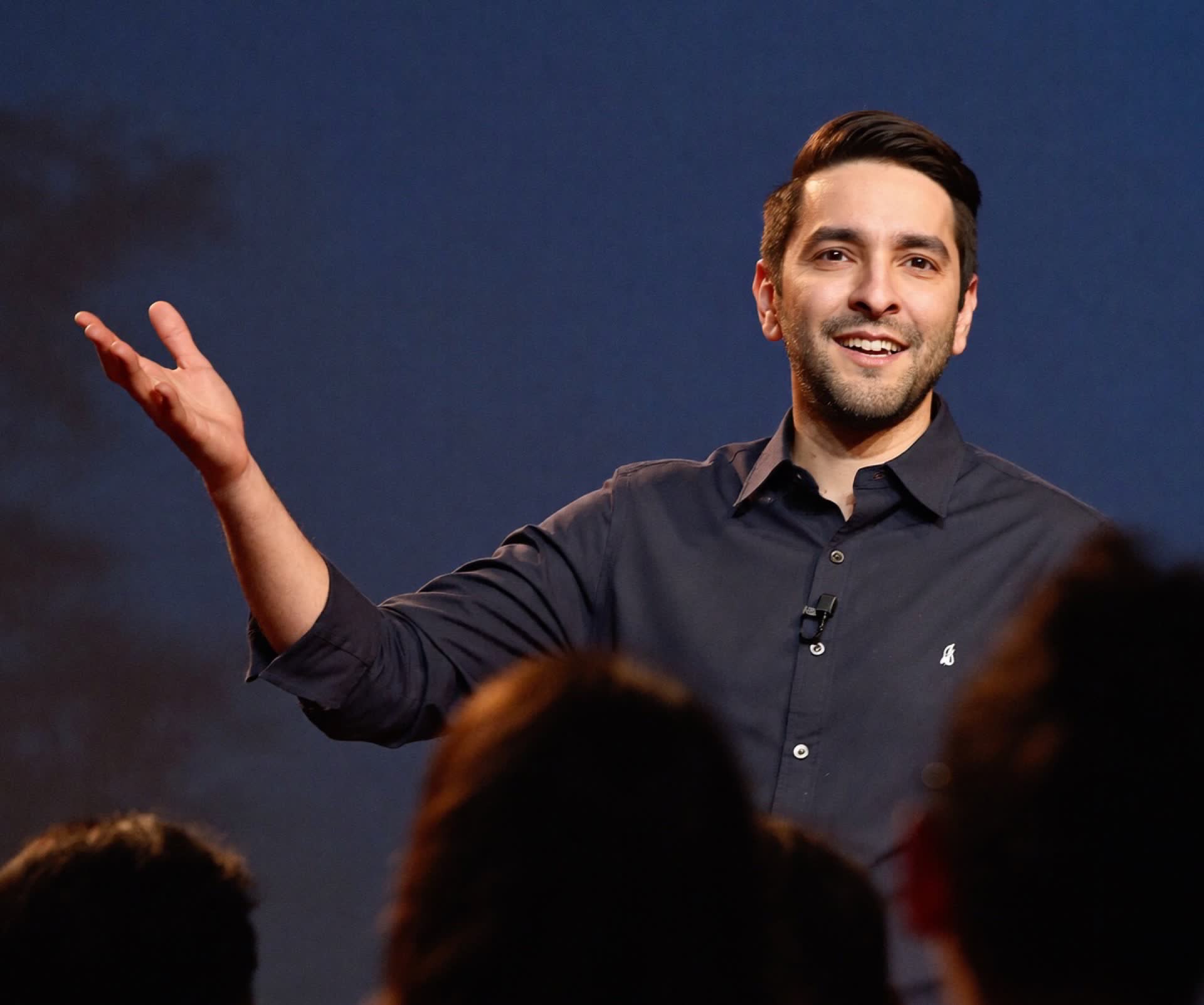
BAT's Chief Operating Officer Johann van der Muilen sits down with Muzamil to explain the company's smokeless transformation, why pulling cigarettes off the shelf would hand the market to illicit traders, and what Pakistan stands to gain from a more regulated, less risky nicotine industry.

with Johann van der Muilen

12 min read

A first for a Pakistani platform

The episode opens with Muzamil framing the conversation as a first for his channel — the first time a Pakistani platform is hosting a sit-down with the Chief Operating Officer of one of the world’s leading consumer goods companies. BAT has presence in more than 150 countries, over 46,000 employees globally, a market capitalisation north of $80 billion as of February 2025, and revenues last year of over £25 billion. In Pakistan, the local subsidiary Pakistan Tobacco Company has invested over $40 million since 2020 to build a modern oral nicotine pouches factory in Jhelum, paid more than 600 billion rupees in taxes in just the last three years, and exported over $150 million worth of cigarettes and nicotine pouches to markets like Japan, Peru and France.

Johann van der Muilen, who introduces himself simply as “fine, thank you” when Muzamil asks how he is doing, has been with the company for more than thirty years. He started as a trainee. He is now COO and a board member. The arithmetic of his own career is the cleanest opening illustration of the company he is about to describe.

The transformation, in Johann’s own words

Muzamil asks Johann to scale-set the business. The answer is direct. “We have a turnover of £27 billion. We make close to £30 billion of profit. So it’s not a small company.” But the number Johann is more interested in is a date: 2035. By then, the company has publicly committed to having half of its business no longer come from selling cigarettes.

The motivation is something Johann is careful to state plainly. For most of his thirty years, the company did not have a satisfying answer to the question of what its products did to the people who used them. “In the last ten years, through innovation, through technological breakthroughs, and based on science, we have now found alternatives for consumers,” he says. “We can offer them alternatives which are much less risky and have a massive health benefit.” The framing he returns to repeatedly is one he attributes to the company’s mission: a “smokeless world.” Today, roughly half of the company’s consumers globally use products that are not combustible cigarettes. The target is to double that base in the next five years.

Why not just stop selling cigarettes

This is the question Muzamil presses hardest, and he frames it the way most viewers would. If the alternatives are real, why keep the cigarettes on shelf at all? Why not force the switch?

Johann’s answer is the longest single passage of the conversation, and it is built around two reasons. The first is illicit trade. “The moment that we leave the space, it’s not that the cigarette consumption will disappear,” he says. He uses South Africa during COVID as the case study. The government banned cigarette sales for six months. The market did not shrink — it flipped overnight to illicit. When the ban was lifted, the legal market reopened. But two to three years later, “still 75% of that market is illicit.” Illicit products carry no quality control, no regulation, no idea of what is actually inside them. Leaving the space, in his framing, is the opposite of harm reduction.

The second reason is economic and frankly stated. The revenues from combustible cigarettes are what fund the transformation. “We talk about billions of pounds just to make consumers aware that there are alternatives, how we build a brand, how we help them to switch.” Switching a smoker, he reminds Muzamil, is not only a product change. “You have to give up a ritual of smoking. So it’s almost like handholding the consumer through their journey.” Both reasons hold simultaneously, and neither is easily answered by a binary stop-or-don’t choice.

What “smokeless” actually means at the molecule level

Before moving on, Johann walks Muzamil through the technical case for harm reduction. The argument is not about nicotine, which he is careful to separate from the harm question. Nicotine is addictive but not carcinogenic — he notes that the FDA in the United States, Public Health England and France’s Cancer Institute have all said as much. The harm in smoking comes from the combustion of organic material at around 800 degrees, which releases the chemical compounds that cause cancer and disease.

BAT’s three less-risky platforms are designed to deliver nicotine without that combustion. Tobacco-heated products warm the leaf to around 300 degrees rather than burning it. Vaping has no tobacco at all — propylene glycol, glycerol, food-grade flavours and pharma-grade nicotine, inhaled but without burning. The third platform, modern oral pouches, removes inhalation entirely. The pouch goes against the mucosal membrane, delivers the nicotine to the brain, and skips the lungs altogether. “You still get the kick, but you don’t get the harm effects anymore.”

He notes that this work cannot be done by industry alone. Governments and the WHO, he argues, have a responsibility to tell smokers who cannot stop that there are alternatives. The current public-health posture, in his telling, often makes that harder than it should be.

The Swedish blueprint

When Muzamil asks for an example of a country that has regulated this well, Johann answers without hesitation: Sweden. Twenty years ago, Swedish smoking incidence was 20–25%. Today, it is 5–6%. But total nicotine incidence is still above 20%. That gap is where the harm reduction story lives — smokers did not quit nicotine, they switched to vaping, modern oral pouches, and snus (which is similar to a modern oral pouch but still contains tobacco; Velo, Johann notes, goes a step further and removes tobacco entirely).

The outcome he points to is the one that should matter most to a policymaker. Lung-cancer mortality in Sweden is less than half the rest-of-Europe average. “This is the most powerful evidence we can show in terms of how tobacco harm reduction can be beneficial for society, can be beneficial for the consumers.” He adds a request to regulators and to the public discourse generally — base the debate on scientific evidence rather than scaremongering, and let the data drive the rules.

Velo in Pakistan and what regulation could look like

Velo, BAT’s modern oral pouch brand, has been in Pakistan roughly three to four years and now has close to half a million consumers locally. Johann calls it a fantastic development and is clear about why pouches in particular suit emerging markets: there is no device to manufacture, no battery, no technology stack. The cost of switching from a cigarette to a pouch is low for both the company and the consumer, and the nicotine satisfaction profile is comparable.

What he wants from Pakistan’s regulators is a framework rather than a prohibition. Specifically: nicotine ceilings on pouches, agreed product and brand standards, and adult-only flavour profiles — tobacco, menthol, mint, fruit. Not, he is firm, bubblegum or Coca-Cola flavours, which he attributes to illegal imports targeting underage users. On vaping, where illegal Chinese product is already circulating in Pakistan, his ask is the same — clear rules on what is allowed in and what is not, plus excise rates set to reflect risk. “As vaping is much less risky than smoking, we would advocate to have a much lower excise rate than on cigarettes.” Done well, he estimates harm reduction policy in Pakistan could save more than a million lives over the next decade.

The 2023 excise shock and the illicit market

The hardest part of the conversation, and the one most consequential for Pakistan, is the discussion of excise. Johann lays out the arithmetic without softening it. BAT, through PTC, holds roughly 40% of the total Pakistani cigarette market — legal and illegal combined — but pays 85% of the cigarette industry’s tax. The Pakistani government currently collects around a billion dollars of cigarette tax a year. If the playing field were level — if the illicit half of the market paid what the legal half pays — that number could double.

The 2023 excise increase, which doubled the tax overnight, is in Johann’s reading the proximate cause of the current imbalance. “If the consumer is struggling, it’s not that he wants to buy an illegal product, but he can just not afford to basically pay for the legal product.” Gradual increases, he argues, keep the consumer inside the legitimate market. Shocks push them out, and once consumption habits move, they do not move back easily.

He calls the company “a very good and efficient tax collector” working for a fee of 15% — a wry phrasing of how he sees the relationship between excise-paying multinationals and the state. The example he offers for what can be done elsewhere is Uzbekistan, which prioritised enforcement against illicit trade and brought the problem back under control. The other tools he describes — tax officers stationed inside factories for full reconciliation, serious port and border controls, political will sustained over years — are not novel. They are just rarely applied at full strength.

PTC as a global talent factory

Muzamil shifts the conversation to people, and asks how a company with 46,000 employees globally manages to retain Pakistani staff for ten and fifteen-year stretches in a market where two-to-three-year tenures have become the default. Johann’s answer starts with a number: 85% of senior promotions inside the company come from within. “You do not join our company for a job. You join our company for a career.”

The proof point he keeps returning to is his own management board. Two members — Zafar Khan, the ops director, and Javed Iqbal, the chief information officer — came up through PTC. Johann first met them in 2018 when Zafar was running operations for the Asia region and Javed was GM of Pakistan, and he sponsored both into the global management board. Today, 40% of his direct team is Pakistani. He notes that Zafar and Javed are from Multan and Peshawar respectively — not from Karachi, Lahore or Islamabad — which he treats as evidence that the talent pipeline reaches beyond the obvious cities. 15,000 young Pakistanis apply to PTC every year.

He also flags the diversity inside the company, particularly the number of women building senior careers in PTC, as something he is personally proud of. The integrity floor is non-negotiable in his telling: selling to minors is the example he uses, and the consequence for crossing that line, he says, is dismissal the next morning.

Made in Pakistan, exported to the world

The export story is one Muzamil deliberately lingers on, because, as he tells Johann, it is hard for a Pakistani viewer to hear a multinational say it is using the country as an export base. Lack of exports has been a chronic structural problem for the economy. BAT’s posture is the opposite of the recent multinational drift out of Pakistan.

PTC employs roughly 1,400 people directly across two factories in Akora and Jhelum, the Lahore shared services centre and the Islamabad head office, with another 3,500 indirect and as many as a million families touched through the distribution chain. The Lahore Global Business Services hub added more than 400 jobs in the last two years and generates over $20 million a year in services exports — IT and global functions delivered out of Pakistan into the wider group. The Jhelum factory, which Johann describes as immediately carbon neutral with solar panels and a biomass boiler, produces Velo for export to Japan, Europe, the Middle East and Latin America alongside cigarettes shipped to Japan, Peru, France and elsewhere. Total hard-currency inflow from services exports and product exports together runs into the tens of millions of dollars a year.

The company has localised inputs aggressively — contracts with more than 10,000 farmers for tobacco leaf, locally sourced wrapping materials — both to insulate against currency devaluation and to create local employment. The exports then provide a natural hedge for the raw materials that still have to be imported.

Sustainability is not separate from the mission

When the conversation turns to climate and sustainability, Johann reframes the question slightly. The single largest sustainability contribution BAT can make, he argues, is achieving its smokeless mission — the health impact on consumers dwarfs the environmental footprint of the operation. But the environmental commitments are real and quantified. Global emissions are to be halved by 2030, with carbon neutrality by 2050. The Jhelum factory will hit carbon neutrality this year, on the back of what Johann describes as the largest solar installation among BAT’s factories globally, plus the biomass boiler and aggressive water recycling.

In Pakistan, PTC plants more than 2.5 million trees a year. On the farming side, the company is working on reducing pesticide use, helping farmers diversify crops, and — using drone surveillance — enforcing a zero-child-labour policy on its supplier farms. “Children have to be in school. They have to learn. They have to study for a better future for themselves,” he says. The framing is consistent with how he discusses the rest of the business. The metrics are real. The motivation is also commercial. He does not pretend otherwise.

The next eighty years

Muzamil closes by asking for the five-to-ten-year vision for PTC. Johann’s answer reaches further than that. PTC has been in Pakistan since 1947. He wants the next chapter to be another eighty years.

What he wants from the relationship with the Pakistani government is dialogue — regulation on vaping and modern oral built on scientific evidence, an enforcement regime against illicit trade, excise that is gradual rather than shock-driven, and product standards that keep responsible companies inside the rules and bad actors outside them. The brand ambition is for current consumers of Capstan and Pall Mall to migrate to Velo as the company’s next big brand in the country. The talent ambition is for Pakistan to continue feeding the global group with leaders. “Long may it continue,” he says, “to the benefit of Pakistan — for the country, for the people, for our consumers, and for BAT-PTC.”

By the end of the conversation, the picture Johann has drawn is not the one most Pakistanis would expect from a tobacco multinational. A company funding its own pivot away from its core product. A subsidiary deepening its commitment to a market most peers were leaving. A tax-and-export story that argues, with numbers, that the binding constraint on Pakistan’s revenue from this category is not the legal industry — it is the illicit one, and the policy shocks that keep feeding it.

Full transcript
Muzamil

सामना ख़बदीना उज़राज channel पर वापस आने का बहुत बहुत शुक्रिया. आज की जो conversation है वह ना सिर्फ़ आपके लिए बल्कि मेरे लिए भी बहुत ही ज़्यादा ख़ास है क्योंकि यह पहला मौक़ा है एक पाकिस्तानी platform के ऊपर दुनिया की एक leading consumer goods company के उर्दू में conversation क्यों नहीं करते? तो इस conversation को मैं कर ही नहीं सकता था. But I hope कि आप इसको enjoy ज़रूर करेंगे. Today, we'll be speaking to the chief operating officer and management board member of BAT, a multinational which has evolved into one of the world's leading consumer good companies with presence in over 150 countries and more than 46,000 employees globally. The company has recently been undergoing a massive transformation as it looks towards the future with their vision of creating a better tomorrow. At the heart of this expansion is Pakistan where since 2020 they have invested over $40,000,000 to set up a modern oral nicotine pouches factory in जेलम. BAT's local subsidiary, the Pakistan Tobacco Company, is one of the leading employers in the country and has paid over 600,000,000,000 rupees in taxes in just the last three years alone. Alongside this, they have also exported over a $150,000,000 worth of cigarettes and nicotine pouches to countries like Japan, Peru, France, and many others. As of February 2025, BAT's global market cap is over $80,000,000,000 with revenues of over £25,000,000,000 last year alone. To help the global operations transformation and growth, they have set up a global business solutions hub in Lahore, hiring over 500 people working in global roles, generating more than $20,000,000 in services exports since they've launched. I'm excited to have Johann van der Muilen join us today for a conversation to discuss BAT, the future of the company, and their operations in Pakistan. Johann, how are you? I'm fine. Thank you. Just as a sort of overview, just as a starter, can you give me context of what the scale of BAT is for those of the viewers who don't know and overall your experience with BTC in Pakistan?

Guest

Yeah. So I think BAT has a a long history, more than hundred years of history. And I think it is a fantastic company where I started my career as a trainee more than thirty years ago and I could work myself up to my current position as Chief Operating Officer in the company. We have a turnover of £27,000,000,000 We make close to £30,000,000,000 of profit. So, it's not small company. We are very proud in terms of our history. But more importantly, I think we also made that decision to transform our business. And I think which makes it very exciting after thirty years wherein the beginning of my career we had that problem that we were confronted with the health impact that our products had on society and we didn't have an answer for that. And I think in the last ten years through innovation, through technological breakthroughs, and based on science, we have now found alternatives for consumers. We can offer them alternatives which are much less risky and have a massive health benefit for these consumers. That makes it very exciting. That's our mission. That's what we want to achieve now. We have said by 2035 we want to have half of our business no longer coming from selling cigarettes. We want to have by February consumers globally who use products which are no longer cigarettes or combustible products. Today we have more or less half of them. But so we want to double in the next five years and I think these are fantastic ambitions that we have declared, we have announced. And that is what I want to be part of, I want to drive. And I think that's our mission: to create a better tomorrow by creating a smokeless world and moving consumers who cannot stop smoking into these, less risky alternatives.

Muzamil

Makes sense. What about PTC? Has it always been, with BAT?

Guest

Yeah, so we have a long standing, presence in I think we started in 1947. So I think it's we we are there for the long term. We're very happy with with what we what we are achieving in Pakistan. I think we are the leading company, we're one of the most respected companies in Pakistan and we're there for the long term. And we always say when we are in a country it's in tough times, it's in good times and and that's how we we see Pakistan. And Pakistan is an integral part of that transformation journey as well. And I think something what you can really be proud of is is the talent that we get out of Pakistan over the years. And I'm very proud and very happy today in our management board. We have two people with Safar Khan, our ops director, Javed Ikbal, our chief information officer, who have have grown up in Pakistan and had a fantastic career within the company. I hope that they are inspiring examples for for many young people who join us today, tomorrow in Pakistan.

Muzamil

Makes sense. Now, you started your career thirty years ago in the same company. This is a company now with almost 46,000 employees worldwide. Yes. You are Chief Operating Officer. My understanding is this role was created in 2023 very fresh before that you were chief transformation officer. Yes. Now this company is going through a lot of transformation itself, and you mentioned some of that early on as well. Tell me about your experience. First of all, how do you how do you feel growing from, a, like, an internee sort of to all the way to chief operating officer of this huge multinational enterprise, $75,000,000,000 net worth, £27,000,000,000 revenue. What's that feeling like? And how has your experience as COO been, with BAT?

Guest

I I I think it's as I said before, it's a great company. And I mean this, because we have, in general, we promote 85% from within. So, you do not join our company for a job. You join our company for a career. And that is is something which I always found very inspirational. And I think also with young people we take risks, we are prepared to take risks. And I always say to my people, the worst thing that can happen in your career is that you can never demonstrate how good you are. And we are prepared to take risks to our people, calculated risks, but to give people the opportunity to shine and to demonstrate how good they are. And I think that sets us aside from many other multinational companies. And I I just give you one example. In Pakistan, every year we get 15,000 people, young people, university who want to join us for a career in PTC or in BET. And I think that's really the power of our company. And we are a very young company with young people and we give really chances to people to grow, to make a career and to have a fantastic career. And I think for myself, speaking for myself as well, I started as a trainee. And if I can do it, everybody can do it. So I I think that's how you have to see it and that is really unique. There are not many companies in the world who who offer this to people who join their companies. And, of course, because of the transformation, sometimes we have to acquire new capabilities from the outside, especially in a transformation journey. If you look now at two of our three platforms which have less riskier products, whether it's tobacco heated products or vaping products. There we are dependent on basically devices, which are technology devices, battery devices with technology. So if you have produced for a hundred years cigarettes, you're not very, very much skilled to make these devices. So then, of course, you have to acquire these capabilities from outside. But that's something which I think is also a testimonial to the success of our company, that we do that and that we then go to the market and acquire the capabilities that are needed for the future.

Muzamil

Makes sense. You've mentioned multiple times obviously less riskier products, smoke free future. And when I went to your website, it very clearly states, you know, working towards a smoke free future, which seems like an oxymoron. And, you know, this is an industry that has been historically very controversial. There's been a lot of debates on this as well. But you're not just claiming this. You're also going through this transformation. Run me through what does BET mean when they're talking about a smoke free future, you know, all the while selling a lot of cigarette products still today. Yeah. So

Guest

we are very clear about this. So we want to create a smokeless world. We want to... Look, if you don't want to run the risk, don't start to smoke. If you smoke and you can stop, stop. But if you don't want to stop, we advise you to switch to better products. Better products means less risky. Let me explain what we mean by this. We we in our products we have nicotine, né? Nicotine is addictive. But nicotine is not a problem. Nicotine is not carcinogenic, contrary to, for instance, alcohol. Alcohol is carcinogenic. So if you can - this is not only us saying, this is also FDA in The US or Public Health England or Cancer Institute in France - if you could deliver nicotine without having to burn tobacco, most of the problems disappear. It's the burning of basically organic material that causes basically all the chemical compounds, components, that cause cancer and cause health issues. So, today with these three platforms, with tobacco heated products, you don't burn the tobacco anymore. Burning starts around 800 degrees. We basically heat the tobacco around 300 degrees. So these carcinogenic components don't get released anymore. In vaping, you don't even have tobacco anymore. So you have propylene glycol glycerol. Then you have food flavours, so flavours which are used in the food industry. And basically pharma grade nicotine, still inhaled, but again no combustion. And I think the most advanced product in terms of harm reduction is, of course, our modern oral products - very, very popular also in Pakistan with velo - where no tobacco. So basically, you start with an organic material, where you add again farmar grade nicotine and flavours which are used in the food industry. No inhalation anymore, so it goes through the mucosal membrane to the brain basically. So you still get the kick, but you don't get the harm effects anymore of of the product. And that these are technological breakthroughs that that we have developed and which help now us to say, I think we can achieve a smokeless world. Now, we cannot achieve this on our own. It's also very important that we get the help from the governments to tell the consumers, to tell the smokers, look, if you cannot stop smoking, you better switch to these alternatives. And that's, I think, a joint opportunity between governments and us as an industry, but I think also a responsibility because we can save lives and we can create definitely a better tomorrow. But we need to do that together and that is also starting from the WHO, starting from governments to say if you cannot stop smoking, switch to a better alternative.

Muzamil

All right. If you are building these alternatives, why don't you just stop, you know, selling cigarettes altogether? I mean, that's the sure shot way to get people to the alternative product considering they are looking for nicotine. And so, if there aren't any cigarettes, it's logical for them to go to, let's say,

Guest

Velo or some of your other, let's say, vaping products. I I think it's a very good question. And and there are two reasons. It's, because it's not as simple as to say stop, selling, cigarettes. The first thing is that we are globally confronted with a lot of illicit, illegal cigarettes. It's also a a big issue in Pakistan. So, the moment that we leave the space, it's not that the cigarette consumption will disappear. I give you one example. In the worst days of COVID in South Africa, the government decides that you cannot sell any cigarettes anymore. South Africa was a very, very interesting market for us, also with a long history. And basically, the whole market flipped overnight into illicit. Now, this lasted for six months. After six months, the ban was lifted and we could reenter the market. But still today, when we are what, two, three years post that COVID time, still 75% of that market is illicit. So, and with illicit you don't have, because we are a responsible company and so everything that we market is actually goes through internal controls. But but we will always respect the laws, the regulations, product standards and the whole thing. With illicit products, don't have that guarantee. You don't know what's in the products. They don't respect any regulation. So basically from something which is at this moment very well regulated in every country, you get into something which is out of control. And I think then we are much further from home in terms of that ambition to create a smokeless world than if if we gradually, together with governments, transform from smoking into into non combustion actually. There's a second reason, which is an economic reason for us. Of course, we we use the the revenues that we get from combustion, from selling cigarettes, of course, to fund the transformation. And and just to put that in perspective, this is we talk about billions. So if you look at how much we spend to build these new categories, we we we talk about billions of pounds just to make consumers aware that there are alternatives, how we build a brand, how we help them to switch. Because also you have to give up a ritual of smoking. So it's almost like handholding the consumer through their journey from stepping away from from cigarettes and and the habit of smoking into these, into these, alternatives.

Muzamil

Right. When we look at Pakistan particularly or generally developing countries like Pakistan, but Pakistan in particular, how do you see BAT introducing... I mean, we know that you've introduced Velo, but there haven't been other products introduced How since do you see Pakistan evolving in this space of alternate tobacco products? Yes, I think Pakistan in

Guest

the emerging economies and developing world is a very good example in terms of openness to these new categories. I think what we advocate where we still can step up is in terms of product regulation, yeah? Because I think we always need very good product regulation, that we keep the situation, I think, regulated, that there is a level playing field. Because I see, for instance, in terms of of vaping, there's a lot of illegal products in in in Pakistan as we speak. Coming out of China, we don't know what's in. So I think if we have a good regulatory framework in in what's allowed and what's not allowed, I think we can we can bring vaping to Pakistan successfully. Second thing is also that we advocate that the excise levels would reflect the risk profile of the product. As vaping is much less risky than smoking, we would advocate to have a much lower excise rate than on cigarettes. Think we should also have a lower excise rate in Pakistan on vaping going forward to reflect that risk profile. I think it's the same with modern oral. So there is a lower excise rate, which is good. But we still advocate there also to have product regulation, like that there is a nicotine ceiling, that we also agree on some product standards and I think also some brand standards. Because let us be very clear, We are very clear as a company that we don't want users - underage users - so minors, children or whatever - to consume our products. Definitely not cigarettes, but also not nicotine products. So I think it's also irresponsible, and we see that from a lot of these products which come illegally into the market, especially in vaping with bubblegum flavors, Coca-Cola flavors. I don't think that this is the right thing, right? As as a company, we say let's use adult flavors, that is tobacco, menthol, minty flavors, fruity flavors. That's it. Adult flavors, not not bubble gum or or or things like that. And the same with, actually, some of these devices that you clearly see, that they are not targeted to adult consumers. So I think that's something very important, that we keep that under control and that we leave that in the hands of responsible companies. But the good thing is that Pakistan as as a country has opened up for that vision of of basically tobacco harm reduction, as we call it. And I think if we could if we could frame that well, I'm sure we can we can save more than a million lives in the next ten years in Pakistan of people who today would continue to smoke. And if we put the proper regulation and enforcement in place, that we could let them switch or help them to switch to these lower risk products.

Muzamil

Makes sense. I mean, this is a fairly new category. Right? And so has have other countries around the world regulated it similar in in similar ways? Like, what would be potentially one example of a very progressive

Guest

regulatory environment that you sort of experience when it comes to the these some of these newer categories? I I think Sweden is is for me the the blueprint in terms of of of regulation. Let me let me explain a bit. If we go back twenty years, the smoking incidents, saddle smoking incidents in Sweden was was twenty-twenty five percent. If we fast forward twenty-twenty years, we see that the smoking incidence is basically between five-six percent. But the nicotine incidence is still above twenty percent. So there you have seen a massive shift from smokers into these new categories, be it vaping, but more importantly, modern oral and snooze. Snooze is similar to modern oral, it still contains Snooze? Snooze is basically the same pouch as what you have in velo, but it still contains tobacco. Right. So we have gone even a step further to take completely tobacco out. And more importantly, if we look then at, for instance, the diseases which are traditionally related to smoking - lung cancer, for instance - then we see in Sweden that the mortality rates linked to lung cancers, for instance, are less than half of what you see in the rest of Europe. So I think this is the most powerful evidence that we can show in terms of how tobacco harm reduction can be beneficial for society, can be beneficial for the consumers. And I think that very powerful. The other thing which I think is important, that we have more and more scientific evidence - because there's a lot of scaremongering in the public opinion around these new category products that - really base our debate and also our regulation on scientific evidence and scientific proofs that these products can help you to save lives and to reduce the risk which is traditionally related with, with smoking. All right. And how has Velo performed? I mean, it's,

Muzamil

it's been how many years in Pakistan? Maybe four or three years, I think. So how has that experience been? No, I mean, it's it's a fantastic

Guest

development. I think we have today almost half a million consumers, which which is great. I think this is this is probably, as I said, it's it has an enormous potential because it doesn't contain tobacco, it's not inhaled anymore. I I think that this is really a game changer for for the consumer. Doing extremely well and we are fully supporting it, fully investing in it. We hope that we can get also the proper regulation in place because, as I said, we want to make sure, like, we are advocating for nicotine sealings, we are advocating for flavours which are adult flavours. Those type of things we still think that we can put in place to give it that sustainability. But the beauty is also you don't need to invest in devices. So it also has a low barrier to entry from a cost point of view for a countries

Muzamil

like Pakistan. I think one of the biggest problems is the barrier to entry for these newer products, particularly for, let's say, a vape or something like It's it is the cost of production is higher. Right? With with cigarettes, it's just tobacco rolled into a very simple product. And so how do you see a lot of the developing world coming into these sort of alternate products considering the fact that it's always going to cost more than just rolling a cigarette?

Guest

Yeah. I I think, modern oral or filo is there, I think, the best answer because you don't have the problem of the devices, the batteries, the technology, the whole thing. So economically, I think that works very, very nicely for us as as a company, but I think also for a consumer because the financial outlay from a purchasing power point of view, is very easy to switch from basically cigarettes to modern oral. And you will see that the satisfaction you get from a nicotine point of view is very comparable to what you get from cigarettes without all the risks, that you have from cigarettes. Right. I'm going to change the conversation a little bit. Just want to understand the sort of business side of,

Muzamil

BAT and PTC in particular. Now, BTC historically has been this one multinational that I know personally. All of my friends when they were graduating, this this was their first, like, primary place to be in. Right? And, also, what you mentioned early on in the start, I've seen a lot of people in in BTC and then in BAT who've worked there for five years, ten years, fifteen years. And this is fairly unique now because it's a very common thing to go to a company, work there for two, three years, and then sort of move on. Tell me, first of all, how were you able to build this sort of corporate environment where people have are are willing even to in today's day and age to spend their entire life within the same organization? Like, what compels them Yeah. To be that sticky to one place? Yeah.

Guest

That's a very, very good question, and I think it relates back to what we stand for as a company. I think very clearly articulated what our strategy, our vision is, I think, which is very compelling now also. You want to be part of that story of creating a smokeless world. You want to be part of a transformation story, especially if you look at the size of the transformation that today already almost close to one fifth of our business comes out of these new products. We're talking about if if you look, it's almost $4,000,000,000 in terms of of turnover, and and this is created since 2018, so the last five, six years. This is huge numbers. So it's a it's a real big transformation that is happening, which I think is a once in a lifetime experience. I think we clearly articulate what we stand for with what we we we talk about as as our values. Passion to win, we like to win, we are very competitive. But also we we we basically we also foster diversity and we want to have diversity of thinking. We want to have gender diversity. We want to have these type of things because if everybody thinks the same, only need one person. But if we have the the difference of thinking and the difference of cultural knowledge and things like that, you get a much richer debate. And last but not least, I I think it's also the integrity, which which we have, which we stand for, which we want our people to to also stand for. I give you the example. So if we say that we don't want to sell our products to miners, that is clearly a red line. So if we find somebody who would cross that line, he or she will be out the next morning. So I think that is what we stand for. And at the same time, we are prepared to take risks with our people in terms of careers, in terms of promotions. And not only careers, as I said, in in in Pakistan, but it's a global career if you want. If you are mobile, you will be today in in in Pakistan, next year in Canada and and the year after in Brussels or in London or or whatever. So I think it's very exciting, it's very compelling

Muzamil

and you can have a fantastic career in in the company. Right. You have two board members right now who are part who are पाकिस्तानी. But interestingly, they're from मुल्तान and पिशावर. Right? So they're in Pakistan's context, when you're looking at Karachi, Lahore and Islambha, these are peripheral cities. Yeah. Not where you'd expect some of the top talent to be coming out. But clearly, talent is there in Pakistan. Yeah. And you guys have been able to nurture that. Yes. Tell me how PTC has aided BAT's global goals. I know for a fact, like you mentioned, that the talent is mobile enough. They're not just exclusive to Pakistan. They're going all over the world, and they're sharing that experience in different regions. In that context, how has PTC enabled, you know, quality talent for the BAD sort of global footprint?

Guest

Yeah. I I think it starts with, as you also rightly said, with the name of PTC in Pakistan. I think it's iconic. I think it's aspirational. So I think people from all over the country want to join our company. As I said before, 15,000 young people every year who want to join us. It's it's phenomenal. It's fantastic. But that shows the power of the brand, of the company. I think that this is this is one aspect. And then secondly, it is a big organisation, so it's part also part of a big area with the with the Middle East. So you you have that. First, you can grow in Pakistan, you can grow in the area, and then you can grow in the world. And I'm very proud that when I first met Javed and and Safhar, Zafar was ops director in for the whole Asia region and Javed was was the GM of Pakistan. This was 2018. And I was impressed with how they were leading their functions, their results, and the whole day, I was very keen to get them and to support them, to get them to the management board. And today they're still in my team. I jokingly said, as COO, I'm responsible for all the commercial performances in the markets. But I'm also responsible for operations and innovation and R and D and the whole digital GBS, shared services, and IDT function, which is led by Javed, and Safari is leading the operations teams. And then I have three regional directors. So 40% of my team is from Pakistan. So that's fantastic. And I hope that that's very inspirational and aspirational to all the talent in Pakistan that is joining us today and that they see them as role models, for for the future. I think the other thing which is also I'm very proud of, because I was in in Pakistan a couple of years ago, how impressed I am in terms of even the diversity within the company. Also, many females. It's not only males, I think we have also a lot of very talented females who are making fantastic careers in PTC and in, the area and the region.

Muzamil

Mhmm. You mentioned global, business shared services.

Guest

Yes. Tell me a little bit about that. Where is this based? This is my understanding is this is in Lahore? Yes, in Lahore. Yes. So in in Pakistan, I think we we employ 1,400 people directly. I think indirectly there's another 3,500. If if you look security guards because we don't employ them, it's outsourced. So we talk probably in total about 5,000 people. But if you look then at the point of sales where we sell and the whole thing, it's probably up to a million families which are indirectly or directly related or benefiting from our presence in in in Pakistan. So back to our 1,400, we have two factories, Akora and and Jaelum, and and then we have shared services in Lahore and we have which is something we set up in the last two years. So we added more than 400 jobs. And I think these are these are very well qualified people who are running our shared services out of Lahore. And then we have Islamabad where our our head office is. Yeah. And so shared services is is focused within for work within Pakistan? Or is it No. No. That's that's the whole region and and and globally, actually. I think which is also interesting if you look at basically how much hard currency inflow this generates for Pakistan. Partially, I think it's like 20,000,000, more than 20 to 25,000,000 which is generated through shared services. And you can double that if you look at the exports that we do of cigarettes or Vilo out of Pakistan into the rest of the world. So I think this is also very beneficial to the economy in terms of hard currency inflow that we generate for for the country. Fascinating. Because my understanding is that the shared services is essentially IT, like, not just IT, but other areas

Muzamil

of human capital export working for the global. Yes. Yes. Interesting. In terms of the products that you're selling in Pakistan, both tobacco and the, you know, the oral products. Yes. Are they made in Pakistan? Yes. Yes. And and it's not only

Guest

made, but but, for instance, also if you look at filo, we also export into the wider world, into Japan, into Europe. We're also looking into The Middle East. So, yeah, it's into Latin America. So it's it's really made in Pakistan is is is a big thing for us. And, yeah, it's it's coming out of a a brand new factory that we set up there. Immediately carbon neutral with solar panels, everything. So also from a sustainability point of view, I think we are a big a big player also in Pakistan. You know, our global targets, that we want to reduce our emissions by by 50% in the next five years. We want to be carbon neutral, by 2050. But for instance, in our Jaelum factory, we will be this year already, carbon neutral. So, that is our commitment. We plant in Pakistan alone more than 2,500,000 trees every year. We also invested in a biomass boiler. So, all this to give our contribution to the environment, to sustainability. So, it's not only production and selling, but it's also responsibility from an ESG point of view and from a sustainability point of view. Fascinating.

Muzamil

And you mentioned that the Velo product is now being exported to Japan and other markets as Yes. Yes. Has that has that entire sort of supply chain been successful? The reason why I'm asking is it's difficult for a पाकिस्तानी to hear that, you know, a global multinational is successfully exporting something out of Pakistan. You know, we've been hit by this lack of exports for so long and that has been a major thorn in the economy as well. So it's fascinating to hear that you actually are not just in Pakistan to sell in Pakistan, but actually using that as a base to globalize the business.

Guest

Yes. And we're we're very comfortable with that and and also very very cognizant about that that we say, I said in the beginning, we're in here for the long term. So I know that Pakistan went through a difficult time. A lot of companies were pulling out or were reducing their footprint. We actually we actually increased our footprint with what we did with Vidho in terms of the investment in a new facility for exports. We're setting up the GBS function out of Lahore, which which added 400 jobs. So we are very committed to Pakistan, to the future. We're very happy and proud. I'm one of the biggest supporters of your country in terms of the talent, in terms of the quality of our products that we make, and we can export them everywhere.

Muzamil

Fascinating. Talking about the the sort of challenges, right, we've we've seen an economic downturn over the last couple of years. And and this is something that Pakistan is a is a tough market because it's not a one off. You know, there's there's a constant cycle of boom and bust and boom and bust. And so if I if you're looking at today, are there any macro challenges that are hampering growth for you,

Guest

for PTC in Pakistan? Yes. I think it's a it's a very good question. I think if you look at our business model, I think we're a very, very good tax collector for the country. We collected over the last three years something like 600,000,000,000 rupee of of of excise and and taxes. And I always say we're a very good and efficient tax collector. We work for a small fee of 15%. If you look at how much tax we collect and how much profit we make, so I think we're a we're a very good civil servant. Let's let's put it that way. And that's where we see that we can do that there is still room for for improvement. What do I mean by this? We had a an excise shock in '23, yeah? And if you if you look at the total market, yeah, at this moment half of it is illicit. I think that the the government, the Palestinian government collects like a billion dollars of of taxes per year. But if we could create a level playing field that everybody would pay taxes, the government can collect $2,000,000,000 of revenues. And I know that they are doing their best and stepping up in that effort to, to collect basically taxes from these, illegal and illicit players. But that's where we still hope that we can make a lot of of of improvement because that's a lot of money that is left on the table that the the the government can use to build schools to have better need, that they can serve the needs of of of the country and of the people. And because if you look, we we have 40% share of the market if you take the total market legal and illegal. But we do 85% of the tax collection of the cigarette industry. That shows how much money there is left on the table. That would be a win win, I think, for society because you don't know what's in these illegal products. That's a win for for the government definitely in terms of excise revenue. And I think it also is is good that there is a level playing field for all the bona fide players who pay the same levels of excise on the products like the government has determined. The second aspect is that we see, this is my experience from all over the world, if we have gradual excise increases, I think you can take the the consumer with you in that journey. Now '23 was a very difficult year because we doubled the excise. So we had an excise shock. And then that basically is for a consumer, is too much. If the consumer is struggling, it's not that he wants to buy an illegal product, but he can just not afford to basically pay for the legal product. And then they go to to the illicit market. So I think it's like you say, how do you avoid these excise shocks which have a lot of unintended consequences? If we would have gradual excise increases, we can keep the consumer in that legitimate business, which is better for the consumer, which is better for the for the country in terms of tax collection. And, also, you don't get that phenomenon that, basically, half of your market goes to to people who do not pay excise or companies who don't pay excise. Right. Is illicit

Muzamil

trade or tax

Guest

non tax paying smuggled product, is that a problem all over the world? It's a problem all over the world. How? The problem is getting bigger and bigger. Right. So that's a massive concern because if you look how much money there is, which if you look at that that part which excise NVET is, if you don't have to pay this, there's an enormous amount of money. So it's very lucrative for non bona fide players to jump into. They don't care about responsibility, they don't care about what they put in the product. So it's all opportunistic, very often even linked to even terrorism in the world to fund terrorism. So this is a major concern and this is also an open question that we have for all governments is to say, make sure that you have the proper enforcement in place so that you avoid that problem of illicit. But it's not only a a problem in Pakistan, It's a problem in in in many parts of the world. But often it gets accelerated when you get these these excise shocks.

Muzamil

Is there any other example that you think, you know, Pakistan can learn from when it comes to managing? Because, I mean, illicit trade has been a problem. And this has been something that's a major part of the conversation at at least I know for for the last decade. But somehow, you know, it's there's a lot of lobbying for it. But somehow, it just doesn't. There's nothing that happens. There's no result. Right? And I understand there's probably a lot of real world scenarios, which is which is what makes it difficult. But are there other examples across the world that we can potentially learn from? You already mentioned sort of sustainable excise But how have other countries tried to, you know, sort of track and and and figure out, you know, or or or to be able to stop these illicit cigarettes from coming in the market? Yeah. I I think it's twofold. On

Guest

one side, it's often produced within the country. There, I think it's it's a good dialogue in terms of because there are good insights who it is and where it is produced. So I think there, in some countries, what we do is basically put tax officers within the company, within the factory, so that everything is registered and that there is reconciliation about what comes in and what goes out. I think that's that's one example. And, of course, the other one is is how do you control your borders, your ports, because that's where it it often comes in. But I think if the political will is there to do something about it, because I think that's also the beauty, because we have seen also in Pakistan when we didn't have these excise shocks. So if we don't have that excise shocks for the next five years, gradually, you will see the consumers coming back to the legal market and the legitimate market. So it is to avoid these type of shocks, then do the right enforcement. I think also invest in that enforcement, and it's good that Pakistan is doing it because the payback is instantaneous. So that would be my advice and there are good examples because we have seen that if if the government invests in that. I'll give you one example. Uzbekistan went through a bad time in terms of illicit, but they prioritized it. They put these things in place what I just, described,

Muzamil

and and they got it back under control. So I think it is it is it is doable. Right. We are an illicit trade. Obviously, there was a lot of inflation last couple of years as well. And, obviously, for a lot of companies, that just completely threw the pricing out the window. Right? And so I'm trying to understand with that sort of economic past that we saw and beyond the just the excise shock. How how did that impact demand? How did that impact overall business? And are you are you seeing now more stability in the economy

Guest

over the last year as we're sort of hearing in in the media as well? Yes. Yes. The answer is yes. What we also do, and I think Pakistan is a is a very good example of that, is that we also localise as much as possible basically our input materials to be less dependent on devaluation, inflation and the whole thing. So I think we're very much at fast on that. We have contracts with more than 10,000 farmers in. So all our leave or a big part of our leave is bought locally. Same with basically the wrapping materials. I think we take that very serious. It also creates a lot of jobs locally. At the same time, we also invest in innovation in terms of of modern machinery output and things like that, so to to stay ahead of of of the game there. So I I think we have that we have that fairly under control in terms of how we cope with these tough tough environments and how we we basically as I said, you we have a long term vision. So we know that economies go up and down in countries and suffer, but but it's a long term game that you have to play and you stay focused on the long term. And and and I think we we have that resilience and we have that history that we can we're not so much worried about economic ups and downs. As long as we don't have that these excise shocks, we can cope with it. Right. And do you think because you said you localized a lot of this, do you think there's a lot of potential now that the with the devaluation,

Muzamil

the pricing would actually be much more lucrative outside of Pakistan than in Pakistan. Right? Do you think that's some of the reasons why the export is potentially now more viable? Yes. So we use the exports also to get the inflow of hard currency

Guest

if we still have because some things we cannot source locally. We still have to import, but that creates then a natural hedge in terms of you have the the inflow of of hard currency, which you can use then for for the importation of raw materials that you cannot source locally. Makes sense.

Muzamil

I want to go back to you mentioned carbon neutrality in your facilities. Climate change is now a major concern, particularly for a country like Pakistan. We saw some devastating floods. And so now it's becoming a very important and serious issue. Tell me about what BAT overall globally is doing and what BTC potentially is doing in Pakistan. And overall, as a company, what's your vision for sustainability, you know, in in today's day and age? Yeah. I think the the the biggest

Guest

impact we have there is is some somewhere somehow a bit beyond traditionally environmental, societal aspect of of sustainability is actually the health impact. The biggest impact we can have on society in terms of sustainability if we achieve or when we achieve our vision to create a smokeless world. I think that is the biggest impact we can have from a sustainability on society. If we look at environmental, as I said, we talk about halving our emissions by 2030. We want to have carbon neutrality by 2050. I'm very proud JLM achieves that this year. What did we do there? That biomass boiler installed. We installed solar panels. I think it's the biggest solar panel factory in terms of solar panels that we have globally. So they will be carbon neutral this year. Water recycling is a very big topic on our agenda, which we have metrics that we recycle more and more of the water, we track and we're doing very well. So that's on the environmental front. The waste, reduce the waste, reduce also basically the waste, the residual waste. So all these metrics we have in place to reduce the impact of our footprint in Pakistan and globally. But I think what we achieved in JLM is almost like a blueprint for the rest of the world. The same with what we do in terms of tree planting, 2,500,000 trees per year. So, this is our contribution to society. If we go then to the farmers, it's the same in terms of how do we reduce the amount of pesticides that we use. Again, in terms of environmental impact where we help them, where we also help them to diversify to to other crops. And also, very important, we want children to go to school. So we also want to have zero child labour. We use their modern technologies like drones to self control, that we make sure that the children are not on the farms working on the fields. So we take this very serious because I think this is very important. Children have to be in school. They have to learn. They have to study for for a better future for themselves. So

Muzamil

this this is high on our agenda. Very high on our agenda. Right. So I'm gonna wrap this up. But I just wanna ask you one last question. As the chief operating officer of the BAT,

Guest

what's BAT's vision for BTC in Pakistan for the next five to ten years? So we're there for the long term. As as I said, we're we're there for almost eighty years. We want to start the next chapter of, eighty years. And in line with our corporate strategy in terms of creating a smokeless world, I hope that we can, together with the government, put proper regulation in place in terms of how to regulate the vaping market, how to regulate the modern oral market, that we can do that in dialogue based on scientific evidence on on what regulation is good to help basically consumers to transform from smoking into these new categories. We have a fantastic brand with with Kapsdan Palmol. So my dream is that these consumers also migrate into the next big brand, which is which will be Velo. So and I think we have that we have a good relationship with the government in terms of our responsibility and how we are basically a serious business partner for the long term in Pakistan. We hope that we can continue that dialogue so that we can create that regulation that helps the consumer to transform as well. That's my wish. And secondly, I think that Pakistan continues to be a talent factory for us as a group. I think we have fantastic talent coming out of Pakistan and long may it continue to the benefit of Pakistan for the country, for the people, for our consumers, and for BETPTC.

Muzamil

It makes sense. Very much. Makes sense, Johan. Thank you so much for coming in and sharing all that insight. Thank you. And for all of you guys, you so much for watching. Hope you have episode personal. Let me know in the comment section below. Do you smoke? If yes, what do you smoke? If you're looking to switch, are you using a smoke free product? कौन सी है? किस तरह की इस्तेमाल कर रहे हैं? I would love to know some insight in the comment section. But nonetheless, this was साहिब मज़मिला संजय दी. You're watching Thought Behind. Thanks. Thank you so much for watching, and I'll see you in the next one.