Thought Behind Things
Kashmir needs strategic international legal action
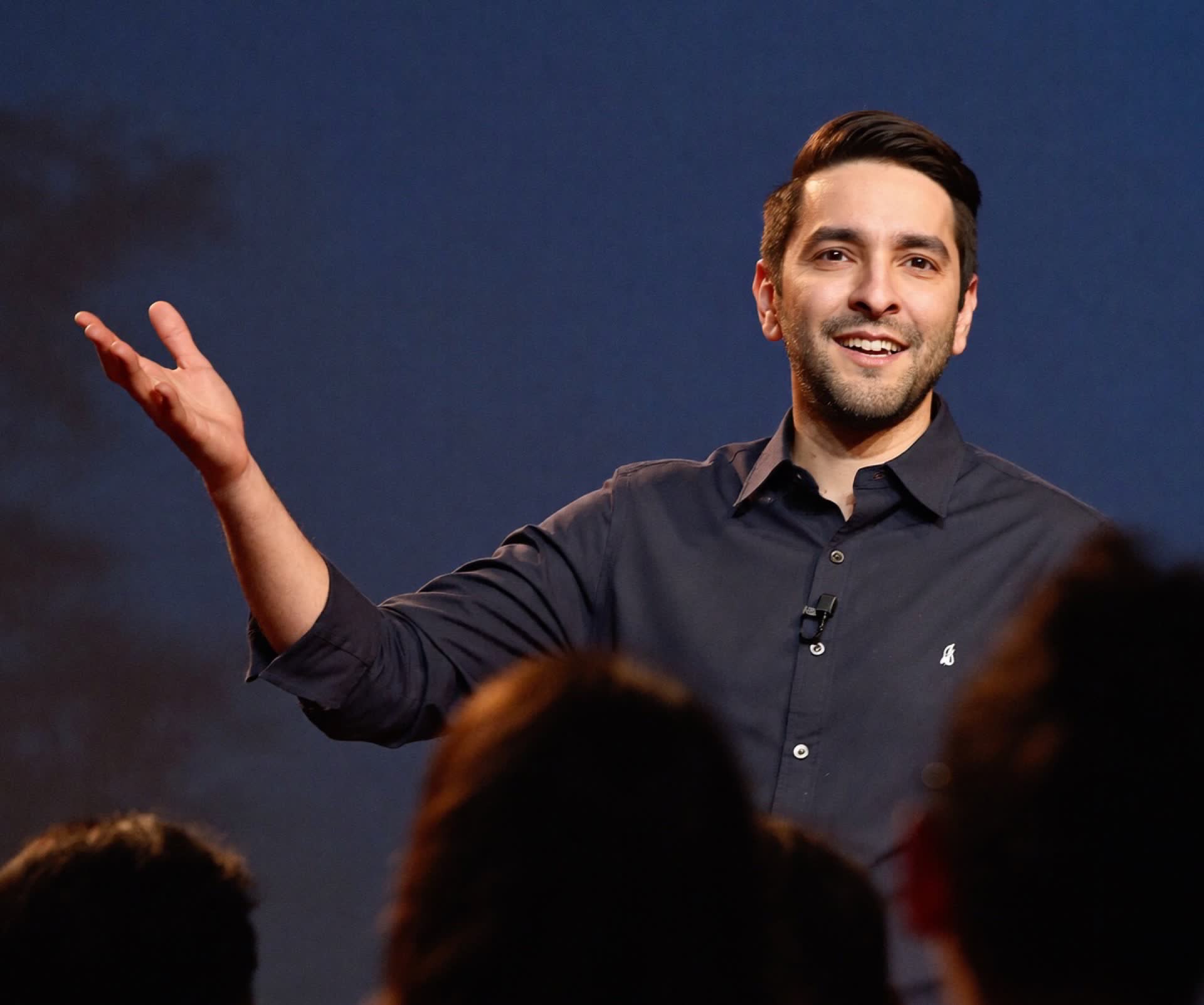
Hassan Aslam, a Harvard-trained international law expert, breaks down how Pakistan can use lawfare and UN strategy to reframe Kashmir as a self-determination question rather than territorial dispute.
Audio-only episode. Listen here:
A Path Through Harvard
Hassan Aslam’s journey into international law began unconventionally. He was not a top student in high school. Working alone after his metric results, he turned his performance around, earning one of the highest positions. His father then presented a choice: pre-engineering or pre-medical, the standard Pakistani path. Aslam chose pre-engineering but soon realized it was not for him. He ended up at Michigan State University, where he discovered a passion for philosophy, law, and humanities that his parents initially questioned.
Despite family reservations, Aslam pursued law with determination. He earned a 4.0 GPA and was accepted to top American universities for his JD, but the cost was prohibitive. He chose to return to Pakistan and studied law there, winning two gold medals. While still in law school, he became the first person from the Muslim world chosen to work directly with the president of the International Criminal Court in The Hague, working on the prosecution of Sudan. That experience crystallized his commitment to international law.
Harvard Law followed on a full scholarship. Aslam recalls the intensity. “Every day, you have, like, four or five hundred pages read,” he says. Yet evenings brought speakers like Jimmy Carter and Bill Clinton. His wife worked while he studied late into the morning, managing coursework and family life simultaneously. After graduation, Aslam chose to return to Pakistan rather than settle in New York, wanting to stay closer to his parents.
The Reko Diq Reckoning
One of Hassan Aslam’s key responsibilities is helping Pakistan navigate international arbitration cases, and Reko Diq stands as a cautionary tale. The case began in 1993 when Pakistan granted a mining concession in Balochistan. Ownership changed hands to the Australian company Tatian Copper Company. Allegations of bribery surfaced, and the Pakistan Supreme Court, under former Chief Justice Iftikhar Muhammad Chaudhry, rendered the concession null and void.
However, nullifying an international agreement carries global legal repercussions. TCC filed at ICID (the World Bank’s International Centre for Settlement of Investment Disputes) and won a verdict of 5.9 billion US dollars. That figure was calculated using established arbitration methodology: loss of profit, loss of opportunity, and reliance interests. When a company invests in a country, it makes assumptions about returns over decades. Pakistan owed compensation.
“They have charged us 100 million dollars so far,” Aslam recounts, referring to the magical circle firms (Clifford Chance, Allen and Overy) that Pakistan hired to defend against the claim. “Sir, not 100 million rupees. And what have we to show for it, sir? Nothing. We have lost all the cases, we have been black faced, and we have gotten nothing in return.”
Recently, Pakistan’s legal team blocked asset seizure in a British Virgin Islands account, claiming a partial victory. But Aslam is clear: the verdict stands. Either way, the money must be returned, likely through a negotiated settlement. The real damage is reputational. If Pakistan does not honor arbitration awards, why would any foreign investor enter the country?
The Kashmir Strategy: Lawfare and Self-Determination
Muzamil asks Hassan about his advisory work on Kashmir. Hassan explains that his area of expertise is lawfare. “Lawfare is the use of law as a weapon of war,” he says. The strategy he proposed to the Prime Minister focuses on reframing Kashmir entirely.
For decades, Pakistan has emphasized territory: Kashmir is ours, it belongs to us. Hassan argues this is a losing frame. Instead, Pakistan should present Kashmir as a question of self-determination for a subjugated people. This shift is crucial. “You talk about Kashmir as a stand-alone right of self-determination of subjugated people,” Aslam explains. The Prime Minister adopted this language change, now speaking about Kashmiri independence.
The mechanism is elegant. In the United Nations General Assembly, only a simple majority is needed: 51 countries out of roughly 200 members. Muzamil double-checks the math. “You need 51,” Hassan confirms. If Pakistan can secure those votes, it can refer the Kashmir question to the International Court of Justice. The ICJ will issue an advisory opinion. While not legally binding, advisory opinions carry enormous diplomatic weight.
Hassan invokes precedent. Three to four years prior, the Chagos Islands case saw the UK lose territory due to an adverse ICJ advisory opinion. “Frame the question smartly,” Hassan advises. Do not claim Kashmir belongs to Pakistan. Instead, pose the question generically: Do subjugated peoples have a right to self-determination? The ICJ will likely acknowledge that right. India’s role in Kashmir, documented by the United Nations Military Observer Group for India and Pakistan for 75 years, is known globally.
Beyond the ICJ, Hassan introduces universal jurisdiction. War crimes, crimes against humanity, and genocide are recognized everywhere. Pakistan can file cases against individuals responsible for alleged abuses, forcing them to face legal liability whenever they travel. It creates pressure without requiring direct military action.
Closing Kashmir’s Narrative Gap
Muzamil raises a critical problem: Pakistan’s story does not exist on the global stage. When operations occur in the Panjshir Valley, India spreads false claims, sometimes using video game footage, and Western media outlets amplify unverified allegations. Pakistan struggles to rebut because it lacks the media infrastructure to broadcast its version.
Hassan is emphatic. “Unless and until we are willing to create a channel along the likes of Al Jazeera and TRT, we will never be able to succeed,” he says. Pakistan needs a sovereign media house, not a corporate advertising board, that projects Pakistan’s image and narrative internationally. Saudi Arabia invests in soft power after the Khashoggi crisis. Iran desperately seeks legitimacy. Pakistan, with 230 million people and significant regional influence, has no equivalent channel.
Building such a channel requires investment and attracting top-tier talent. Pakistanis working internationally earn far more than domestic salaries, so repatriating talent is expensive. “If you give peanuts, you get monkeys,” Hassan observes. Yet the talent exists. Without a media platform, Pakistan cannot defend itself in the court of global opinion.
Building Institutional Capacity
Hassan is not only advising governments. He has taken on mentoring as a personal mission. He conducted a course for law students in Balochistan at Turbat Law School, teaching about 160 students who had never received instruction in international law. They were excited simply to have access.
“When you are in the world and the country, you won’t have a rule with people, you won’t have a rule, then you have done nothing for your country,” he says. Helping people stand on their feet turns them into assets. Muzamil names Hassan as someone clearly doing his part for the country, working to shift not just policy but also capacity.
Hassan also critiques Pakistan’s hybrid legal system. Borrowed from British colonialism, never reformed to be truly Islamic or truly secular, it remains fractured. “We had a founding father, but we never had founding fathers,” he notes, comparing Pakistan’s singular independence to America’s collective founding vision.
An Optimistic Vision
Toward the end of their conversation, Muzamil asks how Hassan sees Pakistan in 2050. Hassan is unequivocal: Pakistan will rise. “We are a nation that has risen from the ashes of our funeral pyre,” he says. Written off repeatedly, Pakistan has survived through war, terror, economic crisis. In another ten to fifteen years, Hassan believes Pakistan will rank among the world’s top leaders, provided the nation harnesses its talent and political will.
His optimism is grounded not in fantasy but in observation. Pakistan has survived catastrophes that would have destroyed other nations. Its people are resilient. The work now is to align strategy, invest in capacity, and project Pakistan’s voice globally.


Never miss a conversation.
New episodes and the thinking behind them, straight to your inbox. No hype, no spam, no pitch.