Skip to content

Thought Behind Things · Jun 5, 2026 · 59:04

A 22-year-old Pakistani's road map to space by 2050

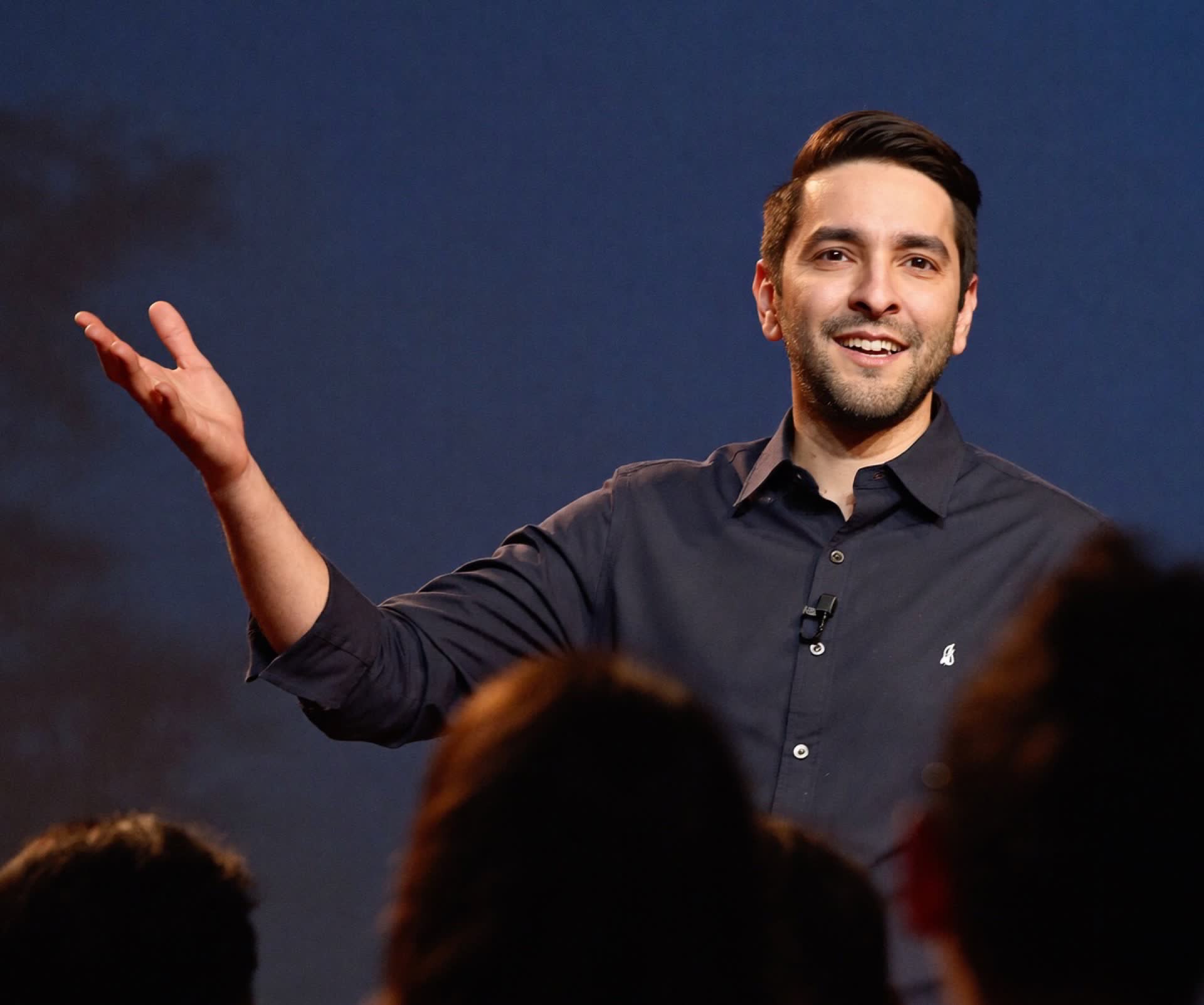
Hassan Mossin, a 22-year-old Pakistani astrophysicist training with the International Institute for Astronautical Sciences, walks Muzamil through the next twenty-five years of space — commercial stations by 2030, a lunar base by 2032, and why the bottleneck isn't food or oxygen, it's energy.

with Hassan Mossin

11 min read

The five fields that will hold the jobs of the next twenty-five years

Muzamil opens the episode with a question he had been putting to ChatGPT: which fields will hold the most jobs twenty-five years from now? The answer came back as a list of five, and it sets the frame for the entire conversation.

Number one was space exploration. Number two was biotechnology — “an intersection of medicine and technology” that Muzamil expects to push average lifespans to 120 or 130, with Japanese researchers already regrowing teeth and full hearing restoration moving from theory to clinic. Number three was energy, because AI needs it and because we are about to start producing water artificially at scale. Number four — the most interesting one, Muzamil says — was climate economics: a world where “the entire economics of the world starts becoming carbon-driven,” and where Pakistani exporters like Interloop are already chasing carbon neutrality to win tax credits in Europe. Number five was robotics, filling the productivity hole left by a shrinking working-age population in the West.

Space sits on top of that list, and it is the one most Pakistanis tune out. “In Pakistan, more often than not, we get disconnected from these things because until they go mainstream, we don’t take them seriously.” That is the gap this episode is trying to close.

Meet Hassan Mossin, 22, Pakistani passport, headed for orbit

Muzamil introduces his guest as one of the first Pakistanis with a credible shot at actually going to space. Hassan Mossin is 22. He studied astrophysics at the University of Toronto. He trains with the International Institute for Astronautical Sciences, the IIAS, in Florida. And, importantly for Muzamil’s audience, he holds only a Pakistani passport — no Canadian citizenship, no permanent residency, no second passport waiting in a drawer.

Muzamil presses on this point directly: “Are you an ABCD born and bred in Canada, or are you inherently a Pakistani with a Pakistani passport gone from Pakistan? Because there’s a big difference.” Hassan was born in Pakistan, spent his early years there, did high school in Saudi Arabia, and only landed in Canada for university.

His path into space, he says, started in a small house in Rawalpindi. “I remember looking at pictures and videos of the Apollo missions, and I wanted to go to space. But being this five-year-old kid who’s in a tiny house in Rawalpindi, I didn’t think it was possible. You have to be American to go with NASA. You have to be Russian. Those are the only two ways.” So he picked the next closest thing — study space from the ground.

The IIAS application nearly broke him. Page one asked about lidar, robotics, remote sensing, atmospheric physics. Page two asked for a scuba diving license, a pilot license, a skydiving license, and an aviation medical. “I had none of the above. I closed the application and went to sleep.” A few days later he decided he would spend the summer getting all of them. He did.

From Apollo one-offs to a sustainable infrastructure

Muzamil’s question to Hassan is whether the moon is the new America — a frontier Columbus heads for, plants a flag on, and exploits. The answer is more sober. The Apollo missions were one-offs. “Everything is gonna be just we’re gonna take everything, the food, the water, everything we’re gonna go, and we’re gonna just have that one mission instead of developing the proper infrastructure.”

The new space age is different in two ways. First, it is commercial — Blue Origin, SpaceX, Vast, Axiom, Voyager Technologies. Hassan calls them “the billionaires’ playground,” and grants that this is where Katy Perry-style joyrides come from. But the capitalist competition is what drives prices down. Second, NASA itself has shifted strategy: “NASA basically decided that now they’re gonna out-contract almost everything.”

The International Space Station is being deorbited by 2030 because it is old and expensive to maintain. Replacing it are at least three private stations targeting 2027 or 2028. Virgin Galactic’s new Delta spaceplane is supposed to start flying by the end of this year, with a rhythm of two flights a week and six people on each. That is twelve civilians a week. “I don’t think everybody realizes how quickly access to space is going to open up.”

The question, Hassan says, has changed shape. “It’s not, do you want to go to space? It’s, what do you want to do when you get there?”

Payload specialist is the new astronaut

The answer for most people who go up in the next five years will be “payload specialist.” You design a science experiment. You pitch a company. “Hey, I want you to give me a million dollars to go to space. I’m gonna go to space, do this experiment, and the research data is gonna be so important.” You bring the data back. That is the new sponsorship model, and Hassan thinks it is going to be “rampant” within five years.

By 2032, the next layer kicks in: NASA’s Artemis program targets a semi-permanent lunar base. After that, Mars — which, Hassan points out, is actually a better long-term inhabitation target than the moon because of its atmosphere. The asteroid belt mining that Muzamil’s ChatGPT-generated road map predicted? Hassan tempers it. “I think they are realistic. We definitely have the capability. But now it’s the economic viewpoint.” Orbital mining will take decades. A Martian base could be inside twenty years.

The jobs nobody is naming yet

Muzamil pushes Hassan on the interdisciplinary question: once the novelty fades, what jobs actually exist up there?

The list Hassan gives is deliberately unexpected. Geologists, because studying lunar and Martian geology teaches us about Earth’s tectonics. Chemists, because both bodies have confirmed water. Doctors. Space architects — “a very, very new field that nobody’s thought about before” — because someone has to design the habitats. Material scientists who can sew, because Prada is helping NASA build the next generation of spacesuits for Artemis.

Muzamil pulls out the larger pattern. “It’s the intersectionality or interdisciplinary nature that’s going to be very, very powerful. It’s about knowing biology, or knowing architecture, but also having an understanding of material science. Architecture increasingly became a very design-oriented art or humanities-driven field. Now it’s architecture with a lot of science. It’s fashion design, but a lot of science.”

The traditional educational routes still hold. You still go to med school. You still study geology. You just bolt physical training onto the end — scuba, especially, because neutral buoyancy underwater is the closest simulation of space weightlessness humans have figured out.

Who owns the moon

Muzamil’s wife had asked him a question that turns out to be the policy question: if we mine the moon, do we eventually lose it? Hassan’s first answer is practical — the moon is big. His second answer is more interesting: the real value of lunar resources is not in bringing them back to Earth. It is in what the space community calls in-situ resource utilization, ISRU. Giant 3D printers that turn lunar dust into wrenches and screwdrivers and emergency tools on site, so the base does not have to depend on Earth for every broken part.

Then comes the law. The Outer Space Treaty of 1967 — “probably the most important document in all of space policy” — says no country can own a celestial body. The more recent Artemis Accords clarified the part the OST left open: you can own the resources you extract, but you cannot own the moon itself. You can temporarily claim a crater for a five-month study window. You cannot plant a flag and call it yours.

There is also a liability regime baked in. “If a NASA astronaut accidentally crash-lands in Russia, Russia legally has to help that astronaut get back to America and keep him safe.” If China destroys another country’s satellite, accidentally or on purpose, it pays. “We’re just trying to mitigate space war.”

The energy bottleneck and the data center question

When the conversation turns to near-Earth orbit, Muzamil lays out the commercial stack as he sees it: communications (Starlink and its competitors), navigation (GPS, China’s Beidou), data centers, energy, and warfare. He asks Hassan which of these is real in the next five to seven years.

Hassan’s answer surprises. The bottleneck for a lunar base is not food, not oxygen, not pressurized habitats — “we already built spacecraft… they’re basically a spacecraft that are in the shape of human body.” It is energy. The moon gets 14.5 days of direct sunlight followed by 14 days of darkness, with brutal temperature swings. Solar alone cannot carry that cycle. NASA’s stated plan is to set up nuclear fission reactors on the lunar surface.

Orbital data centers solve two problems on Earth — electricity demand and water for cooling. But they create a harder one. “In space, you wouldn’t use water. All the heat that you have… has to be thrown outwards using radiation. And it’s very, very inefficient.” The real bottleneck for AI in orbit is thermal management.

And then the warfare layer underneath all of it. The Outer Space Treaty bans weapons of mass destruction in orbit. It says nothing about guns. “Russia actually fired a cannon in space secretly. In 1975, they attached it to the outside of their space station and just shot it and didn’t tell anybody. We only found out much later.” The US Space Force exists. Most of what it does is classified. Targeted lasers from orbit are not, Hassan reluctantly admits, ruled out by current policy.

The Pakistani path in, starting now

Muzamil wants the episode to land somewhere actionable for the audience he keeps in mind — Pakistani teenagers and their parents. He notes that Pakistani Air Force pilots have been selected to train with China’s Tiangong program, and that one is scheduled to fly as a payload specialist. The fifth-largest country in the world, with the fourth-largest expert community in the US and decent relations with both Washington and Beijing, is not as far from this story as it thinks.

Hassan’s advice is specific. Pakistan recently became the sixth country to send a satellite to the moon — the iCube Qamar. SUPARCO runs the rockets and atmospheric satellites. But the country is behind on what he calls “indigenous capability of students.” In Canadian universities he sees 17-year-olds building advanced satellites in student rocketry teams. The path in: read the NASA systems engineering textbook, build a CubeSat (a 10-centimeter cube satellite), contribute to NASA citizen science projects from a laptop, find a rocketry team — NUST has a good one — or build one if your campus does not. “It’s time for the students to get the capabilities rather than only the top professionals.”

Muzamil adds the local map. The Tukwa space observatory in Bella, Balochistan, run by enthusiasts tied to the Institute of Space Technology in Islamabad. Pakistan’s 2040 space vision, drafted in 2011, with a lunar mission slated for 2035. SUPARCO doing the unsexy, slow work in the background. “More often than not, sometimes things are happening in Pakistan. It’s just that the right people are smart enough to cut through the cracks.”

The parent’s caveat, and the close

There is a moment near the end where Muzamil interrupts himself to address his own son, who might watch this in 2045. “Rafael, if you’re watching, you’re an artist, I’m still proud of you. I’m just trying to map out the possibilities of whether you can actually go to space. I don’t want to be that Pakistani parent — space, astronaut, artist.” It is a small line, but it carries the whole brand of the show: map the possibilities, do not weaponize them.

Muzamil closes by telling Hassan something he says he rarely says to 22-year-olds. “I’ve had over 550 conversations over the last five years. I’ve bugged people a lot — people at the age of 40, 50, and I get into their industry. At just 22, I’m incredibly proud of the fact that you are a Pakistani. You have the flag on your hand. You represent the country. The amount of knowledge that you display, the amount of passion that you display, it is an incredible honor to be having this conversation with you. Inshallah, I shall see you on the moon someday.”

Hassan’s reply is short. “Inshallah, I will go to the moon someday. That’s the plan.”

Full transcript
Muzamil

शामानुक़वादी नौज़रात. Channel पर वापस आने का बहुत बहुत शुक्रिया. एक और thought behind things podcast के बाद आपकी हिद्मत में हाज़िर हूं. आप लोगों को पता है आजकल मेरी AI की सीधी चल रही है. But AI के साथ साथ basically जिस चीज़ में मैं principally interested हूं वह future of work है. Innovations आ रही हैं technological और जो different मैंने articles share किए of people with different opinions on universal basic income and AI joblessness and so on and so forth. मैंने कहा यह सारे context को मद्देनज़र रखते हुए. मुझे बताओ पांच सबसे emerging fields अगले पच्चीस साल बाद कौन सी ज़्यादा होंगी जिसमें सबसे ज़्यादा jobs होंगी? तो surprisingly उसने पांच मुझे जो fields बताई उसमें number one के ऊपर space exploration थी, number two के ऊपर biotechnology थी. उसने कहा कि जी जो आपके बहुत सारी different innovations अब आने वाली हैं, Neuralink है और इस तरह की हैं जिसमें technology का इस्तेमाल करके आपकी ज़िंदगी को longevity बढ़ाई जा रही है. सुनने में आ रहा है कि average lifespan might be able to go up to a 120, 130. दांत regrow होना शुरू हो गया. एक Japanese scientist ने recently उसको किया. कानों की आपकी जो पूरी की पूरी hearing है वह आप completely आप वापस ले सकते हैं ताकि बहुत सारी मज़े की innovations आ रही हैं. पर even जो आपके medicines हैं वग़ैरह वग़ैरह इसमें अगर आप follow कर रहे हो it's a phenomenal field और यह इस वक़्त बहुत एक niche जो health industry overall है वह बड़ी niche है. लेकिन जो biotechnology की जो industry है that's basically an intersection of, medicine and, and technology वह बहुत ज़्यादा grow करेगी आने वाले वक़्त में. Number three पर उसने बोला कि जी energy क्योंकि AI को भी energy चाहिए overall अब दुनिया के अंदर हम पानी भी जो है वह artificially produce करना शुरू कर देंगे. बहुत ज़्यादा productivity boost आएगा through energy. तो energy में बहुत ज़्यादा jobs होंगी चाहे वह fission, nuclear electricity हो, चाहे वह renewable हो, solar this or that. Again, उसमें space का तालुक था कि space से हमको energy produce करें. There was a lot of jobs there. Number four के ऊपर बहुत interesting था. उसने कहा business और economics के अंदर climate financing के ऊपर या climate economics के ऊपर बहुत ज़्यादा होगी which basically what he was saying was कि जो आपकी पूरी की पूरी economics है दुनिया की वह carbon driven होना शुरू हो जाएगी. We will actually identify the cost of, producing carbon and producing these sort of, environmentally dangerous forms of, you know, materials और और और let's say, carbon dioxide वग़ैरह जो हम produce करते हैं. और उसके around क्योंकि आपकी economics हो गया already हम Pakistan में यह देख रहे हैं जितनी भी बड़ी आपकी interloop और इस तरह की export की factories हैं, they're going towards carbon neutrality. उनको हर उसके ऊपर tax credit मिलता है Europe से and automatically उनको incentive मिलता है. तो a lot of the rest of the economy will have moved towards that and people who understand the finance people who understand the the carbon, economics will be able to do really well at the time. यह होगीन जी आपकी चार पांचवी जो थी I believe वह robotics थी क्योंकि उसने कहा कि अब west में आपकी productivity बहुत जो है ना जो productive age population है वह reduce हो रही है. तो उसको वह replace करेंगे with robotics. Already हम यह देख रहे हैं Tesla का robot आ रहा है. Robotic automation बहुत ज़्यादा बड़ी you know दर्दनाक imagery आई. Amazon का जो space rocket फटा और उनका वह जो पूरा space station है वह effectively पड़ गया. But Elon Musk की SpaceX के through आप देखते रहते हैं. उसका IPO भी होने वाला है. So there is a lot of chatter around SpaceX as well. Who is a पाकिस्तानी graduated from Nast, currently works at Blue Origin जो Jeff Bezos की company है. उससे मेरी मुलाक़ात हुई उससे मैंने understanding लेने की कोशिश की कि exactly अगले बीस साल का road map किया. मैंने कहा जी दो हज़ार तीस तक कि private space stations आपके deploy हो चुके होंगे जो कि इस वक़्त आपका एक international space station है जो I believe America drive करते हैं, collaboration से होता है. उसकी जगह तीन या चार different space stations आ चुके होंगे. China कभी होगा, America की different private companies का होगा. वह as a lunar base by 2032 they expect, to be live. So, base आपकी round the clock, round the year human, with humans आपकी जो है by 2035 deployed होगी. उसके बाद उसने कहा जी 2035 से 2050 का हमारा target यह है and क्योंकि अब आपने already सुना होगा आजकल बहुत conversation होती है critical mineral के बारे में, rare earth mineral के बारे में, lithium के बारे में, और बहुत सारे ऐसे important minerals हैं जो कि modern society के लिए बड़े valuable हैं. वो बहुत सारा mineral potentially वहां पर asteroid belt में available है. तो उसने कहा कि जो main crux crux है ना वो asteroid belt की mining का है. जिसके अंदर जो economic viability है वो built in है and you will be basically see millions of jobs at that time जो कि emerge कर चुकी होंगी. Different लोग जो हैं ना वह पूरी जो आपने motorway बनाई है ना earth से लेकर space station से होते हुए let's say lunar base से होती भी, potentially margin base से होती भी asteroid belt की. उसके दरमियान में हज़ार जगहों पर हज़ार, you know, jobs और opportunities होंगी जो कि लोग space में जा रहे होंगे. वह literally आज तो astronautic बहुत आपको complicated चीज़ लगती है. लेकिन जैसे हमने आज से सौ साल पहले जहाज़ बनाए और initial जो आपके pilots nature में जाकर भेजना है and scouts का कुछ होता है जिसमें वह आप बच्चे को भेजते हैं और वह जो है ना wilderness में रहना सीखता है. By the age of 15 उसने अपनी pilot training कर ली होनी चाहिए. So जहाज उड़ाना उसको आना चाहिए और you know sci fi वाली चीज़ है. उसको आप literally first principles पर breakdown कर सकते It's a very real thing. It's very much possible and Pakistan में more often than not हम लोग इन चीज़ों से इस वजह से disconnected होते हैं because जब तक वह mainstream नहीं होती हम उसको seriously नहीं लेते. One of the first पाकिस्तानीs to be, not just work in the space industry, but potentially go into space as well. He had a very, very viral reel. Zero gravity के ऊपर he was basically playing around with the पाकिस्तानी flag, and a lot of you guys loved it as well. Today with us, we have Hassan Mossin. He is just 22 years old. Just, did his graduation in, astrophysics, if I'm not wrong. And he's working as a research student at the International Institute for Aeronautical Sciences. आसान, thank you so much for taking the time out and joining us today.

Guest

आसान, अंकुम. Thank you for having me. No, I'm excited to talk about all things space today. ज़बरदस्त. Just to just to give context,

Muzamil

are you are you, a b c d born and bred in in in Canada or are you inherently a पाकिस्तानी, with a पाकिस्तानी passport gone from Pakistan? Because there's a big difference. वह पाकिस्तानी ना पहली फ़र्सत में यह कहता कि यार यह तो बाहर था. Obviously मैं थोड़ी इससे connect कर सकता हूं. I'd love to know your background there.

Guest

नहीं नहीं नहीं, मैं Pakistan बाहर में ही पैदा हुआ था. वहां पर जय पहले कुछ साल रहा था. फिर जय थोड़ा I moved around. मेरा high school जय फिर साल Arabia में था And I only came to Canada for my university. I went to the University of Toronto for Astrophysics as you mentioned earlier.

Muzamil

And right now you have a पाक्षाणी passport or are you a Canadian? Just पाक्षाणी passport. No other citizenship, no other permanent residencies, nothing. Amazing. So tell me a bit about what you do, what's the work that you've done recently? What was the bachelor's program and what got you into space right now? Because again, इस वक़्त तो we're at the very early stage of it. बहुत ज़्यादा research हो रही है, थोड़े थोड़े हम practical implementations भी देख रहे हैं. But what got you interested in in this field?

Guest

I think it was always an interest. I think since I was very very young, I always wanted to become an astronaut. I remember looking at, you know, pictures and videos of the Apollo missions, and I wanted to go to space. But, you know, being this five year old kid who's in a tiny house in, like, Raul Pindi, I didn't think it was possible. Right? You have to be American to go with NASA. You have to be Russian. Those are the only two ways. And I decided, still love space. What's the next closest thing? I can I can study it from the ground? So maybe aerospace engineer, maybe astrophysics. I chose astrophysics. And, I did well in high school. I was good with maths and physics. I decided, yeah, let's do it. I got into the University of Toronto. And throughout while I was at UT, throughout my undergrad, I joined a lot of clubs and student organizations, and I was very active on campus. And that actually led me to discover the International Institute for Astronautical Sciences. I met somebody who told me about it. And I looked at the website, and it was quite literally posed as somewhat of a commercial astronaut training program. And immediately, I fell in love. Immediately, I knew this is exactly what I've been working towards my entire life. I just didn't know. And I opened their application page, and it had a million questions. Some technical stuff like, do you have any experience with remote sensing and lidar, robotics, atmospheric physics? And I was already overwhelmed, but I went to page two and it said, okay. Do you have any of the four things? The four things were scuba diving license, pilot license, skydiving license, and an aviation medical. I had none of the above. I closed the application and went to sleep. After a couple days of just, really just feeling out the emotion, I decided, you know what? I've always wanted to do these things. I think this is my sign. This is my call out to do them now. These are bucket list items, but why wait till I'm older? Why not now? I'm good. I'm healthy. You know, while I'm fit, I might as well. And so I spent a summer just really studying all of these things, working towards my pilot license. I got my scuba diving license, went skydiving. And I had calls with everybody that I could find in the institute. And I eventually had a call with the director of operations as well, and they told me that they think I'd be a great fit. So I I was I thought I was ready. The only problem was I did not have the US visa. So it took me over a year to get the US visa. It's always difficult. But the moment I got the US visa, I emailed them, I said, hey. I know it's super late. You probably have closed applications, but super last minute. I got my US visa. Is there any chance possible? You know, we had a call a couple months ago. I hope you remember me. And they emailed back the same day. They were like, yes. Of course, I remember you. I love talking to you, and, we'd love to have you. Come on over. And that was kind of it. That's how I joined, IIAS, double IAS. And I went to Florida. I did my training. I did, spacesuit training, suborbital flight simulations, hypoxia training. And, after all these different components, I went on to study more with them. And I also went on that zero gravity or microgravity flight that you mentioned earlier, and I got some great clips out of that as well. That was where we designed a science experiment for four or five months, our own scientific payload, and then we free floated that to get data.

Muzamil

And, now I'm studying a little bit about analog habitats and spacesuits with them and it's, very very rapidly evolving field. I'm I'm excited to, you know, work more with them. आजकल की दुनिया में बहुत ज़रूरी हो गया है कि अगर आप professionally successful होना चाहते हैं तो आप अपनी thoughts, अपने ideas को दुनिया के सामने रख सकें. यही वजह है कि पिछले पांच साल के अंदर मैंने पांच सौ से ज़्यादा लोगों को help किया है in building their personal brands and helping them create value of over $50,000,000. अगर आप एक startup founder हैं या अपने professional career में grow करना चाहते हैं या आप एक freelancer agency चला रहे हैं और आपको समझ नहीं आ रही कि यार मैं $10,000 के revenue से $100,000 के revenue में कैसे जाऊं? तो आपको एक personal brand की ज़रूरत है जिसके अंदर आप अपनी thought leadership दिखा सकते हैं. आप एक following curate करके just to identify whether your profile can be a good fit for a successful personal brand. Link मैंने नीचे डाल दी है. Cost आपको कोई भी नहीं है. छोटा सा form है लेकिन हो सकता है कि आपकी थोड़ी सी effort आपके professional career को skyrocket कर दे. खैर, आइए चलते हैं वापस video की तरफ़. Sounds great. थोड़ा सा मैं conversation को expand करूंगा and I know जाहिर है कि मैं तो एक site का बंदा हूं. मैंने ChatGPT से जो information निकाली वह निकाली और right there at the thick of it. So you can give us a lot more context of of what's really going on. But just as a starter, मैंने start base build किया and you were listening, both in terms of let's start with the next twenty five years. We're seeing, again, a very similar cycle. So it was early two thousand two, early nine nineteen hundreds when your plane was becoming mainstream and उसके अंदर हमने देखा कि, you know, commercialize बहुत पहले तो इंसान सोच ही नहीं सकता था कि इंसान उड़ भी सकता है. उसके बाद जब उसने सोचा और उसने ईज़ाद किया, तो उसके बाद से it was just like very very very rapid transformation. And so I'm curious कि अब जब हम within in our, twenty thirties के अंदर हम enter करने वाले हैं अगले पच्चीस साल के by 2050, how do you expect the space industry to expand? What are some of the use cases? Is there any economic viability? Is there still going to be a novelty? Because हमने एक दो बार पहले भी यह देखा कि apparently आजकल लोग बड़े tinfoil hat वाले भी हैं but apparently हम चांद पर चले गए और फिर उसके बाद हम ग़ायब हो गए, right? Like, अगर इंसान चांद पर जाकर वापस आ सकता है तो why did we stop any and everything for the next fifty years? Is it because there's just no economics to, to be, you know, model sustainable. So tell me about your road map for the next twenty five years.

Guest

Yeah, absolutely. I think that we have come a long way from those Apollo missions, and I think that now the goal is to build a sustainable infrastructure. I think that's what was missing because every time we sent one of those Apollo missions, it was always a one off mission. Right? We have everything is gonna be just we're gonna take everything, the food, the water, everything we're gonna go, and we're gonna just have that one mission instead of developing the proper infrastructure. Now we want to develop develop a moon base. And I think what happens in this new space age is we don't have the early issues from the Cold War where everything was secretive. Everything was government funded, taxpayer dollar. Right? And so there was a lot of issue about how the money is used because it is the taxpayer dollar. Now everything is commercialized. Similar to what you said the early days of aviation, you know, we had, for example, the Concorde, this plane that was super, super cool, super fast, but also super expensive. And the same way right now, we have all these big space companies that are essentially the billionaires' playground. You know, Blue Origin, SpaceX, VastSpace, they're all, like, privately owned. And, this is going to give rise to, for example, Katy Perry going to space. This is gonna give rise to those space tourism events. But at the same time, because we have this capitalistic competition, it's gonna drive innovation, bring all the prices down, make everything cheaper and sustainable. And so because we also have things like the International Space Station, which is an international collaboration, But it's old, it's expensive, hard to maintain. So they're gonna deorbit it and just close it by 2030. Now what's to replace it? NASA basically decided that now they're gonna out contract almost everything. And so now we have a bunch of companies aiming to put up their own commercial space stations, specifically VASCE, Axiom Space, and Voyager technologies. And once those go up, we are gonna have civilians. Normal no astronaut background, no proper physical training. They're gonna go up, and they're gonna stay there for weeks in space, maybe months. And this is the same way we can also have space hotels. And all of these companies have actually said that they're planning to launch by 2027 or 2028. So this might actually be sooner than we expect. Of course, everything in space is the timelines are not as rigid, so expect delays. But still, you know, even if it's 2030, I think that's still great progress. And we still have all of our suborbital companies like Virgin Galactic and Blue Origin that, Blue Origin was the one that Katy Perry went on. They have that vertical, takeoff and landing. They actually stopped doing those. They don't do those anymore, because they are focusing on the moon base with NASA. They won the contract to build a lunar lander. And Virgin Galactic, they are still focusing on suborbital flight, actually. They are building their new spaceplane. It's called Delta, and that's gonna launch this year. So starting this year by the end of this year, they are gonna start doing two flights every single week with six people on board for each flight. That's 12 people going to space every single week. So I don't think everybody realizes how quickly access to space is going to open up. If you have 12 people going to space every single week, that cadence is unpreced and, like, unprecedented. It's, I think, just going to, you know, increase the scientific output. And so the question kind of changes from, do you want to go to space? To, what do you want to do when you get there? Because now it's not as hard to go to space. When you get there, do you just wanna go on a joyride? Or do you wanna go there and actually, like, do science research? For all of humanity? Do, you know, some experiment that will contribute to all of humankind and, you know, knowledge for everybody. So I think that this is gonna give rise to open source science a lot. A lot of the missions now are focused on these research payloads. Payload can be anything that you take on board, specifically these science experiments. And that's where all the funding is flowing in from. Even NASA contracts are heavily focused on trying to get different sorts of experiments up into space. And so whoever is the one handling those payloads is called a payload specialist, and that is the next, like, way, the emerging way to become an astronaut. And that's what all these companies are gonna take you to space for. You essentially build an experiment that you think is worth going to space. You go to a company and you say, hey. I want you to give me a million dollars to go to space. I'm gonna go to space, do this experiment, and the research data, the results are gonna be so important. I'm gonna bring back and give those results to you, and that's essentially how you will get sponsored. And I think that within the next five years, that's gonna be rampant. I think that we're gonna have lots of commercial flights. We we're gonna have hundreds of people going to space very, very soon. So I think this is the greatest time to be getting into this. If you do wanna go to space, you gotta start preparing now. You don't wait till you get you get selected as an astronaut. Have to build up to it. So when the time is right, your name is on top of the list. Now after 2030, we also have the NASA moon base that you mentioned. That is probably the most ambitious thing humanity has ever done. And from what they say is that by 2032, they're gonna have a semi permanent base on the moon, and that will kind of really dominate everything that NASA does, all of their focus. And, eventually, I guess, goal is to go to Mars. So all the Artemis program, Artemis is the series of missions NASA is doing to get to the moon, is basically a stepping stone from Mars. And while the moon is closer, Mars is actually probably, in a lot of cases, much better to inhabit because of its atmosphere and some of the other properties that it has. And so that is the next goal. But a lot of other things that you mentioned, like orbital mining and stuff, those are still a little bit challenging. And even twenty fifty might be a little bit difficult to achieve. I think they are realistic. We definitely I think we have the capability to do that, but now it's the economic viewpoint. Is it economically beneficial to spend that amount of money to go there, set up the drilling site, extract whatever it may be, lithium or any source of rare any rare earth metals, and then bring them back and still have it, you know, be valuable more than the trip cost. So I think that we we will get orbital mining, but it's gonna take decades perhaps. Whereas a lunar base or a Martian base could be within the next ten years, twenty years Martian. Very, very realistic timeline.

Muzamil

Makes sense. And just for context, there are a couple of Pakistani, pilots, I believe, from Pakistan AFOs that have recently been, selected, to train for the Chinese mission. China has a space station, Tiang Tiang Gong or something like that. And apparently one of them is going to be scheduled to go in as a payload specialist. So for पाकिस्तानी is obviously watching. You know, a lot of times we imagine कि यार हम तो पाकिस्तानी हैं, हम तो हमारा तो number बहुत ही पीछे है ना. But realistically, you know, you are the fifth largest country in the world. You have some of the smartest people. You have the fourth largest community, of experts in The US for example, which is the largest economy in the world. And you're very elegantly placed between The US and China, seemingly with good relations with both right now. तो तो just to, just for a lot of young people who might be, imagining जितना you were imagining हसान at at the age of five कि यार मैंने space में जाना है, you might see very soon a पाकिस्तानी in the space station. That's gonna be absolutely phenomenal. One of the few countries in the world with with astronauts there. So there's a very clear pathway. You mentioned payload specialist. I want you to imagine, let's say, fifteen years from now when you have a lunar base and potentially an early signs of a Martian base as well. What are some of these people going in for? Like, what sort of jobs are you imagining there? Obviously, everybody's thinking astronaut right now, but my understanding is astronaut is more of someone who who knows the who knows how to deal with the environment and the the the the the overall physical ecosystem. What you do after that once the novelty fades away? Yes. You're there now. What do you do? Are you a communication specialist? Are you are you are you working around biology? Are you working around energy? Are you working as a payload specialist? What are some of these jobs that that seemingly will emerge after after a few years?

Guest

Yeah. Absolutely. I think that, payload specialist is rampant right now because it is suborbital flight and only when you're just free floating. But when you go and land there and the astronaut term is pretty vague. I think that astronauts have to subspecialize afterwards. Right? A lot of the times, it's gonna be, you know, for orbital missions, you're gonna have, like, a pilot, payload specialist, mission commander, stuff like that. But when you're gonna go and land, you're gonna have a lot of scientific people going. I think the first ones to go are most definitely gonna be a lot of different types of scientists. This will include, for example, people might not expect, but a lot of geologists, a lot of our understanding for for about, like, the Earth's geology, how the tectonic plates work, how maybe earthquakes would happen, come from how we studied the moon and Mars. And studying their geology helps us understand our own geology. And so, for example, geologists, doctors, I think chemistry is very, very important here. So we're gonna have chemists go and, you know, test out the atmosphere or the water. We have confirmed water on both moon and Mars. So we're gonna send people to really observe that. And, I think that it's gonna be a multidisciplinary field where everybody's going to converge in some way because you have to remember that if we wanna build a lunar habitat, somebody has to design those habitats. So we actually need space architects. That's a very, very new field that nobody's thought about before. And, we have to build new spacesuits for these Artemis missions. Now perhaps you might have already heard Prada, the design, the fashion design company, they're gonna be helping build the spacesuits for the NASA missions. So we need people who know how to sew really well, who can deal with fabric or material sciences. So in so many ways, we're gonna have all these fields converge. And, I think that even in 2050, I think so when we were talking about your son, I think the traditional routes will still dominate. Right? If you want to study something medical, you still go through the med school route. If you still want to go into geology or anything, you still go through that route. But then you combine it with a little bit of the physical training. For example, scuba is the most important. There is no debate because, when you're underwater and you are able to counteract the forces so for example, you're being pulled down by gravity, and you have the water pushing up with the buoyancy force. When you're scuba diving, you have a jacket, a vest, and then you have a button. By clicking the button, you can control how much you inflate or deflate that vest. If you balance it perfectly, you're gonna be neutrally buoyant, meaning no sinking, no floating. You're just gonna stand there on the water, underwater, like, 40 feet down the water, and you're not gonna move. You're just gonna be perfectly, like, in place. And that is mimicking the space weightlessness. That's why it's important. And so those things, think, will still prevail even though, we don't have the same physical physical requirements as NASA did maybe in the Apollo missions. You know? You don't have to be a tall, white, male perfect military test pilot anymore. Now the access is open to everybody. But some physical training is still gonna be required to make sure you don't get sick on your first flight. Right? Mhmm.

Muzamil

But, again, you need to have the scientific background to really do meaningful science. I think one of the key takeaway for me here is the idea that a lot of people have around the future of education. With AI, for example, really, automating a lot of different areas. Will you have doctors in the future? Will you have computer scientists in the future? Will you have x y z, you know, education in the future? And I think the way that you explain it is you you still need all of that education. I think it's more of the, intersectionality or interdisciplinary nature that's going to be very, very powerful. Right? So it's it's about knowing biology or or knowing architecture, but also having an understanding of material science. Architecture increasingly became a very design oriented, art or humanities driven field. Now it's architecture with a lot of science. It's fashion design, but a lot of science. Right? So is that interdisciplinary nature that's gonna be very, very powerful. I also wanna get a sense of, before we go a little closer to, more realistic possibilities maybe in in in the near earth orbit, I wanna get a sense of what sort of materials are there on the moon and the Mars or, like, on Mars that we can exploit as humans? Do you think there there is a possibility of mining operations, not in the asteroid belt, but let's say on Mars or moon, that we can eventually bring back, and exploit as humans. And what do you think is within the sort of research and academia, space, what's the discussion around that? Because my wife recently asked me this question. She was like, okay. What if we start mining the moon, but the moon impacts the earth? And so, you know, maybe in a thousand years, we won't have a moon anymore because we've mined it up. Like, how does that sort of work? So tell me a bit about that.

Guest

Well, I mean, the moon's pretty big. I it would be very surprising to see if we mine the whole moon. I don't think that's gonna be an issue. But I do think that, there are some things that we can mine. For example, I believe on Mars, we have helium four, which theoretically could prove to be useful in some sort of nuclear fusion and stuff. It is very theoretical at this stage. But for example, if you wanna go to Mars and mine helium three or helium four or something like that, Sure. You can do that. But I don't think that the real value is in bringing it back, but rather something that I like to call well, it's a term that we use in situ resource utilization, I s r u. And so for a sustainable habitat, whatever we want to build, whatever infrastructure, whatever base we have right now might be dependent on earth for decades. Mhmm. So what we want to achieve is have them self sustaining whatever they need. Sure. Maybe we can still keep sending food for now because we haven't cracked botany on Mars yet. But what we can do is have giant three d printers that, print out whatever they may need. So on-site, you can print a wrench or screwdriver whenever you need using the lunar dust. Like, the resources that you get there, you can use those to make whatever you need. And I think that is really the main thing that we're trying to specialize in right now because that would, you know, eliminate the need for taking everything from earth and having no backup. If you have any holes in your habitat, if you have any issues, that's the only realistic way that you can, you know, print out emergency tools or something. So I think that's the way to go. We do have water on the moon and Mars, but I think that a lot of those things would be used for scientific study just to understand how those molecules ended up there, what their state is now, if they are predicted to stay that way. I don't see moon mining to be more than lunar samples just to study the samples as of yet. I think this is the type of thing that we need to go there, maybe drill really deep, and see if we find something that valuable, but I don't see anything yet. Makes sense.

Muzamil

With that question right now, there's a bit of an ambiguity in terms of who owns the moon. If the Americans go there first, are we looking at a colon are we is the space exploration sort of like how Columbus went to America and expanded his reach? Because there's a very interesting series, The Expanse, that actually deals with a lot of these, these sort of political issues of of this exploration. Right? So they I I don't know. They're maybe based a hundred years from now, they talk about how Mars is there's a Mars, civilization, and it's it's declared independence, and then there's lunar and this and that. Obviously, whenever humans come in, there's politics. And so I'm curious, who owns the moon? Who benefits from the mining? Is it first come, first serve? Whoever gets there gets the dips to to to whatever resources exist over there. And it's not just resources. If you have the right access to the right side of the moon, then you have the right access to then, slingshot towards Mars and then slingshot towards other places. So, the location is very important. It's there's a strategic importance to that as well. Tell me about the international law on space right now in terms of how a lot of this jurisdiction, is managed.

Guest

Yeah. Absolutely. I think space law is a very emerging, very growing field right now. I think that it has a lot of importance right now more than before ever. And I'm glad that people back in the Apollo missions had the sense to set up some laws. I think everybody panicked around that time because they realized that this is gonna be an issue. What if people start fighting on the moon? So very, very early on, actually, in 1967, they signed something called the Outer Space Treaty, and, we call it the OST. Very, very, probably the most important document in all of space policy or space law. And so the outer space treaty dictates that nobody can own any celestial body, cannot own any, you know, space, I guess. So you cannot basically start just owning pieces of land on the moon, essentially. But it doesn't say anything about the extracted resources. So, actually, that was a little bit up for debate. When, NASA brought back the lunar samples, they own the lunar samples, for study. They did give out small samples to other countries in good faith. But, anyways, afterwards, they signed a new deal. They created a new deal actually pretty recently called the Artemis Accords. And so those ones really nailed the point home that, yes, you can own the resources you extract from the moon, but you cannot but you cannot own the moon itself. So if we were to go there, you can temporarily claim a part. You can say that, hey. I am going to, for example, the Tranquility Crater. We have the technical technological capability to stop thinking of it just as the moon and start thinking about specific craters, specific points. Right? And you can say, for example, maybe, you know, this specific side of the crater, I'm going there to study. So for the next maybe five months, hey. I'm gonna be studying this. Other countries, please don't interfere. You could do that perhaps, but you cannot own it forever or all of it. And as part of the outer space treaties, afterwards, we had other supplemental treaties come into place that also talked about, you know, rescue operations or liability and registration. So even if we have an astronaut who, for example, lands in the wrong place, a NASA astronaut accidentally, you know, crash lands in Russia. Russia legally has to help that astronaut get back to America and keep him safe. That is a legal liability. Same as if, you know, China accidentally or on purpose, destroys another country's satellite. They would have to pay for the damage and reparation. This was all signed more than fifty years ago, and, this keeps building up. I think we are still working on the space policy side of things with different organizations. So for example, in the United Nations, we've got UNOSA, the United Nations outer space office. I forgot the exact abbreviation, but so we've got regulatory bodies in place working on this, and,

Muzamil

we're just trying to mitigate space war. Right? Makes sense. And before I go for forward, because you said you mentioned space war, I'm gonna go towards the outer the the the, you know, our, near Earth orbit. But let me just put out a clarification here because I know this content is gonna go in archive. Rafael, if you're watching in 2015, you're an artist. I'm still proud of you. I'm just trying to map out the possibilities of whether you can actually go to space. I don't want to be that parent, पाकिस्तानी parent space, astronaut artist and so I also wanna encourage other parents. You can map out possibilities, that's fine. Just don't go crazy on on trying to map out your your children's future professions and and don't get disappointed if they don't achieve them. Having said that, let's let's talk a little bit about the the near earth, sort of possibilities. There's a lot happening there. We we saw the the Starlink that, SpaceX recently has championed, but there are a lot of other companies now. My understanding is the recent, explosion that Amazon had or or Blue Origin had was also part of their communications mission, and it was taking a bunch of satellites for their communications business. So there is communication that's happening. China has its own communications, infrastructure that they're laying out. A lot of the, communication of the Internet or the all of that of the future is gonna bypass the oceans rather than going through these sort of very complicated, large deep sea cables. We're gonna look towards the sky and get access to that. There's also obviously GPS systems. China has its own. US has its own. So there's navigation. There are conversations about data center, and a lot of the SpaceX valuation is right now being pumped by the idea that AI has a lot of, costs, and data centers are a big part of that conversation. So, you know, we're beginning to imagine a future where, you know, you'll have data centers in space. They'll work twenty four seven. I still have a lot of questions about that because how do you sort of keep them cool? How do you give them a lot the energy that is required? But, I mean, there there's a conversation there. And then, obviously, there is energy. And for a lot of people who don't know, I would definitely urge them to do research on the Kharkov's, scale of civilization, that basically talks about how civilizations can basically farm energy. And depending on that, there how advanced that civilization is. Right now, humanity is at 0.67, on that scale. But, basically, the idea is when a civilization is able to, farm all of the energy of their stars. So for that, in that case, it would be sun. How can we get that energy? Obviously, there's we can put a lot of solar in in in our lands, but then we can go to space. We can get a lot of that energy there and sort of reroute that energy, locally towards Earth as well. So just to give you a summarized question, there is communications, there's data centers, there's navigation, there's energy, and, increasingly, we're now hearing about warfare. And and all of that, I feel like, is much more near term in the next five, seven years. How do you see that those industries taking shape? They're now gone beyond research and and are very much commercialized right now. How do you see those individual spaces? And then how do you see opportunities around them as well?

Guest

Yeah. Absolutely. Energy, satellites, warfare. Lots happening right now in the space industry. I think, you've actually brought a really good point because so if we are to build, for example, lunar bases or anything, the main bottleneck actually is not bringing food or setting up oxygen habitats. That's actually something that we can do. We already built spacecraft, you know, pressurized, even space suits. They're basically a spacecraft that are in the shape of human body, and we can use those, in a pressurized manner. So that's not really the main issue. The main bottleneck is actually energy. Having the right energy infrastructure to power everything that is on the moon. It could be rovers. It could be the actual habitats. And so we are going for a mixed approach because something that, for example, on the moon, a big challenge is that most parts of the moon, they get fourteen point five days of direct sunlight nonstop, and then they get fourteen days of darkness. And then that keeps going over and over. So during those dark periods, solar power is not going to work out. You're gonna have a big downtime. You're gonna have big temperature swings as well. So what NASA is actually doing that as part of the moon based missions, they're gonna be setting up nuclear fission reactors on the moon. That is officially what they've stated, and they will be doing that pretty, pretty soon. They're gonna start off by testing out, radioisotopes. That's kind of what they've been doing for the Martian rovers. They have a small amount of plutonium that, gives out that decays, gives out a small amount of energy, very, very low amounts of energy. Even the reactors that they do set up will be low amounts of energy, but we don't need that much energy on the moon. Now as for satellites, I think that the same issue does come into place a little bit that we have satellites. They have very low amount of energy requirements. But if we are to, for example, put data centers in orbit, now that will take a lot of energy. So we actually have entire companies. I believe there was one company called, I think, Starlab that is entirely focusing on building these kind of these satellites that have mirrors that will focus all the solar energy on specific points so that you can power, these data centers that could be used for AI. And if you do do that, let's say we do have that solution for energy. Now data centers on the ground, the biggest challenge over here, there are actually quite a few, is that it's depleting all of our resources. Right? It takes an insane amount of electricity, takes an insane amount of water to cool down. If we put it into space, both of those are eliminated. Mhmm. Great. Awesome. So what is the real challenge there? Why haven't we done it already? It's actually the heat management, the thermal management. That's the real bottleneck. Because in space, you wouldn't use water. All the heat that you have, for example, in your space suit, all the heat that accumulates, it has to be thrown outwards using radiation. It has to be radiated outwards. And so we need but it's very, very inefficient. So if you have so much heat, we need to find better, newer solutions to radiate the heat away from the data centers. That's the real bottleneck, actually. And but I do think it's realistic. I think over the next few years, I'm sure we can manage that. I think we are gonna have that pretty soon. And it will not be, one big giant building of a data center, but rather a whole bunch of connected satellites going together. And, again, that does have the risk of warfare. Right? What if China is to hack all of American satellites? They might not even know when it happens. And that is very, very scary to think about because that will give them access to all credit card transactions, weather data, satellite imagery, everything. I think in those cases, it would cross into cyber warfare. I think that, all of that is still regulated by cybercrime and stuff. So we don't have the same setup in space policy because space policy has focused on other types of weapons. Like, the outer space treaty that I mentioned earlier focuses on they clearly said you are not allowed to take any sort of nuke or weapons of mass destructions to space or keep anything in the satellite. Sure. Okay. But what about guns? Well, honestly, we have never had any sort of rules about guns. Mhmm. Russia actually fired a cannon in space secretly. They like, in 1975, they actually took a cannon. They attached it to the outside of their space station and just shot it and didn't tell anybody. And we only found out much later. And then, even during some of their later missions, they used to take guns to space. It's a very, very well documented thing. They there's this one specific pistol called t p 82. And so it was meant for post landing survival. So if they accidentally land in the jungle, they can, you know, hunt, maybe shoot up a flare, stuff like that. But we have had guns and cannons in space. There are lots of Department of Defense missions that we know nothing about that could have guns. So I think that space warfare needs a lot more policymaking. That's under, you know, that's underdone for now. But, that would also have to, you know, kind of think about how we can use the right energy and create new technologies for data centers. I think there's a lot to do. No. That makes sense. In terms of the warfare aspect of it, I mean, I know the last Trump,

Muzamil

presidency announced a US space force. And so I'm curious if there's a lot of laws on not utilizing space for warfare. What does the space force do? And you mentioned, weapons of mass destruction, and I understand, okay, you can't probably fire a missile from space towards the ground. But what if you have, like, very focused targeted, newer technologies? So we're we're seeing now a lot of countries are moving towards missiles because they're much more they're cheaper. Missile drones. Right? So they're much cheaper. It's easier. The the the asymmetry between a very large player and a smaller player completely shifts. We saw that with Iran and The US conflict. And so the to counteract that now, we're also increasingly seeing the use of lasers or at least the chatter of the use of lasers as these very precise, mechanism to counteract missiles, for example. But we're also now in sci fi beginning to imagine what if there is such a laser out in space that is for defense purposes? Okay. You know, we might have some missile coming at us. But then what if we want to US wants to eliminate someone in Waziristan? Do you need a drone? Or do you need a very specific missile that can map out that individual and just with a split of a second, it sort of burns through you. Right? That's technically not that's very precise. Not weapons of mass destruction. Are is that the world that we're going towards?

Guest

It is unfortunately possible because there are not enough policies in place to really ban that. You know? It doesn't, I guess, classify as a weapon of mass destruction by the old definition. And so what the space force does is largely classified. There are very few things that they really let out, but they are working heavily. Like, a lot of their focus is on lasers or whatever it may be on satellites. So one of their big initiatives actually was to have, low Earth orbit satellites that can track those intercontinental ballistic missiles, ICBMs, because the newer missiles are much dimmer on any radar. You know, we've learned to avoid radars and stuff. So these new missiles can go unnoticed by ground stations and stuff. So we need military satellites to like, figure those out and find those early on. And those are kind of the only ways to have an appropriate amount of response time. And so I think it is important to have those military satellites in pay in place for self defense. Country self defense is their own responsibility. But we don't have enough regulations in place or even any information as to what the space force is doing. So it's scary, and,

Muzamil

we probably should do something about that. But, nothing has been done yet for the space work. That makes sense. I'm gonna, bring this towards a wrap, Hassan, but would love to get a sense of, you know, you're in this space right now. Obviously, going to space is, is the gold standard. Right? I'll be an astronaut. I'll do x y z. We we spoke about possibilities over the next five, six, seven, ten years. We also understand, you know, Elon Musk was, famous for saying he'd be sending people to the moon by 2020, so on and so forth. So space timelines are always to be taken with a bit of salt. Having said that, space itself and the knowledge base that you have for that particular purpose, your your, your, education was in astrophysics as well. As we've explored more around the sort of near Earth orbit, low Earth orbit, commercial activities that are now beginning to take shape, that are much more sustainable and, in fact, rapidly growing, is there any area where you don't necessarily have to be an astronaut per se, but you're still interested in space? You're working on space technologies. What should, a, young Pakistanis be looking at? Because that's much more much sooner than what my kids would be experiencing, for example. And do you think that we will in any of these industries, we will see a rapid growth of opportunities, let's say? Because right now, I mean, they're very exclusive start up companies working in very exclusive spaces. Would you imagine millions of jobs, for example, that deal with communications space or warfare or, you know, data centers or so on.

Guest

I think that, warfare hopefully never happens. I think that's more on the policy side of things. So I think that's still going to be a little bit limited in terms of what regulatory bodies are taking shape. But things like satellite industry and stuff like that, that can rapidly grow. That can scale as we want. We have the choice to go as big or as small as we want. And to any young Pakistanis watching, I think that this is a great time to actually get some hands on experience because Pakistan right now, while we have achieved a lot, right, we recently we are the sixth country to send a satellite to the moon, a lunar satellite. That is a great, great achievement. That was called I cube cummer. Great stuff. We've also had success with our rockets, our atmospheric physics satellites. But compared to the rest of the world, we are behind in some things like indigenous capability of, you know, students and stuff. Because a lot of, for example, myself over here in Canada, I noticed that a lot of universities here, whenever they have an aerospace program, they always have an indigenous rocketry team or satellite team in their university, and there are 17 year olds building advanced satellites. Now that's the sort of thing that we are fortunate to have open source data to today. So unlike before, this is very, very open. If you just read, for example, the NASA systems engineering textbook, it will lay out the road map for you how to design a CubeSat, which is a small 10 centimeter cube satellite, and you can start doing that wherever you are. And so what I would suggest if, for example, if you are interested in things like astronomy, you can go online and look at citizen science website. So the NASA citizen science website, you can contribute to actual NASA project sitting at home from your laptop. If you're interested in aerospace engineering, then you could, you know, maybe join a rocketry team. I know we have very few. I know, for example, NUST. That university has a very, very good rocketry team, but it might not be available in other parts of Pakistan. You can look into developing those or a little bit easier, develop those CubeSats, those satellites. I think this is a great way to get hands on experience with those. There are lots and lots of online resources, and, this will also help Pakistan, I think, in the long term building, I think, indigenous capability. I think what we should work towards is having our own launch capability rather than, you know, depending on all of our friends. We need China to launch everything up. We are dependent on these other places. I think that, having our own capability will be good if we, it will be good, you know, economically. It will be good that we will increase the workforce. Right? The amount of stuff that's being done by Sparkle will increase. And, overall, I think that, it will return to the country in terms of, you know, sovereign capabilities, all sorts of capacity building. So I think it's time for the students to get the capabilities rather than only the top professionals. I think that is the access that we need to open up.

Muzamil

That makes a lot of sense. For people who are interested, there's actually a a space observatory, called Takwa's, space observatory. It's in Bella, Balochistan. It's run by a group of enthusiasts in Pakistan. A bunch of them, working there are from the, institution of space science or something like that in Islamabad. There's actually a university that focuses on, IST. IST. Yeah. Space technologies. So a bunch of their students are now working with this, Takwa space observatory as well. You can obviously look at space as we have a lot of very kick ass high end equipment. So you can reach out to those guys if you're interested and maybe, you know, plan a trip there. Pakistan also has a 2040 space vision that was created in 2011, under which we were supposed to, create an ecosystem of remote sensing satellites and communication satellites, the first of which was launched in 2018. So the the the the vision was there. SPARCO spearheads it slowly and steadily even though it's very annoying, boring, and not very sexy, but we are working towards it. As Hassan recently mentioned, we we sent a a satellite or or a a small, satellite towards, the, moon as well just to get gather some data. We are focused on creating a new communications infrastructure. Again, for a lot of sovereign countries, they can't continuously rely on third party, you know, infrastructure. And so whatever we're talking about in terms of communications and navigation, a lot of that will eventually be indigenized for Pakistan as well. So there will be opportunities for Pakistanis over there, in the grand scheme of things. And then the most interesting one is that the Pakistani space vision actually lays out a plan to have our first lunar mission by 2035. So at least the plan is there, depends on how the country sort of evolves. But, you know, obviously, it's it's a it's a matter of how many people are are are are participating in it. There's a lot happening again. For a lot of people, know you get very depressed that Pakistan really doesn't do anything. You know, with the with the war between India and Pakistan last year when you heard a lot about how AI was used in that warfare, personally, I graduated from fast. I know very closely. I know a few people who worked on that program in twenty sixteen, seventeen. I connected, and and, in fact, one of the instructors to a family member at the time who was in the air force and were working on the AI program. We were doing cutting edge work. Like, not me personally. Were doing cutting edge work. I know the air force was very very progressive. So you'd be surprised. More often than not, sometimes things are happening. In Pakistan, it's just that the right people are smart enough to cut through the cracks और वह जाकर ढूंढ लेते हैं कि कहां पर काम हो रहा उन्होंने उसके ऊपर काम करना है. So a lot of people who are interested in Pakistan can't go out right now. There's still opportunities. Look them up, but nonetheless यहां पर मैं conversation ख़त्म करता हूं. हासाल, I'm gonna say one thing. You're just 22 years old. I've I've been doing this for a long time. I've had over 550 conversations over the last five years. I've bugged people a lot. So people who come in, people at the age of 40, 50. और मैं उनकी industry में ना घुस जाता हूं कि यार यह बताएं और यह बताएं और यह बताएं और काफ़ी दफ़ा मैं expect कर रहा होता हूं कि यार अब जाहिर यह इस बंदे का scope इतना नहीं होगा. You know, at at just 22, I'm incredibly proud of the fact that you are a पाकिस्तानी. You have the flag on your hand. You represent the country. And but it's not just cheer कि यार बस, you know, झंडा लगाकर के इस वक़्त Instagram पर like लेना बड़ा आसान है. But the amount of knowledge that you display, the amount of passion that you display, it is it is an incredible honor to be having this conversation with you. And I hope, इंशालाह, I shall see you on the moon someday, and I shall say कि यार, you know, I've had, I know this gentleman. Keep making Pakistan proud. Thank you for your service, and I hope you have, an incredible future ahead of you.

Guest

Thank you so much for all the kind words. It means the world to me, and, inshallah, I will go to the moon someday. That's the plan. And, yeah, I can talk about this topic for hours. It's my favorite topic, space. But, yeah, I think I hope that I've inspired at least one person in the audience

Muzamil

and maybe more. But hope to see you again soon. 100%. And for all of you guys, let me know in the comment section below what do you think about space, all of the narratives कि Pakistan overall दुनिया में हम मरीख़ पर पहुंच जाएंगे, हम asteroid belt को mine कर रहे होंगे. हम यह सारी communication, communication, यह सारा कुछ कर रहे होंगे. साथ ही Pakistan के बारे में मुझे बताएं. आपका क्या trust है कि Pakistan इसके अंदर actively participate कर रहा होगा? ख़ुद क्या आप चाहते हैं कि आप इन areas को explore करें? Do you think कि, there is an opportunity for, you know, enthusiasts in Pakistan? I think phase one के अंदर हमेशा यह होता है कि government कुछ करें ना करें, smart लोग तो इकट्ठे हो ना, वह भी club बनाएं, कोई community बनाएं, around space. Do you think there's an opportunity to build those as well? Let me know in the comment section below. But nonetheless, उस समय ज़मीला संजय दी. You are watching Thought Behind Things. Thank you so much for watching and I'll see you in the next one.