Thought Behind Things
Pakistan's exports problem has one easy fix: IT
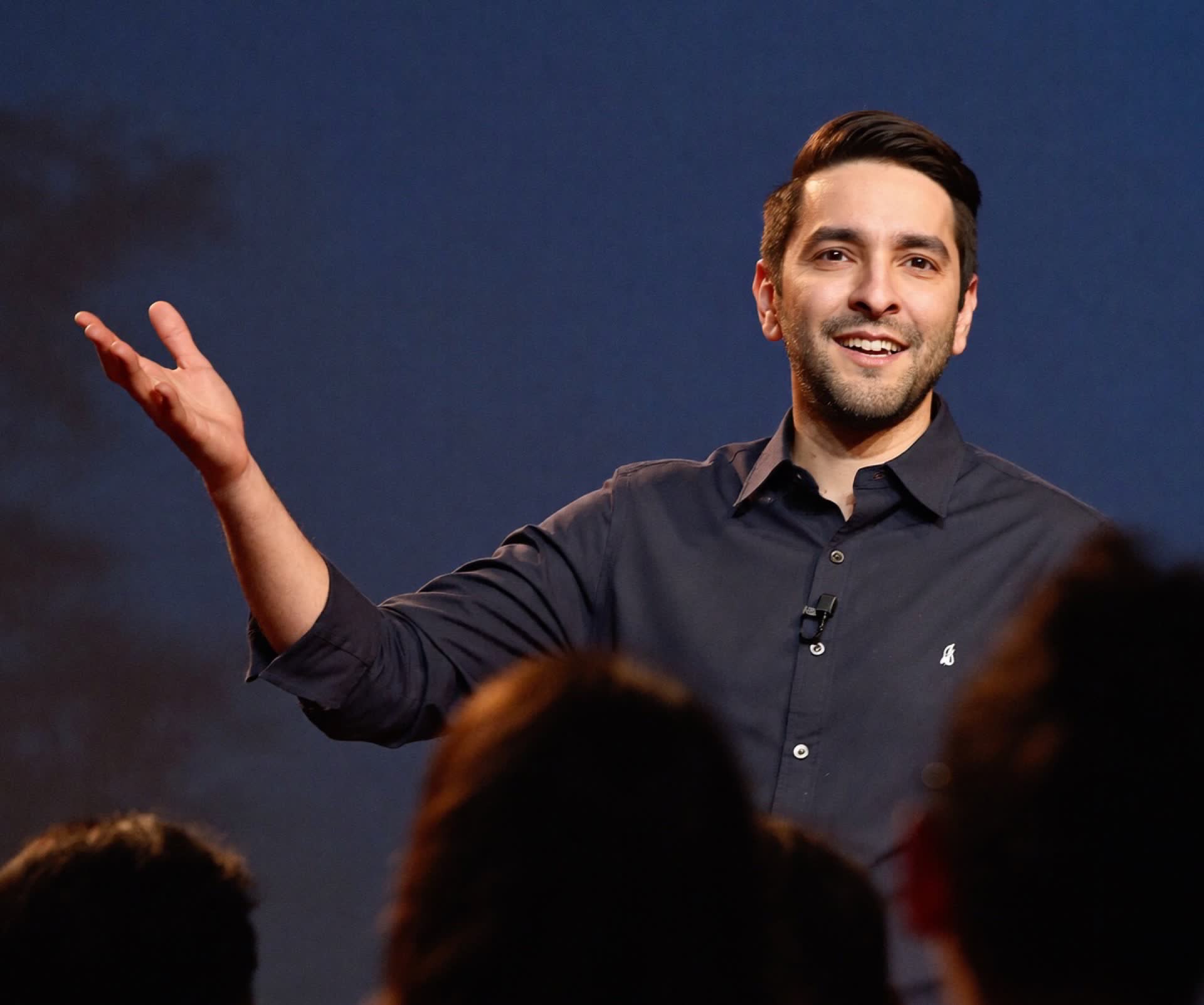
Dr. Sohail Naqvi — former HEC executive director and LUMS vice chancellor — argues that Pakistan's youth is its only real asset, that academia has failed to connect with industry, and that a three-month boot camp can do what four years of university often cannot.
Pakistan’s exports problem has one easy fix
The episode opens with Muzamil framing the conversation in economic terms before a single guest word is spoken. “Pakistan ki economy ko ek exports ka problem hai,” he says. “Us exports ko solve karne ka sabse aasaan tareeqa IT aur digital services hai.” The supply side, he argues, is the binding constraint — not the demand. Jobs exist globally, they can be done remotely, and Pakistan has a young population large enough to fill them. The guest he has brought in to interrogate that claim is Dr. Sohail Naqvi, CEO of Knowledge Streams, former executive director of HEC, and former vice chancellor of LUMS.
From Wah Cantonment to Purdue: building the foundation
Dr. Naqvi was born in Wah Cantonment, where his father had come on a government scholarship to work at the ordnance factory. He credits the town’s unusually cosmopolitan character — and its historically high literacy rate — to exactly that policy of bringing in educated engineers from across the country. Schooling began at Sir Syed School, then Cadet College Hasan Abdal from the age of eleven and a half, where he lived in hostel for five years. “Mein toh kehta hoon mein saadhe gyarah saal ki umr mein ghar se nikal gaya tha,” he tells Muzamil.
A broken right arm one month before his FSC exams — his writing hand — nearly ended the academic run before it started. The plaster came off two days before the exam. He sat it, passed, and applied to engineering universities abroad. Purdue University in Indiana offered admission and, crucially, affordable tuition as a land-grant institution. He arrived in January 1981, having spent the intervening gap year in Denmark with his father and then in Madrid learning Spanish through full immersion — a detail that says something about how he approaches learning generally.
At Purdue he finished his bachelor’s in three and a half years, partly because the Spanish credits transferred. In his final semester he took a graduate course, scored 99 in the first exam, and was immediately offered a research assistantship. He went straight into a combined master’s and PhD, completing both within four years of his bachelor’s. His dissertation was on electromagnetic wave diffraction — how light interacts with structures. He explains it to Muzamil the same way he once explained it to his future father-in-law: the mesh on the front of a microwave oven, and why the holes are sized so that the waves stay inside.
Scatterometry, a startup, and the pull back to Pakistan
The PhD led to a faculty position at the University of New Mexico, a research university where teaching and research ran in parallel. A consortium of semiconductor manufacturers had identified a measurement problem: as transistor sizes shrank toward the sub-micron level, verifying the dimensions of structures during chip manufacturing was becoming impossible with existing tools. Dr. Naqvi’s wave diffraction work was directly applicable. He and a colleague — Bob McKneel, an experimentalist to his theoretician — built a measurement device using laser light, created a company with their graduate students, and commercialised it. The field they created is called scatterometry.
“Jab aap theory mein le baithe banda baitha squiggle kar raha hai, woh samajh nahin aa rahi — lekin yeh application, that was fascinating. That’s out there changing the world.” He became a tenured associate professor. The company was eventually sold.
The pull back to Pakistan was not a single decision. It was, as he describes it, the standard Pakistani-diaspora conversation — everyone at every gathering says they want to go back — combined with a concrete opportunity. GIK Institute was being formed. He took a sabbatical, came to Topi with his family, and found the energy of building something new from scratch more compelling than the comfort of tenure. He never went back to New Mexico as a resident.
GIK, HEC, and the pattern of institutional decay
At GIK, Dr. Naqvi started as associate professor, became head of department, then full professor. He describes the early years as a chance to apply everything he had absorbed about undergraduate education in America. Muzamil presses him on something he has heard repeatedly from guests: that the first few batches of GIK, LUMS, and FAST produced disproportionately successful people. Is that about the students or the institution?
Dr. Naqvi’s answer is careful. He can only compare GIK students to American students, not to later Pakistani cohorts, because he stopped teaching after GIK. But he identifies a pattern that he considers a Pakistani tragedy: “Hum institutions bana dete hain — Pakistan Atomic Energy Commission ho gaya, NADRA ho gaya, HEC humne banaya, GIK banaya, LUMS. Very very rarely are we able to continue with it.” Someone arrives, takes control, governance fails, and the institution slides. Policy mistakes, he says, are expensive. Governance errors are fatal.
He spent ten years at HEC, from its founding in 2002 through 2012. The original idea was that higher education is an act of sovereignty — a country that can think for itself, train its own researchers, and own its own policy agenda does not need to borrow its intellectual framework from elsewhere. He uses the Soviet Central Asian states as a counter-example: every PhD candidate went to Moscow, so when the Soviet Union collapsed, those countries had no post-graduate infrastructure of their own. “Higher education is an ownership of the country of its own destiny.”
HEC’s early strategy had three pillars — access, quality, and relevance — followed by a second phase focused on universities building economies, communities, and leadership. World Bank funding came in: first $100 million, then $300 million, with the first project ranked among the Bank’s highest-performing globally. “Khushi yeh thi ke jo jo cheez thi na woh hamari thi, humne banayi, hamare ideas the.”
Why smart graduates are unemployable
After HEC, Dr. Naqvi spent five years at LUMS, did international consulting for the Asian Development Bank and World Bank, served as founding rector of the University of Central Asia in Bishkek for four years, and then returned to Pakistan to start Knowledge Streams.
The problem he set out to solve is one he had watched accumulate for two decades. Universities were producing graduates. Industry was saying those graduates were not fit for purpose. But the same graduates, taken to Dubai or the United States, would become high performers within months. Muzamil puts it directly: “Yeh kya wajah hai?”
Dr. Naqvi’s diagnosis is structural. Universities have no meaningful connection to industry. The elitist mentality that treats manual and applied work as beneath educated people means graduates arrive without the ability to build, test, or demonstrate anything. Import policies that make foreign goods cheaper than locally manufactured equivalents have prevented a domestic industry from forming that could absorb and train talent. And the universities themselves have become bureaucratic, focused on compliance rather than capability.
But the deeper problem is confidence and environment, not intelligence. “Tum achhe ho. Tumhe jis jisne kaha hai na ke tum achhe nahin ho — let’s throw that out of the window.” He argues that Pakistani students are, by any objective measure, highly capable — they have survived ferociously competitive admissions processes and rigorous programs. What they lack is the experience of being trusted.
The boot camp as an engineering problem
Knowledge Streams is Dr. Naqvi’s attempt to solve this as an engineer would: define the gap precisely, then close it. The name is plural deliberately — IT is the starting point, but the model is designed to expand into agriculture, medicine, and other sectors.
The structure is a three-month boot camp, two-thirds technical and one-third what he calls essential skills — communication, work ethic, the ability to hold a perspective and defend it in debate. “Soft skills” is the Pakistani term, but he treats them as core, not peripheral. Instructors come from industry. The curriculum is built from the best available global material, adjusted for what universities are actually producing. The final two weeks involve working on real projects from partner companies.
A pilot ran in January with 31 trainees from fifteen universities, supplied by two companies — Emblem Technologies and EMPG. “Pehle din unka kya haal tha, kitne sahme hue log the.” By the end, the transformation was visible. Gaps in fundamentals were identified and addressed. Faith was extended — including something as simple as letting trainees track their own tea consumption rather than monitoring them — because, as Dr. Naqvi puts it, if you tell young people you trust them, they behave accordingly. He draws a direct line to GIK, where Dr. Abdullah Sadiq ran exams without proctors. “America mein mein kabhi nahin baithta tha. Mein toh tumko exam dekar chala jaata tha apne daftar mein.”
The Lahore campus is 30,000 square feet, capable of running two sessions per day with 360 trainees each. The plan is to replicate it in multiple cities. The format is deliberately in-person. “Ladkon ko ladkiyon ke saath kaam karna seekhna hai at a professional level and vice versa. Aapne khade hokar bolna hai class ke saamne.” That cannot be replicated remotely.
Pakistan in 2050: choose the younger one
Muzamil closes by asking Dr. Naqvi how he sees Pakistan evolving — not conditionally, but as a genuine forecast. The answer is unambiguous. “I see the country evolving by or through its youth. That is the distinguishing feature of Pakistan and that is where all of the energy of this country is lying.”
By the end of the conversation, Dr. Naqvi offers a personal rule that doubles as a policy prescription. He was recently asked to choose a golf partner from two options. He chose the younger one without knowing anything else about him. “Pakistan needs to choose the younger one. Get all of us — we get out of the way. These people can take Pakistan to any height.”
Muzamil pushes back gently on his own earlier description of academia as thankless. Dr. Naqvi disagrees: “Jo students ki jo mohabbat hoti hai aur jo logon ki jo izzat hai — it is worth more than anything in the world.”


Never miss a conversation.
New episodes and the thinking behind them, straight to your inbox. No hype, no spam, no pitch.