Thought Behind Things
Khazanay sold a million used sneakers on the model Y Combinator told it to drop
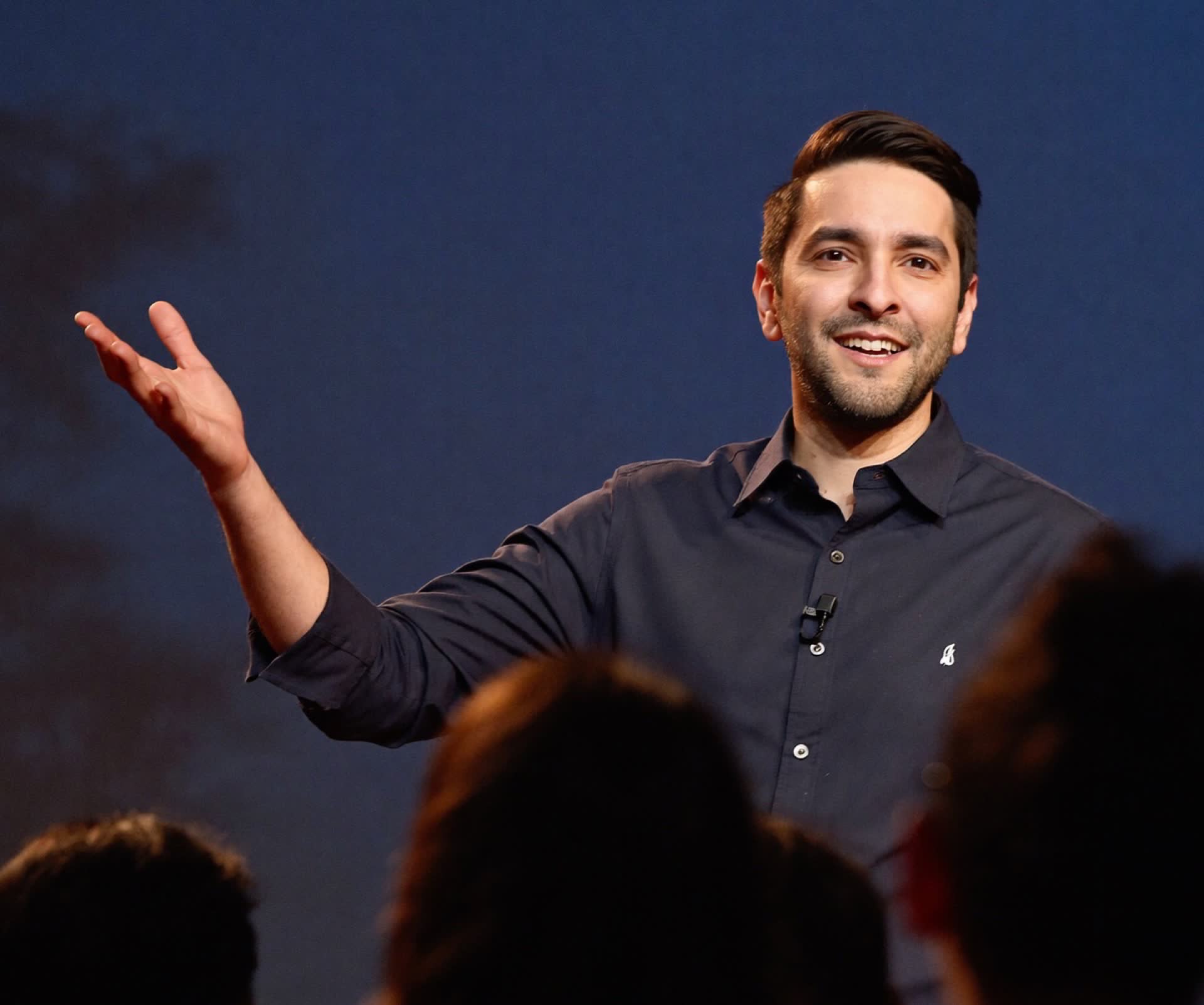
Khazanay CEO Usman Saleem on selling a million used sneakers, a Y Combinator interview over Skype, and why the marketplace model failed in Pakistan.
A business built on a buying-power gap
Muzamil opens with a pattern he has seen across the fashion episodes in the Endeavor Pakistan series. Pakistan has a large youth population that keeps moving toward brands. Local brands are growing, but demand for global brands is large too, and most buyers cannot afford them new. A business that sits in that gap, he says, has done something clever.
Khazanay is that business. It sells second-hand branded shoes, and Muzamil admits that in its early days he doubted whether it would work in Pakistan, given the stigma around used goods. The branding changed his mind. The company now has four retail outlets. His guest is Usman Saleem, its co-founder and CEO.
A father’s death at fourteen and a job at 8,500 rupees
Usman was born in Karachi. The event that shaped him, he says, was his father’s death. He was 14 and in class 8. His father, a heart patient who had suffered earlier heart attacks, ran an advertising agency serving pharmaceutical companies, and that business had started to struggle. The family had no wealth and lived in a rented apartment. At one point they had no car and travelled by bus. School fees became a problem until the principal gave them a discount, which let Usman finish his O-levels at St. Michael’s Convent School.
His elder brother, five years older, became head of the family. That brother had already left school in class 10 because the family could not pay, and he sat his O-levels privately. Years later he went back to study, became a lawyer, earned an LLM from UC Berkeley on a scholarship, and now teaches at IBA while running a business.
Usman began freelancing as a graphic designer in 2006. During his A-levels he designed his school’s magazine, earning about 3 lakh rupees for the year’s project, paid in one lump sum. The money went to family costs. He then self-studied for the ACCA at the Defence Central Library in Karachi, because it was the cheapest route: 14 papers at roughly 60 to 70 pounds each. That led to a trainee job at Ernst & Young, where the stipend was 8,500 rupees a month, enough for lunch and travel.
Muzamil pauses the story here. He says Usman is about the 475th person he has interviewed, and in the comments he sees many people who explain success away as privilege, family money or an army background. “A vast majority of the population refuses to dream,” he says. He asks why Usman kept choosing long-term bets like education over quick money. Usman credits his father, an educated man, and a family in which study always came first. “There was no question about it,” he says. “We had to study.”
Three failed ideas in a few months
Within a year at the audit firm, Usman knew accounting was not for him. His background was creative, so he did an MBA at the Karachi School for Business and Leadership, which the Dawood Group had launched, on financial aid. He started in 2013 and graduated in 2015. His aim was to move into marketing. Employers kept offering him finance roles instead. Coke, he says, invited him to a finance traineeship. Three or four months passed while classmates found jobs.
So he tried businesses. One early venture was a tissue brand called Life Tissues. He bought tissues from a local importer who brought them in from Dubai, packed them in fancy boxes and sold them shop to shop from an old high-roof van. Shops wanted credit, payments were delayed until after Eid, and he shut it down. His brother then suggested exporting chicken feet to China. Usman found a cartel controlling supply and a refrigeration problem, and dropped it within two or three months. A third idea was Islamic insurance for mobile phones sold online, under the name chhatri.pk, which IBA’s incubator accepted.
None of them was making money fast enough. Khazanay, he says, came without planning or a feasibility study. He had been a lunda bazaar customer since school, buying used football boots and basketball shoes, including Jordans, for 400 or 500 rupees from Lighthouse market and the Sunday bazaar.
Three and a half lakh rupees and a chips carton
Muzamil asks what value an online store adds to a market that already sells. Usman says he had seen everyone at the Sunday bazaar, foreigners and wealthy Karachiites included. People bought for three reasons. “Original, branded, cheap,” he says. Nobody needed convincing that lunda sells. The open question in 2015 was whether people would buy it online, when Pakistan had only a few dozen e-commerce stores.
He started with 3 to 3.5 lakh rupees from his brother and went to a used-goods market run mostly by Pathan and Afghan traders, accidentally wearing trousers and a shirt where everyone wore shalwar kameez. He bought shoes at random. On the first day he scrubbed 20 or 30 pairs himself with detergent and learned he could not keep doing it. Then he found someone who would wash a pair for 20 rupees.
The photo studio was improvised. He took an empty Lays carton from a corner shop, cut windows in two sides, covered them with butter paper to diffuse the light, and set two study lamps on a vegetable stand. He shot the shoes on an iPhone 5. He borrowed OLX’s 9-out-of-10 condition scale to grade each pair. A classmate’s brother, a computer science student at IBA, built the store on WooCommerce. Usman designed the ads himself and learned Facebook marketing from YouTube. The first order came on the first day and went out by Leopards courier. Khazanay was then incubated at IBA for two years, which mainly meant free internet and office space.
The stigma was real. Friends thought he was in the junk trade. When his marriage proposal went to his future father-in-law, Usman did not tell him what he did for three or four months, and his wife still teases him about it. “There was no rule book. There was no benchmark,” he says, and he argues Khazanay had to invent its own standards for grading, washing and pricing.
The Y Combinator interview he took on Skype
In 2016, almost on a whim and at his brother’s suggestion, the team applied to Y Combinator, the Silicon Valley accelerator behind Airbnb, Dropbox and Stripe. One morning an email invited them to an interview in California, with travel paid. Usman’s US visa went into administrative processing, so his brother and an early partner, Fareed, who has since left the company, went in person. Usman joined on Skype. Sam Altman ran the interview with his feet up on the table.
The first interview went well, and YC called them back for a rare second one. The feedback was about scale. Usman recalls the message: “If you want to become a billion-dollar company, you will have to buy a million dollars of inventory.” YC told them to move to a consumer-to-consumer marketplace, take shoes from one consumer, refurbish them, sell them to another and keep a commission, becoming in his words “the Daraz or Amazon of used shoes.” They were told to test it and reapply.
They tried, and it failed. Khazanay only accepted original, branded products, and by Usman’s estimate 99 percent of Pakistan did not meet that bar. Most people wore replicas or unbranded shoes. The team returned to buying stock and never reapplied.
Grades, containers and a supply ceiling
Khazanay now imports its own stock instead of buying in local markets. Usman describes a three-step quality check. Grade A is nearly new, sometimes so new it needs no washing. Grade 1 is used but clean. Grade B has faults such as holes or peeling. Because most of the stock is sports shoes, and a fault fails fast when someone runs in it, the company stopped repairing B and C grades and now sells them on to the local market, where cobblers fix them.
Muzamil says the real asset is the refurbishing engine, and asks why it was never applied to more categories. Usman says it was. Early on Khazanay sold used belts, books, men’s shirts, toys, electronics, sports goods and tennis rackets. Each needed its own sourcing and its own refurbishing process, and it became overwhelming, so the team narrowed to shoes. “We went into shoes and we still have not been able to come out of them,” he says.
Supply is the binding limit. Containers began as random mixed loads. Now they are sorted. Sports shoes sell best and cost the most, but people in the US and Europe do not give many of them away. Even when Khazanay asks a supplier for everything available, a container takes about three months to fill.
Four stores built like warehouses
Usman gives the scale. Khazanay has sold over a million pairs since it began, processes more than 10,000 orders a month and has a team of more than 130. The first store opened in 2022 on Zamzama in Karachi. The second opened in 2024 near MM Alam Road in Lahore. The third and fourth opened in May and June 2025, in Islamabad’s I-9 and in DHA Karachi. Asked whether all four are profitable, he says yes.
Muzamil asks why Islamabad’s store is in I-9 instead of a shopping area where Bata and Service already sit. Usman says the idea came from visiting Ross, Marshalls and Burlington in the US. Those stores sell overstock, need huge floors, and are often out of the way because shoppers seek them out. A Khazanay store works the same way. Every pair is on display with nothing in a back room, so a bigger store means more variety. He had not tested this in Karachi because its warehouses sit in industrial zones he thought customers would avoid. I-9 is central and close to Rawalpindi, with a false-ceiling warehouse on one side of the store and a welder nearby. It is now the company’s number one outlet.
Muzamil connects this to his earlier conversation with Salman Parekh of Manto, who told him his unsold stock keeps piling up. As Pakistani brands mature, he argues, the country needs its own Ross and Marshalls for their leftovers. Usman says he had the same idea after his US visit and approached local brands. They refused to hand over leftover stock. He thinks the newer founders may see it differently, and he calls it a big opportunity for anyone listening.
Clothing, women buyers and the PR closet
Usman says used clothing drew as strong a response as shoes back in 2015 and 2016, but he had to choose one. He points to ThredUp in the US and Thrift Plus in the UK, and says clothing is a much bigger market. Khazanay plans to enter it, probably in 2026, with sportswear, casual wear, men’s and women’s shirts, hoodies and winter wear. He will start with his US suppliers and may move to local stock later.
Muzamil pitches a different supply source. Many Pakistani households pack away part of their wardrobe each season. What if they could send a whole box to Khazanay instead? Usman is not sure most people have that many branded clothes. “Here it’s a case of keep wearing it until it tears,” he says, admitting he wears his own shirts until the collar fades. He says most of his buyers are men, because women in Pakistan rarely wear sports shoes with shalwar kameez.
Muzamil answers with an example from home. His wife, Humna, is a creator, and followers regularly message her asking to buy the clothes she posts, and even their children’s outgrown clothes. “Men as a buyer is the worst buyer,” Muzamil says. Men research everything, fight over every rupee, and never replace anything, and he says women often buy men’s clothing too. He adds that a creator can receive 10 to 15 PR pieces a month that she has no room for. Khazanay could buy them, give her a store page to link from her profile, and turn every creator into a marketing channel. Usman calls it a very good idea.
Profit first, and money on murabaha terms
Asked about margins and investment, Usman says the startup culture of big funding rounds did not exist when he began. “My bread and butter was Khazanay,” he says. “Profit was the main objective, not the sales.” The company is bootstrapped. Some profit went home and the rest was reinvested, and he has no plan to raise money or sell.
Muzamil lists the routes to capital: venture capital that wants top-line growth, private equity that wants returns, debt markets where the government takes most of the money, a public listing and franchising. He argues that a listing lets loyal customers who watch a brand grow become its investors, the way people can see a chain like Cheezious expand. Usman says his brother has pushed for a listing from the start. The team has looked at the criteria and is not there yet, so the idea is shelved for now.
Khazanay did build a full franchise structure, but the first franchisee, a friend, wanted the same pairs the website was selling. Because the company cannot control what brands, sizes or conditions arrive, it could not meet that demand fairly.
Instead it uses what Usman calls a murabaha model. Friends and family buy stock on Khazanay’s behalf and sell it to the company at a markup, and Khazanay pays them after a year. His example: a lender buys goods for 1 lakh rupees and sells them to Khazanay for 1 lakh 10,000. Muzamil asks whether the return beats inflation. Usman says the rate is set by looking at what the lender could earn elsewhere, and it has ranged from 20 to 30 percent after a year. Last year it was 30 percent.
Pakistan in 2050
Muzamil ends with his usual question about Pakistan in 2050. Usman’s answer is blunt. “Pakistan, I would say, is not a business-friendly country,” he says. He does not see things improving. He mentions the period about two years ago when foreign exchange ran short and banks stopped making import payments, which closed many businesses. Electricity and internet are unreliable, and Khazanay has installed its own solar. The company is looking at expanding outside Pakistan to hedge its risk. If the basics were fixed, though, he says Pakistan is a very large market and businesses would flourish.
Muzamil offers two counterpoints. The government recently removed right-of-way charges and approvals for laying fibre optic cable, with the National Highway Authority and Pakistan Railways opening their land, so anyone can now deploy fibre. On power, he says plants that came online between 2018 and 2023 carry ten-year payment plans, so pressure should start to ease from 2028. By 2033, he expects costs on Pakistan’s 50,000 megawatts of capacity, of which only 22,000 to 25,000 is used, to drop sharply. He agrees the mood is poor, and hopes the country’s recurring crises come less often.


Never miss a conversation.
New episodes and the thinking behind them, straight to your inbox. No hype, no spam, no pitch.