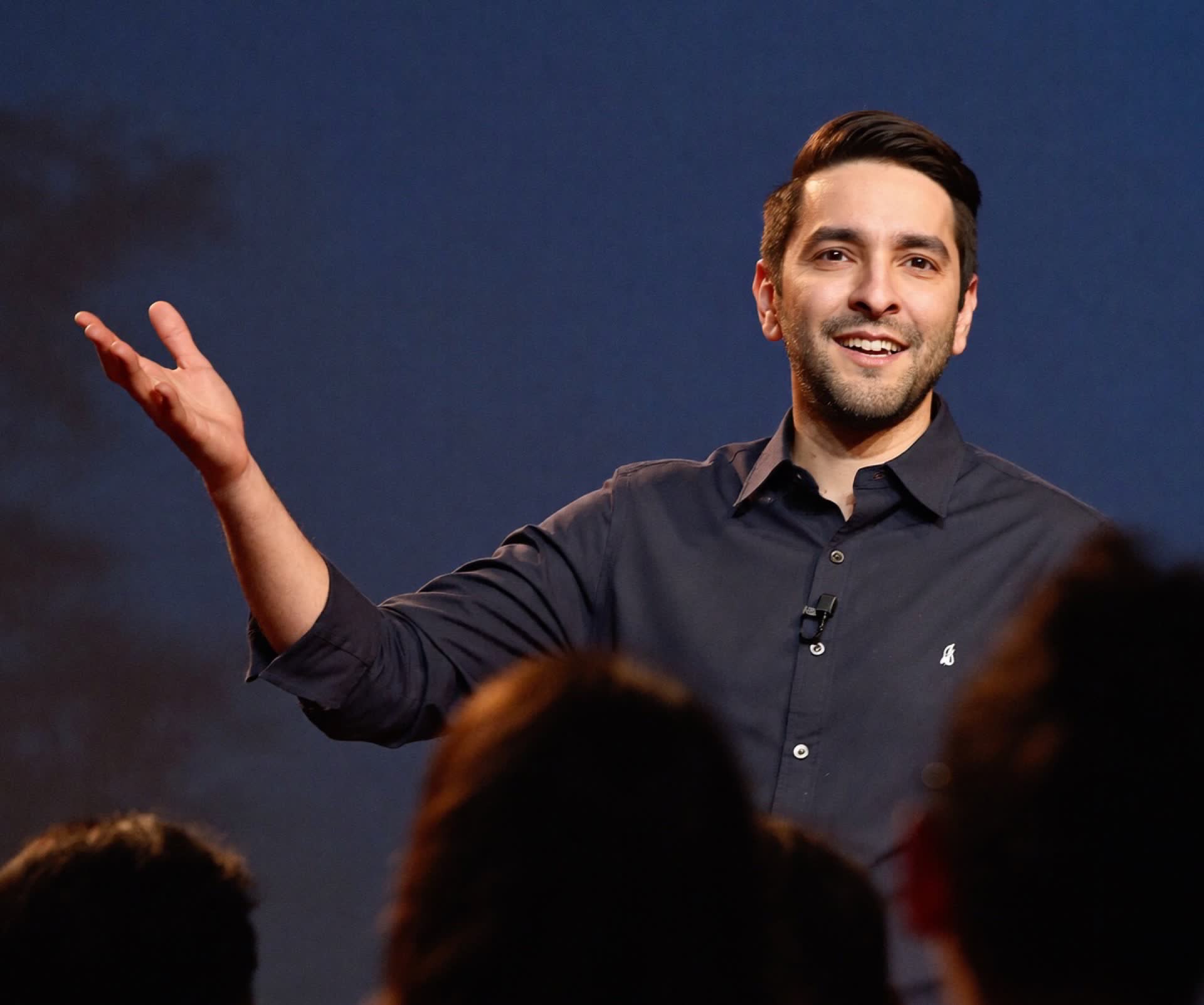
Thought Behind Things · Apr 14, 2026 · 1:19:56
Pakistan is energy abundant. It just runs a distribution problem.
Profit magazine's Farooq Tirmizi returns to argue that Pakistan's biggest businesses are sitting on capital with nowhere to deploy it, that the load shedding story is now distribution rather than supply, that the world is drifting into a US-versus-China war that will hit Pakistan through China's import flows, and that India-Pakistan round two is, sadly, more likely than not.
with Farooq Tirmizi
15 min read
The energy in Islamabad on the eve of peace talks
The episode opens with Muzamil acknowledging a rescheduled recording — his original guest could not make it, and his wife was speaking at the Harvard Pakistan conference, leaving him solo parenting. Farooq Tirmizi, managing editor of Profit magazine, agreed to come on instead, fresh off a flight back to The US on the eve of regional peace talks being hosted in Islamabad.
Muzamil is clear about why he wanted Farooq on. Profit, he says, is one of the few publications he has ever paid for. “I have not seen someone consistently churn out quality content and actually fight the system,” he tells the audience, framing Farooq as the rare nuanced read in a clickbait economy. The brief for the episode is just as clear: Muzamil has been away from the discourse, the regional situation is volatile, and he wants to war-game Pakistan’s bull case, bear case, and base case with someone who reads the data rather than the omens. “Economist najoomi nahin hote,” he says — economists are not fortune tellers; they look at data and identify directions.
Farooq’s opening read of the mood in Pakistan is wry. He recalls a tweet asking what one has to do to ward off the evil eye from Pakistan, because “we’re not used to our government behaving in a responsible manner, let alone behaving in a responsible manner at a time when a lot of other people are behaving irrationally and irresponsibly.” He calls it a healthy mix of skepticism and surprised pride.
Why the biggest business families have stopped deploying capital
The conversation quickly moves to a structural problem Farooq has been picking up in off-the-record meetings with Pakistan’s largest CEOs. He names one on-record source — Mohammad Ali Tabba — and otherwise speaks in aggregate. The pattern is the same across the room. The largest Pakistani companies have grown to a size where the next move requires government cooperation they cannot rely on. International expansion is impossible without the state. Domestic expansion past a certain point runs into regulated industry. So the capital sits.
“They are definitely a lot of companies sitting on a lot of cash thinking, where do I deploy this?” Farooq says. The result, he points out, even shows up in his own work: when nobody is doing interesting and risky things with capital, “there aren’t a whole lot of stories to tell.”
He adds a second, less obvious structural reason: generational cycles. The second generation of Pakistan’s biggest business families is winding down. The third is either taking over or has just taken over. “That tends to be the most risk averse generation,” he tells Muzamil. None of this means nothing will happen — it just means the transition will be quieter than the headline narrative suggests.
Heavy industry, assembly, and the Air Link story
Muzamil pushes the obvious question: Pakistan has a vast consumer class, imports almost everything, and yet has never built a real heavy industry base. Why?
Farooq’s answer is patient. Heavy industry is the most capital intensive activity an economy can take on, and it depends on a higher savings rate than Pakistan has historically generated. The easier path is the one the country is already on — sugar mills at one end of the spectrum, mobile phone assembly at the other.
He uses Air Link as the example. “Yaar mobile ki dukan se shuru hua tha,” he says — it started as a mobile phone shop in 2011. The company moved from a single store to multiple stores, then into mobile phone assembly, and is now moving into Acer laptops and television screens. The parallel he reaches for is unexpected: Sony also started as a shop in Tokyo. Muzamil adds Ronin to the list — a headphones brand he interviewed earlier, which built its own factory after several years of just buying and reselling.
The pattern, both men agree, is that industrialisation in Pakistan is happening bottom-up. The story is rarely the established industrialist building a plant; it is the trader extending the production cycle from six weeks to ten, capturing a little more margin, and earning his way into the next rung.
”Pakistan is about to become an energy abundant country”
Then Farooq drops the line that Muzamil immediately knows will provoke half the audience. “We’re about to become an energy abundant country.”
Muzamil predicts the reaction on behalf of his viewers — load shedding is still constant, gas cuts off at eight in the evening. He asks Farooq to explain.
Farooq’s framing is the most important argument in the episode. The country’s load shedding problem from 2008 to 2011 was a supply problem — there simply was not enough electricity. That is no longer true. “The issue is just that the government has set up too many power plants for which it has to make too many payments, and sometimes they just turn it off literally because they just don’t want to make the payment.” Add solar’s astonishing speed of adoption — Pakistan was the third largest deployer of solar last year — and the country’s energy challenge has flipped from supply to distribution.
A distribution problem is harder politically, but more solvable structurally. The cleanest fix is to route excess capacity to large industrial consumers. Marginal generation cost on coal — about 85% of variable cost — is under ten rupees per unit, with abundant fuel for the next decade and beyond. Capacity payments, the noisiest line item in the cost stack, taper from 2028 and largely roll off by 2033. That is not a permanent ceiling. It is a two-to-five-year transition.
The implication is large. “It has gotten to the point where a very heavy energy intensive industry is now possible in Pakistan in a way that it wasn’t even five years ago,” Farooq says. Aluminium — possibly the most energy intensive industry in the world — is on the table for the first time.
The line that defines the next thirty years
In the middle of the energy conversation, Farooq delivers the line that lands hardest. “The core theme of the Pakistani economy over the last ten fifteen years and certainly over the next thirty years is that the people of Pakistan are done waiting for the government to do anything. We’ve just started doing things.”
Muzamil takes the framing and runs with it. “Twenty years later that is gonna be the story,” he says. The private sector will simply have grown too large for the government to slow it down. The episode then circles back to solar policy — Muzamil’s pet concern — and the question of whether Pakistan will deregulate the electricity market enough to let provincial and neighbourhood-scale operators emerge. Farooq is realistic. The federal government recognises the need, but has not picked a direction. Energy is a natural monopoly market, and Pakistan’s federal-provincial overlap makes the regulation hodgepodge.
Mining, copper, and the long road to scale
The discussion pivots to mining as the natural complement to assembly. Mohammad Ali Tabba’s group, Farooq notes, is going heavily into copper — “a vital element of electronics,” and increasingly the metal that determines who wins the electrification race. Muzamil pulls in his own family example: his maternal uncle has been exporting chrome from Balochistan since the nineties, and only in the last two years has the operation moved into onshore refining at facilities in Risalpur and the south, lifting per-truck value before the ore even leaves Pakistan.
Farooq adds the global context. The scale required to be globally competitive in heavy industry has shifted by an order of magnitude over the last few decades — a 100,000 ton copper smelter that would have been competitive in the 1970s is irrelevant against a five-million-ton modern plant. Pakistan is therefore entering at a disadvantage. But the country is approaching it the right way: bottom-up assembly on one side, mining on the other, eventually converging to the full supply chain. “It’s gonna take some time,” he says, but the tipping points are non-linear — value capture accelerates sharply once a producer crosses certain thresholds.
Digitisation, traceability, and the death of the cash economy
Muzamil brings in a thesis from a previous guest — Faisal Aftab — that Pakistan’s structural inefficiencies are essentially a function of its off-the-books cash economy, and that mass digitisation of finance will collapse the corruption stack underneath. Farooq agrees, and adds the data points.
Last year, Pakistan crossed an inflection. More transactions were conducted through bank mobile apps and web apps than through cash withdrawals from all ATMs and branches combined. Tax filing has gone from a handful of people Farooq knew personally in 2013 to a near-default behaviour today. Account creation has crossed 100 million — heavily double-counted, but moving in the right direction. “We are really at that cusp of taking off where I think people are going to be using a lot more digital money,” he says, and the most likely winners on the deposit side are, somewhat counterintuitively, the legacy banks.
The Iran war, the price of oil, and Pakistan’s quiet luck
Later in the discussion, the conversation shifts to the regional conflict. Muzamil wants the war-game: what happens if the conflict ends, and what happens if it escalates?
Farooq’s read is unexpectedly upbeat in the near term. He quotes Otto von Bismarck — “God makes special providence for drunks, fools, and The United States of America” — and argues that Trump, by accident rather than design, has done something strategically clever. The Strait of Hormuz is staying open, but the cost of keeping it open is shifting from the United States to China. China is the largest importer of the oil that flows through it. The US is now a net surplus producer with statutory authority to shut exports if it ever chooses to. The result: the Americans are unusually insulated from a global oil shock, and the Chinese are unusually exposed. China, accordingly, is the one telling Iran to stand down.
On Pakistan specifically, Farooq’s read is granular. There has been no material disruption to Pakistan’s oil flows — ships are still hitting Karachi Port on three-day sailing times. The country has lost roughly 15% of its gas supply, which is “noticeable but not catastrophic.” Fertiliser plants have been partially shut down, LPG is harder to get, and gas load shedding is up. But the conflict has also pulled Pakistan out of some unfavourable Qatari contracts. Twelve months out, he expects high prices but economic activity back where it was.
Saudi troops, Iranian gas, and aggressive neutrality
Muzamil reads recent moves through a wider lens — Saudi-Pakistan defence deals, a reported $12 billion arms deal with China, a Central Asia trade corridor opened through Gwadar, fuel selling at 280 rupees in Balochistan. “Suddenly there is a lot of activity on the regional connectivity,” he says, asking whether Pakistan is finally building a regional economic role rather than just a security one.
Farooq is precise. Pakistani foreign policy gets one thing right: aggressive neutrality between Iran and Saudi Arabia. Every move toward one is balanced by a move toward the other. The Gwadar-to-Central Asia route is, in his view, “not an economically viable route” — a diplomatic gesture, not an economic strategy. He is skeptical of the corridor thesis altogether.
What he is not skeptical of is the Iran-Pakistan gas pipeline. If The US partially desanctions Iranian energy, the South Pars field — the same field Qatar buys from — becomes accessible by pipeline rather than as expensive LNG. “That really is a major game changer for us,” he says. The Saudis fund Pakistani defence in lieu of Washington. The Iranians may eventually fund Pakistani energy in lieu of Qatar. “Instead of getting aid from Washington, Pakistan’s getting aid from Riyadh.”
Pakistan’s actual economic future, in Farooq’s reading, is not the corridor story. It is attracting investment, growing the domestic economy, and exporting where it can — a less romantic story than the silk road revival Muzamil keeps hoping for.
”The world is now at war”
When Muzamil asks the doomsday question — what if the conflict escalates — Farooq turns flatly pessimistic about the wider picture. “We are at war. The world is now at war.” He frames the next few years as the slow build to a US-led-versus-China-led conflict that will be the war their generation refers to as “the war” for the rest of their lives. Pakistan is currently in both camps, which is rare and useful, but the moment direct conflict breaks out, the most unmitigatable hit will not be food or fuel. It will be Chinese capital and goods flows, which Pakistan depends on far more than it appreciates.
He invokes The Guns of August, recommending it explicitly. Forty percent of Germany and Britain’s trade was with each other on the eve of World War One. They went to war anyway, over what he calls “one of the stupidest wars that the world has ever seen.” Regional trade interdependence works, he says, “until it doesn’t. And then it collapses very dramatically.”
The one thing Pakistan has done remarkably well in the current conflict, Farooq notes, is physical security of supply. The Pakistani flag has functioned, in this regional conflict, the way the ambulance siren functioned in 1990s Karachi when MQM and police were exchanging fire — everyone stops to let it through. “I think that is a remarkable achievement,” he says. In a world where chaos increases, the ability to maintain calm in the middle of the storm is Pakistan’s economic edge.
Indonesia, the Strait of Malacca, and a story about blood
Muzamil escalates the war-game. He points to news of a new US defence partnership with Indonesia and reads it as Washington securing leverage over the Strait of Malacca, where 80% of Chinese trade flows. That, he reminds Farooq, was the entire original logic of CPEC — Pakistan as China’s alternative route if Malacca was ever choked.
Farooq tells him a story he had not heard. “A little known fact about the Indonesian War of Independence was that 600 Pakistani soldiers fought in it, and all 600 died in it.” Indonesia, he says, has not forgotten. “The Strait of Malacca will be closed for everybody. It will not be closed for Pakistan."
"China is weaker than it looks”
Then comes the line that gives the conversation its sharpest edge. “I think China is weaker than it looks,” Farooq says.
His evidence is behavioural. China has war-gamed a Taiwan blockade for years and at any moment has hundreds of ships in position. Two or three perfect openings have come and gone — the Trump assassination attempt, the closing months of a visibly disengaged Biden presidency, an America divided beyond function. “If not then, then when?” he asks. The fact that Beijing did not move at the moment of maximum American distraction tells him they do not believe they are as strong as Washington believes they are. The American consensus, he says, is that the world is firmly bipolar and that China has hit parity, perhaps overtaken. “I don’t think it’s true, and I don’t think the Chinese think of it as true.” Any war, he concludes, will happen because the world stumbles into it, not because anyone decides to.
Muzamil pushes back, courteously but firmly. The same pre-war confidence existed about Iran, he reminds Farooq. The Iran-US conflict and the recent India-Pakistan exchange both demonstrated how much the nature of war has changed in the twenty-first century. He cites a hedge fund manager’s World War Two analogy: American tanks were half as good as German tanks, but America could build five for every one Germany built. Raw industrial power decided the war. Today, he argues, the US industrial choke has been visible — capacity constraints, supply chains, rare earths — and the narrative has flipped from raw power to missile inventory.
Farooq concedes the unpredictability. The conflict, he says, may not be triggered by a decision at all. Iran, at one point, devolved missile command to individual units, meaning launches were happening without central orders. One stray hit on Ghawar — the Saudi field that produces roughly half the country’s oil — would end the regional question instantly. “Game over, man.” The Israelis, he adds, are acting more irrationally than he has ever seen them. He puts the probability of a major escalation at higher within the next two to five years than not happening for ten.
India-Pakistan round two
By the end of the conversation, Muzamil saves his last question for the closest threat. Does Farooq think India-Pakistan round two is coming?
“Until last year, I would have said no,” Farooq replies. “But now I am afraid that you are probably correct, that such a conflict is all but inevitable.” His reasoning is structural. India, to become a great power, needs to stop paying attention to Pakistan. The rational part of the Indian establishment knows that and says so out loud, while the system as a whole continues to obsess. Either Indian politics reshuffles dramatically — which he will not predict — or it lashes outward, and the most politically consensus-friendly target is the one with the most historical practice attached. He closes with a line he learned in high school. “Don’t believe your own bullshit. And I unfortunately think the Indians believe their own bullshit.”
Muzamil wraps the episode honestly. “Lots of optimism, lots of pessimism. I don’t know which way to go.” The tragedy of the moment, he tells the audience, is the gap between the opportunity in front of Pakistan and the irrationality of the seventy-year-olds running the rest of the world. He signs off the way he opened — asking the audience to share their own read in the comments, and noting, half ruefully, that doomsday bunkers are now a real business on YouTube.
Full transcript
नमस्ते नमस्ते नमस्ते welcome back to another episode of Thought Bathing Things. कल की episode unfortunately नहीं आ सकी. मेरे जो guest थे जिनके साथ मैंने कल करनी थी उनको मुझे last home में reschedule करना पड़ा unfortunately I was solo parenting my wife was traveling. I was very proud of her. She was speaking at the Harvard Pakistan conference. If you guys haven't seen that, you know, there's a bunch of very cool पाक्सानीs got together and, know, thought about how Pakistan can potentially progress. A lot of academics there as well. So we'll put a link somewhere. You can check out what's been happening there. But because obviously solo parenting की वजह से आपको बच्चों को संभालना होता है and unfortunately वह time match नहीं हो सका. The the guest was gracious enough to actually reschedule it today and so finally we have फारूक तिर्मीज़ी with us today. He was or is, I think he still is but he was the managing editor for profit magazine for Pakistan and being such I mean that's one magazine that I am personally a huge fan of. मैंने ज़िंदगी में बहुत कम चीज़ों के लिए pay किया है. मैं वह torrent वाला बंदा हूं लेकिन profit magazine मैंने हमेशा pay किया है. हालांकि Pakistan में तो बंदा वैसे किसी चीज़ के लिए pay नहीं करता and that's literally simply because the fact कि just the sheer quality of content in the, in a world full of clickbait crap. I have not seen someone consistently churn out quality content and actually fight the system. Like, they literally fight the system when बड़े बड़े international outlets भी जो हैं वह eventually सकम कर गए on the clickbait advertising model. These guys have done a phenomenal work and therefore चूंकि वह phenomenal work है तो उनकी understanding भी बड़ी nuanced और बड़ी मज़े की होती है. We've had a couple of episodes with फारूब भाई previously as well. आज के episode का context बड़ा simple है. मैं दिरव्यान में गायब रहा हूं और उस time के ऊपर Pakistan की economy में क्या हुआ, क्या नहीं हुआ, सच्ची बात है, कोई समझ नहीं आई. And so I've been recently trying to figure out कि कहां पर आज खड़ी हुई है economy और किस तरफ़ जा रही है? ख़ासकर in the backdrop of very very turbulent times as you guys know, there is a regional conflict जो कि further शायद मज़ीद बढ़ जाए, शायद finally थम जाए. लेकिन उस conflict की वजह से बहुत सारे लोग जैसा कि अली खित्र भाई ने अभी recently बताया हमें कि you know potentially Pakistan की बहुत सारी चीज़ें नई opportunities arise कर सकती हैं. There are changes on the horizon if for example certain scenarios pan out. अब यह scenario का word मैंने बड़ा use किया और इसको मैं ज़रा clearly यहां पर बोलना चाहूंगा because जब भी economy वाली episode होती है ना तो उसके ऊपर नीचे आ करके एक तो आपको India crowd आता है उसको तो मैं कुछ नहीं कह सकता वह तो not withstanding that but बहुत सारे पाकिस्तानी भी आते हैं और वह आकर के scenarios की discussion को या analysis को predictions ले लेते हैं. वह नजूमी expect करते हैं. Economist नजूमी नहीं होते. Economist data को देखते हैं और उसकी basis के ऊपर certain directions identify करते हैं. आपका भी काम है कि आप जाकर के different scenarios को देखें और फिर एक conscious और एक educated decision बनाए अपनी life के बारे में कि आने वाले वक़्त में आपने क्या करना है? So आज हम थोड़े से scenarios को समझेंगे, figure out करेंगे कि potentially Pakistan का एक bull case, एक bear case या एक जैसा चलता आ रहा है वैसा वाला case क्या हो सकता है? परू भाई first of all thank you so much for taking the time out. I know you were traveling. You just landed back to The US and you particularly, you know, right on the eve of the the peace talks. I'd love to know as a starter, first of all, thank you for coming in. And second of all, what was the energy in Pakistan while those peace talks were were happening and being hosted in Islamabad?
Oh, right. Thanks so much for having me back. Yeah. The the the energy, I think, can be summed up with this tweet. I saw somebody asking कि यार Pakistan के लिए सत्खार निकालने के लिए क्या करना पड़ेगा? तो that that's basically our attitude कि यार we can't, we're not used to our government behaving in a responsible manner, let alone behaving in a responsible manner at a time when a lot of other people are behaving irrationally and irresponsibly. So so that was I thought a healthy amount of skepticism and a healthy amount of, like, pride but surprise. So that I thought is a is a is a good mix to have.
Makes sense. What was generally beyond the peace talks? I mean, Pakistan, you I think regularly visit. But what was the energy there overall in terms of the economy, in terms of the sentiment? ज़हरी यह तो एक बड़ा एक छोटा छोटा छोटा बिल्कुल recently आया. But we we know that sentiment has been up and down and more down than up. And so what was the general sentiment out in the markets? Yeah. Yeah,
I I will say the sentiment this time around I'm I'm a huge Pakistan optimist as you might know. I've I've sort of wrote an article series called the bull case for Pakistan. I'm probably gonna turn that into a book at some point. And, so I'm I'm generally very bullish on Pakistan, and I remain so. But I will say there were some things that made me a little bit concerned and and made me think about I I don't think they're long term hindrances, but they are a problem to be overcome. So, I generally try to make it a point to talk to CEOs of of some of the largest पाकिस्तानी companies. I'm not gonna name names, although I interviewed मोहम्मद अली तब्बा and तब्बा and that appeared in profit. So, I don't know if you saw that. So, I did speak to him and that's public record. But I've spoken to a couple of other people at a similar level to मोहम्मद अली तब्बा and those were off the record conversations. But the overall sense I got was that there are a lot of people in Pakistan who have grown their businesses, they're they're quite large now. And they kinda don't know what to do with their capital because once you get to a certain size, it's impossible to move without the government without requiring a lot of government feedback and a lot of government permissions and things like that. You just there's there's only so much you can do in small industry. There's only so much you can do in in things that are not very tightly regulated. And, certainly, there's nothing you can do where if you wanted to do, for example, an international expansion. That's just not without the government of Pakistan having a huge input in what you're saying. And there's a lot of there's a lot of companies in Pakistan that have hit that point where they're like, okay. We we grew as much as we could in our existing businesses, and they're kinda stuck trying to figure out what the next step is. They have I don't wanna say that they've given up because I don't think they have. But they are definitely a lot of companies sitting on a lot of cash thinking, where do I deploy this? And and because they are still in that phase of they don't know where to deploy that capital, you're seeing the situation. And I see this, like, when writing for profit, I'm no longer the managing editor, I do contribute, is if people aren't doing interesting, risky things with their capital, there aren't a whole lot of story stories to tell. There's a handful of interesting stories that we can still tell and talk about, and and I'm happy to get into some of those. But the overall thrust is that people are still very risk averse and still haven't figured out where the next set of opportunities is gonna come.
So it's it's, do you think it's a it's a stability problem then? कि यार situation is so turbulent कि मैं इस वक़्त risk नहीं लेना चाहता because it can go either or way which I make which makes sense because right now we are really at the edge. We can't say कि you know हम वह जो एक moment होता है अभी recently मेरी दो तीन podcasts हुई तो उस पर इस बार यह बात हो रही थी कि normally boom bust होता है ना तो इस बार boom नहीं हुआ है. इस बार you know bust flat line and then potentially bust you know if things go south. So, उसमें तो I understand and I don't I I can't really push you on कि, you know, x y z चीज़ें. मैं थोड़ा सा आपको disconnect कराऊंगा from, let's say, the pulse in Pakistan right now. मैं कहता हूं यार Pakistan से दो minute के लिए side पर आए. मेरे लिए, मेरी confusion है उसको दूर करें. आपको गाड़ियां भी चाहिए, mobile phones तो हैं ही हैं. And then अब range of other home electronics and so on and so forth. जाहिर है कि हमने चूंकि अपनी जो core base industry है वह तो कभी build ही नहीं की पहले तो raw material available नहीं है. वह import हो रहा है सारा का सारा. उसके बाद उसकी processing उसके like downstream सारा ही फिर out है, right? So, theoretically speaking बिल्कुल dumb तरीक़े से अगर मैं देखूं as a as a as an economy तो investment opportunities technically तो होनी चाहिए because of the fact कि इतनी बड़ी consumer class है, उस consumer class के लिए चीज़ें बननी हैं one way or the other. तो वह industry वहां पर लग सकती है और heavy industry लग सकती है तो Why have we been unable to set up heavy industry in Pakistan? जो कि logically I feel like is required. Yeah. But just doesn't happen. Yeah. So,
couple of issues with that. So, I I I can actually get a little bit into why people are sort of being so risk averse. Part of it, I think, is actually has to do with generational cycles and where the biggest business families are in their generational cycle. The second generation is concluding their careers in most business families' cases. And a third generation is either taking charge or has just taken charge, and that tends to be the most risk averse generation. So that that's one structural sort of thing to think about. Doesn't mean things aren't gonna happen, and what that just means is that it's gonna be an interesting transition. But to get to the point of of why heavy industry hasn't happened in Pakistan yet, It's the most capital intensive thing to do, which by definition means you need to have a higher savings rate. It's actually one of those things where, paradoxically, it's a basic thing required for industrialization. But at the same time, it's also the thing that is the most difficult to set up. The easiest thing to set up is something very light that requires either very basic materials, natural raw materials or imported raw material or imported materials where you're just doing the Sugar mill. Yeah. Basically. Yeah, a sugar mill or for example, on the other end of the spectrum, mobile phone assembly. Smartphone assembly has started in taking place in Pakistan right now. And I'm telling the story of Air Link, which is basically यार mobile की दुकान से शुरू हुआ था, ठीक है? In 2011, ठीक है? So this is not not a very old company. They started in 2011 as a store and and they expanded. They they became multiple set of sets of stores. And then they they are now assembling mobile phones. They've started, I think, on Acer laptops and television screens. And so when you look at, for example, the story of Sony, Sony started off as a shop in Tokyo. So when you start seeing those parallels, you start getting a little bit excited.
There aren't enough of these stories but they're there. So, there's that. I mean, Ronin is there. I remember I spoke to the Ronin's guy, जो जो headphone company है. You know, random एक headphone company है that's, like, going second second and third year पूरी market and वह करते करते I think अठारह उन्नीस के अंदर उसने factory set up कि now if you look at the factory it's it's quite something. Yeah. So you're right absolutely कि it's it's not just like top down industrialist अब वह कर रहा है rather even bottom up के ऊपर जो है ना लोग innovative होना शुरू हो गए and they're taking huge amounts of risk. Yeah and so so that's
the easy way to start because you can start off with यार I just have enough to buy product and sell it immediately. Buy product, sell it immediately. Then, ok, I'm gonna buy the product, buy the raw material of the product, have it assembled. And so instead of, like, the six weeks that it takes for it to get from China to to Pakistan, it's gonna, like, you know, across everything. It's gonna take six weeks to get the for the parts to get here, and then maybe another couple of weeks to assemble, and then on to the product. So, like, I've extended my cycle from six weeks to maybe ten weeks, captured a little bit more margin, and it didn't cost me all that much more. But at least I'm in the game now of the manufacturing side of things. So that's when it starts. And over time, yes, you will get into heavy industry. And one of the more interesting things about Pakistan is that we are actually becoming and this is kind of paradoxical to say in a country जितना low shedding अभी भी होती है. We're about to become an energy abundant country. But kind of, like, in some, like, ways kind of already there in terms of the fact that generation capacity is way in excess of what we need.
But again क्योंकि मुझे पता है ना यह यह जो है ना एक nerve twitch हुई है en masse मेरे सारे viewers के अंदर कि क्या बात है कि राय पागल तो नहीं है. Please explain this to to the audience. What do you mean? Contextualize it. What do you mean by an energy abundant country for a viewer जिसको gas मिलती नहीं है, आठ बजे बंद हो जाती है और बिजली जो है वह load shedding होती रहती है. So what's going on there? Yeah, देखिए
the problem the reason why that happens, the reason why it used to happen, why you used to have load shedding in 2008 to 2011 was because there was literally just not enough electricity being produced in the country. Now the issue is not that. The issue is just that the government has set up too many power plants for which it has to make too many payments, and sometimes they just turn it off literally because they just don't want to make the payment. But it's not as though the power plant isn't there. It's not as though the fuel isn't there. It and now with the advent of solar, the the the speed with which we have adopted solar in Pakistan means that this is not a supply problem. It is a distribution problem. And a distribution problem is a very like, I'm not I don't wanna discount. It's a hard problem to solve, absolutely, and it is a more political problem to solve. But what it does mean is that one of the easiest way to solve a distribution problem is by having large industrial consumers take more of your excess capacity. And this is something that a lot of people are working on. I don't know if you've had a chance to speak to Omar Habib Khan at any point. He's a he's an economist who's been working. I think he's also advising the government these days, done a little bit of work on this. And they're essentially trying to solve that problem by having more industrial uses of energy intensive industries. It has gotten to the point where a very heavy energy intensive industry is now possible in Pakistan in a way that it wasn't even five years ago. Because
of the access to high amounts of electricity,
electric energy? Yes. And where where the marginal cost of electricity production has gone low enough and the quantity available is high enough that you can actually think about setting up very heavily energy intensive projects in Pakistan.
Marginal cost explain that to me because my understanding was up until very recently that we had one of the almost 1.5 to two x of the regional average cost of electricity in Pakistan. And so That's the How does that work? Build rate is high because we are not selling enough of it. So, there is an overall level तो sir there's a, yeah, there's a capacity payment problem ना. एक तो capacity payment problem है कि जिसका मुझे जो मेरी understanding है मैं भी उसको भी यहां पर फ़ेंक देता हूं कि मेरी understanding यह है कि that's a two to two years problem left now. क्योंकि 2028 is when it begins to taper taper off, and then 2033 is when it says sort of completely dies out. So Yeah. Our issue is it peaks by 2028, and then over over time it tapers out. Yeah. Assuming that you take the capacity payment side of things out. Yeah. Right? The cost and distribution then is then marginally the same as the region. Is that what it means? Coal,
the cost of the coal, which is about 85% of the marginal cost of of production, is less than 10 rupees per unit. Ok. Yeah. I mean, And there's abundant amount of that coal available for for the next decade or so? Yeah. I mean, it's significantly longer than that. Now look, it's lignite. It's not the highest quality of coal, but the fact is you can still produce electricity for, you know, where the cost of your fuel is 10 rupees per kilowatt hour or some, you know, might even be less than that. And so so when you when you think about that, ok, so it's available. We have set up a very inefficient system to distribute that. We have not set up enough transmission to to do that. But the point is that it's there. The the a a very large part of the infrastructure already now exists. So it's just a question of trying to get more projects that people can start utilizing. Now there, I will say, there aren't a whole lot of people in Pakistan who are actually or or outside Pakistan who are actually looking at Pakistan as a destination to do this. But it takes time for people to realize what is theoretically possible to make it then practically, you know, probable. So that's that that's the phase, that's the lull that we are in right now.
Ok, if I were to talk dive deeper into energy a little bit. पहला तो मुझे यह बताएं कि आपने सोरा का हवाला दिया अभी थोड़ा सा and जाहिर है के लोग जो generic energy को देखते हैं वह यह कहते हैं कि यार अगर आपकी जो production है not the production capacity but rather production है if that has been static over the last five years, theoretically speaking you have not grown at all because energy is at the at the heart and core of it. उसके ऊपर monetization जितनी भी कर करके आगे पीछे कर दें. But if you're not producing enough, right? But then what a lot of people I would argue is are also missing because that data is just your core power plants. What they're missing is the solar, which अभी very recently जब यह पूरा Iran वाला situation हुआ तो a of international media started reporting on that as well. You know, Pakistan being the third largest deployer of solar last year and that made very clear productive value generate करके देती है over time. Sorry,
कुछ कहना चाह रहे हैं? No, was just gonna say the core theme of the पाकिस्तानी economy over the last ten fifteen years and certainly over the next thirty years is that the people of Pakistan are done waiting for the government to do anything. We've just started doing things Absolutely.
Absolutely right and I feel like that is the only like I feel like in hindsight twenty years later that is gonna be the story. The story is gonna be कि यार अब the people and the private sector grew so large कि government के पास इतनी space ही नहीं रह गई कि वह उनको तंग करते जाकर के. But having said that, जो मेरा मसला आ रहा वह यह आ रहा है कि solar को मैं बहुत ज़्यादा closely देख रहा हूं because I feel like that is your deal breaker. Not just for Pakistan, that is a deal breaker in the current sets of circumstances where suddenly I I personally think oil might just stay, not super high but but high enough for the solar adoption or the green energy adoption to have a lot of economic viability suddenly. And as that happens, I feel like, you know, that would that could just be amazing for a country like Pakistan because we can really jump and and yes, we're not completely weaning off of of oil, but potentially we can create a lot of production capacity distributed and democratized तरीके से. Problem उसमें यह है कि the government needs to then allow for and I'm not a proponent of providing useless subsidies. I think जो government ने उसको taper off किया है या करना चाह रहे थे. That makes all sense completely. But I feel like कि जो narrative है वह इतना ख़राब है इस time के ऊपर कि या तो आप deregulate करें. आप कहें कि यार अगर सुबह दोपहर दो बजे सब solar फ़ेंक रहे हैं तो फिर मैं बिजली का unit इतना सस्ता कर दूंगा कि industry के लिए incentive हो जाएगा कि वह सब कुछ बिजली खेंचे. ठीक है? अगर आप flat rate फ़ेंक रहे हैं market के अंदर और फिर आप पांच सौ use करता हूं और बाकी मैं अब जाया कर रहा हूं ना हवा में. तो then it's wasted like I just feel like it's so useless. पूरी इस investment का फ़ायदा क्या हुआ? So, in
in a sense what the government's policy is is designed to do basically exactly that. So what it is doing is so there's the problem of solar electricity is called the duck curve, where if you plot the grid load over the course of a day, it's like it starts off high, then goes down, and then goes back up towards the night. So that's that's the that's the curve. And so what the government has done is basically said that they are going to buy solar from for grid connected peep for people who have it on their rooftop and want to sell back to the grid, they're going to buy it at a very low price. They're effectively buying it. I forget the exact price. I think it's something like 8 rupees per kilowatt hour, something like that. It's a very low price. And certainly much lower than what they are they're charging you when you need it at night. That kinda makes sense because that mean what what what's happening is that during the day, yes, we have a lot of excess capacity. And, oh, by the way, during the day is when we also have the highest economic value uses of electricity, which is running factories. And so if the government is reducing its daytime cost for its highest use providers, it's indirectly doing what I think you're you're you're talking about, which is to price based on availability.
Marketplace model पर आते ना? मेरा सिर्फ़ मसला है कि क्योंकि because the government is doing it. It's the same with oil. The because the government announces it. It's always a thing. You know, हां बताएं fuel की price का क्या मसला है? ओ यार, know, let the market price the the the oil or whatever. My question is, you know, we we deregulated and k electric and we sort of privatized it. Are you hearing? क्योंकि हम एक दिन यानों में हवा चला था कि यार अब तो सब privatize हो जाएगा. And then मतलब PIA privatized हुआ और बाकी सब गायब हो गया है, पीछे चला गया. Are you hearing some sort of deregulation coming in the in the electricity overall markets? Because and and just to give context for for this, मेरी last year उनसे बात हुई KP के जो finance minister है, advisor हैं मुज़मिल असलम साहब. उन्होंने बोला उन्होंने कहा यार KP में तो आपको अगर आज लगाना है ना अपना एक local मोहल्ले में के अंदर एक energy company चलानी है तो आप technically legally बना सकते हैं. Yeah. और मेरे लिए वह बड़ा एक interesting था because China में अभी एक नई battery आई है sodium ion battery, अगर आपने उसको follow की. Yeah. What it does is it it it reduces the cost of the battery pack by, I think, one tenth. It increases the lifespan of the battery pack by, I think, 20 x, and it increases the range of across temperatures a lot. The problem with that one is that there's the energy density is not that much. So गाड़ियों में नहीं लग सकता, जहाज़ों में नहीं लग सकता. But उसका जो principal use case है वह यह है कि यार मैं अपनी छत के ऊपर ना बाकी तो हमने सोरा लगाया हुआ है. मैं अपनी छत के ऊपर जाकर energy distribution is decentralized and distributed. And so Pakistan मेरे लिए ना जहां पर यह सारे जो यह मैं जब वह पढ़ रहा था तो मैंने कहा यार यह जो मसला है Pakistan का तो यह तो एक leapfrog opportunity है But I don't know Pakistan में overall
is there a deregulation की conversation or not? There is a, there is a conversation that isn't enough movement on that and I think that's kind of the problem, right? Because in theory, yes, the provinces are free to set up their own regulations. The problem is they're not a 100% free, and there will always be things that you need the federal government to approve. And the federal government, in some ways, can sometimes be surprisingly progressive about, you know, letting go of control, but in a lot of other ways, it it's still not. And energy is, unfortunately, one of those areas where they have yet to see a path forward on on deregulation. Think they we are at least at the point where they kind of recognize that there's some need for it. They just haven't decided which direction they wanna go. And that's kind of our problem. Like, they they they just haven't picked a direction. And and so, look, energy is also one of those situations where, unfortunately, you like, governments are always gonna be involved because it's a natural monopoly market, which means that there is always more of a case for it to be heavily regulated than a lot of other markets. So if that's the case, then, the government is gonna be involved. And because of our hodgepodge of, you know, provincial and federal, It's, we there isn't a clean set of regulations. So, for example, yes, KP probably has those, regulations. It probably practically doesn't matter because there's going to be at least something for which you need इस्नाहुबाद and इस्नाहुबाद doesn't really acknowledge that that regulation exists.
Make sense. Energy से थोड़ा हटता हूं. थोड़ा सा वापस आता हूं. आपने मुझे उस वक्त heavy industry की एक बड़ी interesting बात की थी जिसके ऊपर मेरा again perspective glass half empty, half full वाली बात है. So half empty यह कहता है कि यार देखो heavy industry setup होनी थी बस assembly कराई जाते और assembly के ऊपर फेंकी जाते और आसान काम है rent सीखेंगे काम है कि यार बस China से मंगवाओ, संभल करो भेज दो और थोड़ा सा made in Pakistan का touch लगा दो. Like, the glass half full although says that heavy industry is not possible unless there is demand. And what assembly does is it creates the demand for slowly breaking individual things down and say कि यार अब उसकी economic viability वन रही है. आज मैं जाता मैं कहता हूं यार तो at least थोड़ी सी मैंने value capture की locally. And then now that I have a data of कि भाई and I don't know कि mobile में ऐसे ruminant लगता but I'm just saying for the sake of an argument कि यार five fifty million mobile phones assemble होते हैं दो साल के अंदर. उस 50,000,000 में पांच, पचास हज़ार ton aluminum use होता है जो कि अगर मैं उसका board बना रहा होता तो चाहिए होता, right? And so now I have actually a business case to say कि भाई मैं पचास हज़ार aluminum क्या Pakistan में produce कर सकता हूं? उसकी क्या factory है? उसकी क्या business case है? And can I then will that be cheaper than importing it? Do you think कि that glass half full
is too optimistic? Or do you think it might just pan out? No, that's that's exactly how it's going to happen. And and and I think it's going to happen sometime over the next ten to twenty years where you're gonna start to see this. So, for example, one of the things that came out of my conversation with मोहम्मद अली तब्बा was the fact that they're going heavily into mining. And what are they mining? They're mining a little bit of gold, but mostly a lot of copper. And copper is especially one of those things that really is a vital element of electronics. It's a vital element of of, really, a lot of different kinds of uses. Right? So, it's a it's a one of the most important, industrial elements, and and so industrial metals, I should say. So so that's we're going on the mining side of that. I actually like the fact that you cite the example of aluminum because aluminum is literally I think it is actually the most energy intensive industry in the world. Because you literally have to set up you have to electrolyze the whole ore in order to make it into aluminum. And so, yeah, it it is it is incredibly energy intensive. It is, therefore, incredibly capital intensive. One of the conversations we've been having with, again, one of the, you know, billionaires of Pakistan who runs a heavy industry complex is they're now finding themselves in a in a marketplace where there was a size that used to be considered globally competitive that is no longer globally competitive, where you need to go up a scale. Let me explain what I mean by that. So there was a time when, let's just make up an example. Let's suppose, let's take copper, for example. K? There's a copper refining or smelting and refining facility. Let's suppose it can do a 100,000 tons. There was a time when the largest industry in the war plant in the world might have been, like, 250,000 tons a year. Hypothetically, I'm just making up an example. So if you had set up something that was a 100,000, you're kind of, like, in that range of, like, being globally competitive. Now if the largest player in the world went from 250,000 to 5,000,000, your 100,000 a ton plant is just nothing because that 5,000,000 guy is now setting the price and is now setting what it takes to be competitive globally in the industry. So the the game has been sort of really elevated in heavy industry. So it's not just a question of having to do it. It's a question of given the fact that we are doing it later than everybody else, we're also competing against people who are of a significant size, relative to to where we are. So so it's gonna take a little bit more time for us to to to crack that scale. But I think we're approaching it in the right way. We're essentially going about it two different ways. One is, okay, let's start with the assembly of the imported goods. And then the second place that we're going is, okay, let's let's start the mining where all I have to do is just take it out of the ground, minimal processing, and set it off. And then slowly converge to the center where you have the whole supply chain eventually. But that's gonna take some time and it's gonna take some time partly because like I said, it's it's a more competitive market than it was in the nineteen seventies when a lot of these countries were setting these things up.
Mhmm. No, that makes sense. And again, mining की अगर मैं example दूं my mommy actually is into chrome export. So he was you know he started in the nineties early stages में वह बलूचिस्तान में for lot of people who don't know बलूचिस्तान में बहुत ज़्यादा chrome निकलता भी है है भी और Afghanistan से ही बहुत ज़्यादा आता है. अच्छा, उस पत्थर के अंदर आप समझ लें कि अगर वह एक पत्थर जो भी उसकी density है या whatever तो अगर आप उसको refine करके साफ़ कर लेना तो वह शायद one fifth या one tenth पर चला जाता है and that obviously उस पर हर चीज़ है कि transportation cost कितनी है, weight का क्या है, differential है वग़ैरह वग़ैरह. Because आप essentially मट्टी और crap फेंक रहे और आप उसको China भेजने हैं, right? And this is, I'm telling you, nineties then early two thousands, two hundred financial crisis. I've seen those ups and downs. Right now, I I believe they're the largest chrome exporter out of Pakistan. And only last two years they एक उन्होंने रिसालपुर में facility setup की है. एक और वह down south उन्होंने setup की है. जिसमें now they're massively upgrading the the quality. वह कर ही रहे कि यार ऊपर KP का जो अब माल आ रहा है. अब वह कराची तक truckओं में ले जाने के बजाए वह रिसालपुर में साफ़ करो. Yeah. ताकि per truck जो जो जो value है वह बहुत ज़्यादा निकले. Yeah. But what I've seen in that evolution is कि उसके लिए वह एक जगह से शुरू हुए करते करते करते जब enough capital आया तो वह accreditation हो रही है और ऐसा ऐसा बहुत radically हो रही है. But it is competitive and they're selling into China mostly. But
I've seen that that pace of growth and I I'm sure वह बाकी minerals में भी जाएगी. Yeah. And and I think that that's that's exactly it. Right? Like, so I think that's going to be the process that we're seeing. We're kind of already seeing it. The other thing to remember is that we, some of these processes hit very interesting tipping points where you very suddenly go from very low margin, very low value add to all of a sudden, the next stage is a massive increase both in margin and in value capture, and then it dramatically accelerates the pace at which you are generating capital and reinvesting and and going further and further up the value chain. So you actually speed up as you go. And so I think if you're looking at a Jacob where I think right at the cusp of that bottom where it's, like, just about to hit that acceleration phase.
And No, that makes sense. इसमें ना मैं अगर आपका एक, I wanna again go further, zoom out and then move towards the region and the changes within the region. But before I go there, पैसा रावत आपसे आपकी मुलाक़ात है. Right? सलाम दुआ हो योगी. I don't know कि off camera या outside of interviews आपसे कोई उन्होंने कुछ thesis वगैरह आपने share किए. He's a very, he's a fascinating individual and he has this very interesting idea about where the world might be headed. And and the reason why I am a huge believer of him now is because दो हज़ार तेईस में वह मेरी podcast पर आए थे और उस time पर उन्होंने बहुत सारी बातें मैंने last week उनसे बात की है. मैंने इसारा कुछ podcast से भी बोला है. कह रहे थे कि यार you know what these are all the data points that I'm seeing that a lot of people are ignoring and and उसकी वजह से certain changes are at play. अच्छा उनका एक thesis है और वह thesis जो जो बहुत बहुत सारी चीज़ें हैं but उसमें एक particular thesis यह है कि हम सुबह शाम बहुत सारी चीज़ों पर tension लेते हैं, बिक्र करते हैं. हम कहते हैं कि inefficiencies हैं, ease ease of doing businesses के missile हैं, corruption है. Again, by and large आप उसको inefficiency में bog down कर सकते हैं. You know what? Like rent seeking भी है तो वह inefficient है. उनका मानना यह है कि वह सारा का सारा is driven by your your off the books grey cash economy. And the reason why he believes so heavily in in Pakistan and that region generally is because he believes there is a shift coming in the next two years where there will be mass digitization of finance. And when that happens, when that happens at the foundational level, उसके ऊपर की जो बहुत सारी चीज़ें हैं ना, उसके लिए आपको कोई activity perform नहीं करनी वह एक logical outcome है कि उसमें आपके corruption के मवाके भी बहुत हद तक ख़त्म हो जाएंगे. Money laundering के मवाके भी बहुत हद तक ख़त्म हो जाएंगे. You know like money laundering like बड़ा negative term है but you know value migration ख़त्म हो जाएगी. आपका जो है वह जो जो जो you know tax evasion है वह काफ़ी हद तक ख़त्म हो जाएगी. So he believes कि यार एक जो आपने अपना j curve है तो उस j curve में उनका भी same thesis है.
But वह यह कहते कि इसी के साथ एक यह चीज़ भी hit कर रही है. I'd love to know your thoughts on on the entire. That part I I definitely agree with and and and you can see it in the data. And I I think he and I are probably looking at similar data points which is and by the way that was a really good episode I saw it. So the the couple of data points I'll sort of add to this. So last year, we hit a very interesting milestone, which was more transactions were conducted on a mobile app or a web app of a bank than cash withdrawals from all ATMs in Pakistan. And and not just all ATMs, I think all all ATMs and, like, bank branches. So what that tells you is that people why did peep why do people withdraw cash to conduct a transaction? Usually, it's either because the party that you are transacting with doesn't accept a digital payment, and that used to be either a facility issue or that person simply just didn't want to have the record. Or it used to be that you don't want to sort of make it visible as to what you are spending money on. And so, like, it was either the buyer or the seller does not want a record of what is happening. Now the fact that that we have hit that point where more transactions are taking place in a traceable manner than with that cash withdrawal and then going out to to do those transactions, that tells you something about Pakistan. And one other thing I'll say, I remember I, as we like, I I left for The US in 2013, and there was, I think, I knew two people in Pakistan who filed their tax records. And so, and and now I, I think I don't know anybody who doesn't file their tax returns. That's just a sea change that has taken place. I we are certainly getting used to the idea of using digital means, having things more recorded, having things more traceable. And you see this in the bank account sort of the bank account in the number of bank accounts data, where the number of accounts that are now being created in Pakistan has, I think, exceeded a 100,000,000 accounts. That's most of that is, double counting. There's lot of people who have multiple accounts, obviously. But and so it's not, like, a 100% reflective of of financial inclusion, but the fact is it's getting there. And we are really at that cusp of taking off where I think people are going to be using a lot more digital money, and I think there's going to be a hence. Unfortunately, I think, actually, the the legacy banks are probably gonna end up being the winners of the deposit side of this at least. But there's gonna be a of other businesses that are gonna be built on top of digital payments. And so that's gonna be interesting to see.
Mhmm. मुझे यह बताएं कि so so you've you've been following what's happening within the region and I don't know how this pans out. Obviously, now we're hearing कि पता नहीं Thursday को शायद there's around two and whether it happens, it doesn't happen, whether a month later something else happens. You know, markets के साथ क्या हो रहा है? सकता हूं दुनिया में है. It's a sitcom but I I I want a sort of war game it and I and I wanna see कि where does this go? And the way that I wanna do it is, I'm curious if that's what something that's gone in your mind as well, k, assuming that, okay. Because when when at the peak of it, people were saying this is the the oil is at 150, oil at 150. Not just oil being 150, but supply choke points means कि it's going to start running out. And as it starts running out, you know, there's, a domino of of of industries that are gonna stop. And already हम देख रहे हैं कि fertilizer अपनी capacity में कम पर है, helium नहीं आ रहा, aluminum नहीं आ रहा, plastics obviously बहुत hit हुई है. So, इसका I feel like a lot of people don't realize it. They're just looking at the price of things. But when capacity goes off, there are effects to it. COVID में exactly यह हुआ था कि, you know, stimulus checks आ गए, everything was fine. But then we saw कि actual में economy के effects हुए क्या? Production रुकने से या बगैरा बगैरा से. So, I'm curious कि what's and I'm I wanna look at Pakistan. Don't wanna global. But how does how how do how do let's say peace इस वक़्त हो जाता है जो छह महीने, छह हफ़्ते या सात हफ़्ते चीज़ें रुकी रही हैं, उसके क्या effects हैं? Short term के अंदर अगले बारह चौबीस महीने के अंदर and assuming alternatively कि हालात मज़ीद बिगड़ जाते हैं, escalation हो जाती है तो फिर उस पर हम क्या देख रहे हैं? Are we looking at a doomsday scenario or is there a way out even then?
So I have a somewhat optimistic take on this. Optimistic in the sense that I think this is gonna resolve itself in a in a way that's interesting. And what's interesting is that there's a there's an old quote by Otto von Pissmark. God makes special providence for drunks, fools, and The United States Of America. And there is this this president as insane as he has been, and he has been even more insane than he has normally been over the last few weeks. But he is he is effectively doing something, not not by design. By accident, he is doing something that is, in the long run, going to reduce the cost for America and increase the cost for China. And the end result will be that the state of hormones will be open, but the cost of maintaining it open will be transferred from The US to China. Right. And because because think about where the oil goes. It goes to China. That it is by far the largest producer the largest importer. The US is actually has a surplus capacity of domestic production, and there was a law passed sometime within the next five years. I forget exactly what it was. But it actually gives The US president unilateral authority to shut down exports, which would then functionally make North America a the only oil surplus zone in the world, and everybody else has a problem of of, you know, too little oil. So the Americans are, oddly enough, like, not at all exposed to global oil markets and global gas markets if they don't want to be. China is and China Mhmm. So, you have this very odd legacy situation where the Americans have been guarding the oil that goes to China and they've effectively dumped it onto China now. तुम सवाल हो जाती है. And China is kind of doing that. They're they're actually kind of stepping in. They're they're trying to get Iran to back off to limit what it is trying to do. And so I think the flows will will restart. It it hit, it hurts China too much. It hurts Iran itself, a lot. And so I think the flows will come back on. I think what this has done is it has gotten Pakistan out of the contracts, with, with Qatar, that we were looking to get out of. So that has been one effect. It has my understanding based on some people I know in the oil industry is that there hasn't yet been a material impact on Pakistan's own oil flows. So the quantities that we need to buy, we had been able to buy, and they had been able to get to Pakistan even after the the the shutdowns because Pakistan is is close enough where we would feel the the impact earliest because it's a week sailing time. Actually, three days sailing time. So, like, you figure it out. Within a week, you would feel the impact right away. Right? And so the fact that they've been continuously able to come to to hit Karachi Port tells you that, ok, we don't have a supply problem. We don't like the price that we're getting it at, but we don't have a supply problem. We have lost the net effect of of gas, I think, is is something like 15% of the gas that has been available to Pakistan is now offline. And so that's something that is gonna be a problem, and we're gonna have to figure out a way to to to live with that. You're seeing increased gas load shedding in Pakistan already. It's getting a little bit harder to get LPG. They've shut down the fertilizer plants, a substantial portion of them, and that has certain impacts. So this is going to be this is going to take a little bit of time to figure out. But 15% is one of those gaps that is noticeable but not catastrophic. Like, you can figure a way out of it. And so so that's that's this position that I think Pakistan will find itself in, where we won't like the price, but I think we are after years of having gone through really bad high inflation, I think we are we had just gotten down to a level of inflation where I think we actually have a capacity to take a little bit more of a hit. It's obviously not great that we aren't gonna take the hit but, but I I think just twelve months from now we're gonna see high prices but economic activity back to where it was before this whole thing started.
दो तीन मैं बहुत interesting चीज़ें देख रहा हूं जो कि again जब हमने start की ना यह conversation तो आपने उसमें बोला कि cautious optimism and नज़रूदार होगा. Yeah. Time ना because कभी कभार खानदान में कोई ज़्यादा चलना शुरू होता है तो problem सर्वें खड़ी होती है. Historically obviously as a as a country I mean I'm not even gonna say कि government maturely or no not maturely. As a nation the way that we have always reacted to things is that we have always more often than not actually. We have come in from a very sort of कि यार हमारा तो bad scene है, हम तो बेचारे हैं और, you know, like किसी को antagonize ना करो. Middle East वाले भी बड़े अमीर लोग हैं, उनको भी तंग नहीं करना. America तो वैसे ही बहुत बड़ा है तो उसको वह नहीं करना. अभी recently एक तो you know for me Saudi Pakistan deal was one thing. The fact that we're now hearing almost 15,000 troops have landed and you know, couple of dozen planes are there and more are are are going to follow. You know, people don't realize it. It's, you know, they don't just send them there. There is, there is always a money situation involved. Obviously, पचास हज़ार आपने venture भेजने हैं. उनको sustain करने के लिए कोई ना कोई पैसा चाहिए. While that was happening simultaneously there is a, there are rumors and reports in the defense की जो news को वह कर रहे होते हैं offer $12,000,000,000 deal with China. We don't have that money. So clearly, there is some money happening there and then there is some money happening there. Right? So you are to to to your point of reshaping that cost, I feel like we're all also seeing that cost of bases, you know, being shifted from US to China. Although China in this case ending up being a beneficiary. जो तीसरी interesting चीज़ news piece मैंने देखा वह देखा कि Pakistan और यह कल हुआ कि Pakistan ने कहा जी हमने Iran Central Asia Trade Corridor खोल दिया और हमने पहली दफ़ाग़ गवादर में मीर उतार के हमने I don't know Azerbaijan or god lo knows where हमने वह भेजा है. ताशकंतुर something like that. In the midst of a war with a country that has that was sanctioned यह हो रहा है and then simultaneously बलूचिस्तान government announces कि यार across the province हमारा जो fuel है वह दो सौ अस्सी का बिकेगा क्योंकि उतेराड़ी fuel है. Thing was I also saw this trade minister meeting, the Eurasian trade minister जो जो block है of the Central Asian states, figure trying to figure out कि how do we do a free trade agreement. So so suddenly there is a, you know, there's there's a lot of activity on the regional connectivity and regional and and I generally feel like कि ना हम हमेशा यह हवाई fire मारते रहते थे कि कुछ ऐसा magic कर लेंगे जिसमें हम China से compete करके America को export कर देंगे और मेरा for a while I have been of the opinion कि यार वह वाली boat हम miss कर चुके हैं. Like, you know, वह शायद आप जो आपने बोला कि आप 1,000,000 से compete ही नहीं कर सकते अगर आप दस हज़ार की factory लगा रहे हैं. On the other hand अगर आपने उठा आपके neighbors हैं यार, आपका Central Asia है, आपका Afghanistan है, Iran है, Turkey है, इनकी बहुत सारी requirements हैं कि आप उनको पूरा कर सकते हैं. So, in case of two things, potential peace and potential relaxation of sanctions against Iran, do you actually see a wider role of regional connectivity and regional trade happening in Pakistan? Particularly in terms of के जो chatter आपने सुनी है या हम वही कर रहे हैं कि बाजी piece-fees करवा करके security domain के अंदर हम कर लेंगे, बंदे बंदे भेज देंगे लेकिन उसकी economic implications या economic dividend हम नहीं दे पाएंगे. So, look there's
पाकिस्तानी foreign policy has a lot of problems. Two things that Pakistan does that I think are actually very sensible. One is that Pakistan's policy is that in the proxy war between Iran and Saudi Arabia, Pakistan will remain very aggressively neutral. Like, we will not take one side or the other. And if we end up having to favor slightly favor somebody, one side, we will then try to do something to favor the other side so that that neutrality is always maintained. So when we send troops to, to Saudi Arabia, we had to do something to make Iran feel like we have relations with them where we are, sort of making them feel, like they're like, there's there's a there's a solid relationship between Pakistan and and Iran. So that's what that sort of flight was. I mean, frankly, it's not an economically viable route. It's there's all sorts of problems with it. It it's not the it's not the major thing. But the one thing that is most impactful and possible now under this current scenario is if The US decides that they are willing to desanction at least some parts of the Iranian oil, oil and gas industry, then the Pakistan Iran gas pipeline really becomes viable, and that really is a a major game changer for us because, you know, the the the पाकिस्तानी oil fields are significantly being depleted, the domestic ones. And so the ability to import from the South Pars field, which is, by the way, the same field that Qatar gets its, gas from. So it's effectively the same field, but instead of having to get it in the form of LNG, getting it through a pipeline, you just dramatically reduce the overall cost, and and availability, and it just it becomes a significant like, it just completely adds to the whole already energy abundant situation for Pakistan. That's the most viable one. Central Asia, I'm a little bit skeptical of. I think we are a that's still a long way away. I think I think that there are still too many hurdles for that element of it to to work out. But if the rest of the region feels the need to play nice with Pakistan, that can be parlayed into economic advantage for the country. Part of the way we're doing it with Saudi Arabia is Saudi Arabia paying for पाकिस्तानी defense, and so subsidizing the cost there, which then reduces the burden on the government to do other things. That has always been historically helpful. So, effectively, instead of getting aid from Washington, Pakistan's getting aid from Riyadh. And then on the Iranian side, it could potentially be in the form of cheaper energy. So those are the two most concrete things that I could see happening. The trade corridor situation, I am a skeptic of that theory. I just I don't see that developing into a major economic story just yet. I actually think Pakistan's most likely economic story is, attracting investment and attracting enough capital to become a domestically a large economy. With obviously some exports to to to the region and and to the wider world but I think that's that's more likely to be our story than than
तो मसला हुआ है इतना कि domestic that I feel like that's that has historically been the story and the problem with that story is that you you're not, you know, you're not energy वह कब कहते हैं ना कि आपकी energy domestic है, energy secure, you're food secure, sure. But you have a water issue. Yeah. A major water issue and that directly impacts your food security. You have, you definitely have an energy security problem and so that is always going to be imported one way or the other. You, a range of raw material. आप जितना भी उसको आप, indigenize कर लें, you will at any given time be importing a ton of raw material to even you fulfill your domestic demand. अगर आपने truly, let's say, middle income economy की तरफ़ जाना है. And so, one way or the other, you need to get that foreign capital in and that's the biggest question mark for me कि यार, how do you do that? Like, either you say कि अच्छा Iran Pakistan gas pipeline में Pakistan को जो gas मिलेगी मेरे लिए वह एक अच्छी बात है but उससे ज़्यादा अच्छी बात है कि यार किसी तरीके से वह India तक पहुंचाओ और India का एक stake integrate करो Pakistan के अंदर ताकि stability. Again, so it's what regional trade does is it creates enough incentive for each other to stop doing shit with each other so that your world can move keep on moving, right? And so I just feel like, maybe the reason why I'm saying, I hope at least hope एक again work optimist हुआ ही. Just then यह तीन चार चीज़ें ना यह एक एक डेढ़ दिन में आई जो Central Asia वाली उसी दिन Pakistan में peace talks हो रही थी. उसी दिन China में Pakistan Afghanistan की peace stocks हो गई which by the way was completely mind numbing to me कि हम क्यों अब आने साल से लड़ रहे हैं इस time के ऊपर? जब the world is going to shed and you know there is so much I would have assumed after whatever strategic depth you know, that we had कि अब Afghanistan अगर अपने आप को rebuild कर रहा है तो हमारे पास businessman हैं. हमारे पास हुए हैं तो हम जाकर उनको कर रहे होंगे और उनका mineral extract कर रहे होंगे but उधर भी हमने फड्ढा ले लिया. Yeah. Thankfully that's suddenly resolved. Right? So so maybe there is a regional at least a hope is there कि यार कहीं ना कहीं वह एक regional collaboration finally start हो ताकि ताकि लोग security domain से हटकर, you know, वह वह historical silk root वाली
vibe में वापस आए if that makes sense. Yeah, I mean, I I definitely see that theory. Unfortunately, I think that theory works until it doesn't And then it collapses very dramatically. And just the the most prominent example of that is on the eve of World War one, forty percent of Germany and Britain's trade was with each other. They still declared war on each other. Over, frankly, what is inarguably one of the stupidest wars that the world has ever seen. And so we are, unfortunately, in a time of incredible stupidity, one book I will highly recommend you read is the guns of August. I think it's time everyone reads that book. It's it's it's about the outbreak of World War one, but it's about how people make really terrible decisions that are not logical. And I think we're in that era right now. And certainly, with Pakistan's neighbors, India is making some a series of inexplicable decisions, decisions that don't appear to be to the benefit of India, at least in my understanding. Maybe I'm completely missing something, but that is I I just I don't understand those decisions. And so I think the way for Pakistan to think about this is to to think about securing its resources. And one of the things that Pakistan has been able to do during during this conflict, I think the part that I would focus on is you mentioned sort of energy insecurity. It's insecure in the sense that it is it needs to be imported, a very large percentage of it. But it has been physically secured by virtue of the fact that all parties in the middle of the war do not want like it was like the Pakistan flag. I I don't know if you like I grew up in the in the nineteen nineties in कराची and there was this thing where there would be MQM and like you know a whole bunch of like the police would be shooting at each other And in the middle, the AV ambulance would be coming in, and everybody would literally stop shooting just to have them sort of, you know, take care of, like, all of the injured and the dead, and then they would leave that. That was पाकिस्तानी ships. Like, you raised a पाकिस्तानी flag, and in the middle of that shooting war, your ship could just, like, flow through. And so that that, I think, is a remarkable achievement. I think that is something that the country should build on and continue to have. And I think it is the result of decades of making a choice to not take sides and at the same time trying to to play the role of the peacemaker. And I think that that ultimately in a world where chaos is going to increase, the ability to maintain calm in the middle of that storm is going to be Pakistan's economic advantage
more than anything else. No, that makes sense. That makes sense. Obviously, you alluded to the, you know, we're at the worst of the best of times in the worst of times. And so I I I do have to go there. What if it doesn't simmer down? And what if, you know, even if you even if your gut says otherwise and even if all the bones in your body say, you know, this is gonna this is the economic cost is too high, and why? Why would people do it? But you know again वह जितनी conspiracy theories थी ना वह somehow real होती जा रही हैं तो अब मैं मैं तो अब मैं सब हर possibility को ना मैं अब कहता हूं कि यार एक बात explain कर ही दो देख लो क्या होता है? And so I'm curious. What happens to Pakistan if this war gets worse, is escalated? Let's assume there's a peace treaty happens, you know, next Thursday or whatever announce हो जाती है. चार, पांच, छह महीने चलती है. पहले भी बारह दिन की war हुई थी. अब हम यहां पर खड़े हैं. फिर यह further escalate होकर आगे बढ़ना जाए and again what we're seeing is कि, you know, Lebanon में हो रहा है जो हो रहा है. There's a lot of shift happening. And again, like you said कि there's like, it's maybe call it a hundred year cycle or whatever. But, you know, a lot of regional powers are making moves. And I feel like whenever जो जो बड़ा बाबू है, वह थोड़ा सा retreat mode में जाता है. तो everybody else needs to reimagine the status quo, they're trying to do that right now. And as a lot of these middle powers emerge, you know, everybody has their own agendas, and they're trying to and and that creates a security problem more often than not. So one cannot get too comfortable, and one cannot to get too optimistic. And, therefore, one must prepare so hope for the best and prepare for the worst. And so in that preparation, I'm curious what would happen if let's assume the the the conflict escalates? Let's assume that the like like you know, आपका जो gas field है वह कतर वाली और और बहुत सारी और जो industry लगी हुई है वह वह वाकई hit होती है और वह not just for the the duration of war but वह seriously medium term के लिए offline चली जाती है. How does that impact the world and then how do you see Pakistan considering where it is today as a sort of youthful developing nation?
Again, possibly based on history, I don't know. Yeah. But क्या उसको समझना चाहिए? क्या करना चाहिए? क्या expect करना चाहिए? Yeah. Look, I think I definitely agree that I actually in some senses have a little bit more of a pessimistic view about the world. We are at war. The world is now at war. There is no, there is no doubt in my mind that we are drifting into a very major conflict, that this will be the war that for the rest of our lives, we will call the war. And when I say that, I mean, it is basically a US led faction kind of versus a China led faction kind of. Now the membership of these factions is a little fluid. Pakistan happens to be formally in both camps somehow. And it's one of the few countries that is and and has that sort of ability to maintain that to Pakistan's advantage for the moment at the very least. So so that that greater war is all, and and there's no doubts about the the fact that that is happening. What is, I think less likely is that the Iran component of it becomes the big thing that accelerates and and, and becomes a major, point of conflagration. I think what we're really headed for is something approaching a direct conflict between The US and China. And I think that hits Pakistan in ways that we do not even have the capacity to understand because we actually import a lot from China in ways that I think we do not appreciate how much we import from them. I think Pakistan does not appreciate the extent to I actually I I I actually think Pakistan's food problem, the food insecurity problem and the energy insecurity problem is, to a large extent, mitigatable. I think what's less mitigatable is the fact that Pakistan's industrialization is happening as a result of a substantial amount of flows of goods and capital from China. And that flow is likely to stop pretty dramatically once a war breaks out. And, I mean, once a war breaks out, not if because that's happening. That will happen at some point soon. Might happen sooner rather than later. The one
Just a quick pause there. Do you expect that to be a direct war? Because, again, I saw there was news that came out today of of of US doing a defense partnership with Indonesia. Now, again, for a lot of people, it's just Indonesia, US doing that. But what they're looking at is securing the state of Malacca, which is, again, which is the the trade volume is much higher than the state of Hormuz, and and the impact to the world is much higher there. And so, suddenly, now there is a chip in the in the chessboard or or or or where there be potentially, they can say, okay. If you do this or that to hormones, we can do this or that to Malaka. And for China, that's 80% of their trade. And that has direct implications on Pakistan because that was, by the way, the reason why CPEG existed. There was, period. There was nothing else. The only chess move for China was if and when strike it off Malacca is a problem, CPEC will be the alternative. And the reason the reason why that makes me fearful is because in that escalation, war is like war is like doomsday. You've really put me to the doomsday right now. But before that, I feel like there are series of escalations. One of them being, you know, state of Malakak and the insecurity or problem, Pakistan might have to make that decision of allowing for China to be able to utilize this role and that just sort of puts you in between these two superpowers, if that makes sense. Actually,
I I I gotta tell you a story about this. And I I miss this Indonesia thing, but I'll I'll, again, yeah, I I have the superstition that that which is protected by the sacrifice of blood is is a protection that lasts. And let me tell you what what I mean by that. A little known fact about the Indonesian War of Independence was that 600 Pakistani soldiers fought in it, and all 600 died in it. Understand. Yeah. And Indonesia has not forgotten that. It is something that matters to them. It means something to them at a time when nobody else was there for them, Pakistan once. And so, I can tell you this. The Strait Of मिलाका will be closed for everybody. It will not be closed for Pakistan.
Ok, but then again, so it it it we might individually for our consumption needs might have, might survive through it. Yeah. Right? मेरे लिए it's the China implicate हाथियों की लड़ाई है ना तो हाथियों को देखना कि वह किस तरह भाग रहा है. Yeah yeah. So so their implication there is because you said देखिए अगर आज आप मुझसे पूछेंगे ना कि यार China US का direct conflict होगा आज as of today. मैं कहूंगा यार China का वह DNA नहीं है. कोई भी जो जो एक emerging power होगी US for that matter before world war one by and large isolated itself and really focused on industrialization, right? जो जो सामने खड़ा होता है ना जिसने world power बनना होता वह कोशिश करता है कि यार directly overtly मैं कभी भी फड्डों में ना पड़ूं. Till the time that the other person weakens themselves enough. But the way that I see that happening is कि अगर आज Iran let's say यह यह hormones वाला play करता है और उस hormones वाले play में one way or the other US को hit पड़ती है तो वह hit कुछ भी नहीं है. Like you said, you know, it's it's a, it's a few dollars here and there. Relative to, yeah. Look, I I think you're right there, but the one part that I I think,
I don't know how this war is gonna play out, but I think China is weaker than it looks. And the reason why I say that is because there have been over the last four or five years at least two to three opportunities that you might consider perfect for China to take Taiwan, and they have been war gaming like crazy. I mean, this is a thing that doesn't get much cover coverage these days. But there are, at any given moment in time, there are hundreds of Chinese ships just surrounding Taiwan. They have the ability to blockade the whole island and just go for it if they want. The fact that they haven't done it at times when The US has been completely distracted. I mean, think about, like, the Trump assassination attempt happened at a time when the whole world knew that Biden was not a functional president. That was a perfect opportunity. America was divided as all hell. There was no leadership in America at that time. If not then, then when? When are you gonna take it? That was the perfect opportunity, and they didn't take it. Despite having spent billions of dollars and years upon years of preparing. I think your point is valid that I think that the Chinese are maybe acting cautiously, but I also think they're they're maybe weaker than than they appear on the surface. Because on the surface, Americans think of them as having hit parity in many ways. Like, they the American view, the view in Washington is we are firmly in a bipolar world, and China is as powerful. And in some cases, like, the the emerging consensus is that China, I mean, in many ways, might actually be more powerful than The United States. That is the view here, you know, in The United States, in in certainly, Washington. I don't think it's true, and I don't think the Chinese think of it as true. And and and so their preparation for for war, I think it's it's going to be if it happens, it's going to happen because the world stumbles into war, not because they go into it.
That's that's that tends to be how these war start. Know? So that's, हां, so that's what I'm saying कि अभी क्योंकि अभी आपने बोला ना तो कल की ख़बर है कि Tai wan के opposition leader went to China and China announced that we're going to restart our ties with with Taiwan. And so, अगर आप उस तरह से देखें तो Iran War was a win for China because now Taiwan seemingly realizes that US might not be the guarantor that we expected it to be and therefore is now going to a source. So for China, they were might be able to take Taiwan not as a as a primary unifier but in a way as in in within its sphere of influence without firing a single weapon. In many ways, अगर आपने again यह both Iranian and Chinese वह क्या खिलाक वह इन्होंने जैसे जात किया था और वह game खेलते वह कौन सी है वह tokens वाली? Just हां, absolutely. I do understand the strategic component there of of of being cautious militarily. मेरे हिसाब से ना I just feel like कि जो आपकी वाली बात है, मैं उससे generally disagree करूंगा and I would love to have a follow up episode just on this because, you know, this I have a lot a lot of data on that. But अगर मैं quickly उसके ऊपर एक आपको quick rebuttal दे सकूं. The same thing you people used to say about Iran, right? We the expectation was we're gonna US is gonna take Iran in a day after Venezuela तो Iran का कोई scene ही नहीं है. And then what was proven not just in in in the Iran US war, but also in Pakistan India war is just how much the nature of war has changed in the twenty first century. And as that nature of war has changed, you know what that reminds me of? It reminds me of the Soviet Union first, and then it reminds me of this very interesting article that I read about about World War two where they, you know, this guy, hedge fund manager है. उसने basically बताया कि China is already, like, China is already won और उसका पूरा thesis यह था. उसमें उसने thesis यह दिया. उसने कहा कि यार World War two में ना the German tank was the world's best tank and our tank was half as good as as as their tank. And everybody would be like कि आप Germany से लड़ ही नहीं सकते just because of the quality and the power of that tank. The difference was that and and it was naturally known कि for every tank that we can take off them, they take four of our tanks. And the reason we won was because we could make five tanks for every one tank that they were making. Right? So it was the raw power, industrial power of The US that allowed for sustainable victories and eventual outcome that we saw. If we look at what's happening today and particularly with Iran US war, the biggest thing that has happened is the The US की industrial choke नज़र आया ना आपको. Both in terms of just the capacity as well as the supply chains, particularly with raw earth and so on. And the way that the entire narrative then flipped from raw power to कितनी मज़ाइलें हैं कि यह. Yeah. And and and that I feel I I personally think that's that has really changed The US power projection in the region with with South Korean prime minister or president has been tweeting Israel if you followed that over the last two two two two weeks. And, you know, I I was पहले मैंने देखा मैंने कहा what the hell is going on? And then I read a few analysis and they were, like, basically saying कि, you know, he's pissed off because their oil 70% is, like, not coming. So their economy is getting choked up. But more so because all of their air defense was moved to Israel and The Middle East and suddenly they feel high and dry in front of China. And so, you know, to जो China US conflict है ना, वह मुझे अभी तक I'm not able to grasp it because, you know, a lot of people around me are saying there's a direct war happening, and I'm trying to sort of figure out how that might pan out. And that's where the question was as well on. Do you think that war can happen in the medium term? I would say two years. Or do you think we're looking at a lot of other escalations that are going to fundamentally alter the way of our life first before everybody gets desperate enough to end up in that war. When the when the war starts, it will be completely unexpected and it'll be it'll be an accident. It'll actually be an accident. It'll be something like somebody set off. Arc duke,
killed Yeah yeah. But but but even more random than that, it'll be something. So, for example, one of the things that that is interesting is, like, the Iranians have given had at least I don't know if that's still the case. But for a while, they had given command of their missiles to individual units They were not getting orders from headquarters. And so people were setting off missiles like all over and it almost felt random. And if one of those hits, for example, घवार, which is Saudi Arabia's largest fuel, it's, I think, something like half of their oil production. Yeah. Game over, man. Like, that's that that's war. Like, it's it's going to be big, and it's and the Israelis are acting in a manner that I have never seen the Israelis being as irrational as they are right now. Like, I mean, there there is there's a lot that can be said about the Israelis and how they have acted. Irrational to the point of stupid is generally not a description I would have ascribed to them. Yeah. But now that's that's kind of looking that way. And and so it's it's going to be that. And and that makes timing predict unpredictable because it it could happen within the next two years. It could also not happen for the next ten years. I think it's more likely that it'll happen sometime within the next two to five years than not happening for the next ten years. And part of that is simply because I think at a certain point when enough missiles start flying, the inhibition goes away.
And you just And then वह long standing जो, long standing जो plans होते हैं ना फिर वह बंदे को होता है कि यार मौका है तो यही है. जो आपने भी थोड़ी देर पहले बात बोली थी. I feel like the irrationality that I that I'm seeing from Israel is also the same. It's like brother अगर मौका आए ना तो दुनिया बदल जाएगी. इस वक़्त जो खेन्च रख सकते हो खेन्च लो. You know and I feel like that's happening across the board where everybody's like कि यार, you know जो पिछले सौ साल के ख़ाब है ना वह अगर आज पूरे करने हैं तो कर लो वरना फिर भूलता उनको. And so I give you a quick last question and I love your thought on that. Do you think there is a serious chance of a of a of a larger scale India Pakistan Round Two happening in the near future? My opinion, I think it's only a matter of time. And I think that same irrationality that you spoke of is very much evident. And there are I can give a range of reasons why I believe so, but I think that is definitely coming, but I'd love to know your thoughts on that.
Until last year, I would have said no. But now I I act I am afraid that you are probably correct, that that such a conflict is all but inevitable. And I think it's it's incredibly a tragedy because I think if India wants to be a great power and needs to stop paying attention to Pakistan, And and their rational part of their brain knows that and says that out loud all the time. Why at the same time obsessing over Pakistan? And and so, unfortunately, I think the answer is yes. I think also partly because of the the nature of what's going to happen in Indian society. One of two things is gonna happen, either a a dramatic reshuffling of the Indian political system, which I I don't know enough about to comment, or there is going to be a lashing out towards exterior actors, one of which, well, the most logical of which is Pakistan because that's the one that they have the most built in political consensus around hitting, and it's the one where they have the most experience, and they think they can go for it. What's, a friend of mine in in high school used to say this to me. I I I firmly believe this. Don't believe your own bullshit, and I unfortunately think the Indians believe their own bullshit.
Yeah. So Yeah. No. That makes sense. And I think, yeah, that's interestingly done. But nonetheless, फारूफाई, I'm gonna wrap this up. Lots of optimism, lots of pessimism. I don't know which way to go and that's I I think that's the tragedy of this time today where just so much opportunity and so much potential that seemingly is being wasted away because 70 year olds are are are are just at the end of their life cycle and they're just thinking कि यार, you know, they're thinking about their legacy and I and I feel like कि हम सारे लगाने जाएंगे unfortunately. हमारे parents में अगर उस दोस्त से बात करता मैंने कहा हमारे parents were the best like वह world war two के बाद आए अच्छा time गुज़ारा दुनिया निकली and then now we just it's it's every two years like either a damn global pandemic or some sort of a world war. But nonetheless, you know, I'm gonna wrap this up. You so much for taking the time. Thank you. Sharing all that insight. This was one of the most insightful episodes I've done recently. So so thank you, अदाली. Thank you, sir. Thank you. And for all of you guys, let me know in the comment section below. I mean, we discussed a bunch of scenarios, good, bad, the ugly. What's your gut feeling? What do you think might happen and might pan out? And then how are you preparing for it? अब तो आजकल जो है वह आप YouTube पर जाएं and if you write a doomsday bunker, they are literally businesses popping up that are building that for people. So, unfortunately, that's the time that we're at. But love would love to know your thoughts on where we're going. This was Sayyama Zamala Sensei. You're watching Thought Guine Things. Thank you so much for watching, and I'll see you in the next one.
More from Thought Behind Things
Jun 30, 2026
Simon Dixon: the US empire is being wound down by design
with Simon Dixon
Simon Dixon argues the American empire isn't collapsing — transnational capital is deliberately unwinding it, and Pakistan's military has become its leverage in the transition.
Listen →
52:45 Jun 9, 2026
How Asad Mehmood landed Mattermost from Pakistan before A levels
with Asad Mehmood
Asad Mehmood walked into Mattermost before he had A levels, crossed two million dollars on Upwork, and now runs a design agency from Pakistan. He sat with Muzamil to lay out the framework underneath it: become undeniably good, then become visible, then sell outcomes.
Listen →
59:04 Jun 5, 2026
A 22-year-old Pakistani's road map to space by 2050
with Hassan Mossin
Hassan Mossin, a 22-year-old Pakistani astrophysicist training with the International Institute for Astronautical Sciences, walks Muzamil through the next twenty-five years of space — commercial stations by 2030, a lunar base by 2032, and why the bottleneck isn't food or oxygen, it's energy.
Listen →Never miss what's next.
The dispatch - new writing and conversations, straight to your inbox.
First name, last name, email - in your inbox weekly. No spam.