Thought Behind Things
Peace, Polarization, and Pakistan's Turning Point: A Conversation with Dr. Adnan Rafiq
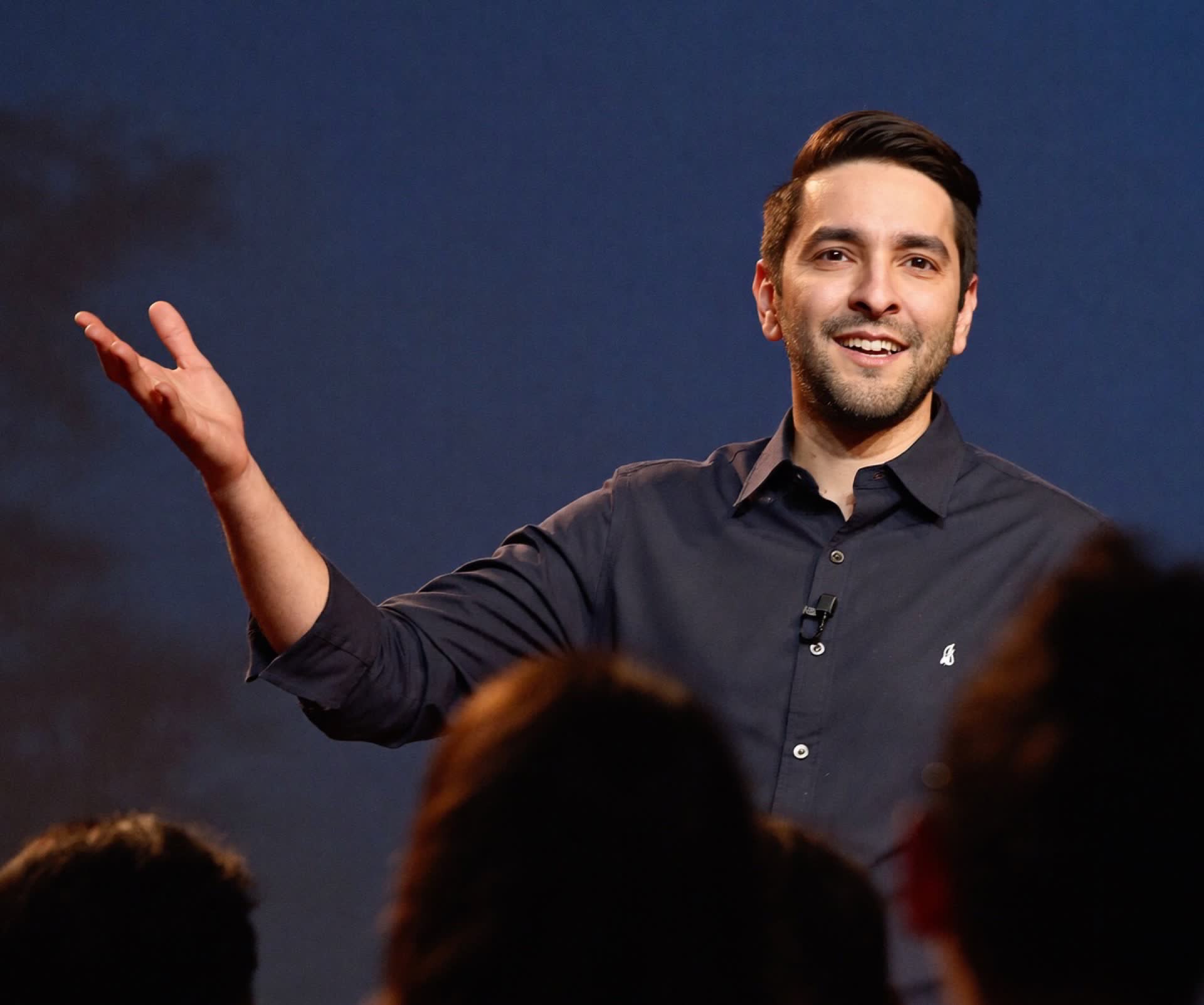
Dr. Adnan Rafiq, country director for the United States Institute of Peace, joins Muzamil to discuss how inequality, information access, and political polarization shape the prospects for peace in Pakistan.
From IT to Oxford: How Dr. Adnan Rafiq Found His Way to Peacebuilding
The episode opens with Muzamil introducing his guest as a doctorate from the University of Oxford in politics, with a focus spanning political economy, governance, security, peacebuilding, international relations, and strategy. At the time of recording, Dr. Adnan Rafiq was serving as country director for the United States Institute of Peace - a role that sits at the intersection of scholarship and applied policy.
Muzamil opens by asking a simple but pointed question: how does someone end up working in peacebuilding? Dr. Adnan Rafiq’s answer is candid. He began as an information technology undergraduate, but found himself drawn away from programming and coding toward something he found far more compelling. “I found organizational change way more fascinating,” he explains. “Rather than programming, coding, and hardcore technology, I got more interested in organizational culture and organizational politics.” From there, his academic route took him through higher education in the UK, a gradual shift toward politics, and eventually to a doctorate completed around 2017.
He describes the years between his bachelor’s degree and his PhD as formative - running summer programs, hosting students from around the world, and beginning to engage seriously with questions of social change in Pakistan. One of his early contributions, he notes, was a policy document that became the strategic national internal security document for the Pakistani police - a document that, as he puts it, “steers in general the direction in which your security is internally.”
What Peace Actually Means
Later in the discussion, Dr. Adnan Rafiq pushes back against a simplified understanding of peace. The common assumption, he suggests, is that peace is simply the opposite of war - that it exists wherever open conflict does not. He challenges this framing directly. Peace is not a passive state. It requires active construction through governance, inclusion, and the delivery of basic services to citizens.
This reframing matters because it shifts the question from “is Pakistan at war?” to “is Pakistan building the conditions for stability?” By that measure, the conversation becomes considerably more complex.
Muzamil also asks about Dr. Adnan Rafiq’s earlier research on judicial behavior in Pakistan - a topic that connects directly to questions of institutional trust. While the conversation does not go deep into the specifics of that research, Dr. Adnan Rafiq’s framing suggests that the judiciary, like other institutions, is part of the broader security and governance architecture that either supports or undermines social peace.
The Internet, Social Media, and the Democratization of Information
One of the more textured exchanges in the conversation concerns what Dr. Adnan Rafiq calls the democratization of information. He describes a moment of personal enlightenment - reading widely, encountering different thought processes, and realizing the importance of exposing oneself to a range of perspectives. That experience, he says, shaped how he thinks about knowledge and access.
The internet, in his telling, was transformative. “The access to information has now been put on steroids effectively,” he says, describing how social media and the broader web broke the monopoly that a small elite once held over public discourse. “The access to information was controlled by the top one percent - suddenly people started talking.”
But he is careful not to romanticize this shift. The same forces that opened up information also opened up space for extremism and polarization. Pakistan’s political conversation, he argues, has suffered as a result. Rather than functioning as a space for problem-solving, public discourse has become “a contest between two parties rather than a movement towards solving a problem.” Ideas, beliefs, and lifestyles have all become battlegrounds.
Inequality as a Driver of Radicalization
The conversation takes a sharper turn when the discussion moves to inequality. Muzamil references a guest from a previous episode who worked with the European Union on infrastructure projects - someone who described communities with no access to electricity. Dr. Adnan Rafiq builds on this to articulate what he sees as one of the root causes of extremism in Pakistan.
The image he uses is stark: a woman in a remote rural area, far from any hospital or urban center, with no infrastructure around her, opens Instagram and sees an influencer traveling the world and marketing products. The gap between her reality and what she sees on screen is not just economic - it is psychological and political. “Maybe,” Dr. Adnan Rafiq suggests, this kind of extreme inequality “is fueling a lot of this extremism.” When people have no legitimate path to dignity or resources, ideology - including religious ideology - can become “a means to an end.” As he puts it directly: “You’re using religion to fight essentially inequality.”
Muzamil presses on this point, and Dr. Adnan Rafiq agrees that a more equal society would reduce the appeal of radical movements. The argument is structural: it is not primarily about ideology in the abstract, but about the material conditions that make extreme ideologies attractive.
Pakistan’s Political System: Between Dictatorship and Democracy
In this conversation, Muzamil raises the question of Pakistan’s political trajectory - a country that has moved back and forth between military rule and civilian government without fully resolving the underlying tensions of either. Dr. Adnan Rafiq acknowledges this instability but does not treat it as a permanent condition.
He notes that the lawyers’ movement and the end of the last dictatorship around 2007 marked a shift, and that subsequent years - however imperfect - have seen democratic processes continue. The challenge, as he frames it, is that political competition has not translated into genuine problem-solving. Parties compete for power, but the structural issues - service delivery, infrastructure, inclusion - remain inadequately addressed.
He also touches on the question of privilege and realignment. Some of those who benefit from the current system, he suggests, need to reckon with the fact that genuine inclusion may require letting go of certain advantages. The discomfort that platforms like TikTok provoke in some quarters, he implies, is itself a signal of how disconnected certain segments of society have become from the lived reality of most Pakistanis.
A Cautious Optimism About Where Pakistan Is Headed
By the end of the conversation, Muzamil asks directly: does Dr. Adnan Rafiq sound hopeful? The answer is yes - but carefully so. “We’re at a sort of a turning point,” Dr. Adnan Rafiq says, “in terms of how we’re evolving.” He sees signs that Pakistani society is beginning to reflect more seriously on its institutions, its governance, and its place in the world.
Part of his optimism rests on the possibility of economic reorientation. Rather than competing internally - a zero-sum dynamic that has historically fueled conflict - Pakistan could compete globally, trade with the world, and generate wealth through productivity rather than extraction. “Maybe we don’t have to compete with ourselves,” he says. The shift he is describing is as much psychological as it is economic: stop measuring yourself against your neighbor and start focusing on what you are building.
Muzamil closes the hour-long conversation by noting he would welcome Dr. Adnan Rafiq back for a deeper exploration of these themes. The topics - peace, polarization, inequality, institutional reform - are large enough to sustain many more conversations. For now, the episode offers a grounded, structurally honest account of where Pakistan stands and what it would take to move toward something more stable.


Never miss a conversation.
New episodes and the thinking behind them, straight to your inbox. No hype, no spam, no pitch.