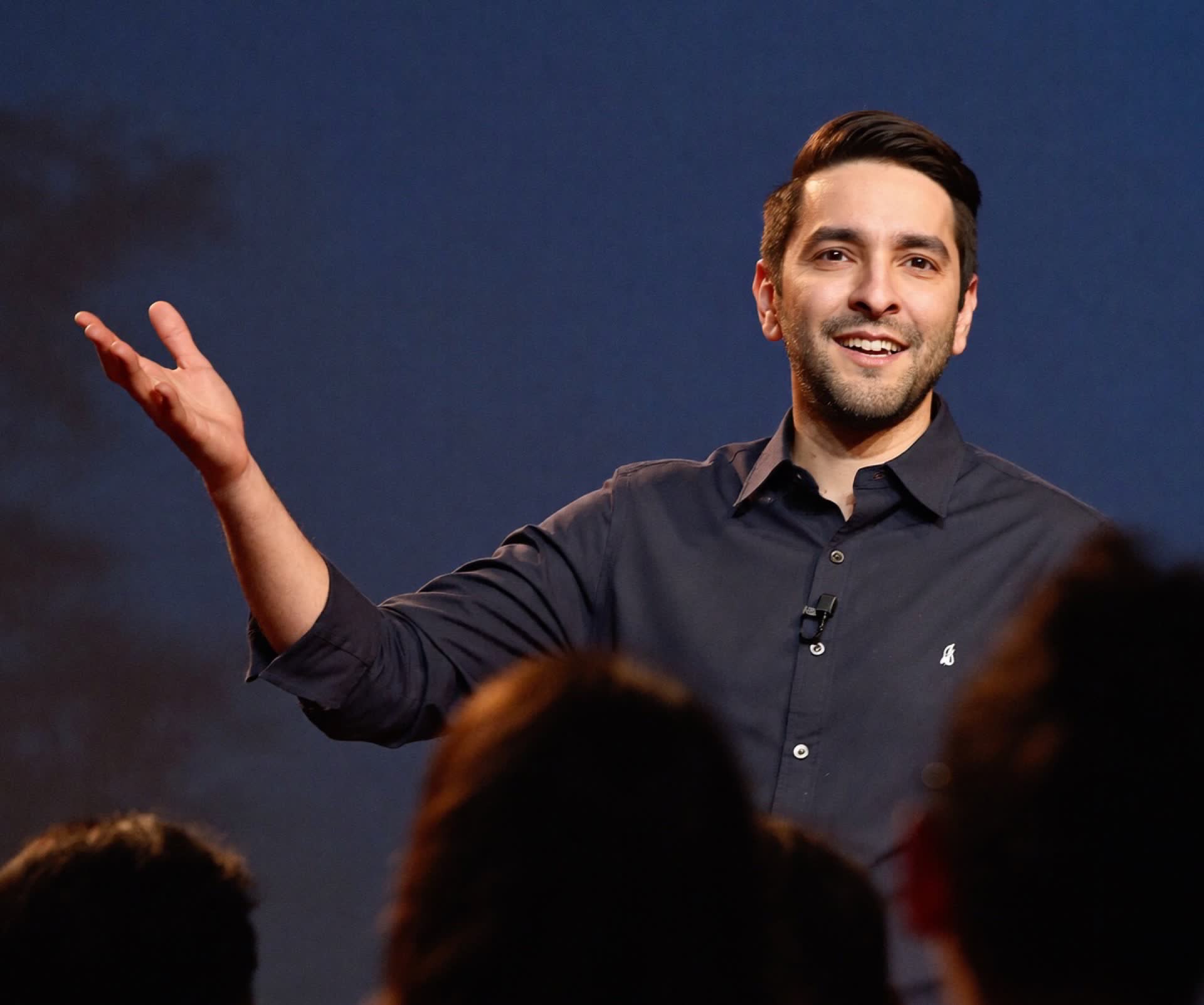
Thought Behind Things · May 14, 2025 · 1:07:36
South Asia will spearhead the next era — if it learns to communicate
Adelaide-based cybersecurity strategist Shahyan Shabbir on why data — not AI — is the real wedge, why South Asian talent will lead the next era of services, and what an Australian client actually needs to see before they wire money to Pakistan.
with Shahyan Shabbir
11 min read
Why this conversation happened in the first place
The episode opens with Muzamil naming the obsession he has been circling for months: how Pakistan grows its IT and services exports from the four-to-five billion dollars they sit at today to something closer to the thirty-five-to-fifty-billion-dollar opportunity he believes is on the table. He frames the diaspora — the people often dismissed as brain drain — as Pakistan’s largest underused asset, the same lever India pulled to build a services-exports industry Goldman Sachs now projects to cross seven hundred billion dollars within five years.
Shahyan Shabbir is on the call because he reached out on LinkedIn from Adelaide with a specific note: he is seeing real demand in Australia for AI and data work, and he wants to source talent out of Pakistan to plug into it. Muzamil’s instinct, stated upfront, is that he keeps looking for “no-nonsense” operators — people willing to say what is actually broken — and Shahyan reads as one of them.
Shahyan introduces himself crisply. He started in IT as a teenager, building machines for relatives. His first job was at the World Bank in Yemen at seventeen, on the back of an FSC and a couple of certifications. From there: a computer-science degree in Pakistan, a stint as a network administrator at Air University, five years in Manchester across corporate banks and a broadband company called Pipex, and the last fifteen years in Australia across energy, defence and health. Twenty-eight years total, fifteen of them in cybersecurity, more than five hundred cyber incidents managed. Nine months ago he left his executive role to start Strategic Pulse, a professional-services firm covering business performance, cyber, data and AI.
Cybersecurity as the unsexy compound bet
Muzamil presses on a point most founders skip. Everyone is talking about AI. Everyone is talking about data. How serious, actually, is cybersecurity as a long-term domain?
Shahyan does not oversell it. He calls it “a very noble field,” but is honest that it requires a different mindset from generic IT. The market opportunity, in his telling, is large and structurally underserved — and crucially, it is the precondition for the AI work everyone else is racing toward. His own thesis at Strategic Pulse is to build what he calls a “cyber immune system” — an ecosystem where cyber, data and AI respond to incidents together rather than as three disconnected functions.
He is also direct about Pakistani talent in this space. “Pakistanis are extremely resilient because we have been through a lot,” he says. “That mindset, coupled with giving them the opportunity to step into cyber, is going to pay dividends for anybody who steps in.” This is not a throwaway line — it returns later when he argues that South Asia, not the United States, will lead the next era of services delivery.
The communication gap nobody wants to name
Muzamil asks the question he asks every guest on this arc: what is actually missing in Pakistani talent that keeps enterprise clients from buying? Shahyan does not flinch.
“The biggest thing is communication,” he says. “English has become the global language — with much regret — and that is something key for our industry to understand.” He points at the Philippines as the obvious case study. Filipino call-centre workers are now indistinguishable from American speakers because the country invested capital, deliberately and at scale, in language and accent work. China has done the same. Pakistan has not.
The second weakness is dedication and ethics, though he is careful to note this is improving. He tells a story about leading an Oracle Fusion Cloud ERP rollout — a multi-million-dollar build on brand-new technology — where his entire team ended up being overseas Pakistanis. The capability was there. The constraint was that several of them were running three projects in parallel, and quality slipped. His framing is constructive: focus on showing return on investment to the client, and a five-year sustainable pipeline opens up for you.
Muzamil reinforces the point with a structural observation. Pakistan’s high-school throughput is roughly five-to-six million eighteen-year-olds a year. Half do not graduate high school. Of the half who do, only twenty percent reach higher education — about five hundred thousand a year. The two million who graduate high school but stop there are the most underutilised cohort in the country: connected via TikTok, ambitious, hungry for higher-value work, but with no infrastructure to absorb them.
Why infrastructure is not the government’s job
Shahyan’s response to the infrastructure gap is one of the sharper moments in the conversation. “We don’t have to wait for infrastructure to be built by the government,” he says. “We can invest ourselves into an infrastructure for creating value for a certain cohort of people. Interview them, do psychometric testing, understand their attitude and aptitude, and then bring them in.”
Muzamil pushes the same point harder, naming what he has seen across three years of interviewing Pakistani IT leadership: an escapist victim mentality. The framing he hears too often runs roughly: “the government has failed us, so what can I do — I have three or four hundred staff, my farmhouse, my annual trips, I am fine.” The vision problem, in his read, is that founders running profitable agencies are not reinvesting in the eighteen-year-olds who could compound their business by an order of magnitude. India’s IITs sent people abroad. The real Indian services machine — TCS and the rest — was built by private operators who treated raw talent as the actual scarce resource.
Shahyan agrees but stays “glass half full.” He sees the new cohort of Pakistani leadership as genuinely visionary; the gap is between strategy on paper and execution on the ground. He quotes a phrase he picked up locally: “slow is smooth, and smooth is fast.” Five days a year of senior-team strategy work with a serious consultant, he argues, is enough to align people, processes and technology — and if those three move together, retention stops being the problem it currently is.
Data is the wedge. AI is the wrapper.
The conversation turns to AI, and Shahyan is unusually clear-headed about where the actual money sits. The noise around AI products will, in his estimate, continue for another year or year-and-a-half as mergers and acquisitions shake out. But the durable opportunity is not in shipping a clever AI product. It is in the data layer underneath.
“If you are building an AI product — a call-centre product, for example — it needs to feed off data. That data requires compliance,” he says. Australia is strict. Privacy and security frameworks are mandatory. The companies who win are not the ones with the flashiest models; they are the ones whose data is structured, governed, accessed and managed properly.
He tells a story that lands. Strategic Pulse went into a client to do an AI-readiness assessment. The client’s access management was loose enough that the AI, once switched on, could read across every structured and unstructured file in the business — salaries, incident reports, everything. “The real gold is on the corporate side,” he says. Customer-service AI will be table stakes. The differentiator is whether AI can be integrated into corporate operations without leaking the company in the process.
For Pakistani operators trying to position into this opportunity, Shahyan names the roles he is actively looking for: data strategists, data architects, data solution architects, AI strategists, AI solution architects. AI engineers will be in demand, but he expects much of the engineering layer to become plug-and-play; the strategic and architectural roles are where the durable margin will sit.
The actual economics of offshore — and the 60 percent number
Muzamil walks through the economics of offshore services in detail, because his audience genuinely does not see how the unit math works. A fresh US computer-science graduate costs around $120,000. Nearshore in Latin America, that drops to roughly $60,000. Offshore to South Asia, it drops to about $30,000. From that $30,000, the resource takes home a salary, the agency covers infrastructure and laptops and office space, and a third component flows into the company pool to cover bench time and the months when a resource is not billable. Pakistani founders frequently miss this last piece and price themselves into a hole.
Shahyan’s contribution is the specific Australian number. He does not pitch on resource cost alone — Strategic Pulse pitches outcomes, three-month sprints, MVPs against prioritised problems — but he is direct about what makes the offshore conversation viable in the first place. “It needs to make sense for the provider and the client,” he says. “About sixty percent. So if it is a hundred rupees onshore and it comes in at forty offshore, that gives them food for thought to actually consider the model.”
Sixty percent is the number. Anything less and the friction of working across time zones, compliance regimes and trust gaps is not worth it for an Australian buyer.
He is also clear on which sectors are even available for offshoring. Defence, never. Several regulated sectors, no. Mid-market and SME work in everything else, yes — and that is where the volume is. Small companies go to Upwork and Fiverr. Medium-sized organisations and enterprises feeling the cost burden of inflation are the ones who turn to hybrid Australia-plus-offshore models, and that is where Strategic Pulse plays.
How a Karachi CEO actually breaks into Australia
Muzamil sets up the closing arc with a persona. An average Pakistani CEO with a hundred-person agency has never seriously looked at Australia. He has now realised there is opportunity. What does he actually do?
Shahyan’s first move is unromantic: market analysis. Is the sector even viable for offshoring? What do the tax laws say? What is the regulatory burden? “Just thinking of it is good. The practicality of it is what matters.”
His second move is the one most founders skip. Do not set up shop. Find a collaborative partnership with someone already on the ground. He gives an example: an Indian firm reached out to him asking for exactly this — they did not want an Australian entity, they wanted Shahyan to build pipeline locally while they staffed delivery. He took it because it was a clean two-way deal: he had the connections and ground knowledge; they had the capacity. “There is no competition,” he says. “There is the opportunity to collaborate with everyone.”
The third move is trust, and Shahyan is concrete about how he evaluates it. Desktop due diligence on the website, reviews and prior projects. Supplier-risk checks. Conversations with the team, not just the founder. The red flag he names directly is weak leadership — specifically, an inability to articulate the operating model, the vision, and what value each side expects to get out of the partnership. If a founder cannot do that in plain language on a first call, the partnership is unlikely to survive a real project.
He shares a line from a senior advisor at Strategic Pulse — Ashish — that captures the philosophy: “The day we have to pick up the paper to look at what clause X, Y, Z says — that is the end of the partnership.” Contracts are a backstop. Trust is the actual product.
Why Australia is worth taking seriously
By the end of the conversation, Muzamil asks Shahyan to widen the lens. How is the Australian economy, actually? Where is services demand going?
Shahyan reaches back to 2008 to make the point. Australia was the only major economy that did not enter recession during the financial crisis, and the reason was structural: it is heavily regulated across financial and other industries, which slows it on the upside but makes it remarkably durable on the downside. The recent election under Anthony Albanese has cleared the policy fog that always slows enterprise spend before a vote, and growth should pick up from here.
He does not have a combined services-sector figure to hand, but he offers one data point: in a market analysis Strategic Pulse ran across thirty sectors, the health sector alone came in at around forty-three billion dollars in revenue. Multiply that across thirty sectors and the addressable pool is significant. And the Australian buyer, in his read, has a specific virtue Pakistani founders should appreciate: a no-nonsense attitude. If they do not like something, they say it. Yes and no come quickly. That is exactly the operating tempo a well-run Pakistani agency should be able to match.
The conversation closes with Muzamil flagging two things to his audience. First, he is building an early-stage solution for the communication and soft-skills problem in Pakistani tech, and is actively looking for English-language and professional-communication trainers willing to be retrofitted into a tech-delivery pipeline. Second, Australia — almost universally ignored by Pakistani founders chasing the United States, Europe and the Gulf — is a serious market that rewards exactly the kind of disciplined, outcome-priced, trust-built services work the better Pakistani agencies are already capable of delivering.
The wedge, as Shahyan frames it, is not AI. It is data. And the path in is not a flight to set up shop. It is a phone call to someone already on the ground.
Full transcript
स्नामला ख़बतीना उजरत. Welcome back to another episode of thought behind things. आप लोगों को पता है मैं पिछले कुछ अर्थे से जोंक की तरह पड़ा हुआ हूं कि यार IT industryओं कैसे fix किया जाए? कैसे opportunities बनाई जाए? I am trying to talk to as many thought leaders, पाकिस्तानी thought leaders जो कि पूरी दुनिया में different you know information and communications technologies, IT technologies, software technologies के अंदर integrated हैं in the developed world जहां पर largely ज़्यादातर opportunities arise करती हैं. मैं यह भी बात करता रहा हूं कि यह जो लोग हैं जिनको हम brain drain कहकर कहते हैं कि वह छोड़कर चले गए, वह हमारा सबसे बड़ा सर्माया है. अगर हमने exports के अंदर services को grow करना है, हमने उनसे सीखना है कि, you know, actually opportunity किधर है? Because these guys, you know, are the most likely to be able to opportunities. यह कोई अनोखी बात नहीं है. India ने भी इसी तरीके से अपने लोगों को सबसे पहले भेजा और फिर उन लोगों ने eventually जाकर बहुत ज़्यादा opportunities बनाई. आज उनकी roughly $350,000,000,000 की services exports की industry है जो कि Goldman Sachs कहता है again the next five years might cross $700,000,000,000 which is again one of the reasons why Pakistan के पास I believe कि there is a 35 to $50,000,000,000 opportunity. Currently our services exports holistically stand at 4 to $5,000,000,000 and I think इसको five to 10 x easily बढ़ाया जा सकता है अगले पांच साल के अंदर अगर हम इसको एक structured consolidated तरीके से pursue करें. इसके लिए आज हमने दावत दी है to have a conversation on this. शायान शबीर who is currently in Australia and it's interesting how this happened because he sent me a message on LinkedIn and he said कि यार I am actually getting a lot of opportunities for AI and you know other domains. We'll talk about those domains as well. In Australia तो Pakistan में कोई ऐसे लोग बताओ जिनका एक non nonsense attitude हो which I find कि मैं जितने लोगों से बात कर रहा हूं वह मुझे सब यही बात कर रहे हैं कि Pakistan से हमने काम करना है, Pakistan से हमें opportunities बनानी है लेकिन हमें ऐसे लोग चाहिए जिनका work ethic strong हो वगैरह वगैरह. We'll talk more about that as well. शायद भाई, first of all thank you so much for being part of the conversation. Thank you Miss अमल for inviting. मैं अगर थोड़ा सा start करूं, if you could introduce yourself, you know, where did you study? What has your career been like over the last couple of decades?
Yeah, sure. So, my full name is शाहिन शबीर और currently residing in Adelaide Australia. मेरी जो journey IT में start हुई वह बहुत early हो गई थी. I was one of those key kids within my family who would construct machines for other relatives and give it to them. So, तरह मेरी journey start. We year, year 12 के बाद जो high school होता है. उसके बाद मैंने कुछ computer course किए networking के और इस तरह के. My father was और is an educationist so he had the opportunity go to Yemen. वहां पर मैंने apply किया World Bank के अंदर. I was at the time 17 and I, you know, प्रीजीन के साथ, एक shirt के साथ मैं चला गया. I didn't know if I will get a job but I thought why not give it a shot?
Know, school graduate diploma and a couple of certifications?
Pretty much FSC, a couple of certifications and I was in World Bank working in Yemen. तो मेरी journey तब start हुई and I have been blessed to have all the mentors so far. उसके बाद दो साल मैंने उधर serve किया, फिर वापस आया Pakistan University, key Bachelor's of Computer Science and then I started working at AIR University as a network administrator. Right. I went to The UK. I saved over there for about five years, half a decade in Manchester, different organizations में corporate banks, PIPEX एक थी company जो broadband की थी and then moved eventually moved on to settle in Australia. So I've been in Australia for about fifteen years or, I've worked in, energy sector, defense sector, health sector. My total journey is twenty eight years, over twenty eight years. Fifteen of those is, has been dedicated to hardcore cybersecurity. So I've managed over 500 cyber incidents, small, big, medium. So I've been fortunate enough to be in a position that I got a good start. And I'm where I am at the moment. I left my executive job to start a company of my own, which is called Strategic Pulse, based out of South Australia. We provide services around business performance, cyber, data and AI. I've been working on it for the last nine months to make sure the service design was as robust as possible. Here we are. I have a short journey in entrepreneurship, but I've got a lot of experience to plug into giving value to the customers.
Fascinating और यह चीज़ बड़ी एक interesting है पाकिस्ताने context में because I feel like हमारी industry grow काफ़ी की है. लेकिन वह ज़्यादा grow जो की है वह freelancing domains में की है, right? So a lot of democratization which is I believe a great thing because that really sort of created ground up एक demand for, you know, pursuing remote digital services. लेकिन जैसे for example India के अंदर enterprise became huge and you have a huge long history of enterprise. So I am I am curious. I want to really tap into those people जो कि freelancing से शुरू किया. वह agencies की तरफ जा रहे हैं but they don't have the DNA जो कि एक software houses का एक ज़माने में होता था वो जाते थे जाकर enterprises के साथ काम करते थे. अगर मैं sort of start करूं सबसे पहले तो आपने मुझे जब initially reach out किया तो you said you wanted people in data and AI domains. With a fifteen year sort of experience in cyber security I feel like कि वह भी एक domain है जो कि often you know seriously नहीं ली जाती. There's AI bubble है, नहीं है. AI हर बंदा बात कर रहा है, data की हर बंदा बात कर रहा है. How serious is cyber security as a as an industry, as a domain in terms of future prospects as well?
Thank you for touching on that. I'm a I'm a hardcore, as I mentioned before, cyber specialist or a strategist as well. So it's a very noble field to be in. However, it takes a very different mindset to a normal IT person. I'm not saying they're not special, they are special. In terms of इसकी जो market में है, there's a huge opportunity, huge opportunity around cyber. Why I reached out on data and AI is because we are creating that ecosystem. So around cyber data and AI, how can we have a cyber immune system which would respond to these sort of incidents by itself? So that is the services side we are trying to create over here. Our job opportunity है पाकिस्तानियों के पास especially, it is huge. और in terms of resilience, I feel पाकिस्तानीs are extremely resilient, क्योंकि we have been through a lot. And that mindset coupled with, you know, giving them the opportunity to step into cyber is going to pay dividends, for anybody who steps in.
Makes sense. So now I'll come to the, you know, the the the no nonsense aspect. And I want you to be very very open. मेरी audience जो है वह बिल्कुल भी दिल पर नहीं लेती. They genuinely try to learn. And again, you're not really pinpointing कि इनमें यह मसले हैं. I think वह weaknesses हैं जिनको हम fulfill करके we can actually get better rewards out of it as well. So, I want to understand you know, you worked in Pakistan as well. You probably worked with a ton of पाकिस्तानी remotely. क्या ऐसा चीज़ें missing होती हैं that that does not allow पाकिस्तानी to be able to tap into these opportunities and and particularly again I will tap into the idea of कि enterprise के लिए certain requirements होती हैं उनकी. चाहे वो scale हो, चाहे वो attitude हो वगैरह वगैरह. तो what would that look like in your opinion if you were to sort of look for agencies or individuals to hire?
देखिए सबसे जो बड़ी बात है वह communication की आती है. Communication is so critical nowadays कि चाहे आप उसको pre sales ले लें, चाहे आपको post sales ले लें या आप corporate operations ले लें. It is important क्योंकि अब वह global language English वन चुकी है और है बड़े अर्थित से. That is something key for our industry to understand and quite frankly there's a huge industry, there's a huge gap to make, bring value to our people around, you know, English classes आप ले लें जैसे Chinese कर रहे हैं. आप देखें Chinese और Philippines को देखें. Philippines का accent अगर आप देखें आपको पता नहीं लगेगा कि वह American बात कर रहे या Filipino बात कर रहे हैं. तो they have spent quite a lot of, you know, capital on uplifting their the language or communication side. So communication is critical. In terms of their skill set, I can tell you this now, Pakistani or South Asian skill set is going to take the world forward, full stop. That is my belief and that's how I'm seeing the world. Yes, America can create technology, they can but it is South Asia which who is who is going to spearhead the next the next era. आपकी बात आई कि भाई क्या पाकिस्तानियों में क्या चीज़ है जो further strengthen करनी है? That's how I see it. Know glass half full. एक तो communication है और दूसरी dedication और ethics है which is improving significantly by the way. मैं आपको example देता हूं. मैं एक project कर रहा था ERP का, multi million dollar project था. हमें Oracle का था. हमें कहीं से बंदा नहीं मिल रहा था. सिर्फ पाक्स्तानी हमारी team में थे और वह भी overseas. यानी can you imagine Oracle technology Fusion Cloud which it's an absolutely brand new technology and पाकिस्तानीs were leading the way. The only issue was they were doing three projects in, you know, at a time. So the quality started to, not all of them, but there was one particular individual I remember. My point over here is that look at quality, look at providing value, look at how you can showcase return on investment to the client or the customer. As soon as you do that, you have a consistent pipeline or sustainable pipeline for the next five years.
Make sense and I think इसमें जो important चीज़ है अगर मैं इसको sort of summarize करूं कि a lot of people in Pakistan do not realize the importance of relationships and relationships are not built overnight. They are built through investment and trust and आपको वह relationship बनाना बड़ी ज़रूरी होती है जिसके अंदर again the quality of your work and the trust that the other person has on you वह बड़ा important over time हो जाता है. You spoke about communication and we are in a weird time unfortunately in Pakistan. यार आपने कहा ना English language सीखना बड़ा ज़रूरी है. तो somehow जो आपकी masses हैं जो एक एक एक बहुत बड़ी population मैं देख रहा हूं अब वो digital services की site के ऊपर आ रही है. एक आपके पास पहले था you know I would say 3% of your economy या population जो कि private schools से पढ़े हुए थे या वह public schools में भी बड़े शहरों के KLI के अंदर पढ़ के वह आए हुए थे and you know they would उनके parents भी एक एक certain class से आए हुए थे, एक certain infrastructure से आए हुए थे और वो खुद भी उनको पता था तो वो उसके हिसाब से they were English savvy so on and so forth. Now जो आपके पास critical mass आ रहा है, जो number आपका scale लेकर आएगा वो काफी दवा छोटे peripheral शहरों से हैं, काफी rural first time migration to to higher education है and there is a certain push back कि यार नहीं हमने अंग्रेज़ी नहीं सीखनी भई हमारी उर्दू है एक certain nationalism कह लें क्या कह लें? जो कि बड़ा unique है to Pakistan because I have gone to other countries and you know I I remember meeting a person from Morocco and शिकार जी हमारे यहां तो पांच languages ना हम on average बोलते हैं. French हमारी international है, Arabic हमारी local है. उसके अलावा हम दो तीन और हमारी चलती ही हैं and because of that obviously they they they reaping a lot of rewards. They're working with मतलब वो Russian भी सीख रहे हैं तो वो Russia से भी काम कर रहे हैं, वो Chinese भी सीख रहे हैं तो Chinese से भी काम कर रहे हैं. Language actually becomes supremely important because अगर language ही नहीं है, communicate ही नहीं कर सकते तो skills का आपको कोई फ़ायदा नहीं है, right? You mentioned multiple times South Asians and how they they they would take the skill set forward. Holistically what's the data? What's the I mean how do you sort of contextualize that for me? कि क्या आप देख रहे हैं जिसकी वजह से आपको लगता है कि यार जो future growth है वह South Asia से आएगी?
देखिए, आपने India के figures तो आपने खुद दे दिए, ठीक है? अब अगर Pakistan के figures which you you also have it on your fingertips, अंबेल अवेड़. यानी आप पचास, I think last was 6,000,000 graduates coming out every year.
That's a- So just just to give numbers, 6,000,000 people are turning 18 every year. They're entering the job market. उन 6,000,000 में से around 20%, मसला हमारा, मैं पहले मसला बताऊंगा थोड़ा सा. जो कि इस situation को थोड़ा सा problem problematic create problematic करता है. छह million लोग पांच million पांच छह million लोग जो हैं वह roughly हर साल अठारह साल की उम्र को पहुंच रहे हैं उसमें से आधे जो हैं वह high school graduate नहीं कर रहे हैं. That's a problem for Pakistan because in in in the age of AI you need, you know, higher value skill set and knowledge to be able to solve higher value problems. But of the half of half of those 2,500,000, let's say, who are graduating high school, around 20% of them are going for higher education, which is around 500,000 people every year. So on average, you have half a million people graduating university or some form of higher education and then you have 2,000,000 people जो कि आकेश स्वात high school graduate कर गए हैं. वो हैं fortunately वो चूंकि इतना ज़्यादा connected हैं through TikToks and all of that कि उनका vision अब बड़ा फ़र्क हो गया. वो ये नहीं कह रहे हैं कि high school कर लिया यार दुकान में बैठना है. वो कह रहे यार मैंने अवसर बनना है, मैंने बड़ा काम करना है, मैंने बड़ा पैसा कमाना है. So you have a a thirst, you have a lot of demand from the from the from the the kid कि यार मुझे सिखा लो, मुझे कुछ कर लो, मुझे higher value काम दो, मैं करने के लिए ready हूं. But you don't probably have the infrastructure to be able to utilize them to the best of
our ability. That's the current overview of Pakistan right now. जी, so when I said about five to 6,000,000 I meant from a high school perspective. तो करीबन बारहवीं तो सभी pass करें. मैं आपको example एक छोटी सी देता हूं. Western मुमारिक में रात ने भी अच्छा हंसा उस पर किया हुआ है. Some of them drop off after twelve. उनको technical school कोई उठा लिया या उन्होंने कोई certification उठा ली and they are absolute guns and that is happening in Pakistan what I have seen as well क्योंकि हर एक को access नहीं है university की जैसे आपने अभी articulate किया तो where you if somebody else sees it they'll see a chaos But in chaos, there is always opportunity and there is the opportunity we need to have to call it, in other words, exploit to bring these people around. And you're absolutely right. Infrastructure नहीं है. देखिए infrastructure आता है policy से और right governance से, which is fine. We are getting there slowly and gradually. I believe we are slowly and gradually getting there as well as a country. लेकिन we don't have to wait for infrastructure to be built by the government. We can invest ourselves into an infrastructure and, you know, for creating value for, you know, a certain cohort of people. हां, उनको आप interview से करें, उनको psychometric testing करें, समझें उनको उनके क्या attitude है, aptitude है और फिर उनको entry करें. तो मेरा कहने का मकसद यह है कि India ने तो already अपनी industry बना ली है and quite frankly I've got partners in collaboration partnerships in India as well. So, and that's where I have got a really good comparison that we are on a really good track and a really good wicket. Que जहां पर वह हैं अभी, we are getting there very quickly. So that's why I really believe the charge is going to come through South Asia, लेकिन it needs to be in a way कि वह coordinated हो and it can only be done by, you know, entrepreneurs or a cohort of entrepreneurs if that makes sense.
Makes sense. मुझे अगर यह जो आपने यह वाली बात बोली कि, you know, you said कि policy makers के certain वह requirement होती है but उससे जो following आपने बात बोली I think मेरा वह inherent belief है कि और मैं India को भी देखता and correct me if I am wrong. Obviously you have better insight working there with partners. कि India के अंदर yes everybody looks at the the IITs that the government made but the IITs sent people abroad, right? They were at the top of the pyramid. It was really the private sector that realized कि listen हमारा जो raw material है that is talent and so it is in our interest to actually you know scale up that talent because that obviously एक तो आपकी pricing जो है वह normalize करता है. जो case of Pakistan ने मुझे बहुत बड़ा मसला नज़र आता है कि pricing आपकी supply कम होने की वजह से out हुई है. तो it's difficult for people to sell that talent abroad जो कि वह अभी बहुत easily कर सकते हैं because you know हमारा rupee parity ऐसी है. उसमें अगर आप एकदम से market के अंदर talent लेकर आऐंगे तो automatically price normalize होगी और जैसे normalize होगी उतना ज़्यादा business आएगा net के ऊपर. मेरे experience में ना मैंने पिछले तीन साल I have covered almost the entire IT industry or the major players talking to their leadership. मैंने Pakistan में जो local level के ऊपर देखा है, unfortunately, वह मैंने यह देखा है कि तेरे से how would you call it? There there is an escapist victim mentality, right? So, मैं actually ना यार वह government फारा गया है. Government ने कुछ किया नहीं है. बच्चे बच्चे में फारे गए तो मैं क्या कर सकता हूं? You know अब मेरी अगर तीन चार सौ बंदे की company है, मेरा system चल रहा है, मेरा farmhouse है, मैं जो है जी वह साल के trips मार लेता हूं तो I am happy और maximum project आएगा तो मैं वह नहीं हो सकते. Vision का मसला है कि वह खुद से invest नहीं कर रहे. Like you've mentioned, you don't necessarily need a four year program at this point in time. What you do need is industry driven sort of cohort based programs जो के आके उस बच्चे को क्योंकि अठारह साल का बच्चा बहुत fresh होता है. उसको आप जो सिखाएंगे वो उसको absorb करेगा. उसको आप सिखाएं और सिखा करके आप कहां पर लगाएं. जो के unfortunately missing है. How have you seen the local services industry in Pakistan? In terms of vision, in terms of you know the lack of growth? Because the fact of the matter is the lack of growth has been there. While India has gone to half a million with with let's say TCS or others हमारा तो you know एक ही company है जो पांच हज़ार cross करती है बाकी पांच सौ अगर कोई cross कर ले तो उससे तो वह जो CEO है या founder है वह सोचता है यार मैं तो मेरे से बड़ा king ना था ना कभी आएगा.
So, again I'll come from a glass half full perspective. देखिए अभी अभी जो latest cohort of leaderships आई हैं Pakistan में. They are absolutely visionary. I've been following them. Mashallah, you've had the opportunity and privilege to interview so many of them And the vision they bring is phenomenal. The only thing that is missing between a vision is basically when you develop a strategy and when you take it to action, there's two different things. You develop a fancy paperwork but there is no action towards it. Action executable execution executioning of strategy is the issue. Now that creates cultural issues. अब जब culture organization का जो है वह थोड़ा सा weak होगा तो, you know, I wouldn't want to stay there. Why would other people want to stay there? I guess study pipeline है, study आपके उनको uplift जा रही है, उनको appreciation जा रही है, उनकी अब professional development हो रही है. But again, that also takes capital as well. So, वह एक phrase है हमारा इधर के slow is smooth and what is it? Slow is smooth and smooth is fast. तो आप चलना थोड़ा सा आराम से समझे, एकदम से जलाने की ज़रूरत नहीं है लेकिन अगर आप थोड़ा सा time खर्च कर लेंगे अपना you know पांच दिन लगाने होते हैं एक पूरे साल में strategy पर executives को. वह पांच दिन लगा लें किसी अच्छे executive के किसी अच्छे consultant के साथ, solidify and make it actionable और फिर उसके हिसाब से आप strategy वन जाती है people की processes की और technology की. You make these three things work. There is no chance people would be leaving and I've seen that now that I've actually jumped into the other side from the corporate side. So in a sense, I agree with you. However, at the same time, I see quite a lot of optimism as well with the new Cape of leaders coming through as well, which hopefully, will change things. And, you know, as you said, when industry led, I feel that, that has started. It's just going to take a bit of time, to get our mindsets a little bit moving towards a growth mindset.
Makes sense. आपने strategy की बात की with consultants. What would, I mean, if someone, let's say there's an agency, 50 members and this is something that happened to me recently, right? So someone booked a call with me and they said कि listen, we're doing blockchain related work, not the cryptocurrency stuff but actually the technical aspects of of building projects and so on. And and the the gentleman was actually an ACCA graduate, had no technical background. Really COVID के दौरान, you know, he said कि I just I use technology, the internet and I try to learn कि क्या नई चीज़ आ रही हो, NFT का boom हो रहा था and I thought कि, you know, मैं मैं gold में नहीं जाऊंगा, मैं मैं shovels में जाऊंगा and so I I I learned, how to build some of these things and because of that I have been able to build an agency over time. So now he has like if I am not wrong eighty hundred people, couple of million dollars of annual turnaround and that's phenomenal by the way. Like that's there's no business in Pakistan जिसके अंदर आप यह कर सकते हैं. एक average लड़का you know अपने random जगह पर office लेकर Pakistan में ऐसा कर सकता है but वह कर रहे हैं. उनका problem यह आ रहा था they were like ok so where do we what do we do next because you know we've just sort of curiously stumbled upon opportunity after opportunity और हमें जो है ना वह एक के बाद एक connections के ऊपर जो है वह लोग आकर हमें reach out करके क्योंकि हम यह काम करते हैं और अच्छा करते हैं quality के साथ करते हैं तो लोग हमारे पास आ रहे experience चला रहा हूँ, right? There is no institutionalization of it. There is no there there aren't a lot of structures और दहेड़ I I I told him what I could. I I I referenced and recommended people that I could but I also realized that यह कहना तो आसान है कि strategy बना लो, consultant के पास चले जाओ. But for for most people in Pakistan, they don't really know who to go to and how do you sort of build that strategy? So if someone were to ask you, you have couple of decades of experience, all enterprise. मैं एक agency हूं पचास बंदे की, मैंने अपने आप को अब पांच सौ के लिए ready करना है. मैंने अपना यह पूरा figure out करना है. How would you solve that problem and how would what would you recommend to them?
यह आपने मेरा बहुत ही passionate subject touch कर दिया है और my organisation which is Strategic Pulse is based on business performance basically. That's one of our key services. जो main चीज़ होती है, can we take the example of the gentleman who reached out to you? So, if we take that example पचास साठ सौ लोगों की company है, they have grown organically. So, organically meaning that जैसा चल रहा था वह ठीक चल रहा था, पैसा आ रहा था. अब वह जाकर plateau कर गए. What that means is that they need to really look at how they are operating. वह कहते हैं ना दो से चार बंदों की जो company है उसमें तो हर every person is doing their job. It's you know all hands on deck. जब वह दस से पंद्रह की होती है तो फिर आस्था आस्था उसको वह उसे क्या कहते हैं policy driven उसकी governance start कर देनी चाहिए. And then when it moves up, you need to have a proper strategic approach. How to do it is pretty, I won't say it's simple but it's easy to approach. The way to do it is look at where you're operating from a market sense. Market analysis बहुत ज़रूरी है. एक market trends किधर trend किधर जा रहा है? क्या वह blockchain, say example, is going to be relevant? अगर आपका कोई बड़ा player आ गया है, will you be able to get their business? How is that going? So, analysis feed strategy कि आप किस तरह fair करेंगे अपने बाकी competitors के साथ और what you want to do with it. So, यह एक critical piece होता है जो कि मैंने note किया है कि कुछ companyयां करती हैं, बड़ी करती हैं लेकिन छोटियों के पास इतना capital नहीं होता या वह mindset नहीं होता कि हमने उसको approach करना है. So once that data is with you, then you come up with your strategy. What that means is other than mission, mission, values, यह तो fancy stuff हो गया. लेकिन how are you going to prioritize scaling up? So इसके तीन इससे होते हैं एक fix, focus and grow. Fix में आपने क्या fix करना है कि उसको ठीक करके वह आप अपनी market को ऊपर hold रखें. Focus यह है कि आप जब ठीक कर लें तो अब हम उसको किस तरह आगे चलने की कोशिश करें growth में full scale attack on on the market. यह यह एक पूरे का पूरा process आपको देखना पड़ता है और फिर जब आपकी business strategy और priorities align हो जाती हैं तो हमको उधर ही नहीं छोड़ देना चाहिए. हमें HR के पास जाना चाहिए. HR जी हमने business strategy बना दी है. आप इसको किस तरह support करेंगे success के लिए? CFO आप कैसे करेंगे या बाकी functions या departments हैं? हर एक department के पास अपनी strategy होनी चाहिए. एक document doesn't serve the whole organization. That is just the bible for जैसे कहते हैं ना just the bible for the top tier to operate. Rest need to have their own strategies in line with that and one of them is digital transformation. IT किस तरह काम करेगी? Digital transformation. Cyber किस तरह उसको support करेगा? So it is not just an exercise out of the organization, you know, पांच दिन की आप workshop कर ली, आपने एक क्या कर लिया? उसका it is, it needs to be monitored every month और जैसे अभी आपने कहा कि वह चार साल की अगर strategy पिछले एक दो comments में आपने बताया basically आज के ज़माने में strategy जो है वह revisit करनी है every quarter क्योंकि इतनी speed से दुनिया move कर रही है कि you can't stand still and that's where we saw a niche and we thought, okay, let's help companies grow and scale. So in short, you know, we help companies run better, stay secure and use their own data to grow and be sustainable. Hope that made sense. That that that does.
इसमें इसी को अगर मैं further आगे लेकर जाऊं. आपने digital transformation की बात की and I remember you know when I was in university studying computer science तो उस time पर हम भी देख रहे थे क्या opportunity होगी, क्या होगा? तो हमें आवाज़ digital transformation क्या आ रही थी, right? जो खासकर जो non tech legacy businesses थे वो सारे सारे कह रहे थे कि भाई digitally transform करो because that is the efficient way of doing business. That is the only way you can survive in the future. अब मुझे लगता है कि आने वाले चंद सालों के अंदर AI transformation will be leading digital transformation and the reason why I say that is because digital actually brought you down to कि यार paperless कर लो. You know, trackable, traceable, efficient, transparent, so on and so forth. These were the keywords and and फिर वह आपने वह tools and services deploy करनी थी जो कि आपके पूरे के पूरे operations को digitize करते थे. What AI is doing now and a lot of people are looking at AI in a very sort of technical lens कि यार AI की कोई product बनाकर मैंने launch कर दी but मैं तो legacy businesses के अंदर भी अब देख रहा हूं कि आपका जहां पर वही जो बात हो रही है कि सौ बंदे का काम चार बंदा कर सकता है लेकिन उसके लिए processes हैं. हर चीज़ नहीं हो सकती. कौन सी चीज़ actually AI से optimize हो सकती है? कौन सी चीज़ नहीं हो सकती? कहाँ पर आपने किस percentage of workflow को AI को देना है और उसके बाद फिर उसके आगे human operator बैठाकर उसका productivity बढ़ानी है. जहां पर आम बंदा जो है ना वह जाता है कहता है यार मैंने यही को use करना कुछ करने के लिए तो हर हज़ार use cases हैं जिसमें से नौ सौ useless हैं by the way. उन जो सौ बचते हैं उन हर use case के लिए हज़ार tools हैं जिसमें से नौ सौ useless हैं so which tool do you use? What workflow do you build? How do you ensure कि when you implement that तो it does not destroy your existing you know system and workflow but actually increase your your overall productivity. In this case आपको आप ज़हर Australia में बैठे हुए हैं वहां पर आवाज़ क्या आ रही है? AI bubble है? AI अभी technology के उसमें use हो रहा है या अब वो AI transformation की तरफ आहिस्सा ऐसा बात seriously लोग लेना शुरू हो गए हैं कि ok we need to start optimizing our operations and trying to see कि how can we actually increase productivity through these tools as well? They are echoing,
we are echoing the same thing what the entire world is saying basically. The AI का अभी जो noise है, वो still it's going to, in my view, it's going to go for the next at least year or so. And the reason for that is there's a lot of merger and acquisition going on at the moment and it'll stabilize in a year, year and a half in my view. The main issue with AI, in my view, and that's why we wanted to focus on data is अगर आप AI product कोई बना रहे हैं जैसे call center की product है, बहुत अच्छी product होती है, लेकिन it needs to feed off data. That data requires compliance. So, Pakistan में ISICI compliance का concept आ रहा है, लेकिन आपको खुद पता है privacy compliance हो गई, security frameworks, laws, especially Australia तो बहुत ज़्यादा strict है. तो that deters, you know, a company or someone who wants to do quite a lot of AI work because that is a compliance that's mandatory. So in my view, data is the key to enabling AI rapidly. That's what I want to see in Pakistan that people who have got the analytical mindset through data can help fast track that change. आप corporate data देख लें और वह corporate data पर AI आप नहीं implement कर सकते. मैं आपको एक छोटी सी example देता हूं कि एक company में हम लोग गए उधर हमने कहा अच्छा जी AI readiness की क्या है? हमने AI readiness देखना शुरू की. What it the outcome was and you'll be you know surprise and shocked to know कि उनकी security क्योंकि access management इतनी tight नहीं थी, AI went into every structured and non structured file which means we could see the salaries of people, incidents and everything. So, you know जो doubt कर रहे हैं AIK, they definitely they must be doing a good job. However, जो real gold है वह corporate side पर है. आप corporately organizations को cost efficient कैसे कर रहे हैं? उनको किस तरह productive कर रहे हैं? That is the key. Customer services वाली AI आप लेते हो आऐंगे लेकिन it has to integrate into corporate. So, my view and in Australia it is that data is the key. Whoever helps structure the data in a way that it is governed, accessed, managed properly, will take it all. And that's my view is and in Australia that's what is the key to success as well and maybe in any part of the world in my view. Makes sense. So let's अगर मैं इसको breakdown करूं let's let's say कि भाई top down आपको
you know you need one node जो कि data security भी manage कर रहा है और वह AI भी manage कर रहा है, right? जी. मेरे हिसाब से for for countries like Pakistan I think data security on an on an enterprise level where where still काफी पीछे क्योंकि वह हमारे environment और culture में ही नहीं built in हुआ. तो हमारे लोगों को on average उसकी severity की अंदाज़ा नहीं होता जो कि for example Europe या Australia के लोगों को बहुत एक second nature होती है उनकी क्या data security तो है और उसको इस तरह से manage करना है. Which is why I feel like कि जो let's say आपका node है Australia में you have that that that visibility to be able to structure the the the principal top down जो आपका वह है. अगर उसमें हैर उसमें फिर आप breakdown करेंगे आप कहेंगे अच्छा यार यह data security की मेरी team है उसको मैंने इस तरीके से set करना है और फिर उसके ऊपर मैंने AI deploy करनी है. आप जब जो इस वक्त AI का talent ढूंढ रहे हैं for example या AI के जो आप use cases ढूंढ रहे हैं वो किस किस्म के use cases हैं क्योंकि for for the average then talent in Pakistan वो अगर उस use case पर काम कर रहा ना तो उसको इस वक़्त tension मेरी understanding के हिसाब से data security की नहीं है. वो इस assumption पर है कि आपने data security already ensure कर दी है और वो within that sort of a sandbox वह उसके ऊपर काम कर रहा है. Correct me if I'm wrong.
जी I think the people I'm looking for is around data first. So क्योंकि वह कहते ना junk in junk out So we need to make sure we, and as part of our services as well, we look at data. Is it in a good form? Is it in a pure form sort of thing so it can fuel AI? That is one. The other piece of it is there are a lot of organizations or companies in Pakistan जो कि AI का काम कर रहे हैं अपने उस एक confined structure में which is awesome. The only thing is we need their help to integrate into the wider picture. That's where we are. At the moment they're working on a smaller level but they have a bigger, they have got this, उनकी capability जो है Whitney superior है कि they can easily plug into a bigger project basically. So, what I'm looking for is one first data, people who can structure data, who can develop data governance side of things, apply AI frameworks, which actually helps to make the data frameworks robust, and then go over to the AI side and AI side nowadays अगर आप उनके देख लें जो codes वगैरह हैं वह खासे easily available हैं लेकिन having a sharp mindset on how to do that, engaging the entire team, not only data team, security team but also the stakeholders कि उनके साथ वह workshops करें और वह use cases discover करें कि भाई किस तरह हो सकता है, कौन सा use case जो है that'll bring, that'll be a quick win for the organization from a value perspective, return on investment and then get to, you know, prioritize it accordingly. So for me, data is key. Anyone who's got, they're really good at data, understanding the analytics side of the governance side of things and framework side of things is going to be in the best position and not not just from from from for me it for
wherever they go. For the entire industry. अगर मैं आपसे यह पूछूं quick-quick question on that कि what sort of roles आपने data की बात की ना generic बात है but उसमें data engineering होती है, उसमें data analyst होता है, business analyst होता है. So what sort of roles do you see in high demand over the next three four years for example based on the sort of transformation that you're seeing? Yeah.
So, data strategist, data architect, data solution architect as well. AI strategist, basically data strategist will become AI strategist in my view. And I've been working with quite a few onshore or in Australia or AI solution architect. Yes, AI engineers will be in demand, but I think the way things are moving, it's more plug and play nowadays, but how to do that is critical. So these are the four or five roles which I see are going to be in very high demand.
Makes sense. अगर मैं थोड़ा सा economics of services की बात करता हूं, इसके ऊपर आता and I want because a lot of people don't also understand कि इसकी overall economics काम किस तरह से कर रही है, right? वहां पर talent है, नहीं है, कितने का है, offshore talent की जब बात होती है तो उसके ऊपर what's the price point जिस तरह से I was speaking to someone in The US just to give context. तो उन्होंने कहा कि यार on average अगर हम एक fresh graduate computer science या इस field का उठा रहे हैं तो हमें वह मिल रहा है एक लाख बीस हज़ार dollar का US के अंदर. अगर हम उसको near shore लेकर जाते हैं यानी कि हम South America में लेकर जाते हैं जो कि हमारे time zone को match करेगा, comparatively close होगा उसको अगर even US आना होगा तो comparatively easier to bring him in for meetings or whatever short term engagements. वह जो है that's half of what you get in The US. So $60,000 में आपको एक near show मिल जाएगा and then you go twelve hours on the opposite time zone and you basically say कि यार रात का बंदा हो जैसा भी हो but मुझे India से मिल जाए, Philippines से मिल जाए, Pakistan से मिल जाए. तो that is one fourth of what you're paying in The US. So 120 का अगर आपके पास average resource है तो आप effectively कह रहे हैं कि यार मुझे 30,000 का resource मिल जाए तो मैं उसको hire कर लूंगा और मैं उसको कर लूंगा. उसके ज़हरे missile होते हैं off times के इसके उसके लेकिन you know that's the the price point जो मुझे सस्ते में मिल रहा है मुझे that's the utility and उसको फिर लोग लेकर आते लोग कहते हैं कि ठीक है that means अगर मुझे उसको on a on a resource augmentation framework पर implement करना है तो उसकी economics इस तरह से काम करेगी कि वह जो भी amount आ रही है let's say पच्चीस सौ dollar per month वह three में divide होगी जिसमें से एक जो component है वह उसकी तनख्वाह है कि एक fresh graduate को आप तकरीबन आठ सौ पचास dollar देंगे अगर आपको पच्चीस सौ मिल रहा है जिसको वह that's his तनख्वाह. एक component जो है वह infrastructure management है. Office लिया हुआ है, laptop दिया हुआ है, internet है, यह है वह है और जो एक component आपका बचा है let's say आठ सौ पचास dollar वह आप effectively company pool में डाल रहे हैं जिसमें अगर एक बंदा bench पर बैठा हुआ है वह दस महीने billable है दो महीने वह काम ही नहीं कर रहा ढाई हज़ार in तो why am I getting eight fifty out? Right but they don't understand कि उस पूरे business को sustain करने के लिए you actually there's a there's a economic model to it जो कि generally लोग use कर रहे होते हैं. आप तो खैर my understanding is you're not hiring direct resources or are you hiring direct resources? Are you connecting agencies to to opportunities?
नहीं I'm hiring direct resources लेकिन वह हैं onshore हैं Australia में एक छोटी सी team लेकिन I'm what I'm looking to build is capability. I'm not necessarily looking to bring or hire staff. What that means is I'm looking to partner with organisations who are very strong and very well regulated within themselves. कुछ का मैंने नाम लिया आपके सामने वह हैं और there must be quite a few क्योंकि हमारा footprint जो है वह अभी Australia, New Zealand है और next we have got people, some people on the ground in UAE as well. We want to cover Middle East. जो बात आपकी economics ही आई, देखिए पैसे बचाना I think it depends in my view क्योंकि what is the quality you are getting and what is the client willing to pay for it. Is, it needs to be a decision the client needs to make, not us. I'll tell you the reason why. आप हम जाते हैं customers के पास और clients के पास, हम उनको very transparently बता देते हैं कि जी देखें यह rate card है, यह आपको onshore मिलेगा, यह offshore मिलेगा. Quality हमारी vetted है, you can interview our people. We will be accountable for their deliverables. So, what we are providing them is a managed fixed package service ताकि हम quality maintain कर सकें और अपनी credibility maintain कर सकें और जो हमारे साथ काम कर रहे हैं वह एक consistent pattern पर हमारे साथ साला साल काम करते रहें. So, may there are several dynamics in terms of expenses. There are several expenses but again वह जो बात आपकी आई कि 120,000 to 30,000 अगर आप यहां पर किसी को defense का कहें तो वह वह तो कभी भी नहीं आपको offshore करने देंगे. ना ही Pakistan वाले कहीं आपको offshore करने पड़ेंगे. तो then you come to other sectors. कुछ के पास flexibility है, कुछ के पास नहीं है. But in my view it remains choice remains with the client basically.
That's fine but मैं जो जो offshore की economics है मैं उसको समझना चाह रहा हूं कि what's the उसमें remote work direct remote work भी है कि यार आप companies are directly hiring and I'm not sure कि Australia में ऐसा हो रहा है या नहीं हो रहा. There is the sort of resource augmentation model कि यार वह लोग एक third party के पास जा रहे हैं और वह third party consultants रखे हुए हैं उन्होंने दुनिया में different जगहों के ऊपर है. India, Pakistan, Philippines, and then you know you got the freelancers and so on. तो I am trying to understand कि what do the payouts look like? What is what's the model here? जिसकी basis के ऊपर business चल रहा है और फिर लोगों ने अगर जो again जो बाहर बैठे हुए हैं जिन्होंने अपने आप को align करना है वह फिर उसे हिसाब से align करें वह understand करेंगे this is what the market looks like. So I mean मैं तो ख्वाब देखने के लिए तो ख्याल अच्छा है गाले type situation है but actual में you know आपने real world dynamic के साथ अपने आपको practical set करना है.
जी हां, so in that terms जो छोटी companyयां होती हैं वह they tend to go for freelance. Basically. आप लोगों के यह Upwork और Fiverr I think है और इस तरह की और भी websites जो कि खासी खासा talent दे रही हैं उनको they are using it. That that is for small to medium sized companies. So something like between five to 10 employees or maybe up till 50 as well, जो capital restricted होती हैं और वह वही जो उनके rate है, I think sometimes $35 for something or 60 whatever it is. In terms of जो जितना वह जिस तरीके से वह काम करना चाह रही हैं operating model तो जब आपका medium size organization या enterprise थोड़ा सा ऊपर आने लगती है and they are feeling the hit of inflation, and cost, you know, cost burdens. Then they would tend to work with organization or companies who are based in Australia, but their operations there, some of their operations are offshore to get the maximum benefit of getting the best people and at a cost effective rate. Again, that depends on AI architect का different होगा, system administrator का different होगा. So I hope that answers your question. Like I am trying to understand कि what for
the average person in the in Australia or wherever, What's the cost reduction that would make justify कि यार मैं किसी ऐसी company के पास जाऊं जो कि मेरे like आप आपकी pitch है. आप presales में एक Australian company है उसके पास सौ बंदा है. एक आपने एक hybrid बनाया है. आपने Australia कुछ में रखा हुआ कुछ आपने किया हुआ आपने कहा यार service quality मैं same provide करूंगा. आप किस चीज़ पर वह करेंगे? आप price point पर करेंगे कि यार you know whatever they're doing we can provide you the same thing but we can do it for 30% less for example. Yeah. What's the what's the what's the price point जिसके ऊपर आपको लगता है कि यार customers if you reduce it that much they are highly likely to convert. That's the sort of economics that I am trying to understand कि 60%. 60% reduction of the of whatever is available onshore. Absolutely. और फिर उसमें जो head app में optimize करना है अपने सारी resources को onshore, offshore and? जी हां बिल्कुल. So 60% so if अगर सौ रुपए का है कहीं पर तो
it needs to make sense for financial sense for the provider and all and, also the client. So it's about 60%. So, Janine, चालीस रुपए पर अगर आ जाती है per घंटा sort of thing, then that works well for them and that gives them food for thought to actually consider the model, and have those, savings in the bank and then then that leads to other conversations.
Makes sense. Do you guys generally or personally, do you guys pitch resources or do you pitch projects कि starting this, ending this, इस पूरी चीज़ के लिए इतनी x amount हम लेंगे और उसके हिसाब से हम आपको यह पूरी implement करके देंगे?
We pitch for outcomes. Outcomes. So I think the main thing for us is to in the market as we are gaining credibility is we are basing our pitch around outcomes. Outcome based, approach is much better for inflation hit economy everywhere in the world. And if that out, and that is for, let's just say three months, we'll do a sprint out or something like that, in different iterations as well. So that's, that's one of what we are pitching for in terms of, what outcomes. So that depends on the problems we are trying to solve. So, and that is prioritized. We help customers prioritize those problems and then, bring them in chunks what we call minimum viable product. So, MVP और उसकी जो भी outcome है, उस हिसाब से उनको हम, बताएंगे कि भाई offshore का यह budget है, onshore का यह budget है, hybrid का यह budget है.
Right. For a lot of agency software companies in Pakistan when I came to Dubai तो मैं जो उस time पर यह hit पड़ा के इतनी demand है. मुझे ना से let's say 100 to 500 people companies के CEOs के messages आया ने कहा यार heard that you moved तो let's get on a call. मैंने कहा अच्छा चले call पर हो जाते हैं. Call पर गए तो line से offering आऐंगे यार but उसको properly करने के लिए मुझे छह आठ दस महीने लगाने पड़ने हैं जिसमें you know you you are able to do it properly. But मुझे I didn't I never pursued it but what I realized was कि ok there is a there is a clear demand because Pakistan में capital controls हैं, लोगों के पास क्या इतने margins नहीं हैं कि sales के funnels and flows इतने proper बने नहीं हैं जो कि you know जो जो छोटी agencyयां हैं वो तो सारी की सारी online वो up work से grow की हैं तो उसी में ही थोड़ा सा cold calling कर ली, आगे पीछे कर लिया. Conferences पर भी लोग अभी properly जाना शुरू नहीं हुए. लेकिन capability भी काफी companies ने बना ली है. उनका system भी अच्छा हो गया है लेकिन उनके पास continuous sales नहीं आ रही है. वह constantly they are stuck at the whims of the the up works of the world and so on and so Australia का भी same situation है. Again US market को तो फिर भी लोग देख लेते हैं Australia का भी majority of पाकिस्तानीs और पाकिस्तानी founders और और और company owners would not truly understand कि वह market किस तरह से काम कर रही है and again हमने start में यह बात की थी कि जब आपने business करना है तो उसमें trust है और trust के लिए relationships हैं, right? So there is a higher chance that you can convert that project having been there, having understood that industry and having had that network. So for for people in Pakistan जो कि इस space में grow करना चाह रहे हैं, how what sort of solution would you look at? Would you look at collaborations? Would you look at कि यार अच्छा come to Australia you know come for conferences, see के relationships क्या बना सकते हो, opportunity कहां है? Again persona यह है. मैं एक average CEO हूं, मेरे पास सौ बंदा काम करता है. मैं कह रहा हूं sir मैंने Australia को कभी notice नहीं किया but clearly there is opportunity there. तो मैंने Australia market को tap in करना शुरू करना है. What do I do? How do I get into that?
पहली बात तो यह है. Kudos to you, for not jumping into something which, made you uncomfortable. And, the reason I've started with this is, it's your credibility that is on the line. When you put your name on the line or name on that dotted line, yeah, sort of kisi mentioned me, then you need, you, you have the, you know, responsibility to, protect it as well. So, I'm really, pleased to hear your stance and, I wish everybody would look into creating credibility and you talked about trust as well. In terms of, I guess if I'm going a little bit off track, please stop me. The main thing, let me recap, it's more around how effectively we can create pipelines, and how can we make sure we, give the right message to the people who want to expand in certain regions. Am I, have I got it right?
Yeah, so I mean मैं मैं एक बहुत बड़ी audience है ना जो Pakistan में बैठी हुई है वह desperately चाह रहे हैं कि यार business grow करा सकूं, मैं sales लेकर आ सकूं, मैं वह connections बना सकूं but उनके पास कोई direction नहीं है. So I am trying to understand what that direction could look like.
जी जी, बिल्कुल. So I taking the example of Australia, say example you are a CEO you just mentioned and you want to set up shop in Australia. The main thing to note over here is, जो मैंने आपसे पहले ज़िक्र किया market analysis करना बहुत ज़रूरी है कि भाई, is it even viable to do it? What is the tax laws says? What are the regulatory burden on it? Just thinking of it is good. However, what are the, you know, practicality of it as well? क्योंकि, and where, from where we need to go from there or the person needs to go from there is look at a collaborative partnership, which is the most cost effective way to have a presence in any country, let alone Australia. So I'll give you an example. There are quite a few of companies overseas as well. Say example, one in India, you know, reached out to me and said, okay, we don't want to set up shop over there. Can you help us build a pipeline over there? And we will provide all the resourcing and all that. So that's where I jumped to the opportunity. I said, okay, let's do it. Because they knew I've got a certain connection, certain name, and they can leverage off that and then work through that. I know the laws and the law off the ground as well. So, I think जो मेरे मेरे नज़र में हैं collaborative partnerships जो हैं वह बहुत critical हैं even if and it needs to be two way. So, it doesn't have to be Mazamil, you're a CEO. I've got a shop over here. You can collaborate, but I want to see my pipeline coming through you as well. If you're seeing anything outside of your peripheral as well, then let me know. अगर कोई cyber का काम आ रहा है या AI का काम आ रहा है, Europe में आ रहा है, let's collaborate together. So the mindset needs to be, there is no competition, but there is, you have the opportunity to collaborate with everyone as well. There is obviously competition, but the mindset needs to be on a growth set mindset.
So I hope that answered the question. If not, then That does, that does. So let's take it one step forward, right? Let's assume a node like yourself, Someone in Pakistan is hearing this conversation or other any other conversation and they're thinking ok this guy is doing the sort of work that we do and you know we don't work in Australia but let's talk to him and say कि यार मैंने Australia में expand करना है. आप वहां पर काम already कर रहे हैं how can we collaborate and seek इसको कर सकते हैं. जो step two आएगा वह trust का होगा. आप digitally किसी बंदे से बात कर रहे हैं. आपको आजकल digital की दुनिया के ऊपर वह आपको कुछ भी घूमा करके भेज दें. वो काम अच्छा हो रहा है या नहीं हो रहा है? Quality actual में कैसी है? So so step two के अंदर. What sort of things are red flags for you? What sort of things do you love to see? I mean you you said you know you've you've had people that you've that have reached out. You have collaborated with people before. What are the things that make you comfortable? कि यार, okay, this is someone that makes me feel like, you know, I can work, work with these guys and actually, create a long term partnership.
Yeah. So I think the first first step is doing a bit of due diligence, just desktop due diligence and looking at the company, figuring out उनकी website क्या है? क्या उनके reviews जा रहे हैं? क्या उनके काम है? And to a certain extent reaching out to those people with the permission of the company. Obviously, you're collaborating with and that's called supplier risk management. So, need to figure out what your risk is on the supplier. उन्होंने projects किस किस्म के किए हैं, talking to their resources as well. अगर यह सब कुछ align करता है तो that's good. There are red flags, more red flags are mainly around weak leadership. If they are not able to articulate their operating model within their company and what their vision is, how they want to work with, say, example myself, and what they want to get value, they want to get out of it, then it is better to part ways then. लेकिन in most cases और आप maybe बहुत से माशाल्लाह अच्छे पाकिस्तानियों को जो किया है, आपने interview किया है वह आपको यही बताएंगे कि आपकी gut feel जो है वह आपको बहुत कुछ बता देती है क्योंकि आप जब बात करते हैं दूसरे से और उससे communicate करते हैं आपकी wavelength जब match कर जाती है तो then it's worth giving them a shot और आपका एक project किया, दो project किया, आपको कहते हैं ना दूध का दूध पानी का पानी हो जाता है. वह आपको पता लग जाता है कि यार it's gonna work or it's not gonna work. तो I think these are the few steps. There needs to be some MOUs, memorandum of understanding as well लेकिन जो हमारे एक हैं senior advisor strategic growth, senior advisor growth and strategic partnership, आशीष भाई हैं उनको हम कहते हैं. वह उन्होंने कहा उन्होंने बड़ी अच्छी बात की एक दफा मुझे. उन्होंने कहा शान जिस दिन हमें काग़ज़ उठाना पड़ा ना देखने के लिए कि भई क्या चीज़ कहीं आप क्या चीज़ लिखी हुई है और किसी को हम बताएं कि clause x y z है that is the end of the partnership. So बस यह छोटी छोटी चीज़ें हैं
being. Have you, have you had horror stories? Have you had you know a partnership, working partnership? और और, you know, कोई ऐसा relationship जिसमें you know, you had to then eventually cut it या उसको वह failure repair नहीं की?
Fortunately not yet. लेकिन and that's maybe पहले तो शायद पहली बात तो मैं कहूंगा कि अल्लाह साथ दे रहा है और दूसरी बात यह है कि due diligence जो हैं खासी Extensive. करते हैं, expensive करते हैं. लेकिन I have heard horror stories which has ended up in credibility, dismantling of credibility of one of the organize or two of the organizations. लेकिन again it's a brand. You need to relook at rebuilding your brand or just rebranding completely.
Makes sense. अच्छा मैं थोड़ा सा closing की तरफ लेकर जा रहा हूं but before I go there I just gonna put it out there. अगर communications के अंदर कोई बंदा है जो कि because they were trying to actually we're we're we're in a very early stage, alpha stage I would say of trying to build a solution for the communications and soft skills problem for Pakistan and I'm actually looking for people जो कि you know English language, professional communication और इस तरह के areas के अंदर train करते हैं लोगों को. Maybe आपका tech का background नहीं होगा. वह हमारा काम है कि हमने उस skill set को tech के अंदर करके tech के लोगों तक किस्ना पहुंचाना है. We are again we are building that. If you wanna reach out you can reach out on my LinkedIn. The link is down below as well and then we can figure out कि हम इसका solution कैसे बना सकते हैं. But nonetheless मुझे यह बताइए एक last चीज़ Australia को आप पंद्रह साल हो गए हैं आपको. दुनिया को हम देखते हैं ना तो जो Pakistan ने बंदा बैठा हुआ है वह बड़ा confused है. Actually दुनिया में कहीं भी बैठा है बड़ा confused है. You know आपके पास बहुत ज़्यादा instability है. There is a lot of chaos. क्या होगा? क्या नहीं होगा? Trade war किस तरफ जाएगी? Economy crash करेगी या नहीं करेगी? You know हर किस्म के thoughts and ideas आ रहे हैं and people are fairly scared. Upside is आज at least मैंने जो देखा कि China और US की trade deal जो है वह announce हो गई है which basically means जो सारे दो बड़े एक factory of the world and एक consumer of the world वह दोनों के दोनों अगर मिल बैठ गए हैं तो शायद थोड़ा सा तो कुछ ऐसे के लिए stability बहाल हो जाएगी. But अगर मैं Australia की बात करूं तो how's the economy? How's the growth? And overall what's the opportunity in terms of purely in terms of services? Does not have to be exclusive to your domain but overall generally services की opportunity Australia में आने वाले वक्त में आप कैसे देख रहे हैं?
जी, मैं आपको थोड़ा सा पीछे ले जाऊंगा I think it was two thousand eight जब वह financial crisis हुआ था. Australia was the only country which withstood the the crisis and didn't go down under recession, उसमें नहीं आया था. मैं उसका example देने का मकसद यह है कि it is a heavily regulated country कि उसमें जो भी financial aspects हैं, financial industry है, कोई भी industry है वह regulated है. तो और उसका उसका फ़ायदा यह होता है कि it doesn't go under that quickly और उसके अभी current situation in Australia कि it is strong. I wouldn't say it is way stronger than all others but it has been consistently delivering on growth. I don't know the numbers, I'll be honest with you. लेकिन the fact of the matter is with our elections, अभी हुए हैं जो Prime Minister Albanezi, Anthony Albanezi जो हैं elect हुए हैं. It always slows down before the election because nobody knows what the policies would be. So now there's a fresh government, it's going to be here for about four five years or another three years, whichever one it is. That's where economy starts to pick up again towards the growth trajectory. So in terms of services का, definitely services का बहुत scope है. As I mentioned before मेरी मेरी अपनी services की है, professional services company and I am collaborating with and I want to collaborate with others as well around the world. मुझे उसका exact figures नहीं पता in terms of the combined sector value, but I can give you a sector value of one sector. So six, one is health sector. Health sector, we did a market analysis and it was around $43,000,000,000 of revenue. So that's one sector and we did 30 of them. So if you combine all of them, it was quite high. So I think there is quite a lot of scope over here. And the best part of it is Australia has a no nonsense attitude. As I mentioned before. They are very straightforward people. If they don't like something, they'll say it. And you know, that is what I learned from them. Let's get straight to the point, not fluff around.
And then, you know, that's where you get business done fairly quickly. It's a fairly quick yes and no. Makes sense and overall immigration वहां पर जैसी चलती आई है वैसी ही है, बढ़ रही है, कम हो रही है like we're seeing in Europe वहां पर ज़्यादा there's a certain nationalist sentiment and so expected है कि at least on some level immigration might not be as easy as it was before. Which in the context of an aging population makes you feel like ok, so maybe remote work might actually rise because they need the efforts in population but if they're not letting them come in तो वह पिछले remote की तरफ eventually जाएंगे. What does Australia look like in that regard?
देखिए immigration to Australia की तो हमेशा से ही difficult रही है और they regulate their immigration in terms of requirements of skill set. तो आपने सुना ही होगा कि वह quotas उन्होंने introduce कर देते हैं कि भई पांच हज़ार इसके चाहिए, दस हज़ार इसके चाहिए. So, they are actively monitoring the situation of the industry, talking to the industry quite a bit as well and then that's how they're doing it. So I think if I, one of the reason and was talking to somebody, one of the hidden agendas for me to establish my own company was actually to give रोज़गार to our people quite frankly, क्योंकि जितने भी लोग निकल रहे हैं, let's just say hypothetically 100,000 people are graduating, उनके साथ उनकी मांओं की और बहनों की, बाबों की उम्मीदें लगी हुई हैं, families उनके साथ attach हुई हुई हैं, masters जो कर रहे हैं, उनके एक एक दो दो बच्चे हैं. So, how can we contribute to that, to those people's lives? So, I think there is a great opportunity here in Australia and New Zealand for people, especially from Pakistan who can collaborate effectively in a forum where they're like minded people and they have got growth mindset, same vision, I guess. But yeah, coming back to that immigration and the reason I brought that up is हमारे बेचारे पाकिस्तानियों को अब immigration तो क्या उनको visitor visa भी मिलना थोड़ा मुश्किल हो रहे हैं. तो that in itself is says volumes about the frustration within Pakistan. So, I hope that changes and you know we are front runners in doing something about it.
Makes sense. शाहिन भाई, thank you so much for taking the time out and I hope, इंशाल all the best, to your, you know, new entrepreneurship journey. And I hope कि एक तो आप ख़ुद भी grow कर सकें. Actually, you can grow a lot of value from Pakistan as well. चायान भाई का LinkedIn हमने description में attach कर दिया है. If anybody wants to reach out, you can DM him and seek, you know, whether you can learn something from him or figure out a potential partnership. Sir, thank you so much for taking the time out and coming on the show. Thank you, Muzambel, and best of luck in your venture as well. I'm keenly following you and the your service to country is really applaudable. So thank you very much. Thank you, sir. And for all of you guys, thank so you much for watching. अगर आपको यह episode पसंद आई हो तो दोस्तों और साथ ज़रूर share करिएगा. Let me know in the comment section below have you looked at opportunities in the in Australia because this was actually the first time कि मुझे Australia से shout आया and I thought you know let's explore that side as well because Europe हम देखते हैं, US हम देखते even Middle East हम देखते हैं, but I think we're just ignoring an entire opportunity out here. So have you worked with people from Australia? Are you working on any Australian projects? Beyond that, how do you see the IT industry and some of the challenges and opportunities we've mentioned in this conversation? Let me know in the comment section below. But nonetheless, as was Same, Zamalas and Zedi. You were watching Thought Behind Things. Thank you so much for watching and I'll see you in the next one.
More from Thought Behind Things
Jun 30, 2026
Simon Dixon: the US empire is being wound down by design
with Simon Dixon
Simon Dixon argues the American empire isn't collapsing — transnational capital is deliberately unwinding it, and Pakistan's military has become its leverage in the transition.
Listen →
52:45 Jun 9, 2026
How Asad Mehmood landed Mattermost from Pakistan before A levels
with Asad Mehmood
Asad Mehmood walked into Mattermost before he had A levels, crossed two million dollars on Upwork, and now runs a design agency from Pakistan. He sat with Muzamil to lay out the framework underneath it: become undeniably good, then become visible, then sell outcomes.
Listen →
59:04 Jun 5, 2026
A 22-year-old Pakistani's road map to space by 2050
with Hassan Mossin
Hassan Mossin, a 22-year-old Pakistani astrophysicist training with the International Institute for Astronautical Sciences, walks Muzamil through the next twenty-five years of space — commercial stations by 2030, a lunar base by 2032, and why the bottleneck isn't food or oxygen, it's energy.
Listen →Never miss what's next.
The dispatch - new writing and conversations, straight to your inbox.
First name, last name, email - in your inbox weekly. No spam.