Thought Behind Things
Muzamil Hasan on going global and Pakistan's reform moment
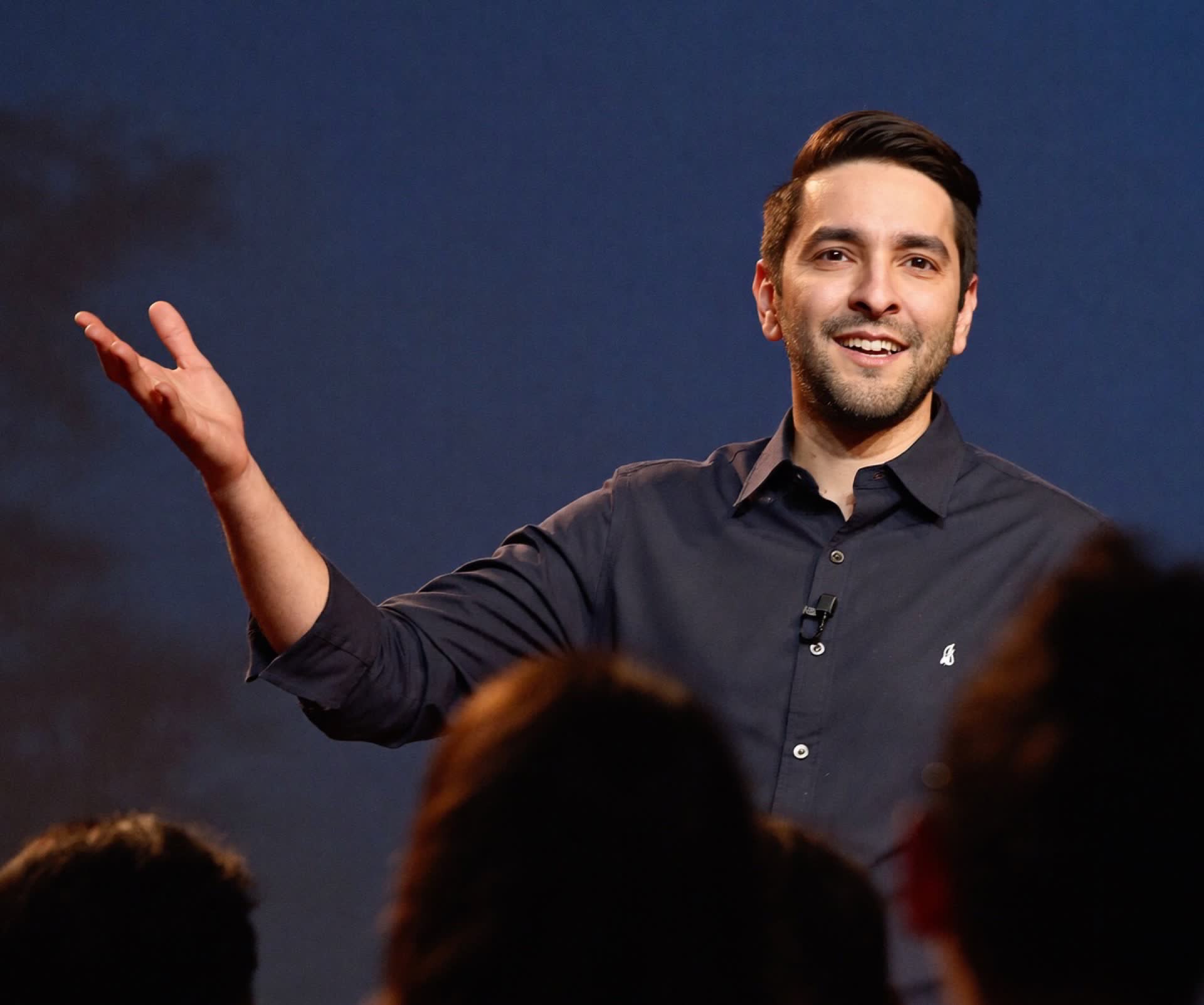
In a role reversal, Muzamil Hasan sits in the guest chair and talks through Season 3's biggest firsts, Pakistan's structural economic crisis, the rise of centrist thinking, and why he has registered a media company in Dubai.
The role reversal that opens Season 4
The episode opens with an unusual setup. The regular host chair is occupied by Hamna Raza, a co-producer at Thought Behind Things, while Muzamil Hasan Zaidi sits across from her as the guest. The reason, Hamna explains, is that a great deal has happened in Muzamil’s personal life and in Pakistan at large during the season break, and the best way to surface those thoughts was to put him on the other side of the microphone.
“I just happen to be hosting today,” Hamna says, “because our very special guest today is Muzamil.”
Muzamil’s response sets the tone for the next two hours: “This podcast is nothing else than my journey in learning interesting, useful, valuable things from interesting, useful, valuable people — things that I can use to make my life better. That is recorded and shared with other people so they can be on that journey with me.”
Season 3’s firsts — and why the Abdur Razzak Dawood conversation mattered most
Before turning to the present, Muzamil reflects on what Season 3 actually achieved. He describes 2022 as the year Pakistani podcasting “arrived” — listenership at TBT doubled, and roughly 85 to 90 percent of guests in Season 3 came through inward queries rather than outreach. That shift, he argues, signals genuine brand equity.
He lists several firsts: the Unilever CEO sitting down for a personal, unscripted conversation rather than a corporate panel; the vice chancellor of LUMS on a podcast for the first time; and the ex-prime minister episode, which he describes as a tipping point for the entire industry. “After that, you can talk to anyone and tell them you are doing a podcast and they know, they understand,” Muzamil says.
But when pressed on his personal favourite, he names the Abdur Razzak Dawood conversation without hesitation — a two-hour archive of the Dawood family’s history, from migrating to Pakistan with nothing, to becoming part of the 22 richest families, losing everything, and rebuilding a billion-dollar enterprise. “He has never given a personal interview before,” Muzamil notes. “I had constant goosebumps during that conversation.”
He also credits the Murtaza Wahab episode as a political first: Wahab came to TBT, had an extensive conversation about Karachi’s actual problems, and the podcast went viral. A domino effect followed, with all the mayoral candidates going to various podcasts. “For the first time, people had much better insight when they went out to vote,” Muzamil says. “It wasn’t just the rallies and the banners — people actually challenged and questioned.”
The real impact: a boy from Chitral who found his skill
Muzamil is careful to distinguish between viewership numbers and actual influence. He gives concrete examples: a startup that raised over 100 million rupees after appearing on TBT; two startups that discovered each other through the podcast and became partners; and a government that found a key e-commerce policy architect — Kamran Shaukat — because of his TBT appearance.
The example that lands hardest is one he heard on a flight from Dubai to Islamabad. An air hostess recognised him and upgraded his seat. The passenger next to him turned out to be from Chitral. He told Muzamil that he had watched the podcast, identified a skill, found work, and made himself fully financially independent. “Otherwise I would still be at home just doing nothing,” the man said.
“For me,” Muzamil says, “these are profound, life-changing experiences. That is what makes the podcast worthwhile.”
Later in the discussion, Muzamil articulates the underlying philosophy: “You can have 3,000 followers and have massive impact, and you can have 3,000,000 followers and not have enough impact. Our viewership is educated. They are future leaders.”
Polarization, centrism, and being misunderstood on Twitter
Toward the end of Season 3, Muzamil appeared on other podcasts and became a top Twitter trend — the first time in his life, he notes with dry humour, that it made his bucket list. The experience was not entirely pleasant. His cousin had passed away around the same time, and the online noise felt dissonant and relentless.
His analysis of what happened is less about the personal episode and more about a structural observation. He argues that society moves like a pendulum, and that the past several years of social media have pushed polarization to an extreme on all sides. “Pick a side, pick a label, right and wrong, black and white,” he says. His view is that this is a natural phase — extremes push the boundaries of all schools of thought — but that the tail end of that phase is approaching.
“I think over the next five years there is going to be a rise of centrists,” Muzamil says. “People who will bring reasoning, who will say we are all human beings and we are all inherently damaged, and we have to be a bit more humane in our judgment.”
He was trying to model that approach by having conversations across political lines, but the attempt was misread. “I was being misunderstood continuously,” he says. “That is not a good feeling — when you are being criticised for something you have not done.” He chose not to respond publicly, reasoning that shame cannot accelerate anyone’s evolution. People have to arrive at critical thinking on their own timeline.
The new set: lighthouses, old maps, and a saltwater aquarium
The conversation pauses to take in the redesigned studio. Muzamil explains that every season brings an upgrade, but this was the most deliberate one yet. The theme is nautical and marine, built around a specific idea: hope as a survival mechanism.
“When you are lost at sea for days and you see a lighthouse, that feeling — the power of a lighthouse — is what we are trying to do. We are trying to give hope to people by showing them knowledge as a way to improve their lives.”
Three hand-drawn antique maps hang on the walls. The first is a geological map of the globe published in Edinburgh in 1850. The second is a 1690 map of Asia, authored in Paris, which shows the Mughal Empire at its greatest extent under Aurangzeb — stretching from Persia to Myanmar — and carries the label “Grand Mogul.” Muzamil notes that the subcontinent at that moment represented 35 percent of global GDP. Today it accounts for less than four percent. “That is a rise and fall,” he says. “And I hope the rise again in the coming years.”
The third map, published in Edinburgh in 1818, shows Hindustan — and Karachi does not appear on it, because the city did not yet exist as a city. The maps, he explains, are a reminder that world orders change, borders shift, and the people who assume the present is permanent are always surprised.
The centrepiece of the set is a saltwater aquarium. Muzamil wanted something that would visibly evolve over the season — corals growing, fish being added, occasional problems arising — as a living metaphor for growth and uncertainty. “Our lives also have this many problems,” he says. “In a very subtle way I wanted the background to show evolution.”
Pakistan’s structural economic crisis — and why the IMF deal is not the answer
The conversation then moves to what Muzamil calls the elephant in the room: Pakistan’s economic crisis. Recording in early 2023, with an IMF deal still unsigned, he is direct about his diagnosis.
“The structure itself is broken,” he says. Pakistan is an import-led economy in which consumption is financed by debt. Every time the current account deficit becomes unsustainable, the country has gone to friendly nations for a bailout. That cycle is now broken. Saudi Arabia’s finance minister publicly stated at Davos that the Gulf states would no longer give free handouts — only conditional loans tied to reform. “That was a very clear message,” Muzamil says.
He traces the pattern across decades: the 1960s boom driven by American aid dollars, the 1970s socialist experiment that destroyed private enterprise, the late 1990s near-bankruptcy, the CPEC-era dollar inflows that were used to keep the exchange rate artificially stable rather than to build export competitiveness. Each cycle ended the same way.
His conclusion is blunt: “You are going to the IMF simply because your macroeconomic structures are messed up. If you get the deal, you will have a six-month delay. That is all.” The only alternative to eventual default is radical reform — cutting the size of government, privatising loss-making state enterprises, and redirecting resources toward productive industry. He singles out PIA, which he says lost 90 billion rupees in a single year, as an example of money being borrowed to subsidise a white elephant that serves no structural purpose.
“Reform is painful,” he says. “For everyone, from top to bottom. But without this moment we can never actualize the dream of Pakistan that we want to achieve.”
What individuals should actually do: go global, earn dollars
Muzamil is asked what the average person should do. His answer is not about charity or civic duty in the conventional sense. It is about reorienting toward the global economy.
He uses a household analogy: if two members of a family go out and earn, while four stay home, the household has more bread. Pakistan’s problem is that the entire web of economic activity is connected to imports rather than exports. “Every person needs to be connected to an industry that is exporting,” he says.
He points to freelancers, IT services professionals, and anyone earning in foreign currency as doing more for the nation than most. He points to Saudi Arabia’s Vision 2030 and Dubai’s Vision 2040 as massive, underappreciated opportunities for Pakistanis, given the cultural linkage and existing diaspora. “The future of the world is being created in the Middle East right now. People are not seeing it.”
He also addresses the investment mindset problem directly. He describes a former employee on a minimum wage who spent two months’ salary on an iPhone to play games, turned down every learning resource offered to him, and kept looking for passive income shortcuts. “People are not just lazy — they are not willing to make themselves grow. And if people don’t grow, how does the country grow?”
Registering in Dubai and going multinational
By the end of the conversation, Muzamil announces the decision that the entire episode has been building toward. He has registered a media company in Dubai. At least half of Season 4’s conversations will come from the Middle East and North Africa region. He plans to speak to Pakistanis and non-Pakistanis alike, to bring knowledge of where the global economy is heading back to his audience in Pakistan.
“I am going on a journey of globalising myself,” he says. “I want to peg my earnings on a dollar — earn there and bring it here, rather than take from here and spend there.”
He is candid about the anxiety involved. Dubai is expensive. The audience may not immediately understand why they should care about a Saudi agri-tech startup. But his reasoning is consistent with everything he has said across the two hours: the podcast is his own learning journey, recorded and shared. If he is going to learn about where the world is going, he has to go there.
“I am proud to announce that we have registered a media company out of Dubai,” Muzamil says. “We are now a multinational podcast.”
He closes with an open invitation to politicians from parties he has not yet been able to reach — specifically naming figures from the PML-N and PPP — and reiterates his approach: critical questions, asked respectfully, with the answers left for the viewer to judge. “I am not an investigative journalist. I am just a conversationist. I trust my viewer to build their own opinion.”


Never miss a conversation.
New episodes and the thinking behind them, straight to your inbox. No hype, no spam, no pitch.