Thought Behind Things
Taimoor Akbar on why daily uploading changed everything
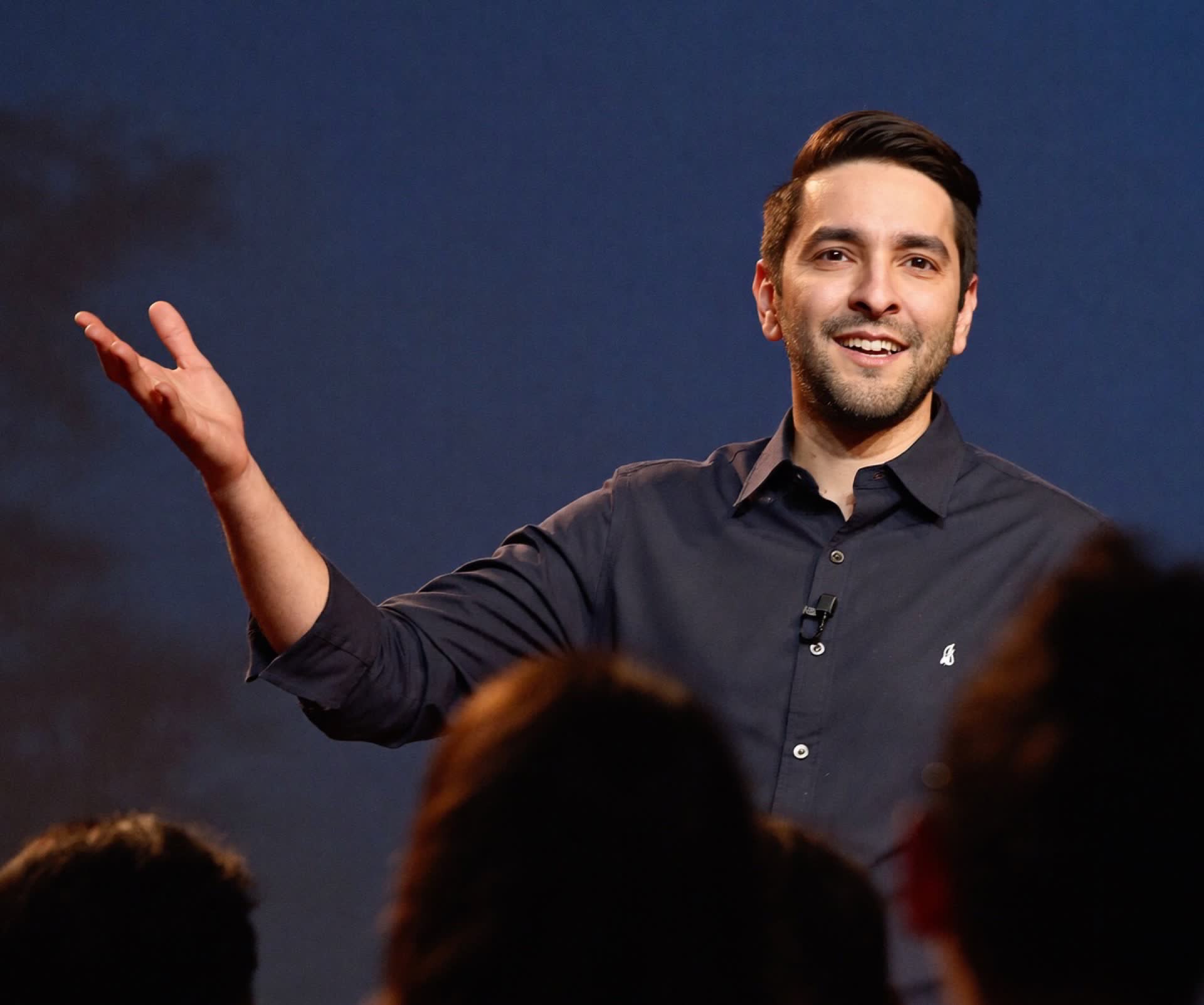
Taimoor Akbar — mechatronics engineer turned content creator — walks through how a single algorithm insight, a Ramadan experiment, and a willingness to take risk built one of Pakistan's fastest-growing Instagram presences. The conversation expands into drama industry economics, AI-powered language translation, and whether Pakistani creators can ever go global.
From mechatronics to reels: a pivot nobody planned
The episode opens with Muzamil welcoming Taimoor Akbar — born in Rawalpindi in 1993, raised there, and educated at AIR University Islamabad in mechatronics engineering. The degree itself was something of an accident. Taimoor explains that a friend in the mechanical department asked him to switch over so neither of them would be alone, and he sold the idea to his family by arguing that mechatronics covered both mechanical and electronics, doubling his job prospects. “Jo job se agar aap dekhte hain to woh to bechare baaki bhi to roll hi rehte hain” — the jobs on offer after graduation were, in his telling, barely worth the four years spent.
Of his batch of roughly a hundred students, most have either moved into sales, pursued masters degrees, or left engineering entirely. Almost nobody is working in the field they studied. Taimoor graduated in 2016 and spent about a year drifting, taking a job as a business development manager in Islamabad while quietly nursing an interest in acting.
The England effect: risk tolerance as a learned behaviour
Before the content creation story begins in earnest, Muzamil steers the conversation toward a broader question about Pakistani society and risk. He had studied in the UK and noticed that people in more stable economies are more willing to try things — and more willing to encourage others to try. Pakistan, by contrast, produces a kind of ambient fear: fear of failure, fear of what people will say, fear of what actually happens if it goes wrong.
Taimoor agrees without hesitation. “Hum as a society hum dari hui gau mein hain — yaar pata nahi kya hoga agar yeh fail ho gaya to? Hain? Log kya kahenge?” He says the England experience shifted something in him, particularly around communication and the willingness to engage across different kinds of people. He does not call himself an introvert — he is comfortable one-on-one — but the cross-cultural environment pushed him to operate in rooms he would not have entered before. That shift, he believes, is part of what made the later leap into content creation feel possible rather than reckless.
The algorithm insight that built 60,000 followers in six weeks
The actual turning point is specific and unglamorous. During Ramadan 2021, Taimoor had been making occasional short videos — some on Facebook, some on Instagram — without a system. A friend based in Dubai who ran a real estate Instagram account told him the one thing that actually moves the algorithm: daily uploading. Taimoor’s first reaction was practical panic. “Daily upload mein kahan se nikaalunga main? Itni videos.” But once the mindset shifted, he says, thirty videos became findable.
He committed to daily content. Within a month to six weeks, his Instagram following went from negligible to sixty or seventy thousand. He had already set himself a target of 100,000 followers by June of that year. He hit it by January. Shortly after, he quit his job.
“Jab woh ek baar mindset bana li hai na maine, phir tees videos — haan. To woh phir chal gaya tha kaam.”
The lesson he draws is not about creativity. It is about consistency as a technical input into a platform’s distribution logic. The content was already there. The reach was the problem. Daily uploading solved the reach problem.
How the Nestlé TVC and Hum TV drama arrived
Neither of Taimoor’s two biggest commercial breaks came through conventional auditions. The Nestlé TVC in early 2022 happened because he had made a demo video pitching Islamabad United for PSL content — his World Cup cricket content had gone viral — and a director who was separately looking for talent saw that video and called him within three days. “Haazir hai,” was his answer. The shoot happened in Karachi.
The Hum TV drama followed a similar pattern. A friend passed his number to a contact at the channel. A call came. He was offered a character in a comedy drama. He said yes before hearing the script. “Maine drama karna hai. Koi bhi role hai chalega karna hai.” The shoot ran from August to February — five to six months, in and out of Karachi — for twenty-eight episodes, which Taimoor acknowledges is longer than a typical drama production.
Later in the discussion, he is candid about the experience on set. A comedy drama where he could not find a single funny line. Long days — nine in the morning to nine at night — for three or four scenes. And a realisation that the skills that make someone good at content creation do not automatically transfer to acting, and vice versa.
The drama industry’s economics and its content problem
Muzamil raises a question that sits at the centre of the conversation: why can’t a group of creators pool resources and make a proper drama for YouTube or Netflix, bypassing television channels entirely? He runs the numbers out loud — a billion views on YouTube at a conservative CPM of 800 rupees generates roughly eight hundred thousand dollars, which at the prevailing exchange rate is a substantial sum in rupees, before any brand integrations.
Taimoor puts the average cost of a proper drama at around two crore rupees. The math, on paper, works. But he identifies the real barrier: Pakistan’s market only moves after someone has already done it and shown the validation. “Woh sirf tab change hoti hai jab aap jaate ho aur aap karte ho aur aap validation lete ho aur uske baad phir lines hain sab shuru hote hain.” He uses Muzamil’s own podcast as an example — structured scheduling, chapters, proper descriptions — which was dismissed when it started and then copied widely once it proved itself.
Muzamil pushes further: he knows creators like Khakan and Raheem Pardesi who have television experience. Taimoor had himself been thinking about a ten-to-fifteen creator collaborative series, imagining the social media hype alone would be enormous. But the question of who organises it, who takes the headache, keeps stopping the idea. “Inko ikattha kaun karega? Main yahi hai.”
The deeper problem, both agree, is script writing. Pakistan has produced actors. It has not produced script writers. “Script writers ki bahut kami hai.” Taimoor gets messages constantly from people offering to work with him, but the scripts that arrive are, in his words, third-class. His half-joking solution: use ChatGPT to generate a screenplay from a basic story, then sit down and replace the elements that need to be localised.
Content creation versus acting: a genuine dilemma
Muzamil asks Taimoor directly where his head is — content creator or actor? The answer is honest confusion. He cannot give up content creation because he believes it is the future, and because it is now genuinely easy for him. “Content mere dimag mein jo jo aata hai main lagata jaata hoon.” Even while shooting the drama, ideas kept coming. A video that once took significant effort now takes little time.
But he also sees the threat clearly. Actors who start making content will outcompete content creators on reach alone. An actor with millions of followers can post a simple video and get more views than a creator who has engineered something carefully. “Jis din actors ne content creation start kar di na, content creators ka dhanda kam ho jaana hai. Main mazaak nahi kar raha.”
His aspiration, if he were to pursue acting seriously, would be something like Gangs of Wasseypur — or, more practically for a group of creators, a university or college drama that highlights real student issues with a comedic tone. Characters in that age range, he argues, are ones creators can actually play convincingly. He acknowledges that going directly from social media to acting brings real gaps, and that a drama school program would address them — but only if he decides acting is the path.
AI translation and the coming collapse of the language barrier
The conversation shifts when Muzamil shows Taimoor a video produced by students at GIK (Ghulam Ishaq Khan) University. The tool they built uses generative AI to take a video in one language, identify the speaker’s tone and script, translate it, generate a dubbed audio track in the target language matching the original speaker’s voice, and then re-sync the speaker’s lip movements to match. The result, shown live in the episode, is seamless enough that Taimoor’s reaction is immediate: “Yaar yeh to bahut zabardast hai.”
Muzamil’s argument is that this technology is about to dissolve the single biggest constraint on Pakistani creators — language. Right now, Pakistani content competes only within a Urdu-speaking audience. Indian creators have already gone global. The gap, as Taimoor frames it, is roughly ten years: Pakistanis are four or five years behind Indians, who are five or six years behind the West.
Taimoor connects this to something he had already noticed independently. His nineties nostalgia content — cassettes, childhood games, shared cultural touchstones — gets strong engagement even when the specific references are Pakistani, because the underlying experience is universal. “Aap nineties mein cassettes ki baat karenge to woh to puri duniya mein cassettes hai.” The language barrier was the only thing stopping that content from reaching a Spanish or French audience. That barrier is about to come down.
Pakistan in 2050: cautious optimism, honest arithmetic
By the end of the conversation, Muzamil asks Taimoor to extrapolate — where does Pakistan end up by 2050? Taimoor’s answer is characteristically direct. He is optimistic every year, he says, but the honest assessment is that if the current trajectory holds, Pakistan in 2050 will still be about twenty years behind the first world. The reason people will be happy is not that they have caught up, but that they will have moved forward relative to where they are now. “Hum khush kyun honge? Kyunki hum thoda sa aage nikle.”
He stays in Pakistan for now — he mentions moving south as a plan — and sees his future there. The brands are struggling with campaign budgets because of the country’s economic and political instability, but the underlying demand for content is real. “Mera nikaal paise banaenge.” The work is good enough. The country is turbulent enough that people need something to watch.
Muzamil closes by noting that this is the first genuinely fun conversation he has had in a long time, after a period of being, in his own words, “thoda sa life mein serious.” The episode ends with both of them agreeing that the next wave for Pakistani creators is not about growing a local following — it is about figuring out how to reach the world before the window closes.


Never miss a conversation.
New episodes and the thinking behind them, straight to your inbox. No hype, no spam, no pitch.