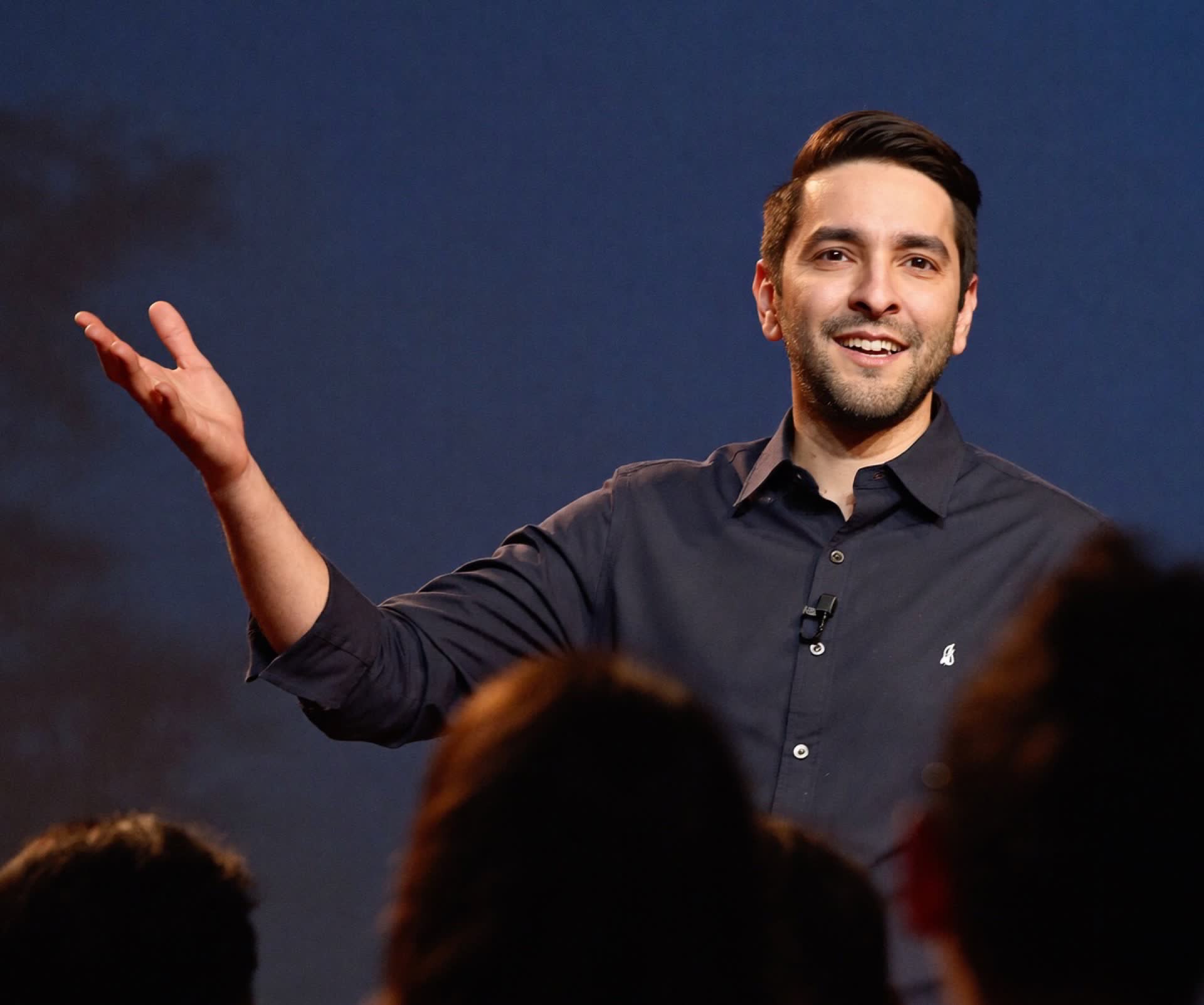
Thought Behind Things · Jul 7, 2021 · 50:58
The ASP who built Pakistan's first gender protection unit
ASP Amna Baig on joining the police force as a woman, founding Islamabad's Gender Protection Unit, and why financial independence is the only real answer to gender-based violence in Pakistan.
with Amna Baig
10 min read
“Why not?” — the question that started everything
The episode opens with Muzamil asking Amna Baig a question that sounds simple but isn’t: what made a woman from a conventional household decide to join the police? Amna’s answer goes back further than the CSS exam. It goes back to her mother.
“I always said that when I eventually have a daughter — I’m a feminist at heart — she must grow up to say that I want to do something that my mother is doing.” Her mother, she explains, was an exceptionally brilliant student who married early. The resources and permission to continue her education were never given. Amna did not want to carry that same regret forward.
Her father was a civil servant in the Pakistan Administrative Service, which meant the family moved constantly — she started school in southern Punjab, passed through several postings, and eventually sat her metric exams at Hamza Public School in Rawalpindi. No private school. No elite coaching. “My father could not afford a private school. He was a civil servant.”
She graduated from NUST in 2013, having spent four years quietly working on the one thing she knew would hold her back: English. The CSS exam, she notes, has an English composition component that filters out enormous numbers of otherwise capable candidates — people who grew up in Urdu-medium schools, who never had the exposure, who are brilliant by any other measure.
Failing the first time, and what came after
Amna did not clear the CSS on her first attempt. She missed by two marks on that English composition paper. “I went into complete depression,” she says plainly. What pulled her out was a circle of people — her brothers, and the man who is now her husband, who was then a close friend. They pushed her to sit the exam again.
The second time, she passed. And she had always known which service she wanted. Her father had been in the administrative group — DMG — and had pushed her toward it. She refused. “I told him that’s boring.” Police was her first priority from the start.
When she went before the interview panel, they asked the question that, as she notes, they would almost certainly not have asked a male candidate: how would she manage field work? Her answer was direct. “My father did it. I saw him do it. Why can’t I?”
The interview went well. She was inducted as an Assistant Superintendent of Police, the entry-level officer rank, and began the two-year training pipeline — the Civil Services Academy in Lahore, then the National Police Academy in Islamabad, then a field attachment in Gujarat — before being posted as a Subdivisional Police Officer.
What the job actually looks like
Muzamil asks Amna to describe what an ASP’s day-to-day work involves, and she pushes back gently on the assumption that it must be different for a woman. “Whatever my male colleagues are doing, I’m doing the same.” At the SDPO level, that means supervision and management of crime, security, and everything in between — murder scenes, case files, data, law and order duty, all of it.
She is candid about the emotional weight. “You’re constantly dealing with negativity of sorts. It’s crime. It’s people coming to you crying, in distress. You’re seeing a lot of things which, I think, unconsciously impacts you.” She says she has changed over the years, and believes most police officers do. She does not dramatize it — she says she loves her job and would not give it up — but she does not pretend the cost isn’t real either.
The hardest moment she shares is the death of a colleague. A SHO she had worked closely with was shot in front of his wife and children by someone he had previously arrested. His father had been martyred at the same police station before him. “You lose a brother. It’s the feeling I can’t explain. You can’t shake off the feeling looking at his children, who were like eight or ten years old.”
Minimal resources, maximum stretch
Later in the discussion, Muzamil raises the question of whether Islamabad Police has grown in terms of resources over the past decade and a half. Amna disagrees with the framing that nothing has changed, but she is equally honest about the constraints that remain.
The core problem, she argues, is human resource stretch. “This one inspector or sub-inspector or ASI has to write his case file, he has to arrest the person, he has to go for the DNA, he has to do the law-and-order duty, he has to do his duty officer duty, he has to do the gush as well. Of course quality is compromised.” She has been vocal, she says, about the need for more officers.
She also points to the criminal justice system as a whole. Even when police do their work well, conviction rates suffer because cases collapse at other points in the chain — in the courts, or because the parties involved reach a private settlement. “Most of the times, you must have worked hard on a case, you must have tried your best to ensure something goes to trial and conviction — however, what would happen is that the parties would compromise.”
On drugs, she is similarly clear-eyed. Police can work to stop supply, but the community has to be part of the solution. “As long as community support nahin hai, police itself cannot do much.” She points specifically to educational institutions as a site of concern, and to parents who are not close enough to their children to notice early warning signs.
The Gender Protection Unit — and why it exists
This is the section of the conversation that carries the most weight. Amna describes how the Gender Protection Unit came to exist, and the logic behind it is almost embarrassingly simple once she explains it.
When she was posted to a subdivision in Punjab — the first female officer ever posted there in 40 to 50 years — her staff noticed something within three months. Female complainants who had never come in before started arriving. Women who had not felt safe walking into a police station staffed entirely by men were now willing to come. “Women feel more comfortable speaking to women.”
At the same time, she was receiving complaints through social media — women from across Pakistan messaging her directly, asking for help. When she or her team would respond and ask them to come in, the answer was often the same: can we do it over the phone? “There is a taboo attached with women going to a police station in this country.”
The solution she designed, with the support of a senior officer she credits by name — SSP Usman Yunus — was a helpline staffed by female officers, who would go to the complainant rather than requiring the complainant to come to them. It worked in Rawalpindi. When she was posted to Islamabad, she replicated it.
The Gender Protection Unit is now based in F-6, Islamabad. The helpline number is 8090. It is toll-free. It is staffed 24 hours a day, seven days a week. There is also a walk-in facility — not a police station, she is careful to say, but a service center — that operates on the same hours. Female officers respond to calls and, where needed, go directly to wherever the woman is. The unit serves women, children, and transgender persons.
In its first month of operation, it received over 130 complaints and walk-ins. Amna was preparing to release the data publicly at the time of recording.
Financial independence as the only real answer
The conversation turns to gender-based violence more broadly, and Amna makes an argument she clearly believes deeply. The reason most cases end in reconciliation — even cases involving severe physical violence — is not forgiveness. It is the absence of any alternative.
She describes a woman who walked into her office having been shot four times by her husband. She had survived. She wanted him arrested. But she had no clothes — he had taken everything. She had three children. Her elderly father could not support her. Her brother’s family already filled the house. “She said, ‘Cabinet mein kahan jaaun?’ Can you imagine what she’s been going through?” Weeks later, the woman sent Amna a message asking if she could help her find a job. “How am I supposed to survive?”
“I feel that identities are totally dependent on the man in the house,” Amna says. “And one of the reasons is that there’s a vicious cycle of dependency on the men by all these women.” Financial independence, in her view, is not an abstract feminist principle. It is the practical mechanism by which women gain the ability to leave.
Muzamil asks her to address the portion of the Pakistani public that opposes women’s financial independence. Her answer is measured: most of them, she believes, are simply not aware of what the alternative looks like in practice. They are in their own silos. The cases she sees every day are not visible to them.
Social media, community policing, and humanizing the force
By the end of the conversation, Muzamil and Amna discuss how officers using social media has changed the relationship between the police and the public. Amna joined Twitter at the urging of a batchmate who felt there was a gap — a community looking for answers and finding no one to connect with on the other side.
She describes a case where a CCTV clip surfaced on Twitter, people flagged it publicly, officers responded, and the suspect was behind bars within a few hours. “I think that’s incredibly powerful where we’re going in terms of real-time intelligence sharing.”
But she is clear that her own presence on social media was never about personal profile. “It was never about me. It was always about the department.” She uses it to highlight female officers, to share the human side of police work, and to fill the information gap that formal statements — carefully worded and always delayed — cannot fill.
Pakistan in 2050
Muzamil asks Amna where she sees Pakistan when her generation is in power. She does not give a policy answer. She gives a cultural one.
“The thing that I would want is that I would not want us to be discussing women’s issues anymore. It should be normal by then.” She should not, she says, be invited to speak at events because it is remarkable that a woman achieved something in uniform. The daughters growing up now should not have to think twice about whether a career is “for them or not for them.”
“I would want to see a more equal world. And I think we would.”
She is not naive about the distance between now and then. But she is also not pessimistic. Ten years ago, she says, nobody was talking about women’s rights publicly. Now men and women both are. The direction is right, even if the pace is slow.
Full transcript
[Applause] [Music] um i know that a lot of you guys have been saying okay you know bring someone from the police service and i think there could be no better uh than asp amna bake ma'am thank you so much for being part of the show thank you so much for having me uh the conversation started karunga with uh trying to understand um your journey right and and uh if i if you could start off with your high school high school update were the steps that led you to join joining the police force because as especially as a woman um it seems like a police car as a citizen you know um and joining that is seems difficult being a woman and joining that is just like that's that's some serious guts in my opinion what were your thought processes and how how did that trajectory sort of happen uh so i uh basically i come from a very conventional household and uh uh like a lot of other women my mother wanted me to get married and that is how i grew up and that is uh what i was told that uh my ultimate goal is and uh uh but uh like i remember and that was something that struck me because why not interesting yeah why not you thought about it nobody yeah and i always said that you know when i eventually have a daughter i'm a feminist at heart so she must grow up to say that you know i want to do something that my mother is doing it was this and then the fact that i saw that my own mother was an exceptionally brilliant student and she got married early and even though my father is extremely supportive he's the reason that i'm sitting here but back then times were different or uh unknown education continuing if she had been allowed or she had been given the resources to uh you know do her best so maybe um i i did not want to grow up with that regret i was in divisional public school bindi and then i did my metric from hamzami public school in bindi again and uh here i started my school by the way in dirac my father was also a civil servant yeah he was from the pakistan administration administrative group so dmg we were posted around so i started from i started my education in southern punjab lake in bus over the years but you didn't go to a private school no no my father could not afford a private school he was a civil servant so really yeah yeah he could not uh and uh right and uh but i knew i knew from the start that i wanted to join the civil service so i was the first one in my family to actually clear the civil services was it the first time no it was the second time the first time i could not clear one exam english composition memory when your country most of your country can't speak i feel like there could be a very brilliant people who are just aren't able to make it just because of your english language schools skipper for a very long time i could not speak english all those people who could not make it to lums just yeah absolutely so there were all those uh you know private school house graduated i think i graduate yeah i i don't think i know i graduated in 2013. i started in 2009 right right right four years yeah so then you graduated and straight up you decided so over the years the four years i was in nast i i worked on my english because i knew okay uh [Music] but you're right absolutely this is not how it should be right and so you graduated and you decided exam day did you do sales study or so they i cleared my exam and they're like yeah yeah i met your father and he said she's almost taken the exams it's about to happen and i was like okay good 100 thank god so uh for many muslims this is what i want i wanted it it wasn't i always wanted to join police because i had an idea about civil service because of my father licking it was never about um which gives you financial independence which gives you the authority uh which you need in the society uh and specifically considering that i'm super close to my family and i want to take them along i wanted to keep that social legitimacy jamaica parents with the career that comes all of those things coupled i decided that i wanted to sit for the exam right and and uh palace was your first priority yeah yeah yeah yeah abu was dmg so i did not want to do that i told him that's boring even though he pushed me he blackmailed me into it but i got yeah because all of my friends were like you know dng and then foreign service and then police and no it depends it totally depends from person to person yeah that's not how it works right right uh so so you you know you studied again i went into depression yeah i went into complete different it was only two marks that just sucks i was just like what happened like you know uh and then uh yeah but i had i have a very supportive pair of brothers and uh my husband who's who's now my husband uh uh he was my friend and we were you know so he said uh so yeah i had this group of people around me who helped me get out of that depression and take that exam again because it takes a lot of strength yeah yes yes i think six hours a day uh it's a lot more i would not want to go over that it's not difficult i i must clarify it over here it's not difficult but it's a lot of studying to do yeah and i think there's a lot of grit involved to study and to actually go up it's not for everyone right i think it is like if you want to but it's it's a lot of commitment yeah um okay so then you finally you know you passed you found out you passed and uh what was that feeling like the second time when you finally got there i always wanted police you have to wait i don't think i have ever felt better in my life it was it is something that i always really wanted to do and i had gotten it so i don't know it was something out of this world yeah that's pretty amazing up your form on initial failures yeah and then so you passed your exam and you went in for an interview yeah do they like do they know when they interview captain you just thank you yeah they ask you questions because yeah sorry you must ask me if they asked about the police right you know i mean that's a that's a very logical pakistani society yeah so they don't particularly ask you about police but they said how would you do field because administration again is yeah police against field and they said okay how would you do that and i said my father did it i saw him do it why can't i like you know yeah i i i don't think he'd ask the same question to a guy yeah because i i was just like he did it i saw him and i used to go with him to the work and it's not something that i can't do so yeah yeah and and then so that went well my interview went really well right it went really well yeah exactly this and then so getting into the police force uh what's the first uh sort of position okay yeah so i'll make you go through the process that you know after your after your interview after your final allocations interview psychological blah blah blah um uh you go to the common train you go through the common training program which is uh the civil services academy in lahore walton road piranha academy here and i'm from the 44th batch of uh that common training and uh after that we come to national police academy right next to a nast wahhabi nikki training 42 days to all police officers to all the officers who have been inducted and you have to all including like uh outside of police as well no no no okay because because once you come to the national police academy it's it's the specialized training which starts in gujarat uh during my attachment or chemist so it's a two two year process and then you get posted yeah and what's the first uh generally character we we get inducted as assistant superintendents of police and once you take the charge the officer is called a subdivisional police officer okay yeah and what's the what's the job like so basically one of the questions that i always get is like this is the first question that every comes to everybody's mind when they look at me but no that's not how it works uh whatever my male colleagues are doing i'm doing something so depending on the sub division division it's the crime it's the security it's everything okay so it's management of absolute supervision and management supervision supervision management and so crime essentially data metrics who are those people uh they are us because because i'm a newly inducted asp not newly but you know a 17th grade page about so you and your show the subdivisional police officer and the sho have to do everything like murder crime scene what is the serious crime he is data analysis technical analysis all of that yeah how much of that have you done in the past how many years four years um uh three three and a half years yeah [Music] it's fascinating right like you you talk to a police officer that you know police officers are generally very intimidating but you talk to i am i'm a common man i tried that process but um you know when when someone knows you though automatically like a quick juicy story i don't want a juicy story but he's trying to understand okay what is it is it generally desk okay guys has there been times when you're just like here i mean today was a bad day yeah oh somebody does take a toll like the work takes a toll on you because you're constantly dealing with uh negativity of sorts right it's crime it's people coming to you crying in distress you're seeing a lot of things which you know i think unconsciously impacts you and i feel that i have changed over the years and i'm sure all the police officers do and at one point i think everybody needs therapy as well but the thing is there are times emotionally involved i remember there were a few cases of child abuse where i was extremely even though i am not a very expressive person in terms of my emotions and i do not like to talk about my work in the sense oh it's doing this to me or is doing that to me i love my job it's extremely interesting i would not give it up for anything in the world however yeah it does have its tool and it does come with an opportunity cost you miss out on family functions you miss out on so much of your social life you miss out on your personal life now because you're 24 7 at work however yeah there are cases where uh you you for a minute just sit down and think and you know you go like wow okay yeah because i'm what i'm thinking is you know there's a case or two pakistan pakistani roth and then you have to go through these cases day in and day out either you have to really sort of become so emotionally intelligent um objectively performed again it's i mean i don't think it's humanly possible for a person to deal with that day in day out and that's why i'd like to ask pakistan is this is therapy a thing or is it is is there an effort towards making it your thing uh now it is the senior officers there are two issues which two three issues which you know now the senior officers and i'm which issues palestine or which issues because awareness are the honest and mental health is one of them uh our seniors do think about these things working conditions because they're in the leadership positions right so they have to decide irrespective of what the perception around in pakistan around the police force is like um before joining the force i was also like one of those keyboard warriors writing bad things but after joining the service i realized minimal resources hamari police force and they are doing a wonderful job it's just that a lot of it is this thing that you thrive around negativity right don't people don't want to talk about very happy things like what was solved and what was done good but there is so much that these jawans are putting in these officers are putting and you have no idea they have sacrifice there are so many shahadats ho recently uh we had worked so closely and as i said mother because i'm at in the sdpo level or sdp or south [Music] [Music] this person who he had actually arrested okay so he was just short in front of his wife and kids so and i know how he how close he was and he was also a son of a shahid his father was martyred before him in the same police station he was the show of the same police and it's just like you lose a brother like it's the feeling i can't explain you can't shake off the feeling looking at his children which were like eight or ten years old like so it's you're risking your lives you don't know who's going to come back and shoot you and sometimes even for the most menial things because it's risk right you're taking sort of a risk so yes [Music] because we do have someone else coming in next week and i think we'll have a better discussion on this with him but you're in islamabad right now mujira prada you know i've talked to hamza and he told me keep past press hasn't really grown in terms of resources over the past at least a decade um and a decade and a half at least and us is that is that true like it could be resourcing anybody no i i would like to disagree over here we have uh there are a few things that i would want to talk about uh right and i hope i can raise awareness around them through this platform uh resources me yeah we have established a gender protection unit recently or it's a toll-free helpline eight zero nine zero so islam so can you tell me a little bit about this because this is very important it's called gender protection unit protection unit eight zero nine zero pay you can call the toll-free helpline okay and what's the thought behind that okay so uh i'd like to talk about why uh women in police are important and uh it starts from when i joined uh punjab police two three years ago and after a few months because i was the first police officer to be posted in that subdivision right ever first police officer sorry female policeman okay uh ever so so it had been going on for like 40 50 years and i was the first female officer they'd be very confused but it's a good case study because what happened was okay uh uh three months after my staff came to me and they're like madam have you we've noticed that a lot of female complainants are coming in who did not be when they were male officers so that got me thinking that yes right okay women feel more comfortable speaking to women right and that is when i started thinking about oh and i had started using social media as well so i was getting a lot of complaints through social media right uh ladies from all over pakistan were just in boxing can you help this can you help that so that got me thinking that uh and you know there was a very uh interesting phenomena that uh we're going to provide you help so can you come in uh they would say can you do it over the phone we don't want to come to the police station because there is the taboo attached with going for women going to police station in this country right right and that's when i realized okay so they are not comfortable coming in so we have to find a solution around that ah uh here we started this helpline where the idea was uh i had an excellent excellent boss siresen yunus i'd like to mention him here i think most of the policing that i have learned in my life is through him he was an enabler [Music] so i think about so what we need to do is we need to have a help line where they can call and our female police officers respond to wherever they are instead of the thane it should be a female unit right so we did that in pindi yeah and it did brilliantly and sir was kind enough to provide me with all the resources and we set it up and bought the chava hua and we had a good response so when i got posted to islamad so we replicated over here so the facility may we have a walk-in as well so it's not a police station uh i'd call it a service center okay so it's in f6 uh the new one the new building yeah yeah yeah yeah yeah yeah so it's in the basement of that uh you can walk in it's 24 7. the helpline is 24 7. the walk-in facility is 24 7. it has uh counters so you can just give your application if you walk in or you can just call actually uh our team of female officers will come to you and they will uh do the handle whatever whatever and so is it is it specific to gender issue that is specific is it potentially any crime no it's uh so it's it's to be honest it's for the women of the country and the transgenders and the children those venerable segments who usually uh find it difficult no no so what i'm sorry about what i meant was for the women are they reporting gender-based crime there or are they every crime every potential crime so this is like if they if they're ever feeling scared gender related she was living in a hostel and she was like my warden beats me up and uh you know uh report card she's a constable or something in the police so what do i do and i feel like this is the sort of place where she could have potentially just cooked absolutely essentially absolutely absolutely from start till the end almost interesting we have been received so we started a month ago and we have already received received over 130 plus complaints and walk-ins or those maybe have complaints such as neighbors husbands i am so happy that we have been able to provide some sort of relief this this great example that you've given me so this happened something something that happened with me you've just come here right because yeah has been used to beat his wife yeah every single day yeah you could hear it tk you could hear it called the police dala came said not our problem went away what's the science behind that no so basically next time when you hear something that's what i'd like to say just call our helpline okay eight zero nine zero our female police officers would come and they would handle because they're sensitized to the issue now like this no so basically what happens is amir i like to clarify not everything is police's jurisdiction okay so if we go and knock at the door and somebody's like oh i don't want to complain right okay so right the gender unit comprises of lady officers lady officers can go in oh so there's a technical yeah yeah so this is that's pretty amazing and i hope that this is i i hope the results are great yeah will you ever make it public uh okay so that i didn't yeah so we we as i mentioned kevin martin first june go first uh pura month complete we were waiting for a month to complete so we have some data to play with and alhamdulillah as i mentioned we are working on it this weekend we will be receiving releasing the data server i look forward to that um okay um you know i mean you talked about you were talking about reforms essentially you talked about the gender uh this this particular helpline if you'd like to talk about it um so there are a lot of things that we uh have done uh so for example islamabad police generally happy because for for example a common man goes to a police station he does not know who to go meet casey report right so the police guys uh police guide is sitting at the very front and you meet him and he will explain you say mira id card right are you digitizing the system as well absolutely we are we are in the process uh as you mentioned another police officer is going to come on your show he will explain how it's we have shifted from like uh our regular uh you know mechanisms to i.t based policing or inshallah he'll help you he'll tell you everything in detail sounds good have you seen brooklyn nine-nine yeah like you know as a police officer what do you what do you think when you when you watch something like that us-based yeah i'm a big fan of comedy i love that i think i live for comedy yeah so i love it right so a lot of what they show is um you know the the policing they show that show that but they also show the the legal aspect of it and in pakistan we hear a lot of this like oh you know and as again as a lame and my understanding is that the the police is basically responsible for providing the evidence to make sure that he eventually ends up staying in prison do you think there is a gap between the laws that that have been made and the capacity of the police to provide the amount of evidence required to actually prosecute someone as i mentioned i think i i think there are of course there is always room for improvement in terms of flaws etc but generally i feel that uh i think it's it's it comes down to resources and it comes down to human resources in particular uh so i feel okay sometimes our police is overstretched right so this one uh inspector or sub inspector or asi has to write his case file he has to arrest the person he has to go for the dna he has to do the law and order duty he has to do his duty officer duty he has to do the gush as well so of course quality compromise and we can uh you know i've always been very vocal about this that we can use more police officers we are extremely stretched when it comes when it comes to uh you know human resource or us may of course be then it starts impacting your work however it's not just the human resource of course this is because it's a criminal justice system yeah yeah yeah but then there are a lot of other processes that the person has to go the criminal has to go so vote up the completeness and then finally and most importantly mozamel the people who are involved so most of the times you must have worked hard on a case you must have tried your best to ensure something goes to trial and conviction isn't shown however what would happen would be that the parties would compromise yeah so for one reason or another i'm not blaming them i'm just saying things that we need to look into when we talk about conviction rates yeah it makes sense um islam what major problem there's seems like a drug epidemic um you know in our young kids um drugs seem quite easy to acquire to be very honest um why do you think that's happening and and what is being done or can be done to to to prevent that uh amazon again it is one of those uh things that you know that's always on our minds and you know we are trying our best to uh stop the supply at uh every possible end that we can uh like feel k responsibility sorry community here police in itself but then again your police is from the community and the communities from the police as long as community support nahin community forward community health police itself cannot do much database what we see is that a lot of we see very uh a lot of supply going around in institutes like educational education institutes [Music] we need to tell them the harmful side effects of whatever they are doing and especially the parents need to step up societies men are usually parents are not very close to their kids in terms of personal cheating if a child is going through something personal and he has been addicted to something there needs to be somehow a you know a community community based effort towards this drug problem that we have right now right makes a lot of sense uh i know for a fact that you're a stand-up comedian as well um what's what was the thought behind that because like i am trying to reconcile these two you know this this incredibly powerful police aura that you have and then stand up comedy right so how did that happen so basically uh as i said that you know my my work is very um i'd say challenging and it brings a lot of it's very empowering too but it then again it's very you know draining as well in terms of emotional drain hair physical drain hair right sorry situation i know people like to say that i'm a twitter star somehow to the celebrity but i have to clear it out i am only on twitter for memes and i only i only joined it for the jokes because i think pakistanis have a great sense of humor yeah and uh manito serif is joined and now it has become something else but yes i definitely enjoy and there are a few there's a there's this a few comedians that i really really enjoy pakistani comedians that i would want to give a shout out shout out to chaudhary here from karachi i don't know if you know him he is absolutely brilliant and if akbar is hearing that hi akbar i'm a big fan and us we have a sehar tariq from oretnak in islam then we have a lot of brilliant people and i definitely enjoy comedy because trust me i cannot go on with all of this without commodity in my life yeah right do you think there's an industry of comedy india with netflix with all of that all of that pakistan may somehow lack here um i think now it's growing um content creators facebook but now everybody has shifted either to twitter or instagram which i think is brilliant so twitter pay we i'm sorry instagram pay we have people uh you know ig tv people are putting up videos uh so i think it's growing it has started and i'm very glad that it has and i i see a great future for them 100 percent social media kind of authority but i feel like this is something okay it's a new thing um and i i'm personally a huge proponent of social media i'm a huge proponent of the access to information and what how social media has allowed that right um there is a conversation um there's been a conversation around uh public servants using social media um and i'd like your your thought on that as well i personally think um you know i've seen your profile i've seen you know uh hamza's profile and and i see these profiles particularly my police came back so i've seen like there are there are a bunch of you out there that keep on retweeting each other as well but you guys are very very active like i found a new digital uh policing a digital community policing you know like people keep on flagging listen this is happening this cctv camera i mean that literally happened on twitter yeah right like somebody just popped it up and they were like then people started talking listen can you look at it look into this then a bunch of people attacked a bunch of other people and then five three four hours later the guy was behind bars so i think that's incredibly powerful where we're going in terms of the intelligence like intelligence sharing and like the real-time intelligence sharing people are just finding it and you're able to do that um and then beyond that as well i feel like i mean through to twitter through a lot of what you guys are doing i'm able to humanize um a lot of what you guys are doing so i personally think it's a great thing um you know the way that the the generally overall um you know csp officers have started using social media but i'd like your thought on that as well uh um like you said i mean for me uh it was never about me it was always about the department it's still about the department if you go through the things it's mostly about i try my best to highlight things how we have how you know as i mentioned one of our one of our brothers got embraced shahadat and then we have female police officers i'd like to highlight those uh human sides of you know police but generally the idea was i'll tell you how it started for me uh one of my batchmates farhan uh is extremely uh he's a feminist he's an nobody is telling them what we think about this right so he's like please join please join please join or tom johanna let's let's just uh he's very emotional in the that sense of where he's police other but be here or he takes it very personally so anyways he asked me to join twitter and i i had made an account in 2009 but i never knew how to use twitter twitter was for people with brains right i had none but so so perfect and then uh and i realized this there was a gap this is the gap that you you just identified that in the commun the community which was looking for answers was not getting any and uh uh they wanted to connect but there was nobody to connect to yeah and i feel que police sub several perception because a lot of people have access to it i don't think you can see your medium fuji's achieved and i think the the access to information and the transparency that you're essentially achieving as well right and i'm on twitter i'm trying to look at one of you guys just to sort of contextualize what happened and statements come much later they're very you know worded in a certain way but what we're reading on twitter sort of makes us okay some things happen happening and something has been done something is being done and that honestly that's 90 percent of the emotion yeah because i'm sitting 2000 miles away from the actual incident i can't do anything yeah so you're very important here um i'd like to take the conversation a bit towards financial independence you talked about that and i talked a lot about that on the podcast as well um i think i i personally am a strong proponent of i mean i'm economy i'm getting pakistan you can't make that happen if 50 of your essentially your population is outside of the productivity markets right can you tell me a little bit about what financial independence means to you i think i mean it's it means everything i mean it makes me you know i have always felt that uh because as i mentioned and that's how i realized the importance of this financial independence and i understand the concept of gender inequality that exists in the society and the patriarchy that you know exists and one of the reasons is that there's a vicious cycle of dependency on the men uh by all these women uh because uncover opportunity to break that cycle and come out and have their own lives so most of the times even um i don't know if you have seen that uh documentary by sharmini girl in the river who's maybe she's shot in her face she could have died but eventually she compromises because you know there are social pressures such as and the reason the only reason was they they are not financially independent and that is why i feel identities are totally dependent on a ma on the man in the house uh and so to sort of extend that and i know for a fact because more often than what i try to sort of understand i mean it's a very basic concept financial independence equality anyone who has a basic human mind so i really try to sort of contextualize and understand okay why do people oppose it there is a sizable audience your postcard why do they oppose and i and i've learned that more often than not either they're not aware of you know incidents no not the benefits of the negatives that are happening so i i see a lot of people in their own silos and so i do understand where they're coming from because they're such i'd like to ask because you probably are at a position where you hear a lot of these incidents like can you can you share for the for the audience as i mentioned gender-based violence gbbk cases be it rape be it domestic violence be it uh i'd say you know some other sort of abuse or harassment they eventually go down to reconciliation and that is what i don't have figures so i'm not going to quote anything but generally your marijuana experiences or my batchmates say disgusting most of them go towards reconciliation what is the reason one of the main reasons is that the woman does not have support so agarwal show her say mark hockey severely i remember my passing and the woman walked to me she barely she could barely walk mozamel she walked to me and she's like my husband shot me four times i survived and can you help him get arrested so he had shot her like she could have died she just survived because she like skipped me insane from her liver to you know so uh and then eventually it was pushed towards reconciliation how can you go and live with someone she said i don't have clothes he took all my clothes and my things i have nothing where would i go so she went to her father the father she had three kids the father could was very old she came from a lower middle class family yeah she had a brother living in her in that house with his wife and kids so how can you imagine she said cabinet so can you imagine what she's been going through she's like and she the the and then after a month or so when she was a bit better she's like can you help me find a job yeah she asked me that mother i still have that message she said can you help me find a job because how am i supposed to survive yeah so this is where i feel okay uh do financial independence yeah make sense makes a lot of sense um this is a question that i asked generally everyone um how do you see pakistan off today what's your feeling about pakistan today i think we are born in good times musamel i think uh i always say that to my parents and my mother that you know i feel lucky enough to be born in a society where we have a lot of mediums to express ourselves we have a lot more opportunity i'm talking about myself as a woman right we have a lot more opportunity than what our mothers did and i feel that we are progressing people are more aware not just women men are more aware about the women's rights and i feel uh generally we are in transition towards a better society and in terms of gender equality peace security and i feel that we all are somehow contributing towards that better uh future that we are looking towards and i think everybody's doing a brilliant job 10 years ago i had nobody talking about my rights anywhere but now i see a lot of women standing up for me not just women men right and i do the same for them so i think uh the world that we are creating for our children i think we are pushing for a better world and a better pakistan and so if i if i if i'd ask you you know 25 20 50 pakistan it's 30 years from now you're probably more 29 30 31 um so you'd be 50 51 if i survive yeah what's your what's your uh limit because for me that's 40 40 about four credits but what where would you put that number i i would not put it anywhere the sort of stuff that i have seen in my life it could be today tomorrow yeah that's that's a morbid thought i hope that doesn't happen i hope i you know we see you at that at 70 80 90 inshallah um but 20 50 pakistan you know you're 50 50 52 years old um your inshallah ig what's the top post igp pakistan i don't know pakistan what's the top most for i think that would be it yeah you're there um how do you see how do you imagine how do you sort of picturize that that pakistan when the older generations have all gone away um this generation is now in power and i'd like to for you to contextualize really sort of the anecdotal evidence that you have around of the people around you when they're in power um and the world is changing how do you sort of see pakistani the thing that i would want i don't know if i'd see that but the thing that i'd want is that i would not want us to be discussing women issues anymore i think it should have been normal by then it should not be oh she has a ponytail and she is uh uh she's wearing a uniform right also she's a lady and she's very so it should be a normal thing i should not be invited to places to speak about how it is a great thing for a lady to do achieve something it should be a normal thing everybody should have done that and we should have way we should have moved past on that right so that the the young girls who are growing up they they see the oppo they don't have to think twice case this for me or this is not for me right so i'd want to see a more equal world and i i think we would i think we would and i would not want uh like it happens now that you know fathers would come up to me and they're like we have this daughter and we want her to grow up to be like you it should be a normal thing and they should think the daughters should think whatever they want to be yeah so yeah a more more equal world more inclusive more equal more equal um 100 that's a beautiful for all genders yeah 100 uh amna thank you so much for for being part of the show this is extremely insightful um thank you so much for your service um and for everything that you do for you know for your for the police force and for pakistan thank you so much there's an elite police force badge on your shirt yeah that is the bethya 42 day thing that i did in lahore where i had to read the ssg what was that like it was insane it was almost closed they used to make us get up at like six four in the morning and the guy would come up we used to live in barracks and he would whistle it was like january fog andera oh no and he would just whistle and we would get out of our char pies and we would be like here and then we would start running and we would run like eight eight miles a day in our dms shoes and other struggles but then everybody we it was a teamwork i think it was the best experience of all the trainings that i had and not just for me all of the batch they taught you teamwork yeah so firing currently right it makes a lot of sense all right thank you thank you so much amna and you know um i i i hope to see you soon uh inshallah on the show to discuss some more around police work actually because you know we have we have another show coming up um but again thank you so much for watching the show sanjay you are watching thought behind things thank you so much for watching and i'll see you in the next one
More from Thought Behind Things
Jun 30, 2026
Simon Dixon: the US empire is being wound down by design
with Simon Dixon
Simon Dixon argues the American empire isn't collapsing — transnational capital is deliberately unwinding it, and Pakistan's military has become its leverage in the transition.
Listen →
52:45 Jun 9, 2026
How Asad Mehmood landed Mattermost from Pakistan before A levels
with Asad Mehmood
Asad Mehmood walked into Mattermost before he had A levels, crossed two million dollars on Upwork, and now runs a design agency from Pakistan. He sat with Muzamil to lay out the framework underneath it: become undeniably good, then become visible, then sell outcomes.
Listen →
59:04 Jun 5, 2026
A 22-year-old Pakistani's road map to space by 2050
with Hassan Mossin
Hassan Mossin, a 22-year-old Pakistani astrophysicist training with the International Institute for Astronautical Sciences, walks Muzamil through the next twenty-five years of space — commercial stations by 2030, a lunar base by 2032, and why the bottleneck isn't food or oxygen, it's energy.
Listen →Never miss what's next.
The dispatch - new writing and conversations, straight to your inbox.
First name, last name, email - in your inbox weekly. No spam.