Thought Behind Things
Shahveer Jafry on why you should never have a plan B
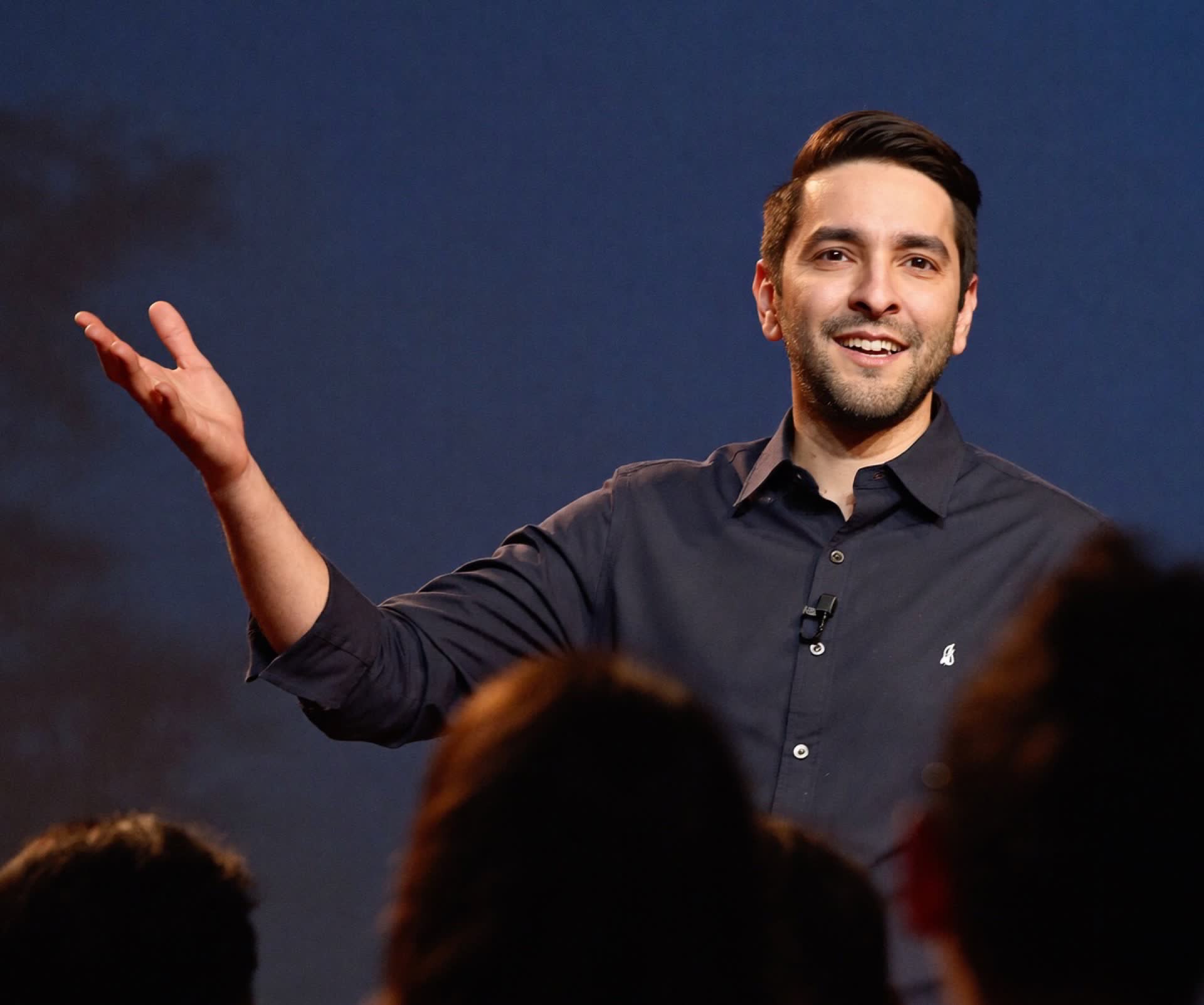
Shahveer Jafry — content creator, entrepreneur, and one of Pakistan's biggest YouTubers — sits down with Muzamil to talk about growing up across three countries, the mechanics of manifestation, and why dreaming is a prerequisite for achieving anything at all.
YouTube takes Pakistan seriously — and TikTok is why
The episode opens with Shahveer Jafry fresh off a flight from Singapore, where he had been representing Pakistan at YouTube’s official creator summit alongside his cousin Sundus and fellow creator Ducky. It was, he notes, the first time YouTube formally recognised Pakistan at such an event — and the significance was not lost on him.
Muzamil presses immediately on whether this interest is genuine or reactive. “Do you think a large part of this sudden interest could be that with TikTok really giving them a run for their money, there’s that level of insecurity where they’re like, ok, listen guys, let’s take care of these markets?” Shahveer confirms it without hesitation. Every major platform, he argues, has been scrambling to replicate TikTok’s endless-scroll dopamine loop — Instagram with Reels, Snapchat with Spotlight, and YouTube with Shorts. The difference now is that YouTube is putting real money behind it.
The most concrete piece of news Shahveer brings back: YouTube Shorts monetisation is opening up to Pakistani creators from February. He also reveals that the most-subscribed creator in Pakistan — a comedy Shorts creator named Salman Humaan with ten million subscribers — is almost entirely unknown to the broader public, including Shahveer himself before the summit. The growth, he says, is very real, and Shorts is the next frontier.
Muzamil raises a legitimate design concern: Shorts sitting inside a long-form channel creates a messy user experience. Shahveer acknowledges it but says YouTube is solving for it — Shorts will live in a dedicated tab within your existing account, keeping the main feed clean while still feeding the algorithm.
Karachi to Lahore to Houston to Brampton
Muzamil steers the conversation toward Shahveer’s biography, and what emerges is a portrait of a childhood spent in transit. Born in Karachi, raised in Lahore, two years in Houston, then more than fifteen years in Toronto — specifically the suburb of Brampton, later Milton.
The Houston years left a strong impression. The Pakistani community there was tight-knit, social, and warm in a way that the early Canadian years were not. “US mein mujhe maza bahut aata tha,” Shahveer says, though he is careful to note that Canada eventually became home in a deeper sense.
The culture shock of American middle school was vivid and specific. No uniforms. Teachers addressed by name, not “sir” or “ma’am.” And public displays of affection — something that, for a boy raised in Pakistan, was genuinely disorienting. He recalls his father’s dry reaction on their first visit to the high school to register: seeing a couple outside the office, his dad simply said, “Welcome to America.”
Shahveer’s own response was to retreat. He was, by his own description, an extremely shy kid. When a girl in grade eight sent word through a friend that she liked him and would come to talk to him at lunch the next day, he simply did not go to school. “Mujhe tha ke mujhse ladkiyan aakar baat kari, main gir jaunga, main mar jaunga.”
What moving between cultures actually teaches you
Rather than treating these experiences as embarrassing anecdotes, Shahveer uses them to make a broader argument about cultural judgment. The lesson he drew early was that labelling another culture’s norms as shameless or backwards is a move that cuts both ways.
“Agar woh aapko backwards kehte hain to phir aapko woh cheez bhi mind nahi karni chahiye,” he says. Every society has evolved its own norms over thousands of years. The people in untouched tropical communities who dress differently are not shameless — they simply have a different history. The same logic applies in reverse.
Muzamil pushes him on the hypocrisy he sees in Pakistani public discourse: demanding that France allow the hijab while simultaneously wanting to ban things that don’t conform to Pakistani cultural norms. Shahveer agrees immediately. “The framework has to be the same. It has to be rationalized.” You either believe in cultural self-determination for everyone, or you don’t believe in it at all. You cannot apply it selectively.
His prescription is travel. “Hamesha experience kharido. Bahar jao, doosre culture se interact karo.” The more you see how other people live, eat, love, and organise their societies, the harder it becomes to treat your own defaults as universal truths.
The 10,000-follower birthday and the mechanics of manifestation
The conversation’s emotional centre arrives when Shahveer tells the story that shaped his entire understanding of what is possible. He had 3,000 Facebook followers — earned over a full year of work. His birthday was November 26. It was November 1. He set a goal: 10,000 followers by his birthday.
“Maine kaha, I don’t know how, but I have to get to 10,000 followers by my birthday.” Twenty-six days later, at five minutes past midnight on November 26, he hit exactly 10,000. “Yeh magical story hai. It was insane to me at the time. That was my first exposure to manifestation.”
From that point, the pattern repeated. He would imagine collaborations in the shower — specific shots, specific pitches, specific people — and then, months later, those exact things would happen. He messaged Zaid, who was already a million-follower creator, with a complaint about something. Zaid responded with an apology, showed up at his door, and they made a video together that got 300,000 likes overnight.
The Atif Aslam story is the most cinematic. In 2017, Shahveer attended an Aslam concert from the very last seat in a 40,000-person stadium. He came home and recorded a vlog saying: “Atif bhai, one day I’ll meet you, and that day is not far.” Three years later, a brand reached out. He told them he didn’t need money — he needed Atif Aslam for a video. They got him. Aslam flew in, arrived in a Corolla to avoid attention, looked at Shahveer, and gave him a nod. “I was like, ok, I don’t remember what I’m doing here.”
The point Shahveer draws from all of this is not mystical. “The power of manifestation is that once you can imagine yourself doing something great, if you can imagine it, you can get there. All you have to figure out is how to get there.”
Why plan B is a trap
Later in the discussion, Shahveer makes his most provocative claim: he does not believe in plan B. Not as a rhetorical flourish, but as a genuine operating principle.
“I think you should only have plan A. Because if you have plan B, you always have a cushion to fall back on. I think that in itself is a weakness.” His cousin Sundus, who co-hosts his podcast, pushes back on this — pointing out that he is speaking from a position of relative opportunity, having grown up in Canada with access to jobs, education, and a functioning social safety net. Shahveer takes the point seriously. He acknowledges that his circumstances were not the hardest imaginable.
But he also pushes back with specifics. He worked one full-time job, one part-time job, and full-time university simultaneously. He wrapped his jeans in Saran wrap to walk through snow because he couldn’t afford the bus. He waited an hour in negative-thirty-degree weather for a late-night bus because he missed the 11:45 and the next one wasn’t until 12:45. He cleaned toilets at a restaurant while fans asked for photos. He drove Uber while Pakistani and Indian passengers recognised him and climbed into the front seat.
“I have seen those days. What I am saying is: just freaking be a dreamer. There’s no greater joy than dreaming something and actually achieving it.”
Dreaming before manifestation: what Pakistan’s youth actually needs
Muzamil raises a structural concern that sits underneath the manifestation conversation: before you can manifest, you have to be able to dream. And a lot of young Pakistanis, he argues, have had that capacity systematically removed.
Shahveer agrees and extends the point. “A lot of kids that I meet, I ask them: what do you wanna be? If you could have anything, what would you want? They’re just blank. It’s like their direction, their everything has been cut off and they’ve been put in a box.” The aggression you see from young people online, he suggests, is not aggression at individuals — it is the pressure of people who cannot breathe.
He is careful not to replace one box with another. Guiding youth does not mean defining their path for them. It means showing them that dreaming is permitted. “Aapko unko sabse pehle khwab dikhana padega ke yaar, khwab dekhna seekho.” The sequence matters: first the permission to dream, then the belief that the dream could apply to you, then the work.
Muzamil notes that the privilege debate often collapses this distinction — using structural disadvantage as a reason to stop before starting. Shahveer’s response is to reframe privilege entirely: “I don’t use privilege as a way to make excuses for myself. I use privilege as a way to practice gratitude.”
Pakistan in 2050
By the end of the conversation, Muzamil asks Shahveer the question he puts to all his guests: what does Pakistan look like in twenty-eight years?
Shahveer pauses. He admits that being a dreamer makes this question both easier and harder — easier because you always hope for the best, harder because you know the gap between hope and reality.
He does not pretend the problems don’t exist. He says he avoids political commentary not out of cowardice but because political conversations almost never change minds — everyone wants to hear their own side confirmed. What he does believe is that the single variable that matters most is acceptance. Not agreement, but the basic willingness to treat someone as a human being even when you disagree with them.
“Agar hamare andar yeh cheez aa jaye, I think we will turn around so fast.” He imagines a future where another Muzamil and another Shahveer are podcasting about a 150-floor high-rise being built in Lahore. “I really freaking hope that all the pundits and analysts are wrong about their default situation of Pakistan and I really hope we turn around, man. But I think it begins with the people.”


Never miss a conversation.
New episodes and the thinking behind them, straight to your inbox. No hype, no spam, no pitch.