Skip to content

Thought Behind Things · Apr 3, 2026 · 53:34

The strait of Hormuz toll is good politics, bad law

Yasir Abbas returns to Thought Behind Things to read the Iran-Israel-US conflict from the inside of international law: why the war has already expanded economically, why Iran's Hormuz toll plan won't survive a courtroom, why Pakistan's awkward middle position was actually played well, and why the UN is past repair.

with Yasir Abbas

13 min read

A fuel hike, ninety days of dry goods, and the wider context

The episode opens not with the war but with the bill for it. Muzamil notes that fuel prices in Pakistan have just risen by roughly 150 rupees, a historic high, and that public anger is understandable but, in his reading, misdirected. The Pakistani government, he argues, did not have a choice. There is no money in the reserves to fund a subsidy, and any subsidy granted now would come back to bite within six months, as it did in 2022. “The right critique would not be on the fuel hike,” Muzamil says. “The right critique would be why don’t we have buffers? Why don’t we have any money in the bank?”

He frames the fuel hike as phase one. Plastics, aluminium, helium, and a range of other commodities are already offline, and the second- and third-order effects will roll through the economy over the next six to twelve months. He admits, half-laughing, that he asked Gemini what a family of four in the US should stockpile in case of a COVID-style supply shock and then went out and bought ninety days of dry goods, forty kilos of rice, and canned food. The advice to viewers is the same: prepare for the worst, hope for the best, and do not assume business as usual.

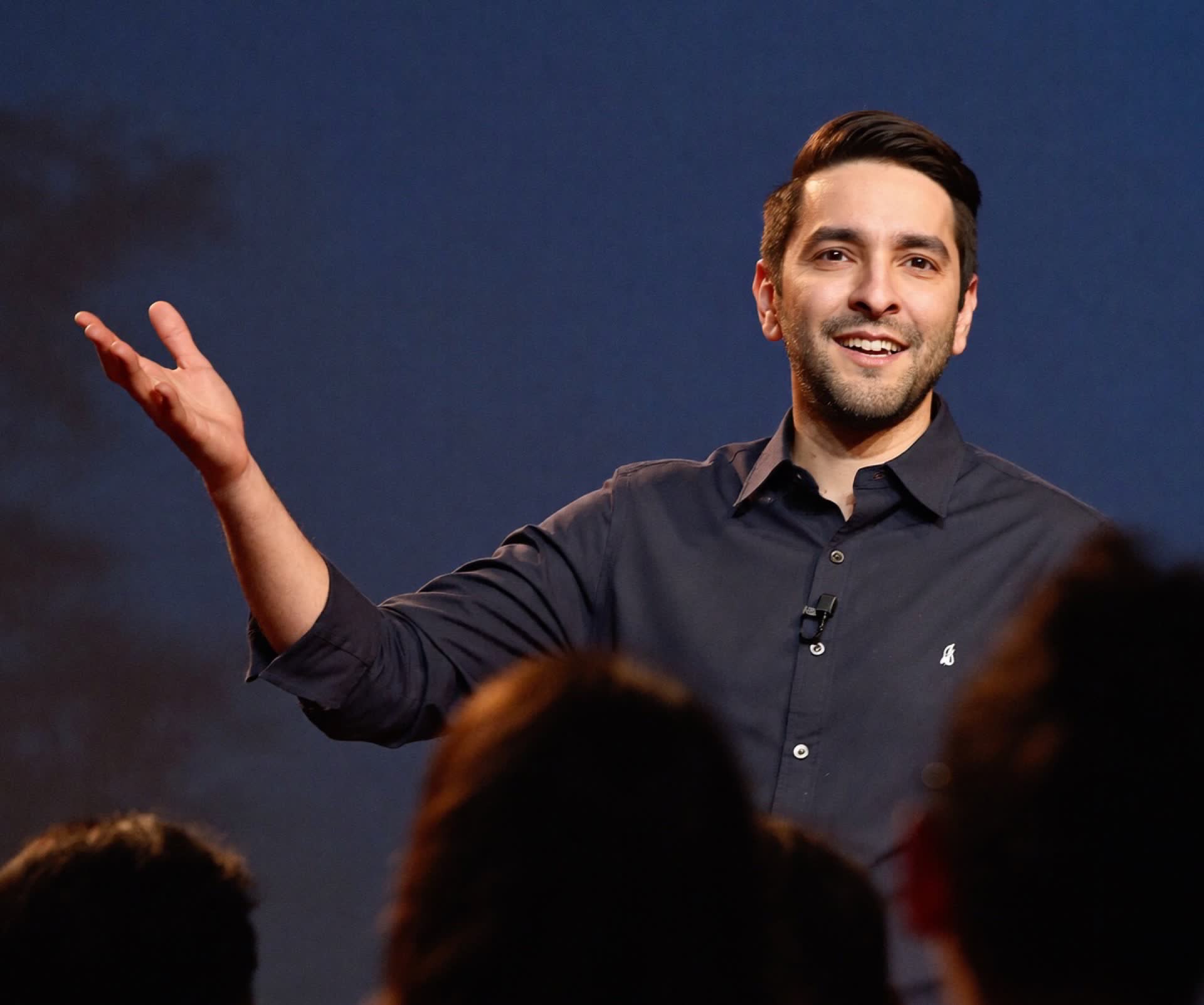
It is into this opening that Muzamil introduces his guest. Yasir Abbas was on the show three or four years ago, is now a PhD researcher and lecturer in international law at the University of Manchester, and was previously the special assistant to the chief minister of Gilgit-Baltistan on law and public policy. The first question Muzamil puts to him is whether the Iran-Israel-US confrontation is simply an ideological war with the US as a wildcard, or something larger working in the background.

Why no single prism explains this war

Abbas’s first move is to refuse a single framework. “The scale and the complexity of this matter is such that there is no one way of looking at it,” he tells Muzamil. The conflict has ideological, economic, and political dimensions, and each of them is being fought at different levels, in different theatres. Where you sit, what your religious identity is, and what your political lineage is all determine which face of the war you see.

Zoom out, and you see an international order rearranging itself around the Middle East. Zoom in, and you see a contest over religious authority, oil reserves, and the control of crucial passages — who will dictate the terms of future economic flows. Russia, China, and what Abbas calls “greater Asia” each have a coherent reading of the same conflict, and each reading is internally logical. “We cannot single out one aspect and say that this conflict is primarily determined by these many factors,” he says. “It is multifaceted.”

The implication, which Muzamil draws out, is that the predictive models people were using have all failed. Anyone expecting Trump to retreat at the first sign of oil-price pain has watched that scenario evaporate. The worst-case scenarios are panning out instead. Muzamil cites a tweet by Pakistan’s former NSA Moeed, warning that if the war does not ramp down within the week, history will write it as World War III.

The war that has already expanded by other means

Abbas does not endorse the World War III framing, but he does not dismiss the question either. His position is more interesting: the war has already expanded — just not militarily. “I don’t see the military expansion of it,” he says, “but I see the economic cost of it already doing the damages that in ordinary circumstances would, war do.” South Asia is feeling the dent. The Strait of Hormuz beneficiaries are feeling the pain. The market is doing the work an army would otherwise do.

His grounds for cautious optimism that the kinetic war will not go global are specific. NATO, which for forty years would jump into a US adventure first and ask questions later, has been openly reluctant. The transatlantic alignment between London and New York has cracked: a British government has, for the first time, publicly called the war illegal. The traditional blocs are not unanimous, and without unanimity there is no machinery for global escalation.

Inside the region, however, the war has already overshot Washington’s plan. Iran struck the GCC. It struck Saudi Arabia. It struck the UAE. These were targets the United States, by its own admission, did not expect Iran to hit, and the air bases and naval hub in Bahrain were exactly where American forces had positioned themselves. “Trump would like to say it was going to be a little incursion,” Abbas observes. “But that little incursion is turning out to be costly.” That, in his reading, is also why he believes Washington will look for an off-ramp rather than escalate: the threshold has already been crossed in ways no one in Washington modelled.

A weaker nation wins by surviving

Muzamil pushes on what victory and defeat actually mean in a war this asymmetric. Abbas offers one of the sharpest lines of the conversation. “A strong nation has to win a war decisively,” he says. “And a weaker nation, in order for it to win, has to survive the war. It does not have to dominate the superpower.”

By that standard, Iran has already won the segment of the war it can win. The regime is intact. The strategic position over the Strait of Hormuz is intact. The asymmetric capability — from its own missile arsenal out to the Houthis at Bab el-Mandeb — is intact. “It’s just a stretch of 35 miles,” Abbas says of Hormuz. “A mighty military like the United States is unable to control or unable to clear the pathway, which is vital for global trade and economy. So it says a lot about a mighty army, but at the same time, its kinetic limitations.”

Muzamil presses further. Could this be a Suez moment for the United States — a trade route the hegemon cannot reopen, a sanctions architecture that loses its bite because Iran can sell oil and gas anyway? Could the perception of American power not survive the gap between intent and outcome? Abbas’s answer is careful. He sees Iran establishing credible deterrence and recognition as a disruptive player that cannot be ignored. He does not see Iran setting up a tollbooth.

Why the Hormuz toll plan dies in court

This is where the international-law lens does its sharpest work. Three days before the conversation, the Iranian parliament’s national security commission approved a plan to charge tolls — payable in Iranian rial, not US dollars — on ships transiting Hormuz. Pakistan was reportedly in discussions about flagging vessels to take part. Muzamil asks whether this is enforceable.

Abbas’s answer is that it serves Tehran beautifully at home and fails everywhere else. “The free navigation is a principle which is recognised by the UN,” he explains. He points to Article 32 of the UN convention and to the Corfu Channel precedent against Albania, where a state was found to have no vested authority to prevent free navigation. “From a domestic consumption perspective, it serves the purpose,” he says. “But from a global navigation perspective, it will not have any legal value.”

When Muzamil asks why this should be any different from the Suez Canal or the Panama Canal — both of which charge tolls and are inherent to their countries’ economies — Abbas distinguishes them cleanly. Suez and Panama are artificial canals; states built them, and states can monetise them. Hormuz is open sea, jointly bordered by Iran, Oman, and parts of the GCC. No single one of the three can act unilaterally without the others. And if the precedent of toll-charging on open-sea straits were ever to hold, “then there will be a Bab el-Mandeb tax, then there will be a Cape of Good Hope tax.” The system would collapse into disarray.

The Hormuz toll, in other words, is a piece of theatre for the Iranian public. It is not an enforceable economic regime.

Pakistan between the devil and the deep sea

Muzamil turns the conversation to Pakistan, and to a posture that confused everyone. One week, the story was that Islamabad was about to side with the Saudis and walk into a war with Iran. The next, Pakistan was helping negotiate with Tehran. There was talk of a US vice-presidential visit. Iranians were calling Pakistanis great. Cargo ships were being discussed.

Abbas’s read is that this looked confused because the compulsions were genuinely contradictory. Pakistan has a defence pact with Saudi Arabia and deep economic ties with the GCC. It has cultural and religious ties with Iran. It has strategic interests with the US, including through the IMF, and a growing rapport between Islamabad and Washington that it needed to capitalise on. More than twenty percent of Pakistan’s population belongs to the Shia school of thought and feels a religious connection to Iran. Any absolute stance would have been detrimental.

What he says next is unusual coming from him. “I would basically appreciate the stance that Islamabad took.” Joining offensive operations against Iran would have been deeply unpopular at home and globally. Stepping back entirely would have exposed weakness to Riyadh, to Tehran, and to Washington. The middle path — bringing parties to the table, defending the GCC’s right to self-defence, condemning aggression on Iran, acting as messenger — was, in his words, “a classic diplomatic move which was rooted in securing your interest first.” Muzamil agrees: nobody was expecting the state to play it this well.

But he sets up the harder question. If Iran does retaliate on Saudi and UAE infrastructure, what choices does Pakistan have left? Abbas’s answer is that the Saudis themselves know the cost of a direct confrontation with Iran is too high — disastrous for their oil resources, their economy, and the GCC brand built on safety, security, and development. He believes a threshold will hold. If it does not, the defence treaty becomes live, and “in either case, it will be terrible for the country.”

A jelly state at the centre of every conflict

The most uncomfortable observation in the conversation is Abbas’s about Pakistan’s own structural limits. Other small or mid-sized countries — Finland, Norway, Switzerland — have built durable diplomatic identities around neutrality and mediation. Pakistan has been at the centre of crucial international junctures repeatedly, from 9/11 to the original opening between Washington and Beijing, and has consistently failed to convert that centrality into leverage.

The reason, he argues, is internal. “We are a jelly state, basically,” he says. “We don’t have the institutional capacity to act in a way that is consistent.” Two provinces have active insurgencies. There is an extremism problem. There is institutional decay. The civil-military question — whether the country is run by civilians, the military, or some hybrid, and what the contours of that hybrid actually are — remains unresolved. The result is that when conflicts settle, nobody remembers what Pakistan did. To raise its leverage, Pakistan needs a credible judiciary, governance, and above all an economy. Without those, it remains an actor that participates and is then forgotten.

Muzamil agrees and pivots to China. The world is deglobalising into blocs. China is Pakistan’s neighbour and largest strategic partner, and the current conflict is, beneath the surface, a US-China contest as much as anything else. The president recently made an unannounced visit to the Chinese embassy. The foreign minister went straight to Beijing after the Gulf trips. China is now mediating between Pakistan and the Afghan government after Qatari and Turkish mediation failed. Should Pakistan, for once, stop hedging?

Abbas’s answer is that the hedge is the right answer, and that, unusually, both Washington and Beijing recognise it. The US does not push Pakistan to take a stance against China the way it pushes other countries, because both capitals know that if pushed, Pakistan would have to choose China. China, for its part, treats Pakistan as a strategic partner and an access point to the larger world rather than as a counter to Washington. The CPEC corridor, the Gwadar question, and the BRI architecture make Pakistan more important to China by the month, especially as the global passages tighten one by one. “Either of the both capitals will ever push Pakistan to take that one linear stance,” he says.

The institution past repair

The conversation closes on the question that Muzamil frames as personal. He and Abbas grew up believing the world functioned as a system, that institutions existed, that there was an ethical code and a moral one. They have watched, in real time, the ICC’s rulings on Gaza produce nothing, and a war on Iran that much of the world has openly called illegal. Will the system survive?

Abbas does not soften his answer. “I personally think that the whole fabric of international law has been ruptured beyond repair, basically,” he says. The abuse of the system has been so brazen that it questions the utility of the set-up altogether. What he sees coming is a pattern of unilateralism: states conducting their affairs on their own security calculations with little regard for the UN, because they have watched the UN behave in the face of core issues impacting humanity. He expects a resurgence in weapons programmes, and more countries seriously considering nuclear capability — because, in his reading, the lesson of the last few years is that a nuclear weapon is the only reliable impediment between a state and destruction.

He expects new regional alignments to take shape, though he is honest that the existing ones — SCO, BRICS — have been notably silent during this crisis and will face their own reckonings. “The biggest casualty of the current crisis will be the further erosion of United Nations legitimacy,” he says.

The image he leaves Muzamil with comes from his classroom. At the University of Manchester, where his students are mostly white — European, Australian, American — there is, he says, a consensus forming among the students passionate about international law. They are studying it “in order to know how useless it is.” When the topic of human rights or international law comes up, there is a sarcastic smile on their faces. “Social media has made it extremely easy for them to determine where a genocide is happening, where international humanitarian law is violated, where sovereignty has been brutally violated.” The students are not interested in academic nuance anymore. They want to say to the world’s face what is actually happening. Abbas calls this an equally positive development.

It is, in its way, the cleanest summary of where the conversation has been for an hour. The fuel hike in Karachi, the missiles over the Gulf, the toll plan in Tehran, the hedge in Islamabad, the silence in Brussels, the smile in a Manchester seminar room — all of them are facets of the same fact. The system that everyone was taught to trust no longer functions, and the people who will run the next one are already in the room, watching.

Full transcript
Muzamil

राणुल गवितीन आज रात. Welcome back to another episode of thought behind things. As I told you yesterday, the fuel prices are unfortunately at a preliminary hike and for most of Pakistan I think the major news today was the rise in fuel prices almost an increase of a 150 rupees at the historic highs now and I'm not too sure how people will afford it. Obviously, people are rightfully outraged. But you also have to understand and this is something that I said, you know, in the past government as well. I am saying this right now as well as of right now considering these sets of circumstances that Pakistan and पाकिस्तानी government is in they did not have a choice. They had to increase the fuel prices. Obviously some people are gonna get upset and they are gonna be like you know why are you saying this? People are gonna you know they're gonna go through a lot of tough time. The fact is the पाक्ष्टानी government does not have any money to give you subsidies. They do not have any extra cash to you know give you some sort of a relief. If they give any form of subsidy today, six months later, that's going to bite them or bite you in one way or the other as we saw in 2022 as well. So it is an unfortunate situation for those of you who do want to still criticize the government. I think the right critique would not be on the fuel hike. The right critique would be why don't we have buffers? Why don't we have any money in the bank? Why don't we have any money in our reserves? Why are we at a position where we don't have any choice? Because right now complaining and asking for a lower price for fuel, I feel like, is practically impossible. But as I said yesterday, this is just the tip of the iceberg. This is, in in a lot of ways, this is phase one of the implications that are gonna reach Pakistan. As I told you earlier, plastics is offline, aluminum is offline, helium is offline and a range of other commodities are offline and they're going to slowly hit the market and second and third degree effects are going to start to roll over on the economy. So the next six months and next year is going to be very very tough. I would recommend, yes, you can criticize and and and be depressed about it all you want but I would recommend a lot of people to prepare. Personally, I'm sitting out here in The US. I have literally gone. I went to Gemini. I asked it. I said I'm a family of four. In case of supply chain disruption similar to what happened in COVID, give me a list of things that I should go and buy and I literally went to and I bought ninety days worth of dry greens. I got, you know, 40 kgs of rice and canned food and so on and so forth. I would recommend if you're a viewer worst case scenario, best case scenario nothing happens worst case scenario be prepared, get food products before supply chains run out. But anyways, don't wanna be too alarmist. I do want to say that things are not as simple as they look right now. It's not gonna be business as usual. This is, you know, one of those moments we've had many of these in history as well where major shifts are happening. And I understand a lot of people in Pakistan do not understand what those shifts are. A lot of people do not understand why this is happening and that's one of the reasons why we were doing this show as well to sort of contextualize and give you an understanding of what's what's really going on. To tell us more about that today we have यासिर अब्बास who has previously been on the show maybe three four years ago. I'm glad to have him back here. He is a PhD researcher at the University of Manchester currently focusing on international law. He teaches at the University of Manchester as well. Previously he was the special assistant to the chief minister of गिलगित बल्तिस्तान on law and public policy. Yeah, sir thank you so much for taking the time out and being part of the show. It's a pleasure, मुज़मिल. I'm gonna start off the conversation just sort of trying to understand a little bit about what you think is going on. Is it just a ideological war between Israel and Iran with The US being a wildcard or there is something bigger happening in the background?

Guest

I think, मुज़मिल, you know, the the scale and the complexity of this matter is such that there is no one way of looking at it. And to understand this confusing situation, you have to basically look at many things. It really matters where you are. It really matters what is your religious identity. And it also matters what is your political lineage as well. So if we zoom out and look at things and mix all those prisms, We see an international order in this area. While this area has many factors, it has an ideological aspect to it, it has an economic aspect to it, and it has a political aspect to it. And each are fought in different levels, in different sections. And we see that from a perspective of Middle East, there is a perspective of economic resources. There is a perspective of religious side of it. And then at a larger power politics, there is actually a competition of who controls the crucial passages, who will dictate the terms and conditions of future economic prospects in the years to come. So, as I said, it really depends where you are, what is your ideological inclination and also what sort of religious identity you possess. And to be honest, all of that makes sense. All of those prisms, when you look at this situation, they have logical explanations associated with it. So we cannot single out one aspect and say that this conflict is primarily, you know, determined by these many factors. No, it has an aspect which makes sense from a perspective of Russia. It makes sense from a perspective of China. It makes sense from a perspective of Greater Asia. So, yeah, I wouldn't agree on one framework or one prism of looking at this conflict because it is multifaceted.

Muzamil

But you see then, I mean, okay, so it is multifaceted. And I feel like one of the reasons why it's so confusing to understand what's going on and potentially predict what's going to happen is because for a lot of people they were looking at the economic dimension and they thought, ok, if the markets are, you know, suffering, if the oil prices go up, Trump is going to retreat and he's going to, you know, fall back. The fact is all of those sort of expectations have fallen off because, know, the worst case scenarios are panning out right now. And I mentioned yesterday's in yesterday's video as well, Pakistan's former NSA मोहित tweeted. He said, if this war does not ramp down over this week, we will be calling it, you know, history will write this conflict as World War three. I think it's a serious statement by a very serious figure. Do you think that this because of all of these different factors and because of the confusion and because of the the randomness of of even the the the objectives of for this war for The US and Israel, Is it going to end soon or do you think it is going to linger on? Do you think it is going to become a war of attrition for Iran, you know, maybe six weeks, maybe six months?

Guest

I think from a perspective of warfare, there is no clear end to what The U. S. Wants. And there is no clarity. And as we speak, the most recent development is that the secretary of defense, The US secretary of defense has apparently asked the chief of army staff, to retire at such a critical juncture. So this basically says a lot about the lake of clarity because you are not going to change your primary warhorse at such a, you know, such a tough time where every hour is dictating or bringing new reality to the war. So, The US has no idea where the war is going on right now because initially the intended goal was initially bringing or denuclearizing Iran and the strikes happened in June. And the president of The United States said that we have completely finished the nuclear dimension of Iran. And then came the recent strike. So from a perspective of war, it is now clear that America had no direction whatsoever while going in Iran. And now from a perspective of whether it will be global or not, there are few basically unexpected developments which makes me think that while it has a regional dynamic, but I don't see it becoming a world war. For example, the primary ally of US is NATO from last forty years. Now, every all primary countries, the strong NATO nations have been really vocal about not becoming part of this adventure. Because previously, in all such encounters, NATO would jump in first and ask later on what the war was about. So this has changed. And another crucial aspect which I see is an indicator of this war not becoming a global war, region specific. The Transatlantic linkages or association between London and New York. You see, for the first time, you have a government in The UK which has been very vocal, very blunt about not being part of this adventure and going as far as to say that this war is illegal, so which is unprecedented. So I don't see a unanimity among the traditional blocks regarding having an approach or a consistent approach towards a conflict. Now within the region, in the region it has expanded beyond scope because according to the war assessment by The United States that they were not expecting Iran to basically hit the GCC region, notwithstanding the fact that GCC is the region from where the primary American military movement was. The air force bases were there. Bahrain was the primary naval hub for naval operations. So that actually shows that America wanted it to be as Trump would like to say it, that it was going to be a little incursion, but that little incursion is turning out to be costly. And it is taking the region in its influence, which also shows that Iran was more than prepared for it. And Iran had a clear assessment of what their limitations are and also how can it fight on its term. So it took the war, not just it does not limited the war between the countries that were taking Iran, but it made it an affair of the region, effectively making this conflict very costly, not just for the agresses, but also the wider region to the extent that we see developments

Muzamil

in South Asia where the fuel prices have been hiked. I I I would agree to your point that Europe is trying to at least very aggressively trying to remain neutral and remain out of this conflict. But I, one could argue that one of the reasons why this could sort of expand into a wider conflict is because of the fact that there is no unanimous or unanimity between all of the developed world. Right? I feel like right now with US being alone, China and Russia, you know, silently or otherwise supporting Iran one way or the other, and the developed world by and large staying out of it, The region itself, let's not let's say it's not the World War. Europe is not participating, but the region itself, you know, Middle East is very actively involved. UAE is now beginning to say, oh, we'll we'll officially we might end up being part of trying to getting the state of hormones open. Do you think this this, conflict could expand? And the reason why I say this is because if you look back at World War one, if you look at back back at World War two, it didn't just happen overnight. More often than not, there were certain variables that existed that created the perfect storm. And I feel like today when I look at, the region, when I look at Pakistan, when I look at India, when I look at much of, East Asia, the current economic crisis, I think, is is is is a precursor to instability, and instability is more often than not a precursor for governments to then go out and try to, you know, expand out. So do you think the conflict might grow grow beyond just Iran?

Guest

To be honest, Muzambil, I think that the conflict has already expanded. It's just that the way we look at the modern war is just different. So, I don't see the military expansion of it, but I see the economic cost of it already doing the damages that in ordinary circumstances would, war do. You have the whole of South Asia, which where the economy is already, you know, feeling the dent. And you have all other countries, around which are the beneficiary of the, you know, the Soviets, the Strait Of Farmers. They're already feeling the pain. What I'm a little optimistic about not, you know, seeing this war into some sort of a bigger, wider scale war is that I think it has reached the scale and size which was not anticipated by the policymakers in Washington, which makes me believe that they wouldn't want to cross or they wouldn't want to go or raise the threshold further because they have already reached a climax of the event which they had not anticipated. They were not expecting Iran to strike Saudi Arabia. They were not expecting Iran to strike UAE. And in fact, it reminds me of the statement of Donald Trump when he said that, you know, we are surprised that they are attacking, you know, GCC regions. So this actually reflects that there was a collective wisdom which did not anticipate the widening scope of this war. So I think, I personally think that this war has reached the threshold where it has to be managed by The United States. Because if that goes beyond it, if there is one country that loses the most, it's The United States. From narrative perspective, because you have no block which is visibly in support of your adventures. There is absolutely no country which is vehemently other than Israel is actively seeking to be part of this region. So for it to be a wider conflict, for our government has to be deeply unpopular to be to to be doing that, which I don't think, any any, you know, country would be willing to do it because we already see Russia is busy in Ukraine and it's like a perfect, perfect situation for them. And deep down China is planning its own, situation potentially for Taiwan in the years to come. So for them for them, this war basically gives them a window to study and to basically anticipate what it would be. But at the same time, they are cognizant of the economic cost associated with it. So I think at some levels, and for which I see that there will be an interesting interesting summit between, you know, Zee and Donald Trump in the upcoming weeks, that would be more crucial. So I think that Washington at some point would want to be at bigger pedestal and decide the course of war in the region rather than just going back. So putting these things together, I don't see the war going expanding beyond the current spare that it has already because this was not the intended aim, from Washington. I don't see or I don't see any sort of, potential or any sort of rupture emerging, beyond, you know, this region with direct linkages to this conflict. Now India, Pakistan has have their own history, and their own, you know, dynamics to the conflict. We had Operation Sunur launched by India. We had, you know, Pakistan's response to it. I think that these both countries, while part of the larger international fabric, have a nature of conflict which is strictly kind of, you know, regional. And none of both of them are not willing, to basically extricate the benefits of the situation happening around them and convert it into some sort of avenue where they can, you know, basically extract prices from each of this weakness. I don't think that's happening because the cost associated, with it is just, you know astronomical. Is not something India can afford. It's not something Pakistan can afford and the expansion of this conflict in Europe, in Western Asia. I don't think that the economic costs are you know for any country to stomach to go for this adventure. So personally, I mean, this is my assessment. I don't see this war going beyond what it what it has already reached.

Muzamil

You think if, and tailoring to your point of The US might just be ramping it down because there's clearly has seemingly no objective now. And whatever they do, I don't see them even with boots on the ground. A lot of people are saying boots on the ground are coming. I don't see how that's going to help them carry out a regime change. This is not Iraq. This is not Syria. This is not Afghanistan. You know, there's a country of 90,000,000 very, very proud civilizational state. That, having sanctions over the last many, many years, has has been phenomenal in the way that they sort of reacted to this aggression. It's also very interesting now that the Ottomans, the Persians, and Pakistan and India are the missile powers. All three of them have ballistic missile systems, phenomenal ballistic missile systems, and, clearly, this war is being fought by missiles. I'm still curious, though. Do you think this is if US, at this point where they are now, where Iran has closed off the state of Hormuz, their parliament has passed a law where they're officially saying, okay. If you wanna pass this, you have to give a stole and not not just in dollars not in dollars at all. In fact, you have to give it in yuan and or, their local currency. Do you think this is potentially a Suez Canal moment, for The US? Which is the parallels are just absolutely insane. Right? It was a trade route that they wanted to get open, if The US is unable to open this trade route. If now with all of this hoopla, the end state is that Iran now is able to extract rent and and, you know, they're able to sell oil, they potentially are able to sell their gas as well to Pakistan and India and the sanctions no longer are relevant, where does that leave The US power or at least the perception of US power?

Guest

Look, it's very interesting, मुसुमिर. Look, from a war perspective, from a, you know, win and defeat perspective, it's important to understand, the objectives of the war and the outcome of the war. So, a weak and strong nation perspective, a strong nation has to win a war decisively. And a weaker nation has in order in order for in order if the weaker nation has to win, it has to survive the war. It does not have to dominate the superpower. So in this context, Iran has been able to do just that. It has survived. It has the regime which is pretty much intact. It had the price position of straight reformers and it's pretty much active in that. Now imagine it's just a stretch of 35 miles. A mighty military like The United States is unable to control or unable to clear the pathway, which is vital for global trade and economy. So it says a lot about a mighty army, but at the same time, its kinetic limitations. So from a perspective of Iran, yes, it is establishing a credible deterrence from a perspective that they have their cuts, they have their, asymmetric capabilities well intact, as far as Babul Mandap, through the Houthis in Yemen. But at the same time, they're able to disrupt the navigation within the Strait Of Hormus and are able to let ships they would like to or, you know, stop ships they wouldn't like them to. So in this context, now I don't see Iran basically converting it into a passage where they will charge a fee and then let, you know, countries to pass. But I see Iran recognize itself as one disruptive player or one actor in the region which cannot be ignored, which cannot be taken for granted. Because the global navigation laws are clear. There has to be a free, access for ships and you cannot prevent them. You cannot, hamper the navigation. But at the same time, it does not prevent any state from exercising their strategic or their security underpinnings, while at the same time, you know, ensuring that the global trade economy should not be disrupted. So I don't see Iran taking it as far as, you know, charging fee on nations, But I do see the global, actors, the international community respecting Iranian, sensitivities in that region.

Muzamil

But how does that? I mean, so just to confirm, this is a this is three days ago. The Iranian parliament committee approved straight of almost toll plan. This is something that's came out straight from their parliament. It was originally tabled from from their national security commission. And they've, like, apparently, this is a very clear official plan from Iran that has come out, which says that any, you know, country that wants its shipped ships to pass, they have to pay tolls in real, and they can get access. And this is, I mean, we're hearing from, you know, diplomats in Pakistan. They're participating in this. There are talks of 12 vessels, and then Pakistan going to different countries in the region to potentially have their flag and utilize this toll opportunity. Give me the international law perspective. Is this, I mean, if if पाकिस्तानी for for for पाकिस्तानी sea, there there are there's the open sea and then there is every country has their own sort of sea as well. Right? Yeah. Can Pakistan not charge tolls for ships that pass through their their waters?

Guest

No. So the free navigation is a principle which is recognized by by the UN to where there are clear laws or clear principles. For example, the UN clause, if I'm not wrong, it's article 32, which basically requires a free passage, a free navigation global trade and economy that you cannot unlawfully prevent the navigation of global trade and economy shipping basically. So now from a Tehran perspective, it serves a good domestic optics. It is basically a law that can basically embolden Iranian people further, that look the extent of our control is such that now we can extract fees on them. But if we will put it to the test in the international legal forums, it wouldn't be admissible. Because we have a precedent in the case of Albania where there was a kerfuchanel case where there was a similar situation arised where shipping was prevented by Albania. The court ruled that this the country has no wasted authority to basically prevent the free navigation. So, I think from a domestic consumption perspective, it serves the purpose, it serves the political messaging for the masses within Tehran and largely Iran. But from a global navigation perspective, it will not have any legal value.

Muzamil

Why do you so, I mean, I understand the fact that they can navigate through freelancing doubling down on this because I know a lot of people take this very seriously and so I would love to understand the the legal perspective behind it. But there is the Suez Canal, there is the Panama Canal. Both of them are very important trade routes and both of them charge tolls. They're an inherent part of the economy of their respective countries. How does that differ from Iran and what this situation is?

Guest

Now, see, the Suez Canal is not just an Iranian extended shore. It's basically sandwiched between Oman, Iran and also part of the GCC region as well. This basically Sorry, Strait Of Hormuz? The Strait Of Hormuz, sorry. Yep, the Strait Of Hormuz. Yep. Yeah. So this is basically Oman, Iran and also parts of the GCC region. So they basically collectively control it. So even if there is a mechanism, even if there is a monetary mechanism, Iran wouldn't be able to do it in isolation. It has to be a collective decision of GCC, of Oman and of Iran. So currently, I don't see any legal avenue unless it is one narrow path which basically dissects an Iranian mainland territory. In that case, it would make sense for Iran to basically extract money off it. Now, here we are talking about a narrow strip of 31 miles in an open sea. So this is fundamentally different from Panama Canal because it's an artificially built canal. And this also our Swiss Canal, which is also an artificially built canal. So this, the similarity or the comparison that we draw over here wouldn't make sense from an international navigation perspective because there you can, in the future there might be many canals which will be man made and it would make sense for such states to, charge a toll tax on that. But in open seas, if this president goes on, then there will be a, you know, a Bab Mandap tax, then there will be a Cape Of Good Hope tax. So it would be like it would be an unprecedented development in every region within the proximity of such canals, such narrow strips, then we'll be emboldened to basically, start charging, you know, money out of it. So it will be a complete disarray. So legally, I don't see it happening. And also from a perspective of global trade and interconnectivity and also the world trade standards, I think it wouldn't meet the requirements for which a country can start taking toll tax in order for the ships to pass the Nero Strip.

Muzamil

I see. Now if I were to bring this closer to Pakistan, closer to home, I mean, Pakistan's role has been fairly confusing. And Pakistan as always happens in cricket. It happens in geopolitics. You know, it's a country that's that's ignored and then at the center stage and then ignored again. But tell me about what you're and you've worked closely with the government in Pakistan. You you understand how the system works. What happened here? Like, why did Pakistan suddenly over the last few weeks, suddenly it was in all of the news. There were talks of The US vice president potentially coming to Pakistan. Pakistan was yeah. And and and the emotion has been so up and down. People initially were like, oh, you know, Pakistan is just gonna side with the Saudis. You know, we're gonna get we're about to get into a war with Iran. And then suddenly, it flipped, and now we're negotiating helping negotiating with Iran. Iranians are saying, oh, you know, people in Pakistan are great. Pakistan our friend. Here's some few cargo ships. And so what's what's happened there? Like, beneath the surface, what's your understanding of this shift? And where do you see this shift going?

Guest

I think, look, you know, so Pakistan was in the most typical, you know, situation between the Devil and Dead Sea, basically. Know, the either options of taking any extreme position was going to be detrimental for the country. So I think, I think and frankly, like I would basically appreciate the state, the kind of stance that Islamabad took. Now look, you had many compulsions in this conflict. Number one, you have a defense pact with Saudi Arabia. And with Saudi Arabia and other GCC regions, we have very strong economic ties. With Iran, we have deep cultural religious ties. And at the same time with US, we have strategic connectivity and strategic interests in the shape of our economic vulnerability through IMF. And at the same time, we have this bonhomie developing between Washington and Islamabad, which required Islamabad to capitalize on. So you had all these basically check boxes, which required you to not take any absolute stunts. And I think Islamabad just did that. So in rather taking an absolute stunt and going jumping into the foray and joining Saudi Arabia and striking any sort of offensive operations against Iran would have been deeply unpopular, not just from a narrative perspective globally. But also, we have to understand Pakistan is a very diverse country. We have a population, more than 20% population basically subscribe to the Shia school of thought and which deeply value, the the in Iran. So they have a deep religious association with it as well. So Pakistan as a as a nation of such diverse, religious identities had to adhere to these sensitivities as well. Now, if Pakistan would not have done anything and stepped back, you would have exposed your weakness in front of Riyadh and also in front of Tehran, while at the same time you would have presented yourself as an actor with no productivity in front of the Washington as well. So for Pakistan to take this poacher, bringing the parties to the negotiating table, at the same time defending the right of the right to defend of the GCC region and at the same time condemning aggression on Iran was just a classic diplomatic moves which was rooted in securing your interest first. What is that interest? That under no circumstances you need to be part of this active conflict. And if anything, you have to be that one mediated role, either call it like a postal serviceman or call it any, you know, term possible but you are a channel of a communication between these warning parties and you are able to basically push the GCC region into not falling for any sort of kinetic offensive on Iran and at the same time pushing Washington for any possible window of dialogue with Iran and serve as a basically messenger between the both parties. I think these diplomatic maneuvers, surprisingly enough, which I wasn't expecting. I was expecting that there might be some sort of blunders that the state of Pakistan will commit. But I have to agree they played really smartly in this.

Muzamil

I think that I would 100% agree with with you on that. I think nobody was expecting the state. Mean, the state has made its fair share of mistakes over the last couple of years. Even today, there is a there's a fuel price increase. And what most people obviously are looking at the primary primarily the fuel price, but there is a thought. There is a method behind the madness where they've actually increased the the the tax on petrol, and they're inherently trying to subsidize diesel. And what the thought behind that is, diesel is used for transport of your goods. And so if you increase the price of diesel, that creates inflation across all the economy, whereas petrol is seemingly is is is more discretionary. And you can actually give direct subsidies to to motorcyclists and more vulnerable people. So they have been fairly they're not they're not just randomly wing it. There is a very clear thought process behind what the state is doing and that is definitely appreciable. But there is that spoiler in in the mix with with Israel. We saw yesterday that they bombed Teheran and कमाल ख़राज़ी, I believe, the former diplomat who apparently was the primary negotiator on the Iranian side working with the पाकिस्तानीs to potentially have a conversation with vice president JD Vance. The his wife was killed and and he is severely injured. And the Iranians also over the last couple of days have made it very, very clear they are not interested in negotiations. If it doesn't get wrapped up, if in fact it escalates and if they if the Iranians then if if, you know, The US doubles down, they did bomb a civilian bridge today, the rhetoric is is increasingly aggressive. If it escalates and if Iran sort of retaliates towards Saudi and, you know, UAE and and other Gulf nations, what choices do you think Pakistan has left? Again, the compulsion that you've mentioned. You know, we have the compulsion with China as well. We have the compulsion with Gulf as well. We I mean, we're at a stage where we have a compulsion with everybody. And so how does a country like Pakistan maneuver through this situation?

Guest

I agree with you, Muzumel. Look, Pakistan has been fairly central in all the conflicts if we go back like thirty years or even, you know, Pakistan was responsible in bringing China and United States together as well. So from this perspective, look, if this conflict expands, I understand that there is a certain threshold which the Saudis and Pakistanis might have agreed for now. To the extent that, you know, look, for as long as the nature of the conflict or the nature of attacks by Iran is limited to such an extent that it's not directly aimed at Saudi infrastructure, I think to that extent that this threshold will be maintained. And to some extentand I'm sure that deep down the Saudis or the GCC region are not too willing to get into direct confrontation with Iran because it will be disaster for their oil resources. There will be disasters for their economy and for their overall brand for which, on which GCC thrives, which is safety, security and economic development. So I don't see them while there will be an appetite to settle scores, but deep down they know the cost is just too high. And this is precisely what the people in Washington and Tel Aviv would love to see, by the way. It will make their job really, really easy. So, I think they understand the situation, the delicacy of it. They will be tempted to do something. But even if they do, I still believe that they will also maintain a threshold which will make Tehran act in a way that it won't escalate directly aiming at the GCC region. So, but still, I mean, if things go beyond any proportion, but in that case, I think Pakistan will have to make an unpopular choice, which will be deeply troubling for the country. But then again, such is the dynamics of the region. At some point, you have to take that absolute stance, which I think, personally think is not going to happen. I don't see this conflict, going in that direction. I think the off ramp will be on the offing in the days to come, in the weeks to come. But we will have to make an unpopular choice if that, you know, if the situation reaches at that point. And in that case, I think, the Saudis might be very tempted to invoke the defense treaty they have with Pakistan. Now, that, Pakistani actions would be defensive in nature, offensive in nature. That is a complete different dynamic which the strategist would define. But in either case, will be terrible for the country. And it will be terrible for the harmony within the country. And also, we have the kind of neutrality we have so far maintained, in the region, which also speaks about our structural limitations as well. You see, traditionally there have been countries which have played vital role in international diplomacy. You have the example of Finland. You have the example of Norway. You have the example of Suzolent as well, who have capitalized on their neutrality, who have capitalized on their mediatory roles. But unfortunately, you know, Pakistan has some structural limitations in the shape of we have instability, almost two of our provinces have active insurgency going on. We have an extremism problem and we have an institutional DK. And then we also have a problem of civil military harmony. We are still not clear that who is going to run the country, whether it's going to be a civilian leadership or is this going to be a military leadership or a hybrid mix of it. So even if that is a hybrid mix, what are going to be the contours of it? What aspect of, you know, a country will be drawn. Basically, you know, we are a state, which if I have to quote a word, we are a jelly state basically. We don't have the institutional capacity to act in a way that is consistent. And that is why despite being at the forefront of crucial international junctures such as the one happening in The Middle East or the events happening after nineeleven or even before that, we were unable to capitalize on this crucial load that we played. So much of that is less to do with things outside Pakistan, more to do with our own institutional weaknesses in the shape of corruption, in the shape of insurgency, in the shape of, you know, political harmony, in the shape of a disunity within the federation. So I think which is very unfortunate, it's something that people in Pakistan, people in Istanabad and Rawalpindi in particular must, you know, think about that why in all these situations where Pakistan is central, at the end of the day when the conflict settles, no one, you know, gives no one asks you what, you know, role did you play or how central was your role. So I think we need to raise our leverage. And that can only happen if we will have some sort of, institutional strengthening in the country in the form of a good judiciary, a good governance system, and a good economy, most importantly economy. So if we won't work on these, we would be just one those, you know, active actors in conflict only to be, you know, forgotten by all other actors when that is over. So we shouldn't be that one again. I feel like, you know, the the last point that you mentioned, in fact, more often than not in today's day and age, they sustain through economics.

Muzamil

Now when it comes to economics, I feel like that where where we do have to be cognizant of the fact that we are going towards deglobalization. There is a shift happening. There is a multipolar world being made. And increasingly, it seems I don't want to create an absolute statement, but it increasingly, it seems that the world will be broken down into different blocks. And, you know, you will have to, at one point or the other, have to identify which of those blocks are you going to participate in and where can you provide maximum value. Today, the second block is being seemingly is going to be run by China, which is our neighbor, which is deeper than the sea, higher than the mountains, sweeter than honey, best friend of four of ours. And I feel like we do, while we do talk about Iran versus Gulf, I feel like this conflict is really weighing on China versus US, more so than anything else. And the president made an unannounced, at least that was just reported, an unannounced visit to the Chinese embassy. The foreign minister right after the the meetings with the, you know, brotherly Muslim states went straight to China. China is apparently mediating between Pakistan, you know, and and the Afghan government even though the the Qatar and the Turkish mediations have failed. So suddenly China is increasing its role and, you know, if things do pan out the way that seemingly in the worst case scenario, we do see that China needs a trade route through Pakistan. We do see China requiring energy supplies through Pakistan potentially from Iran. And therefore, is a very economic opportunity to be able to side with China. Now in a in a fight between elephants, an ant like Pakistan more often than not is going to get crushed. And so, realistically or practically speaking, do you think we're just gonna be somewhere in the middle not being able to provide opportunities for China, not being able to do anything for The US, or do you think we might as well for once take a clear stance and say, okay, while diplomatically, we're we're neutral, we're we're we're nice, but we realize what who we want to go ahead with and who do we sort of hedge our bets with.

Guest

I think Buzambil, there are many things where I've seen Pakistan being basically struggle in maintaining balance. But with regards to Washington and Beijing, I've seen that Istanbulabad has done well in maintaining that balance between a relationship with Washington and at the same time China. And most importantly, this is recognized by both capitals. You don't see Americans pushing Pakistan against taking, you know, taking a stance against China as much as they do to other countries because they understand the intricate nature of this relationship because, if you push Pakistan to take a choice, it would make it easier for Pakistan to make a choice and that in that case it would be China. So they don't want to push you to such an extent that you will have to take an absolute stance. On the other hand, China also recognizes your importance because China also is not treating you as that you're either with us or with Washington because China sees Pakistan as a strategic partner, its access to the larger world and also its historical connection. So now, from a perspective of geo economics, now it makes a China Pakistan cooperation more than ever because you see the circle around China is now getting smaller and smaller. You see that the global passages, economic passages are now getting compromised one by one. Because before understanding the Middle East crisis, we also have to understand that what happened in Venezuela, they're not isolated incidents. So basically, the larger picture, the bigger picture here is the fights of the elephants which will come or which will have a mutually damaging stalled med or maybe there might be, you know, a division of playing fields because countries are now far too stronger to fight each other into submission. I mean, America struggling in a conflict with a country like Iran, which has literally no air force. Now place that situation in a fight with a country like Russia, direct confrontation with Russia or, for that matter, China, which it will be detrimental for the entire humanity. So I think moving forward from here, this is a great window of opportunity for China and Istanabad to basically fast track their economic linkages and understand the vulnerability now. Because the question of passage, the question of गवादा, the question of CPAC, the question of BRI, is now becoming increasingly important for the Chinese. And to that extent, I don't see there will be any sort of, visible pressure from Washington to basically downgrade, you know, make Islam but downgrades its relationship with Washington. I don't see that and I don't see Beijing doing the same. So because the both capitals are in harmony with regards to Pakistan, with regards to the utility of Pakistan, either of, you know, the both capitals will ever push Pakistan to take that one linear stance.

Muzamil

That makes sense. I'm gonna wrap this up. We're almost at the forty seven minute mark. Yes, sir. I'd I'd I'd love for you to sort of give me a sense of the aspect of the international order, You know, you you you champion and you research international law. To an average, I mean, I'm not saying this as a as an analyst, as a podcast host. I'm just genuinely as an ordinary person. It seems like we grew up with this idea that the world functions as a system, that institutions exist, and there is a there is a law, and there is a moral code, an ethical code. And increasingly, as we grew up, we realized it was a might might is right sort of a situation. There is a developed world, and what the developed world wants is what the law is and that law can be changed and randomly applied if and when, you know, things happen. Increasingly now, I feel like nobody trusts these institutions anymore. With Israel's sort of genocide in Gaza, the ICC had so many rulings and nothing happened. With the war in Iran, a lot of people are saying this is completely an illegal war. There is an expansion happening out in Lebanon now. How do you see institutions and the overall system that we have I mean, you and I have grown up in this, been born into this. And but but for much of humanity, they've seen this over the last eighty years since 1947. Do you think this is going to sustain? Do you think it is going to it is in its last few breaths and we might see the emergence of a potentially new system?

Guest

I think, look, this is, an extremely depressing, moment for a, for an institution, for an international organisations like the United Nations. And as a personally, as a student of international law, I personally think that the whole fabric of international law has been ruptured beyond repair basically. The abuse or the exploitation of the system has been such brazen, such rampant that it basically questions the effective utility of having this, set up altogether. So I see, the an institutional decay which will take further routes. And as a result, there will be a more pattern of unilateralism. You will see countries being more proactive in conducting their affairs rooted in their own domestic and national security considerations than what the UN thinks right or wrong, because they have seen how the UN has behaved about core issues impacting humanity, security and economy. So I think there will be a pattern which will be more unilateral in scope. You will see countries going solo, conducting their international engagements based on their own vested interest with little regard to the United Nations. You will also see a rapid resurgence in countries designing more powerful weapons. And I see countries, potentially more countries seriously considering to go nuclear because they see a pattern where nuclear weapon seems to be the only basically impediment between you and destruction. So why not just have it? Because at a time when you have an organization like United Nations, which is doing absolutely nothing. The whole idea of self defence, the whole idea of responsibility to protect, the whole idea of veto power is used for the vested interests of the powerful nations. So I think unilateralism will be rampant. There will be new regional alliances, which I see will take shape. But I mean, that is also questionable because we saw SEO bricks, which are, you know, not relevant in the current conflict as well. I didn't see any of them coming up with any sort of strong statement. So there will be an introspection, in those secretariats as well that where do that stand, in the face of such brazen, you know, actions which are against the established, international, international norms. So I think, the biggest casualty, of the current crisis will be the further, you know, erosion of United Nations legitimacy because I mean, you can basically, judge it, from this perception which even the kids have developed in the university. And when you when we say, okay, today the topic is, you know, human rights or international law, there is a sarcastic smile in their faces. So that shows a lot. That shows a lot that to what extent, the international fabric has been disfigured, to what extent it has been ruptured. So, number one, there will be unilateralism in practice. You will see more brassan, actions by powerful nations in the future. There will be a collective desire or countries seeking powerful weapons in order to, you know, work on the defenses. And there will be realignments between countries who share shared economic and political or ideological, you know, spares. So UN unfortunately has failed, to basically live up to its established norms and, conditions. It has made, it absolutely clear, to countries, to weaker states or to be to the countries which are under active aggression that, look, we can just pass resolutions. We are there to document what's happening, but we are unable to do to stop it.

Muzamil

Makes sense. Yeah. Sir, thank you so much for taking the time out and sharing all that insight. Just one last question. At the University of Manchester, the students that you're teaching, what's the ethnic background or the breakdown of of different students? I'm curious as to, you know, for for courses like international law and, you know, diplomacy,

Guest

who are the It's people coming primarily white. It's primarily white. And it's a good hybrid mix from different ethnicities. But majority of my students that I interact with are white. They're Europeans, they're Australians, they're even Americans as well. So there's diversity, but there's one thing which is common regardless of, at least to the extent of the students I interact with who are from the law department. There is one consensus that is developing within the students who are passionate about international law that we have to study it in order to know how useless it is. So this is the perception which is being developed. This is the mindset which is being developed because now you don't need to read literature to understand what happened in the past or what is happening in the region. You don't need to go what sort of violation is taking place. Social media has made it extremely easy for them to determine where a genocide is happening, where international humanitarian law is violated, where sovereignty has been brutally violated, and where territorial integrity or the question of weapons of mass destruction or the question of pursuit of nuclear weapon is used an excuse to basically bring down countries one after another. And this is the kind of mindset which I think, is not bothered about the academic nuances anymore. They talk about what is actually happening and really, really enthusiastic about telling it in your face that whether this is a genocide or not. So this is a massive transformation which I see in schools, among the young students, which I see is an equally positive development because they see through the abuse, they see through how the institutions have failed them and they are actively trying to study it in order to know that how useless it is.

Muzamil

That's it. Thank you so much and yeah, thank you for coming in.

Guest

Thank you, Miss Amil. It was a pleasure.

Muzamil

And for all of you guys, let me know in the comment section below what do you think is gonna happen with this Iran war? Do you think we're headed towards the World War three? Do you think we're seeing an off ramp coming in anytime soon? What are how are you preparing for a worst case scenario? How do you see things panning out if you're watching from Pakistan? How do you see things panning out for you in terms of the economics, in terms of social cohesion? Would love to know your thoughts in the comment section below. But nonetheless, it was same as Amrassan Zedi for watching Taught Behind Things. Thank you so much for watching and I'll see you in the next one.