Thought Behind Things
Canada taught him the grind. Pakistan, he says, is where money is easiest to earn.
Creator Asfandyar Waraich on losing his father at 17, driving trucks in Canada, his first viral reel, and why money is easier to earn back in Pakistan.
A comedy episode inside a startup series
Muzamil opens by placing the episode. Thought Behind Things is running a series with Endeavor Pakistan to explore the country’s most exciting startups and businesses. This conversation sits on a tilt. Outside startups and the economy, his other interest is scrolling Instagram reels, and there he keeps seeing comic talent emerge and grow at speed.
That is why he recently sat down with Sikandar Nawaz, Dayan and Abbas Bukhari. His reason is industry size. Entertainment drives hundreds of billions around the world, and Pakistan never built the mechanisms to make it an industry. The new creators, he says, are turning their work into long-term brands. Abbas, he notes, sold out a show in Dubai after his TBT episode.
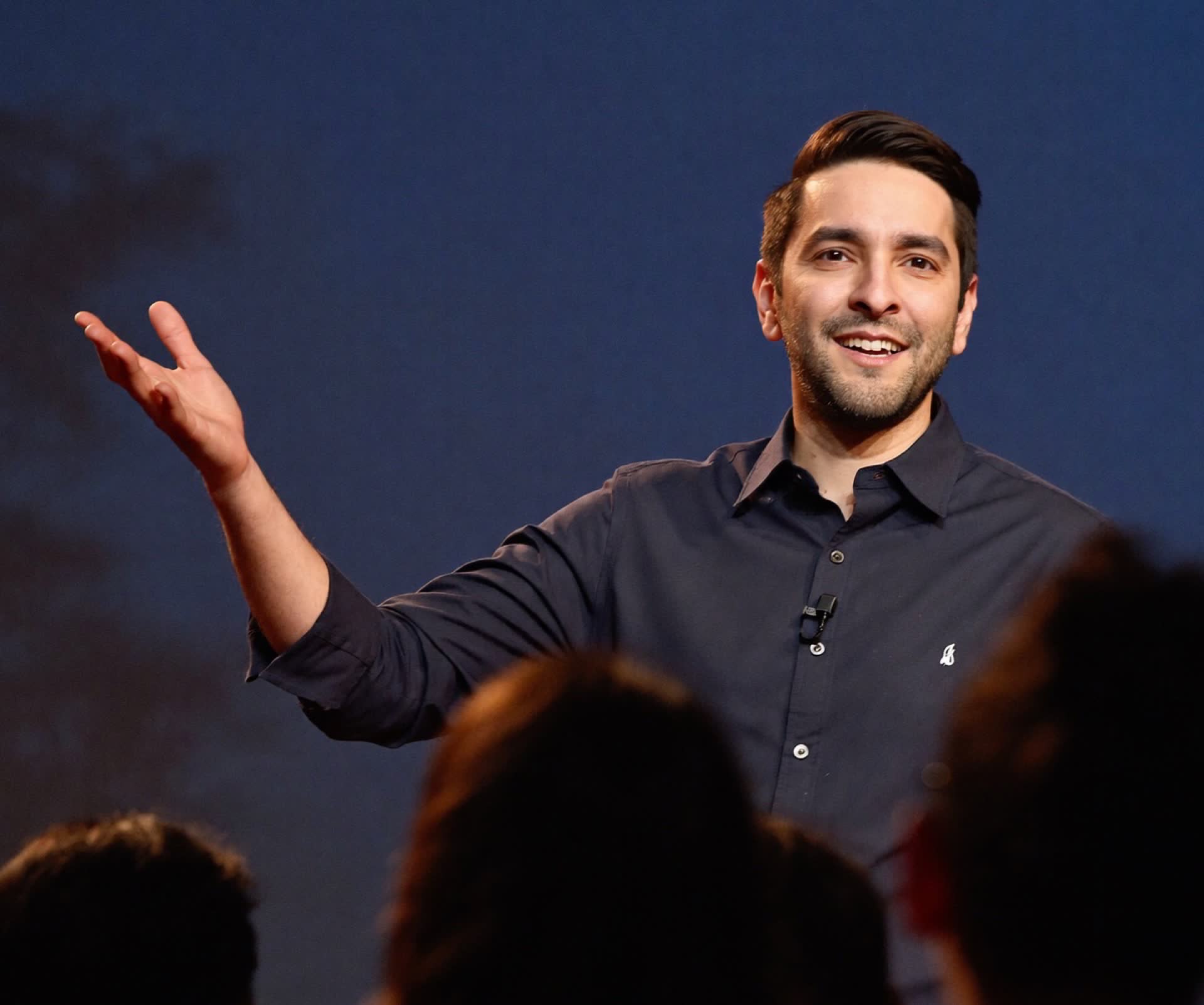
The guest is Asfandyar Waraich, a Lahore-based creator whose reels have drawn millions of views. The conversation is shot at the Lahore space of Kickstart, which Muzamil describes as Pakistan’s largest coworking space. Asfandyar arrives with a sore throat from the Lahore smog and apologises in advance.
An army childhood, and a father who trained him for the world
Asfandyar was born in Sargodha. His father served in the army and retired as a lieutenant colonel in Gujranwala in 2010, and the family settled in Lahore. He describes a sheltered cantonment life of clean streets and easy comfort. Only later did he realise how much of a privilege it was.
He studied at Army Public School and calls himself a weak student. He chose Fine Arts for his FA as the easy route and passed with about 50 percent. At Lahore Garrison University, his CGPA stood at 1.8 by the third semester.
His father died in 2016, when Asfandyar was 17. He credits his father with a practical kind of training. After retiring, his father would send him to fetch a plumber. The first plumber charged 2,000 rupees to fix a tap. The next one, an honest man, charged 500. That is how Asfandyar learned to bargain and to judge a fair price. His father also sent him alone to the village to attend funerals and meet relatives.
The death changed the family’s position overnight. The army held back the pension, he says, and his father left a house but almost no cash. Some of his father’s closest friends did not even come to the funeral.
The lesson he took was about money and usefulness. “At the end, if you are putting value on the table, then you are of benefit,” he says. “Otherwise you are of no use.” With the couple of lakh rupees he had, he opened a gaming zone on Street 11 in Lahore. It failed. He then sold cats and dogs online through a friend who worked at a shelter.
Cash jobs in America, trucks in Canada
On a whim he applied for an American visit visa and got it. His family is from Gujrat, where, he says, people go abroad first and find the job there. He moved to the United States at the end of 2017.
He worked as a cashier at a gas station, at a gift shop in Times Square, and at another petrol mart. He was paid in cash, which he admits was not allowed on a visit visa, though he did not overstay. About 25 workers lived in the gas station owner’s old house, and Asfandyar shared the attic with six others. He says Pakistanis were paid seven or eight dollars an hour when the minimum wage was eleven, for 14-hour shifts, six days a week.
That year showed him how most people live. The children of colonels and bureaucrats, he realised, are a tiny share of any country. He remembers crying into his pillow on Sundays when friends at home did not pick up. “The first year is the toughest,” he says. “In the first year you bleed from everywhere.”
His uncle in Canada arranged a work permit. Asfandyar waited two or three weeks in a shelter house for his border appointment, then crossed after a four-to-five-hour interview.
In Canada he packed cereal boxes in a factory for about two months, then bought a 2001 Honda Civic for about 700 Canadian dollars and delivered food and auto parts. His childhood dream, which his father used to mock, was to drive a truck. He started on a five-ton dry van, then took a bank loan for the licence to drive a tractor-trailer. With interest it cost him about 11,000 dollars and five months of practice. He drove for around four years and lived in Brampton, where his Sikh friends taught him Punjabi. On long motorway runs, he says, he listened to TBT on the dashboard.
Why he did not stay
Muzamil asks the obvious question. Most people who go through that much struggle in the West stay for the passport. Why did he leave?
Asfandyar starts with privilege. His father left the family a house in Lahore. Without it, he says, he would have had to buy one, and a house costs at least one and a half to two crore rupees. Five years was enough, he says, to judge whether the place was worth the next ten. “I was never about driving a truck,” he says. “I was all about owning a company.” When he ran the numbers on buying trucks and hiring drivers, they did not add up. The only way, as he saw it, was to cheat the government or the bank. When he looked into some of the people at the top of the trade, he says, he found shortcuts behind their success.
Muzamil relates. When his own life went up and down a year or two earlier, he says, the way out kept requiring him to cross ethical lines, and his upbringing would not let him. Asfandyar will not call himself an angel. His reason is that his father earned an honest living all his life, and the family never went hungry. He retells a story from Qasim Ali Shah about a king’s servant who eats a bitter fruit without complaint, because he has eaten so many sweet ones from the same hand.
The turn came in 2021, during COVID. He called his brother and said his heart was not in it. His brother told him to come home. The family was stable now, he said, and could catch him if he fell. Asfandyar started the process in 2022 and landed in early 2023, in time for his brother’s wedding. It was his first trip back since leaving at 17. His mother, he says, was strongly against his return.
He also tells of a man with two crore rupees and a four-kanal house who asked him how to get to Canada. If you are well off at home, Asfandyar says, you do not need to leave. Muzamil adds a recent guest, a tech founder, who could move to the US but could not answer one question: why go, and what would he do on the sixth day?
A dollar goes a long way here
What surprised Asfandyar on landing was the dollar. “Here, ten dollars wins a person over completely,” he says. In Canada, money covers necessities. In Pakistan, he says, if you want to leave a mark you need money, or a high post in the bureaucracy. “Nowhere else does money have as much power as it does here,” he says. “And nowhere is money as easy to earn as in Pakistan.” He puts it down to the many gaps in the system. He knows many people from his old Mississauga and Brampton neighbourhood who have also moved back.
Muzamil adds that exposure is what makes the money easier to see. He flips the example to himself. He grew up comfortable in Islamabad and absorbed the idea that earning a lot of money was somehow dirty. Five or six lakh a month felt respectable. Fifty lakh felt like the income of a corrupt man. A cousin told him his relationship with money was messed up. It took moving to Dubai and paying his own rent, he says, to change that.
Asfandyar’s complaint about Pakistan is shelter. He describes a 28-year-old friend who calls his mother before going for tea. He blames parents who do everything for their children, and Muzamil calls it handicapping them. Asfandyar also mocks what he calls the busy idle man, always on the move and producing nothing. Muzamil’s reading, which he offers as opinion, is that much of Punjab’s urban population arrived from rural areas in the last 20 or 25 years, and that rhythm takes generations to change.
The petrol pump video that started it
Asfandyar had made trucking vlogs in Canada. His first YouTube video drew 10,000 views, and he remembers being stunned. Back in Pakistan he made what he calls silly videos for family, such as blowing a leaf blower in his own face, for 200 or 300 views.
The break came by accident. Sitting in a petrol pump mart with two friends, Yasir and Sadiq, he started renaming the products on the shelf. Yasir told him to stop. Sadiq told him to open the camera. He posted the clip to Instagram and TikTok, and woke up to a lakh views. He had six or seven hundred followers at the time, mostly people he knew. That one video brought him three to four thousand more.
His brother then pushed him to meet Moiz Nawaz, an NCA graduate with seven to ten thousand followers at the time, and the two began collaborating. Asfandyar soon realised people make a full living from content alone. He will not disclose rates. He says brands pay so much that he cannot believe the offers. He mentions a trick he picked up from a video by the creator Junejo: quote double the fee. Everyone said yes, he says, and it worked for him too.
His read on timing is that now is a good moment to start. He gives it two to five years before the field saturates and weak content starts to get filtered out. He is frank about his own place in the system. “Right now the algorithm needs me,” he says. “But at some point, when it thinks this guy cannot convert people for me, it will drop me. Simple as that.”
Muzamil has done his homework. It has been about 120 weeks since the first viral video. After it, ordinary posts drew a few hundred likes, until a video with Moiz Nawaz about parents crossed 2.2 million likes and another crossed two million. Today an average photo draws three or four thousand. Muzamil’s point is that one viral hit means nothing on its own. He cites a study he read: people need to see you about 11 times before they remember your name.
Authentic, rage bait, and the R-rated line
Asfandyar sees two kinds of content that work. The first is authentic. He tells creators not to copy India or anyone else. Most of his own viral videos had zero production and zero direction. He is the same person offline as online, he says, and friends now tell him to act more aloof in public. He cannot. He is loud by birth.
The second is rage bait. He does not recommend it. It travels, he says, but it brings unfollows. When he posts it, he does so on purpose, knowing which audience will react. He gives the example of a line about a husband’s rights, which he says sets people off every time. His advice to viewers is not to hand anyone that power.
He describes his natural humour as R-rated and tones it down into something families can watch. One PG-13 joke with a double meaning went badly. He says Abbas made the point on his TBT episode that you have to make what your audience wants to watch. “There are no brands that want to pay you to promote anything for them,” Asfandyar says of R-rated creators. “There are no families that want to watch your videos on YouTube on the big screen.”
He has done stand-up once, for 60 or 70 people. It went well but slid into R-rated material, so he has not tried again. Muzamil pushes back: a ticketed show can be marked 18-plus in a way social media cannot. Both agree that many Pakistani R-rated comics strain to seem edgy.
Muzamil names three ingredients: relatability, comedy and storytelling. Instagram reels, he argues, are storytelling at heart, which is why he believes reel creators can move to stage. The video of Asfandyar’s that stuck with him showed what mothers see and what they hear, told in a switch from Urdu into his Punjabi style.
Between the burger and the paindu
Muzamil then lays out what he sees as Pakistan’s split. There is an upper-middle-class world and a middle-class-and-below world, and they do not get along. Education, access and exposure sit with the first group, which he puts at 3 to 4 percent. Most products, including most Instagram content, are made for that small slice. What reaches the masses on TikTok gets dismissed as cringe. His example of the real audience is the milad, where 20,000 people gather while concert organisers complain that only 500 turn up.
His read on Asfandyar is that he is an upper-middle-class man who has lived a middle-class life through his years in the US and Canada. That lets him reach both sides. Asfandyar agrees and quotes a line he has heard since childhood: “too paindu to be from the elites and too elite to be in the paindus.” His brother tells him his content fills the gap between the two.
He also admits he has become comfortable over the past six months. His followers are growing, brands want him, and they pay well. One big job a year, he says, could cover the next five or six years. Muzamil warns that comfort is the danger for someone who has seen the bottom of the pyramid.
On traditional media, Asfandyar says dramas give a creator recognition among the masses, while Instagram followers are the cream. As a hypothetical, he says that with a million followers he might charge 25 to 30 lakh rupees for a single reel, and a couple of hit dramas would let him earn from both sides. He would act in a good role, but no one has offered one. Acting is frowned upon among influencers, he says, because dramas repeat the same scripts and the early pay is very low.
Staying relevant after the first wave
Muzamil draws on his own 15 years in the space. He calls himself a tier-zero creator who has watched his peers rise, fall and stagnate, and some now give interviews complaining about the industry. Abroad, he says, a stand-up comic moves to a late-night show and then to producing. In Pakistan, people are doing the same thing after 15 years. “Evolution demands pain,” he says, “and evolution demands sacrifice.” He asks whether creators could band together to make a drama on YouTube with mass-market reach, even with no money at first.
Asfandyar says he has relaxed and has no fixed plan to expand. The usual route is a clothing or perfume brand. He has rented a studio and is unsure whether to launch a YouTube show. The idea is an inquiry-style format set in a police station, with his father’s old office tables, a green government carpet, and himself as the station officer charging guests with complaints. He has uploaded a few dummy episodes under the title “Mere munh na lag,” a phrase his father used to say to his mother in anger. He found them too basic.
He also describes burnout. Over 120 weeks, many weeks carried two reels a day. Now when a punchline lands, he thinks “good reel” instead of laughing, and he plans to step back for a month or more. He grew up on Punjabi stage dramas with his father, and he cleans up their rough jugat humour for his own audience.
Muzamil’s advice is to stop calling the idea a podcast. His north star would be the American late-night show of Jimmy Fallon and Jimmy Kimmel. He points to Tabish Hashmi, who went from stand-up to a YouTube show and then a mainstream one. Comedians, he argues, are among the smartest people in the creative industry, because they read psychology and answer in real time. Asfandyar says he cannot afford a live audience yet and will start with a camera and a guest.
Pakistan in 25 years
Muzamil closes with his usual question: how does Pakistan look 25 years from now if it keeps opening up? Asfandyar says that Pakistan itself was one of his reasons for leaving Canada. He concedes it is easier to say from a privileged class. He sees industries rising at a speed he has not seen anywhere, from stand-up and film to construction, real estate and technology. New creators appear every day.
His example of the inventive streak is a strip someone made to seal the gap under a door and keep the air conditioning in. He says it earned crores. The country’s struggle, he says, makes people creative. He is impressed by Gen Z, the cohort now around 21 or 22, whom he sees as the next leaders and civil servants. His favourite sign of change is girls riding scooters in Lahore, Islamabad and even Sargodha.
Muzamil agrees. If he were teleported 25 years ahead, he says, he would not recognise the country, in a good way. He has spoken to 475 guests and takes pride in spotting people early, and he notes that all of the Shark Tank judges came on TBT first. He tells Asfandyar that his success story still feels like an early stage.


Never miss a conversation.
New episodes and the thinking behind them, straight to your inbox. No hype, no spam, no pitch.