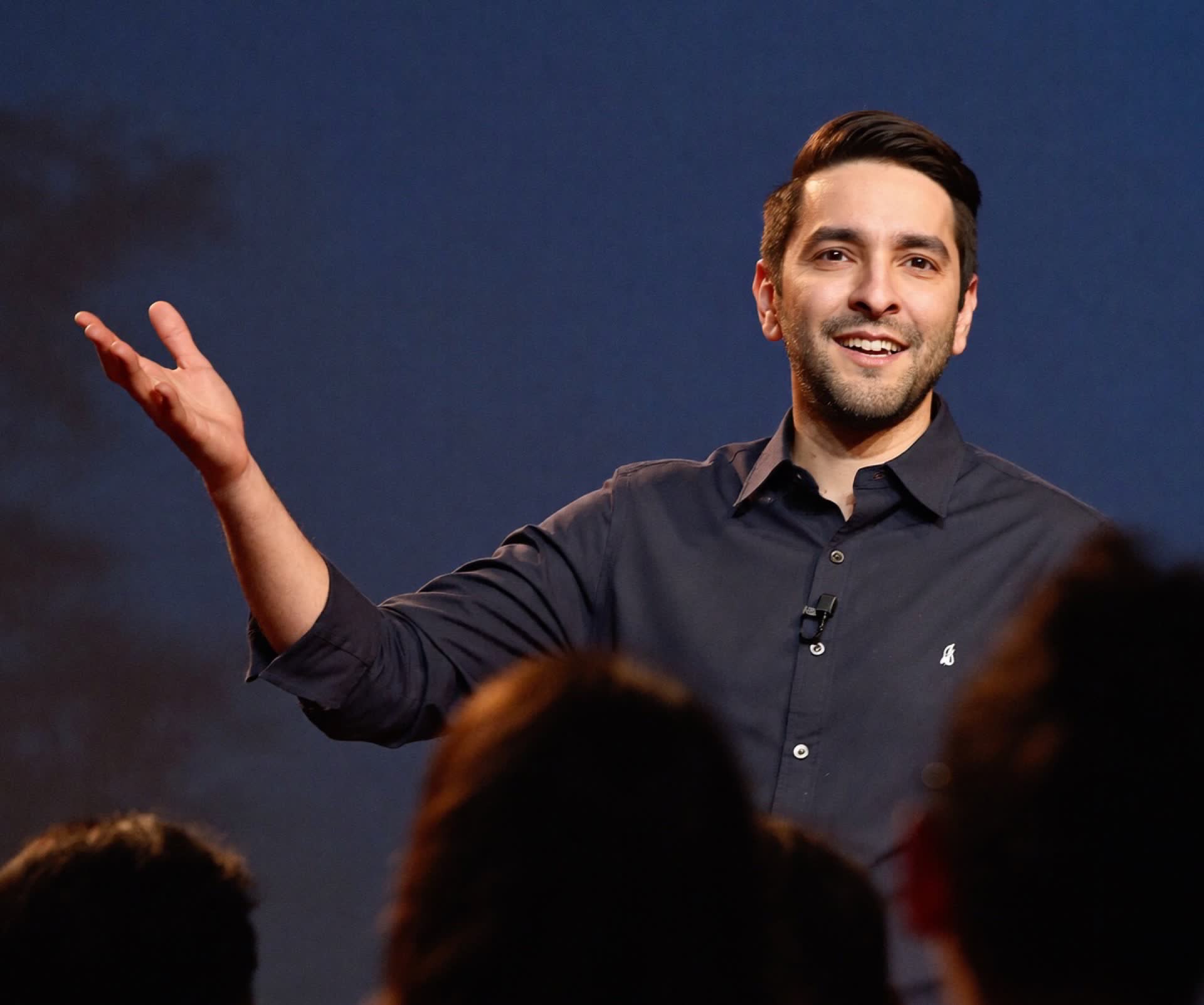
Thought Behind Things · Oct 6, 2021 · 59:08
Why Danish Hasan dropped out in his final semester
Filmmaker and content creator Danish Hasan on walking away from his engineering degree in the eighth semester, why he treats Pakistani universities as a broken system, how Bros Meets the World ran its course, and what a bike accident in Karachi taught him about who he actually wants to talk to.
with Danish Hasan
10 min read
A guest in a transitionary phase
The episode opens with Muzamil placing the conversation precisely. He has been following Danish Hasan’s work since the early YouTube food-channel days, and he says outright that the man sitting across from him is in a “transitionary space” — too talented to be where he is, and worth opening up to find out why. Danish has just turned 34. He has, by his own count, three days of being 34 under his belt.
Danish grew up in Saudi Arabia, did his schooling up to the eighth grade there, and finished his O- and A-levels in Karachi at a DHA public school. He did not get into the colleges he wanted. He describes the four years that followed as rolling down a long tunnel where he could only see darkness, until “it took me four years to kind of see a glimmer of light at the end of the tunnel.”
He landed at PAF-KIET — the Karachi Institute of Economics and Technology — to study engineering. The thing he says he took from college was not the engineering. It was a couple of close friendships and a first, partial glimpse of how authority figures behave. “Colleges, it’s all a social experience,” he tells Muzamil. The rest he calls “a very broken system that we’re forced into.”
The eighth-semester decision
The moment the conversation sharpens is the dropout. Danish walked away in his eighth semester, six or seven courses short of a degree. Muzamil pushes him on this in the way any Pakistani relative would: why not just finish? The last mile. The piece of paper.
Danish’s answer is the most considered argument in the episode, and it arrives as an Olympic-race analogy. A sprinter can run a near-perfect race and still tear a hamstring two seconds before the finish line. That does not make him a failure. It just means he did not win that particular race. “I looked at that race as a part of my life. I didn’t win that race. It’s okay. But I can’t keep going back to it.” He counts four years, five with the extra one he took, against an average lifespan of sixty-something. It is not nothing, but it is not everything.
He is also careful here. He acknowledges his privilege explicitly. “For me to say this is pretty easy, but for the person who has their whole family depending on them, can’t make that decision very easily.” Four siblings in his household work; his mother is an artist; his elder brother is an illustrator, animator, and game developer; another brother is a working director of photography on digital series; his sister is a doctor. The financial floor was there.
Muzamil draws out the deeper diagnosis. Pakistani students go to university for the piece of paper, not to expand the mind. Friends who studied in the US or Europe paired computer science with world history because they treated the institution as a mind-expanding instrument. “University for them is to expand their mind,” Muzamil says, “whereas university for us is a vocational training institute.” Danish agrees, and then sharpens it: “But it doesn’t even do that properly.”
Two months, two hundred dollars, and a way out
After dropping out, Danish did not have a plan. He had a problem: money. He went online, picked up Adobe Illustrator and vector design from scratch, and within two months had earned two hundred dollars in freelance graphic design. For a recent dropout still living at his parents’ house, with friends from the year above earning less in six months, that figure mattered. It told him the system outside the system worked.
A cousin in film pulled him into documentary work next, and Danish makes a small but firm argument for the documentary form as a foundation. “You really need to get into documentary filmmaking,” he tells Muzamil, because it teaches you to see what is around you clearly, to frame without controlling the scene, and above all to wait. He shot for the Indus Hospital, then for The Citizens Foundation, then for Shell on a long-running freelance engagement that lasted about seven years.
Graphic design eventually stopped working for him. The problem, as he frames it, was not the craft but the judgement loop — one design, one client, repeated cycles of feedback from people he did not feel were qualified to give it. He needed a medium with more surface area to express a vision.
Bros Meets the World and the people who watched
Danish met Rameez through a mutual friend around late 2017, after a video Danish had shot at a Distinguished Gentleman’s Ride caught Rameez’s eye. The two clicked instantly. Within a couple of months they had taken a trip together, decided to leave the organisation Rameez was at, and started Bros Meets the World.
Danish is unromantic about what the channel was. The content, he tells Muzamil, was “low-hanging” — a food and lifestyle vlog, easy-going, fun to make, and honest about being that. “There are people who have millions of followers thriving on that content,” he says, and he does not look down on it. But it was never going to be a long-term home for him. The channel ran for about three years before it went dormant.
He refuses to say it ended. “I don’t like to use terms like stop and end or whatever, because it has to be more fluid than that.” He compares it to a coal engine that stopped being fed. Muzamil pushes the metaphor — coal still exists, nobody uses it any more — and Danish lets it land. The friendships, he says repeatedly, are what he holds on to.
The first solo video, and the industry that noticed
The most animated stretch of the conversation is Muzamil’s account of seeing Danish’s first solo video on his own channel. Muzamil says he has only seen two moments in recent Pakistani YouTube where a creator dropped a debut and the entire industry celebrated it. One was Memes Im Moment. The other was Danish.
“I roam around the industry and nobody knows this,” Danish replies, half-laughing. Muzamil presses on the point: in Pakistan, real artistic work is usually under-appreciated until the artist is gone. For senior creators to publicly celebrate a debut on aesthetic alone, the work has to be genuinely disruptive. Danish accepts the read and offers his own diagnosis of why he then failed to sustain it: he was running three things at once. The studio, the freelance corporate work, and the channels. Bros took priority. His solo channel sat as a side project. A video that should have taken a week of focused work was stretched across a month of stolen hours.
The shift he announces in this episode is that, for the first time in his life, he is calling himself a full-time content creator. The plan is one cinematic video a week at the production quality of his debut, supplemented by a Patreon for the people who message him asking how he edits, lights, and frames. Earlier in his life, he says, he could not call himself a director because he did not have enough work under his belt to claim the title. Now he can.
Imitation, originality, and the local lineage
Muzamil and Danish spend a good stretch tracing the lineage of cinematic creators they grew up watching — Peter McKinnon, Casey Neistat, Dan Mace, Ray William Johnson, Mystery Guitar Man — and locally Mooroo, Irfan Junejo, Ukhano. Danish makes a point he says he was not comfortable making when he first started, but is now: every creator is a collage of borrowed pieces, and that is fine.
“If you were to focus on that piece alone — the font, the way it’s placed — oh, that’s this person,” he says. “But if you look at it holistically, the whole piece is unique.” He cites a small book he has finally picked up after years of being told to: Steal Like An Artist. The argument he draws from it is the one he wants to leave with the audience. Imitation is the most honest form of flattery, and pretending you arrived at your style independently is the dishonest move.
Muzamil presses him on Irfan Junejo specifically — why a creator with a heavy bike and a MacBook managed to land in a relatable register that pulled in a Lyari-boys audience. Danish’s answer is that nobody really targets a demographic. They make what they make, they figure things out, and they land somewhere. Irfan’s vulnerability on camera — the stumbles, the moments where confidence dipped — was what people connected to. Danish admits he is only now reaching that comfort. His latest video keeps in the takes where he stumbles, looks the wrong way, or says something the wrong way. Weekly rhythm does not allow the monthly perfectionism of a side project.
The flyover, the bike, and what he refused to do next
Around the fifty-minute mark Muzamil asks Danish to walk through his recent bike accident. It is the third one Danish has had in Karachi. The first was a rickshaw turning into him. The second was an uncle in an old car trying to overtake from the wrong side on a highway. The third happened on a flyover in Clifton. Three men on a 70cc, no helmets, no visors, no licence, decided to cut across his lane with no signal. Danish, on a Harley Davidson cruiser that does not stop quickly, had about four or five seconds to watch the gap close. Jamming the brakes would have put him down. He squeezed them slowly and ran out of road.
He slid, then tucked into a roll — “I just became like a small cylinder,” he says — because that is the safest way to bleed off speed. When he stopped, he walked himself to the footpath, checked the bike was not on fire, and sat down.
Then the part of the story he wants to be heard. A crowd swarmed in. There was anger, gaalum-ghuloz, the usual scene. Danish refused to play it. The men who hit him had no licence, gave no signal, did not look. The framing he insisted on, both in the moment and on camera afterwards, was not class or sympathy. It was rules. “Privileged, non-privileged, mistake, no mistake — that goes out of the window. It’s all about right and wrong, following the rules and not following the rules.” He chose to record the incident and use it as content, because the people he can actually influence are the ones who watch his videos. He is roughly eighty percent recovered as of the recording, still limping, but well enough to have trekked with his mother and brother two days before.
Pakistan in 2050, and the last word
Muzamil closes with his standard final question: what does Danish see when he looks at Pakistan thirty years from now? Danish refuses to bluff. “I can’t see much. It’s a blur.” He will not pretend he has the insight to forecast a country when he can barely forecast his own next hour. What he is willing to wish for is a society that is less aggressive, more inclusive, more accepting, and less defined by Lahori-versus-Karachi tribalism — assuming the climate crisis does not overtake all of it first.
By the end of the conversation, Muzamil tells Danish he is one of the few artists left in Pakistan genuinely interested in identifying problems and trying to solve them. Danish accepts the seat he has been given on the show, thanks the channel, and the episode wraps with Muzamil’s usual sign-off and a quiet acknowledgement that what comes next for this guest is unwritten — exactly the transitionary space he was invited in to talk about.
Full transcript
स्लाने ख़वादिनों से रात, welcome back to another episode of third time. Things आज है मेरे साथ मौजूद है. एक बहुत ही ख़ास मेहमान जिनको इनसे मेरी मुलाक़ात हुई थी for the first time I believe in 2019. You know and I've been following his work probably way before that. You know he he had a YouTube channel I believe that was the first time जब public facing wise थे. खाने के बारे में बात किया करते होते थे. फिर उसके बाद उन्होंने बहुत सारी और चीज़ें की. इस time I feel like he's in a very transitionary space and I'd like to sort of explore that mind as well कि क्या वजह है कि, यह कितना talented इंसान जो है वह इतनी transitionary phase में इस time अपनी life के, बैठा हुआ है. दानेश हसन from Rose Meets the World and also
what was the? Parallel Studios? Yeah. Parallel Studios. दानेश, thank you so much for coming in. My pleasure, man. You know, it's it's wonderful having you in my company. I I love how articulate you are and how so free flowing you are. I wish I had that kind of free flowing. मुझे हर्षी edit करनी पड़ती.
चलिए, thank you so much. Gonna start this conversation with you're 33 years old, I believe? I've just turned 34.
34. October 1 जो three days ago. Three days ago and
Oldly now. And and so, आपने high school Pakistan से किया था? I
basically grew up in सौदिया तो वहां पर मैंने schooling शुरू की थी but yeah I completed my education in Pakistan.
और और सौदिया में किया था Pakistan जो embassy school होते हैं या PSIJ? नहीं,
So वहां से फिर मैंने studied till the eighth and then I moved, यहां पर. Yeah.
To Karachi. And so high school आपने कहां से किया था? DHA, public school एक था. है,
in Karachi. Yeah, तो O levels Cambridge मैंने वहां से किए. यह levels भी मैंने से किया था. Right. And then I, decided to turn my life around. Great, not by afraid of it. By not committing to it. That's when it started, right? That's when it started. Right right right. Yeah. And then I couldn't get into the the, you know, the colleges I wanted to get into. And then उसके बाद it was like just me rolling down this, you know, big tunnel where I'm like कि बस, you know, I I just just see darkness. अच्छा. और it took me four years to kind of see a glimmer of light at the end of the tunnel and Where what you what did you do after that? आपने पढ़ाई की थी उसके बाद? मैंने High Devils के बाद I went into this engineering university by the name of P A F Keet. Right. Kite नहीं है, lot of people confuse it with kite. It's k I e t. Right. Karachi Institute of Economics and Technology.
Economics and Technology, में that's तो media. Media या BBA,
engineering, arts. It is like जो हो सकता है everything else. जो हो सकता है. Yeah. So yeah so yeah रोम I made a few made a made a made a few, see? Not that articulate. A couple of really good friends and that's the one thing I retake back from that experience. यार colleges यार it's all a social experience. You're there to kind of work with people, try and understand them, you know, and आपके जो overlords हैं, आपके teachers होते आपको बोलते हैं यार यह नहीं करोगे तो यह हो जाएगा. तो आपको थोड़ा glimpse मिलता है of what bosses are gonna be like in in But then, yeah, it's it's but it's not even close to what the real world is like and I feel like it's a very I feel broken system that we're forced into. Really? Yeah. It didn't work for me. It didn't work for me. Terrifyingly morbid. Yeah.
But but yeah, that's true. I mean, I I agree with you. Universities आपको एक बड़ा sort of standard किस्म का एक world view देते हैं और उसके बाद फिर आप जब दुनिया में जाते तो आपको पता लगता है कि यार I mean that's 0%. You you literally start from zero. And you literally, you know, learn the ropes and I feel like one of the reasons why आपका तो ख़ैर एक बड़ा art side पर निकला but beyond art is where a lot of people, you know, graduate in engineering and computer science and this and that and they have this sort of entitled mentality where they're like ok मैंने चार साल एक चीज़ में लगाया है, cup लगाइए. Yeah. डांटे खाइयां सारा कुछ किया है कि अब मुझे इतना पता है कि मैं कहीं जाऊंगा तो मुझे जो पता है वह उसकी basis पर मुझे कुछ मिलेगा. Yeah, that's the reason. But the fact is कि you have no idea and so the person who's who's looking to hire you Yeah. Also obviously भाई वह तो पैसे दे रहा तो उसको तो एक requirement एक चीज़ भी है. उस university
उसकी तो नहीं है. Yeah. And so that discrepancy then creates a lot of this chaos and And I feel like it didn't work for me but it works for some people. It doesn't work for the the vast majority. That's Yeah. That's why I'd say I'd say it's a broken system. Right. Because when you're talking about a system, right? It should cater to all. Mean, that's that's the way it should be. Or at the very least, it should cater to to the majority now. At least, like, know, if I were to give it a statistic, mean, I know you like numbers. But, like, 80% maybe. Yeah, it should work for that big extent because, like, you have very different kinds of people with different mindset, different backgrounds, different, you know, biological needs. You know, some people really understand stuff quicker, some people don't, you know. So you maybe अभी so I'm kind of teasing this before I post this up because I I went into, like, the Muggerhills trek maybe recently after, like, the accident. We'll talk about that a little bit also. Yeah. But I I just I'm still in recover still recovering, but I was able to, like, trek with my mom and my brother. And, because I've, like, we were talking about this earlier before the podcast started कि मैं I was I took a break for four months from work and that's the most, that I feel that I've grown as a person. And the one thing I'm really open to is being present and being able to take everything in and, not be lost in my own thoughts. तो my mom just mentioned कि यार, you look at this, tree. It's curving around the branch, of this other tree and it's, like, using it as a support system to grow up. And I took that picture and then I was recording content because I'm, like, whenever I have usually, I don't. But like whenever I'm motivated I'm like, you know आज मैं जो record करना है कुछ. I took my gopro and just recorded, started recording something and then understood this is what it's gonna be about because like my content needs to speak something of value. I feel like I just can't put up. Oh, so I made this vlog. I, it, we used to do this. We had a channel that just did that. Oh, हमने यह खाना खाया and then we Low value, low hanging sort of content, right? Yeah. कुछ करें बगैर भी आपका fun. It was fun. Yeah, it was just like easy going content but like सच्चा भी है, सच्ची बात है. चलता है. Yeah, we know the people have millions of followers, you know. Yeah. Thrive on that content but like yeah उस पर वह मैं बातीम कर रही थी कि यार people are different. So उस पर यह हुआ कि I saw that tree and I was like कि man अगर यह दरक नहीं होता तो यह दूसरा शायद survive भी नहीं करता. Mhmm mhmm. So it needed that stronger root to kind of just intertwine around and grow and thrive. And then वह symbiotic relationship थी and then those two trees were really healthy and that's, you know, forest. तो अब यह schooling is the same. When you have somebody who can't speak properly, when you have somebody somebody who who's not that, good looking. Because then, obviously, in in college, in in schooling, that's the biggest thing that people will just see you. Yeah. They don't see what's inside you. They see what the physicality of you is. And that and we all learn when you grow up, k o. We were bad people when you were back in school or we were good, like, however which way. So, yeah, man, that's why, that's what happened with the university thing. And I let and I had to drop out, last In
the last year? Yeah. In in the seventh semester or the eighth semester?
It was the eighth semester. Had about six to seven courses to go.
Yeah. I mean, WDF, वह कहते ना normally तो again, so पाकिस्तानी सोच ही कहेगी यार भाई थोड़ा सा आगे जाकर degree ले ले फिर आगे दिखी जाएगी जो कहां सोच हो what why not? Like why not just this last mile get the degree and?
Yeah, think of it as like I just came about this. I'm really like and there's a jump around. But, I I think it really makes sense. Is the fact that if you look at at, an Olympic race Mhmm. And अभी recently, I think the last race that you seen bolt was part of, you can have a very successful career. You could do everything really perfectly. But but sometimes it's the last race and but he's achieved a lot but it doesn't, I mean, talking about a specific race कि उस race के अंदर he ran the the ready, when he, उसने वह button होता and he क्या होता है? Like, whatever the stick is. वह पकड़ा है and then he he he started to spin and उसी point पर like he he just pulled hamstring और क्या हुआ? And then he started to limp. चलो वह तो खैर रीले था. Even if you are talking about like a singular race, आप face line से पहले भी दो second पहले भी you can, you know, pull pull a hamstring and you can stop. Right. But, it does not mean that you're a failure. So I I looked at that race as a part of my life. Those four years, those five actually, was five years because I didn't, graduate in the fourth year. My everybody every one of my friends here before me. So I looked at it as a race. I didn't win that race. It's ok. But I can't go back. I can't keep going back to it and try to, you know, give false reality of, you know, कि यार मैं मुझे वही race जीतनी थी. I have other races in my life. चार साल हैं, पांच साल हैं. We live for an average what? 60? 65? Whatever the average, you know, term is for a person. Yeah yeah. Five years is nothing when you look back into And it's not like I wasted five years. I I learned a lot. Like, there were a lot of things I picked up. I can't I I I inter... You know, I was communicating mixed with a lot of different kinds of people who who were coming in from very not so, privileged backgrounds.
So, you know, that's that's the learning that I also, did with them. And I think one of the things I find very interesting in in in this statement is, for you it wasn't about the piece of paper to begin with. You You went there. You done an and I think that's fundamentally, पाक्षतानी universities का problem यह है कि you're going in for the piece of paper. You're not really going in to to sort of study or expand your mind. Yeah. I think one of the reasons why when I when I look at the, you know, my my friends who went to The US or or or Europe for for their education, It's very much defined by what they wanna take and so they're like, yo अच्छा मैंने यह अपने कोर्लियों में है और साथ में जो है ना परिजन पढ़ रहा हूं या मैंने यह कोर्लियां हुआ है और साथ में world history पढ़ रहा हूं. Mhmm. And and you're you're just like कि यार but wait, you're doing computer science. Why are you doing world history? And for वह वजह उसकी यह है कि university for them is to expand their mind whereas university for us is a vocational training institute. Absolutely. Build but it doesn't even do that properly Yeah. It doesn't. But, yeah, so so so so you dropped out and, I mean, were were you were you was your family okay with that? So
me and my mom are pretty close. We my dad, we don't speak that much. So he wasn't really he didn't know of the situation, of the micros, what was happening. Mhmm. But my mom kinda saw me not doing greedy well in the last three years, four years. And every time I would come, there was any kind of like announcement in terms of like एक छोटा था pause, are you the youngest? I am the middle child. Actually, middle doesn't make sense because before but like, yeah, I'm the You're the middle. Yeah, well.
Right.
Yeah. And I would like to say कि for, you know, for what it's worth, I think we're also in the same socioeconomic setting as well. Because for me to say this is pretty easy, but for the person who has their whole family depending on them, can't make that decision very And I'm very well aware of that. Right. But the fact is that जो कर सकते अगर मोह नहीं करें तो फिर where is the world going then, you know? You know, I'm so if I, we can take chances. I mean, you know, we still have food on the table. We still have more siblings that are working, you know? And, you know, it's it's a very functional and, well functioning house that, you know, alhamdulillah that I will live in. Every person contributes naam mashallah and everybody is earning all four of us. So, yeah, so I saw that happening. Unless खोदाना खास था कुछ physical disability या कुछ इस तरह का health issue आए, that's a major, setback for any individual. Until that happens, you're good to go. I mean, the only thing that you need is time. And, today's day, you just need, like, a black screen in front of you, and you need to be able to know where to go, and then sky is the And so you drop out and immediately you were looking at what what to do next? So my, little background is that my my mom's an artist. Elder brother is a very fantastic, illustrator, animator, game developer, multifaceted. So, my brother now is a very, up and coming DP. He is doing a lot of projects in, you know, the series that we are seeing. आजकल digital series जो आ रही हैं. So he is very, he is a DP in the, so like the whole family except my sister she is, she is a doctor but like I feel like she is the one that feels. She so far away from me. Yeah. I think she feels a little left up sometimes. But, yeah, so, तो yeah. We're we're we're pretty artistically inclined. So, I saw that growing up. So, Mirendra, with her. I could see what good design is. I see what a good painting is. I see what a good character design is or, you know? So, I always had that as something I could fall back on, and I felt that that was, you know, a better place for me to be in rather than trying something that my... The society and my parents kind of got into work. यार engineering करना है लड़का है तो, typically. You know? So, yeah, man. I think the biggest feud in my life has has been the the anger to prove people wrong. And that takes you really far. But, the gra- the good thing is that now I've overcome that anger. And I have no resentment with people around me, I'm very happy. And I can- I can go back to the house and, you know, meet every individual with, you know, the the the respect and humanity that everybody deserves. And I feel like यहां beach में you as a... I I talk about family अभी क्यों क्योंकि I feel like that's that's your that's who you are. Right. And and the moment you try to detach yourself from it and try to be something and pretend that you're you're someone that you're not, society and world the the the how the way the world works, you know, kind of forces you back into it. There'll be a post one day about Mother's Day or, like, Father's Day or Brother's Day or whatever. Yeah. And then you'll think about it. Yeah. So I feel like, you need to be a very balanced individual to be able to, do anything successful in life, and especially what we do as content creators, because you're being targeted and judged every step of the way. I just posted a video at three 3PM. Right. And, there will be something that'll be there. It'll be like, क्या इतनी यह क्यों बोला? वह क्यों नहीं किया? यह क्यों किया? And, you need to understand that that's it's that's one attempt. It's not, you know, the the last thing that you'll do, god forbid. तो that's that's what I really learned that day when I let go and dropped out in the last minute. It's okay to fail. Right. I'm a failure. It's fine. I have 20,000 failures in under my belt, but I have successes as well to show for it. Yeah. And that's the beauty of it. K? Whenever it comes, you really need to be proud of it, but you need to work towards it. And it's okay. Maybe education is on the way. And I think so Formal education. नहीं बस so so you know you you dropped out and
उसके बाद what was that sort of journey जिसके अंदर आपने यह realise कि ok this is my calling, this is what I'm going to focus on. I had no idea. Okay. So it was,
once -one step at a time. And I I say that, मैं quantum भी बोलता हूं यह same चीज़ के it's one, you know, one minute, one second, one hour every day, one step -one step at a time. You have to figure out, okay, what's my problem right now? Okay. Abhi, I just dropped out. I have no set path to make money in life. Oh, money is the problem. Let me find that solution. I went online, saw this website that could I could do the graphic designing. Like I mentioned, I had the, you know, the the DNA to kind of get into it, genetic code. Though I tried it. It took me very, low key part of this because, like, that's the one thing that we were talking about that I have really if I have a gift, I have the ability to really pick up things quicker. So, yeah, two months. At the end of the second month, starting from scratch, picked up illustrator, vectors and all of that stuff and earned $200 at the end of the day. And for me, like, living in the parents' house, just, you know, didn't graduate just out of the, मतलब out of university. Trying to figure stuff out, that's a big thing. Because, like, my, colleagues, like, you know, not my colleagues, but, like, my my friends who who graduated a year earlier were making less than I did, probably in six months than I did in two months. Right. So, I was like, oh, so this works. And then it was the one thing that I had, like, a cousin who was into film, and, I did a few projects with him, started doing documentary work. And I feel like if you wanna get into the visual medium of making moving pictures of videos or whatever, आजकल cool term. But, yeah, you really need to get into documentary filmmaking because it, does, a few things. Number one, it it enables you to see stuff around you pretty clearly. You don't have the ability to change it. You have to frame accordingly. And when you do that, you have to wait because it teaches you patience, it teaches you to adapt and you get what you get. Right. She don't have a lot of control. So, यह जो documentaries आप कर रहे थे, यह किस particular ऐसी channel के लिए थी यार? No, there were, there were hosp, there was an Indus hospital, there is an Indus hospital, which is doing really well, really support that organization because free इलाज होता है वहां पर and वहां पर doctor बारी एक है उन्होंने जो है basically उस वक़्त उनको इस तरह का काम काफ़ी he was not him particularly but like we would focus a lot on you know, making it, at least I did, to kind of make it a little more cinematic that, other people are doing it, and the people that got us on board really light our psyches. My cousin and his friend and who we were working with, but they were training to be filmmakers from an institute that, no longer exists, exists but in Pakistan. So, वो वहां से पढ़कर आ रहे थे and I was kind of piggybacking on that kind of mindset. So, I was like, oh, I need to make this really, something else very aesthetically pleasing. And उस point पर, शिमीन बैठकर आई थी अभी भी, really sweet थी saving face. Right. And I looked at saving face. And then I looked at my documentary. And this is this is my first documentary I've ever done. From an artistic standpoint, I was like, that film won an Oscar, but Logi, I I knew that mine looked better at least. Yeah. Fine. There's a lot more documentary. This is the aesthetic side of it. But at that point, I knew that I could become close to something that was that had won awards. Yeah. Yeah. So, After that, worked with TCF for a bit, did a lot of free projects for them, काफ़ी कुछ काम किया आगे पीछे. They worked for corporates. Did a still, at least last year तक मैंने first worked with Shell for about seven years. रोज़ तो दिनाक़्क़स, एकदम low end projects and then pretty much an employee for Shell because everybody knows me there, like document everybody there. Right. But yeah, so And a lot of this was freelance work essentially. A lot of this was, thanks, man. You were my connect there. But it was a lot of people connecting me to other people. Right. But it's it Freelance. Freelance. Right? It's more like you were working for, a production house? No. Not at all. It was me solo, like, Freebird. Right. Yeah. But, yeah, so I was, graphic design didn't work well for me because I was very limited, and I feel like it was just that one design that was being judged on and on and on and on. I I couldn't go through that judgment where I felt like people didn't know what they were talking Right. I needed something more complex that could have a a better way of representing my vision and my, you know, thoughts. Right. So how do you how do you, you know, get into the whole YouTube pro meets the world situation? So I met Ramesh to a friend, a mutual friend of ours.
What year is this? This is 02/1718.
I think it's the end of seventeen maybe. Right. Yeah. So at that point I was basically documenting this event called distinguished gentleman gentleman's ride and उसमें basically क्या होता है? It's a prostate, cancer awareness run they do every year and basically bikers, you know, dress all dayper and stuff and kind of do rides around the city to promote and raise awareness. तो I I was always like a gearer. I loved cars and like typical boy, right? Right. So, I would not ride or sit or even, you know, touch most of these bikes. Would just document them. And I would go on these. We had, a small group, उसमें हम लोग जाते थे. We did rights together. तुम्हारा मैं document करा था. And, I would treat them as, my short films, you know, artistic pieces. And everybody who's, like, writing really appreciated me. God, this guy, this boy has potential, you know? So, again, small checks. I I could see where I was going was the right way to go. Eventually, of those videos, caught the eye of this mutual friend. He showed it to my, to Ramesh. Mhmm. And he's like, oh, this guy has an aesthetic. Maybe, you know, I could talk to him. So that time he was working for an organization, named... Should I name or not? Name I don't know. Let's just put it in that. He was working with a small organization, and I I I went to him and I met him, and I was like, Oh, he was working with that organization? Yeah. Think you Connected the whole. So, yeah, my mom instantly hit it off. I saw him as this guy who's very flamboyant, who's, like, very pretty, you know, confident. And he was like, यार, यह अच्छा scene है boy का. I don't know what he saw in me, like, he can pronounce with that because I was still, you know, getting into my, who you see right now. I'm just trying to figure myself out. But the thing that I have was, like, my work, and that I that that was the thing that I valued most, in my life, k r, you know? This is something that, you know, I have nothing. I still have the ability to make stuff or produce stuff. Right. So, yeah, we hit it off, instantly. And then, like, a couple of months later, he mentioned he wanted to travel. I was like, yo, man. I wanna travel. And then he was probably I was the first guy. And he was the first guy that I met. That instantly, we said yes. And then we did made a trip, like, a couple of weeks getting to know each other? Two or three months. Yeah. So and, we both had friends. They were, like, planning for years and years and years, and we had that conversation during the tip as well. And that's when, he decided we wanted to leave that company. And then as soon as soon as we came back, we decided we wanted to start something. And that something was broken into the world, and that's how it all began.
Why did you stop?
Where did I stop? The Champs. Yep. Like with everything, we we started talking about change and being able to let go of something that doesn't work anymore. Not because the system doesn't work, not because the format doesn't work, but it doesn't work for us individually anymore. So we feel like if we were going we have multifaceted people. What you see on camera and on these, like, Twitter clips is a a fraction of who we are. Right. And if that's the only thing that you're going be defined by for the next ten, twenty years, I mean, you think about that stuff and you're like, what's my legacy? Oh, why? वह जो burger खाते थे. हां. So, yeah, but it wasn't creatively or even, you know, it wasn't very fulfilling किसी भी तरीके से. मतलब don't don't get me wrong, like, the one thing I really love is the community that we built and, you know, the fans that follow us and recognize me to this day. We still, you know, have that love. Our our contra was wholesome. We enjoyed making it, but it was not something that, was ever gonna be very long term. We knew that getting into it. So we gave it three years, and, as of today, it's just dormant. I wouldn't say it's dead. I don't know what's the future. Maybe you pick it up, maybe you don't. But, the important thing is that we, you know, why got, like, a lifetime worth of friendship with them? I mean, that's something I really hold more valuable. Right. And you guys stopped in 2019. We technically just it's it's like the the engine, we stopped churning coal into it. It stopped. It started for a bit, stopped, started for a bit and then ring ring ring. Actually, दिनों भी कुछ आया था उसके ऊपर, I feel like. Yeah, was the last time we threw some coal into it. It's like, that's it. So I don't like to use terms like stop and end or year over because I feel like it's, it has to be more fluid than that. I feel like in definitions. Interesting that you use the word coal because I mean with the The train came to mind. I don't know. With the, you know, it's it's not gonna be It's there interesting you took it there.
I mean, coal exist कर रहा है maybe. Yeah. But nobody's using it anymore. So True.
Right. So so so that ended and then you started your own studio, parallel studio. So before we were we were remotely slowing down, I started my own channel. He started his channel. Did really well. It's still doing really well. And then I started another channel called, Doctor साहब. Another friend of mine, I said, That was happening and then my I got my studio space. That's on my channel, मैंने document किया हुआ है पूरा. तो,
yeah, there's a lot of things happening. And then as with everything in life, if you, you know I mean, we're gonna get it over as with what happens in life. Yeah. But tell me a little bit about that vision, right? So you Yeah. You you were doing Rose Meets the World and you DLi to me. Meets the world. Meets the world. Now I have to crack. And, they're like, you know,
you're like, ठीक है, अब मुझे इसकी शायद उतनी समझ नहीं आ रही है artistic standpoints and I want to do something bigger in my life, right? And so so you're like, ठीक है, मैं अपना एक channel start करता हूं. मैं Ok, so it's never like, think that's the best thing that we've, we were very communicative throughout everything. It's like a management. You're if you're working with, you know, somebody for spending so much time, it it becomes like, you're you're very tied together. So you have to be very communicative. How you, what are you feeling about this? This is what I wanna do, what I'm doing. And it's very important for both parties to have their own voice. I felt for the longest time, I kind of went with what he was going because I was, like, coming from a very low confident, low self esteem place. I was like, oh, this seems like a confident dude. Maybe he's just mid he's better than mine. Let's just go with it. Right. And then later it started become I started to voice stuff more. And then, there was never a fight. There was never a fight. I mean, till we were doing with the, you know, making the content. So, we would have like really heated arguments later later maybe like in the third year where we were talking about, ok, it's not working but like it was never like personal. It was all this that. Heated
arguments को कुछ लोग लेंगे as as arguments.
I would take it as passion because if you are two creatives working together. You need to be vested in it. Otherwise, that's the point. Yeah. So, yeah, I was never यह stop करेंगे तो वह start करेंगे. हां. It was like कि oh, ok, रामेश wanted to remake his own content. Like, I was all, he was really and he was very vocal about, you know, okay, how good I was at Minecraft, and I I really appreciated that. And then I wanted him to go and start, like, if I will have this, like, thing wherever I we would go. He would have, like, the best picture taken, you know, and like the most aesthetic. Then whenever like it was my turn, I was, I would get no good pictures. Or like जब मेरे को frame होता था, he will always be pointing a little bit towards the right or to the top and then he goes like, यार, I'll just do it myself. तो I was mostly just holding the camera myself. But eventually he wanted to get into it, He wanted to learn as, you know, the thing that that's unique about all of us is that we have the potential to grow. And I feel like everybody anybody who does that needs to be pushed and not be stopped. So he wanted to do that. I was like, yeah. Great, man. Do your thing. Start your channel. Right. Neil. So that's what I'm saying. So we didn't stop. Like, it was never कि यह stop करते थे वह start करते थे. मैं आपका sort of mindset समझना चाह रहा Not pertaining to रामेश और और bro meets. Yeah, Bro's meet the world. Yeah.
मैं समझना चाह रहा या चाह रहा कि ज़ाहिर एक इंसान होता है, एक इंसान का अपना vision होता है individualistically. So what was the vision behind? Ok? So so whether bro Behind bros meet the world? No no no. Whether bros the world exist or not, Bros meet the world exist or not. मैं अब जा रहा हूं और मैं अब यह shool space बना रहा हूं that I saw as well and and and I'm gonna start this channel called Dr. साहब and I'm gonna, you know, create because I remember देखिए जो आपका पहली video आई थी ना so that was when I sort of really उससे पहले seeing the the food content again like you said, food content or entertainment content or prank content generally is great content but it doesn't leave a mark on your in your mind in terms of the individual or the thought process or Yeah. As an artist. The first mark that was left, was the first video that came out on your channel, right? And I feel like that was something that the entire industry was like, woah, what's going on? I remember, you know, very बहुत occasionally ऐसा हुआ है कि कोई किसी बंदे ने एक नए channel के ऊपर एक नई video डाली है और throughout across the board industry में वह celebrate हुई हो. I feel like मैंने आजकल दो आज तक दो examples दिए हैं. एक मैंने आपकी देखी है और एक मैंने meme से moment की देखी Moment, I was getting there as well. That's true. और उसमें you know, I saw that and I probably one of the most exciting, moments on digital was when I saw your video, and and I saw Interesting. Where it was going,
you know, or or or rather how it was being celebrated. But important चीज़ है यह पाकिस्तानी industry Yeah. Within the community it was like, and I could I could feel it like a good I already had a channel that was pretty successful. We were going somewhere. Yeah. So I knew, you know, okay, what the being successful on a channel is. But, you know, starting from scratch and then getting the kind of response for the kind of people that I really look up to in the industry, gave me a shout out and, like, commented and, you know, I was like, okay. I I want to something. Yeah. And it's it doesn't happen just because you're already successful. Industry No
way. They will only do it if they find something so disruptive that they're like, you know, like, okay. So this needs celebration. And so, I saw that, and I I could tell that this is not coming from a place of, मुझे शौर्यत चाहिए. Mhmm. This is coming from a place of art. Yeah. But more often than not, in Pakistan, art is something that is so so so there's so much discrepancy. There's concept Yeah. Of globally. कि वह socioeconomic class का और वह सारी चीज़ों कहता discrepancy होती है कि that sort of true art is generally not really sort of understood by the masses and so it's mostly underappreciated until that person dies, and we're still waiting for you to do that. And yet you're being celebrated. So unless there is really so so clearly, were onto something. I was. Yeah. But then it never really sort of sustained. There's a button. Yeah. There's a So
what happened was that, so, like I mentioned, I was already in, you know, I had a lot of things going on. And at that point, the other channel, the third channel hadn't started. But, I was already, you know Third channel. Doctor. Saab. Doctor. Yeah. I started mine first before I did. So, yeah, so I was already into the filmmaking side of starting my own production, and I that was already registered. I was already, you know, doing work, you know, as a freelancer, and, you know, I was reaching out to, corporates and doing a lot of that. And that's when Bros came into the picture. So there was always, like, stuff that I was doing on the side. So YouTube and content creation was always additional. Right. And then eventually, because Bros took up a lot of our time, it it started to become the number one priority, and then my stuff became second. From into on my In terms of was it generating revenue as well? I mean, when it did, it did. When it didn't, there were dry patches, and that's where our, you know, other businesses came in. And that's why we could do what we did for the channel. And that's how I, you know, we were doing stuff for our own channels as well. Because we always have stuff on the side, and that's unfortunate. Because, as of today, this is the first time I've spoken on any, you know, public platform or channel where I've spoken this out loud. I have hinted this in my in the video that I just released, but I am officially now full time content creator on YouTube now for the very first time in my life. And so you you you wouldn't call yourself that, like, two years ago when you I wouldn't call I couldn't I couldn't call myself a director a year ago or two years ago. Because I felt like you need to have a number of, you know, projects under your belt to be able to say that you are something. Right. I was always part of this group, this duo. So as a duo, we were we were content creators. We were we were whatever, you know? And but but, as an individual, I hadn't proven myself. I had the the first, you know, the way it rippled in the the sea with my first video, and I had I was going moving on to something. But I didn't have the the consistency or the commitment of that time to really make it work, and I could've. And and how long did did that first video take? To make? Yep. Technically, from an editing standpoint and kind of filming, it takes me a week. Right. End to end. Right. But because of my work and everything, it usually takes a month,
over a period of month for me to, like, spend time thora thora film करें. But you can sort of create something similar or rather not just similar, but up to definitely scale up because you have the experience now as well. Absolutely. In a in a in a week if you're doing that full time. Yeah. Absolutely. So the goal is now to hit one,
video of the similar, aesthetic and production quality, to put that out every week. Mhmm. Supplemented by a lot of other stuff on other platforms. Now I have a a I'm gonna plug myself here. Mhmm. I have a Patreon now, so there's lot of micro content that I'm gonna be posting there and I wanna talk to the people who really this is for the DM people, you know, for the people who come in and message ना यह कर दें, वह कर दें. You know, teach me this, मुझे यह बता दो, वह कर दो. And I'm like कि यार आपके लिए for a for a month's burgers worth आपके लिए यह content नज़दीक है. So you could go to x y z institute जो आपको the text, सबको पता है बहुत सारे हैं. तो वह आपको बता देंगे यह यह इस तरह यह करना है, वह करना है. But, you know, if you see what I make and you like it and you know you want to get in on board to as to how what the behind the scenes stuff is, there's immense content everywhere we are. Like, there could be another camera somewhere, like, up right up there documenting the process of how we're filming this, and that's content. So the point is k, you know, there's there's so much that I wanna put out, but, obviously, because of my... Previously, because of my limitations of time, I couldn't do that. So now it's, I had to shut all that weight, but that took a lot of time, not a self reflection of what I need to do in, you know, as, as, creative. Right. Because I'd have to make stuff. I'd rather get... I'm looking at this table and I'm like, you know, how I can I can make this back home or what's the, you know, the texture कैसा है इसका art and then the picture foam boots लगाएं? I'm very designed and, as you can see through my content, I'm very particular. Like, can see the frames, like, a little skew at the back and that's been bugging you for the same Yeah, yeah.
I mentioned that on the podcast as well. That's, यश्वरा that's, that's entirely on you. But I mean, thank you for doing that. No,
it's like, you did a good job but, like, you know, you have a keen eye for it. It's okay, miss Amman. You don't have to you don't have to. I I'm I've learned to be comfortable with these. It's my my small issues.
But, yeah, so, as of right now, what is the what is the... For lack of better word, does the empire look like, for Danishasan?
Empire. This is such a strong word. Look, man, I'm just spending every day trying to figure stuff out. So, this this thing... This, you know, social media thing really excites me, I still feel that there's a lot for me to explore individually. You could say the market is saturated, but, like, coming the, you know, the skill sets that I possess, the abilities that I have, the the knowledge and experience that I've gathered over the years, I feel like I have a lot to contribute. There are lot of people that, you know, aspire to individuals that, are just making content for the clicks and for the views, and they hack the system to make it work. I feel like, there needs to be enough people in the market to kind of combat that Cause we can't push them away. It's free free world, right? The everybody can do whatever hell they want. Yeah. But, yeah, it it'll be good to see, like, you you spoke about memes in moment. I saw that kid and I was like, oh, man. I hope he can keep that up. Yeah. Because that was the first instinct. Because I know how much time goes into, you know, editing a video as opposed to posting a TikTok and, like, setting it up on a camera and doing your thing. You know? And I imagine doing that at the age of 14 and I kinda Oh, yeah. And then all the social pressures and everything. I feel like, I don't know if he's listening into onto to this podcast, but I feel like there's there will be a time where he'll take a break. Yeah. Definitely. That's much needed. And I feel like he'll come way stronger than we did. Mhmm. Whether we when we started. Because, like, he's already at, like, at fourteen, man. What would we doing at fourteen? Have you seen, have you seen this channel called GoksArt?
I haven't. So, I mean, you know, growing up, हमारे लिए जो channels थे, वह थे, you know, Peter McKinnon
Yeah. Cinematic. Even way back when, like, Ray William Johnson Yeah.
That that DOGs. Yeah. And and I remember when I saw your first video, one of the one of the most exciting aspect was I remember you you there was a scene where you're sitting and there's a Screens at the back. Screens at the back, and it has all these old channels. And I'm just like, I saw the channels that were appearing there, I was like, wait a minute. What? Mystery Guitar Man, like, yeah. Someone also someone else also watched this stuff. Yeah, yeah, yeah. Because I I I roam around the industry and nobody knows this.
Yeah. You know, it it I mean, before I started, you guys were doing your thing way back like 2010. Yeah, 2010 and that was the time with these guys were doing it in the international stage. Absolutely. Man, you guys were weirdly but like yeah. But yeah man, I mean, that's where we sure this kid, it's
called Goks art. You should definitely check it, check it out. Oh, yeah. Now I recognize the logo. Yeah. You know, and this is this, this is Oh, brilliant. Absolutely brilliant. Yeah. I mean, you watch one of his videos. इसका ना Q and A जो होता है ना? अच्छा, आप start करते हो आप कहते wow. As a creator you're like कि oh, हर चीज़ आप एक critical lens से देख रहे होते हैं. मैं तो यह मैं कैसे करूंगा? यह मैं कैसे करूंगा? Fifteen to twenty seconds into the video just like कि भाई तू कर I am not gonna I am not gonna compete because वह real time पर pen होता है पर वह pen मेरा camera movement भी हो रही है वह slow mo भी हो रहा है उसके behind is so curve भी खुद रहा है वह illustrate भी it's insane. And so, when I look at memes im Moment, I realize, you know, that's where you get that head start, right? Like, at the age of 31 or 34, you're always going to all, a, have the millennial aesthetic. You're never gonna मैंने repeat, पिशेदार मैंने team से बोला That's who you are. Yeah, you can, you can be like a 14 year old. Exactly. I mean, आप तो यह, आप वह कर सकते हैं but then. हां, वह कर देना हाथ क्या कि जी वह हाथ के वह डाढ़ाism डाल रहे और वह आकर But, कर रहे you can do it for commercial को but truly doesn't speak to you. You know, you are a minimalist at heart because that is the aesthetic that you do. Don't even, even use, I don't like to use the term accurate.
Just be you. Yeah. I mean if you, you like the that you're wearing, I mean, you like to be loud or if you like to dance randomly, burst into, song and dance and that's who you are, just do it, यार. मतलब, be respectful of people around you and just be authentic. That's the only thing. बहुत यार हमारे यहां we're we're tied into so many constraints. I mean that's another 20 podcast talking about, you know, the constraints of our society. But I feel like the biggest struggle that I had to kind of overcome when I made that first big decision was of The Wing University dropping out was लोग क्या सोचेंगे? I had to shut that out and जब तक मुझे अंदर की अपनी आवाज़ ध्यान clear नहीं सुनाई दे रही थी. I had to just I respected everybody like my you know the pooppos, the खालाs, you know the मामूs, everybody you know we respect them dear dean सब कुछ होता है but like they need to keep space. You need to keep boundaries and need to know, you know, not every four, I have four, you know, we have four siblings. Each is so unique. How can you expect like घर में जब इतना diversity है, so how can you just, you know, put anybody in like, just like paint It's them with the same like, we're so unique and I feel like वह explore करना is our god given, right? And we should. So content by extension should be very different. I will just start, sorry I'm cutting off but like really just start I'm finally after like seven years of like people telling me किताबें उठा लो पढ़ लो. Like finally I've got into space and the mindset and the capacity to kind of just get into that. So I've picked up a lot of books with, it's a very easy read. It's a very small book. It talks about, you know, steal like an artist. It's a very common thing that everybody has heard. But I really wanted to just pick that book up and kind of just maybe spend some a couple of hours really not having any screens, little noise around me. Just focus on the words and kind of really deep think about what that means. And that book talks about that so candidly. I mean, I'll tell you now. Like, I I wasn't comfortable talking about this maybe when I started the channel. But internationally, Peter McKinnon, Casey Neistat, those are the only two people that I would say. Dan Mace. Some people that really picked up stuff that I I would see. They're pretty famous. There were a lot of others like Mister गिताम and इस तरह के. Bossage में पहले photo किए थे. But, like, those are the fresh ones. Locally, मोहरू popped up, इरफ़ान जो नेजर popped up. Soon after that, युकाना popped up. Mhmm. I could see bits and pieces of myself there in everybody's content. Right. And I would just choose certain parts of it. Yeah. And if I were to use that in my content, then if it would just focus on that piece alone, just the font Yeah. The way that it's placed, oh, that's this person. Yep. But if you look at it holistically and if you just ignore the fact that, you know, that particular piece has been inspired by that individual, the whole piece is unique. Yeah. This is how it's come together. If you talk about, you know, making food like, you know, you talk about, a beef burger. Like, how can you reinvent that? There are only a certain a certain way you can speak to the camera. There's only a certain way you can add text. There's only a certain way you can cut, edit, transition. You need to be able to come continue to explore what the new way of doing it is. Yeah. And the best way to do it is is to imitate, and I think that's the best best form of flattery to kind of Yeah. Yeah. Yeah. Makes sense. And I think, for a lot of people, they're just trying to sort of
लेंगे और पे कहेंगे इसको मैं electric कर लेता हूं या whatever so on. Yeah. And and so we do see that as well, in terms of इरफ़ान. You know, surprisingly I I I don't know why but मूरू को देखा देखी मैंने बहुत ज़्यादा artists नहीं देखी but definitely इरफ़ान had that sort of star appeal,
where there was this जुनेजों army of these young kids. I'll tell you why that is. Why do think that is? I'd like to ask you.
I think एक तो एक तो पहली चीज़ तो मेरी understanding है and I haven't really sort of thought very deeply about this. But I think एक understanding यह है किरफ़ान की targeting जो थी वह generally younger audience की थी. So, मुरू का content generally twenty twenty
two to 24 plus में मैंने देखा है कि ज़्यादा नज़र आता है, and that's not the demographic. Yeah, but we're talking about the fact कि how you think that why they could relate and why they could, sorry, maybe take inspiration from that individual? Ilfant, like, for example, Why do you think that... If I were to answer that Yeah. If I can. Yeah. Like you said, whoever makes content and targets a certain crowd, I don't think people target. I think the people just make content, they figure stuff out, and then they happen to land somewhere, and then they make more of that stuff. Right. That's, I think, what happened. I I don't know if we can talk to have him over and, like, have a chat, but, like, I think that's probably what happened. And, with regards to Muru's content, he is, you know, again, multifaceted. He has a lot of experience before he started making this content. Same as I did. That's why my first video is the way it is. So, yeah, I feel like when you see something that's approachable that's attainable, you're like, oh, maybe I can try that out. Because he was very open. Like, you see his first videos, and you seek you can see the journey. Anybody who would take would get on to his journey, and it was, again, like an open playfield. Nobody was there. Yeah. Everybody who would search the word vlog or anything, it was remotely,
it would often pop him up. I think one of the things that I find very To us, related to being Ifanet is that when when people see generally, seek a racha, when they're scaling relatability. Mhmm. Right? Generally, what they comment on is the clothes that you're wearing or the car that you're driving or the machine that you're using, and that's where your Camera कौन सा है? Camera कौन सा है? And they're like, oh, you know, आप तो बड़े महंगे हैं या आप तो एक बड़े Yeah. Type के. Yeah. But Irfan started with a MacBook and that's not a very sort of mass market thing. And so one would assume that this guy will end up in a particular very small niche Yeah. Of of of a DHA type crowd, joke he उससे relate कर सकेंगे. But somehow he was able to target the pulse in the language, in the, in the emotion. That's a big barrier, yeah. You know? Yeah. और उस emotion के साथ उसने connect, connect क्योंकि वो लैरी boys जो हैं वो इरफ़ान may have a civic और a heavy bike और a MacBook और like a like, दोबारा ग़लती से उस से lens की recommendation मांग ली थी. मैंने कहा भाई, बताना गया अब करो.
But,
you know, so so he you know, he he want likes to get the best of the best. He's that perfectionist as well. But somehow,
in the way that he expresses himself like you said, it was very it was so raw and real that people could connect with him and Yeah. And were able to And the vulnerability you could see if there was, a little bit of stambling or he wasn't as confident. I met him, like, early when we were shooting for the I think there was the video that, Ramesh approached me for for the company, and we made a video of it which which is featuring at that time. I think he'd made three or four vlogs at that time. And it was interesting. I could see the way that he turned up, and he was like, okay, okay. So I'll just be talking about it. And and he did it very, like, he just turned up and looked at us. Guys, yes. And then he did that he did that thing. And then it was it was was fun, man. I I saw that, that side and I was like, and then, you know, falling in since that day. And I've been he's Marshall has done really well for himself. He's doing really he's probably reading away. He recently got featured on YouTube. Yeah. Instagram. But, yeah, I mean, the fact that you need to be authentic on camera is the one thing that you shouldn't hold back on. You should, you know, and talk about the guy who's saying that. Highly edited, everything. But now I'm getting very comfortable with, you know, putting in I mean, recent video my stamina, like, I I said stuff and I go, it does I didn't say it the right way. I looked there or whatever. I'm keeping all that in. Because the thing is, for consistency, you can't keep it you can't hold that for about a month. And if you can't curate it for the rest of the life. If it's a time crunch, then only so much you can do. I think that's the problem that I had with my previous work. I had I was that was almost a side project. That was wasn't the thing that I was doing. So I always have, a week. So, oh, you have this four hours. So I was flying here, like, with my mom. So I I had, like, the morning off to record that whole talkie for it sets up the whole video. That's the most important part. I had two hours. Yeah. And I just you know? So I did Did I read up videos,
in the beginning? कि भाई मैंने अब यह करना होगा, यह करना होगा, यह करना होगा. To some extent. More like it To some extent. Shoot shoot shoot shoot and then finally sit down and figure out कि भाई सुख क्या है कैसा ना करना? Very fluid. I shoot something, I get inspired by something, I'm watching something. I recently watched, the squid game. -हां. Demag बढ़िया. And then I like the ending though.
I would kind of disagree. It was pretty satisfying the way... I mean, we we discussed this off camera, but, yeah, I mean, like, interesting when I feel like it set it up for
A second season.
I mean, yeah, there's definitely something in the works. I mean, it's it's been such a I hope it doesn't happen to what money heist के साथ जो हुआ है. I feel like that's I I seen money after. Oh, man. It's like, they should have stopped at three. Know, like बस सही है, ठीक है. तो खैर यार. I'll just expect हां खैर off camera क्यों हम लोगों के ख़राब करें. But, yes. I was talking about the fact that I get inspired and I feel like कि that's me. If I don't give enough enough time to the process of making the the videos themselves then I'm just, you know, becoming a robot. Oh, यह कैसे? अच्छा, पिछली video में मैं ऐसे किया था, यह वाली इस तरह का. If everything I out, I'm making the whole video based on that one hour that जिस तरह मैं उस वक्त feel कर रहा हूं. हां. I could be feeling angry or low energy or whatever and then I I I commit to that. I can't because I feel like now this is since I'm committing to this, Yeah. It needs to be very authentic, needs to be free flowing. So I I I write something, I shoot something, and I figure something out. Oh, this could be interesting. The last the the latest video is, know, a great example of that. If you were to break it down, I did try to make sense of it, but it's very flee flowing. Like, it talks about the accident, the bike accident. I've recently gone into it. तो वह, and I didn't wanna make it too serious because I'm, at the end of the day, nobody wants, you know, somebody to pee preach you online and, यह करो, वह नहीं करो. I'm, this is me. This is what happened. This is what I think. करना है करो, नहीं करना, I'll see you again next time, you know? Yeah. So that's me. That's the very free free flowing process. We're at the fifty minute mark, I'd like to definitely explore the accident also. Run me through a little bit about what happened. Oh, man. Like, this is the third accident I've been in in Karachi, on a bike. And I'm that I've never had a very major accident riding a car because I feel like I'm low key very proud of the fact that I can drive really well. And I'm really looking forward to try the the the go kart here. I've heard good things about it. But yeah, तो, yeah, the bike accident is another case, of somebody just wearing into my lane. The first one was the first accident was a rickshaw. Just, you know how they turn into it. Second was on a highway. I was banking into the right turn and there was no, intersection or anything. The random uncle, just with an old car, just try to कच्चे से उपरान नहीं कोशिश कर रहे थे and didn't have time to break. I said, same is the case with the last one. I was going down a flyover in in Clift and Karachi and वहां पर तीन 70 cc पर तीन वंदे बैठे हुए थे. No helmet, no nothing, no visors, side vm, nothing, no license Or they just decide to turn. And it's like, the signal is like, wait, एक kilometer आ गया. So you have time. You why do you need to turn here? There's no reason for you to turn here. Maybe Jaro. It's a heavy bike, and cruisers are not, especially my model, the Harley Davidson, not very good at braking this model. The superbikes, do you jam on the brakes? These guys these things stop. Mine takes a while. So, yeah, so I could see, like, one, two, three, four, five seconds. It took me, like, four or five seconds before I hit. But, it was just them, you know, kind of coming into my lane, and the gap getting smaller and smaller and smaller. I was going to the right, and I I I couldn't jam the brakes. Because if you jam the brakes, you fall. Any good rider or seasoned rider might know कि you never jam the brakes. I had fallen twice before. Those weren't good experiences so I have built up, you know, reflexes of not breaking. So I I was squeezing the brakes slowly, sorry, but there wasn't enough time. So they बस just pancake me against the the or बस. Slide करते हुए, मैं गया घिसते हुए. And then as soon as I I started to roll I was getting hit every place but I just became like a small cylinder and just started to roll like bunch a few times because that's the safest way to kind of slow yourself down. Just become like a The core. Yeah. And then as soon as I I I stopped, I was like, okay. Nothing is everything is supposed to be where it is. I could stand up. I myself, limped myself towards the the footpath and I I had didn't have enough courage but I just glanced. I was like, bike को आग तो नहीं लग रही ना, बस ठीक है. And I'm like manageable है. And then I sat down and then people swarmed in my French इज़ाद. He was there with me, पीछे से ride कर रहा था. We go on a breakfast run सुबह सुबह तो pretty regular. So that's the one day I decided कि मैं वाला हैम्बड़ नहीं पहनूंगा इसमें GoPro लगाया मैं नंबो वाला पहनूंगा. Full face वाला नहीं पहना मैंने. So yeah, so I couldn't document the process but यह कि I sat there and then everybody just like गालम गुलोज यह वह चलना है. I was like I am the whole process is there in the video and then I I started गालम गुलोज क्यों चली है? अगर आप गालिम निकलोच नहीं कर रहे तो कौन गालिम गुलोज कर रहे हैं? People who care for me. My friend who is there. I have go कर रहे हैं. Other people who have had other experiences. That's what I am Yeah. Curious क्योंकि आप Who have lost life. होना यहां पर. Yeah. तो technically There so much anger, You know? Anger तो आपकी side से आएगा. But this anger nonetheless आपके साथ कुछ और जो भी है people swarm in. तो मुझे उस वक्त यही हुआ कि यार अगर मैं इसको the guy doesn't have a license. उसने clearly he came into the fasting without signaling. You never turn like that. You always indicate and you are always look. Whatever the case is, if a car hits you from the back in the fasting, you are the one who's, you know, made the So, mistake वह privilege, non privilege card, ग़लती, ना ग़लती, वह, that goes all out of the window. It's all about right and wrong, following the rules and not following the rules. Right. I record the video I was like यार ये हुआ है, ये क़रीब है, मैं क्या उखाड़ लूंगा? रामेश I was supposed to meet him इत्तेफ़ाक़ से डेढ़ महीने बाद we had planned a lunch breakfast together he came in little late हम लोग brunch का scene था. मतलब मैं तो टपका दूं and he was like, if I were given a signal I was like, oh, oh तो भाई तीनों को लेट आ चुका होता. No doubt. But yeah, मुझे वही like since like I told you like the last three four months I have, you know, been taking it slow and kind of just thinking things. And that moment I was very clear. What has happened has happened. The least I could do is, you know, speak to my people. People like you, me, my friends and family. Those are the only people. The people that watch my content, those are the only people I can influence and, like, can have an opinion and like they can listen to me. यार राज चलता random बंदा जिसकी doesn't know what's gonna happen. Just thinks like कि कोई अमीर ज़्यादा है. उनको क्या पता है यार कैसे, कैसे कहां हम पहुंचे यहां पर? But यह है कि उसने decision मैंने तो कर ली ना. वह मैं गरीब हूं, जाने दे, माफ करने वह typical speed हो रहा था. मैंने बोला कि यार यह law enforcement का यह है. I just record this. This is I am इर्दिन the content creator तो मैं इसको थोड़ा use कर लेता हूं. Life experience and that's what happened man. And you are fully recovered now? Alhamdullah, I'm I'm 80% recovered. Still limping, but, like, yeah, pretty good. I think I can I just released a video so, yeah? Pretty able Alhamdullah. You're able to fly and fly? Yeah, man. Did a trek, like, two days ago. That's pretty cool.
Danish भाई, I'm gonna I'm gonna ask you to go towards the last question that I generally ask every You day at know, you've you've been in Pakistan for almost, I believe Seventeen years. Seventeen years. You know, knowing what you know now, knowing with the system considering the accident. Yeah. And and I'd like for you to sort of... I know that people in Karachi, whenever I ask peep... Them this question, there's a very negative vibe because Karachi generally is... Has not had a very good past couple of decades. And so Yeah. You know, it's it's it's understandable कि वह अपने scope से दे रहे होंगे. But you've you've been to Islamabad, you've been to Lahore. Yeah yeah, all all parts of the country. Yeah yeah. So, how do you see Pakistan of twenty fifty, thirty years from now? You'd be probably 64.
Mhmm. Inshallah. Inshallah. So,
आपने थोड़ी देर पहले mention भी किया ना? That's the it's the ending credits scene. So so, how do you see Pakistan of of thirty years from now? Twenty '50? Yeah, I I can't see much. It's a blur,
and it's clouded by so many different factors. I only know what my probably my next hour would look like, what my next week is like, what I have planned for the year. That's pretty much it. And I won't be, delusional to say कि यार यह होगा, वह होगा because I don't think that, I don't think I have the the the insights and the knowledge to kind of so many factors. Pakistan, man. मुझे नहीं पता मेरे साथ क्या होगा. Right. I, yeah, I would say कि I would wish that we are a society that's less aggressive, more inclusive, more accepting. Because generally Pakistan की जो perception internationally वह यही है. Because I have travel, मैं बाहर भी रहा हूँ तो ज़्यादातर perception यही है. क्या है? दूसरी की टांग खेचते हैं. You know, follow the rules only if you have to. I feel like कि I think we should, I hope that we are a society that is this functions well together. We are less about लाहौर, कराचीs और यह and more about
यह ना हो कि हम लोग एक climate crisis or whatever की वजह से है. Are bigger things at play. Omelette बंद के side project. Yeah. So, yeah, hoping for the best but preparing for the worst. Thank you so much नानिभा for all the insights, for sharing your story. I mean, it's, it's an incredible story particularly. We've had this on this particular channel. We've talked about degree, we've talked about non degree. I think you're you're a very pretty interesting mix of both where you did mention in the beginning, you know, did learn a lot of things during that experience as well, didn't really care much for the piece of paper. Beyond that, also, I feel like, there are very few artists left in the world who are actually, up or I don't know about the world, at least in Pakistan, who are actually very interested in, identifying problems and solving them, you know, jovi, distransige, context, So so it's always a pleasure, you know, talking to you and and you're one of those few artists. You know, I I'm I'm excited to see, कि आप अगले तीस साल में Pakistan में क्या करते हैं? Pakistan से बाहर भी जाते हैं तो obviously that पाकिस्तानियत stays with you. And so what you you take from Pakistan and how you sort of represent Pakistan
Yeah, I'm I'm a collection of a lot of things and I feel like Pakistan is a very, very, very, very, very big part of who I am. And, yeah, man. This is a very interesting experience. I love having, you know, conversations with like minded individuals that I feel like के get my vibe. Right. And we can I was really not holding back, it's really open and I was happy to that you guys, you invited me here and this seat has been filled by pretty some heavy bottoms? बढ़िया. Yeah, thank you so much and thank you for having me. Thank you uni channel. Ma'am uni channel तो नहीं है but good luck for yeah for the resurgence.
Resurgence absolutely. I love you to see that for all of you guys अगर आपके episode पसंद आई हो तो दूसरे यहां से दूर share करिएगा. YouTube वाले like करने में आऐंगे. ज़्यादा engagement बढ़ेगी ज़्यादा हमें तुम्हारी conversation पहुंच जाएगी. Guest recommendations लेते हैं, different articles share करते हैं so you can join that as well. But anyways, this was सैयद मुसैमिल हसन जैदी. You were watching Thought Behind Things. Thank you so much for watching and I'll see you in the next one.
More from Thought Behind Things
Jun 30, 2026
Simon Dixon: the US empire is being wound down by design
with Simon Dixon
Simon Dixon argues the American empire isn't collapsing — transnational capital is deliberately unwinding it, and Pakistan's military has become its leverage in the transition.
Listen →
52:45 Jun 9, 2026
How Asad Mehmood landed Mattermost from Pakistan before A levels
with Asad Mehmood
Asad Mehmood walked into Mattermost before he had A levels, crossed two million dollars on Upwork, and now runs a design agency from Pakistan. He sat with Muzamil to lay out the framework underneath it: become undeniably good, then become visible, then sell outcomes.
Listen →
59:04 Jun 5, 2026
A 22-year-old Pakistani's road map to space by 2050
with Hassan Mossin
Hassan Mossin, a 22-year-old Pakistani astrophysicist training with the International Institute for Astronautical Sciences, walks Muzamil through the next twenty-five years of space — commercial stations by 2030, a lunar base by 2032, and why the bottleneck isn't food or oxygen, it's energy.
Listen →Never miss what's next.
The dispatch - new writing and conversations, straight to your inbox.
First name, last name, email - in your inbox weekly. No spam.