Thought Behind Things
Why Pakistan cricket is stuck in 1992
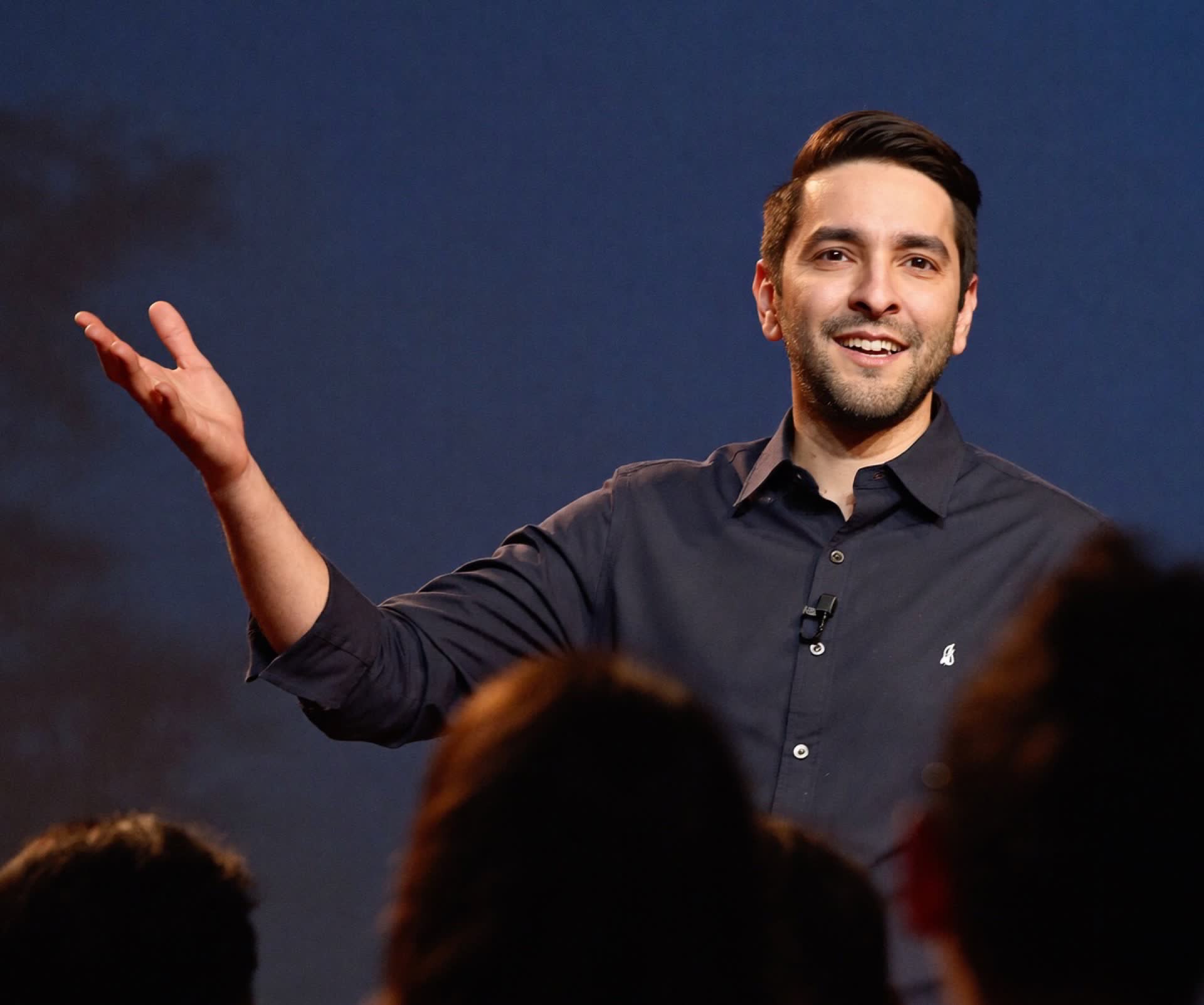
Pakistan's first and only sports psychologist for the national cricket team, Taimoor Ali Khan, breaks down why the team keeps choking, why the PCB operates like a charity case, and what a two-tier PSL with promotion and relegation could do for the sport.
Pakistan’s first sports psychologist walks in
The episode opens with Muzamil explaining why Taimoor Ali Khan is sitting across from him. A previous episode on tennis had turned into an on-air frustration about why sport in Pakistan refuses to grow, and that outburst produced this guest. Taimoor is introduced as the first and only sports psychologist ever hired by the Pakistan cricket team — a fact that, on its own, says something damning about the state of the sport.
The conversation begins with biography. Taimoor was born in Rawalpindi, raised in Islamabad, and schooled at Beacon House before moving to Bahria College. By the time he sat his matriculation exams in 1992 — the year of the World Cup — he was already representing Islamabad at the national under-19 championship and had been named in the Pakistan under-19 squad against England. Cricket was not a hobby. It was a pathway.
His father played club cricket in Karachi, and the family ran a cousins’ eleven called Brothers Eleven that still plays today. Taimoor’s formal entry into the game came through Diamond Cricket Club in Islamabad, where a coach named Shakeel Sheikh — later a governing board member of the cricket board — first spotted him at age eleven. The club-to-regional-to-national pipeline worked cleanly in those days. Clubs nominated talented players for regional trials, national selectors attended, and the best moved into the under-19 setup before graduating to first-class cricket.
The system that worked, and the one that replaced it
Taimoor’s description of Pakistan’s old domestic structure is worth dwelling on. There were two first-class tournaments: the Quaid-e-Azam Trophy, which was city-based, and the Patrons Trophy, which was department-based — National Bank, United Bank, WAPDA, Sui Gas. The department system gave cricketers permanent jobs and financial security. It was, in its way, a profession.
That structure was dismantled in the last few years of the previous government, when Imran Khan pushed for an Australian model of six regional teams. Taimoor is direct about why this was a mistake. “Australia is a small country with a small population. Our country has 220 million people. How can you compare that?” England, with 60 million people, runs eighteen first-class teams. When England toured Pakistan recently, they were missing their captain, Ben Stokes, Mark Wood played only two games, and Johnny Bairstow was unfit — and they still won the series. That bench strength, Taimoor argues, comes from having enough teams to develop enough players.
The six-team regional model also destroyed something less tangible: identity. Muzamil pushes on this point, and Taimoor agrees immediately. Nobody associates with Northern or Central Punjab. Everybody associates with Lahore, Karachi, Multan, Peshawar. The PSL’s own success is built on city franchises, and yet the board runs domestic cricket on a regional basis that has no commercial logic and no emotional pull.
The KPL, digital segmentation, and what the PCB is missing
Taimoor’s career took him from first-class cricket in Pakistan to club cricket in England for fifteen years, through a back injury that ended his peak years, through an MBA done under family pressure, and eventually to a master’s in sports science at the number-one ranked sports science school in Wales — the same institution that held England Cricket Board’s research and development contract. He graduated in 2011.
After struggling to find work in sports psychology, he moved into commodity trading in London and then investment management in Dubai, before being approached to work with the UAE national cricket team voluntarily. That voluntary work led to a paid role as director of cricket for a franchise in the Emirates domestic tournament, where he assembled a team of unknowns from Pakistan, India, Sri Lanka, South Africa, and Bangladesh. Three of those players — Fakhar Zaman, Abid Ali, and Asif Ali — went on to represent Pakistan. Nine represented UAE.
Fakhar Zaman’s story is the one Taimoor tells in detail. The young left-handed opener from Mardan was dismissed for zero twice in practice matches. Taimoor told him not to take his pads off. “Every failure is a step closer to success,” he says. When Fakhar scored that century against India in the Champions Trophy final, he mentioned Taimoor’s name in a Sky Sports interview. Mickey Arthur, Pakistan’s coach at the time, called.
The KPL chapter is where Taimoor’s commercial thinking becomes most specific. In the first season, he created what he calls segments on digital platforms — not just a live broadcast, but separate packages for highlights, six-ball compilations, wicket reels, each sold to a different broadcaster. “You have created five or six revenue streams for yourself,” he explains. The result was 40 million viewers, making KPL the second most-watched cricket league in the world on digital platforms in 2021, behind only the IPL. Muzamil notes that PSL, in its sixth season, had not come close to those numbers. Taimoor’s answer is blunt: “Research नहीं है. پڑھائی کے تو قریب جانا ہی نہیں ہے۔” — there is no research, no appetite for study.
The kit deal that explains everything
One anecdote lands harder than any statistic. Nike sponsors India’s cricket kit — meaning Nike pays the BCCI to have its logo on those shirts. Adidas pays Cricket Australia. In Pakistan, the arrangement runs in reverse: a local company puts its logo on the Pakistan team’s kit and charges the PCB for the privilege of making it. The PCB pays the invoice.
“Really?” Muzamil asks.
“جی,” Taimoor confirms.
This is not a minor accounting error. It is a summary of how the institution thinks about itself — as a cost centre, not a commercial property. Pakistan is, by Taimoor’s reckoning, the second-largest cricket market in the world after India. The board’s response to that position has been to pay for its own uniforms.
What a two-tier PSL would actually do
The promotion-and-relegation argument runs through the conversation like a spine. Taimoor’s case is structural: Lahore Qalandars finished last for four or five consecutive PSL seasons and faced no consequence. No franchise that is guaranteed its place in the league has any reason to invest in player development, coaching infrastructure, or mental skills programmes. The competition is, in his word, redundant.
The alternative is a second PSL division. The bottom two teams from the top tier go down; the top two from the lower tier come up. Franchises now have something to lose. They start spending on the things that make players better. The final weeks of the season — the promotion and relegation battles — generate more commercial value than the rest of the league combined. He points to the English football model: “The commercial value of that one week is massively more than the whole league itself.”
The golf analogy extends the point. When the PGA introduced winner-takes-all prize money, players started taking risks. Tiger Woods started playing those shots through the trees. The last hole became appointment viewing. Risk creates drama; drama creates audience; audience creates commercial value. PSL’s current structure eliminates risk at the franchise level entirely.
Sports psychology in Pakistan: one person, two series, no follow-up
When Taimoor joined the Pakistan setup in 2019, he encountered what he describes as deep trust issues among the players. “Every player is from a different social and economic background. They have a different perspective to life. You can’t take them as a group even though they play a team sport.” He had almost no time to build the trust that psychological work requires, and he managed it only partially.
His recommendation to the PCB, submitted in a formal report, was to make sports psychologists mandatory at the regional domestic level and at the national academy — not one psychologist parachuted into a senior squad, but a psychology department embedded in the high-performance centre from under-15 level upward. India made it mandatory for every IPL franchise to have a psychologist. England’s psychologists begin working with players at under-15. “If I am working with somebody who is already in their late twenties or early thirties, he has his own way of approaching things. For me to completely change that would not be fair on that player.”
The Andy Flower story is the sharpest illustration of what serious psychological preparation looks like. Before England’s 2010-11 Ashes tour of Australia — a tour they would win for the first time in over thirty years — Flower sent a questionnaire to Taimoor’s sports science school asking which people the players communicated with most when on tour. Then he invited all the wives and girlfriends to a meeting and gave them ten to fifteen specific phrases to use in daily calls with the players: sentences designed to prevent homesickness, build confidence, and maintain a positive mindset. “Can you imagine that happening in Pakistan?” Taimoor asks. “Pakistan is the second biggest cricketing market in the world. These idiots — I’m sorry to use this word — what planet are they living in?”
The 1992 curse and the politics that ate the sport
Later in the discussion, Taimoor makes an argument that reframes the entire conversation. The 1992 World Cup, he says, became a curse. The same generation of players has occupied every administrative, commentary, and advisory role in Pakistan cricket for thirty years. In that time, Australia won four more World Cups, England won two, India won three. Pakistan won none. “تیس سال پہلے ہم World Cup جیتے ہیں — خدا کا خوف کرو۔” Thirty years ago we won the World Cup — have some shame.
The political dimension is inseparable from the structural one. Taimoor describes the KPL experience, where a senior political figure used the league as a personal campaign platform. “It seemed like a political rally was happening,” he says. He could not object. Private event or not, the political power was sufficient to override the commercial logic of the tournament. Muzamil and Taimoor agree that this is the core dysfunction: sports in Pakistan is used as a vehicle for political mileage rather than as a commercial and cultural asset in its own right.
By the end of the conversation, Taimoor is still in Pakistan, fighting a court case against KPL for unpaid dues. Cheques bounced. Court dates keep getting pushed back two months at a time. He knows the lanes around the courts in F-8 well enough to draw a map from memory. He is not leaving. “I’ve played cricket. I’ve studied cricket. I’ve served Pakistan cricket team as a sports psychologist. I did the second biggest league in the world. I’m not going to let two crooks or scammers run the sport that I have given my life to.”
Muzamil closes by asking how Taimoor sees Pakistan twenty years from now. The answer is cautious but not pessimistic: the two-family political system will eventually be erased, the IT sector will grow large enough to produce a new class of people who call the shots, and the youth — connected, frustrated, and watching the world on their phones — will demand something different. The institutions are broken. The people inside them are not showing up to their offices. But the country is not the institutions.


Never miss a conversation.
New episodes and the thinking behind them, straight to your inbox. No hype, no spam, no pitch.