Thought Behind Things
Why Pakistan won't just buy gas from Russia
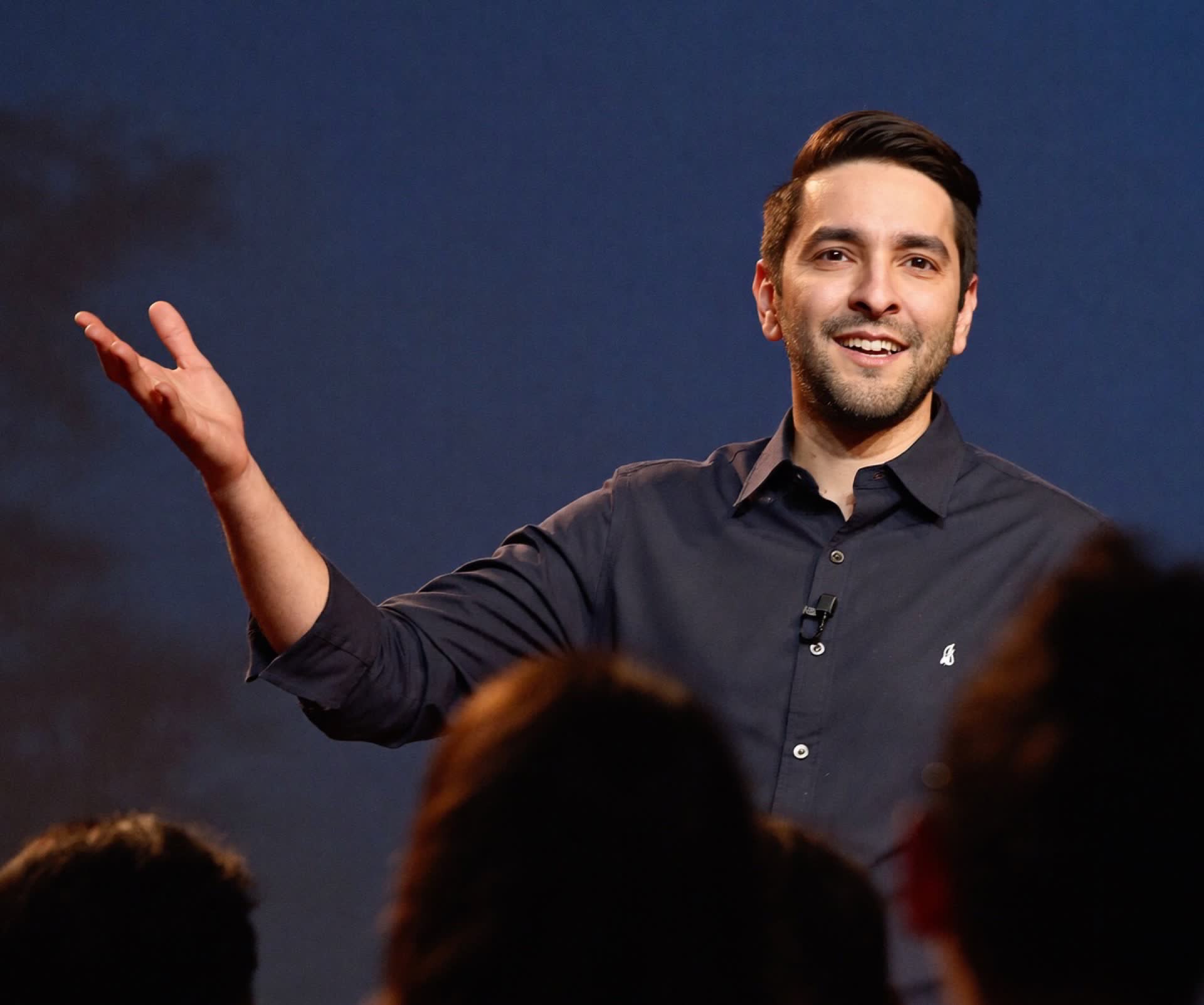
Syed Ali Zia Jaffery joins Muzamil to map Pakistan's foreign policy choices — from the Ukraine war's ripple effects to the India-Pakistan deadlock and why taking cheap Russian oil is harder than it sounds.
From Quetta to nuclear studies: a researcher shaped by adversity
The episode opens with Muzamil introducing Syed Ali Zia Jaffery as someone he had been following closely on Twitter — a researcher whose commentary on regional security had stood out precisely because it offered the kind of structural clarity that mainstream Pakistani media rarely provides.
Jaffery’s personal story sets an immediate tone. Born in Quetta in 1992 into a military family, he contracted meningitis at four months old. He lost his eyesight temporarily, lost movement in his right hand, and nearly lost his life. “The frosty winds of Quetta weren’t kind to me,” he says, quoting the line he uses whenever he introduces himself. Doctors told his family that the illness had not damaged his brain — and might, in fact, have sharpened it. His father, a retired army officer, had dreamed of a second son in uniform. That dream ended in the hospital. What replaced it was a household steeped in reading, military history, and strategic thinking.
Jaffery studied at Lahore Grammar School, then read history and political science at Forman Christian College — dropping economics when mathematics proved too demanding. He began writing for Islamabad-based think tanks after graduating in 2015, found his voice in that space, and eventually connected with Dr. Rabia Akhtar at the University of Lahore, one of South Asia’s leading nuclear scholars. That mentorship became the anchor of his career. He now teaches arms control and non-proliferation at the undergraduate level, edits Pakistan Politico, and is preparing to pursue a doctorate — most likely in the United States — focused on nuclear weapons policy.
The return of great power politics: what Ukraine is really about
Muzamil asks Jaffery to step back from the battlefield details and explain what the war in Ukraine actually represents at a systemic level. Jaffery’s answer is precise: Ukraine is not primarily about Ukraine. It is about the return of great power competition.
He invokes the historian John Lewis Gaddis and the concept of the “long peace” — the argument that nuclear deterrence prevented direct great-power war during the Cold War. But, Jaffery notes, the absence of war was never the same as peace. Proxy conflicts ran continuously through Vietnam, Korea, and Afghanistan. What changed after the Cold War was the brief illusion of a stable unipolar order. That illusion, he argues, has now been “taken to the cleaners by events.”
The United States signalled the shift itself. Its 2017 National Security Strategy and 2018 Nuclear Posture Review both named China and Russia as the primary strategic threats — above terrorism. Russia, for its part, wants to re-enter the global equation as a consequential actor. NATO enlargement is the proximate trigger, but the deeper logic is that “diplomacy was taking a back seat and the use of force is now becoming a very viable tool for eking out diplomatic concessions.”
Ukraine, in this reading, is a victim of great power signalling. And the costs are global: supply chains already fractured by COVID, inflation already running hot, and oil prices that Pakistan — a net energy importer — feels with particular acuity.
Globalization cuts both ways: why Pakistan cannot be oblivious
Jaffery makes a point that Muzamil returns to several times: in a globalized world, the idea that a conflict in Eastern Europe is someone else’s problem is simply wrong. “Globalization is a double-edged phenomenon,” Jaffery says. “Threats traverse across borders more quickly than before.” Even North Korea, he notes, is not truly isolated if you look carefully enough.
The practical implication for Pakistan is that the longer the war in Ukraine continues, the more pressure accumulates on a country that is already in the middle of an economic crunch. The question is not whether Pakistan is affected — it is — but whether Pakistani policymakers are thinking clearly about how to respond.
The Russia oil question: cost-benefit, not morality
Later in the discussion, Muzamil raises the question that gives the episode its title: why isn’t Pakistan simply buying cheap Russian oil and gas? Jaffery’s answer is characteristically structural. States draw red lines. Every decision in global politics involves a cost-benefit analysis, and the question is whether the cost of engaging Russia outweighs the benefit — or vice versa.
“If you want to ward off the influence of a country and you snub Russia, you have to weigh the cost of that snub against the benefit of not snubbing,” he argues. Energy security, he stresses, is one of the most important pillars of national security. Without gas and electricity, industrial output collapses, employment falls, and the economic base that feeds military strength erodes. “Strength is essential. It is the most essential plank of your national power. But to build it, you have to take decisions that are in your own interest.”
His broader point is that Pakistan has been too deferential — not because deference is strategically sound, but because it has become a habit. A smaller power sitting across the table from a larger one still has negotiating leverage if it holds something the larger power needs. “You need me,” Jaffery says, describing the logic of asymmetric negotiation. “I am in a good position to pressure you into doing something.” The failure to exercise that leverage is a choice, not a structural inevitability.
The US relationship: event-driven, narrow, and in need of a new foundation
Muzamil pushes on the US-Pakistan relationship, noting that American support since the 1970s has been primarily military rather than developmental — that the nation-building investments of the Ayub era were not replicated in the post-Cold War decades. Jaffery agrees, but adds a layer that complicates the standard critique.
Pakistan, he argues, actually used the United States brilliantly during the nuclear program era. “We achieved what we wanted to. We built our nuclear deterrent and we kept America on the side. America knew, but we played our cards so brilliantly that we got more out of that equation than they did.” The problem was not that the relationship was exploitative — both sides exploited each other — but that it was never broad-based. It was event-driven: a crisis would arise, the relationship would intensify, the crisis would pass, and the relationship would revert to near-zero.
“If our relationship with the USA is to improve, it has to be based on trade, economics, technology transfer, people-to-people contact, and investment,” Jaffery says. “When two-sided stakes develop, relations are more durable.” The current moment of confusion — Pakistan simultaneously seeking IMF relief, managing Chinese debt rollovers, and navigating American expectations — is a direct consequence of never having built that broader foundation.
India-Pakistan: why trade without reciprocity is a concession, not a gesture
The conversation’s longest and most contested section concerns India. Muzamil frames the question generously: the economic logic for regional integration is overwhelming, the cultural and historical ties are real, and Pakistan is approaching bankruptcy while India sits on over $500 billion in reserves. Is the Kashmir impasse really worth maintaining?
Jaffery’s answer is careful and, by his own admission, likely to irritate both the Pakistani left and right. He recently wrote an article arguing against resuming trade with India at this point — not because trade is wrong in principle, but because of what India’s current leadership would do with it.
“The Indian leadership is not in any mood to give any space to Pakistan,” he says. If Pakistan opens trade without a reversal of Articles 370 and 35-A, New Delhi will read it as acceptance of the status quo. He points to the 2019 pilot release as a precedent: Prime Minister Imran Khan’s gesture of restraint was met not with reciprocity but with the claim that Pakistan had “buckled under pressure.” India, he argues, has consistently mistaken Pakistani restraint for weakness.
The deeper structural point is about red lines. States that concede on vital interests cannot then expect their adversaries to stop. Indian leadership has publicly stated its interest in what it calls “Pakistan-occupied Kashmir” and Gilgit-Baltistan. “If you concede now, they will be bolstered and enchanted to do much more.” The eighty lakh to one crore Kashmiris who look to Pakistan for support would, in Jaffery’s view, turn against Islamabad if it effectively abandoned the claim.
Muzamil pushes back: is the game even worth playing when bankruptcy is at the door? Jaffery’s response is that this is precisely the moment when radical steps become possible — as India itself demonstrated in 1991 — but that those steps have to be internal reforms, not external concessions. “It is not a price worth paying today, tomorrow, or in the future.”
The real problem: no appetite for internal reform
By the end of the conversation, both Muzamil and Jaffery converge on what they see as the central failure. Pakistan’s problems are not primarily external. They are structural and domestic: a political economy that protects real estate interests, a ruling class with no appetite for reform, and a policy horizon that extends only to the next election.
Jaffery is direct. “There is no appetite to solve the actual problems at home. We are trying to outsource our problems — IMF will fix it, America will give relief.” He dismisses the celebratory reaction to China’s debt rollover: “You have been saved by a whisker. It is nothing to celebrate. You cannot survive on borrowed power.”
The silver lining he identifies is unexpected: the current crisis has democratised foreign policy. Ordinary Pakistanis are now discussing IMF conditions, alignment choices, and energy deals in drawing rooms and on Twitter. “Foreign policy is everywhere now. This is a good thing. It has democratised foreign policy, and in a country like Pakistan, this is a healthy thing.” The next election, he predicts, will be the first in which every party will need a credible foreign policy component — because voters will demand one.
Muzamil closes by noting that the conversation had only scratched the surface — the Afghan Taliban talks, the Indian missile that crossed into Pakistani territory, and the nuclear deterrence architecture all remained on the table for a future episode. Jaffery’s parting point is the one that runs through the entire discussion: Pakistan has the geography, the population, the deterrent, and the talent. What it lacks is direction — and direction can only come from within.


Never miss a conversation.
New episodes and the thinking behind them, straight to your inbox. No hype, no spam, no pitch.